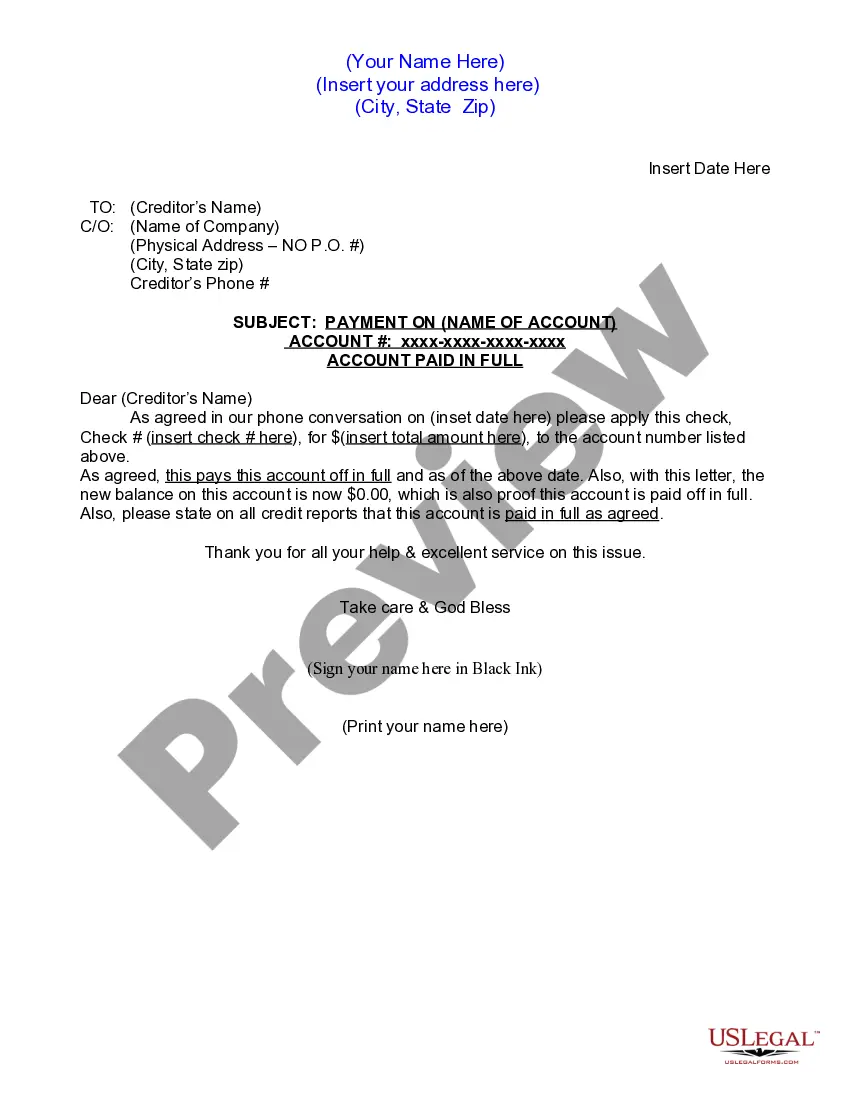
Sample Paid In Full Letter From Creditor
Description
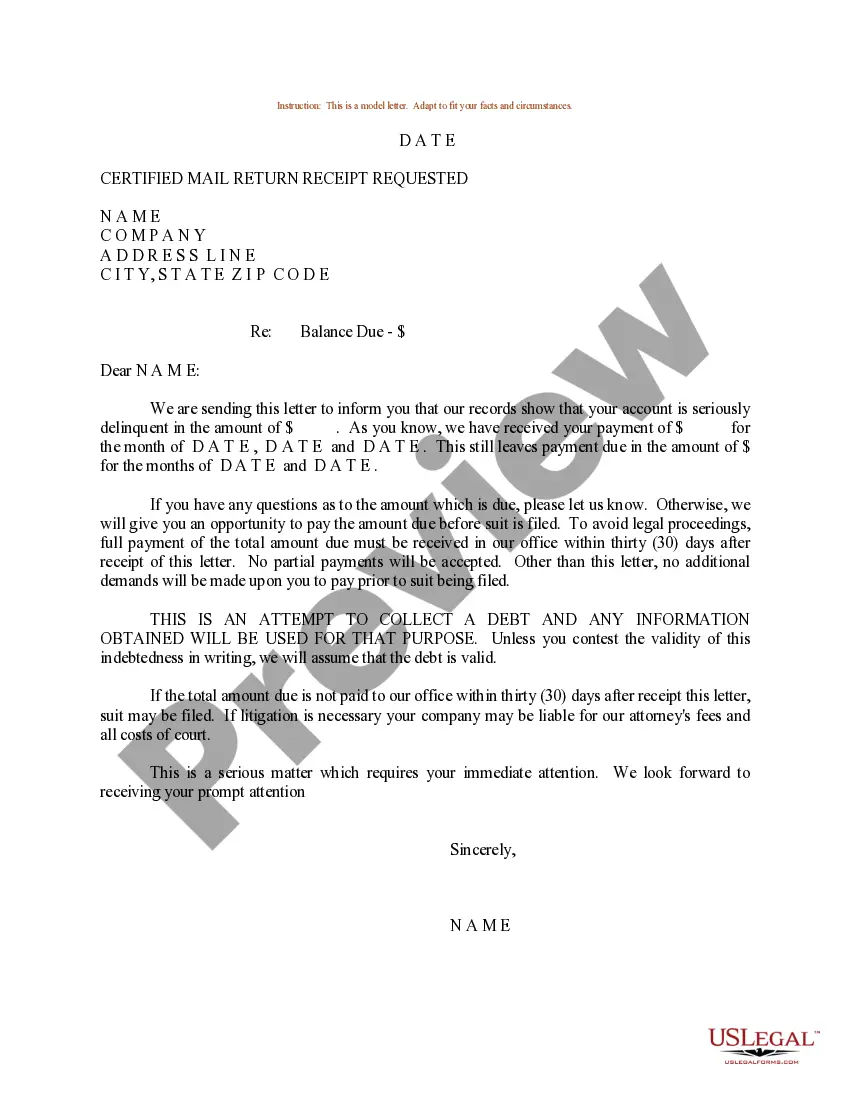
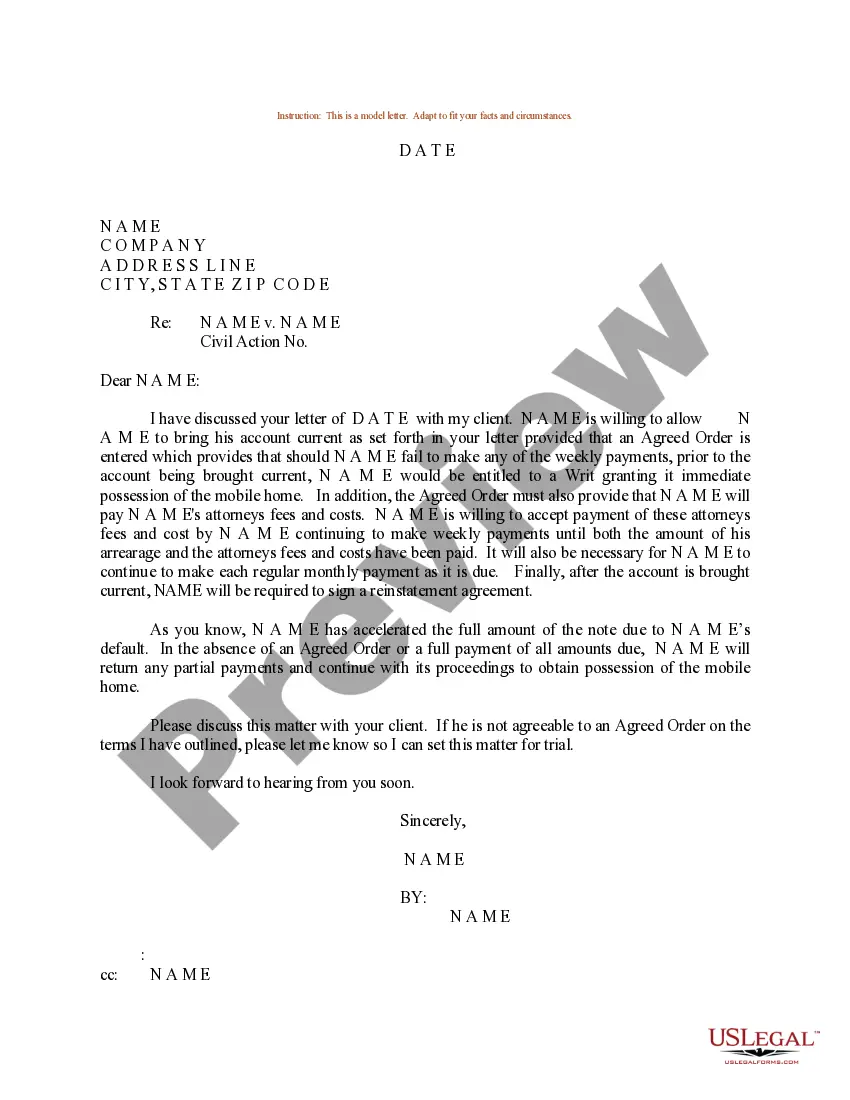
Get your form ready online
Our built-in tools help you complete, sign, share, and store your documents in one place.
Make edits, fill in missing information, and update formatting in US Legal Forms—just like you would in MS Word.
Download a copy, print it, send it by email, or mail it via USPS—whatever works best for your next step.
Sign and collect signatures with our SignNow integration. Send to multiple recipients, set reminders, and more. Go Premium to unlock E-Sign.
If this form requires notarization, complete it online through a secure video call—no need to meet a notary in person or wait for an appointment.
We protect your documents and personal data by following strict security and privacy standards.

Make edits, fill in missing information, and update formatting in US Legal Forms—just like you would in MS Word.

Download a copy, print it, send it by email, or mail it via USPS—whatever works best for your next step.

Sign and collect signatures with our SignNow integration. Send to multiple recipients, set reminders, and more. Go Premium to unlock E-Sign.

If this form requires notarization, complete it online through a secure video call—no need to meet a notary in person or wait for an appointment.

We protect your documents and personal data by following strict security and privacy standards.
Looking for another form?

How to fill out Letter For Account Paid In Full?
Whether for professional reasons or for personal issues, everyone must confront legal matters at some point in their lives.
Completing legal documents requires meticulous care, starting from selecting the correct form template.
Once saved, you are able to fill out the form using editing software or print it for manual completion. With a vast collection of US Legal Forms available, you don't have to spend time searching for the right sample online. Take advantage of the library’s user-friendly navigation to find the appropriate template for any circumstance.
- Obtain the sample you require by utilizing the search bar or catalog navigation.
- Review the form’s description to ensure it fits your needs, jurisdiction, and locality.
- Click on the form’s preview to inspect it.
- If it is the wrong form, go back to the search feature to find the Sample Paid In Full Letter From Creditor template you require.
- Download the document if it fulfills your requirements.
- If you possess a US Legal Forms account, simply click Log in to access previously stored documents in My documents.
- If you don’t have an account yet, you can acquire the form by clicking Buy now.
- Select the suitable pricing option.
- Complete the account registration form.
- Choose your payment method: you can utilize a credit card or PayPal account.
- Select the file format you prefer and download the Sample Paid In Full Letter From Creditor.
Form popularity
FAQ
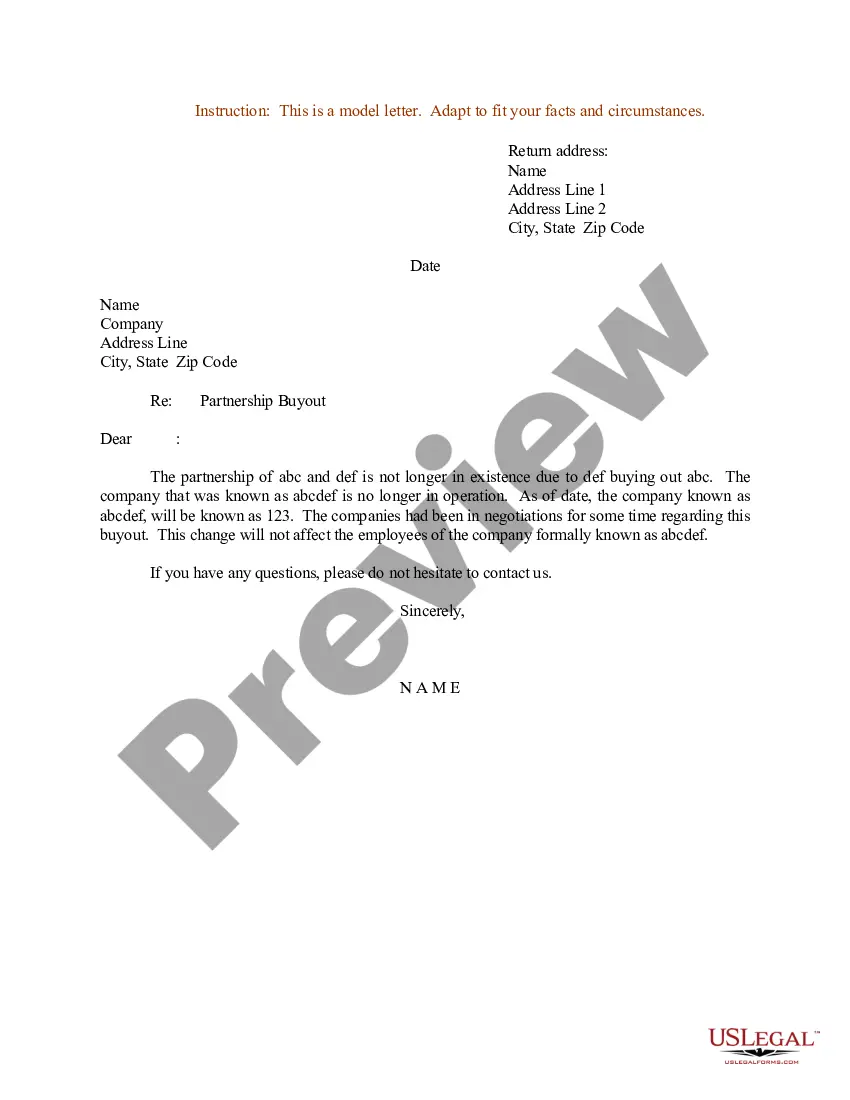
To craft a letter about payment, you can begin by clearly stating the purpose of the letter. Include the recipient's name and contact information at the top, followed by your details. Mention the payment amount, the date it was made, and any relevant reference numbers. For a comprehensive example, consult a sample paid in full letter from creditor to ensure your letter is both professional and effective.
To write a letter of full payment, start by clearly stating your intention to confirm that your debt has been paid in full. Use a straightforward format and include your name, address, and account details to ensure proper identification. Additionally, it is helpful to reference the specific payment made, and conclude with a request for a confirmation, such as a 'Sample paid in full letter from creditor.' For assistance in drafting this letter, you can use the US Legal Forms platform, which provides templates to simplify the process.
To write a full and final payment letter, begin by addressing the creditor with proper details, including their name and address. Clearly state that the letter serves as a confirmation for the payment made, and specify the amount paid, making sure to mention the date of payment. Include a reference to the 'Sample paid in full letter from creditor' to guide your structure, ensuring clarity in your intentions. Finally, sign the letter and keep a copy for your records to protect yourself in the future.
An assignment of mortgage under Florida law used to assign and transfer a mortgage from one lender to another.
A promissory note commits a new homeowner to make payments on their house. A mortgage gives a lender the right to take that home if they don't do so. A recent Fla. court opinion highlighted those differences.
The purpose of the mortgage or deed of trust is to provide security for the loan that's evidenced by a promissory note. Loan Transfers. Banks often sell and buy mortgages from each other. An "assignment" is the document that is the legal record of this transfer from one mortgagee to another.
Mortgages are assigned using a document called an assignment of mortgage. This legally transfers the original lender's interest in the loan to the new company. After doing this, the original lender will no longer receive the payments of principal and interest.
The purpose of the mortgage is to provide collateral for the debt that's evidenced by the promissory note. Banks and mortgage companies frequently sell and buy home loans from each other. An "assignment" is the document that's the legal record of this transfer from one entity to another.
In Florida, an assignment of mortgage: Transfers the assignor's rights under the mortgage to the assignee. Permits the assignee to pursue the same remedies, including foreclosure, as the original lender. Generally retains priority of the mortgage that is assigned for the benefit of the assignee.