Wrongful Single Actions Statement With Multiple Conditions
Description
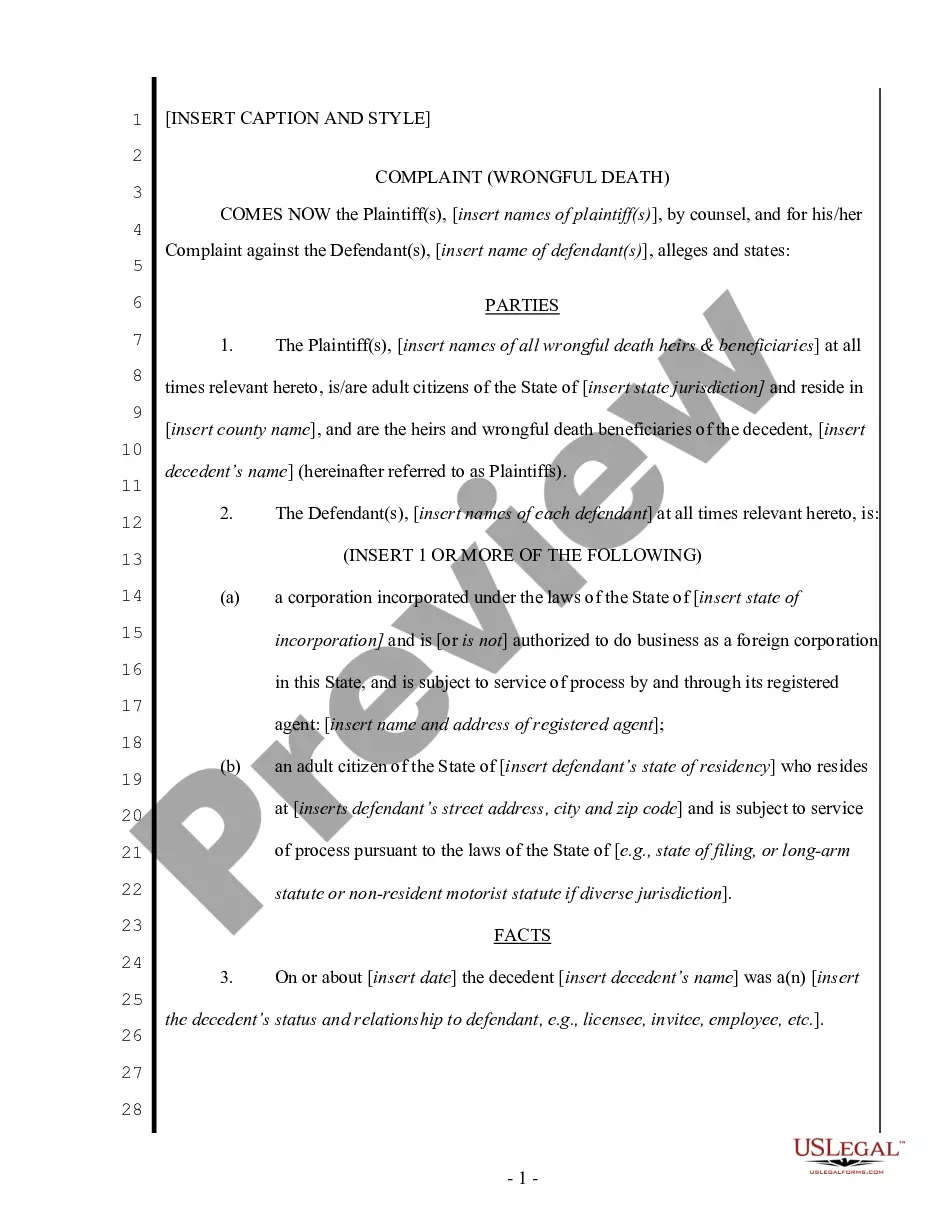

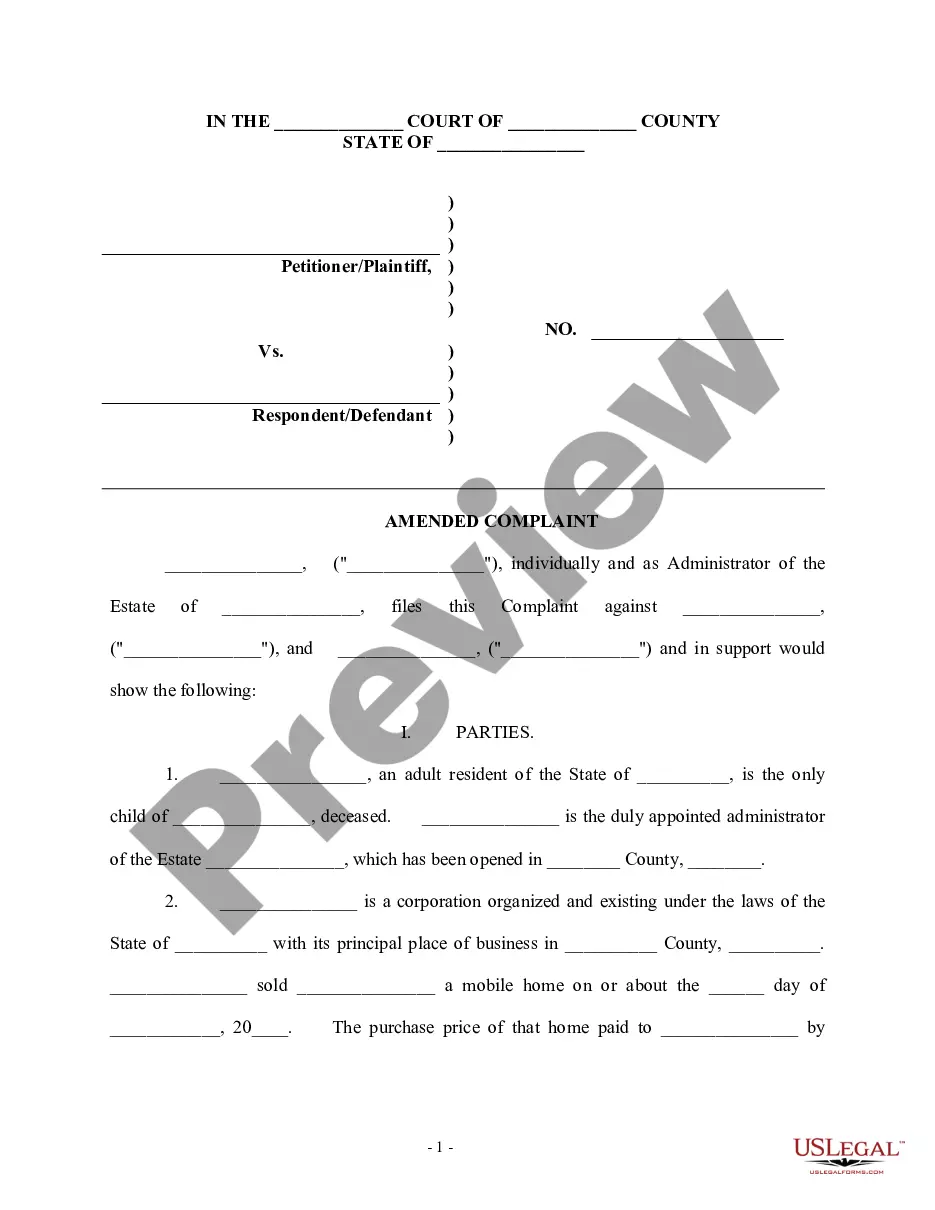
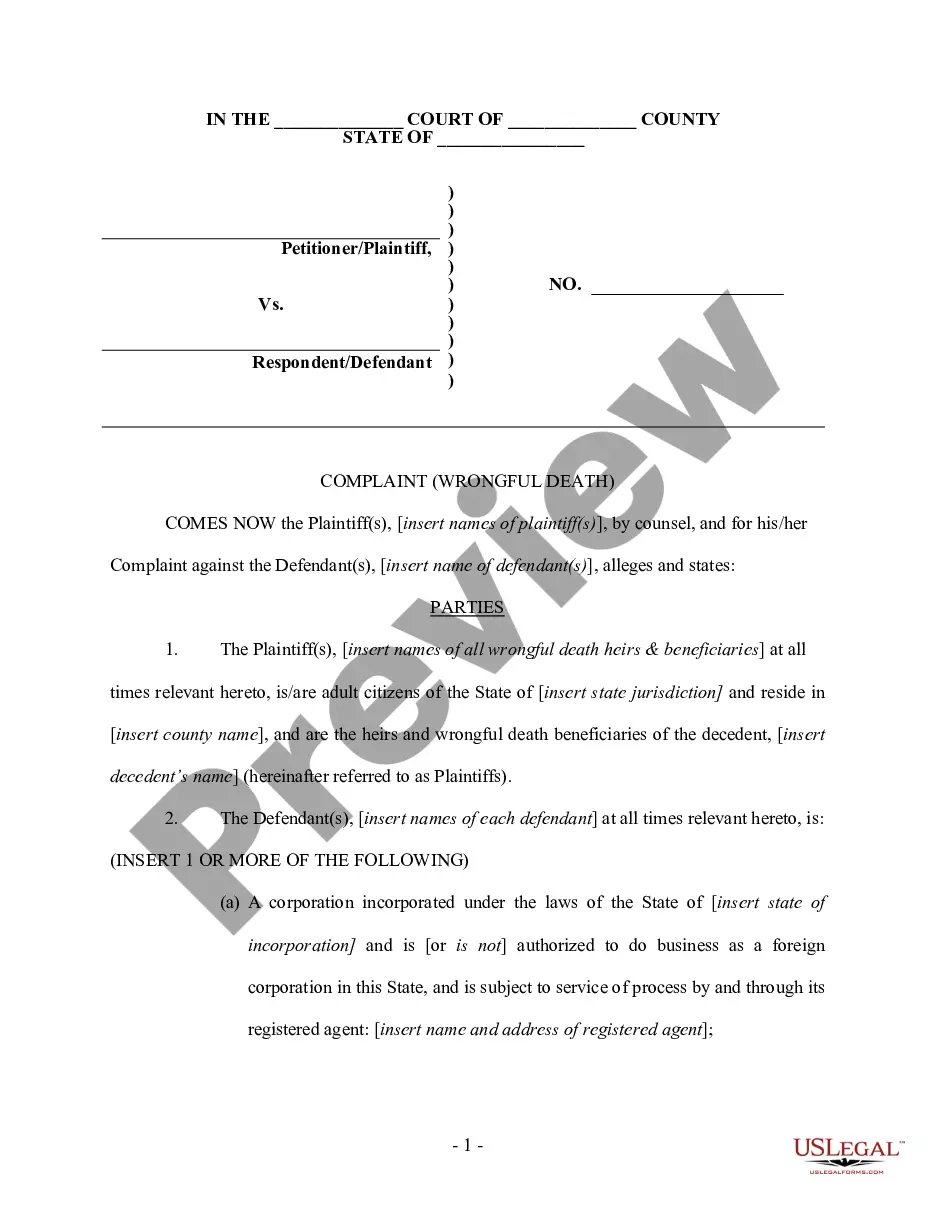
Get your form ready online
Our built-in tools help you complete, sign, share, and store your documents in one place.
Make edits, fill in missing information, and update formatting in US Legal Forms—just like you would in MS Word.
Download a copy, print it, send it by email, or mail it via USPS—whatever works best for your next step.
Sign and collect signatures with our SignNow integration. Send to multiple recipients, set reminders, and more. Go Premium to unlock E-Sign.
If this form requires notarization, complete it online through a secure video call—no need to meet a notary in person or wait for an appointment.
We protect your documents and personal data by following strict security and privacy standards.

Make edits, fill in missing information, and update formatting in US Legal Forms—just like you would in MS Word.

Download a copy, print it, send it by email, or mail it via USPS—whatever works best for your next step.

Sign and collect signatures with our SignNow integration. Send to multiple recipients, set reminders, and more. Go Premium to unlock E-Sign.

If this form requires notarization, complete it online through a secure video call—no need to meet a notary in person or wait for an appointment.

We protect your documents and personal data by following strict security and privacy standards.
Looking for another form?

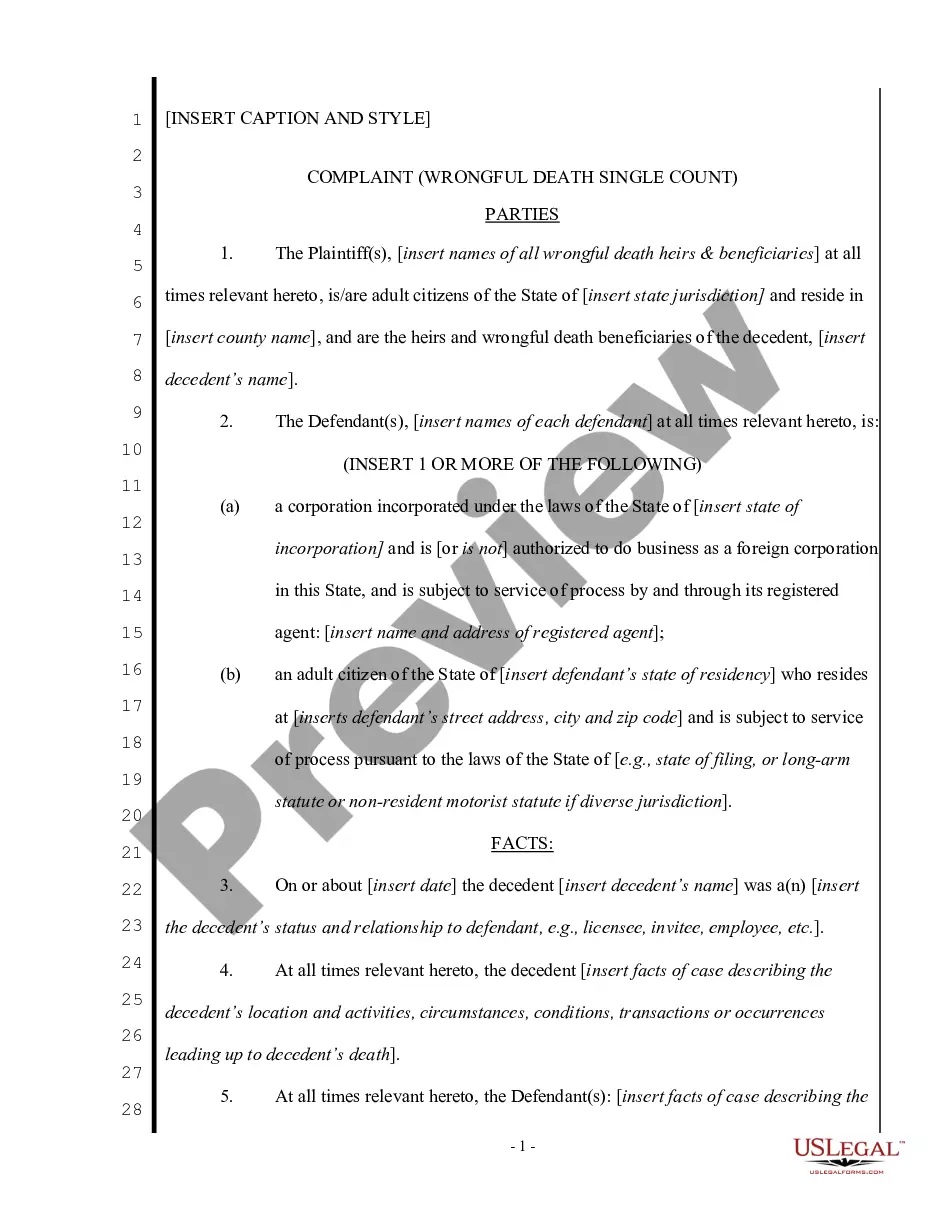
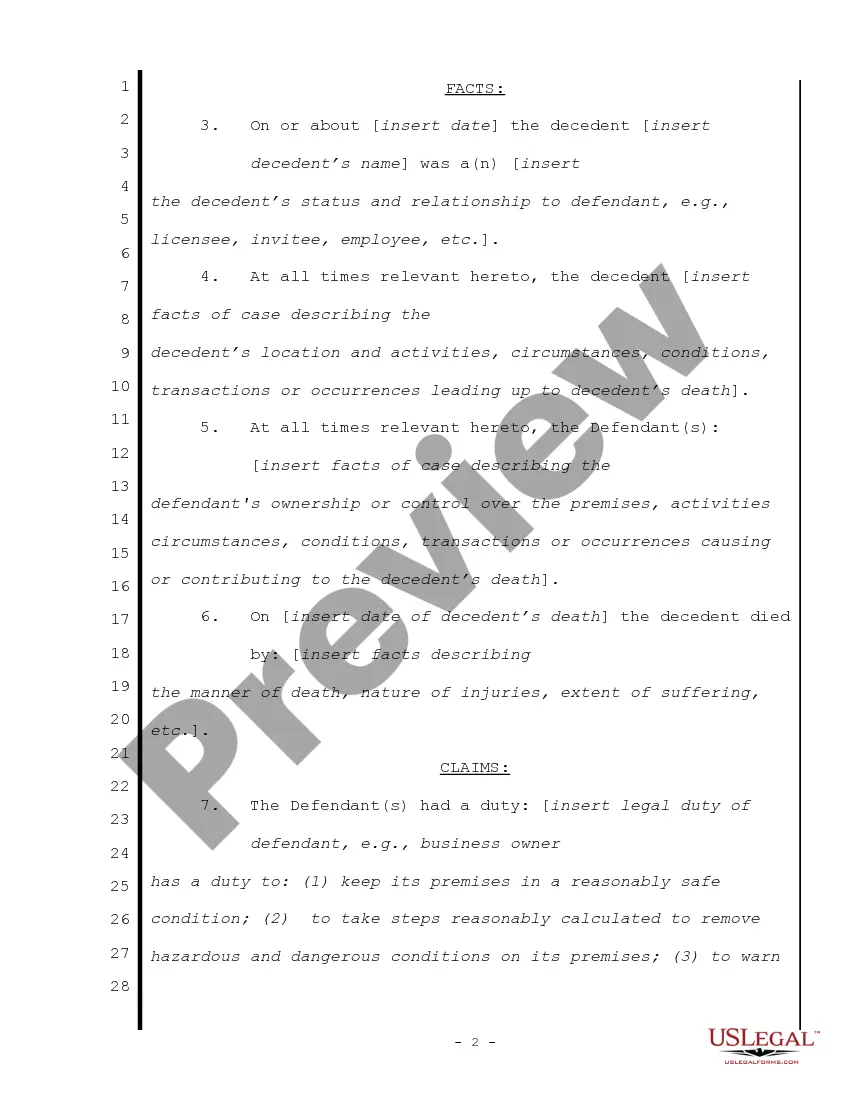
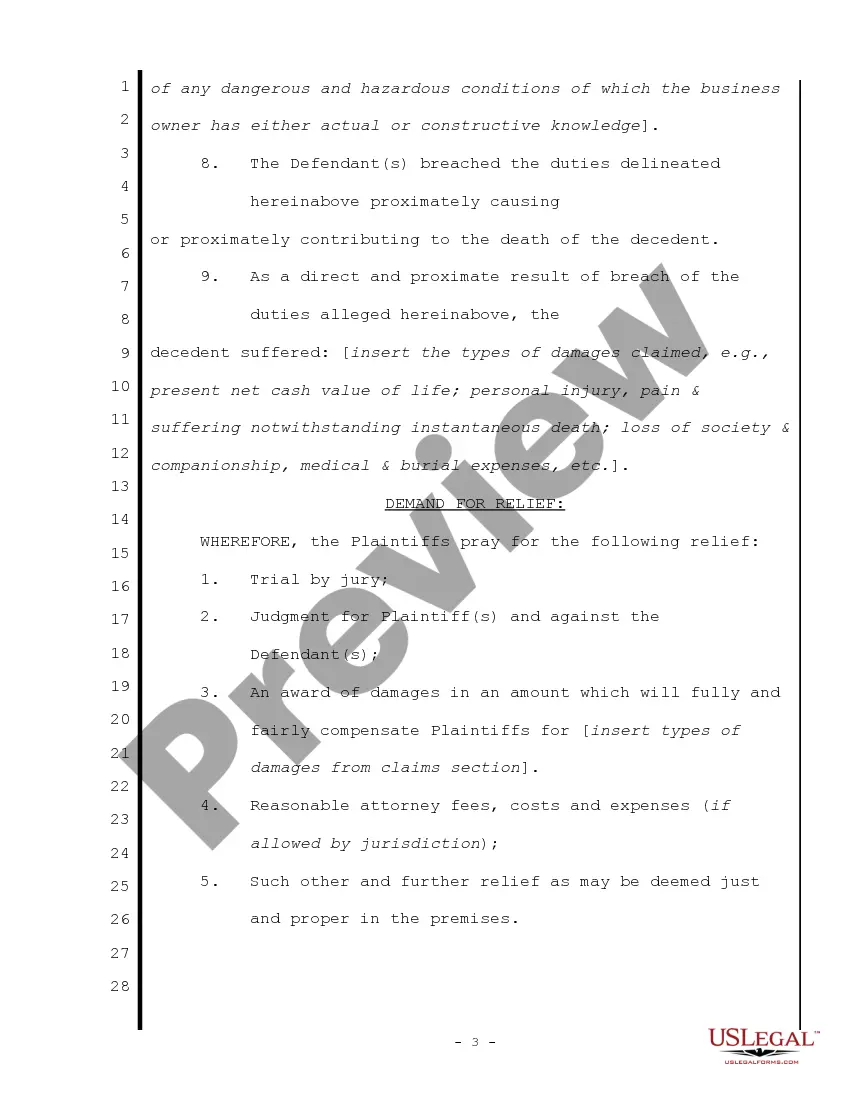
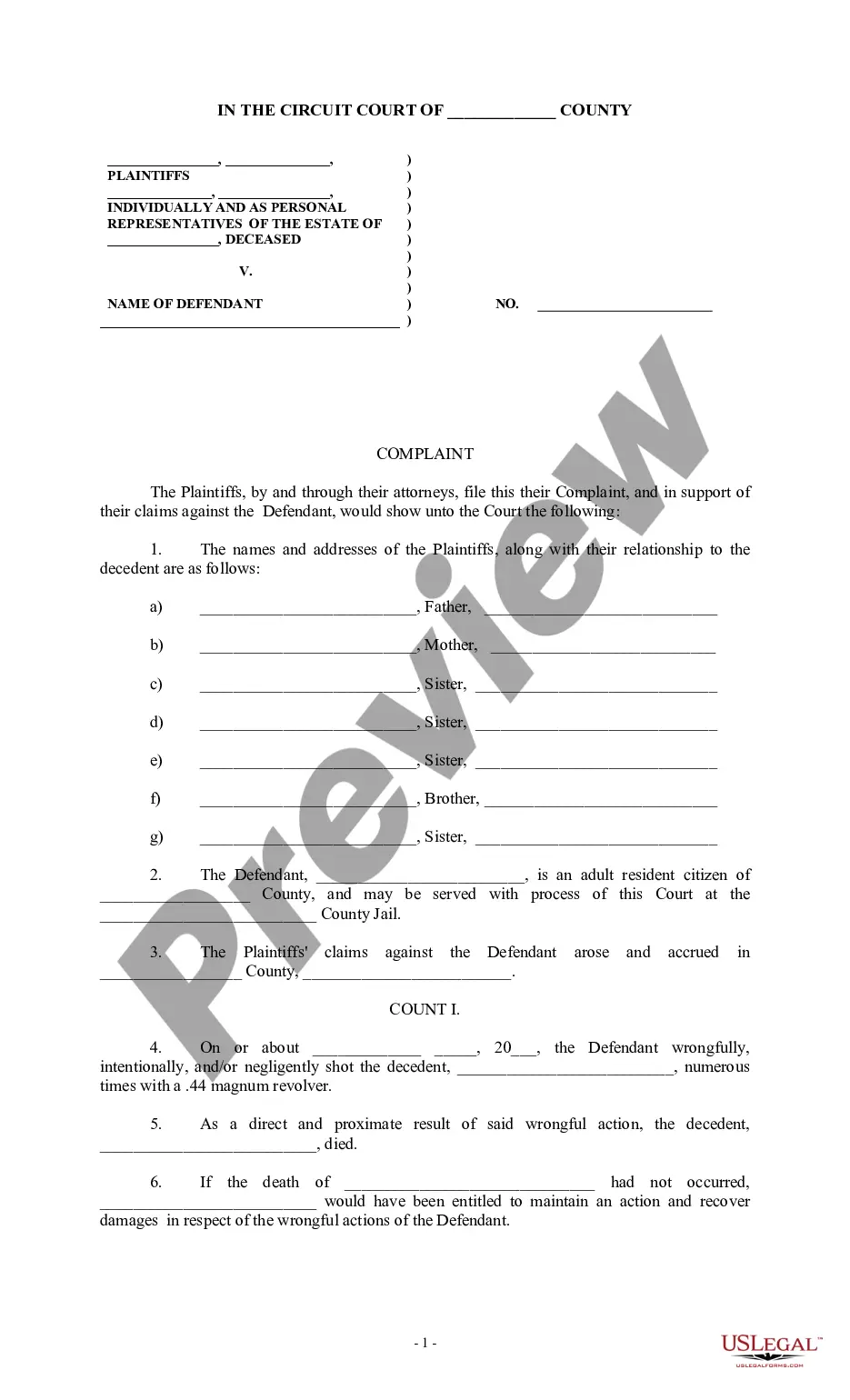
How to fill out Complaint For Wrongful Death - Single Count?
- If you're a returning user, log into your account and locate the form you need in your library. Ensure your subscription is active; if not, renew it based on your payment plan.
- For first-time users, begin by reviewing the form in Preview mode to confirm that it fits your requirements and adheres to your jurisdiction's standards.
- If adjustments are needed or if the form isn't suitable, leverage the Search feature above to find an appropriate template.
- Once you identify the correct document, click on the Buy Now button. Select a subscription plan and create an account for full library access.
- Complete your purchase by entering your payment details, either via credit card or PayPal.
- Finally, download the template to your device. You can also access it anytime from the My Forms section of your profile.
In conclusion, utilizing US Legal Forms provides you with an extensive and efficient way to manage your legal documentation needs. With over 85,000 templates and expert assistance, you can ensure your documents are accurate and legally valid.
Start your journey today by visiting US Legal Forms and secure your rightful statement with ease!
Form popularity
FAQ
When using the IFS function, if all conditions evaluate to false, it will return an error. However, you can include a final condition to handle this situation, effectively making it return a specified value instead. This aspect is similar to crafting a wrongful single actions statement with multiple conditions, providing clarity and direction. By strategically using the IFS function, you can manage outcomes seamlessly.
To check if a value falls between two numbers, you can use the if condition with logical operators. For example, you can structure it as 'if (x >= lower && x <= upper)'. This method allows you to implement wrongful single actions statement with multiple conditions effectively. Utilizing this approach ensures that your comparisons are both clear and accurate.
Yes, you can combine multiple conditions in a single if statement using logical operators like 'and' and 'or.' This combination allows you to create a more complex conditional evaluation, which is crucial for comprehensive programming tasks. Learning how to implement these combinations will enable you to write a wrongful single actions statement with multiple conditions that is both effective and streamlined.
When it comes to testing multiple conditions, the if statement remains a favored choice among programmers. This statement allows for a logical evaluation of various scenarios, providing clarity in decision-making within your code. By effectively using this, you can develop a wrongful single actions statement with multiple conditions that operates efficiently.
The conditional statement that is primarily used to test multiple conditions is the if statement, particularly when paired with logical operators. Using 'and' or 'or', you can evaluate conditions together to determine the flow of your code. This method proves essential when creating a wrongful single actions statement with multiple conditions, ensuring clarity and precision.
In Python, the if statement combined with logical operators like 'and' or 'or' is used to check multiple conditions. This approach allows for a concise representation of multiple conditions, making your coding more efficient. By learning to use these techniques, you can write a wrongful single actions statement with multiple conditions that is both effective and clear.
To check multiple conditions, control statements like if-elif-else are commonly employed. These statements allow for a clear path of condition checking, ensuring that every specified condition is evaluated in sequence. By mastering control statements, you can effectively create a wrongful single actions statement with multiple conditions, improving the logic of your code.
In programming, when you need to evaluate multiple conditions, you typically use either a compound if statement or a series of if-elif branches. The if statement allows you to combine various conditions for a comprehensive evaluation. This approach simplifies the creation of a wrongful single actions statement with multiple conditions, making your code cleaner and easier to read.
When you utilize multiple conditions in a single if statement, each condition is evaluated in order. If the first condition is false, the next condition will be checked. This process continues until either a true condition is found, or all conditions are exhausted. Understanding how to construct a wrongful single actions statement with multiple conditions can enhance your programming techniques.
In a Python program, the if statement, along with Elif and else, allows you to test multiple conditions. These statements act as a decision-making structure that lets you evaluate various options and outcomes based on the conditions you define. This approach is especially useful when constructing a wrongful single actions statement with multiple conditions, as it aids in clarity and organization within your code. It enhances the overall functionality of your program.