Wrongful Count Actions Online With The Law
Description
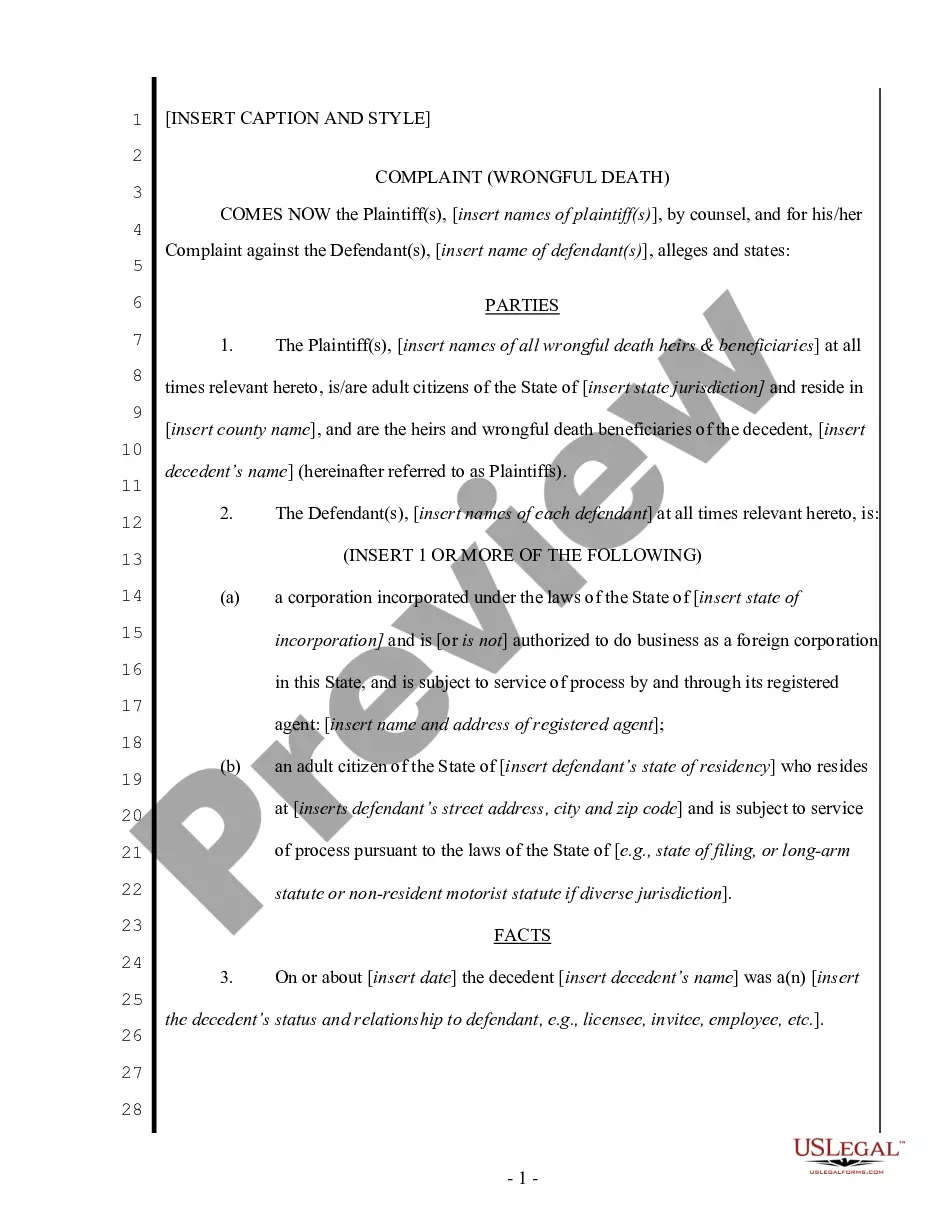

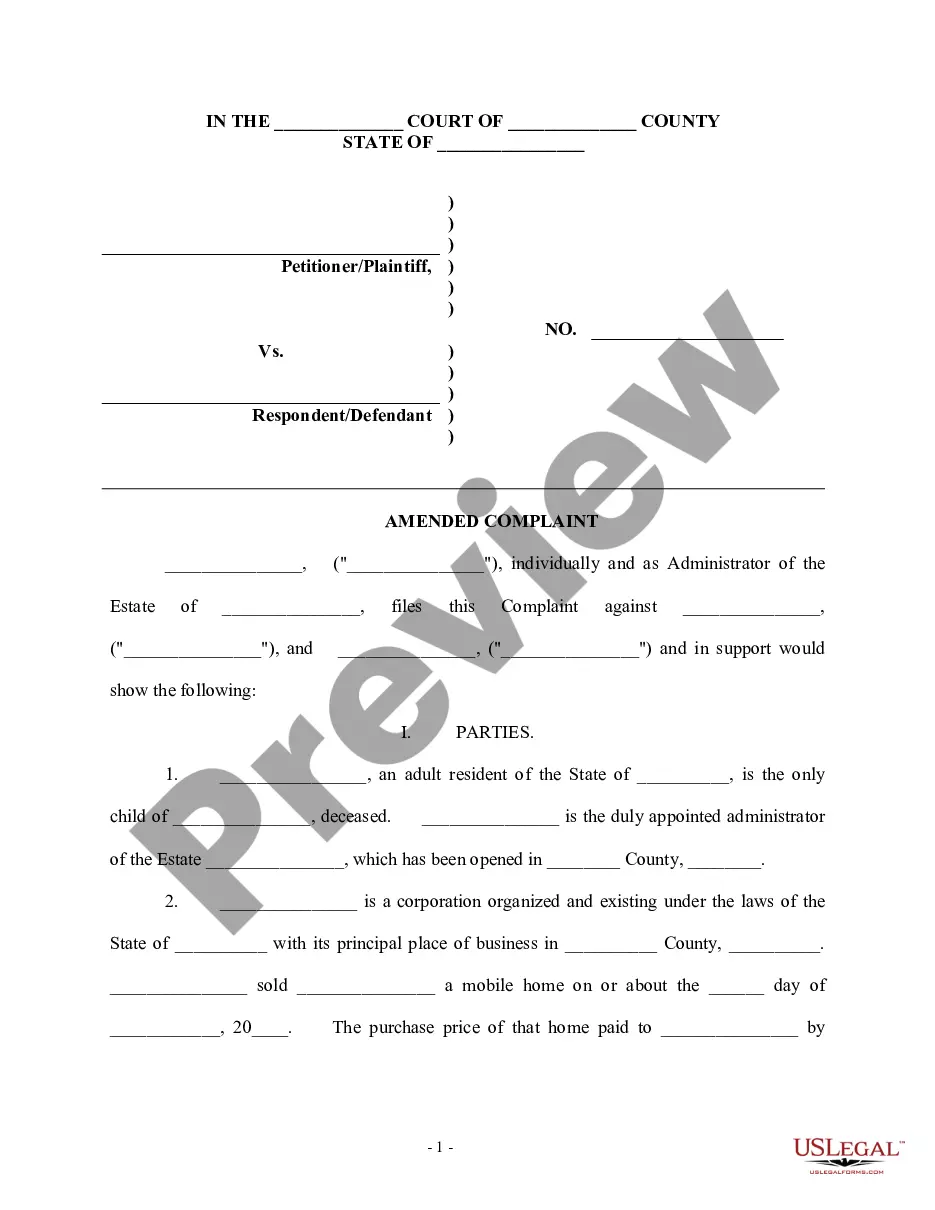
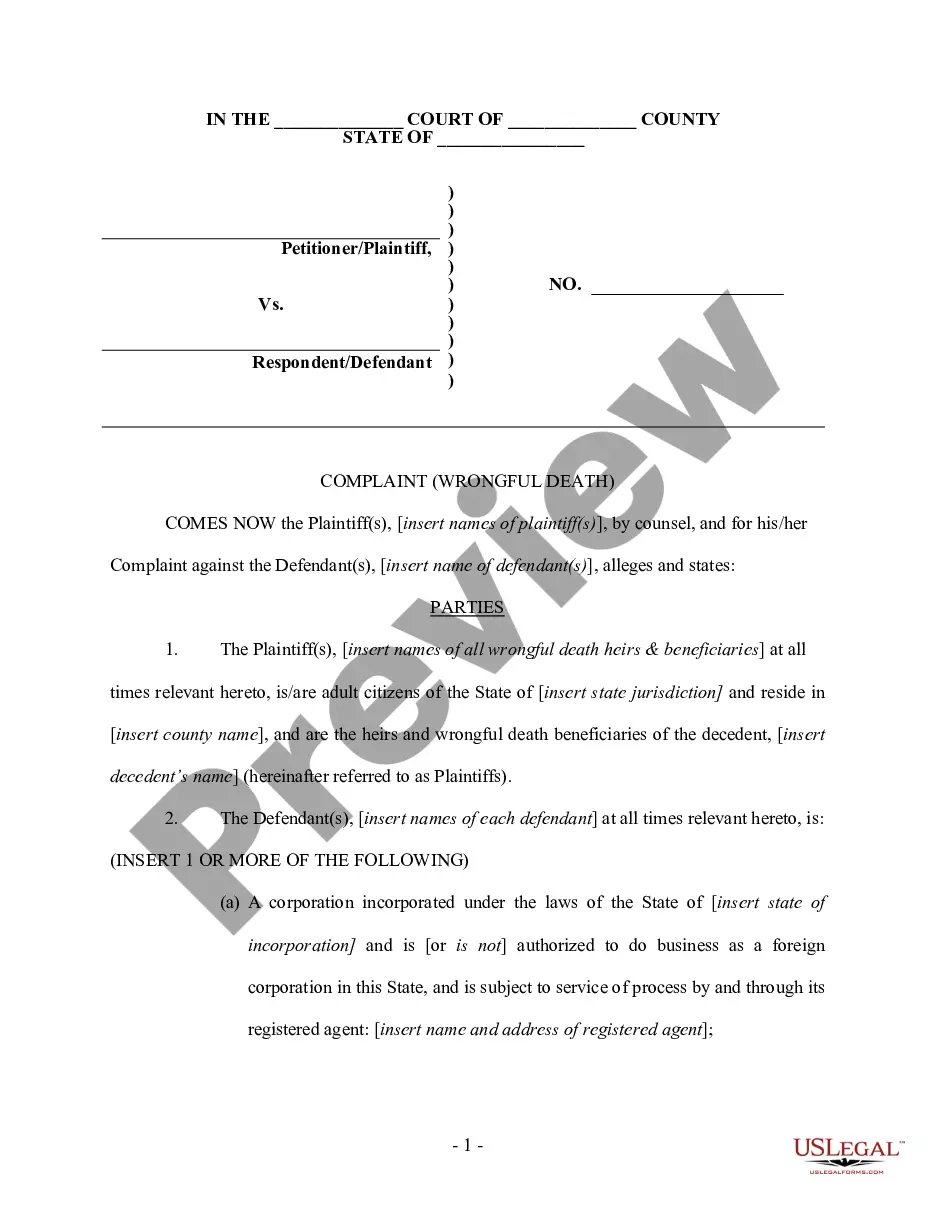
Get your form ready online
Our built-in tools help you complete, sign, share, and store your documents in one place.
Make edits, fill in missing information, and update formatting in US Legal Forms—just like you would in MS Word.
Download a copy, print it, send it by email, or mail it via USPS—whatever works best for your next step.
Sign and collect signatures with our SignNow integration. Send to multiple recipients, set reminders, and more. Go Premium to unlock E-Sign.
If this form requires notarization, complete it online through a secure video call—no need to meet a notary in person or wait for an appointment.
We protect your documents and personal data by following strict security and privacy standards.

Make edits, fill in missing information, and update formatting in US Legal Forms—just like you would in MS Word.

Download a copy, print it, send it by email, or mail it via USPS—whatever works best for your next step.

Sign and collect signatures with our SignNow integration. Send to multiple recipients, set reminders, and more. Go Premium to unlock E-Sign.

If this form requires notarization, complete it online through a secure video call—no need to meet a notary in person or wait for an appointment.

We protect your documents and personal data by following strict security and privacy standards.
Looking for another form?






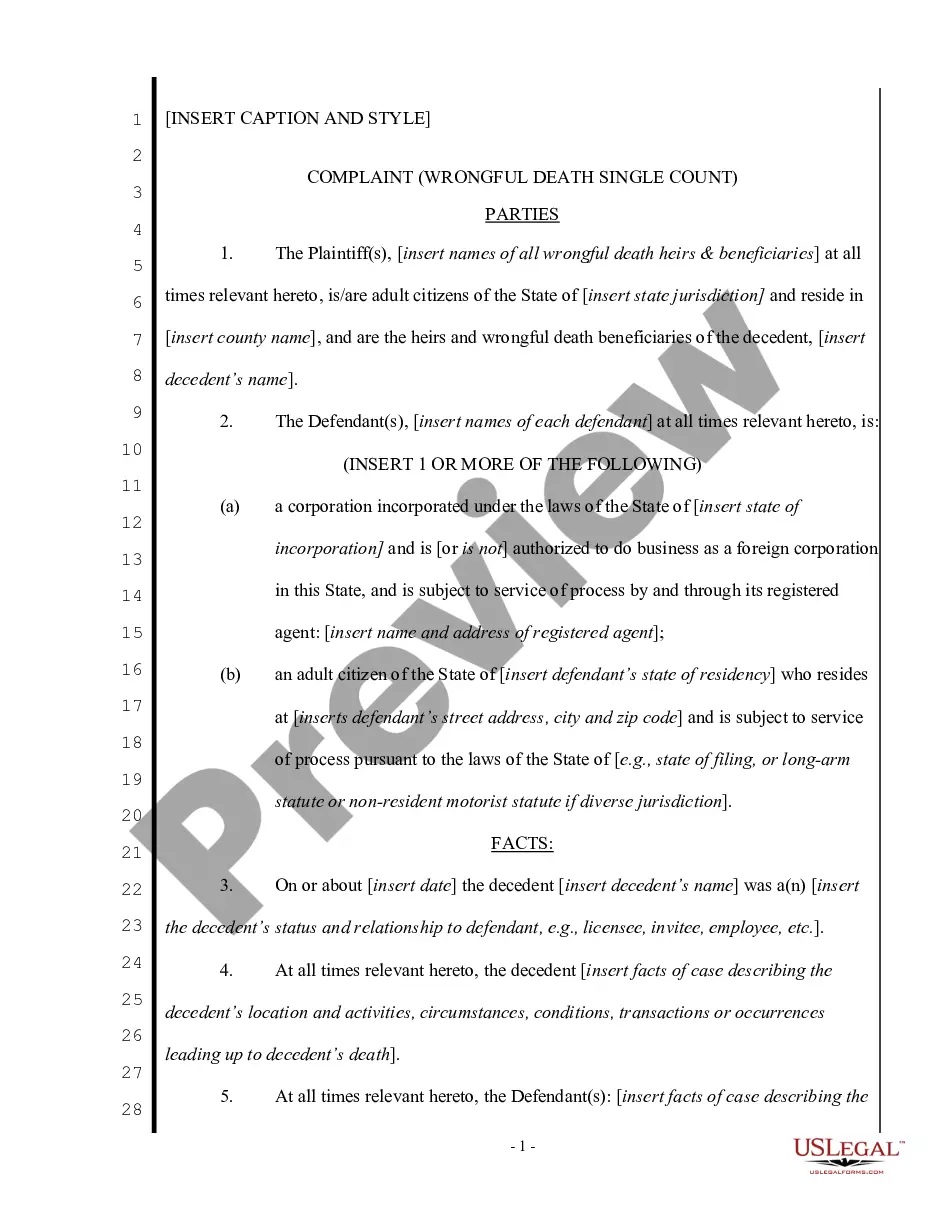
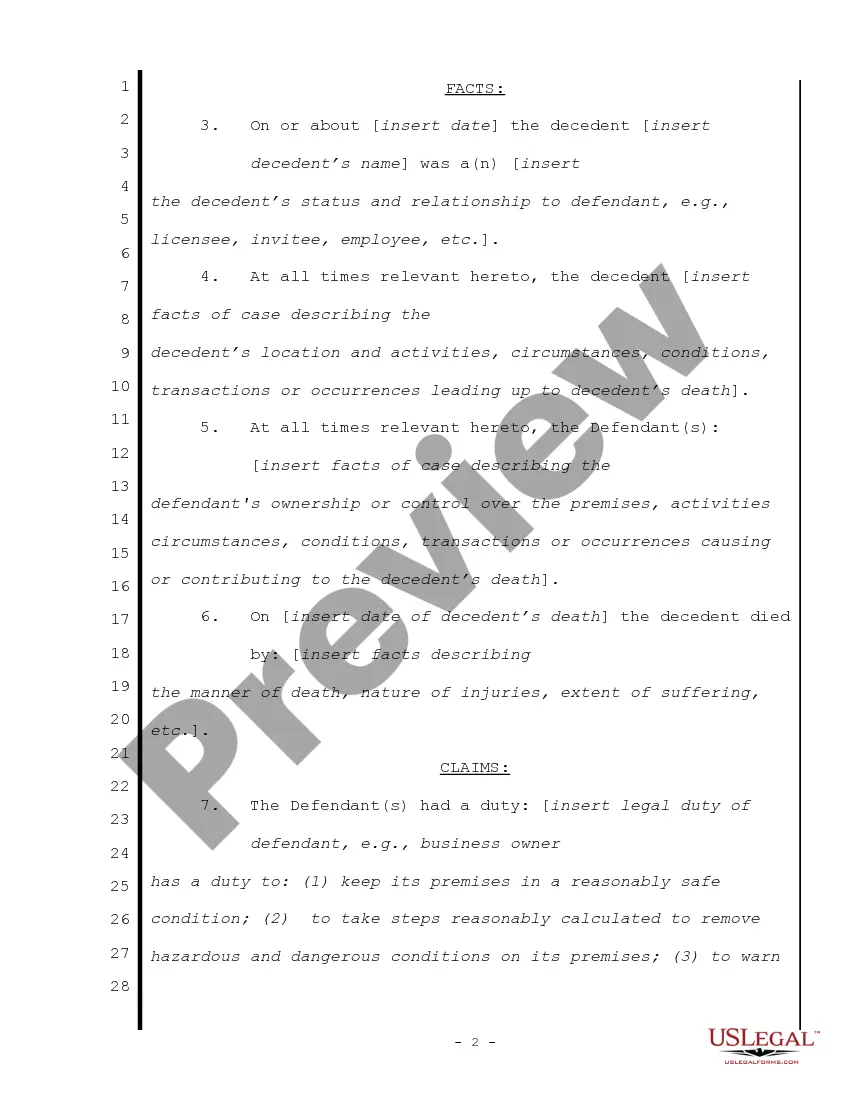
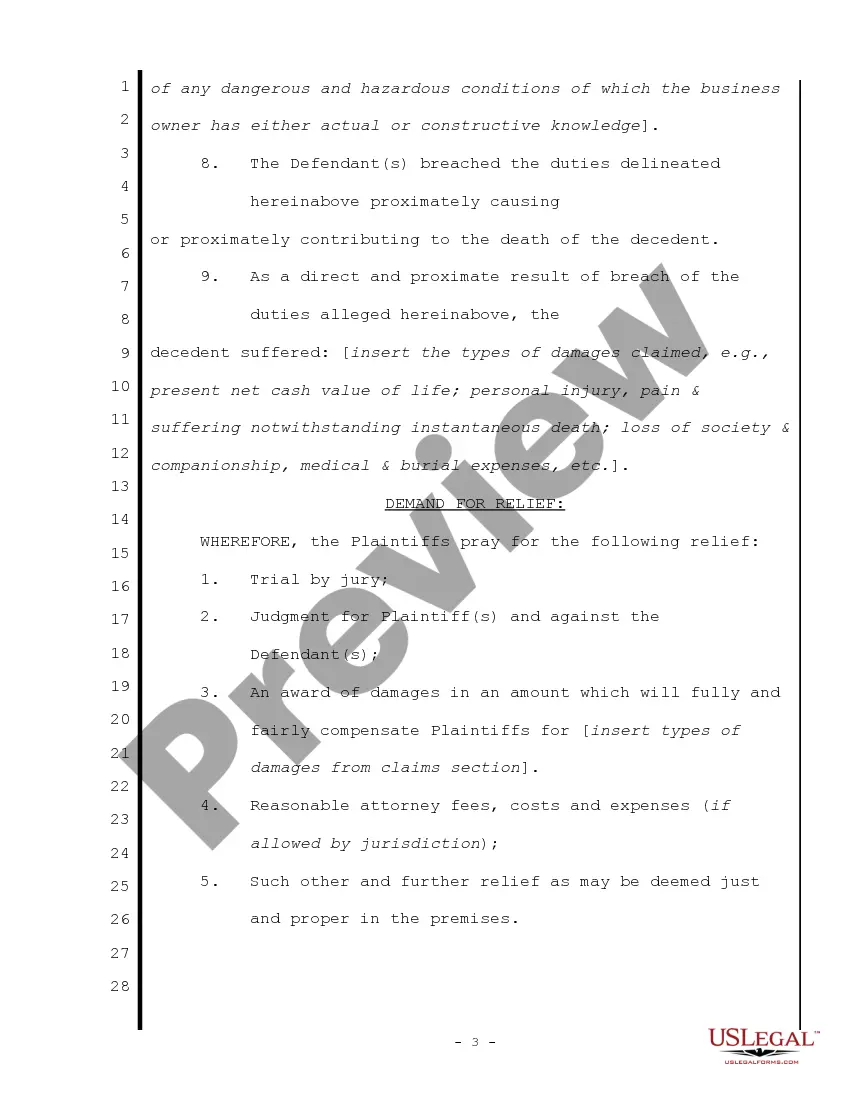
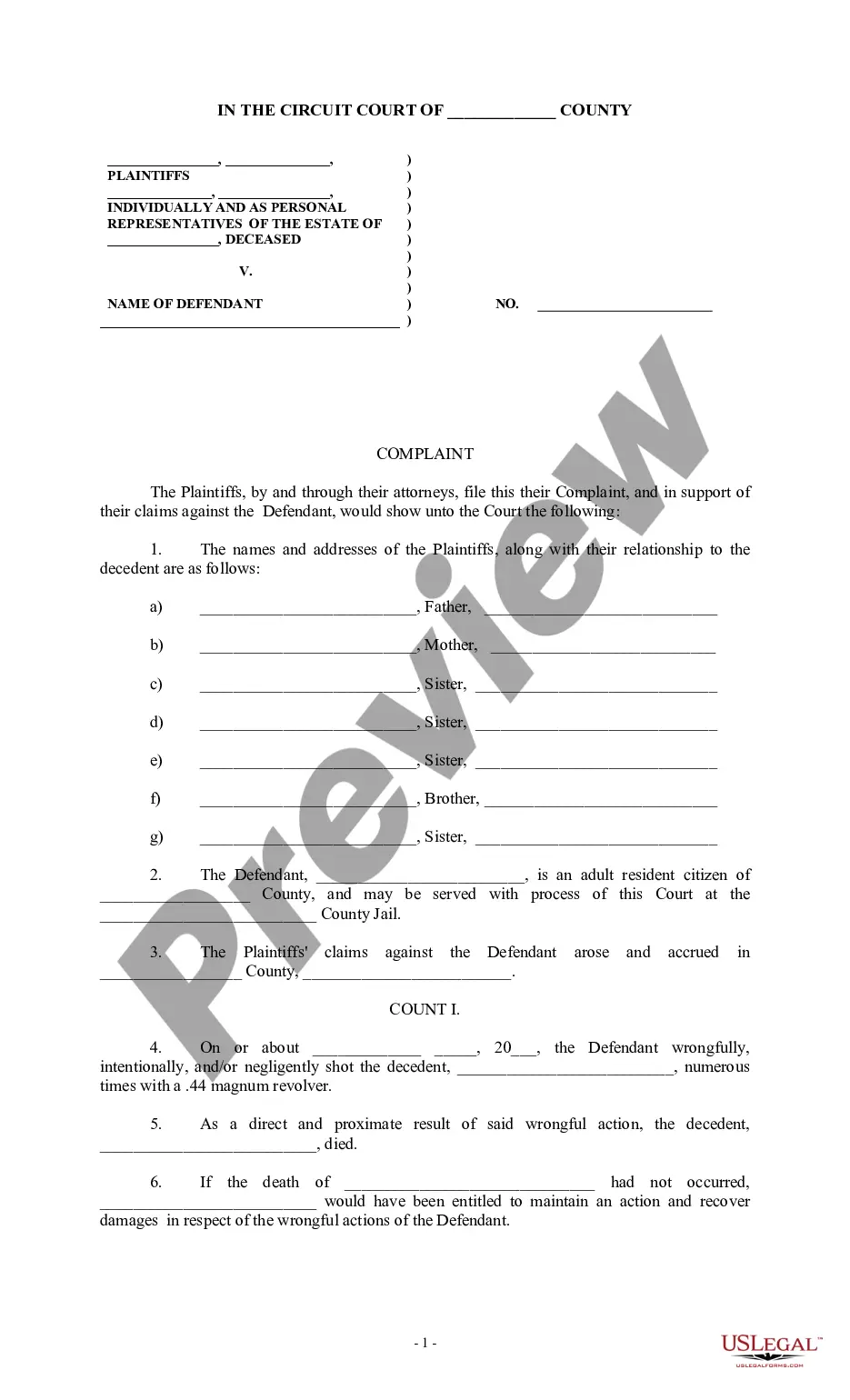
How to fill out Complaint For Wrongful Death - Single Count?
- If you're a returning user, log in to your account and access the form you need by clicking the Download button. Ensure your subscription is active; if it’s expired, renew it according to your plan.
- For first-time users, start by browsing the extensive library to find a form that suits your needs. Check the Preview mode and form description to guarantee compliance with your local jurisdiction.
- If the initial form doesn't meet your requirements, use the Search tab to locate another template that aligns with your needs.
- Once you've identified the correct form, click the Buy Now button to proceed. Choose a subscription plan that fits your needs and create an account for full access to the library.
- Complete your purchase by entering your payment details via credit card or PayPal.
- After the transaction is complete, download the form and save it on your device. You can revisit it anytime through the My Forms section in your account.
By leveraging US Legal Forms, you can streamline the preparation of legal documents with ease and confidence. The platform's robust collection and expert assistance ensure that your documents are accurate and compliant with legal standards.
Don't hesitate to take control of your legal needs. Start using US Legal Forms today for all your wrongful count actions and other legal documentation requirements.
Form popularity
FAQ
You can sue someone for defamation online if you can establish that they made false and damaging statements about you. The legal framework is the same as traditional defamation cases, focusing on the truthfulness of the statements. Engaging with seasoned professionals on wrongful count actions online with the law will clarify your options and the likelihood of a successful outcome.
Yes, the law of defamation applies online, just as it does in traditional media. The principles of defamation, including false statements and the impact on reputation, are also valid on digital platforms. Understanding wrongful count actions online with the law can help you protect your rights and take appropriate action.
Dealing with online defamation starts with gathering evidence and assessing your legal options. You may want to request a retraction from the offending party or seek legal counsel. Exploring wrongful count actions online with the law can provide you with a structured approach to address the situation effectively.
Proving online defamation involves demonstrating that the statement is false, defamatory, and published to a third party. Gather evidence like screenshots, timestamps, and witness testimonies to support your claim. Consulting with a legal representative skilled in wrongful count actions online with the law can help strengthen your case.
The consequences of online defamation can be severe, potentially damaging your reputation, relationships, and career. It can lead to emotional distress and financial loss. Seeking legal advice is crucial to navigate wrongful count actions online with the law and to understand the potential remedies available.
To stop online defamation, you can request the person to remove the false statements. If they refuse, document the defamation and consult with legal professionals to consider wrongful count actions online with the law. Sometimes, a cease-and-desist letter can also help to resolve the issue without going to court.
Yes, you can sue someone for spreading lies about you online under wrongful count actions online with the law. To file a lawsuit, you must show that the statements made about you are false, harmful, and made without legal privilege. Consider consulting with legal experts to understand your rights and options.
Employees discharged for reporting potential illegal acts may pursue legal action under the concept of whistleblower protection. This legal framework aims to protect individuals from retaliation in the workplace for speaking out against wrongdoing. If you find yourself facing wrongful count actions online with the law, understanding your rights is critical. US Legal Forms has resources that can support your whistleblower claims effectively.
The law prohibits discharging a worker when it is in retaliation for engaging in protected activities or based on discriminatory reasons. Furthermore, it protects workers who report violations or unsafe conditions. Familiarizing yourself with these legal protections can help you recognize wrongful count actions online with the law. US Legal Forms can assist you in navigating these complex legal landscapes.
A reason like an employee's refusal to perform illegal acts is generally considered a protected action and cannot lead to a lawful discharge. On the other hand, discharges based on legitimate business needs, like poor performance, are usually legal. Being informed about these legal standards can help prevent wrongful count actions online with the law. Platforms like US Legal Forms offer guidance on documenting these issues effectively.