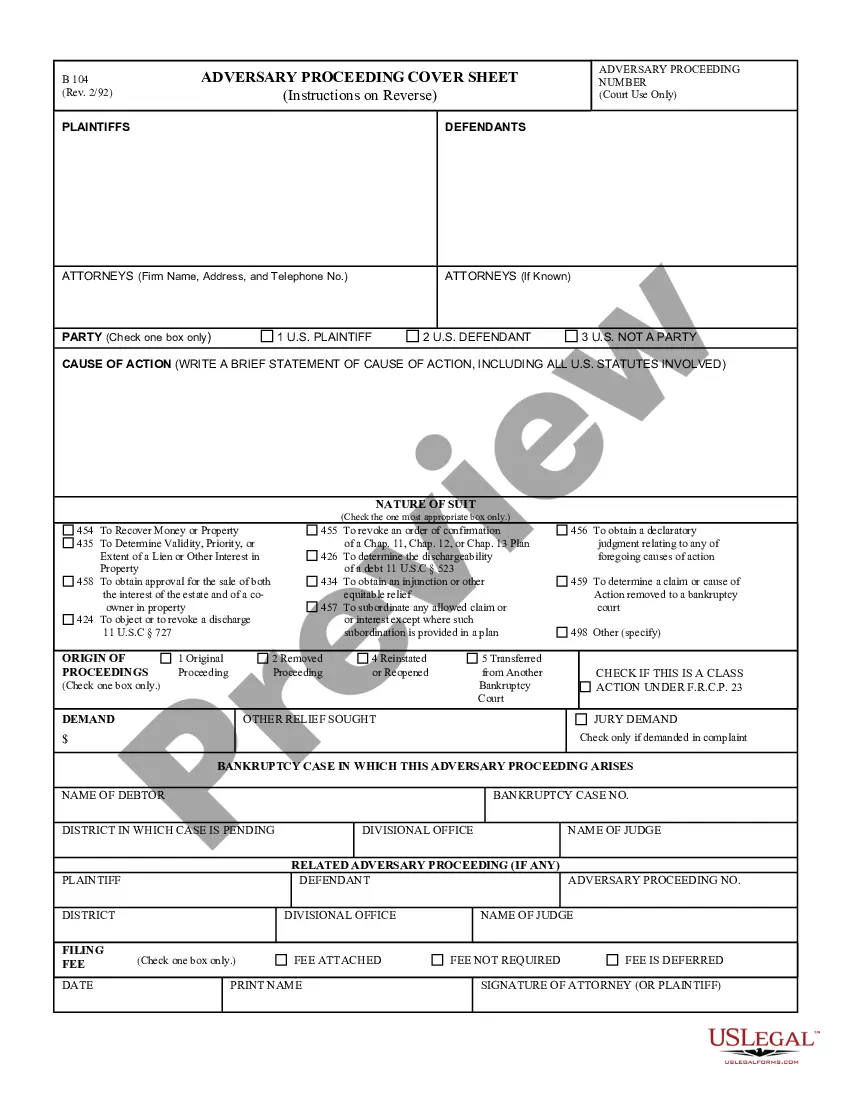
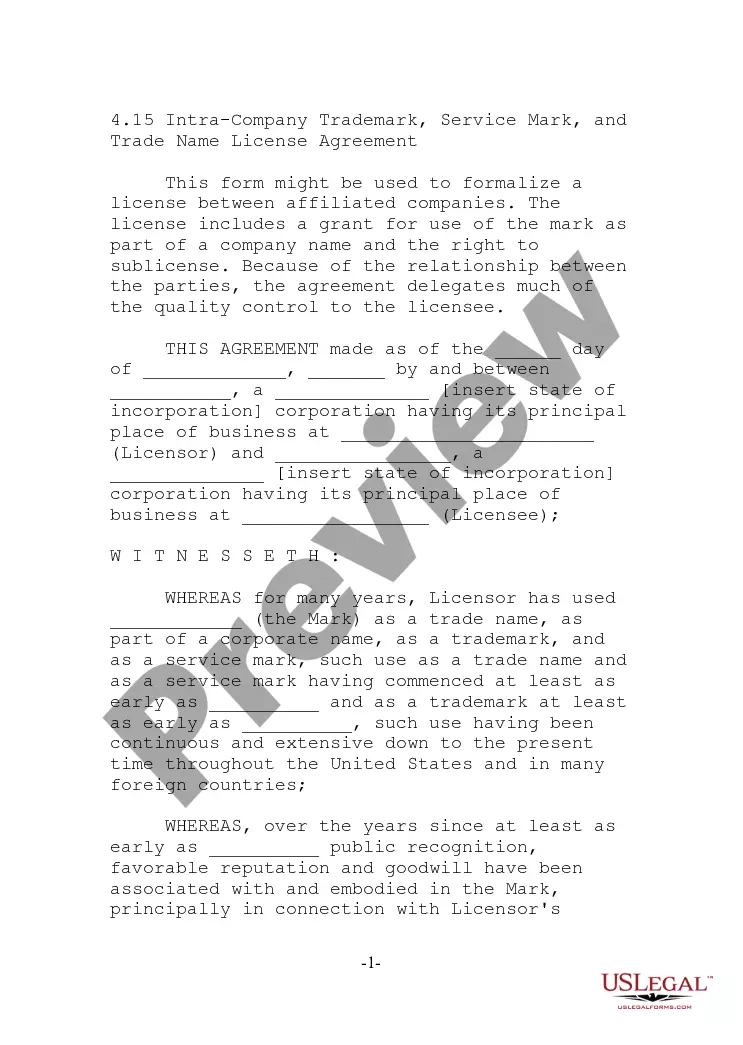
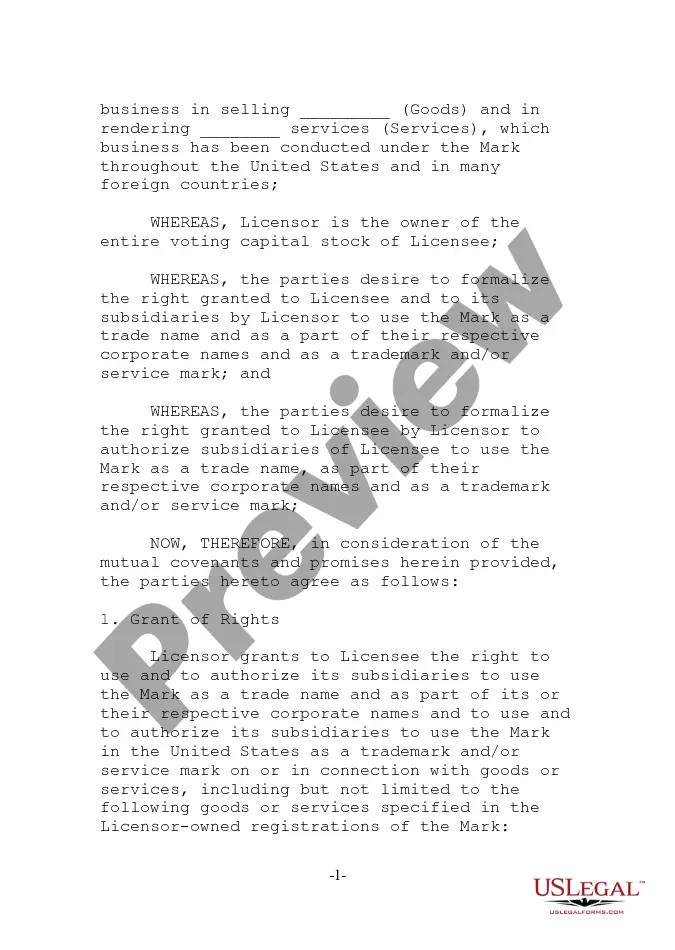
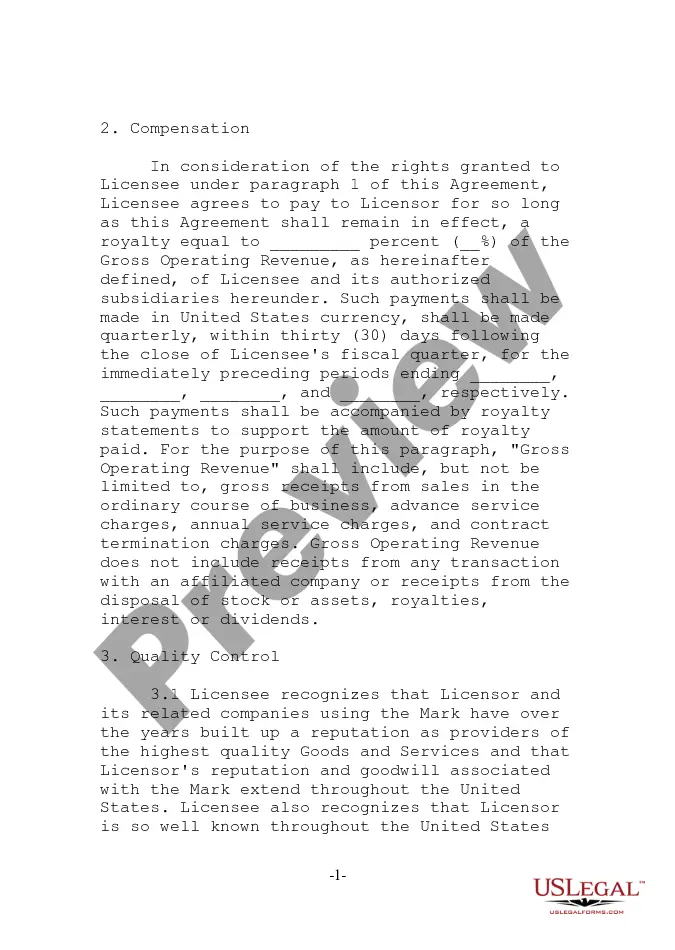
Intercompany Trademark License Agreement With Royalty
Description

Get your form ready online
Our built-in tools help you complete, sign, share, and store your documents in one place.
Make edits, fill in missing information, and update formatting in US Legal Forms—just like you would in MS Word.
Download a copy, print it, send it by email, or mail it via USPS—whatever works best for your next step.
Sign and collect signatures with our SignNow integration. Send to multiple recipients, set reminders, and more. Go Premium to unlock E-Sign.
If this form requires notarization, complete it online through a secure video call—no need to meet a notary in person or wait for an appointment.
We protect your documents and personal data by following strict security and privacy standards.

Make edits, fill in missing information, and update formatting in US Legal Forms—just like you would in MS Word.

Download a copy, print it, send it by email, or mail it via USPS—whatever works best for your next step.

Sign and collect signatures with our SignNow integration. Send to multiple recipients, set reminders, and more. Go Premium to unlock E-Sign.

If this form requires notarization, complete it online through a secure video call—no need to meet a notary in person or wait for an appointment.

We protect your documents and personal data by following strict security and privacy standards.
Looking for another form?
How to fill out Intra-Company Trademark, Service Mark, And Trade Name License Agreement?
There’s no longer a requirement to squander hours searching for legal documents to adhere to your local state guidelines.
US Legal Forms has gathered all of them in one location and made them easy to access.
Our site offers over 85,000 templates for any business and individual legal situations categorized by state and purpose.
Use the search bar above to look for another sample if the prior one didn’t meet your needs.
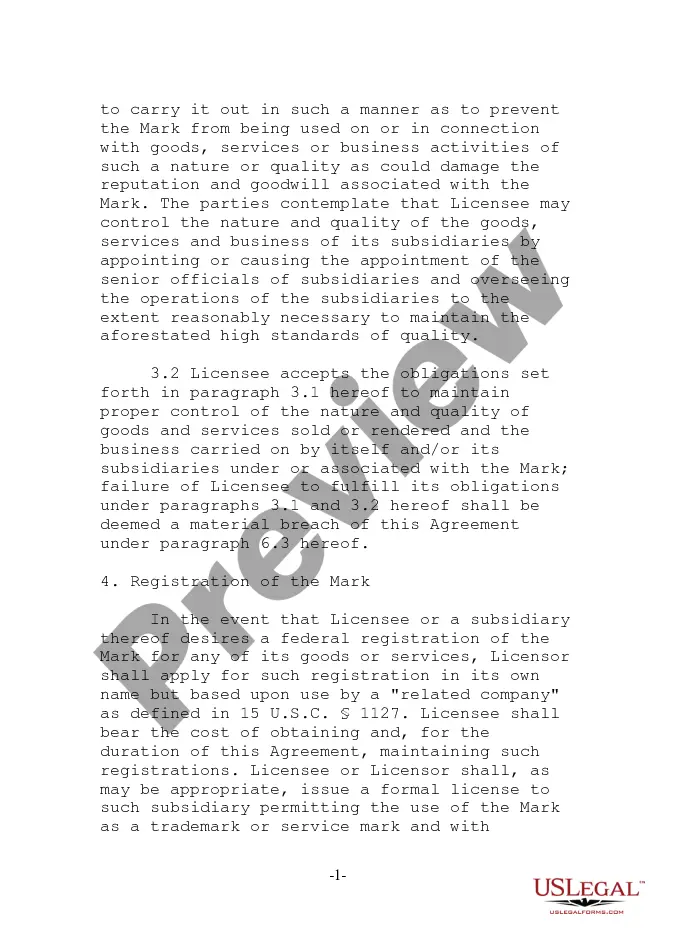
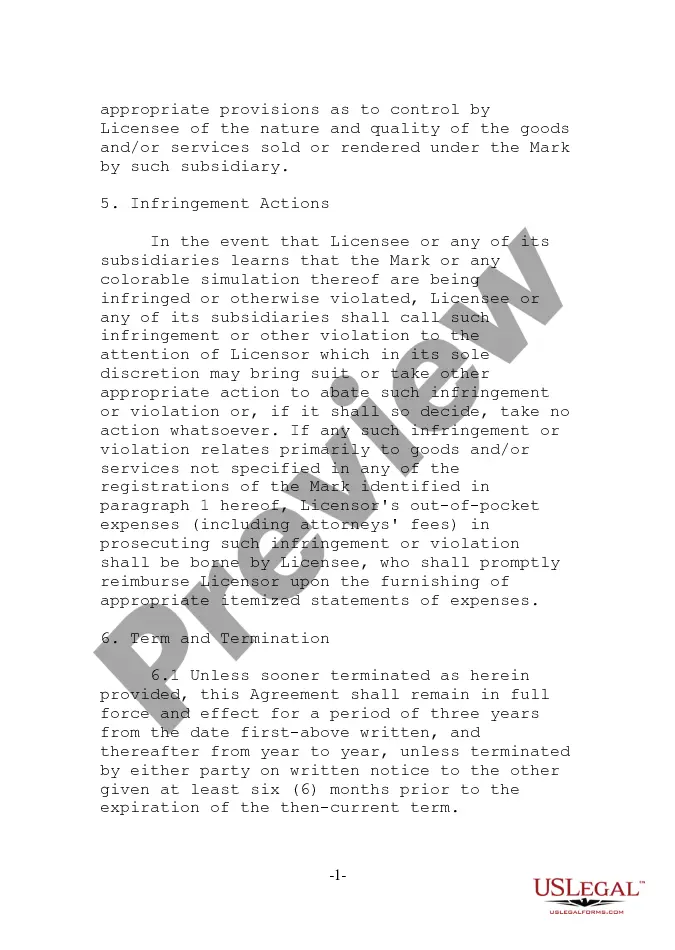
- All forms are properly drafted and confirmed for legitimacy, so you can have confidence in securing an up-to-date Intercompany Trademark License Agreement With Royalty.
- If you are acquainted with our service and already possess an account, you must verify that your subscription is active before obtaining any templates.
- Log In to your account, select the document, and click Download.
- You can also revisit all previously acquired documents at any time by navigating to the My documents tab in your profile.
- If you haven’t interacted with our service before, the process will take a few additional steps to finalize.
- Here’s how new users can locate the Intercompany Trademark License Agreement With Royalty in our library.
- Carefully read the page content to confirm it includes the sample you require.
- To do this, use the form description and preview options if available.
Form popularity
FAQ
Licensing agreements generate revenues, called royalties, earned by a company for allowing its copyrighted or patented material to be used by another company. Some examples of things that may be licensed include songs, sports team logos, intellectual property, software, and technology.
The royalty rate is calculated based on how much profit margin the IP contributes to revenue. For example, if the industry average profit margin is 15% and the patented technology accounts for 50% 60% of the product, then the royalty rate would be about 3.5% 4%.
The licensor and licensee will agree a trademark royalty rate in the licensing agreement. A trademark royalty rate is usually a percentage of sales generated from the use of the trademark for example, 5% of gross or net revenue, paid quarterly.
A license to a registered Trade Mark in India can be of two kinds- A simple license agreement which is with respect to permissive use and A Registered User wherein the license agreement is registered with the Registrar of Trade Marks. In this license certain rights accrue to the licensee as per statute.
The average royalty percentage applied to licensed services varies between 2-15 percent of the total buy, depending on the attractiveness of the property. Another (easier) way to work licensed service deals is to charge an annual fee for the licensee's right to use your intellectual property.