Dietitian Consultation
Description
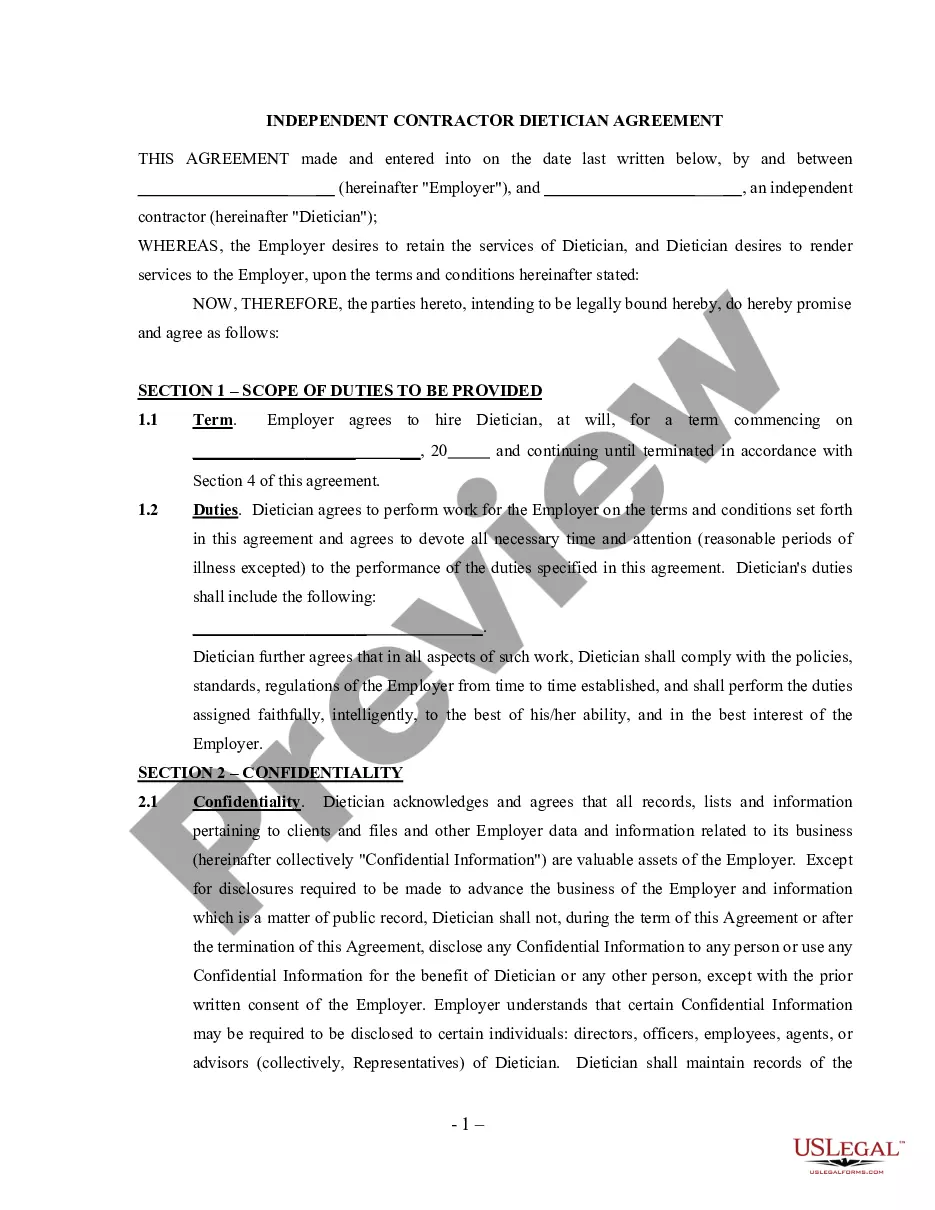
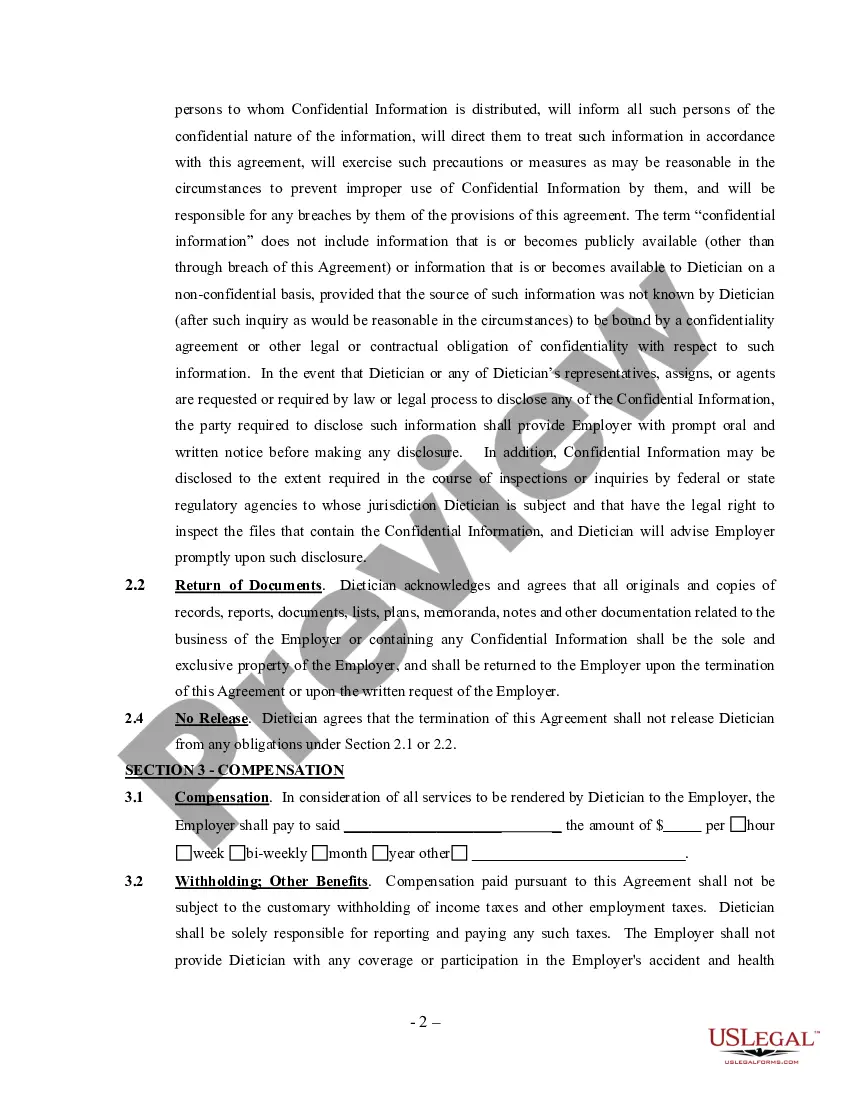
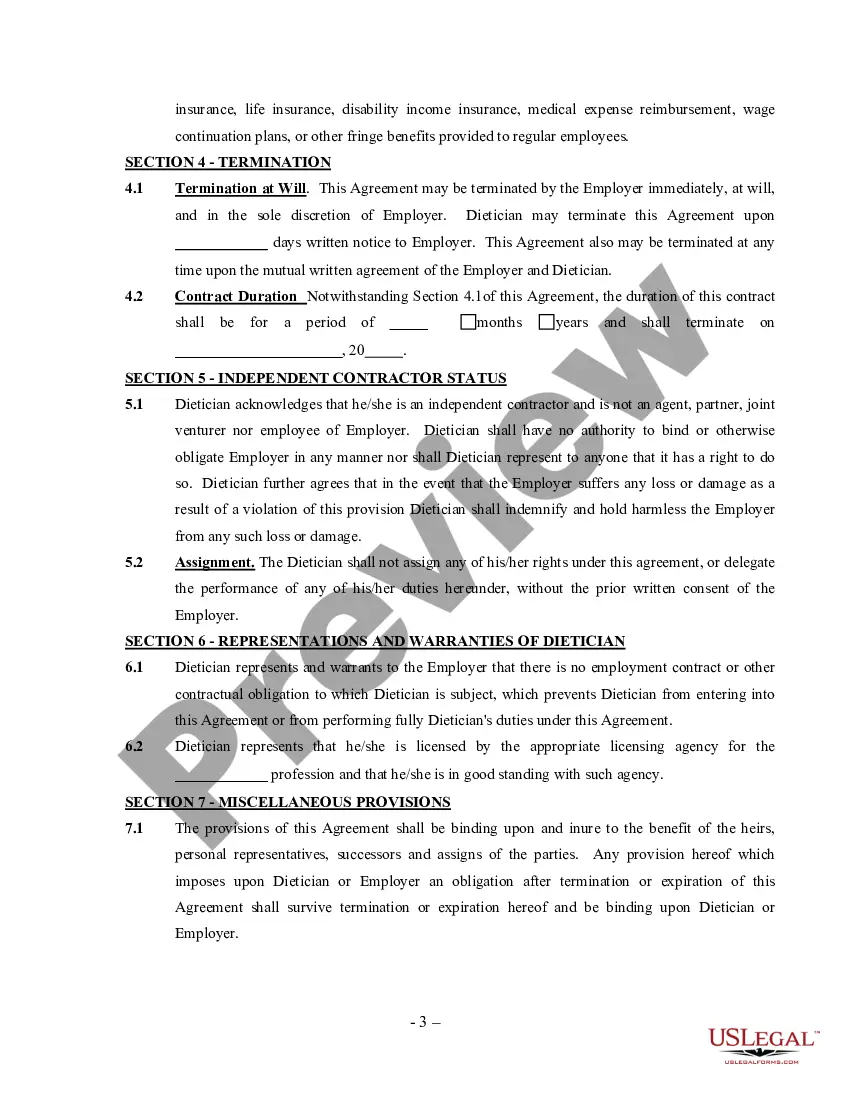
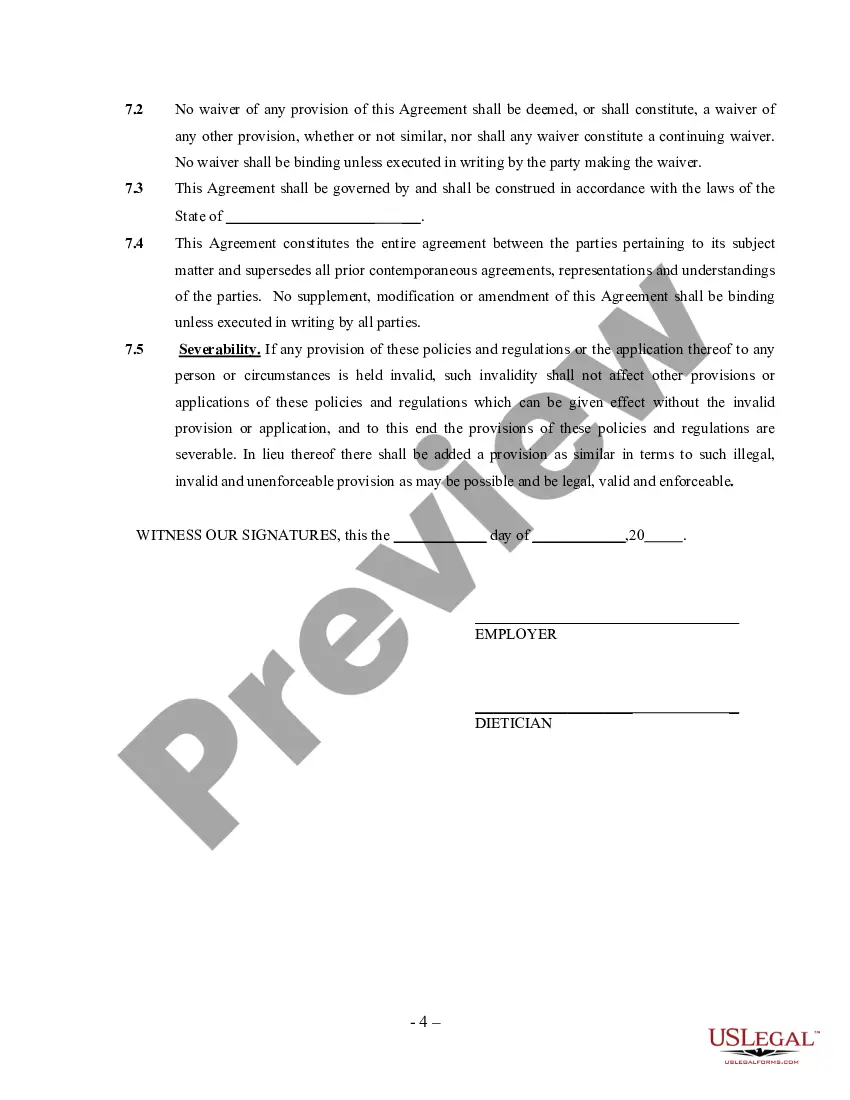
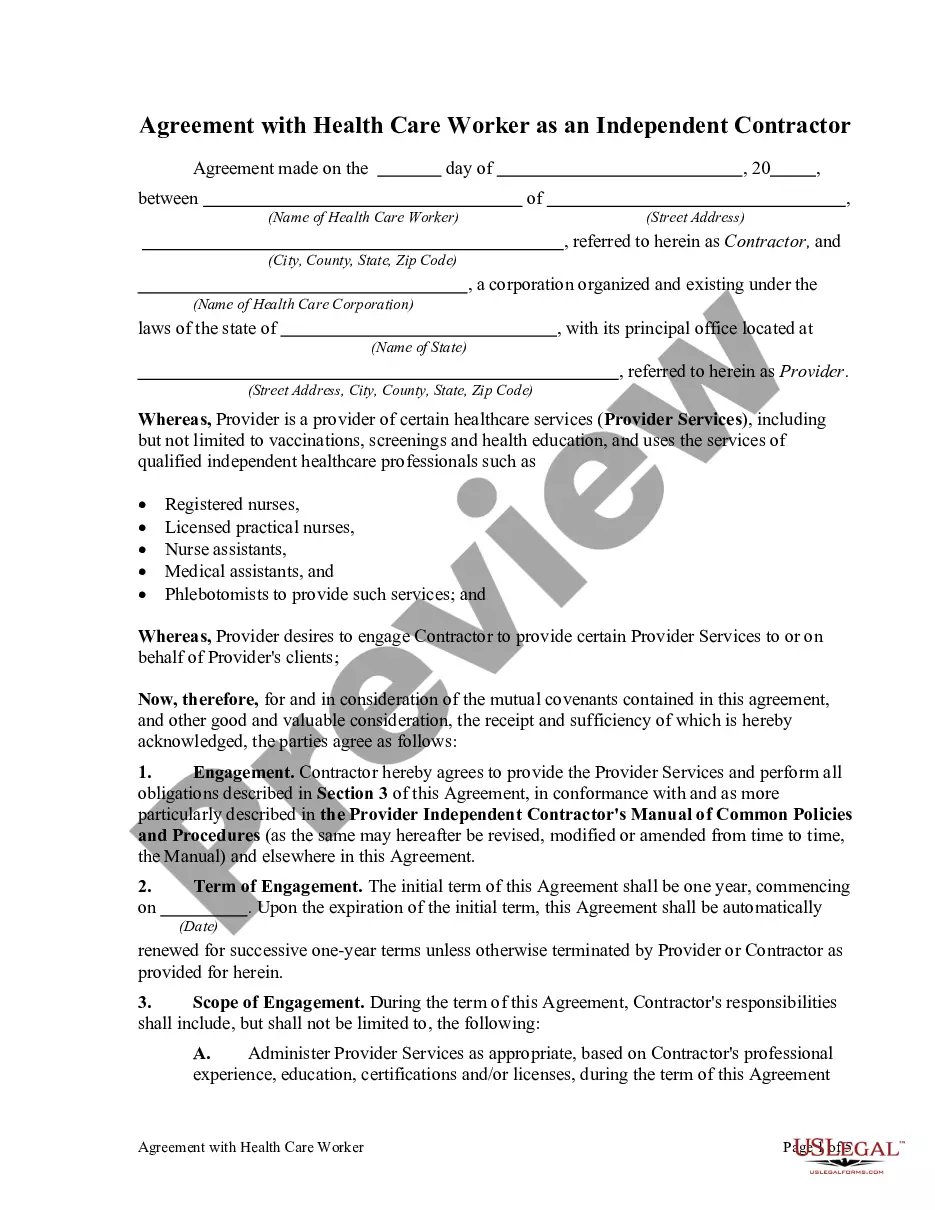
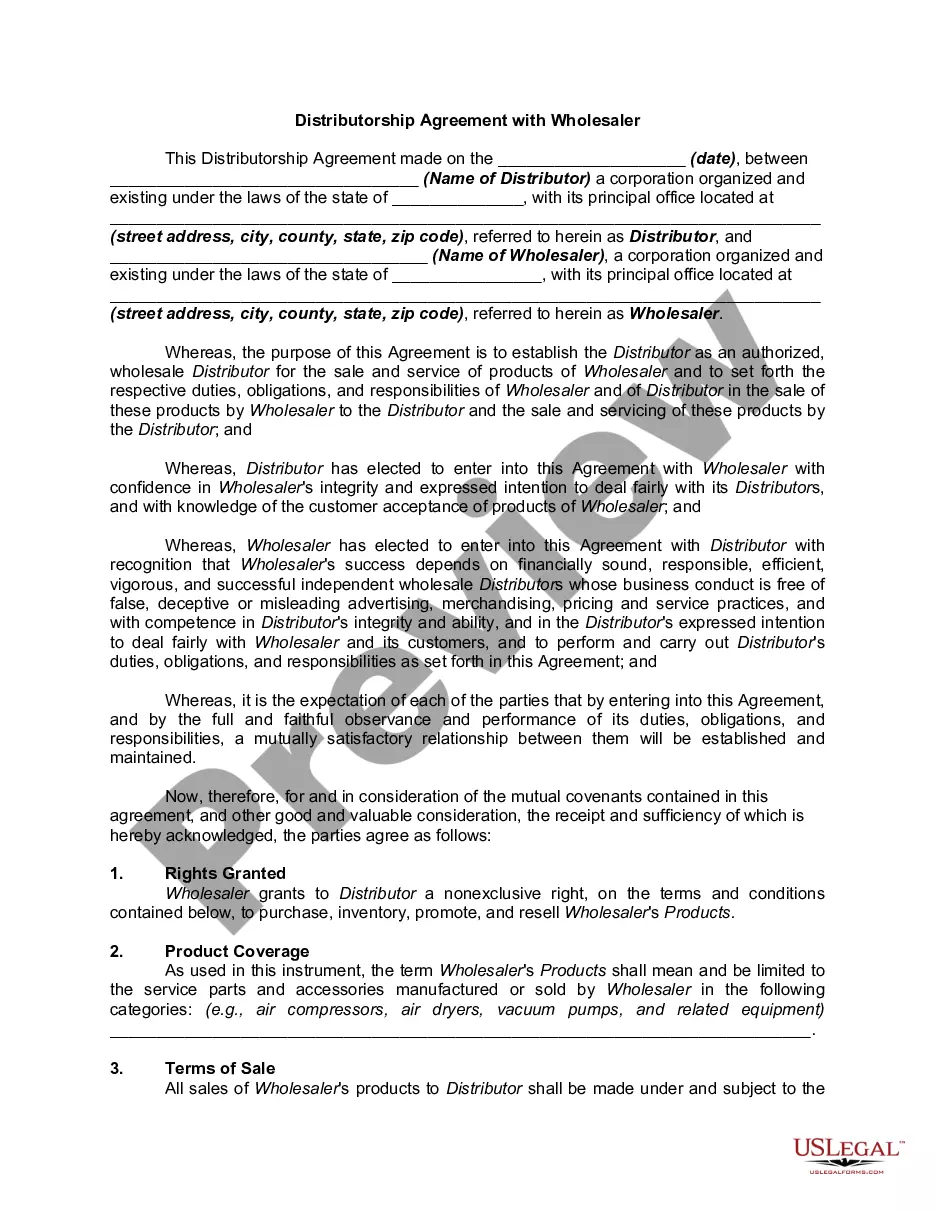
How to fill out Dietitian Agreement - Self-Employed Independent Contractor?
- If you're a returning user, log into your account and select the desired form template to download. Ensure your subscription is active; renew it if needed.
- For first-time users, start by reviewing the Preview mode and form descriptions to identify the proper template that fits your requirements and complies with local regulations.
- Search for additional templates if necessary. If the form doesn't meet your needs, utilize the Search tab to find a suitable option before proceeding.
- Purchase the document by clicking the Buy Now button, selecting your preferred subscription plan, and creating an account for access.
- Complete your purchase by entering your credit card information or opting for PayPal to finalize the subscription.
- Download your form and save it for future use. Access it at any time through the My Forms section in your profile.
In conclusion, US Legal Forms provides an invaluable resource for anyone seeking legal documents related to dietitian consultations. Whether you're a seasoned user or a first-timer, the platform's step-by-step process ensures a hassle-free experience.
Start your journey to better health and legal clarity today by accessing US Legal Forms!
Form popularity
FAQ
A consulting dietitian offers expert advice tailored to individual needs and goals, focusing on nutrition-related problems. They assess dietary habits, provide personalized meal plans, and offer ongoing support. Often, they work in various settings, including healthcare facilities, private practice, or remote platforms. If you are seeking professional guidance to better manage your nutrition, connecting with a consulting dietitian can be a valuable step toward improving your health.
Hiring a dietitian can provide you with specialized knowledge and tools to make informed food choices. If you are struggling with specific health conditions, weight management, or dietary restrictions, a dietitian consultation can be highly beneficial. Their expertise allows you to navigate complex dietary needs, helping you reach your health goals more effectively. Investing in their services can ultimately lead to lasting improvements in your nutrition.
A dietetic consultation involves an assessment of your dietary habits and nutritional needs by a qualified dietitian. During this session, you will discuss your goals, challenges, and any health concerns. The dietitian uses this information to create a tailored nutrition plan that fits your lifestyle. This process helps you understand how food impacts your health and well-being.
Yes, you can often see a dietitian without a referral. Many dietitians are available for direct appointments, which can streamline your path to better nutrition. If you're looking for guidance, a dietitian consultation can provide personalized advice tailored to your health needs. Always check with your chosen dietitian to confirm their policies regarding referrals and appointments.
Yes, you can see a dietitian without a referral, depending on your local laws and health insurance network. Many dietitians accept self-referrals, allowing you to book an appointment directly. This flexibility simplifies the process, letting you access nutritional advice when you need it. Engaging in a dietitian consultation can significantly enhance your diet and overall wellness.
To receive a referral to a dietitian, start by discussing your dietary needs with your primary care doctor. They can assess your situation and recommend a dietitian specific to your needs. Additionally, some health insurance plans may have specific procedures for obtaining referrals, so it's beneficial to review your policy details. A proper dietitian consultation can effectively guide you toward your health goals.
You do not necessarily need a referral to meet with a dietitian. Many individuals can schedule a dietitian consultation directly, especially in states that allow direct access. However, having a referral may offer some advantages, like insurance coverage for the consultation. Always check your insurance policy for specific guidelines.
During a dietitian consultation, you will discuss your health history, current eating habits, and goals. The dietitian will assess your dietary needs and may provide an initial meal plan or dietary modifications. This appointment is an opportunity to ask questions and clarify any concerns about nutrition. Afterward, expect follow-up guidance to help you stay on track with your health journey.
Filling out a nutritional assessment form may seem challenging, but it's straightforward. Begin by honestly answering questions about your dietary habits, lifestyle, and any health issues. Include preferences and dislikes, as this information greatly assists in creating a personalized dietitian consultation plan. Accurate details help your dietitian build a clearer picture of your nutritional needs.
Preparing for a dietitian consultation is essential for maximizing your time. Start by tracking your food intake for a few days, including portion sizes and meal times. Bring any relevant medical history, medications, and a list of your health goals. Being organized will help your dietitian tailor recommendations to meet your specific needs.