Common Law Requirements For A Valid Listing Agreement
Description

Get your form ready online
Our built-in tools help you complete, sign, share, and store your documents in one place.
Make edits, fill in missing information, and update formatting in US Legal Forms—just like you would in MS Word.
Download a copy, print it, send it by email, or mail it via USPS—whatever works best for your next step.
Sign and collect signatures with our SignNow integration. Send to multiple recipients, set reminders, and more. Go Premium to unlock E-Sign.
If this form requires notarization, complete it online through a secure video call—no need to meet a notary in person or wait for an appointment.
We protect your documents and personal data by following strict security and privacy standards.

Make edits, fill in missing information, and update formatting in US Legal Forms—just like you would in MS Word.

Download a copy, print it, send it by email, or mail it via USPS—whatever works best for your next step.

Sign and collect signatures with our SignNow integration. Send to multiple recipients, set reminders, and more. Go Premium to unlock E-Sign.

If this form requires notarization, complete it online through a secure video call—no need to meet a notary in person or wait for an appointment.

We protect your documents and personal data by following strict security and privacy standards.
Looking for another form?






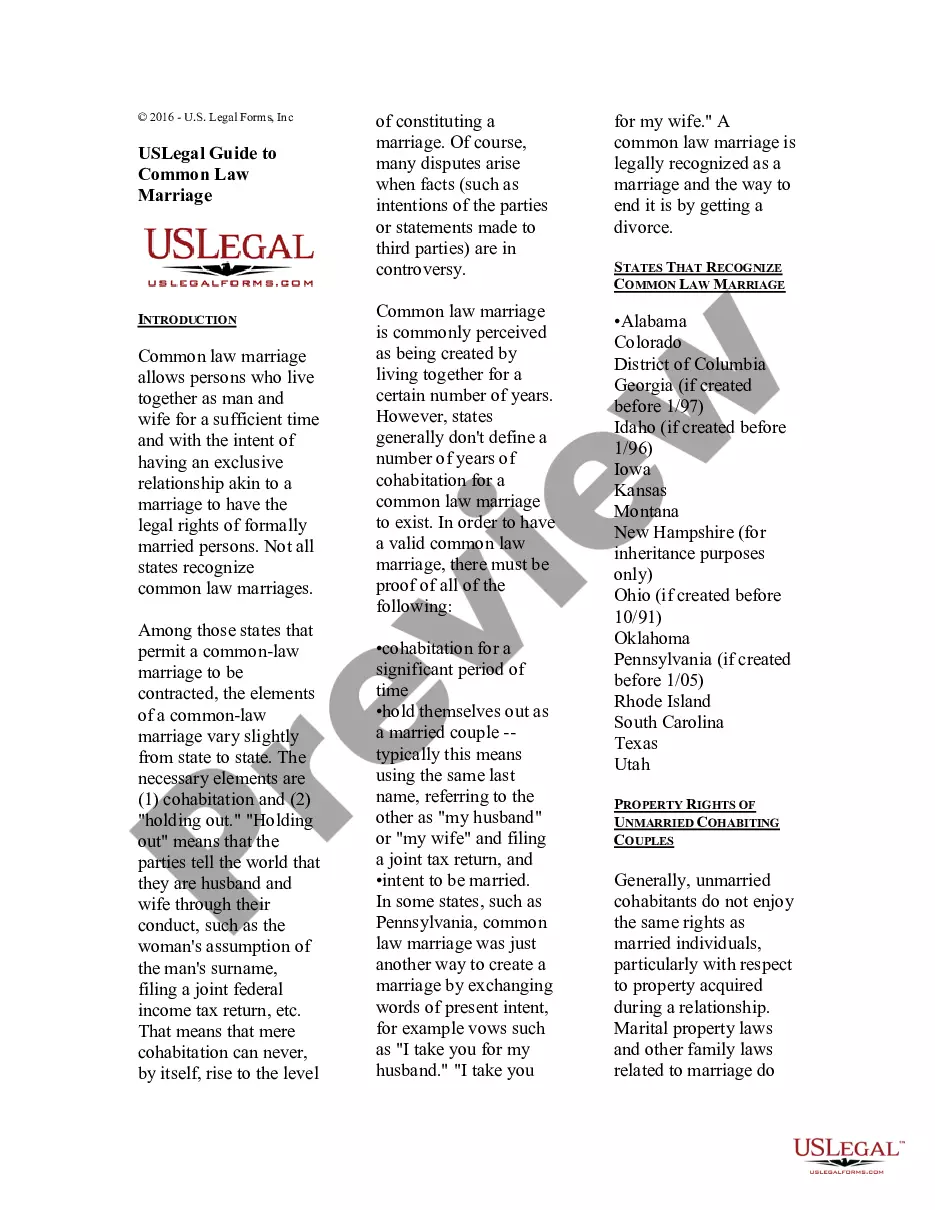
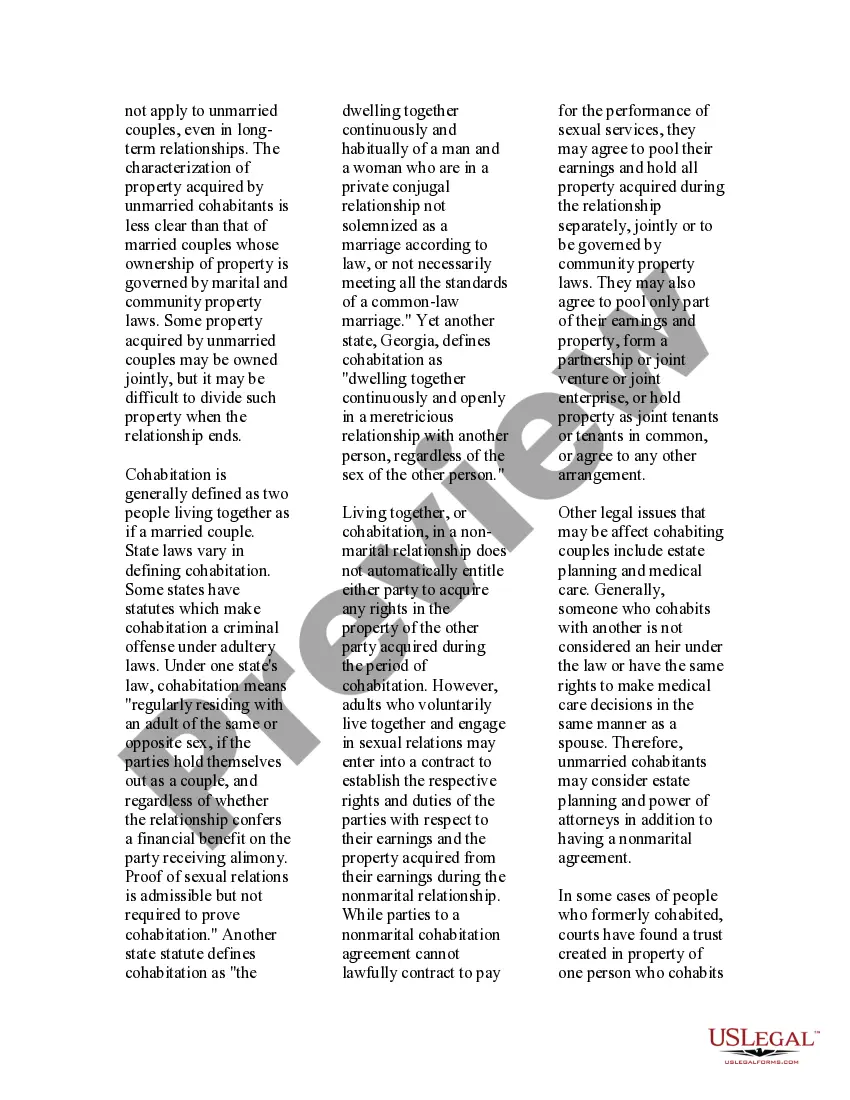
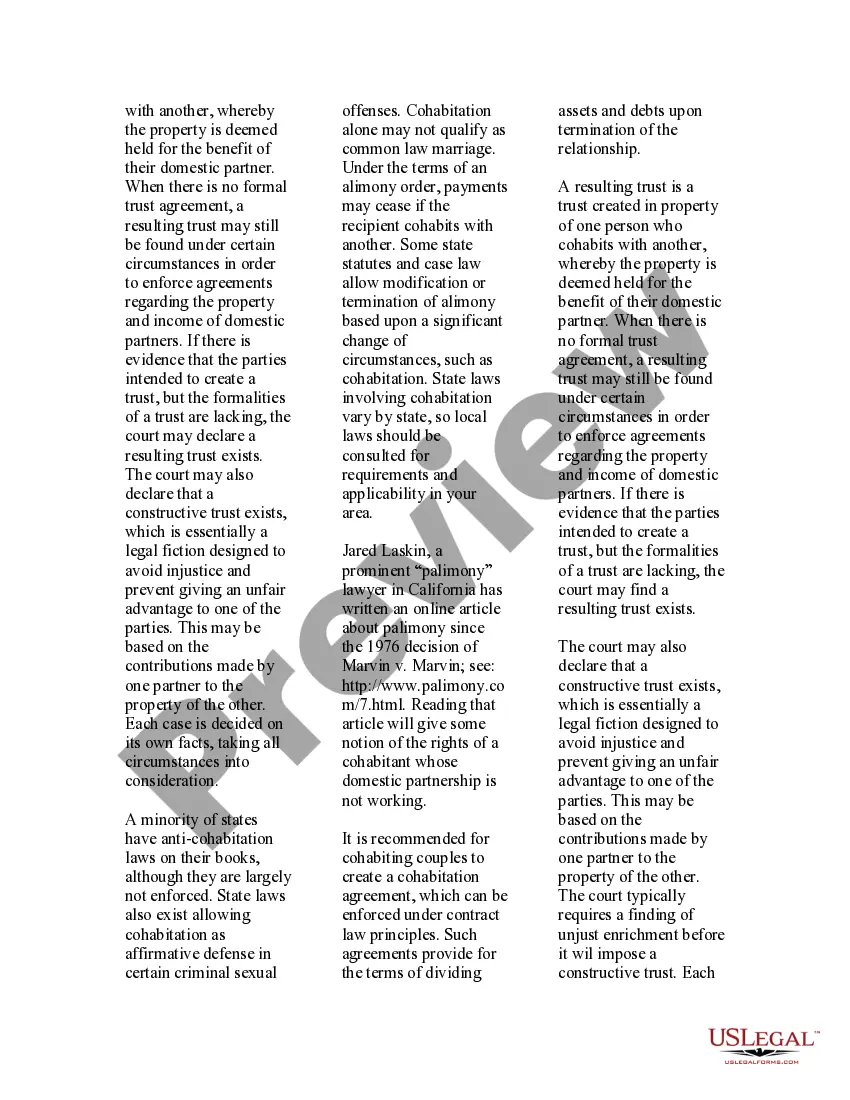
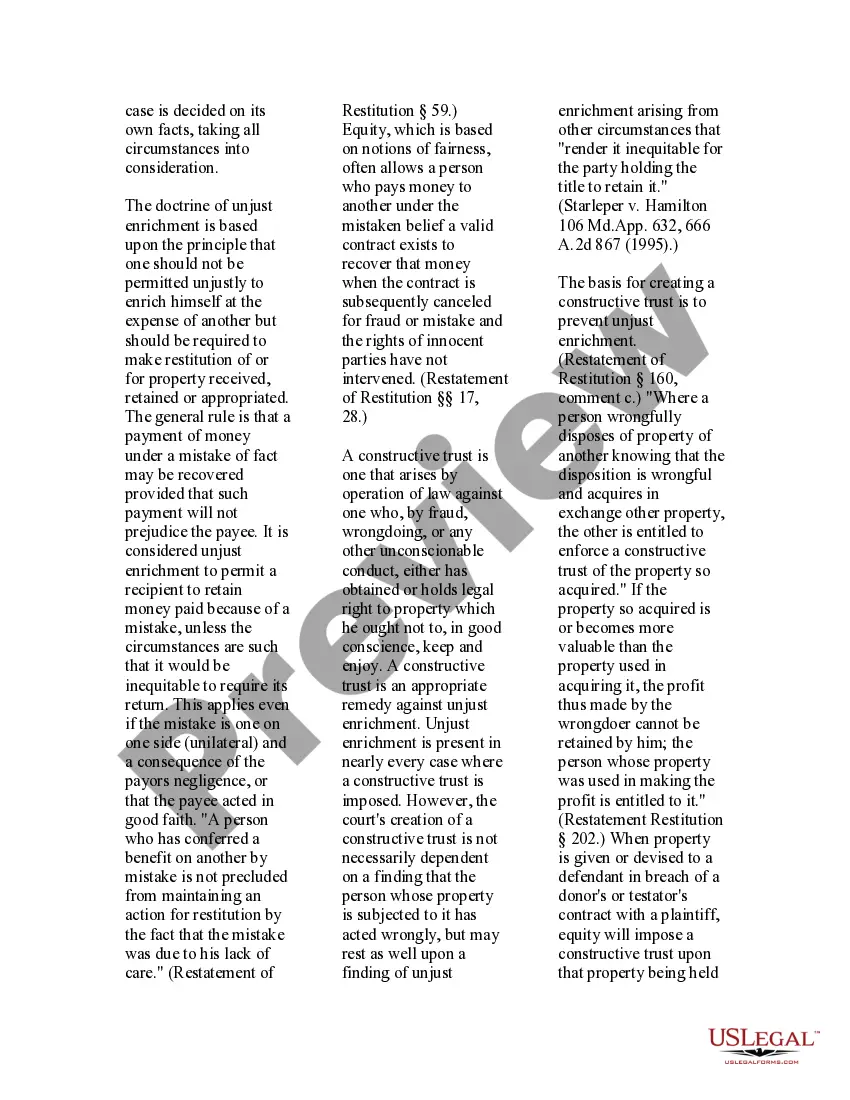
How to fill out USLegal Guide To Common Law Marriage?
Finding a reliable source to obtain the latest and most pertinent legal templates is a significant part of navigating red tape.
Selecting appropriate legal documents requires accuracy and careful consideration, which is why it is essential to gather samples of Common Law Requirements For A Valid Listing Agreement exclusively from trusted providers, such as US Legal Forms.
After obtaining the form on your device, you can modify it using the editor or print it out to fill it in by hand. Eliminate the stress associated with your legal paperwork. Explore the extensive US Legal Forms library to discover legal samples, evaluate their applicability to your situation, and download them instantly.
- Use the library navigation or search box to find your template.
- Examine the form’s description to ensure it meets the requirements of your state and locality.
- Preview the form, if possible, to confirm it is indeed the document you are looking for.
- Return to the search and find an appropriate template if the Common Law Requirements For A Valid Listing Agreement does not meet your specifications.
- Once you are confident about the form’s relevance, download it.
- If you are a registered user, click Log in to verify your identity and access your selected forms in My documents.
- If you do not yet have an account, click Buy now to obtain the template.
- Choose the pricing plan that fits your needs.
- Proceed with the registration to complete your purchase.
- Finish your purchase by selecting a payment method (credit card or PayPal).
- Select the format for downloading Common Law Requirements For A Valid Listing Agreement.
Form popularity
FAQ
For a contract to hold validity under common law, it must include an offer, acceptance, consideration, and mutual intent to enter the agreement. Each party's commitment to uphold their end of the bargain is crucial. If these components are missing, the agreement may not be enforceable. By adhering to these common law requirements for a valid listing agreement, you can create a solid foundation for your contractual relationships.
A common law contract requires several key elements: an offer, acceptance, consideration, capacity, and legality of purpose. Each party involved must have the legal ability to enter into the agreement and fully comprehend its terms. Additionally, the contract's subject matter must be lawful to ensure validity. Understanding these elements helps you meet the common law requirements for a valid listing agreement effectively.
To ensure a contract is legally binding, the common law requirements include an offer, acceptance, consideration, mutual consent, and a lawful purpose. Each party must understand and agree to the terms outlined, demonstrating intent to create a legal obligation. Without these elements, a valid listing agreement cannot be formed. By following these common law requirements for a valid listing agreement, you can secure a legally enforceable contract.
The most common complaint filed against realtors often involves issues related to misrepresentation or failure to disclose important information. Clients may feel that they were not fully informed about property conditions or contractual obligations. Being aware of these concerns and adhering to the common law requirements for a valid listing agreement can help you maintain trust and transparency with your clients.
A listing agreement becomes legally binding when it includes the essential elements of a contract, such as offer, acceptance, and consideration. Additionally, both parties must have the legal capacity to enter into the agreement, and it must serve a lawful purpose. By understanding the common law requirements for a valid listing agreement, you can ensure your contracts hold up in court.
Two crucial elements for a real estate contract to be valid are capacity and lawful purpose. Capacity refers to the legal ability of both parties to enter into a contract, while lawful purpose means that the agreement must be for a legitimate reason. Knowing these common law requirements for a valid listing agreement can empower you to create enforceable contracts.
For a listing agreement to be considered valid, it must meet specific legal criteria, including mutual consent, a lawful object, and consideration. This means that both parties must agree to the terms, the agreement must involve a legal transaction, and something of value must be exchanged. Familiarizing yourself with the common law requirements for a valid listing agreement can help you avoid disputes later.