Disabled Accommodation
Description
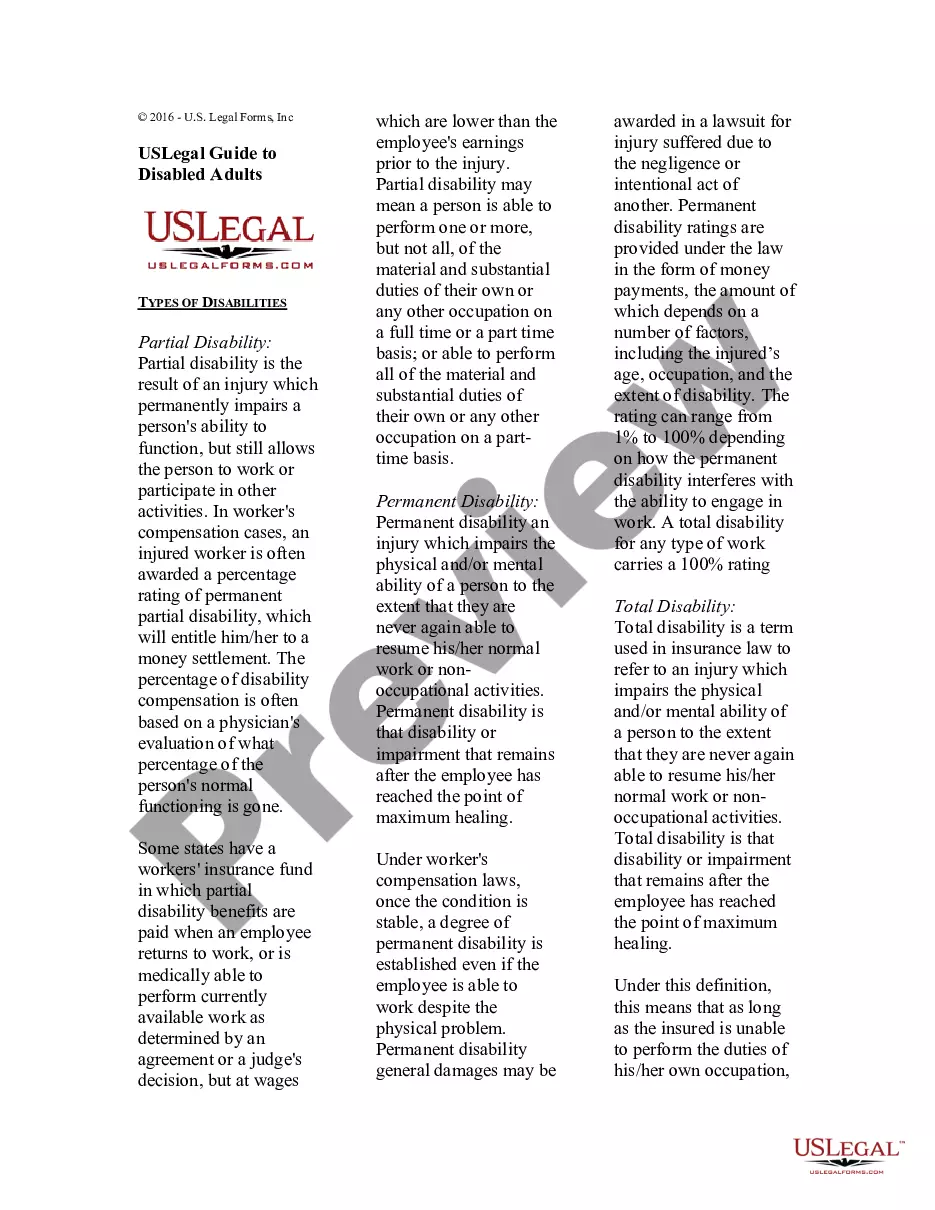
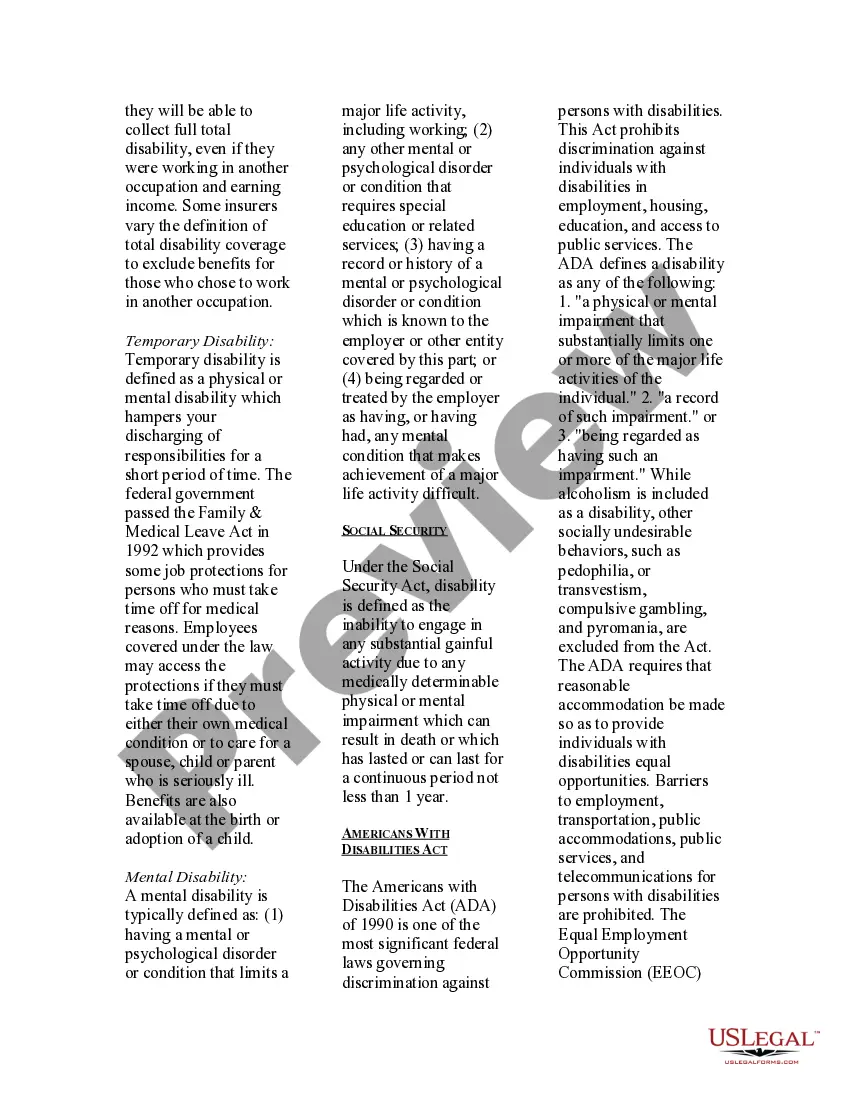
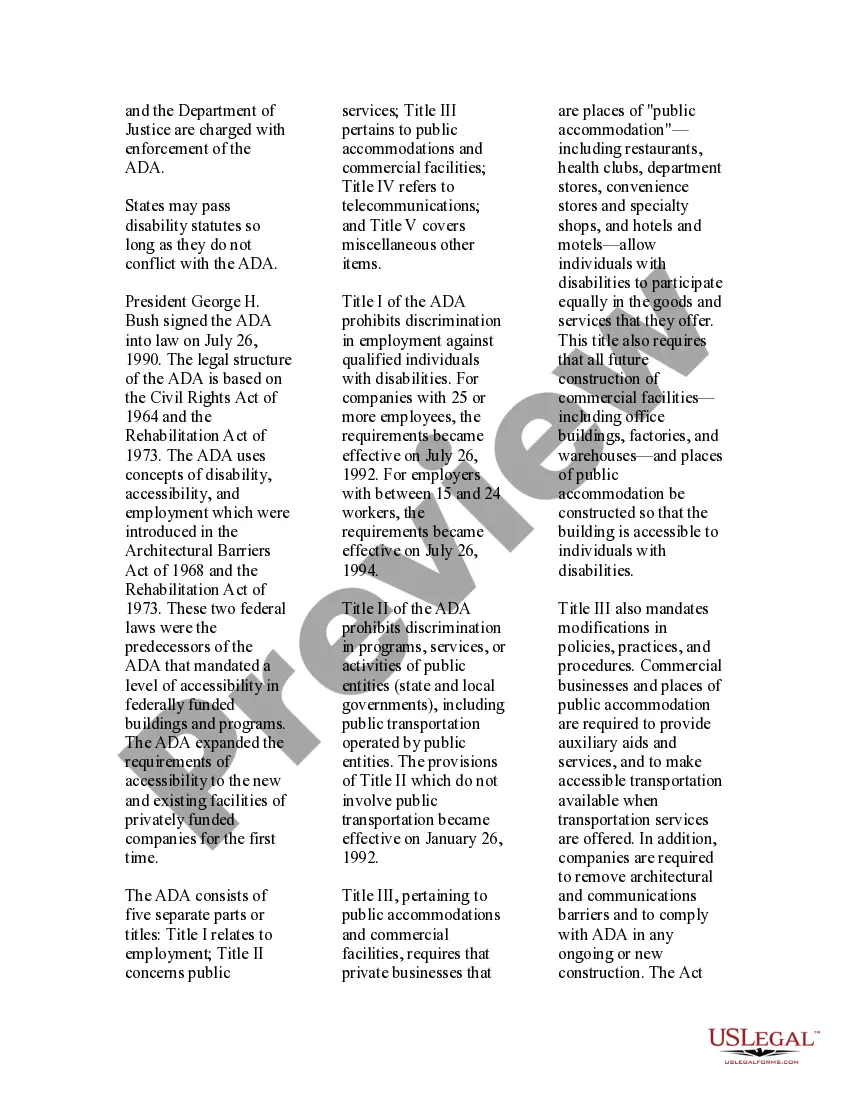
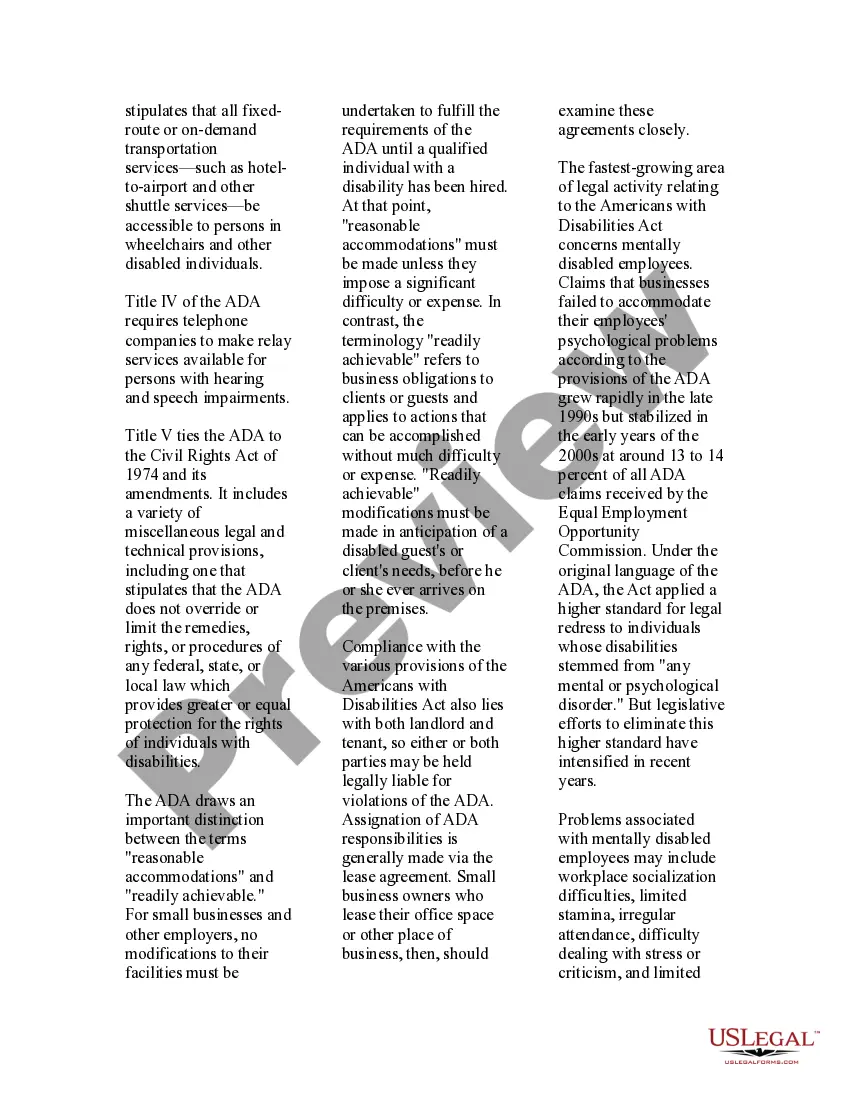
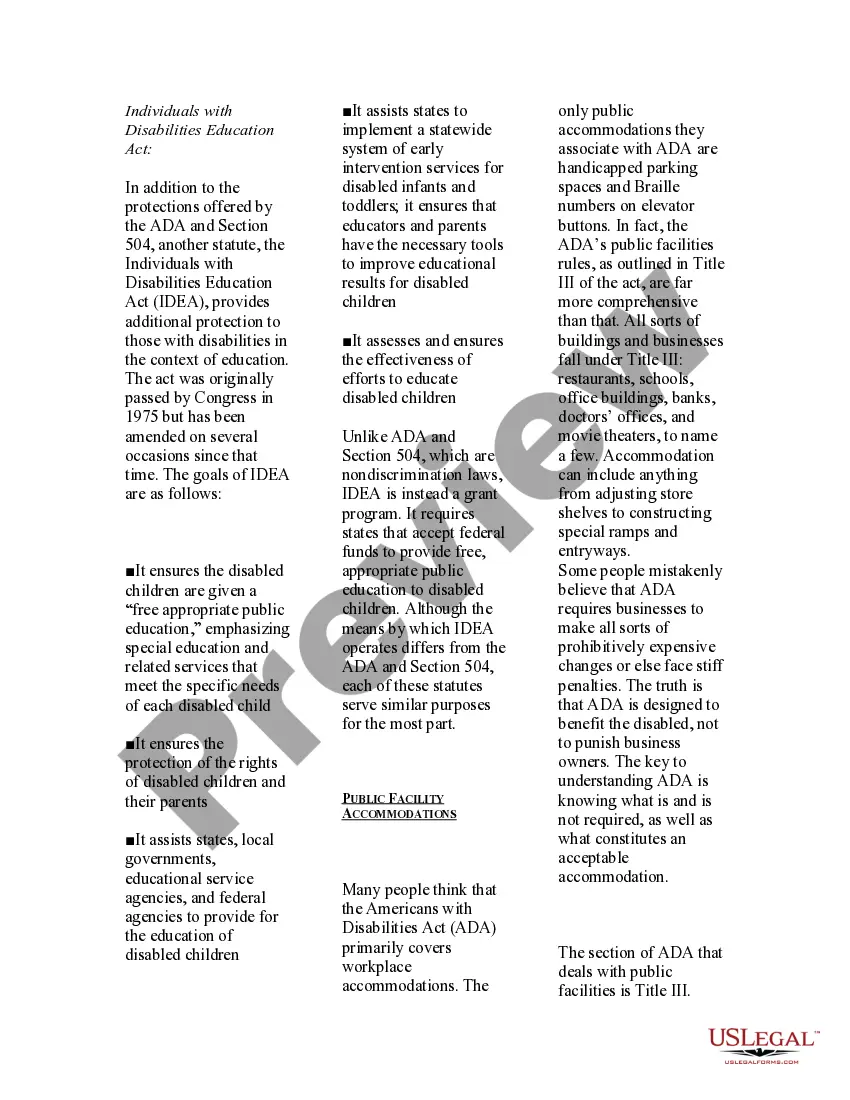


Get your form ready online
Our built-in tools help you complete, sign, share, and store your documents in one place.
Make edits, fill in missing information, and update formatting in US Legal Forms—just like you would in MS Word.
Download a copy, print it, send it by email, or mail it via USPS—whatever works best for your next step.
Sign and collect signatures with our SignNow integration. Send to multiple recipients, set reminders, and more. Go Premium to unlock E-Sign.
If this form requires notarization, complete it online through a secure video call—no need to meet a notary in person or wait for an appointment.
We protect your documents and personal data by following strict security and privacy standards.

Make edits, fill in missing information, and update formatting in US Legal Forms—just like you would in MS Word.

Download a copy, print it, send it by email, or mail it via USPS—whatever works best for your next step.

Sign and collect signatures with our SignNow integration. Send to multiple recipients, set reminders, and more. Go Premium to unlock E-Sign.

If this form requires notarization, complete it online through a secure video call—no need to meet a notary in person or wait for an appointment.

We protect your documents and personal data by following strict security and privacy standards.
Looking for another form?



How to fill out USLegal Guide To Disabled Adults?
- If you are a returning user, log in to your account and find the desired form in your library. Ensure your subscription is still active. If it has lapsed, be sure to renew it based on your chosen payment plan.
- For first-time users, start by checking the Preview mode and detailed description of your chosen form. Confirm it meets your needs and complies with local jurisdiction requirements.
- If the form doesn’t suit you, utilize the Search feature to explore additional templates. Once satisfied, proceed to the next step.
- To purchase the document, click the Buy Now button and select your preferred subscription plan. You will need to create an account to unlock the complete library.
- Finalize your purchase by entering your payment information, either via credit card or PayPal, to secure your subscription.
- After the transaction, download your form. Save it directly to your device for easy access to complete and edit it. You'll also find it in the My Forms section of your profile whenever you need it.
By following these straightforward steps, you can effortlessly access the legal forms necessary for disabled accommodation. US Legal Forms empowers users with a robust collection, ensuring that you have the right documentation at hand.
Don't let the complexities of legal paperwork hold you back. Start your journey today and explore US Legal Forms for all your legal document needs.
Form popularity
FAQ
Conditions that typically do not qualify as a disability include temporary ailments like a cold or an acute injury that is expected to heal quickly. Additionally, certain personality traits, lifestyle choices, or minor inconveniences may not meet the legal criteria for disabled accommodation under the law. It's essential to understand these distinctions to ensure appropriate requests and support.
Reasonable accommodations for a disability can include modifications to the workplace, such as providing accessible equipment or adjusting work schedules. It can also involve offering remote work options or allowing service animals in the workplace. The goal is to create an environment where employees can perform their job duties without barriers.
Filling out a reasonable accommodation form involves providing your basic information, describing your disability, and clearly stating the accommodation you need. You should detail how the requested change will help you perform your job effectively. Utilizing resources like USLegalForms can guide you in this process, ensuring you complete the form accurately.
An example of a reasonable accommodation request includes the need for a flexible work schedule due to a medical treatment. For instance, someone might request to start work later in the day to accommodate morning appointments. Such adjustments are essential for fostering an inclusive work environment and supporting employees with disabilities.
A request for a disabled accommodation may be denied if it imposes an undue hardship on the employer, meaning it is significantly difficult or expensive to provide. Additionally, if the accommodation would fundamentally alter the nature of the business or if the individual does not have a qualifying disability, the request may also be denied. Understanding these parameters can help both employers and employees navigate the process more smoothly.
In the context of disability, accommodation refers to changes or adjustments that enable individuals with disabilities to participate fully in society. This could involve modifications to the environment, assistance with job tasks, or flexible scheduling. The aim is to promote equality and ensure individuals have the resources they need to thrive in various aspects of life.
Examples of ADA accommodations include installing ramps for wheelchair access, providing screen-reader software for visually impaired employees, and allowing employees to work from home when necessary. Each accommodation is tailored to meet the individual's specific needs, fostering a supportive environment. Platforms like USLegalForms can assist in understanding these rights and options available.
ADA reasonable accommodations can encompass a variety of modifications, such as alterations to work facilities, job restructuring, and provision of modified equipment or tools. The goal is to support individuals with disabilities in achieving performance expectations without compromising the integrity of the workplace. It's important to discuss specific needs with employers to determine the most effective solutions.
Under the Americans with Disabilities Act (ADA), individuals with disabilities can access several accommodations. These include accessible workspaces, flexible work schedules, and the provision of adaptive equipment or technology. These accommodations help ensure individuals can perform their tasks effectively without unnecessary barriers.
Living independently as a disabled individual is possible with the right support and resources. You can explore available aids, such as home modifications, accessible transportation, and community programs designed for independent living. Utilizing platforms like USLegalForms can provide essential information and legal assistance to navigate these resources effectively.