Grandparent Family Law Withdrawal
Description




Get your form ready online
Our built-in tools help you complete, sign, share, and store your documents in one place.
Make edits, fill in missing information, and update formatting in US Legal Forms—just like you would in MS Word.
Download a copy, print it, send it by email, or mail it via USPS—whatever works best for your next step.
Sign and collect signatures with our SignNow integration. Send to multiple recipients, set reminders, and more. Go Premium to unlock E-Sign.
If this form requires notarization, complete it online through a secure video call—no need to meet a notary in person or wait for an appointment.
We protect your documents and personal data by following strict security and privacy standards.

Make edits, fill in missing information, and update formatting in US Legal Forms—just like you would in MS Word.

Download a copy, print it, send it by email, or mail it via USPS—whatever works best for your next step.

Sign and collect signatures with our SignNow integration. Send to multiple recipients, set reminders, and more. Go Premium to unlock E-Sign.

If this form requires notarization, complete it online through a secure video call—no need to meet a notary in person or wait for an appointment.

We protect your documents and personal data by following strict security and privacy standards.
Looking for another form?
How to fill out USLegal Guide To Grandparent Visitation?
Identifying a preferred location to acquire the most recent and pertinent legal samples is a significant portion of navigating bureaucracy.
Finding the correct legal document criteria requires precision and meticulousness, which highlights the importance of obtaining Grandparent Family Law Withdrawal samples solely from trustworthy providers, like US Legal Forms. An incorrect template could squander your time and hinder your progress.
Eliminate the complications associated with your legal documents. Explore the comprehensive US Legal Forms library where you can discover legal samples, verify their relevance to your case, and download them instantly.
- Utilize the library navigation or search option to find your sample.
- Access the form’s description to determine if it meets the specifications of your state and locality.
- Open the form preview, if accessible, to verify that the form is indeed the one you seek.
- Return to the search and identify the appropriate document if the Grandparent Family Law Withdrawal does not align with your needs.
- Once you are confident about the form’s pertinence, download it.
- If you are a registered customer, click Log in to verify your identity and access your selected templates in My documents.
- If you lack an account, click Buy now to purchase the template.
- Choose the pricing option that meets your needs.
- Proceed to the registration to finalize your acquisition.
- Complete your purchase by selecting a payment method (credit card or PayPal).
- Select the document format for downloading Grandparent Family Law Withdrawal.
- After obtaining the form on your device, you can edit it using the editor or print it out to fill it out manually.
Form popularity
FAQ
Rule 6.710 addresses the specific procedures in family law cases related to grandparents' rights. It provides guidelines on how grandparents can file for access and outlines the necessary documentation. Familiarizing yourself with this rule can be beneficial during the grandparent family law withdrawal process.
Grandparents have a right of access. This means that they are entitled to see their grandchildren regularly. If they are denied contact, they still have a right to contact the child (§ 1685 BGB), but only if the contact serves the best interests of the child.
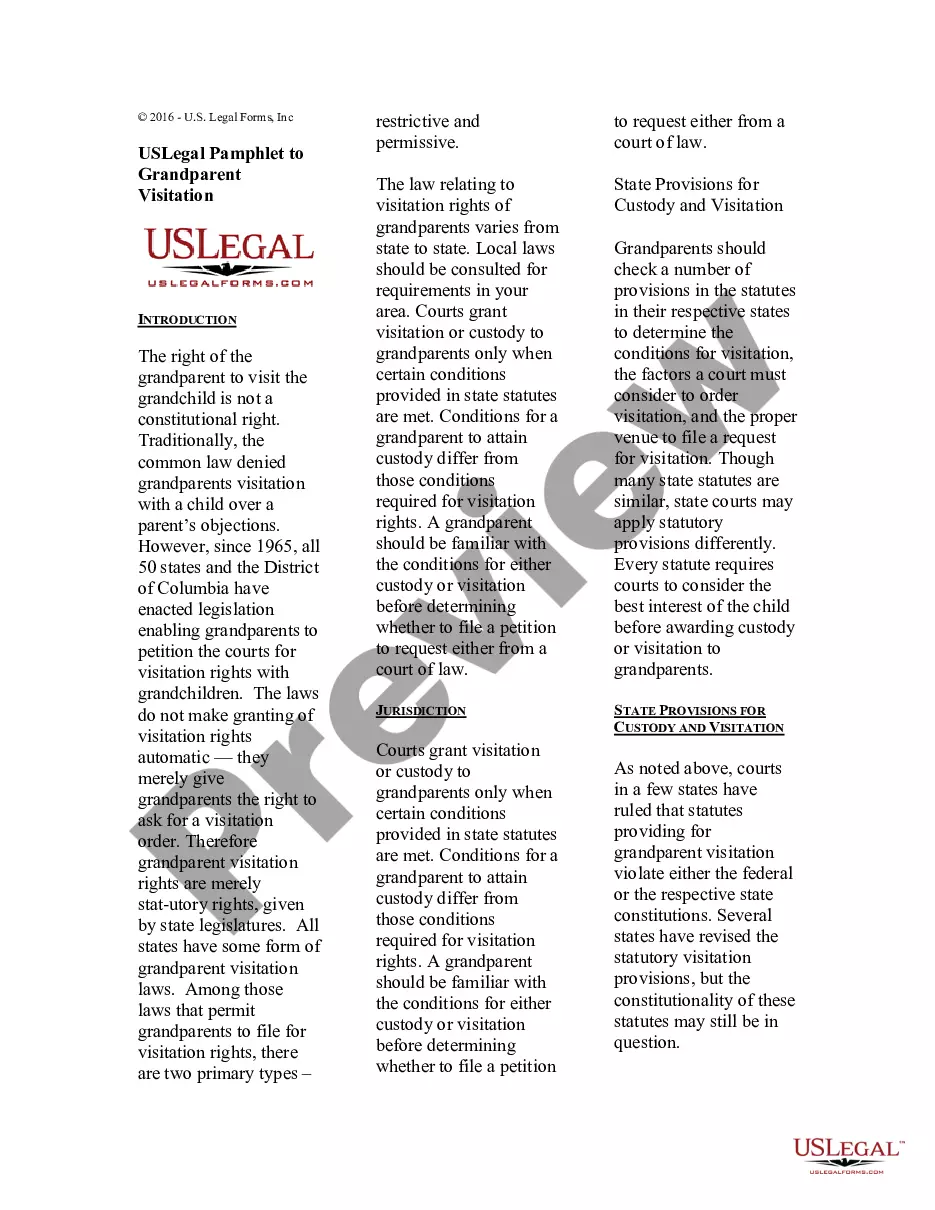
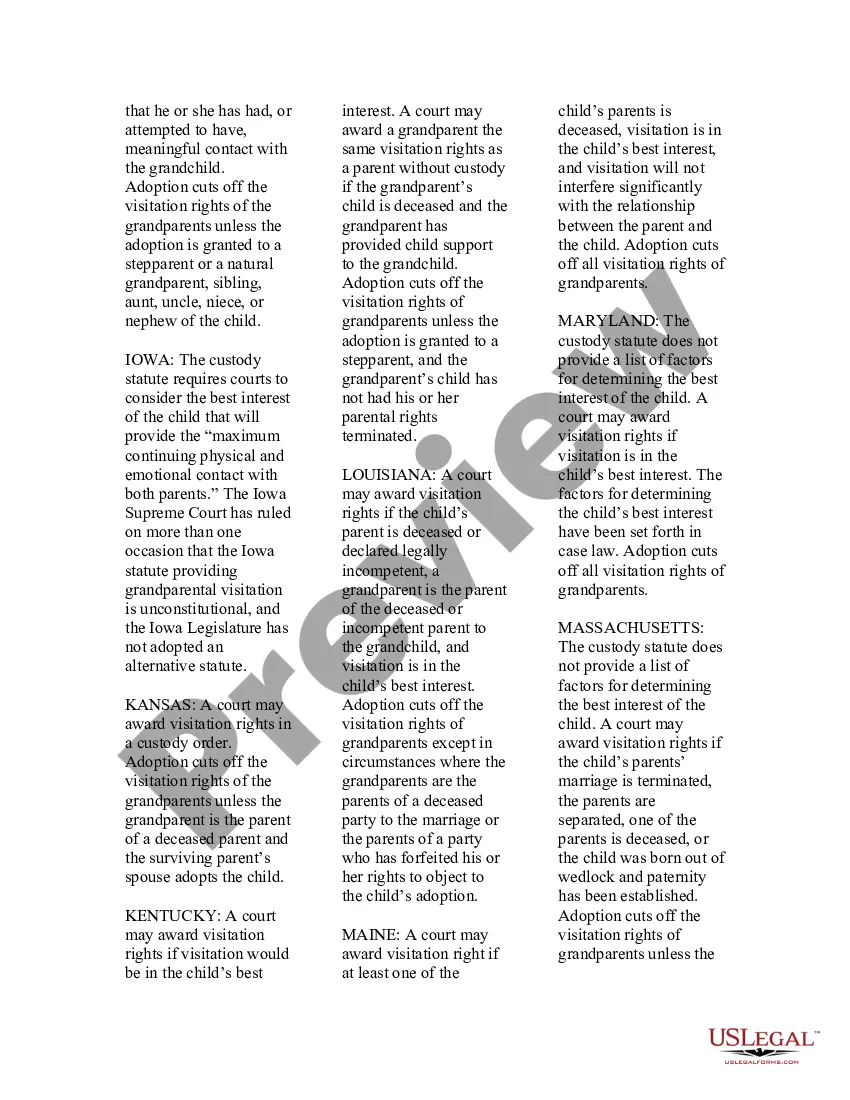
In a nutshell, grandparents do not automatically have custody rights to their grandchild, but they may have the right to petition the court for it, depending on the state and the circumstances. As the grandparent, you need to understand your state's statutes, as some are permissive while others are restrictive.
Do grandparents have a right to see their grandchildren? In England and Wales, grandparents do not have an automatic legal right to see their grandchildren. However, they can try and get access through an informal arrangement or via a court order.
United States. As of 2013, all US states have statutes that permit non-parents to ask a court to grant them the legal right to maintain ongoing contact with a child. In many states, these statutes explicitly name grandparents and great-grandparents as potentially eligible people.
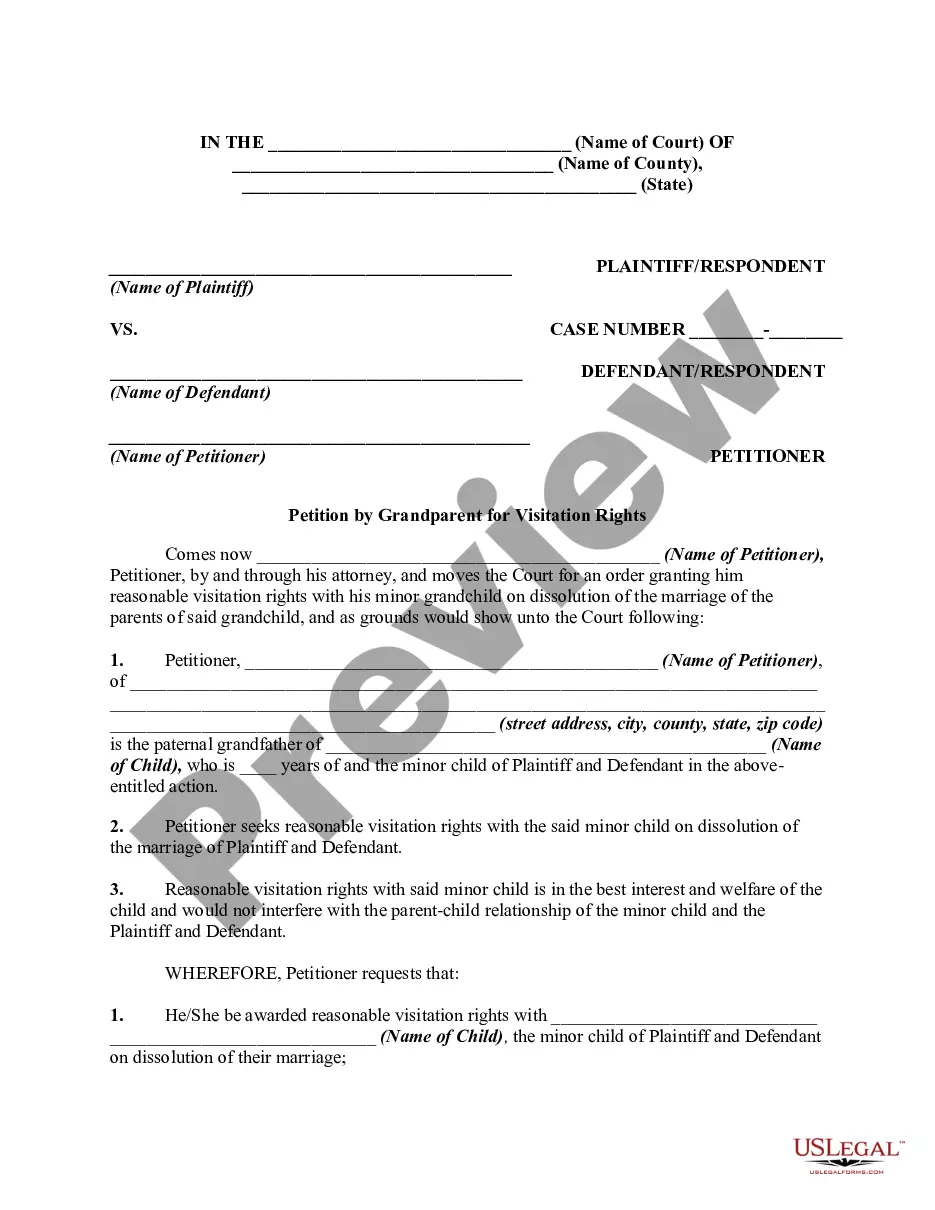
In the first scenario, applying for grandparents' rights in Florida would entail filing a petition to the court. Next, there will be a preliminary court hearing. During the hearing, evidence will be presented to prove why (s) you are seeking visitation. The court will then determine whether your petition is proven.