Credit Shelter Trust And Portability
Description

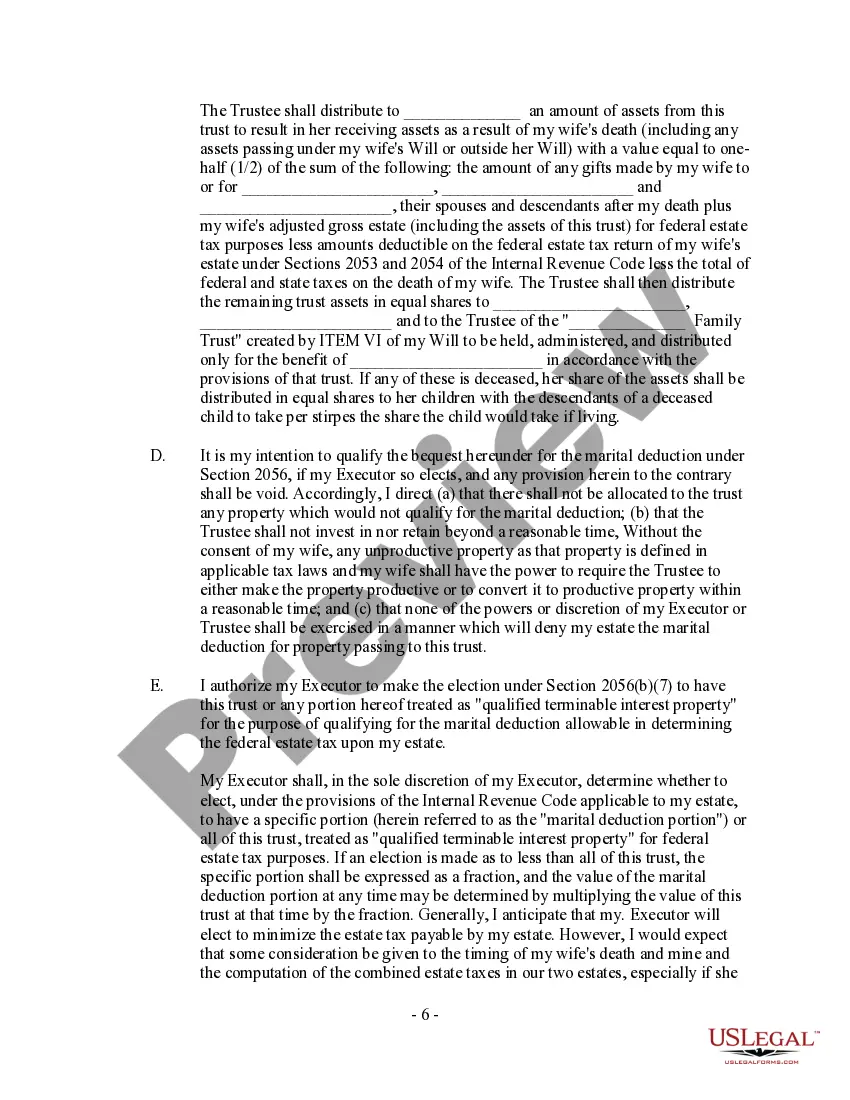
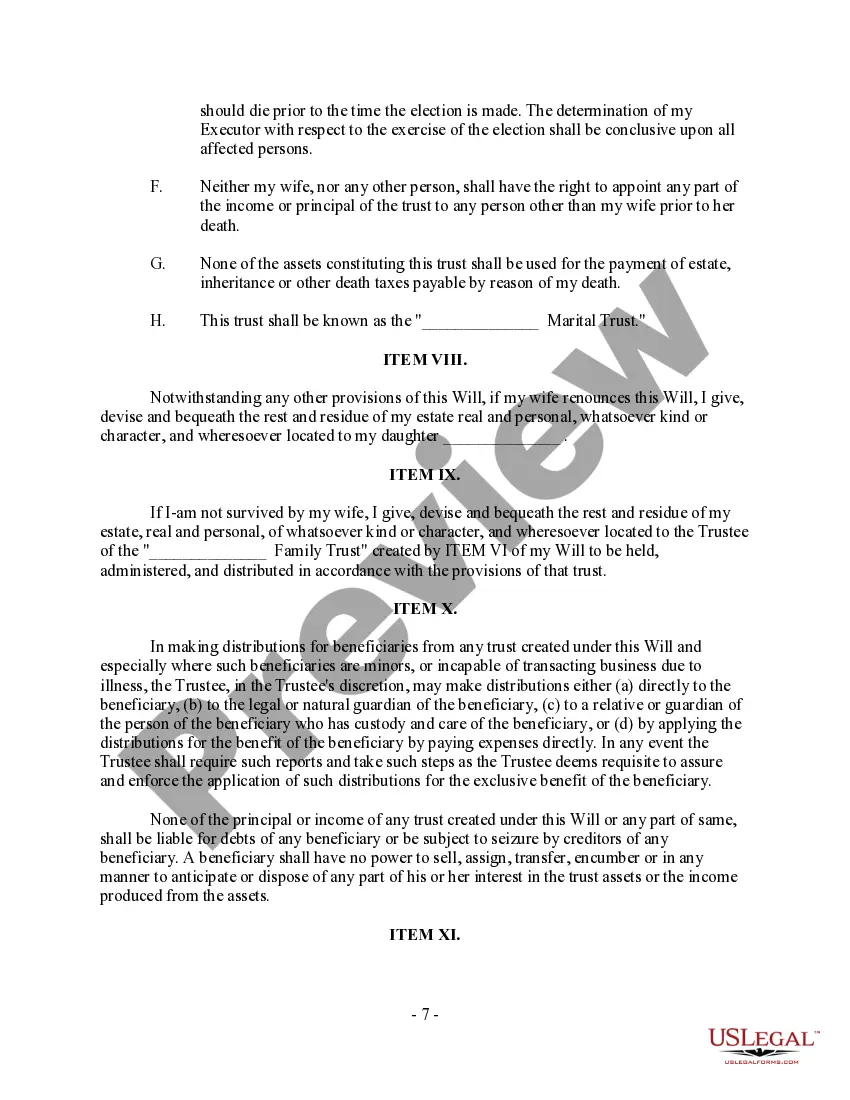
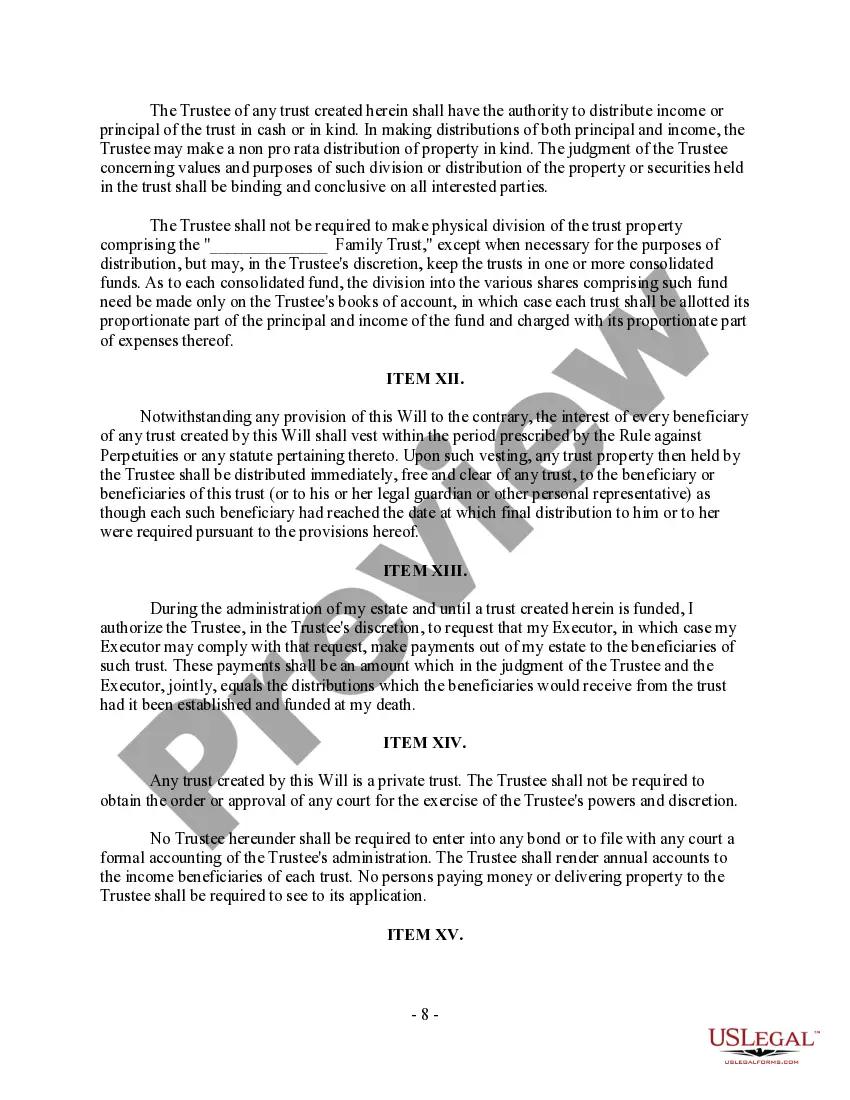
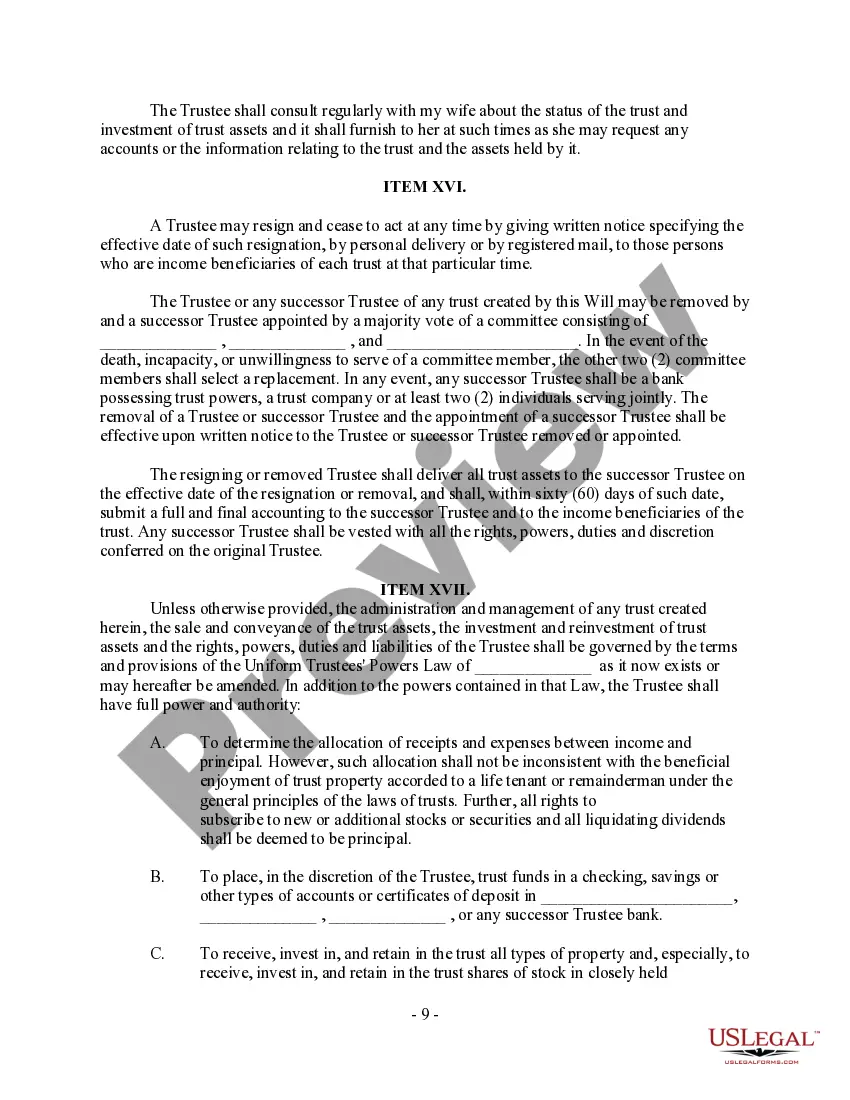
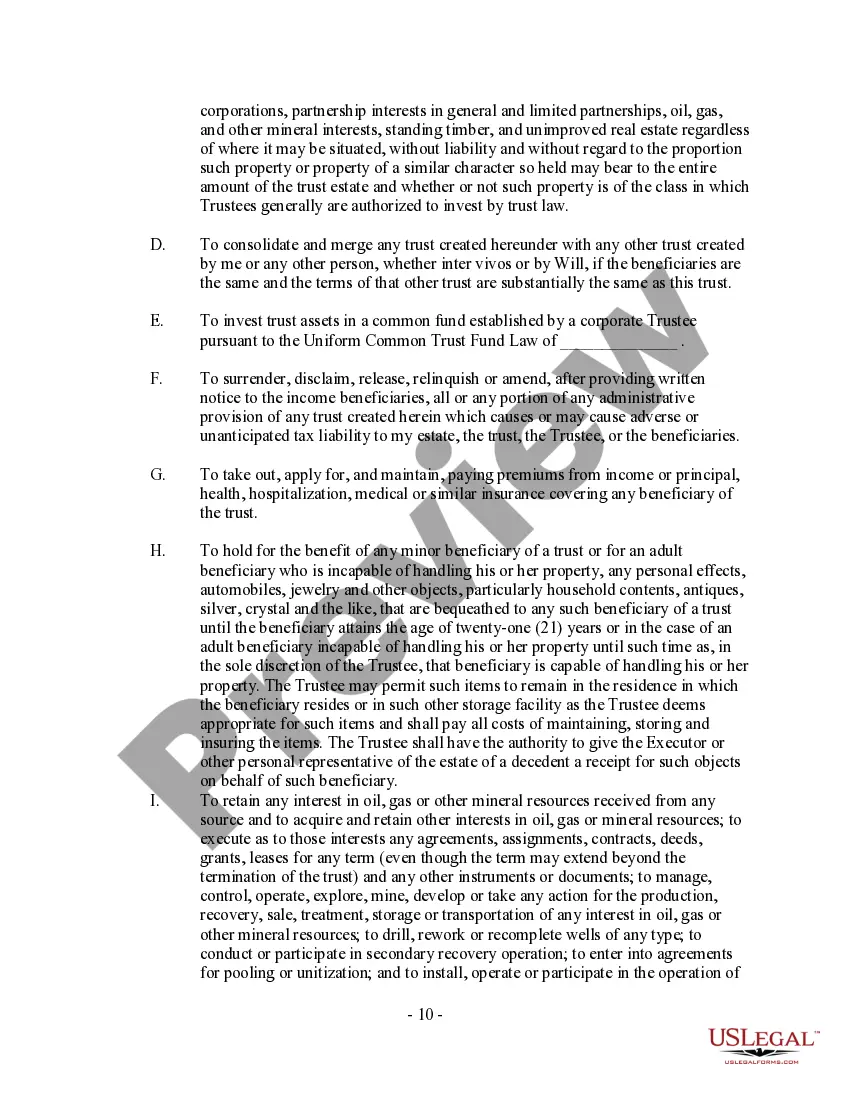


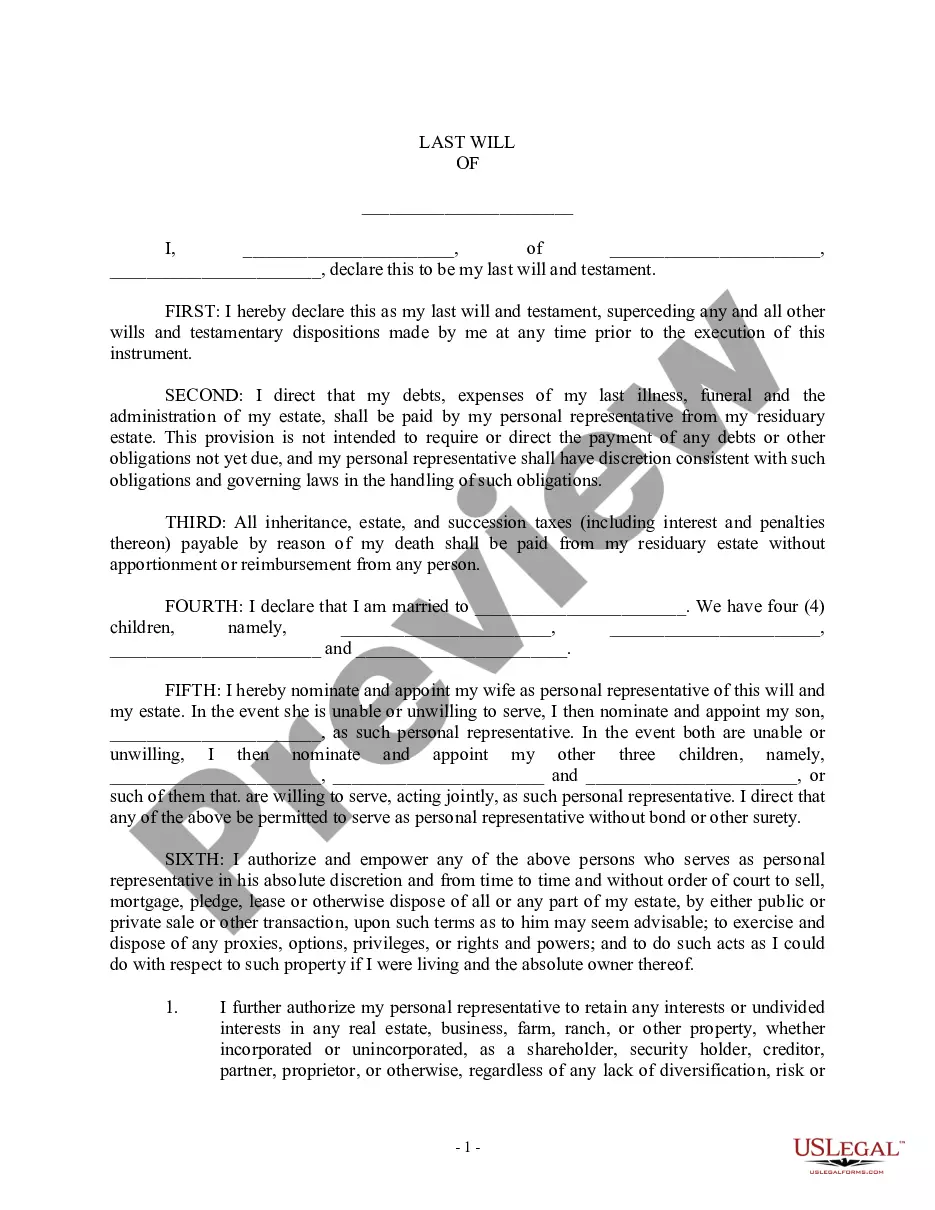
Get your form ready online
Our built-in tools help you complete, sign, share, and store your documents in one place.
Make edits, fill in missing information, and update formatting in US Legal Forms—just like you would in MS Word.
Download a copy, print it, send it by email, or mail it via USPS—whatever works best for your next step.
Sign and collect signatures with our SignNow integration. Send to multiple recipients, set reminders, and more. Go Premium to unlock E-Sign.
If this form requires notarization, complete it online through a secure video call—no need to meet a notary in person or wait for an appointment.
We protect your documents and personal data by following strict security and privacy standards.

Make edits, fill in missing information, and update formatting in US Legal Forms—just like you would in MS Word.

Download a copy, print it, send it by email, or mail it via USPS—whatever works best for your next step.

Sign and collect signatures with our SignNow integration. Send to multiple recipients, set reminders, and more. Go Premium to unlock E-Sign.

If this form requires notarization, complete it online through a secure video call—no need to meet a notary in person or wait for an appointment.

We protect your documents and personal data by following strict security and privacy standards.
Looking for another form?



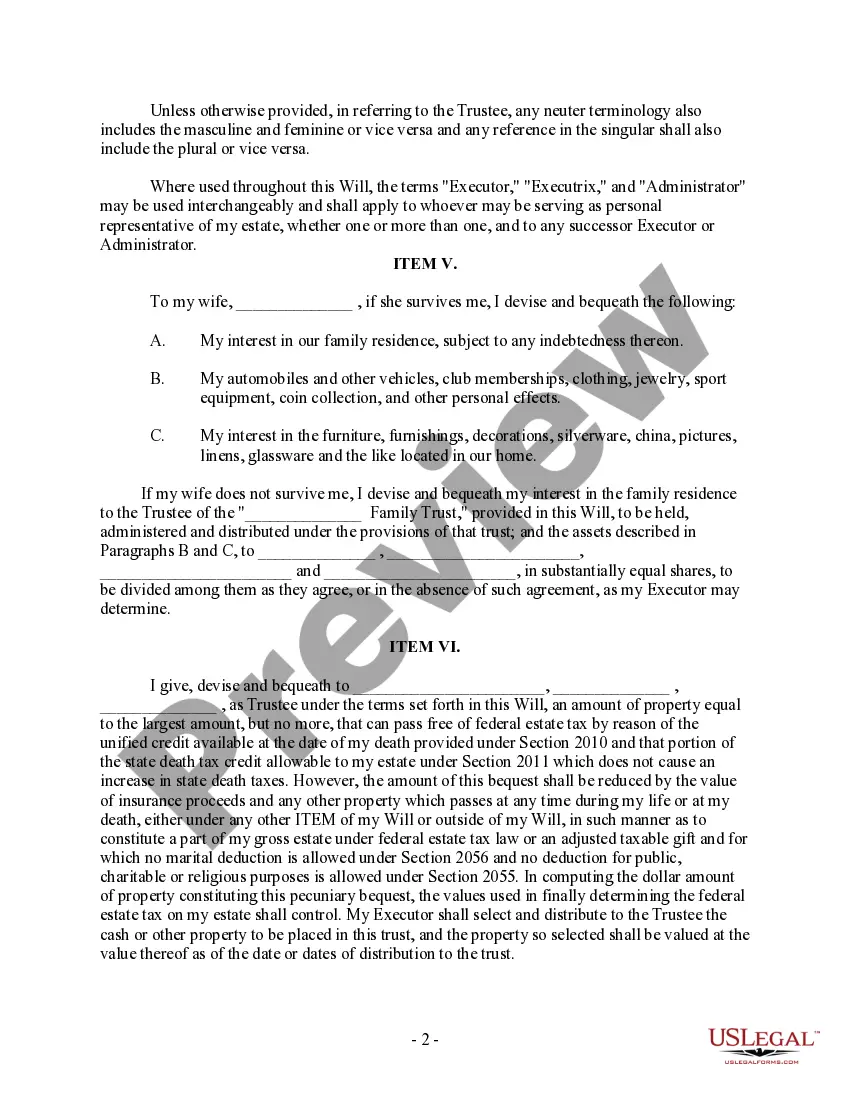
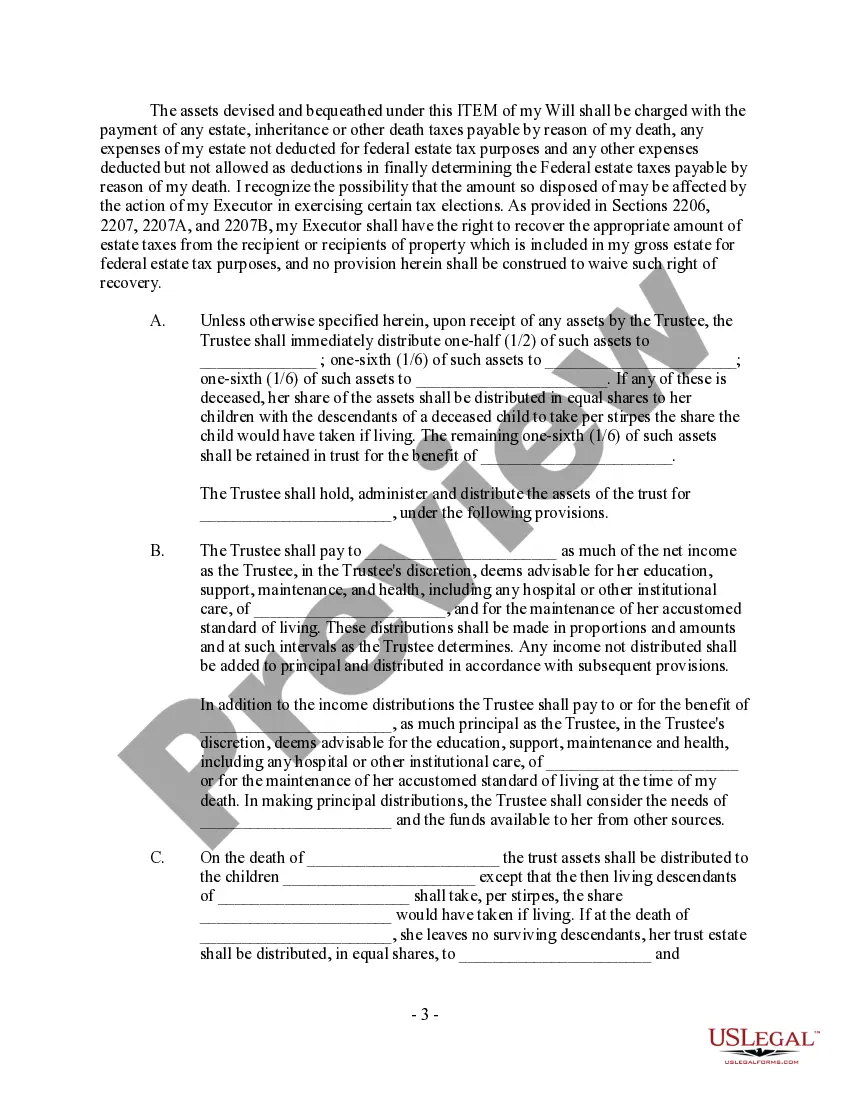
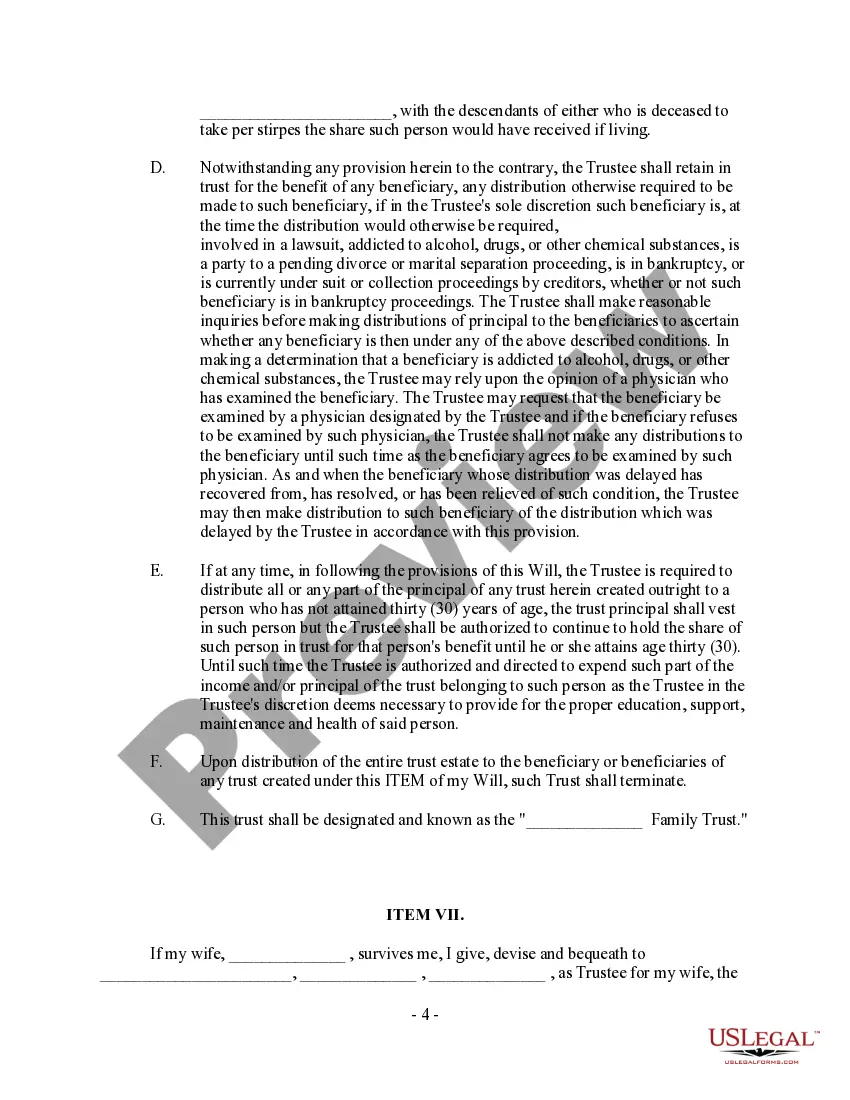
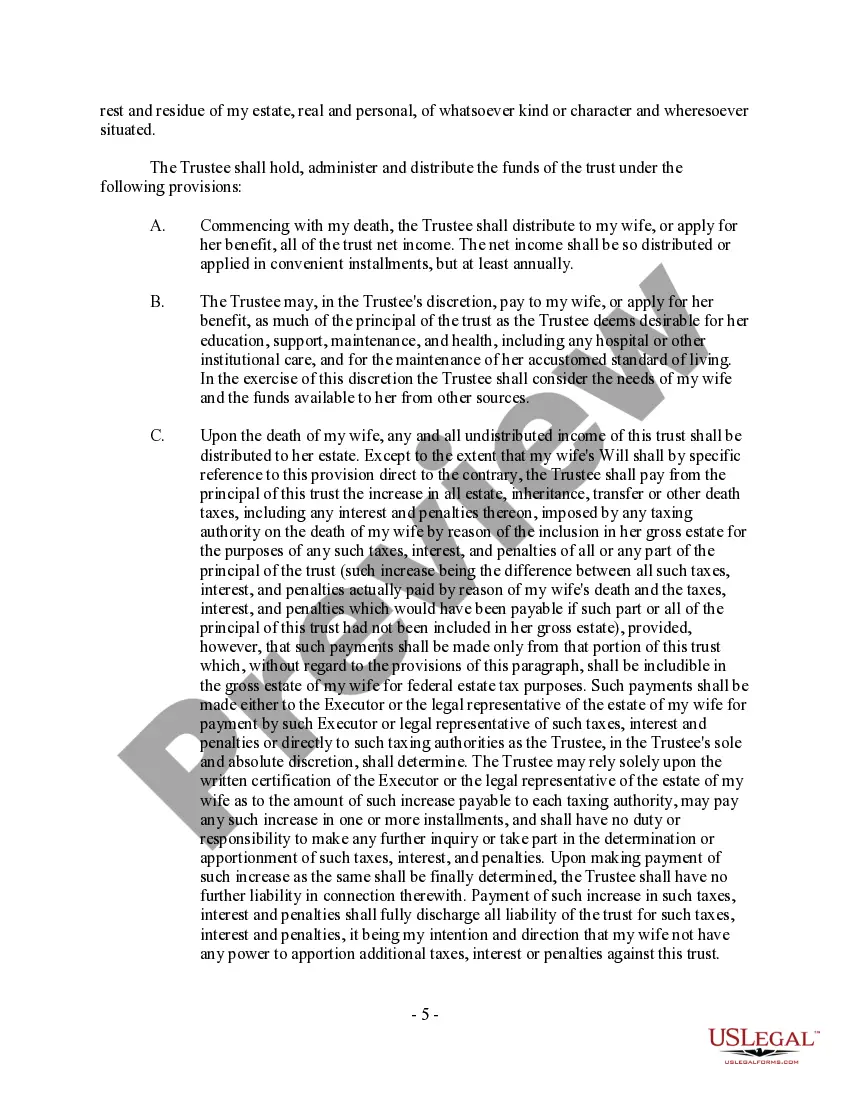
How to fill out Complex Will - Credit Shelter Marital Trust For Spouse?
- If you're a returning user, log in to your account and find the desired form by clicking the Download button. Ensure your subscription is active; if not, renew it as per your payment plan.
- For first-time users, start by previewing the form descriptions. Confirm that the selected document aligns with your specific requirements and complies with local regulations.
- If necessary, search for alternative templates using the Search tab. If you find any discrepancies, reassess until you find the appropriate form.
- Purchase the document by clicking the Buy Now button and selecting your preferred subscription plan. You’ll need to create an account to access the full library.
- Make your payment by providing your credit card information or opting to use your PayPal account.
- Finally, download your completed form. Save it to your device and access it anytime via the My Forms section in your account.
US Legal Forms empowers you to quickly generate legal documents with an extensive collection of forms, ensuring accuracy and compliance throughout the process. With over 85,000 editable forms, you have the best resources at your fingertips.
Streamline your legal documentation today! Explore US Legal Forms to access premium resources and expert assistance tailored to your needs. Don’t wait—get started now!
Form popularity
FAQ
Currently, there is uncertainty about the future of portability beyond 2026. Legislative changes may impact the availability and limits of the estate tax exemption. To prepare, it's wise to consider proactive estate planning strategies, including credit shelter trusts, to safeguard your estate regardless of potential changes in portability legislation.
The purpose of portability is to maximize estate tax exemptions for married couples, allowing them to transfer any unused portions of their exemptions after one spouse passes away. This strategy can significantly reduce the potential tax burden on the estate of the surviving spouse. By utilizing both credit shelter trust and portability, couples can ensure comprehensive tax planning and wealth preservation.
The portability clause of a trust facilitates the transfer of an unused estate tax exemption between spouses. This clause ensures that if one spouse passes away without fully utilizing their exemption, the surviving spouse can inherit the remaining exemption. It's essential to incorporate a portability clause in your estate plan to optimize benefits of credit shelter trust and portability effectively.
Portability in a trust is the mechanism that allows an estate's unused tax exemption to be transferred to a surviving spouse. This option enables the surviving spouse to benefit from the deceased spouse’s exemption, effectively increasing their own exemption amount. By integrating credit shelter trust and portability, couples can maximize their estate tax benefits, providing greater financial security.
Credit shelter trusts are somewhat influenced by the portability of the estate tax exemption. If a couple opts for harmony between these strategies, they can utilize portability to simplify their estate planning. However, some couples may choose to maintain credit shelter trusts to shield assets from estate taxes, ensuring that family wealth remains protected over generations despite any changes in exemption limits.
While portability provides valuable benefits, it also comes with disadvantages. One significant drawback is that it requires the timely filing of an estate tax return, even if no tax is due, to claim the unused exemption. This process can be complex, and failure to file may result in missed benefits. Additionally, relying solely on portability may not provide the same long-term protection as a credit shelter trust.
Portability in a trust refers to the ability to transfer unused estate tax exemption from the deceased spouse to the surviving spouse. This means that if one spouse does not use their entire exemption, the surviving spouse can utilize that exemption in their own estate planning. Essentially, credit shelter trust and portability work together to maximize tax benefits and minimize estate taxes for married couples.
An example of portability occurs when a deceased spouse leaves a $5 million estate, but their exemption was only $3 million. The surviving spouse can claim the unused $2 million exemption, allowing them to shield a larger amount from estate taxes upon their own passing. This portability feature enhances the surviving spouse's financial flexibility and relief from future tax burdens. Educating yourself about credit shelter trust and portability can empower you to make informed decisions about your estate planning.
A credit shelter trust, often called a bypass trust, is designed to take advantage of a dead spouse's estate tax exemption. For instance, if one spouse passes with an estate worth $2 million, the trust can hold assets equivalent to the exemption amount while allowing the surviving spouse to benefit from the income generated. This structure helps in preserving wealth for heirs while navigating the complexities of estate taxes. Using tools like US Legal Forms can simplify setting up such trusts.
Electing portability allows a spouse to utilize the unused estate tax exemption of a deceased spouse. This means that if one spouse passes away without using their full estate tax exemption, the surviving spouse can apply this unused amount to their own estate. This can be particularly beneficial for minimizing estate taxes. Understanding credit shelter trust and portability can help you secure financial advantages for your heirs.