Warranty Or Warrenty
Description
Get your form ready online
Our built-in tools help you complete, sign, share, and store your documents in one place.
Make edits, fill in missing information, and update formatting in US Legal Forms—just like you would in MS Word.
Download a copy, print it, send it by email, or mail it via USPS—whatever works best for your next step.
Sign and collect signatures with our SignNow integration. Send to multiple recipients, set reminders, and more. Go Premium to unlock E-Sign.
If this form requires notarization, complete it online through a secure video call—no need to meet a notary in person or wait for an appointment.
We protect your documents and personal data by following strict security and privacy standards.

Make edits, fill in missing information, and update formatting in US Legal Forms—just like you would in MS Word.

Download a copy, print it, send it by email, or mail it via USPS—whatever works best for your next step.

Sign and collect signatures with our SignNow integration. Send to multiple recipients, set reminders, and more. Go Premium to unlock E-Sign.

If this form requires notarization, complete it online through a secure video call—no need to meet a notary in person or wait for an appointment.

We protect your documents and personal data by following strict security and privacy standards.
Looking for another form?

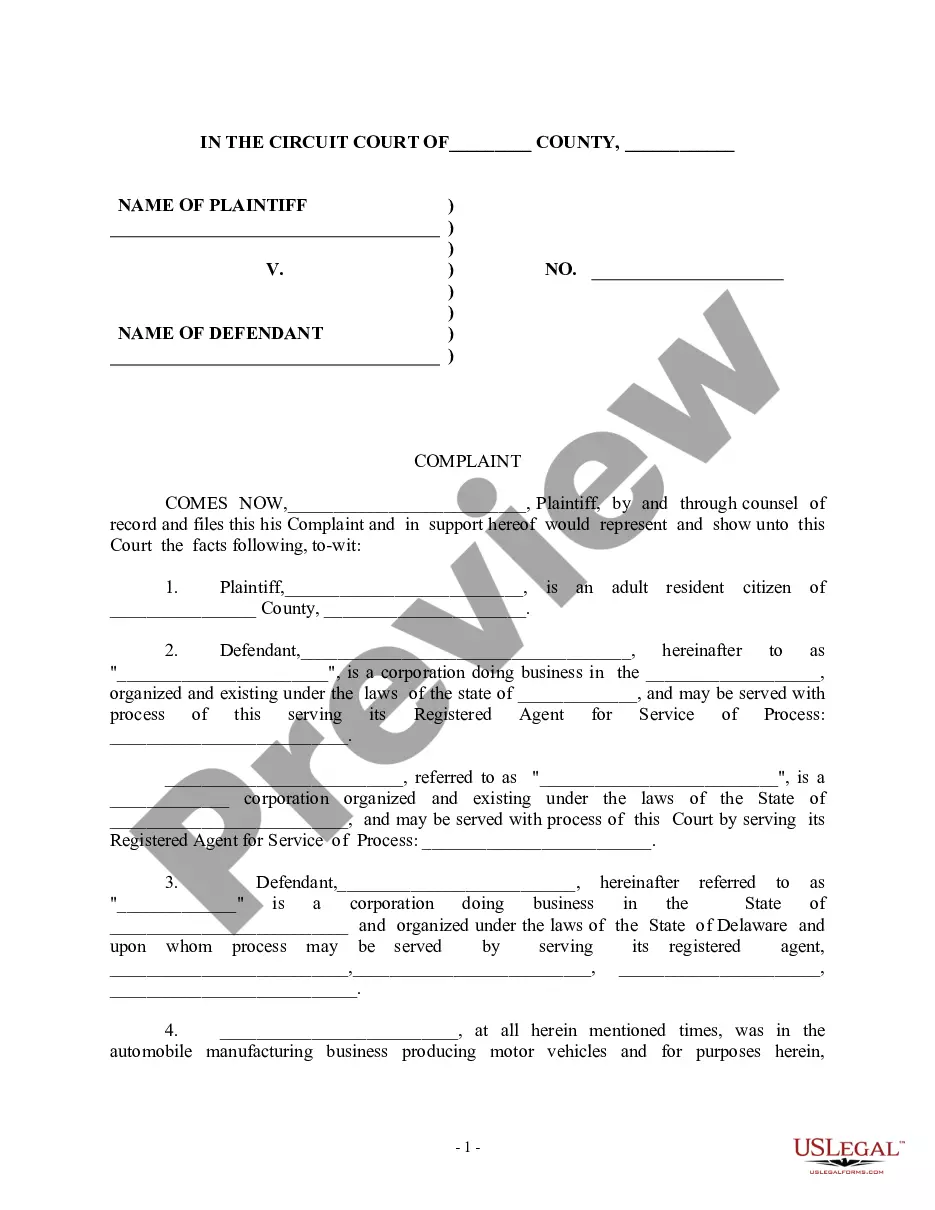
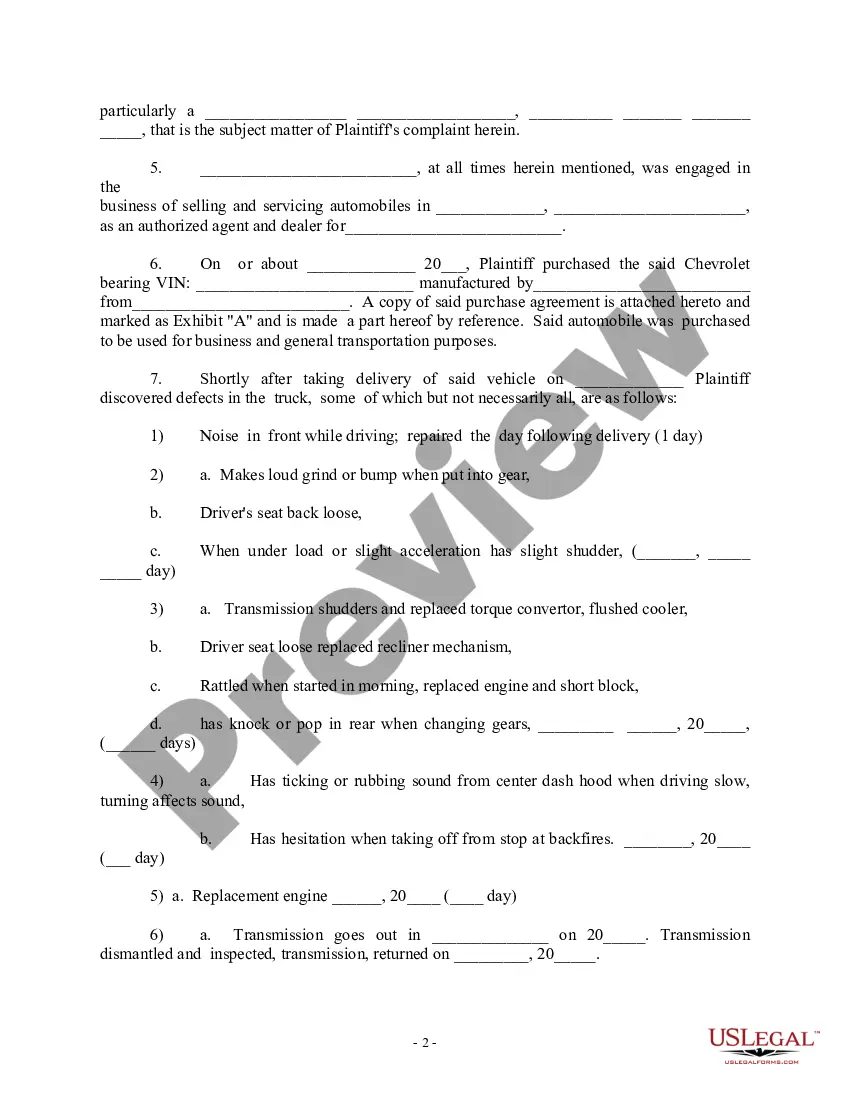
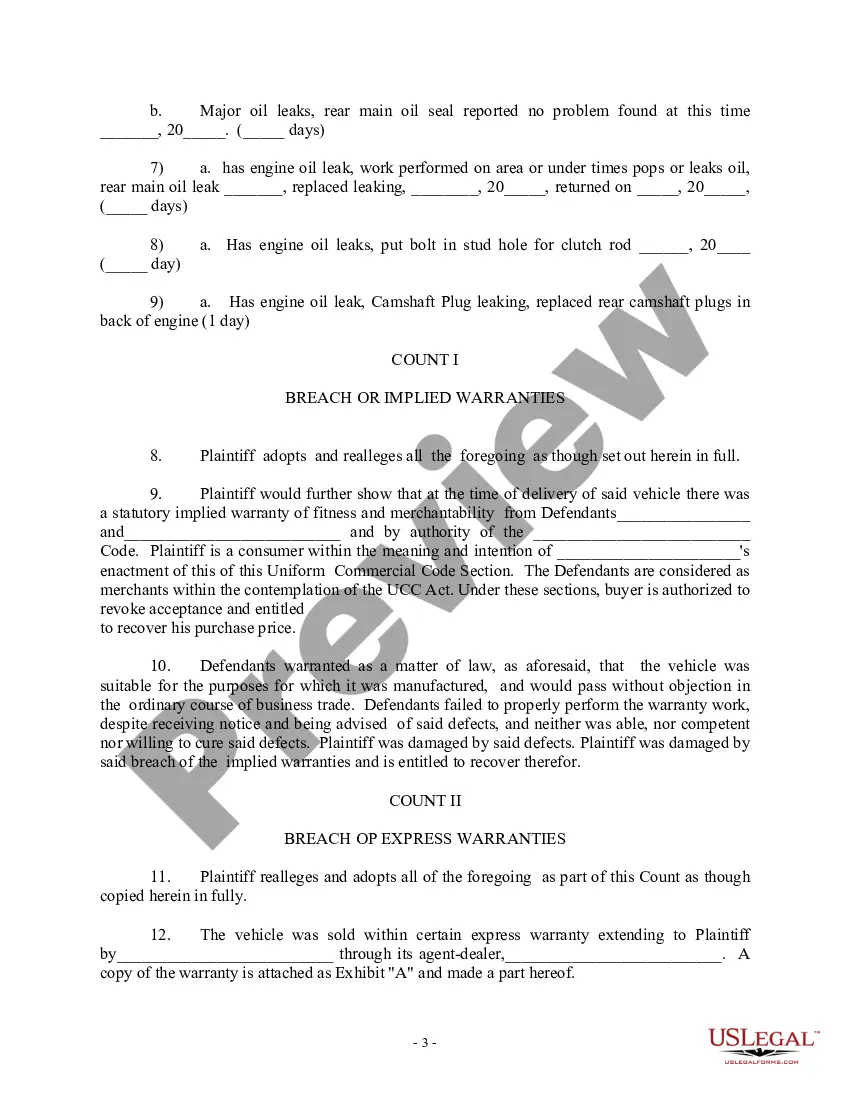
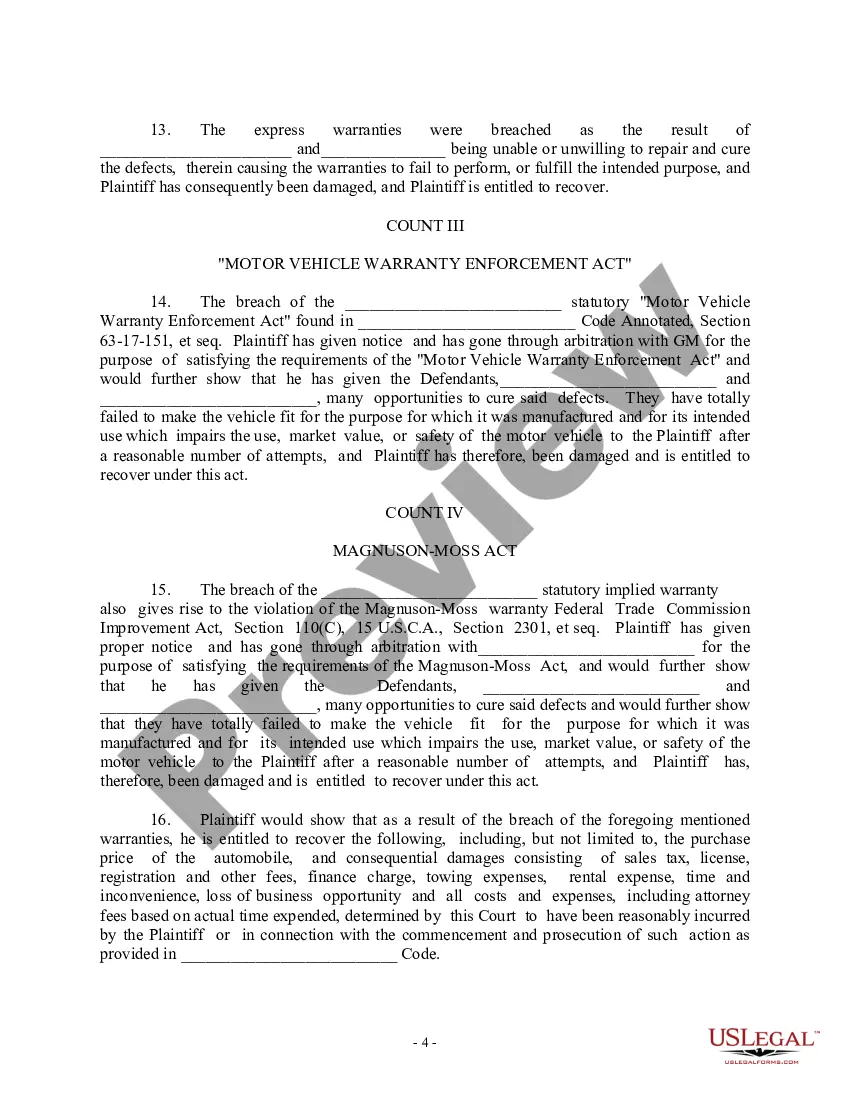
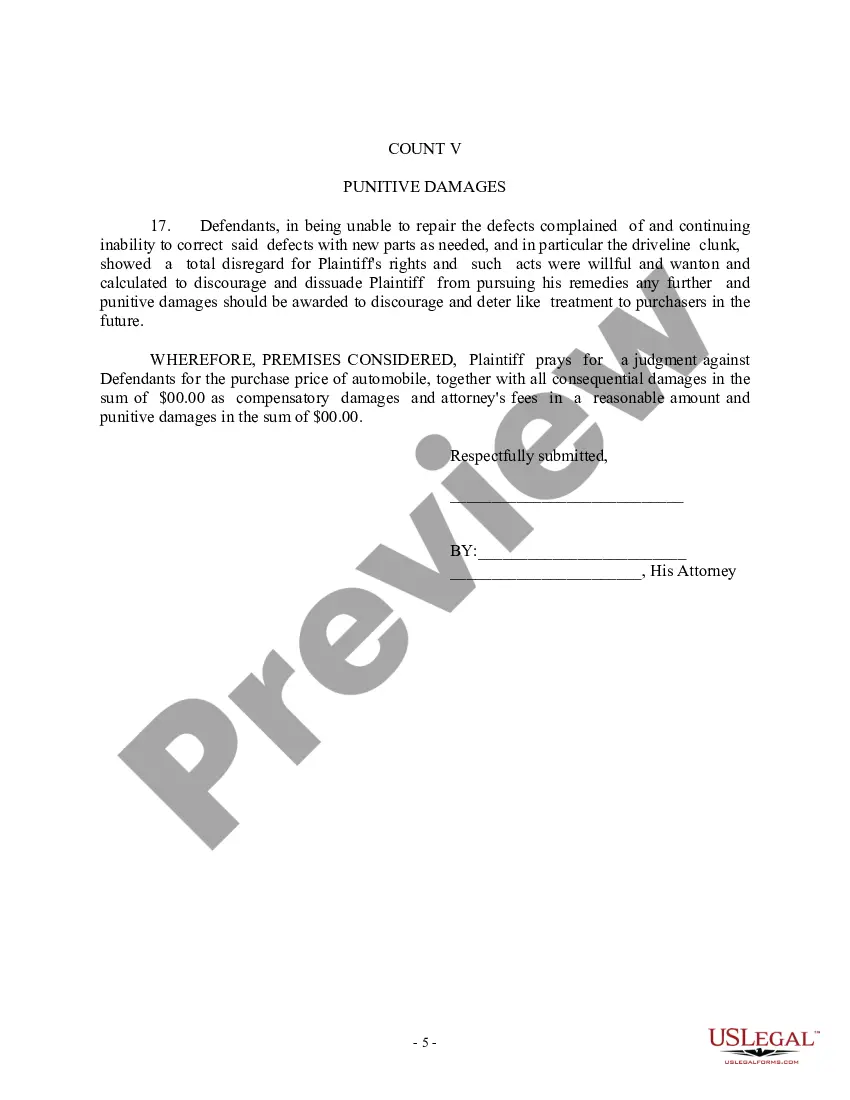
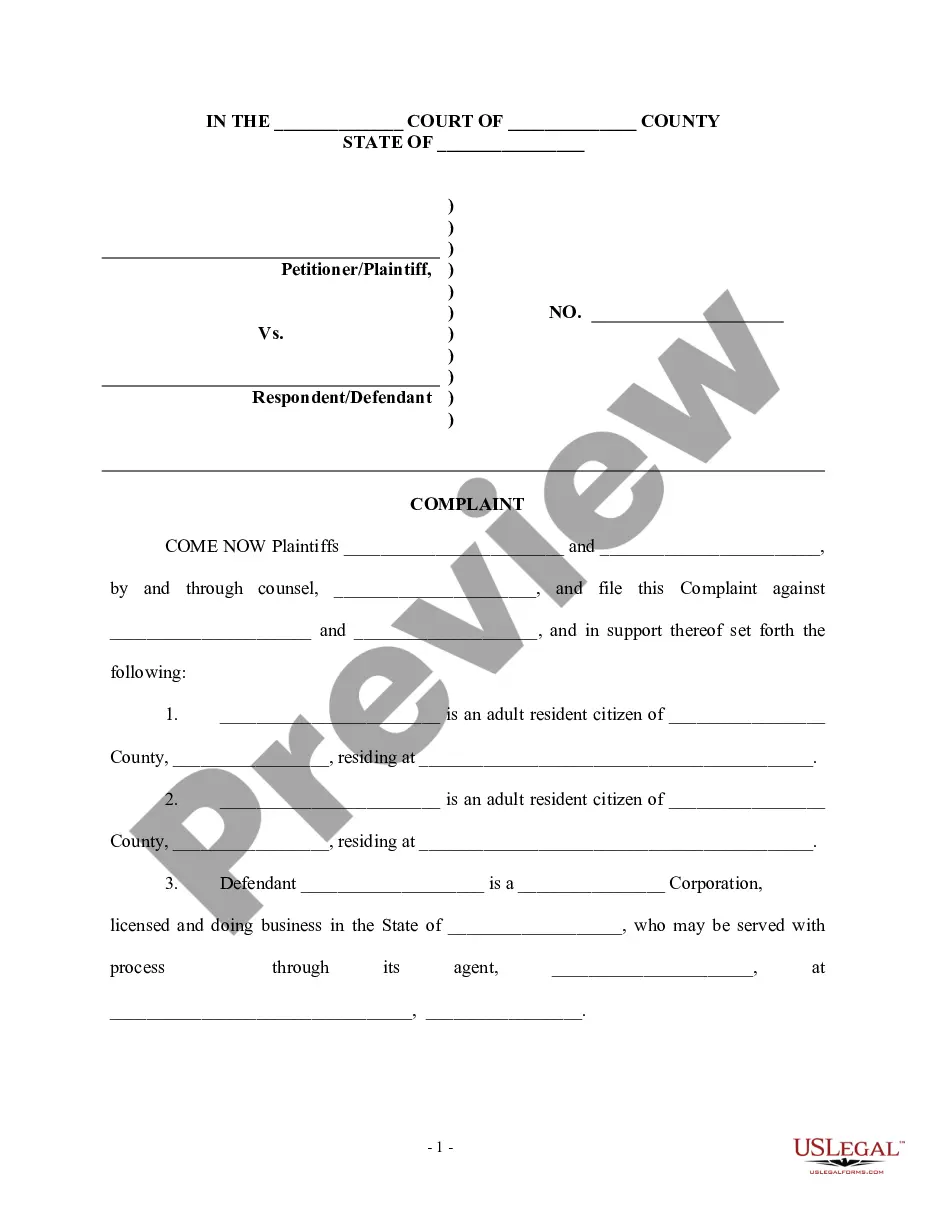
How to fill out Complaint Regarding Defective Auto, Breach Of Warranty, Motor Vehicle Warranty Act, And Magnuson Moss Act, Punitive Damages?
Obtaining legal templates that comply with federal and state regulations is essential, and the web provides many alternatives to choose from.
However, what’s the benefit of squandering time searching for the right Warranty or Warranty example online when the US Legal Forms digital library already consolidates such documents in one location.
US Legal Forms is the premier online legal repository with over 85,000 customizable templates crafted by attorneys for any business or personal circumstance. They are easy to navigate, with all documents organized by state and intended use.
Utilize the search tool at the top of the page to find another example if necessary.
- Our experts stay updated with legislative changes, so you can always trust that your documents are current and compliant when procuring a Warranty or Warranty from our site.
- Acquiring a Warranty or Warranty is straightforward and quick for both existing and new customers.
- If you already possess an account with an active subscription, Log In and save the document sample you need in the appropriate format.
- If you are new to our platform, follow the steps below.
- Review the template using the Preview function or through the text description to ensure it suits your needs.
Form popularity
FAQ
To make a warranty claim, start by gathering all necessary documentation, such as the receipt and warranty details. Prepare a brief statement describing the issue and how it relates to the warranty terms. Contact the company’s customer service through their official channels and present your claim clearly. If the process feels overwhelming, US Legal Forms offers helpful resources to guide you through making a warranty claim.
If a company refuses to honor a warranty, the first step is to review the warranty terms carefully. Make sure you understand what is covered and any conditions that must be met to make a claim. You can contact customer service for clarification or to escalate your complaint. If your issue remains unresolved, consider filing a complaint with a consumer protection agency or seeking legal advice, and remember, using platforms like US Legal Forms can help you navigate these processes effectively.
'Warranty' is indeed the correct spelling of the term that describes a promise regarding a product's performance or quality. It's crucial to remember this when drafting or reviewing legal agreements. Misinformation can create legal challenges, so using the correct spelling is important for clarity. For more assistance, US Legal Forms can help you generate the right documents related to warranties and more.
Yes, 'warranty' is the correct spelling when discussing guarantees related to products or services. It is essential to use the accurate term to ensure clear communication, especially in legal contexts. Misusing the term can lead to misunderstandings in contracts or claims. If you need professional assistance, US Legal Forms provides templates and guidance to help you with warranty documentation.
The word 'warranty' pertains to a promise or guarantee regarding a product's reliability. On the other hand, 'warrenty' is an incorrect spelling of the term. When you seek clarity on warranties, using the correct spelling, 'warranty,' is essential to avoid confusion in legal documents and agreements. US Legal Forms offers various resources to assist you with accurate warranty information.
In America, the correct spelling is 'warranty.' This term refers to a guarantee provided by a seller or manufacturer concerning the condition of a product. Understanding the correct spelling is important, especially when you seek legal forms or contracts related to warranties. You can find reliable resources, like US Legal Forms, to help you navigate warranty documents efficiently.
In a general sense, warranty is correct when referring to the assurance of quality, while warrantee relates to the individual receiving that assurance. Knowing the difference is crucial for clarity in any discussions or legal documents. Always use warranty when outlining what a product guarantees.
The term warranty refers to the guarantee of a product, while warrantee refers to the person or entity that holds that warranty. Understanding the distinction can help you communicate effectively in legal matters. For your documents, use warranty when discussing the guarantee itself.
The correct spelling is warranty. It is easy to confuse the spelling with the incorrect version, warrenty, but it’s important to remember that only one 'a' is present. Ensuring you spell it correctly helps maintain professionalism in any legal documents related to warranties.
The correct spelling is warranty, not warrenty. Many people mistakenly add an extra 'e', but remembering the single 'a' is key. A warranty is a guarantee that a product will perform as promised for a certain time frame, providing peace of mind to consumers.