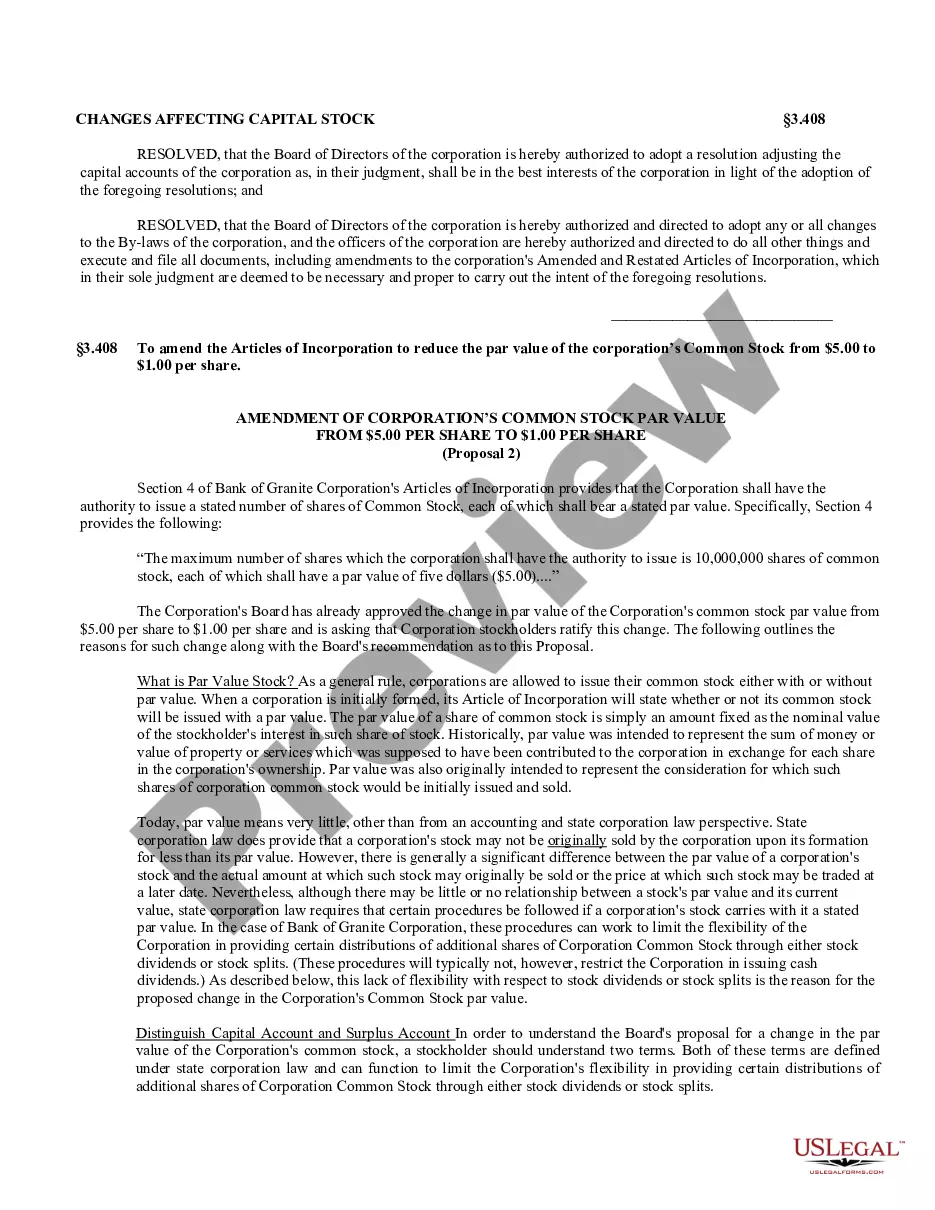
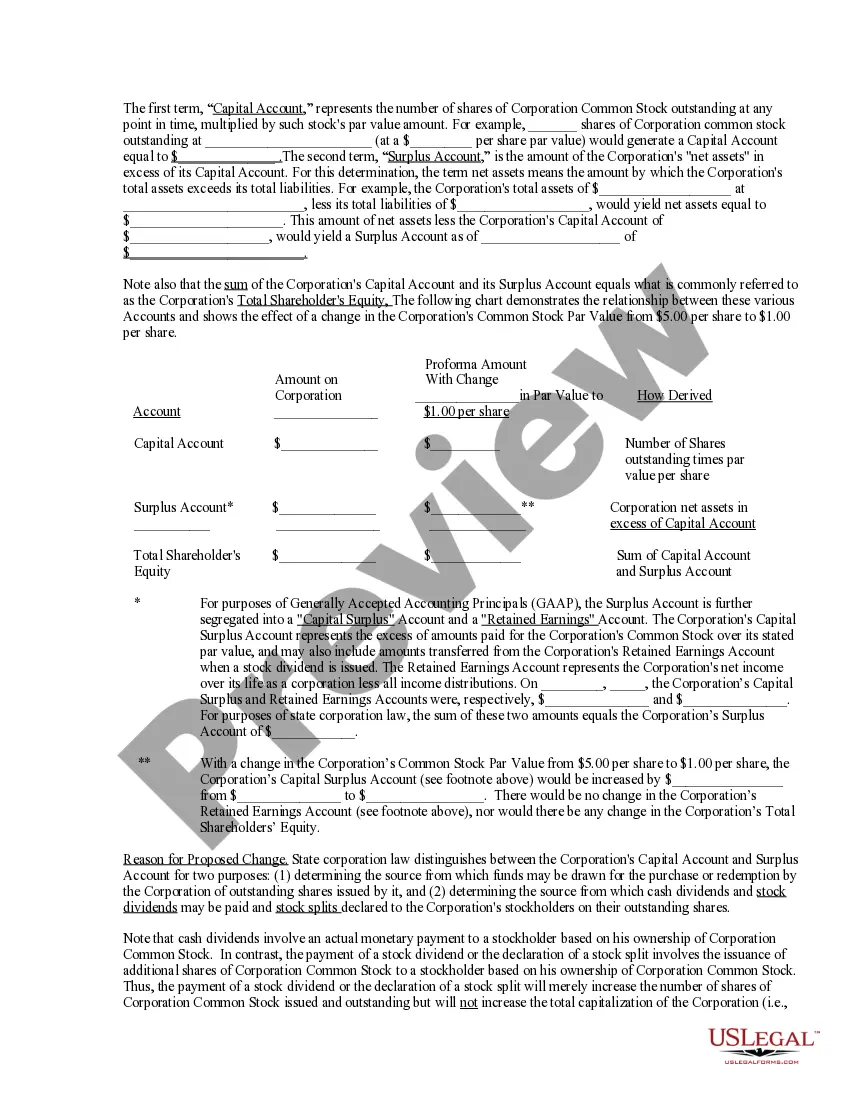
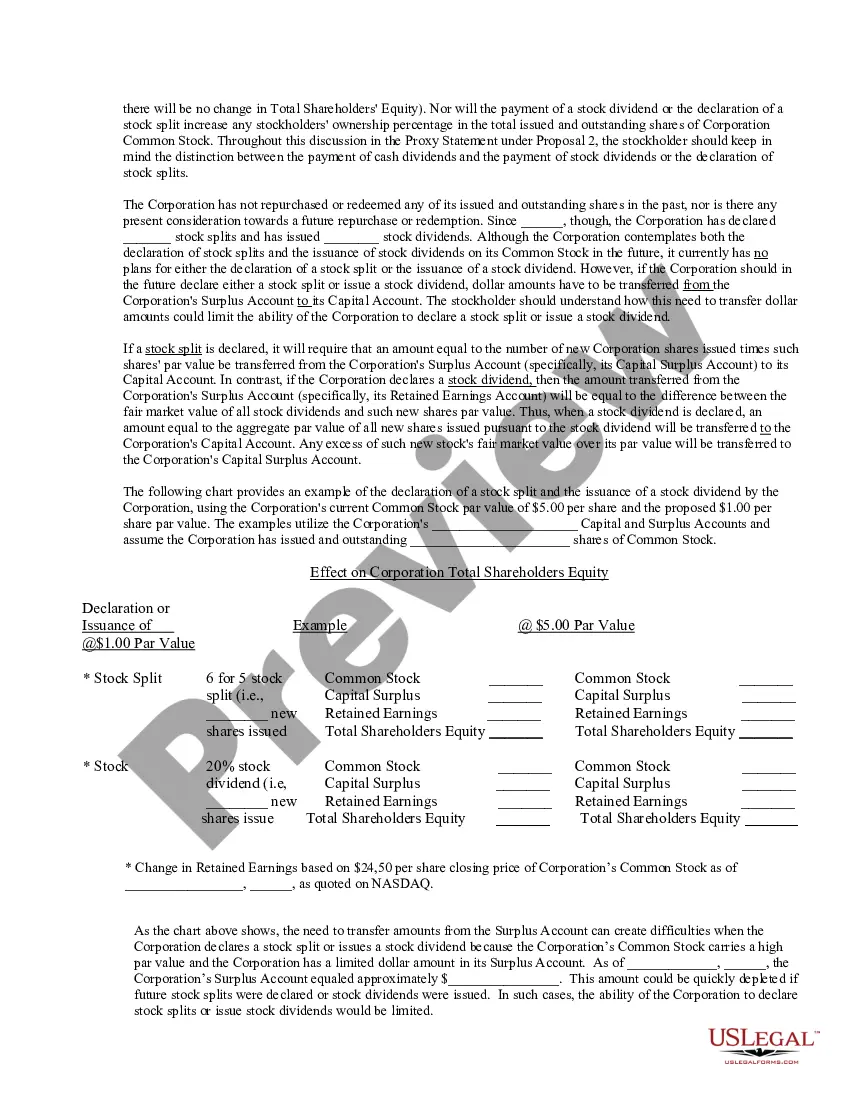
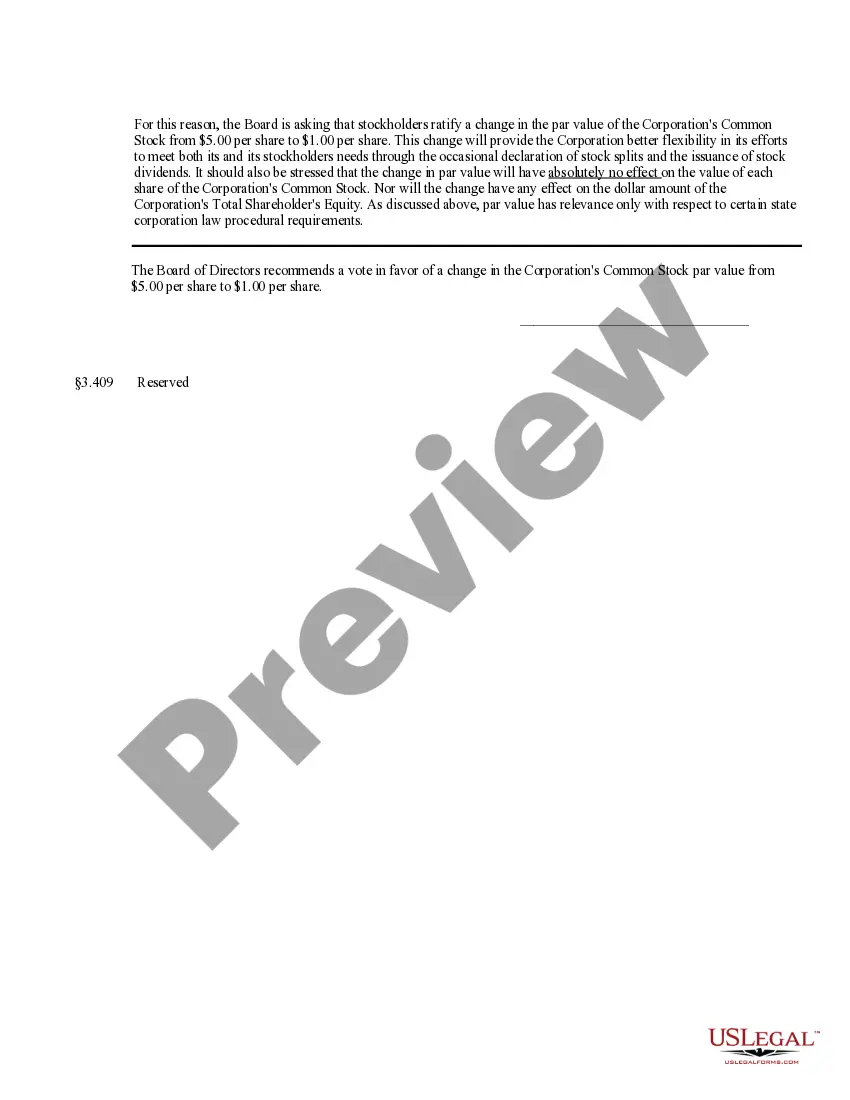
Par Value Common Stock For Cash
Description
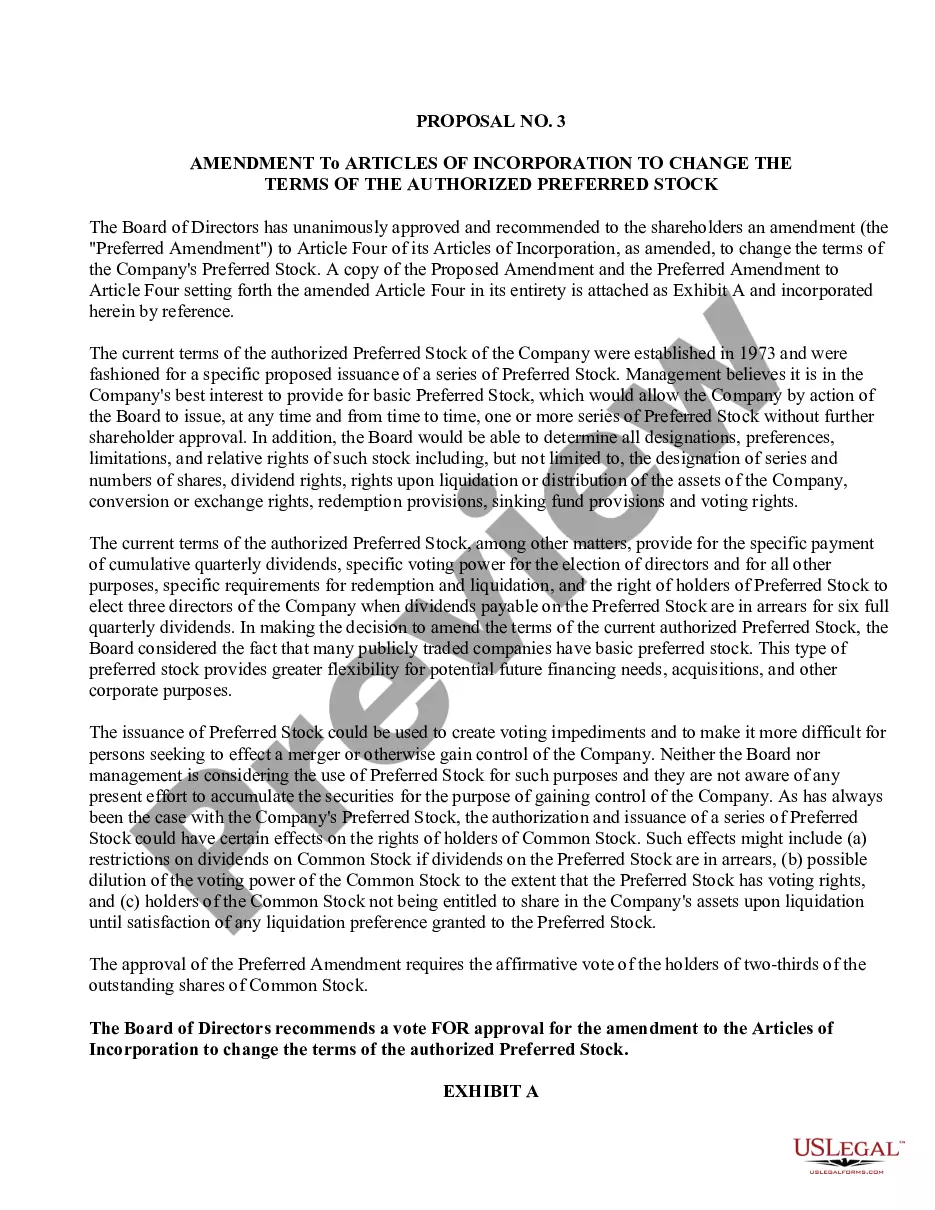
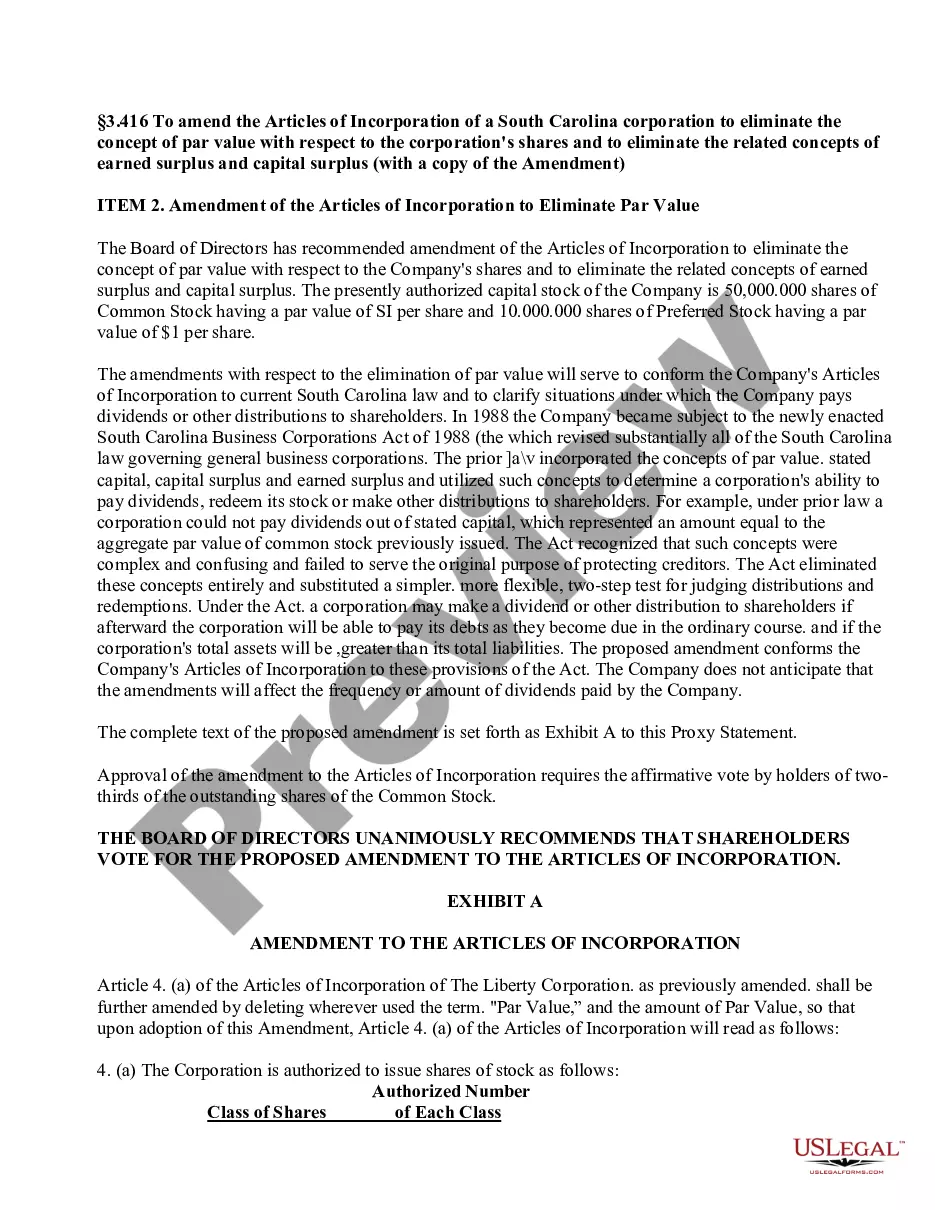
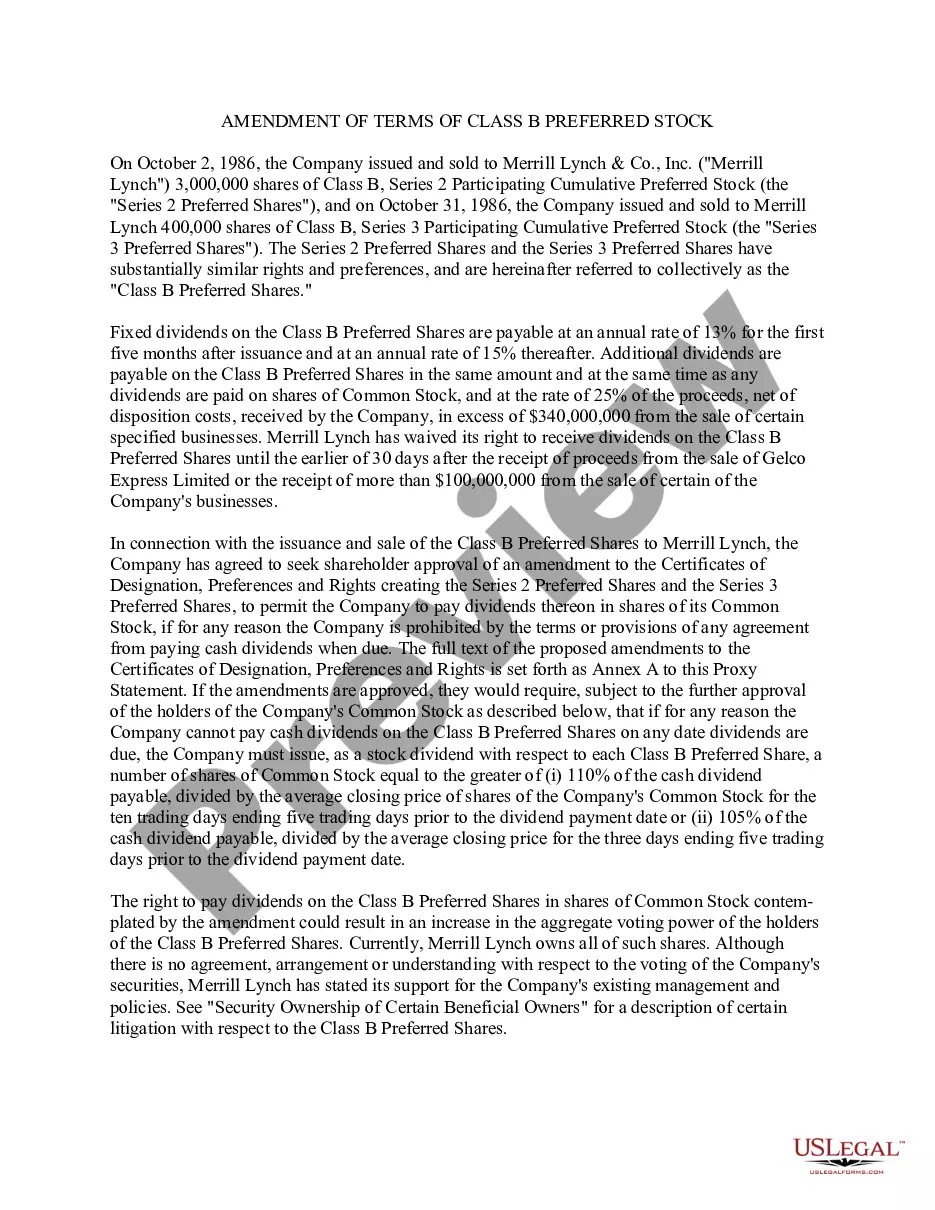
Get your form ready online
Our built-in tools help you complete, sign, share, and store your documents in one place.
Make edits, fill in missing information, and update formatting in US Legal Forms—just like you would in MS Word.
Download a copy, print it, send it by email, or mail it via USPS—whatever works best for your next step.
Sign and collect signatures with our SignNow integration. Send to multiple recipients, set reminders, and more. Go Premium to unlock E-Sign.
If this form requires notarization, complete it online through a secure video call—no need to meet a notary in person or wait for an appointment.
We protect your documents and personal data by following strict security and privacy standards.

Make edits, fill in missing information, and update formatting in US Legal Forms—just like you would in MS Word.

Download a copy, print it, send it by email, or mail it via USPS—whatever works best for your next step.

Sign and collect signatures with our SignNow integration. Send to multiple recipients, set reminders, and more. Go Premium to unlock E-Sign.

If this form requires notarization, complete it online through a secure video call—no need to meet a notary in person or wait for an appointment.

We protect your documents and personal data by following strict security and privacy standards.
Looking for another form?








How to fill out Amendment Of Common Stock Par Value?
The Nominal Value Common Equity For Currency you see on this page is a versatile official format crafted by expert attorneys in accordance with federal and state laws.
For more than 25 years, US Legal Forms has offered individuals, businesses, and legal experts with over 85,000 validated, state-specific forms for any enterprise and personal circumstance. It’s the swiftest, simplest, and most dependable way to obtain the documents you require, as the service ensures the utmost level of data protection and anti-virus security.
Sign up for US Legal Forms to have authenticated legal templates for all of life’s situations at your command.
- Search for the form you need and review it. Browse through the file you searched and preview it or verify the form description to confirm it meets your requirements. If it does not, utilize the search feature to discover the suitable one.
- Register and Log In. Choose the subscription plan that fits your needs and create an account. Use PayPal or a credit card for a prompt payment. If you already possess an account, Log In and verify your subscription to proceed.
- Obtain the fillable form. Choose the format you desire for your Nominal Value Common Equity For Currency (PDF, DOCX, RTF) and store the sample on your device.
- Fill out and sign the document. Print the template to fill it manually. Alternatively, employ an online multifunctional PDF editor to quickly and accurately complete and sign your form with an eSignature.
- Re-download your documents again. Use the same document again whenever necessary. Access the My documents tab in your profile to retrieve any previously downloaded forms.
Form popularity
FAQ
You can find par value common stock information through financial statements, stock registrars, or the company's investor relations page. Additionally, platforms like USLegalForms provide resources and documentation related to stock issuance, including details about par value common stock for cash. These tools can be invaluable for both investors and corporations.
To calculate the par value of common stock, refer to the company's articles of incorporation or the stock certificate, which will specify the assigned par value. This value remains constant and does not fluctuate with market conditions. When you consider par value common stock for cash, knowing its calculation can aid in better financial decision-making.
Par value is calculated based on the predetermined value set by the company's board of directors when the stock is authorized. This value is usually a nominal amount, such as $0.01 or $1, and does not change over time. Understanding how par value common stock for cash works helps in grasping the overall equity structure of a company.
The journal entry for issuing common stock for cash typically involves debiting the cash account and crediting the common stock account at par value. For example, if you issue 100 shares with a par value of $1 for $10 each, you would debit cash for $1000 and credit common stock for $100. This entry reflects the transaction involving par value common stock for cash accurately.
A $1000 par value indicates the nominal value assigned to a share of common stock, representing the minimum amount the company must receive when issuing the stock. This value does not necessarily reflect the market value, which can fluctuate based on demand and company performance. Understanding par value common stock for cash is essential for evaluating a company's financial structure.
To cash in a common stock, you generally need to sell your shares through a brokerage account. You can place a sell order for your common stock, and once the transaction completes, the proceeds will be credited to your account. If you hold par value common stock for cash, ensure you understand any potential tax implications related to the sale.
To find the par value of common stock, you should review the company's registration documents or consult their annual reports. This value is often noted in the balance sheet under equity. If you're having trouble accessing this information, platforms like uslegalforms offer resources that can help you understand and navigate the complexities of stocks and their par values. This clarity can be particularly useful when dealing with par value common stock for cash.
The formula to calculate the par value of stock is quite straightforward. It is defined as the total capital received from common stock divided by the number of shares issued. This means that if you have issued 1,000 shares and received $10,000, then the par value would be $10 per share. Understanding this calculation is essential, particularly when dealing with par value common stock for cash transactions.
Cashing out common stock generally involves selling your shares through a broker or trading platform. First, ensure you have an account set up with a brokerage that allows stock trading. Next, place a sell order for your shares. If you need assistance, platforms like uslegalforms can guide you through the necessary legal paperwork to ensure a seamless transaction related to par value common stock for cash.
To find the par value of common stock, you should start by checking the company's articles of incorporation or its financial statements. This information is typically disclosed in the equity section. If you can't locate it, consider reaching out to the company directly or looking at their investor relations page. Knowing the par value common stock for cash helps you understand the nominal value assigned by the company.