Issuing Par Value Common Stock For Cash
Description
Get your form ready online
Our built-in tools help you complete, sign, share, and store your documents in one place.
Make edits, fill in missing information, and update formatting in US Legal Forms—just like you would in MS Word.
Download a copy, print it, send it by email, or mail it via USPS—whatever works best for your next step.
Sign and collect signatures with our SignNow integration. Send to multiple recipients, set reminders, and more. Go Premium to unlock E-Sign.
If this form requires notarization, complete it online through a secure video call—no need to meet a notary in person or wait for an appointment.
We protect your documents and personal data by following strict security and privacy standards.

Make edits, fill in missing information, and update formatting in US Legal Forms—just like you would in MS Word.

Download a copy, print it, send it by email, or mail it via USPS—whatever works best for your next step.

Sign and collect signatures with our SignNow integration. Send to multiple recipients, set reminders, and more. Go Premium to unlock E-Sign.

If this form requires notarization, complete it online through a secure video call—no need to meet a notary in person or wait for an appointment.

We protect your documents and personal data by following strict security and privacy standards.
Looking for another form?








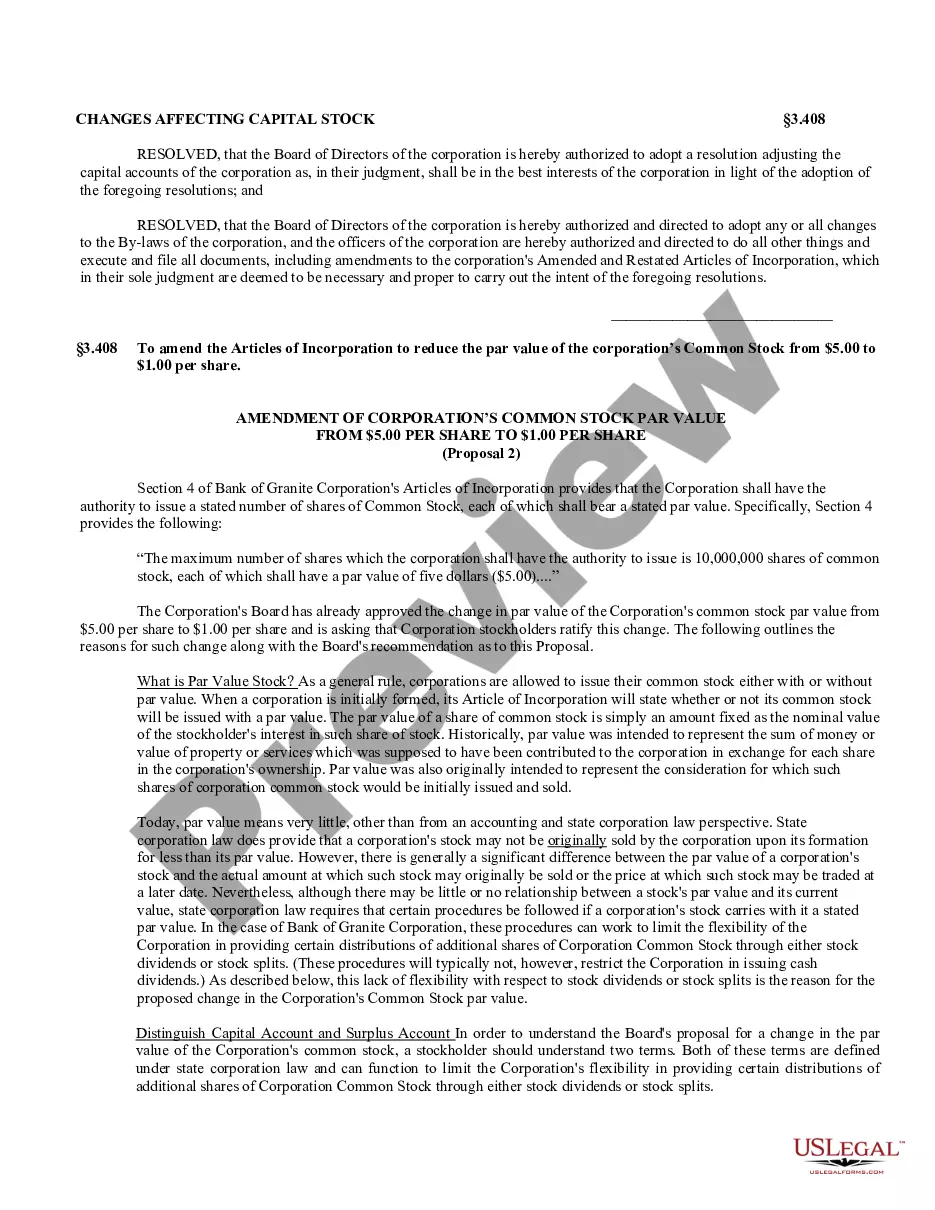
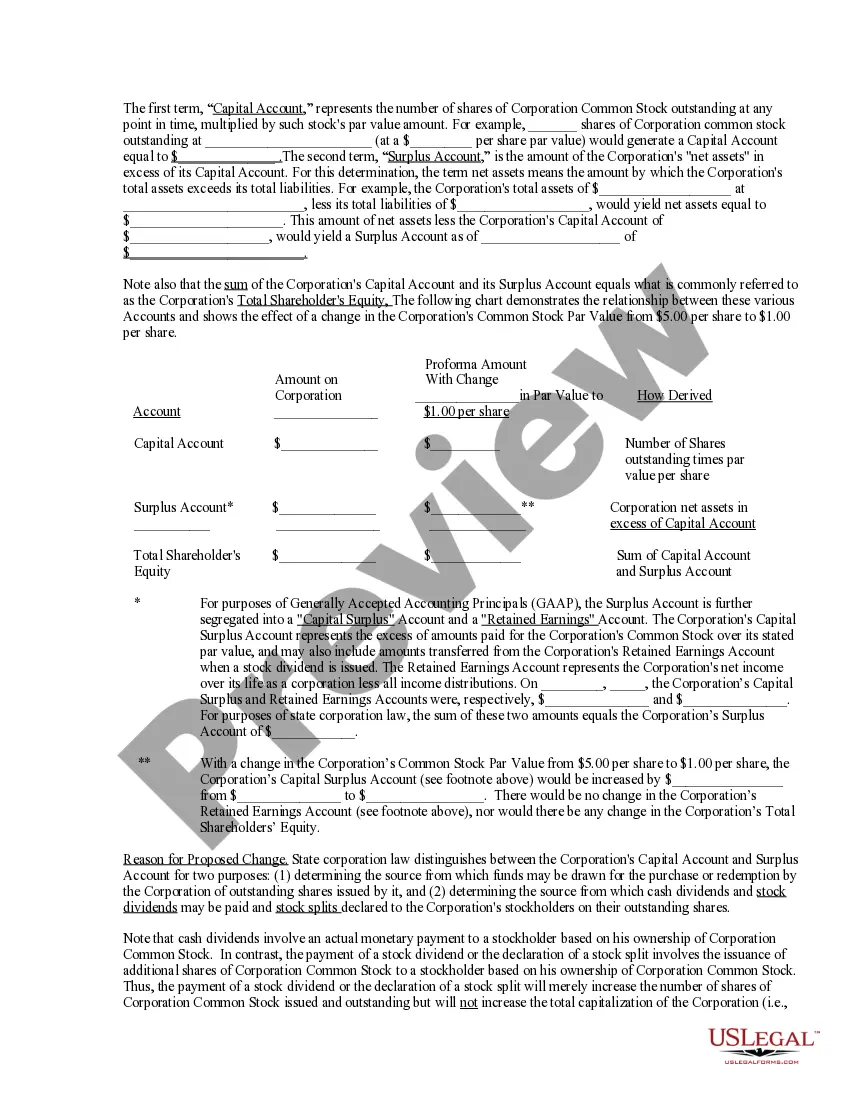
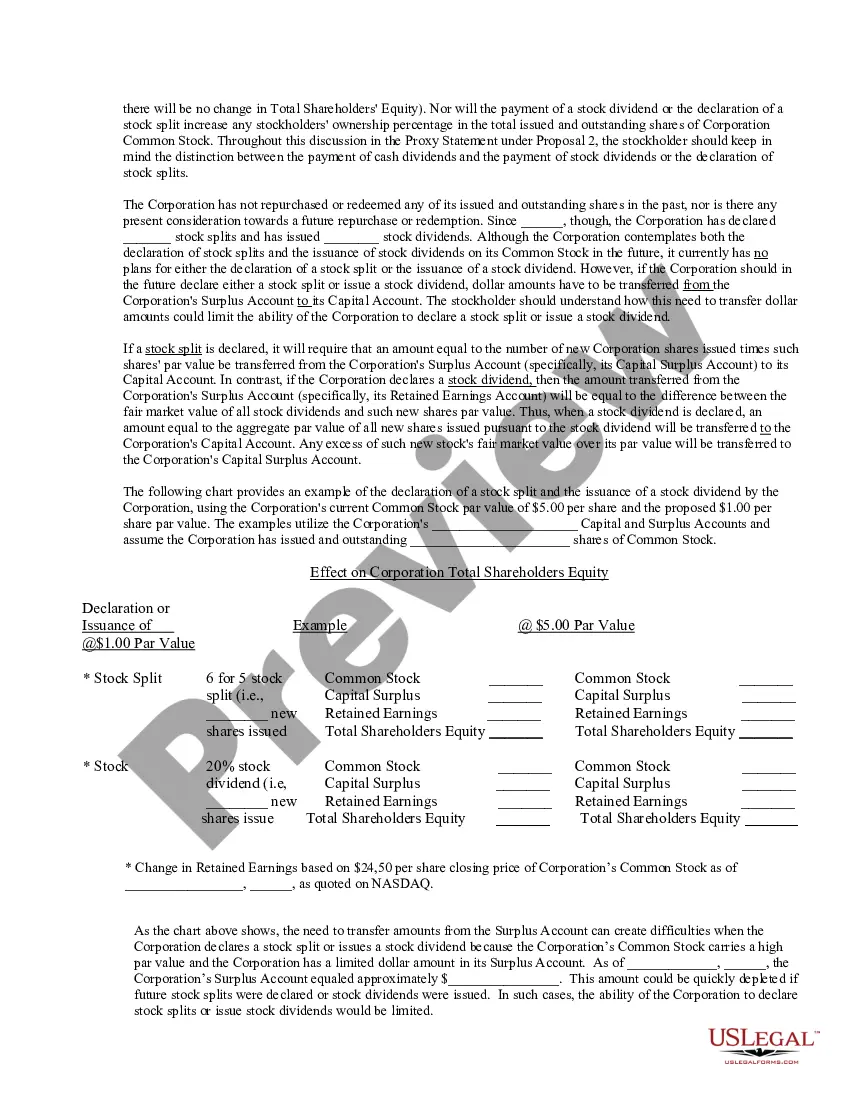
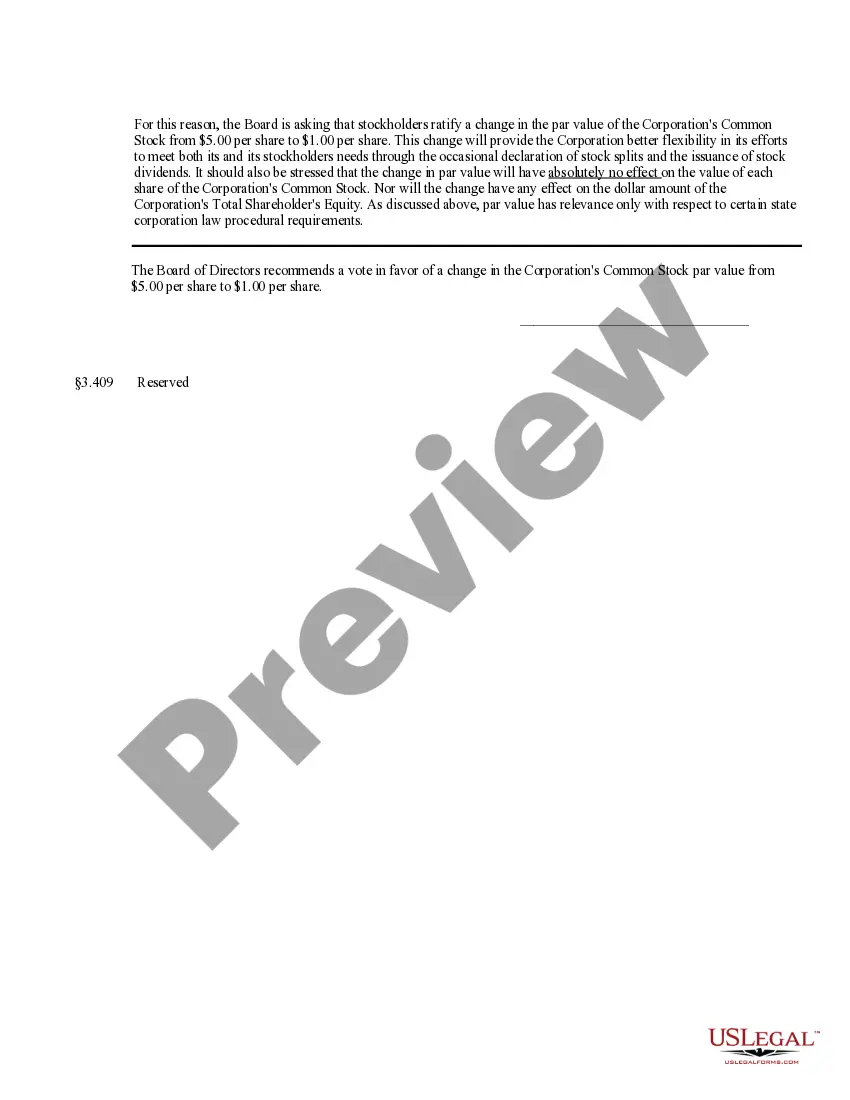
How to fill out Amendment Of Common Stock Par Value?
Legal documentation management can be maddening, even for the most adept professionals.
When you're looking for an Issuing Par Value Common Stock for Cash and lack the opportunity to invest time finding the proper and updated version, the procedures might be overwhelming.
Tap into a valuable resource hub of articles, guides, manuals, and tools pertinent to your situation and needs.
Save effort and time searching for the documents you require, and use US Legal Forms’ advanced search and Preview feature to find Issuing Par Value Common Stock For Cash and obtain it.
Make sure the sample is acknowledged in your state or county. Once you are prepared, select Buy Now. Choose a subscription package. Select the format you require, and Download, complete, eSign, print, and submit your documents. Take advantage of the US Legal Forms online library, supported by 25 years of experience and trustworthiness. Transform your daily document management into a straightforward and user-friendly process today.
- If you possess a subscription, Log In to your US Legal Forms account, seek the form, and obtain it.
- Visit the My documents tab to review the documents you have previously downloaded and to manage your folders as needed.
- If this is your first encounter with US Legal Forms, establish an account and gain unlimited access to all features of the platform.
- Here are the procedures to follow after reaching the form you need.
- Confirm this is the correct form by previewing it and reviewing its description.
- Access state- or county-specific legal and organizational templates.
- US Legal Forms fulfills any requirements you might have, from personal to corporate documentation, all in one location.
- Utilize advanced functionality to complete and oversee your Issuing Par Value Common Stock For Cash.
Form popularity
FAQ
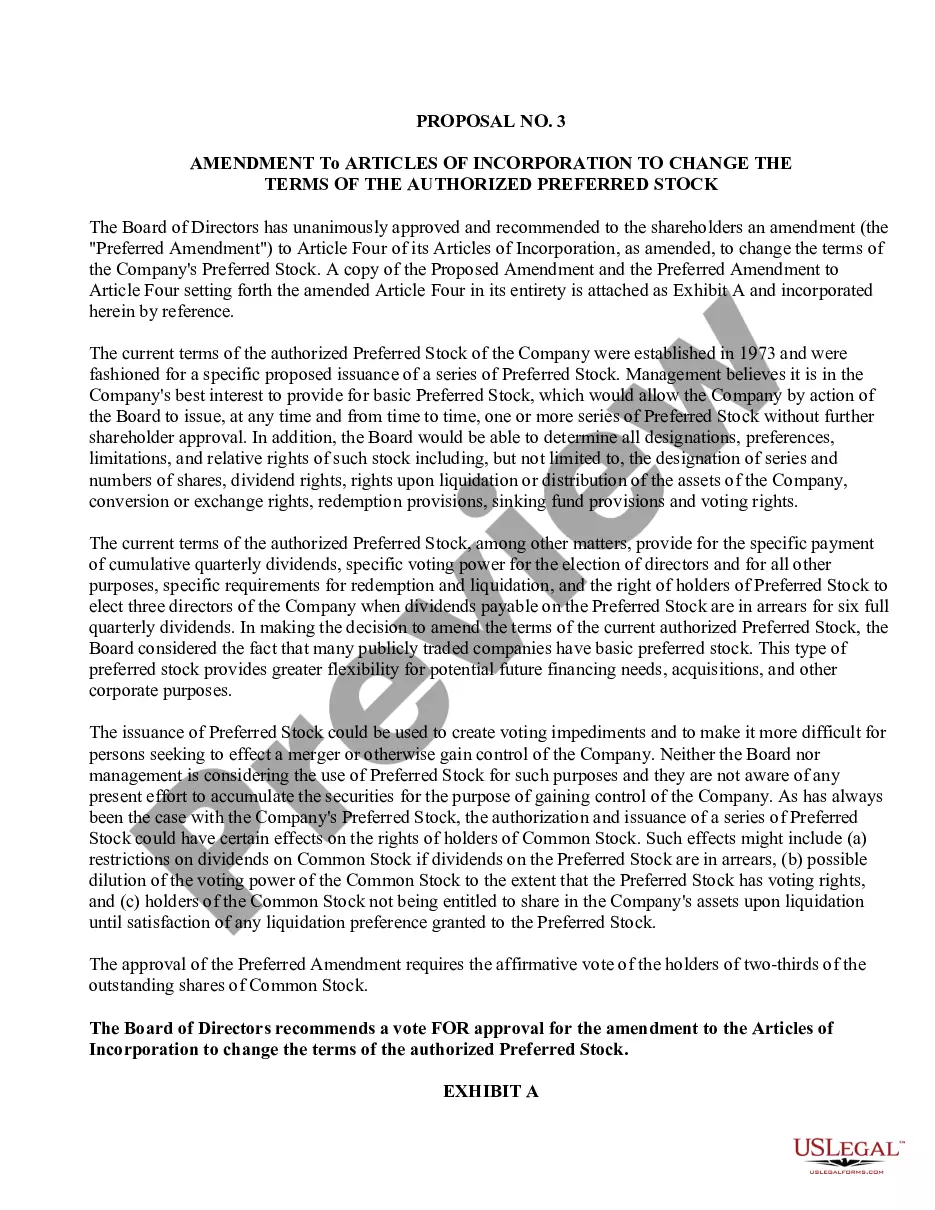
When a company issues shares for cash, it means the business is offering ownership stakes in exchange for cash contributions from investors. This approach allows the company to generate funds needed for various business functions. Issuing par value common stock for cash is a fundamental strategy used to boost available resources. Moreover, this practice can be an effective way to strengthen the company's financial position.
Issuing par value common stock for cash refers to the process where a company sells its shares to investors in exchange for cash. This transaction provides the business with immediate funding that can be utilized for growth and other essential expenses. Investors acquire ownership in the company, anticipating potential future profits. Overall, it is a crucial method for a company to raise capital.
Issuing par value common stock for cash does not decrease cash; rather, it increases cash on the company's balance sheet. When you issue common stock, investors provide cash in exchange for ownership shares in the company. This transaction creates additional capital for the business while enhancing cash flow. Thus, you can use this cash for various operational needs or investments.
The formula to calculate par is quite straightforward: Par Value = Total Capital Raised / Number of Shares Outstanding. This calculation becomes especially useful when issuing par value common stock for cash, as it helps you establish a clear understanding of the value assigned to your shares. Keeping track of these figures aids in maintaining transparency with investors.
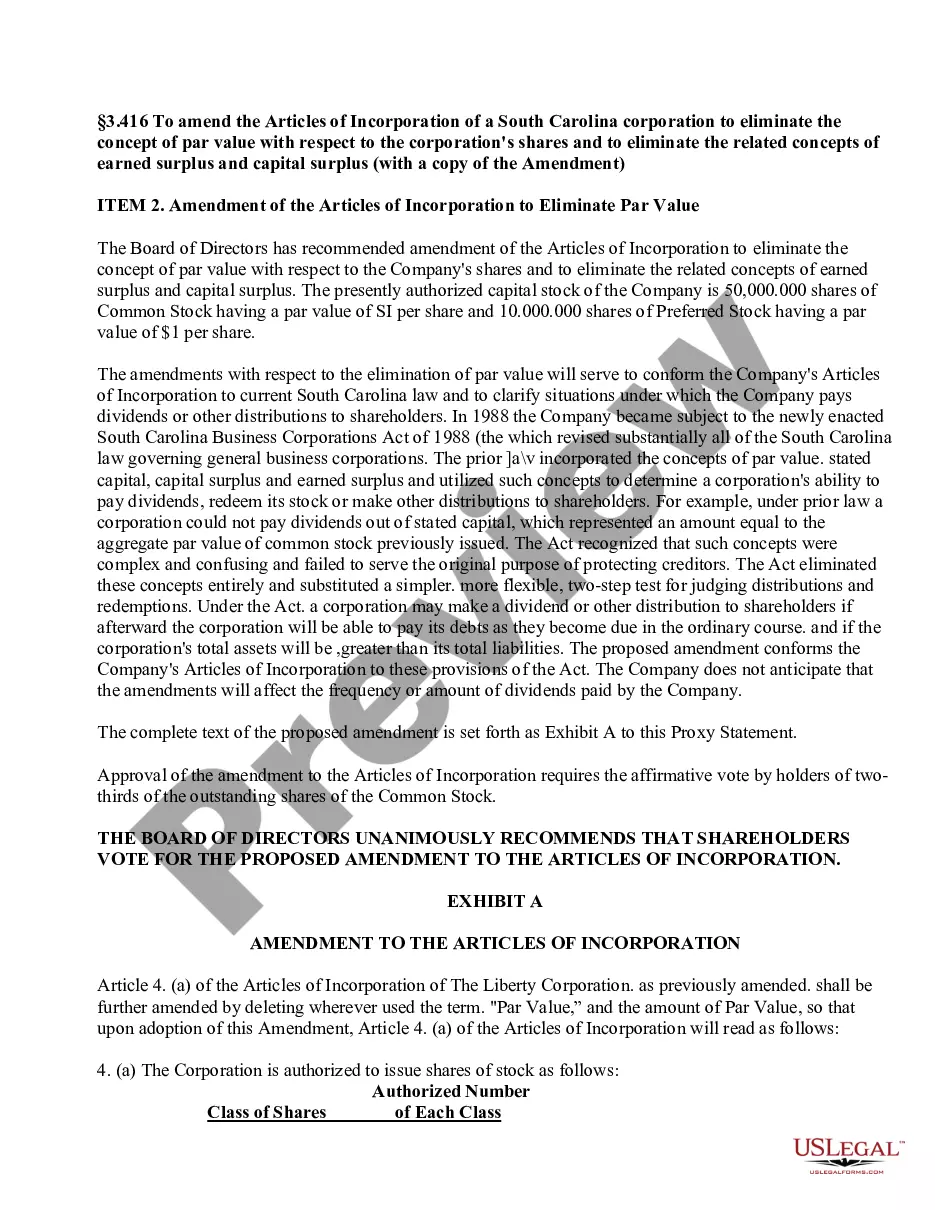
Some common stocks have a par value, while others may be issued with no par value. The par value is often a small figure, like $0.01 or $0.10, which serves a legal purpose rather than reflecting market value. If you are considering issuing par value common stock for cash, check your state laws to ensure compliance.
To calculate par stock, use this formula: Par Value = Total Value of Stock Issued / Total Number of Shares Issued. This formula helps you determine the standard value assigned to each share when issuing par value common stock for cash. Understanding this calculation is essential for accurate financial reporting.
Common stock par value appears in the equity section of the balance sheet. It represents the nominal value of shares issued by the corporation. When you issue par value common stock for cash, this figure reflects the legal minimum value assigned to each share, which is important for accounting purposes.
You can determine the par value of common stock by reviewing the company's articles of incorporation or corporate bylaws. These documents typically state the par value assigned to shares. If you plan on issuing par value common stock for cash, ensure that the amount aligns with your corporate records and meets state regulations.
To put common stock in a journal entry, identify the total amount received for the issued shares and separate it into par value and any excess. Debit the cash account for the total amount received and credit the common stock account for the total par value issued. This clear structure simplifies the process of recording transactions related to issuing par value common stock for cash efficiently.
Yes, common stock is recorded at par value on the company's balance sheet. The par value is referenced when issuing shares as it establishes a nominal legal capital. This process is vital when you're issuing par value common stock for cash, as it influences your financial reporting and compliance.