Par Value For A Bond Is Also Known As
Description
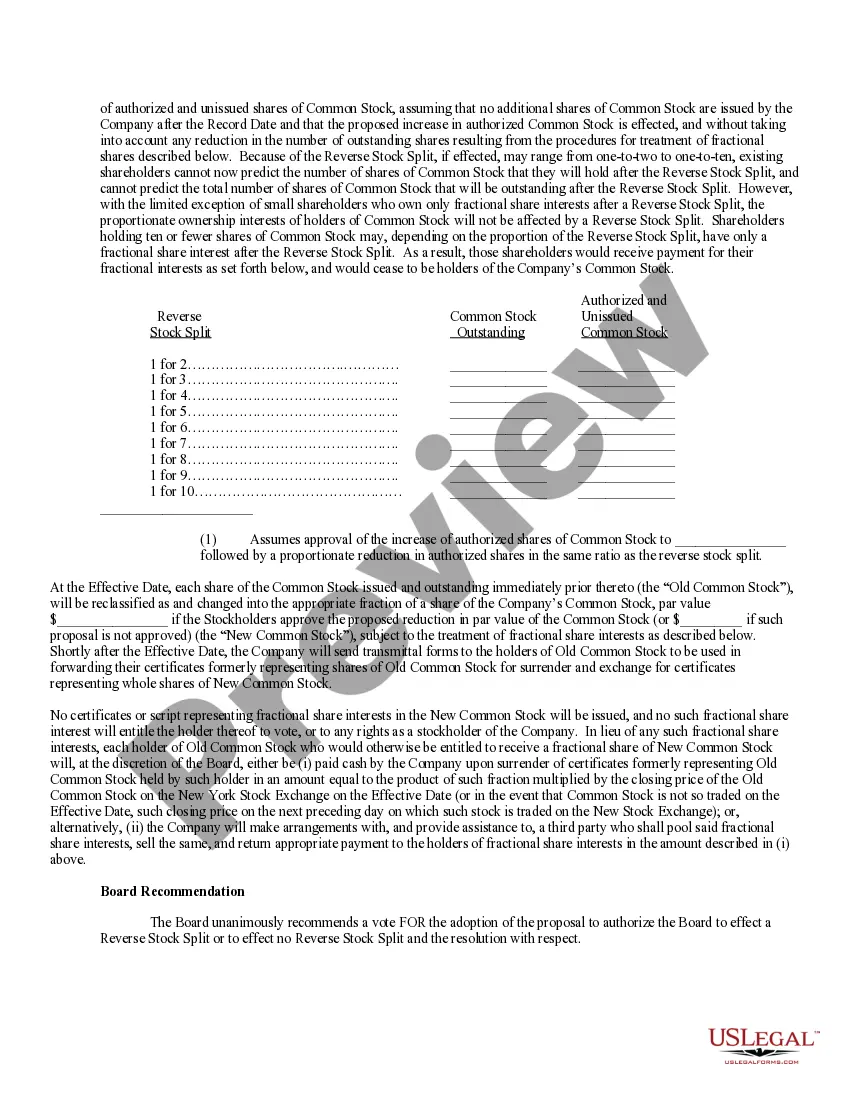
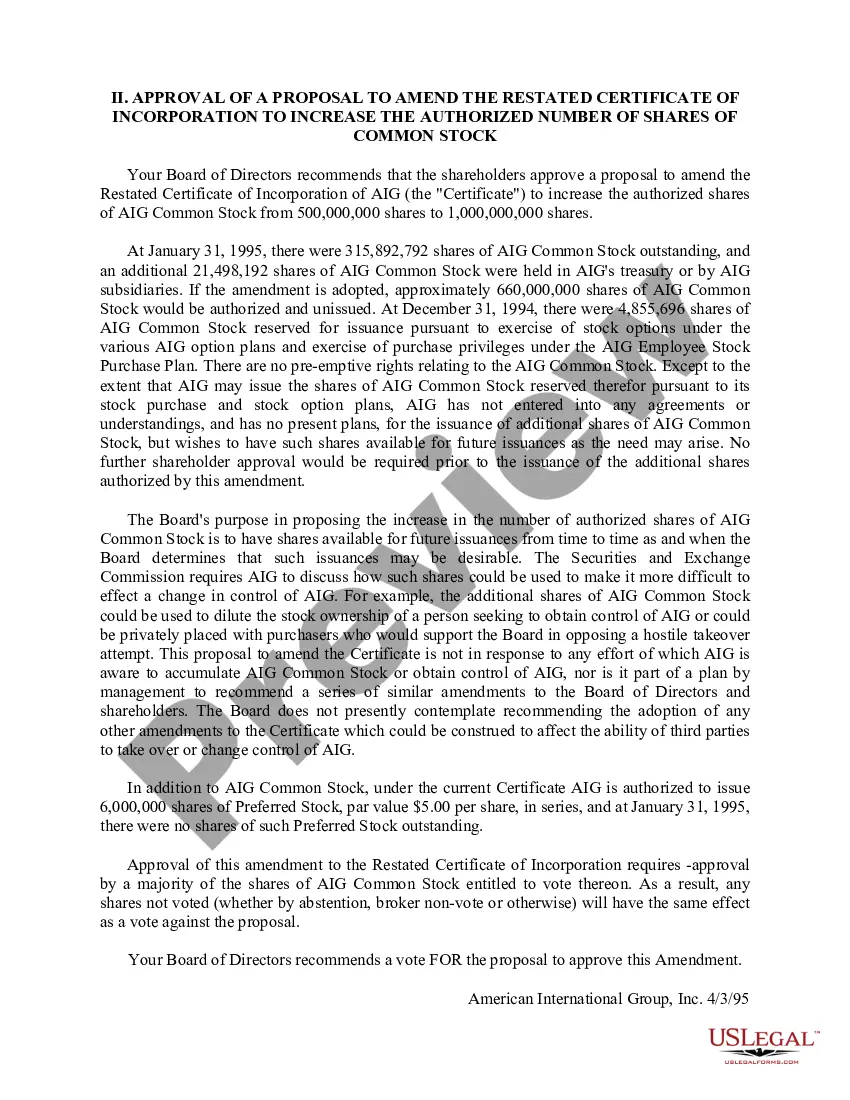
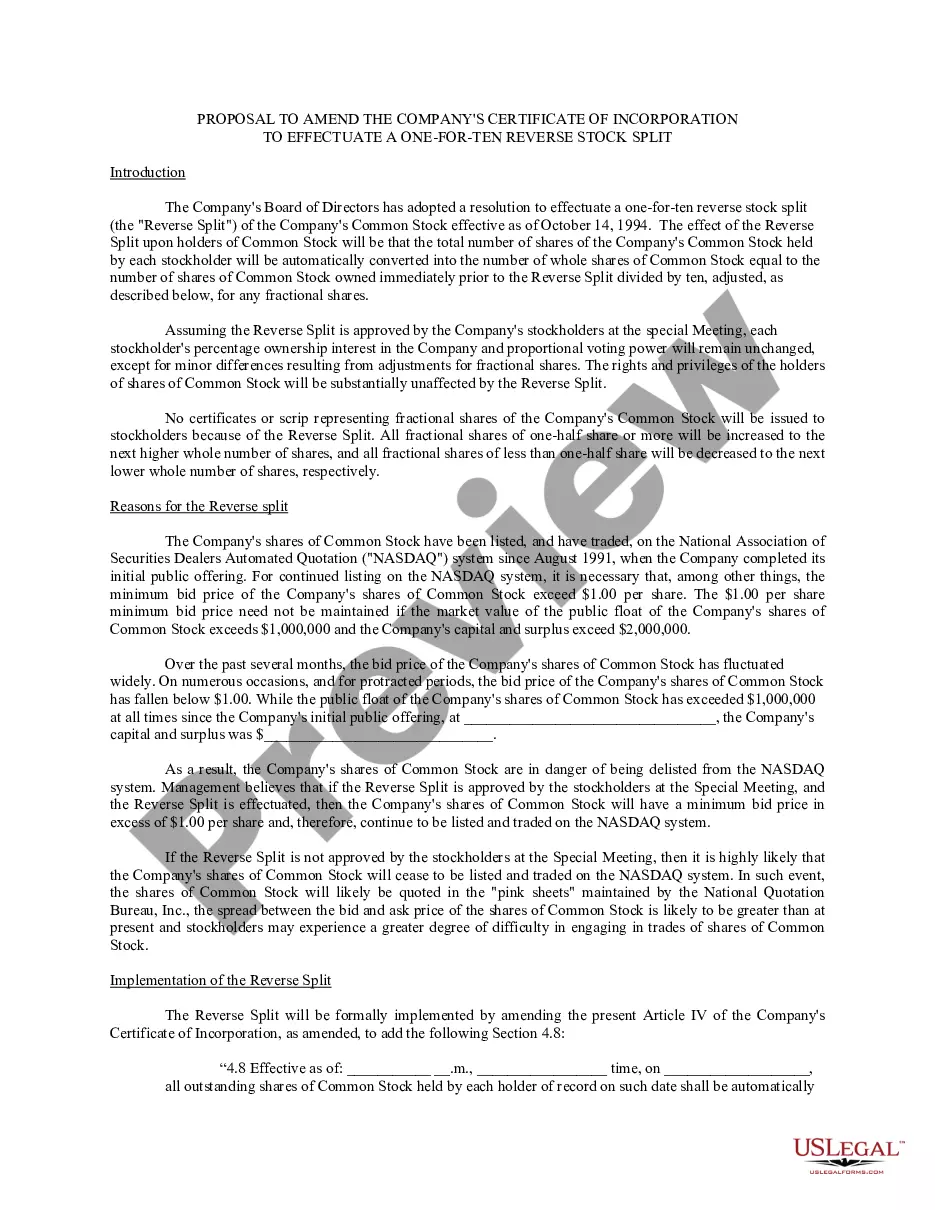
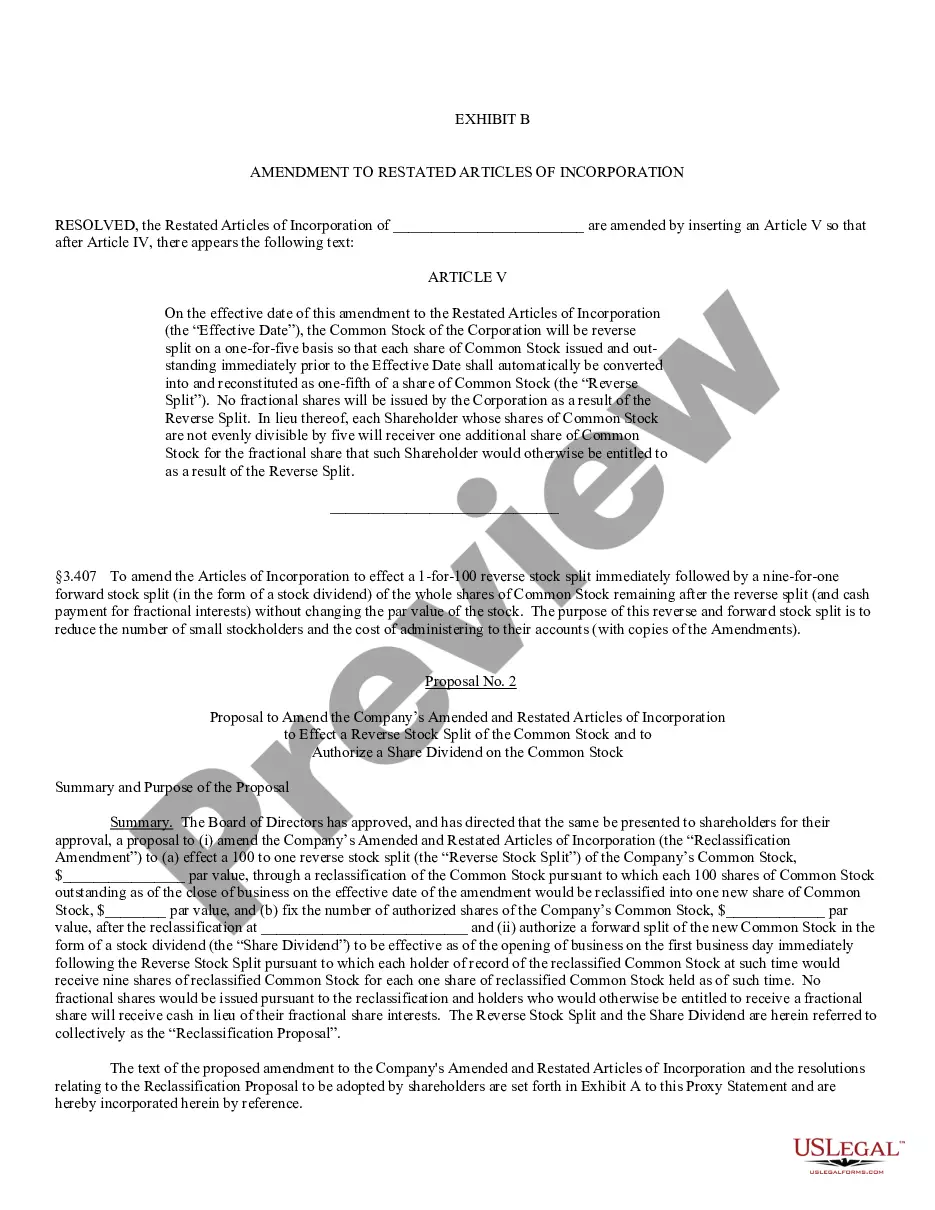
Get your form ready online
Our built-in tools help you complete, sign, share, and store your documents in one place.
Make edits, fill in missing information, and update formatting in US Legal Forms—just like you would in MS Word.
Download a copy, print it, send it by email, or mail it via USPS—whatever works best for your next step.
Sign and collect signatures with our SignNow integration. Send to multiple recipients, set reminders, and more. Go Premium to unlock E-Sign.
If this form requires notarization, complete it online through a secure video call—no need to meet a notary in person or wait for an appointment.
We protect your documents and personal data by following strict security and privacy standards.

Make edits, fill in missing information, and update formatting in US Legal Forms—just like you would in MS Word.

Download a copy, print it, send it by email, or mail it via USPS—whatever works best for your next step.

Sign and collect signatures with our SignNow integration. Send to multiple recipients, set reminders, and more. Go Premium to unlock E-Sign.

If this form requires notarization, complete it online through a secure video call—no need to meet a notary in person or wait for an appointment.

We protect your documents and personal data by following strict security and privacy standards.
Looking for another form?







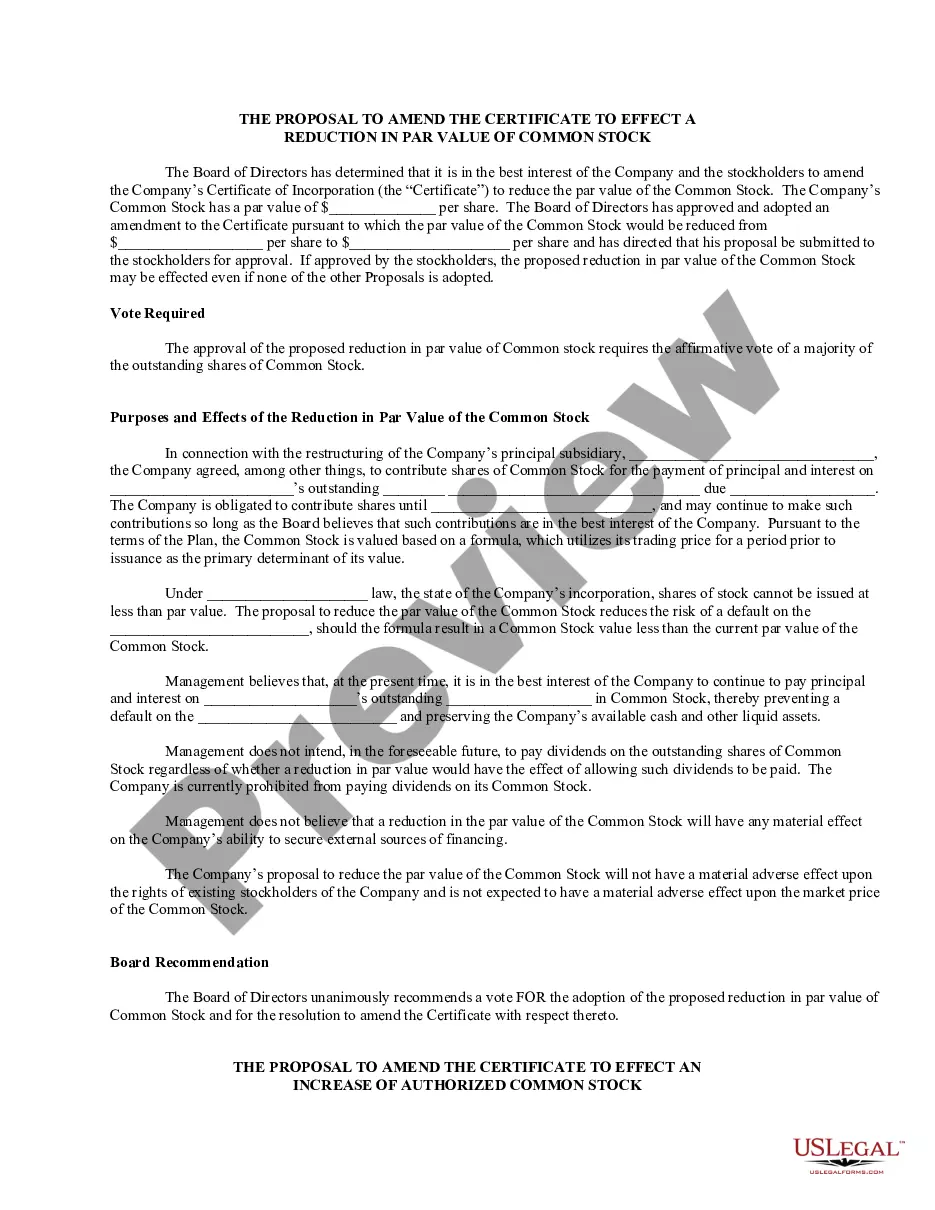
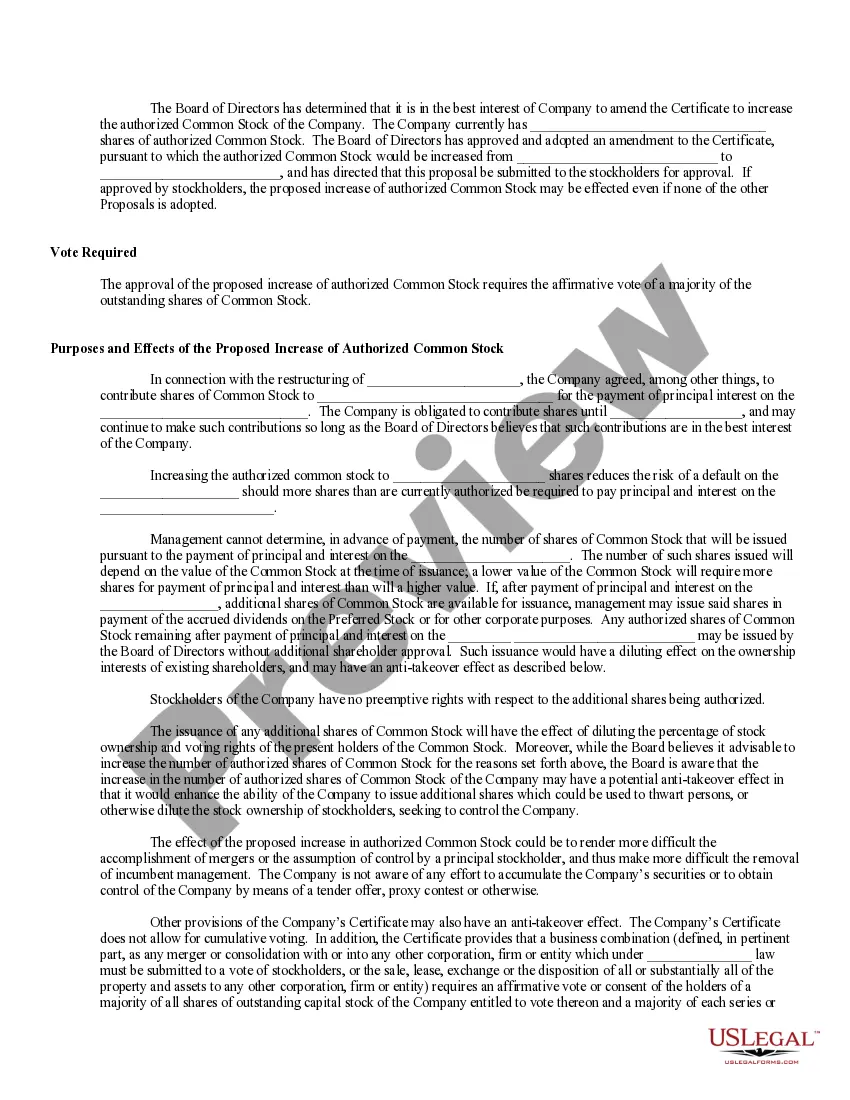
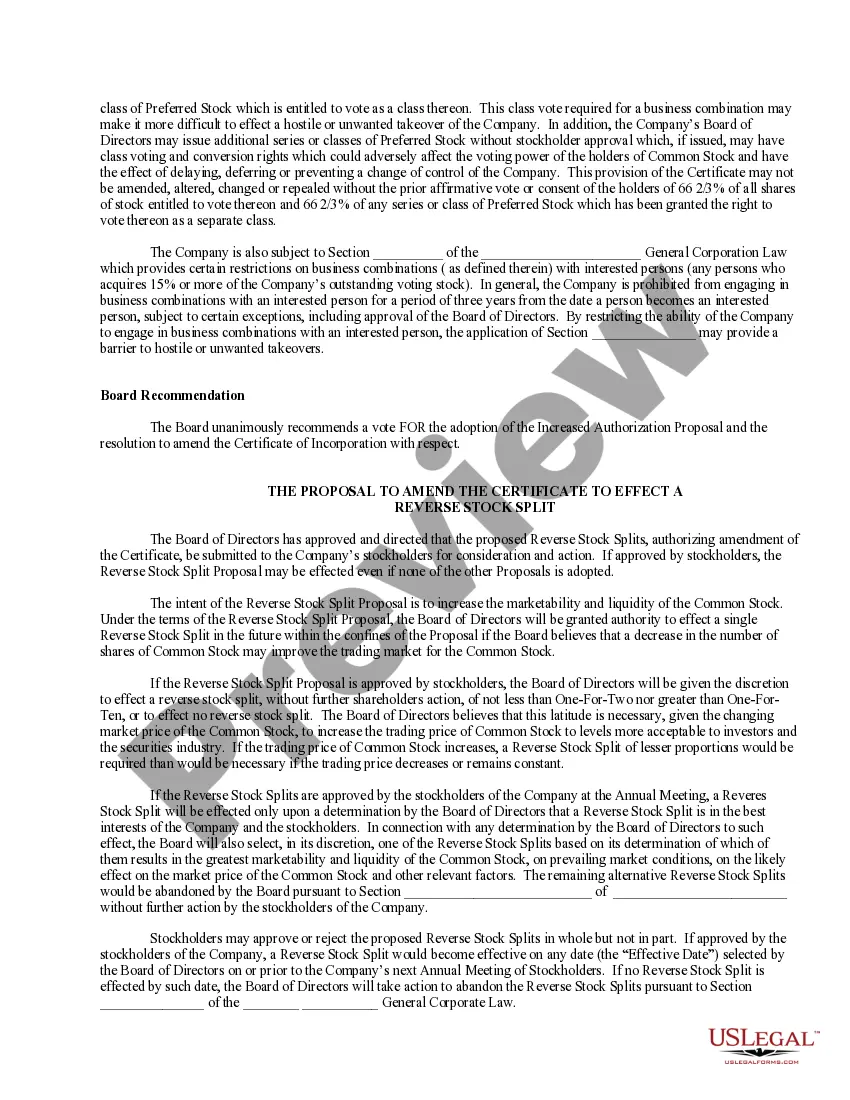
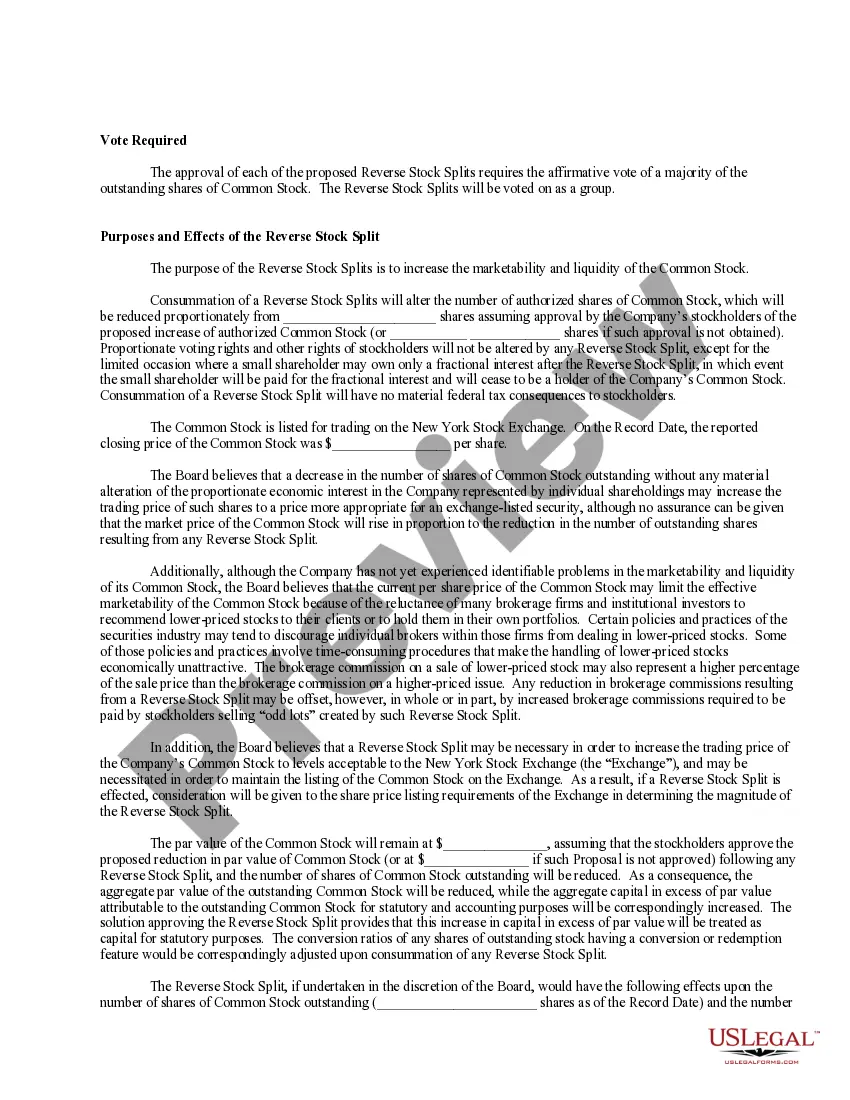
How to fill out Proposal To Amend Certificate To Reduce Par Value, Increase Authorized Common Stock And Reverse Stock Split With Exhibit?
Whether for commercial reasons or personal issues, everyone must deal with legal matters at some stage in their life.
Completing legal forms requires meticulous focus, beginning with selecting the correct template.
With a vast US Legal Forms library available, you never have to waste time looking for the appropriate template online. Utilize the library’s straightforward navigation to find the correct template for any occasion.
- Obtain the template you require by utilizing the search box or catalog navigation.
- Review the description of the form to confirm it suits your circumstances, state, and area.
- Click on the form’s preview to inspect it.
- If it is the wrong document, return to the search feature to find the Par Value For A Bond Is Also Known As template you require.
- Download the file if it corresponds to your specifications.
- If you have a US Legal Forms account, click Log in to access previously saved documents in My documents.
- If you lack an account, you can acquire the form by clicking Buy now.
- Choose the suitable pricing option.
- Fill out the account registration form.
- Select your payment option: you may use a credit card or PayPal account.
- Choose the document format you prefer and download the Par Value For A Bond Is Also Known As.
- Once it is saved, you are able to fill out the form with the assistance of editing software or print it and complete it manually.
Form popularity
FAQ
Par value for a bond is also referred to as maturity value. This term signifies the sum that investors receive once the bond reaches its maturity date. Knowing the maturity value helps you understand the bond's long-term financial implications, ensuring a well-informed investment strategy.
Each bond comes with a set term that typically ranges from 1 to 10 years or more. The face value of each bond, also referred to as the par value or redemption value, is set by the issuer and typically printed on the bond itself. It represents the amount the issuer promises to pay once the bond reaches maturity.
Par Value and Bond price can be the same at issue, but it is not always the case. The price of a bond can change over time before it reaches maturity. When this happens, the price of a bond is not the same as the par value. The price of the bond is often then quoted at its par value.
How to Calculate Par Value. The par value of a stock or bond is the stated value on the security certificate of the issuer. The par value, a term often used interchangeably with the face value (FV), is the nominal value of a share, bond, or other related securities on their date of issuance.
The par value of a bond, also called the face amount or face value, is the value written on the front of the bond. This is the amount of money that bond issuers promise to repay you at a future date. It is fixed at the time of issuance and, unlike market value, it doesn't change.