Reorganization Plan
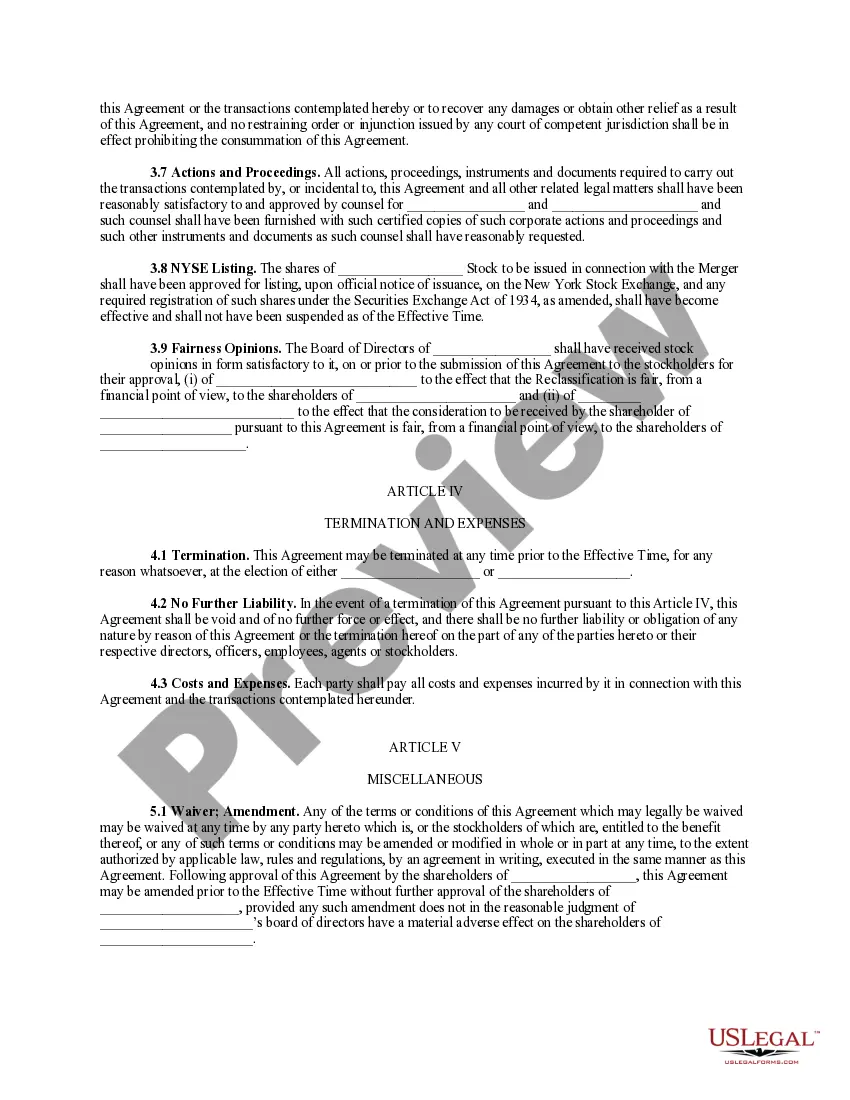
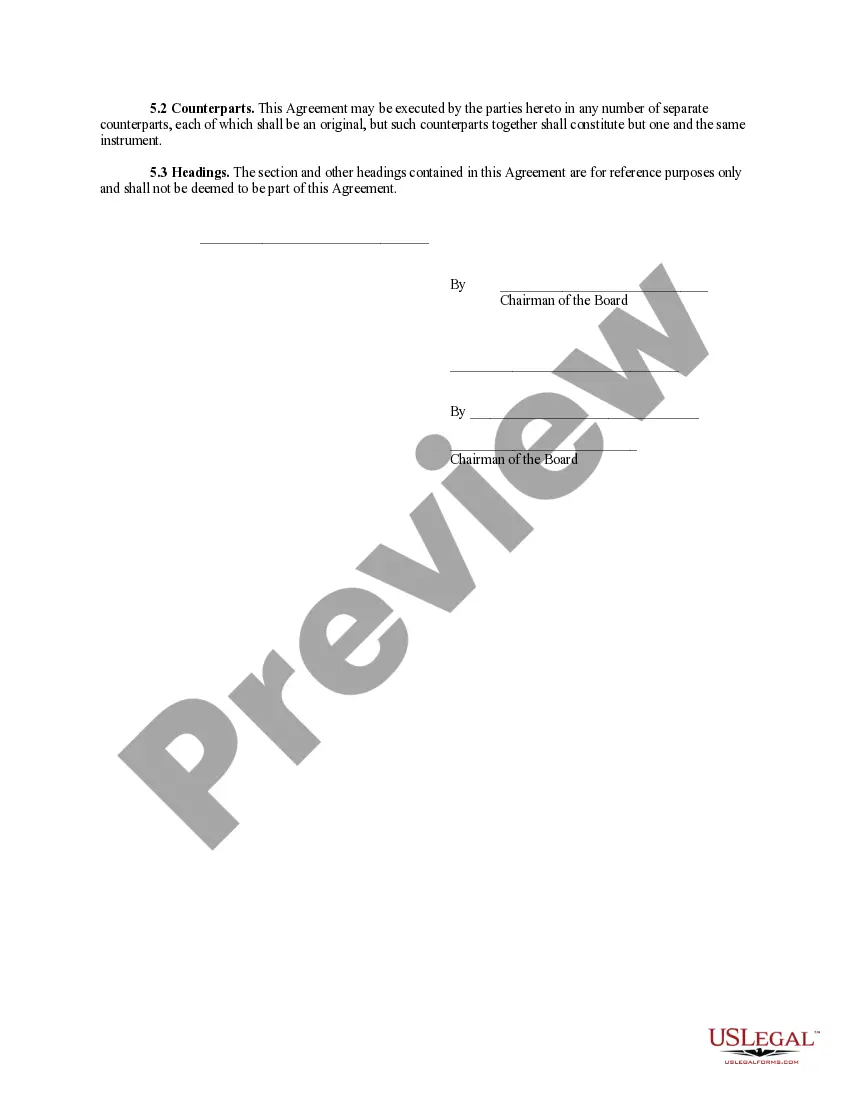
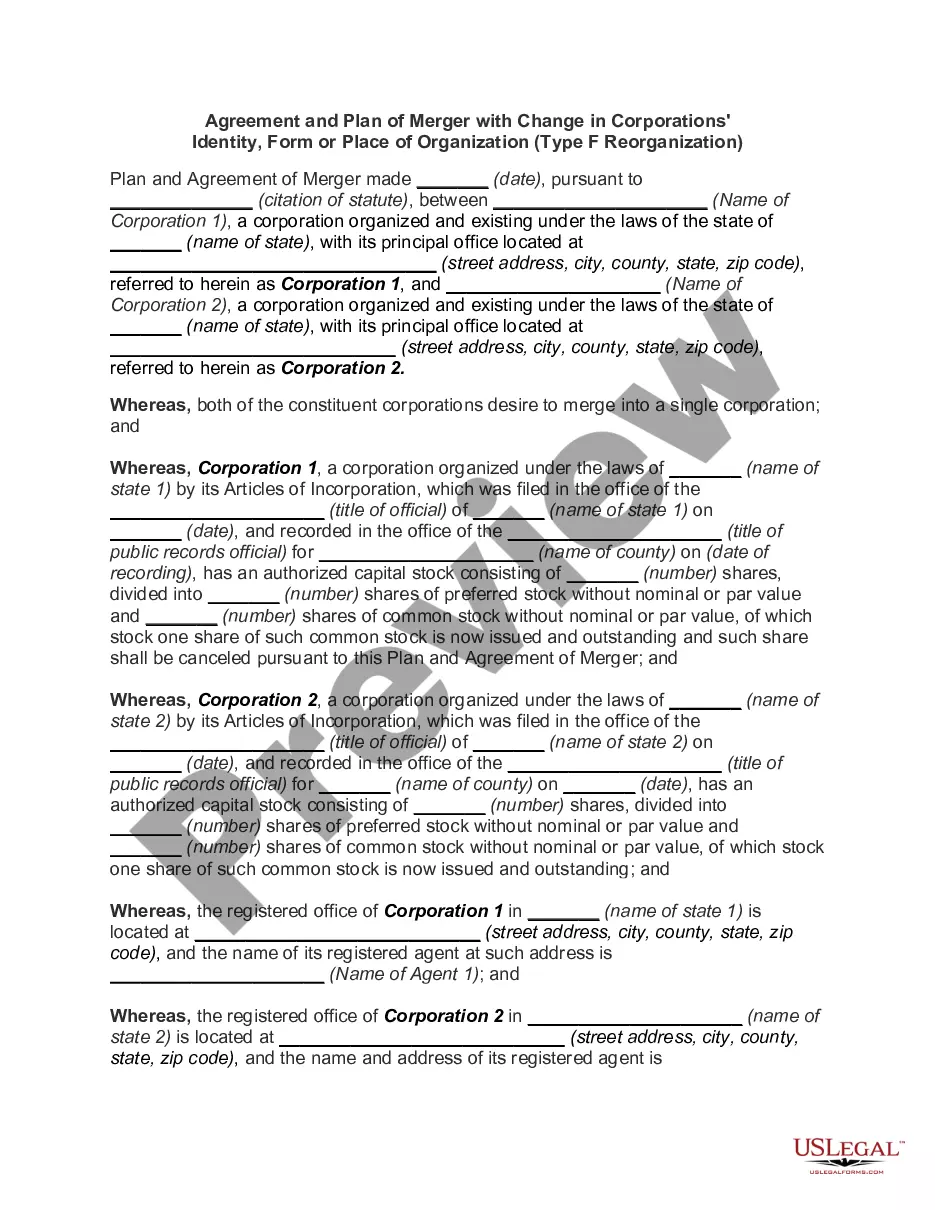
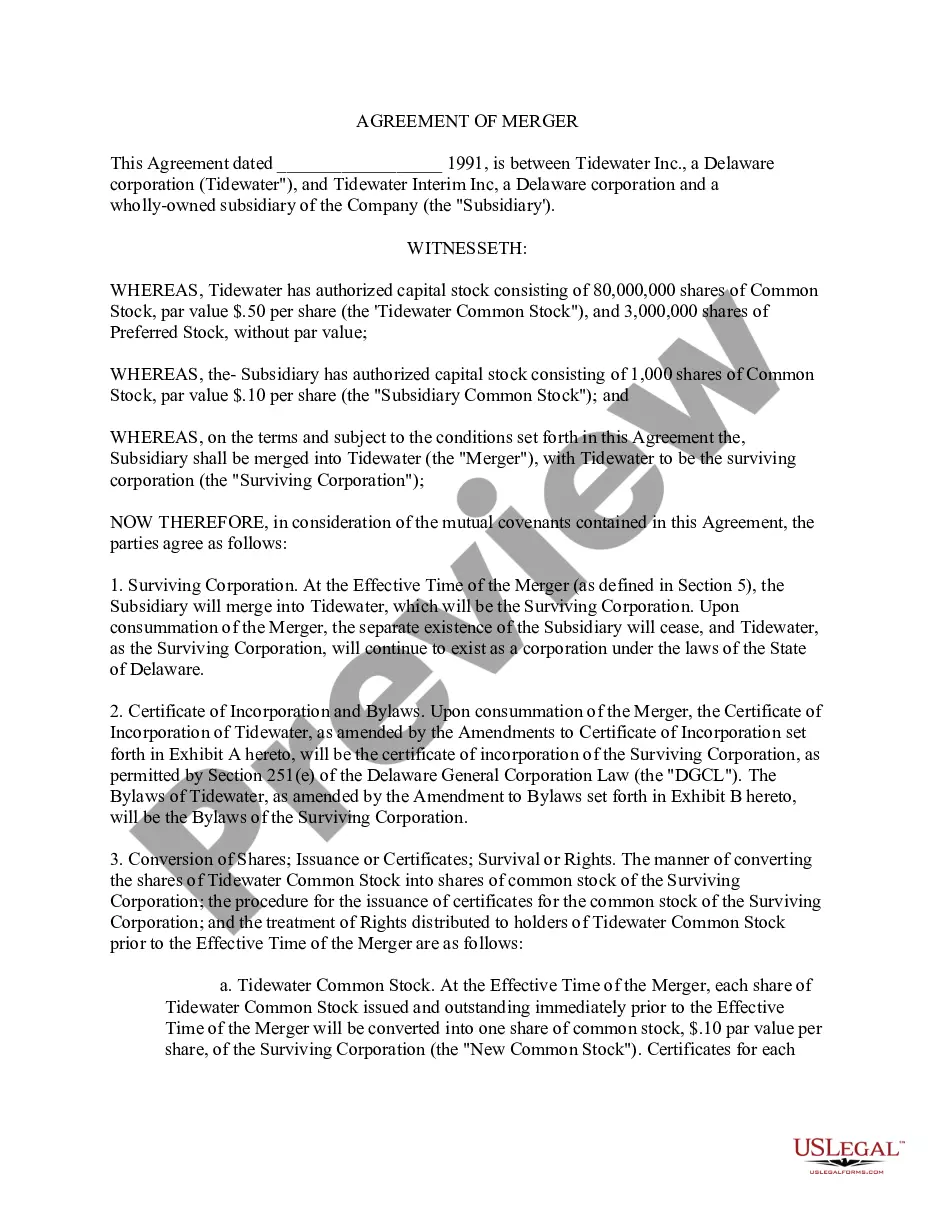
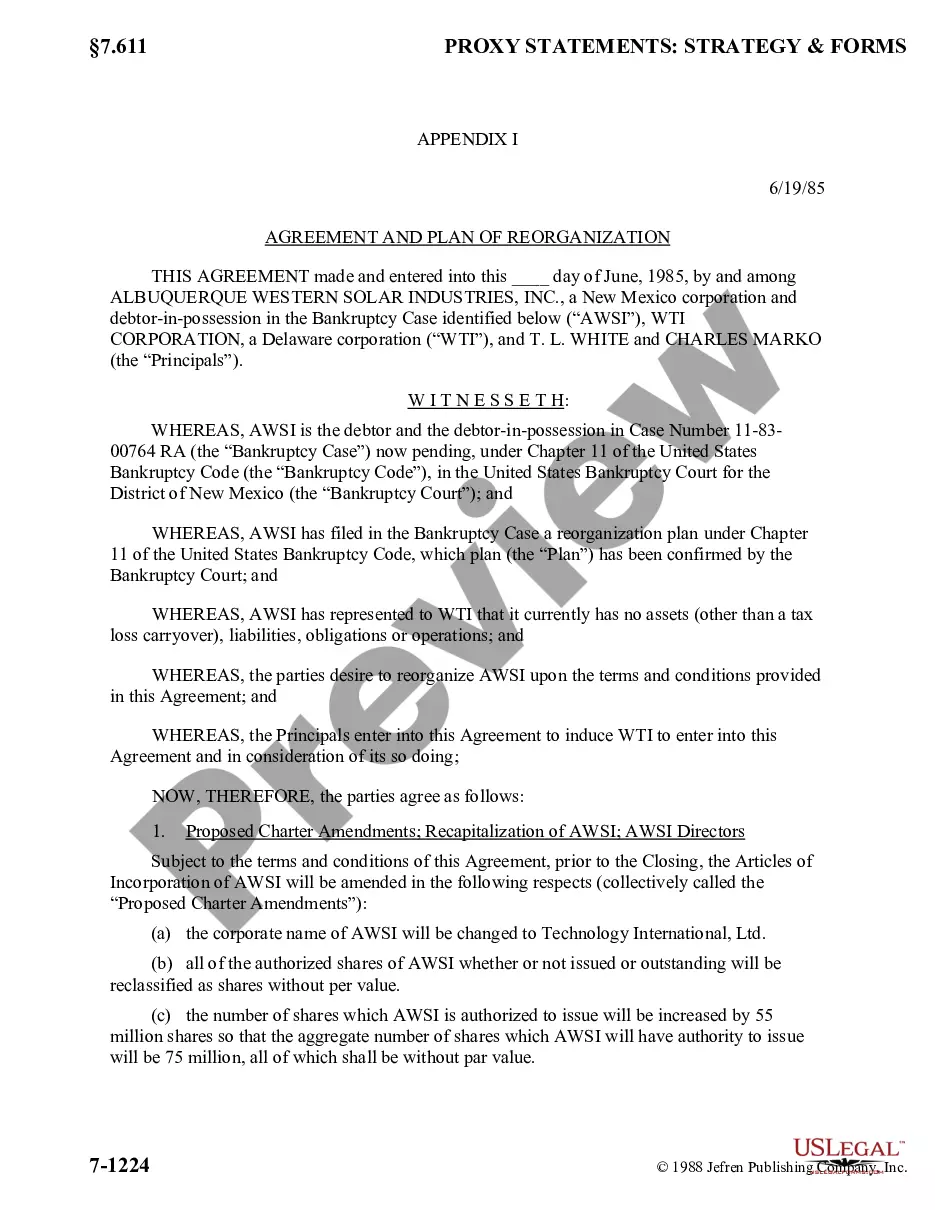
Description
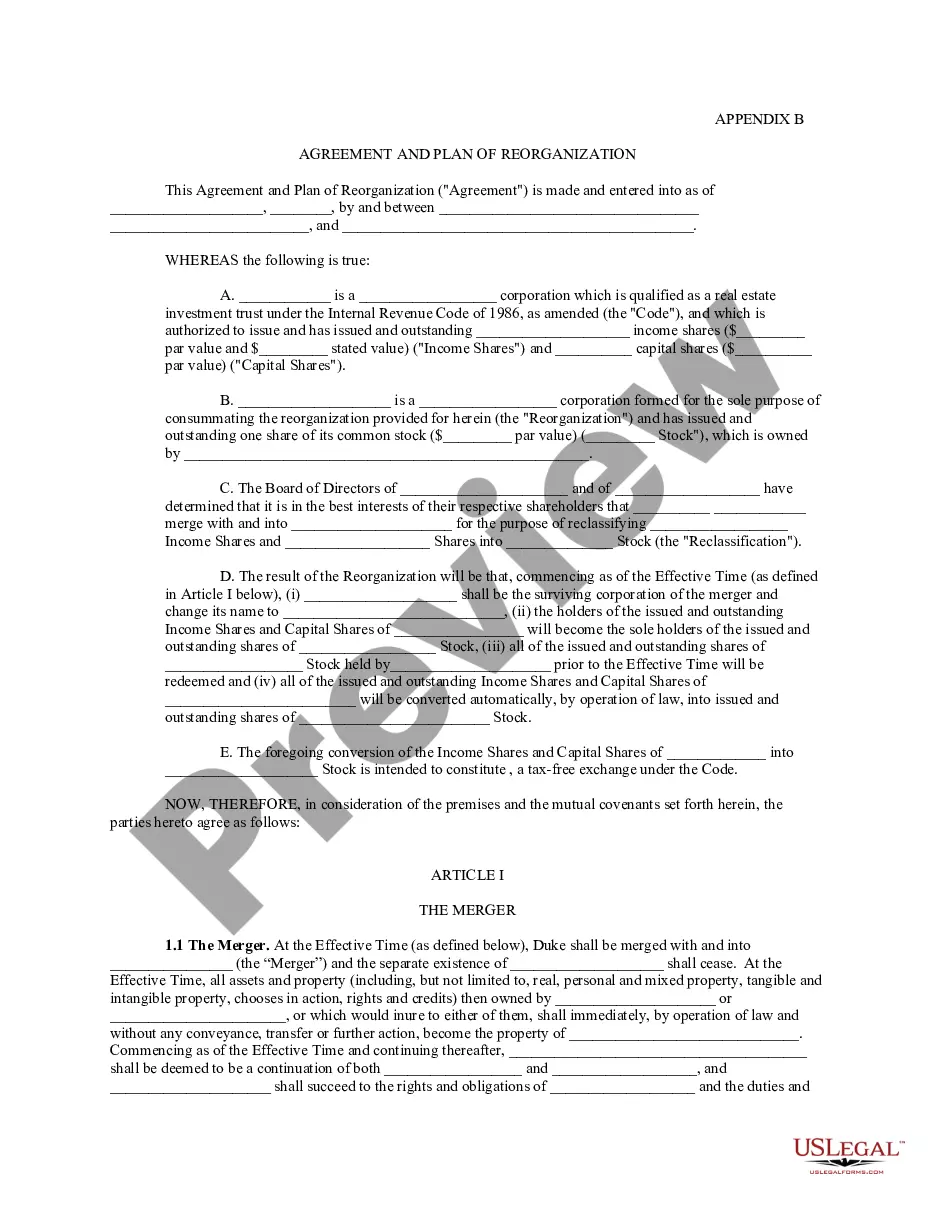
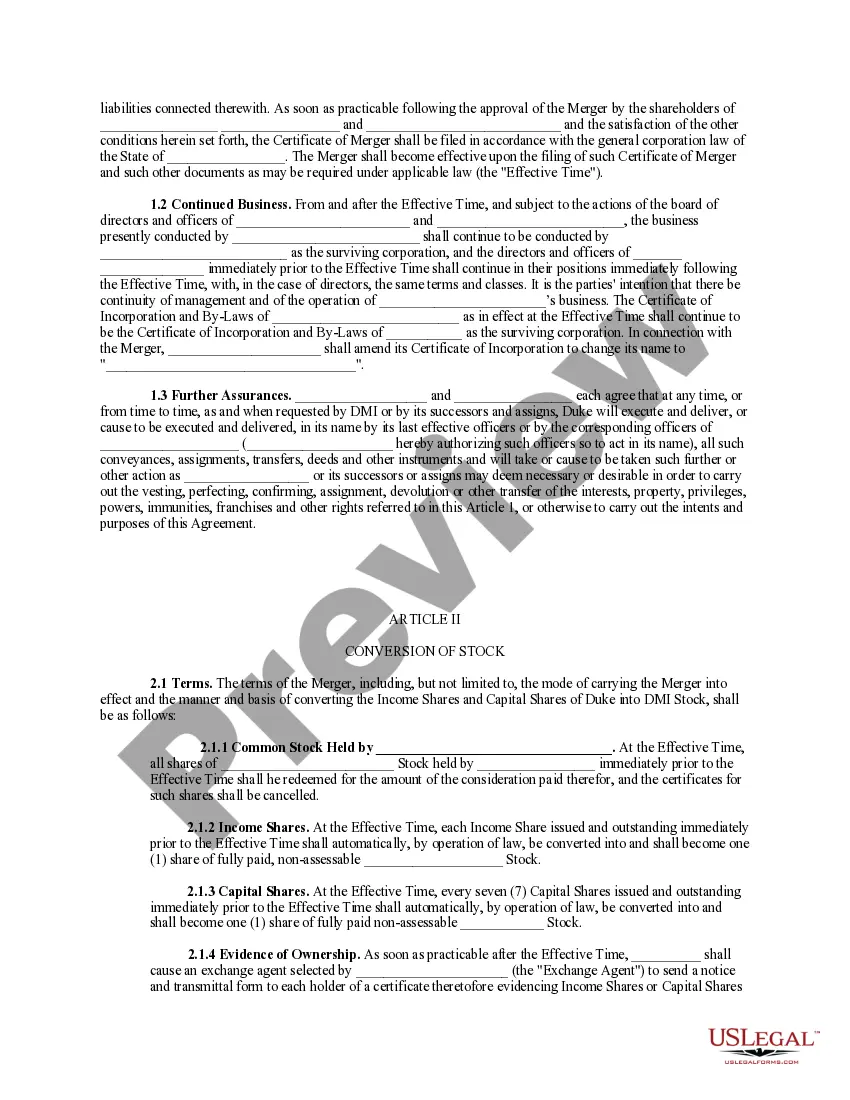
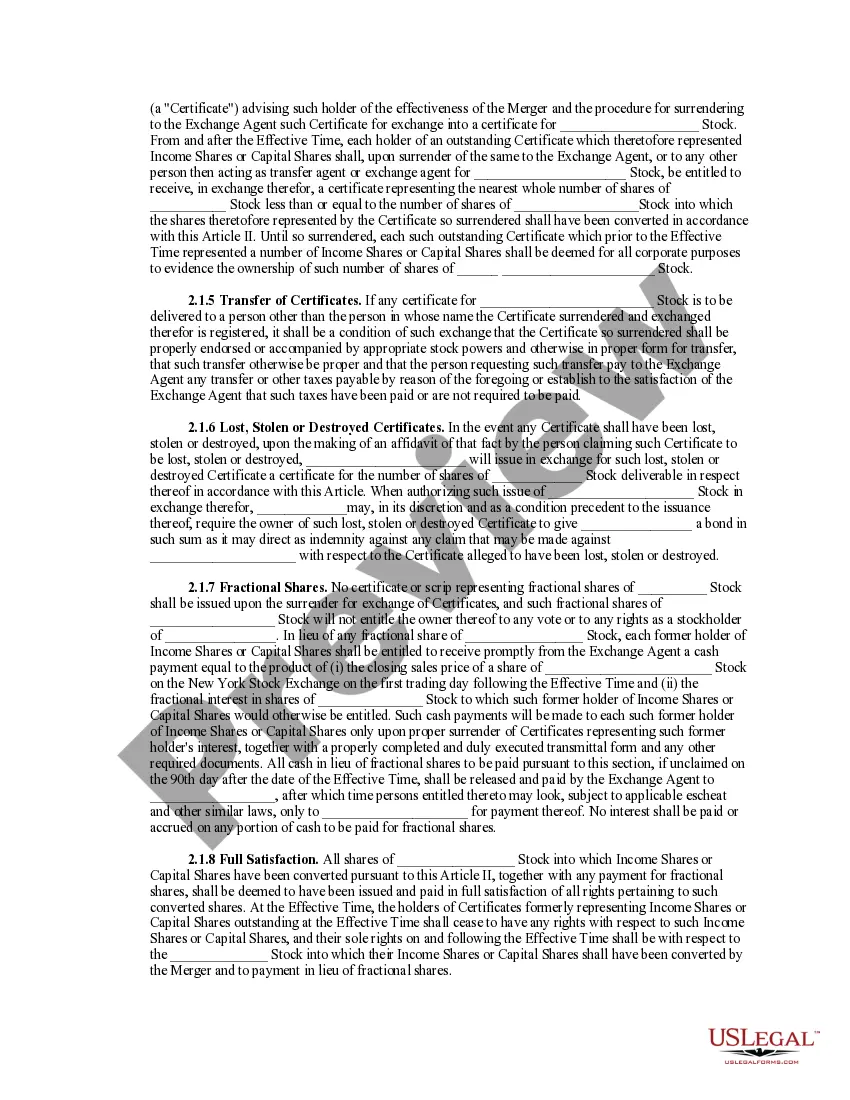
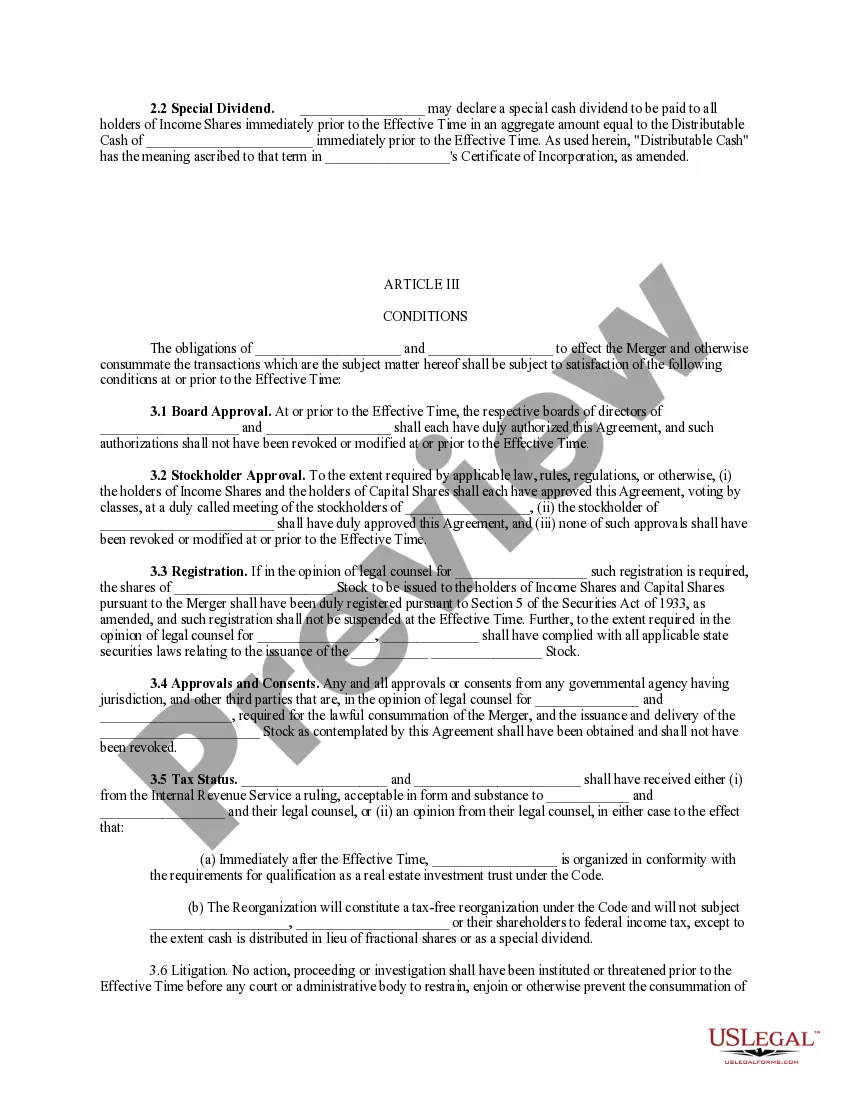
Get your form ready online
Our built-in tools help you complete, sign, share, and store your documents in one place.
Make edits, fill in missing information, and update formatting in US Legal Forms—just like you would in MS Word.
Download a copy, print it, send it by email, or mail it via USPS—whatever works best for your next step.
Sign and collect signatures with our SignNow integration. Send to multiple recipients, set reminders, and more. Go Premium to unlock E-Sign.
If this form requires notarization, complete it online through a secure video call—no need to meet a notary in person or wait for an appointment.
We protect your documents and personal data by following strict security and privacy standards.

Make edits, fill in missing information, and update formatting in US Legal Forms—just like you would in MS Word.

Download a copy, print it, send it by email, or mail it via USPS—whatever works best for your next step.

Sign and collect signatures with our SignNow integration. Send to multiple recipients, set reminders, and more. Go Premium to unlock E-Sign.

If this form requires notarization, complete it online through a secure video call—no need to meet a notary in person or wait for an appointment.

We protect your documents and personal data by following strict security and privacy standards.
Looking for another form?



How to fill out Agreement And Plan Of Reorganization?
The Restructuring Blueprint you see on this page is a reusable formal model created by professional attorneys in accordance with federal and state statutes and guidelines.
For over 25 years, US Legal Forms has supplied individuals, organizations, and lawyers with more than 85,000 authenticated, state-specific documents for any business and personal situation. It is the fastest, most straightforward, and most dependable method to obtain the paperwork you require, as the service ensures bank-level data protection and anti-malware safeguards.
Select the format you desire for your Restructuring Blueprint (PDF, DOCX, RTF) and save the sample on your device. Complete and sign the document. Print out the template to fill it out manually. Alternatively, use an online multifunctional PDF editor to quickly and accurately fill out and sign your form with a legally-binding electronic signature. Download your documents again. Use the same document again whenever necessary. Open the My documents tab in your profile to redownload any previously saved forms. Enroll in US Legal Forms to have verified legal templates for all of life’s situations readily available.
- Search for the document you require and review it.
- Browse through the file you searched and preview it or examine the form description to confirm it meets your requirements. If it does not, use the search function to locate the appropriate one. Click Buy Now when you have found the template you need.
- Subscribe and Log In.
- Choose the pricing plan that fits you and create an account. Use PayPal or a credit card to make a swift payment. If you already have an account, Log In and check your subscription to continue.
- Obtain the fillable template.
Form popularity
FAQ
To plan a reorganization, begin by gathering key stakeholders to discuss the objectives of the reorganization plan. Next, outline the steps needed to achieve these goals, ensuring to consider all aspects such as structure, processes, and resources. It's also essential to communicate the changes clearly to your team, as this helps in gaining their support. Utilizing platforms like USLegalForms can provide valuable resources and templates, simplifying the process of drafting your reorganization plan.
The first step in creating a reorganization plan involves assessing your current situation. You need to understand your organization’s strengths, weaknesses, and financial position. This critical analysis helps you identify the necessary changes and set clear goals. Once you have this information, you can start outlining a plan that addresses these needs effectively.
The reorganization plan of 1939 was part of an effort to stabilize the U.S. economy during the Great Depression by reforming how businesses managed their financial affairs. This plan introduced more structured processes for companies to reorganize under bankruptcy laws, promoting accountability and financial responsibility. Understanding the historical context of the reorganization plan of 1939 can provide insights into today's practices and the evolution of corporate recovery strategies.
Having a reorganization plan means that an entity has a clear strategy for addressing its financial challenges and restructuring its obligations. It demonstrates a commitment to financial recovery and provides a structured approach to managing debts and operations. With a well-defined reorganization plan, businesses can gain the trust of stakeholders and work towards a sustainable future.
A plan of reorganization outlines how a company intends to restructure its debts and assets to improve its financial situation. This plan typically involves negotiations with creditors to reach agreements that allow the business to continue operating while repaying debts over time. Essentially, the reorganization plan serves as a roadmap for the company's recovery and future stability.
HR consults and collaborates with managers to develop job descriptions, titles, salary recommendations, posting requirements, and communication strategies. HR, in consultation with the department head, will determine if new or reclassified positions resulting from a re-organization are posted.
The seven main types of company reorganization are mergers and consolidations, acquisitions, practical mergers, transfer spinoffs and split-offs, recapitalization, identity changes and transfers of assets.
Reorganization can include a change in the structure or ownership of a company through a merger or consolidation, spinoff acquisition, transfer, recapitalization, a change in name, or a change in management.
Questions employees might ask during a reorganization Why is this happening? ... Will I keep my job? ... How does this affect my job? ... How can I benefit from this? ... What if I have concerns about reorganization? ... What are my options? ... Do these changes happen immediately? ... Will my salary change?