Solicitation Statement For Graduate School
Description

Get your form ready online
Our built-in tools help you complete, sign, share, and store your documents in one place.
Make edits, fill in missing information, and update formatting in US Legal Forms—just like you would in MS Word.
Download a copy, print it, send it by email, or mail it via USPS—whatever works best for your next step.
Sign and collect signatures with our SignNow integration. Send to multiple recipients, set reminders, and more. Go Premium to unlock E-Sign.
If this form requires notarization, complete it online through a secure video call—no need to meet a notary in person or wait for an appointment.
We protect your documents and personal data by following strict security and privacy standards.

Make edits, fill in missing information, and update formatting in US Legal Forms—just like you would in MS Word.

Download a copy, print it, send it by email, or mail it via USPS—whatever works best for your next step.

Sign and collect signatures with our SignNow integration. Send to multiple recipients, set reminders, and more. Go Premium to unlock E-Sign.

If this form requires notarization, complete it online through a secure video call—no need to meet a notary in person or wait for an appointment.

We protect your documents and personal data by following strict security and privacy standards.
Looking for another form?



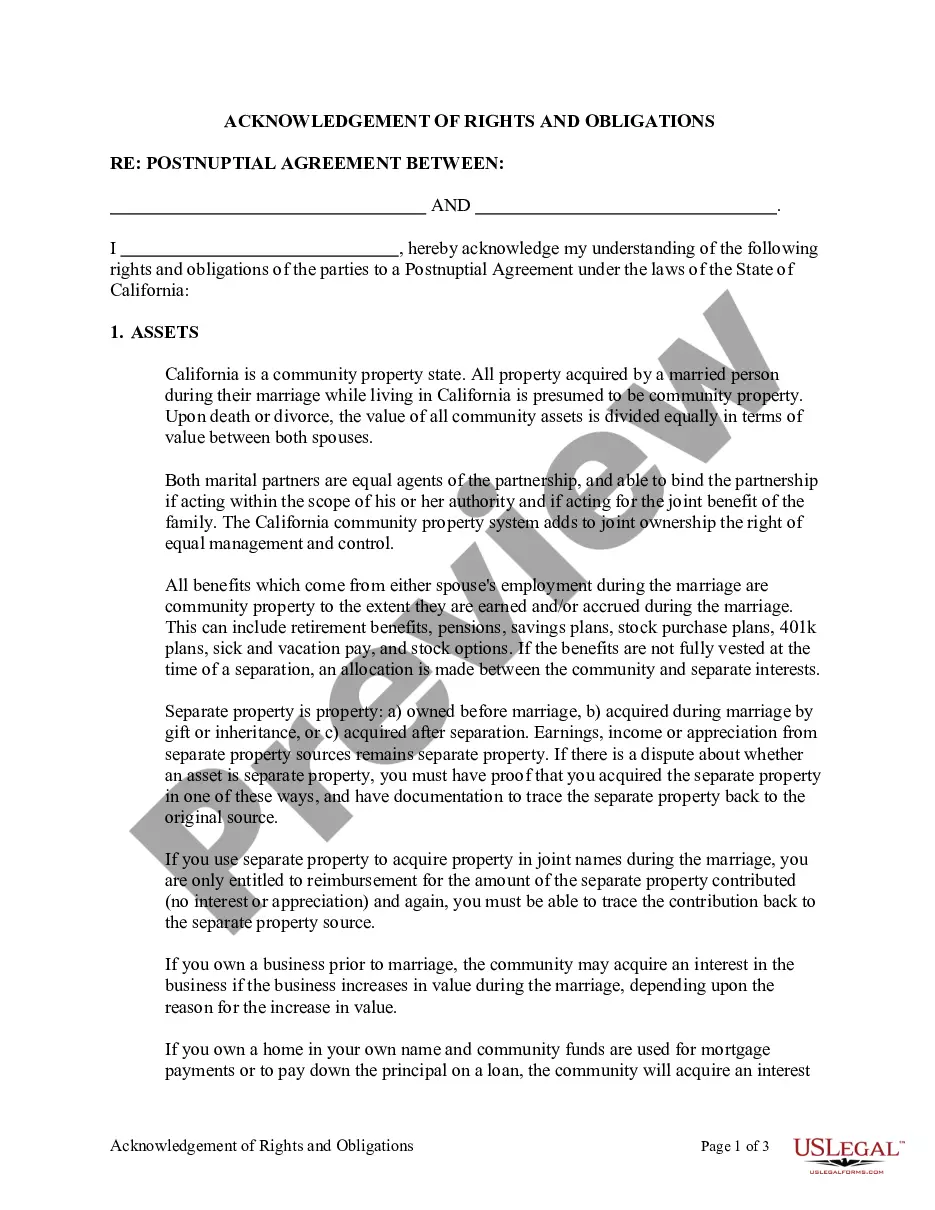

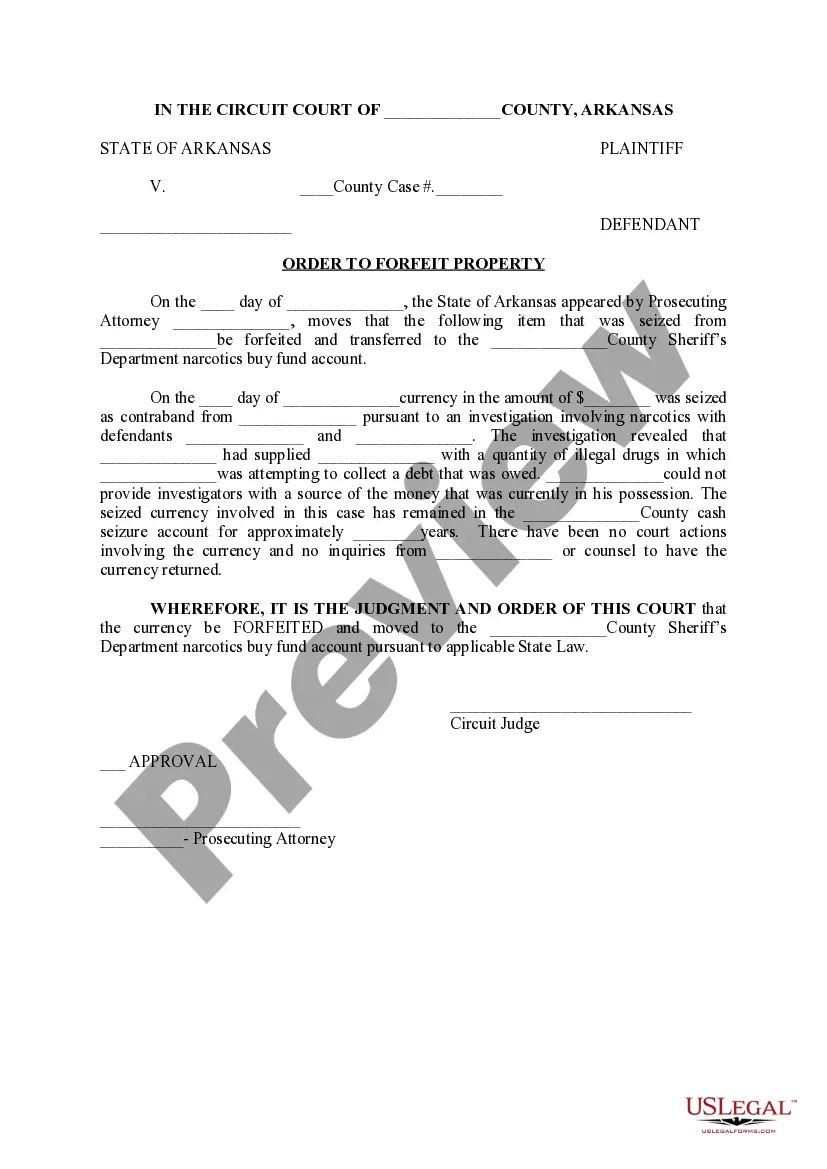

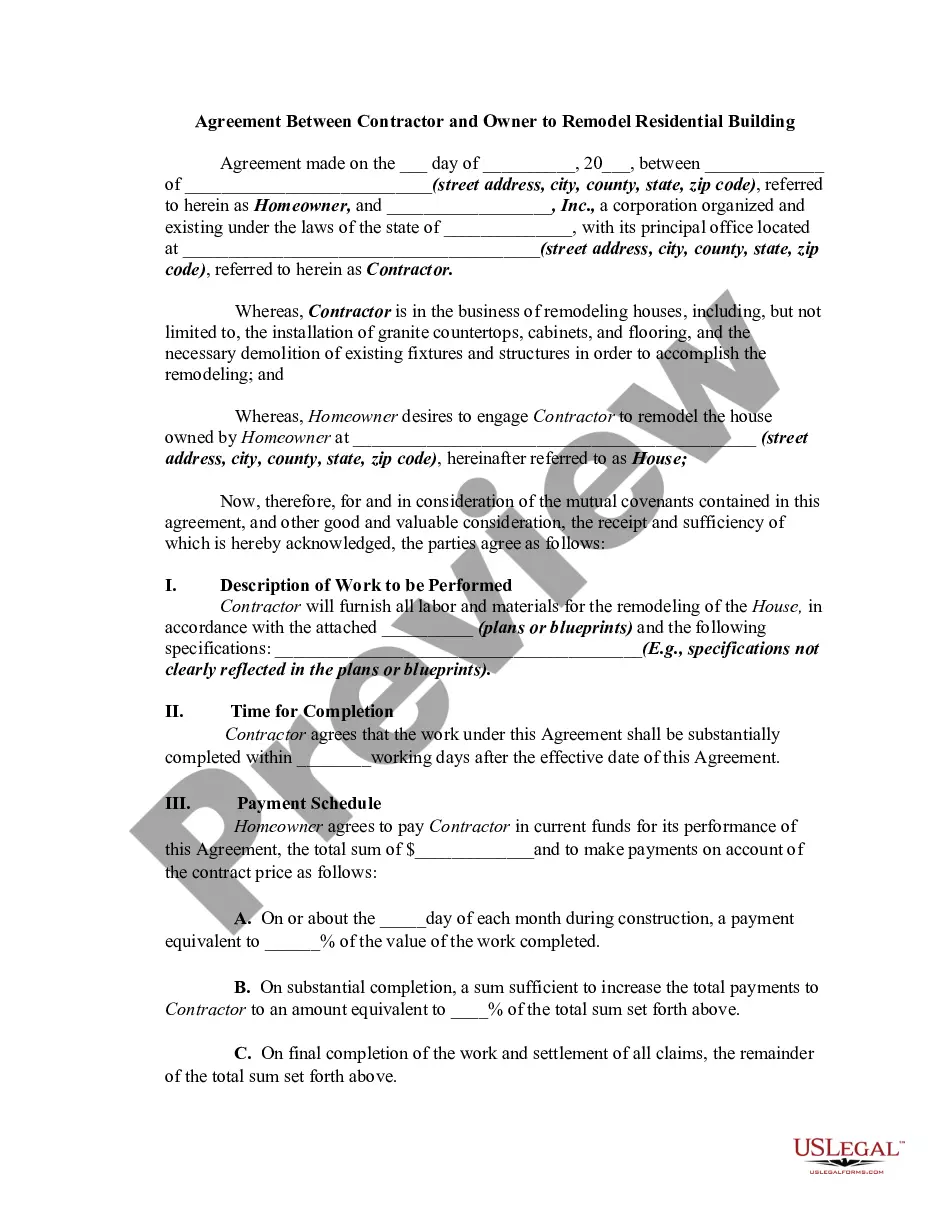

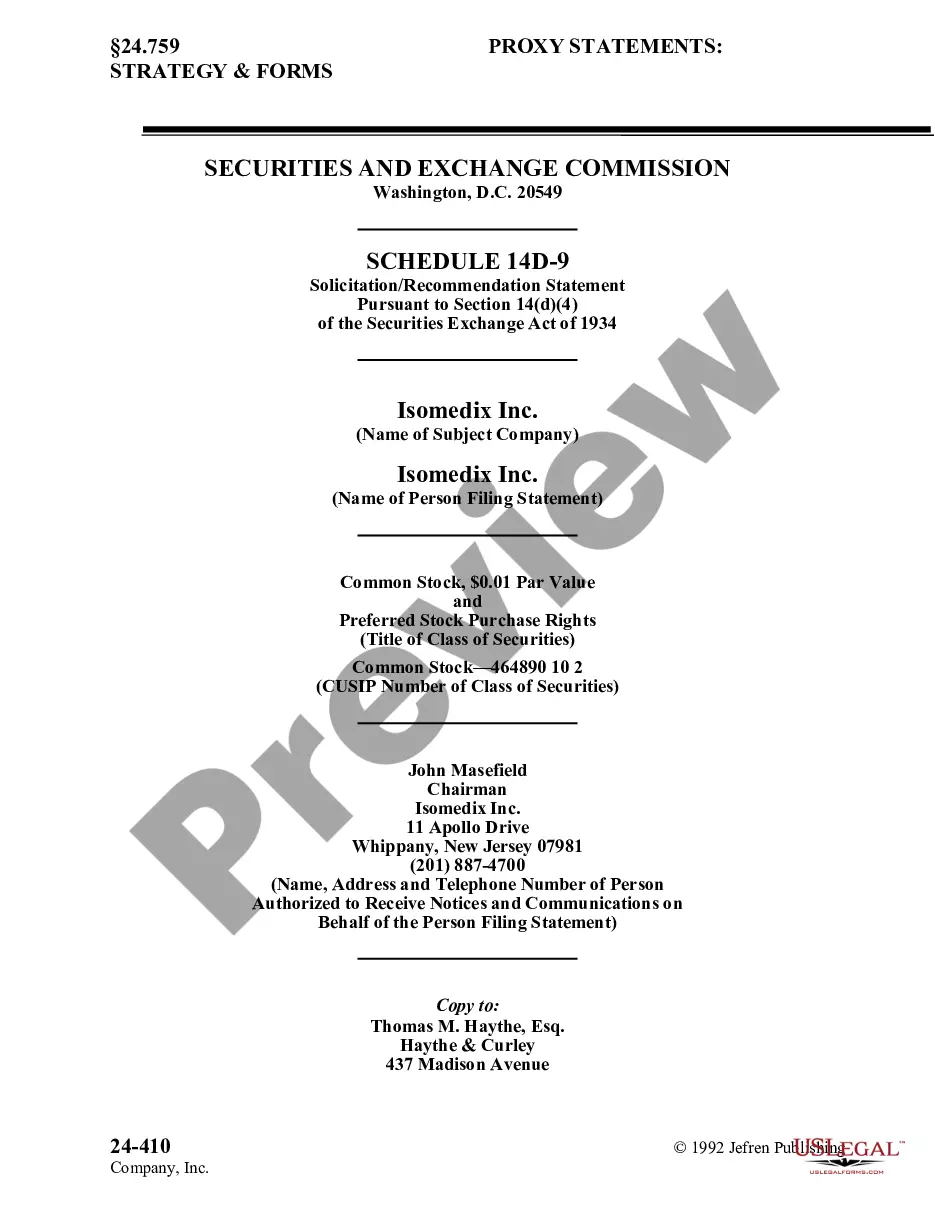
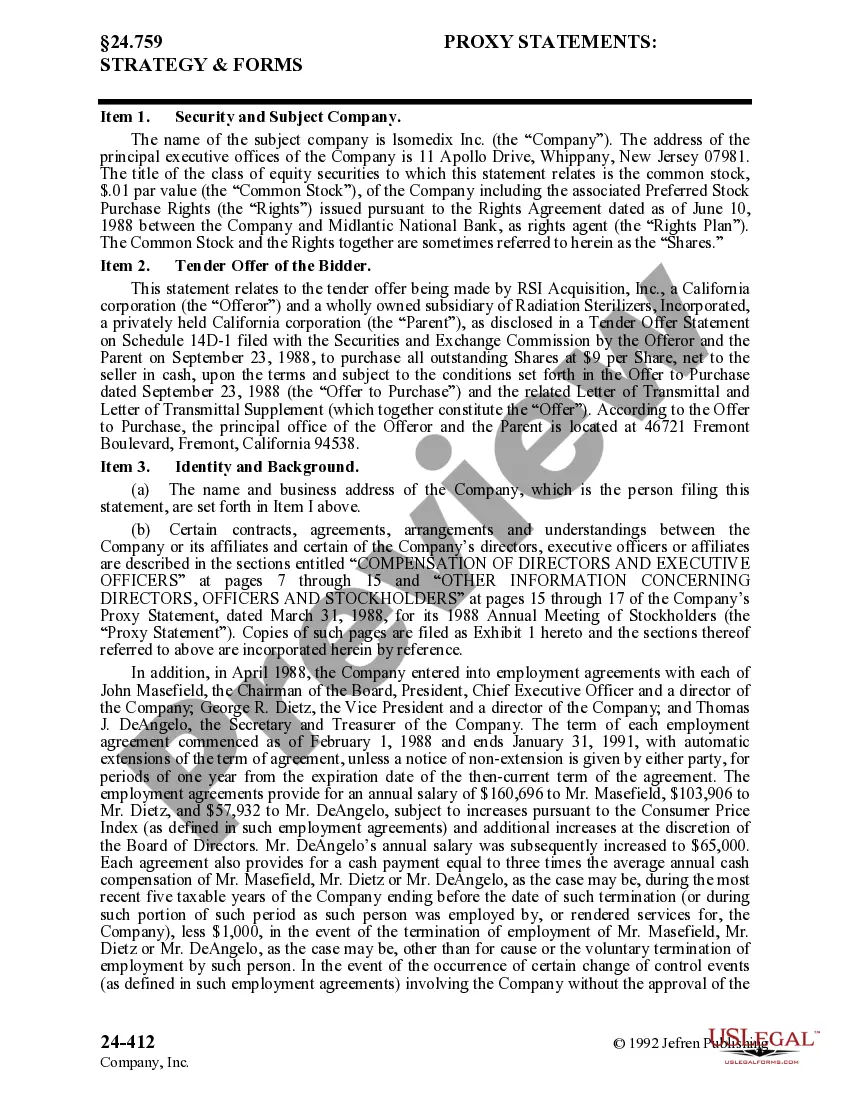
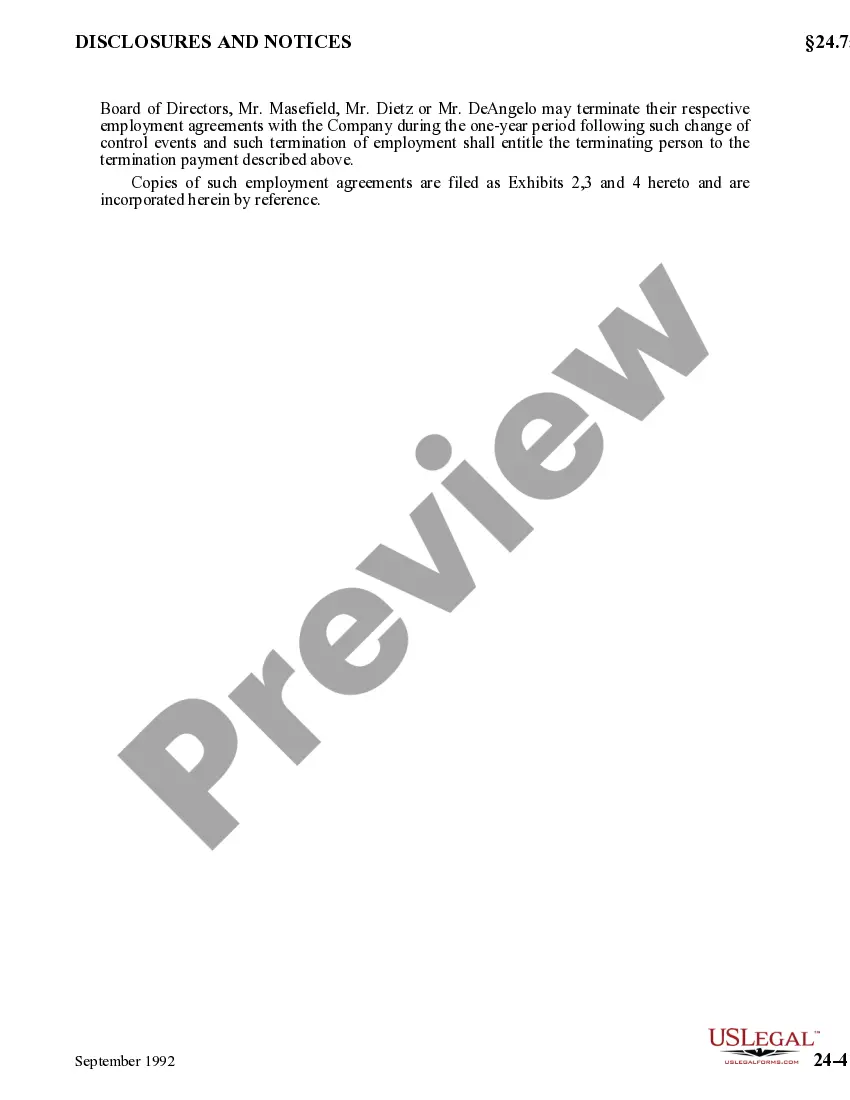
How to fill out Schedule 14D-9 - Solicitation - Recommendation Statement?
Whether for professional objectives or for private concerns, everyone must confront legal issues at some stage in their lifetime.
Completing legal documents requires careful consideration, beginning with selecting the appropriate form template.
With an extensive US Legal Forms catalog available, you never need to waste time searching for the correct sample online. Utilize the library’s straightforward navigation to find the appropriate template for any circumstance.
- Locate the template you require using the search bar or catalog browsing.
- Review the form’s details to confirm it corresponds to your situation, state, and locality.
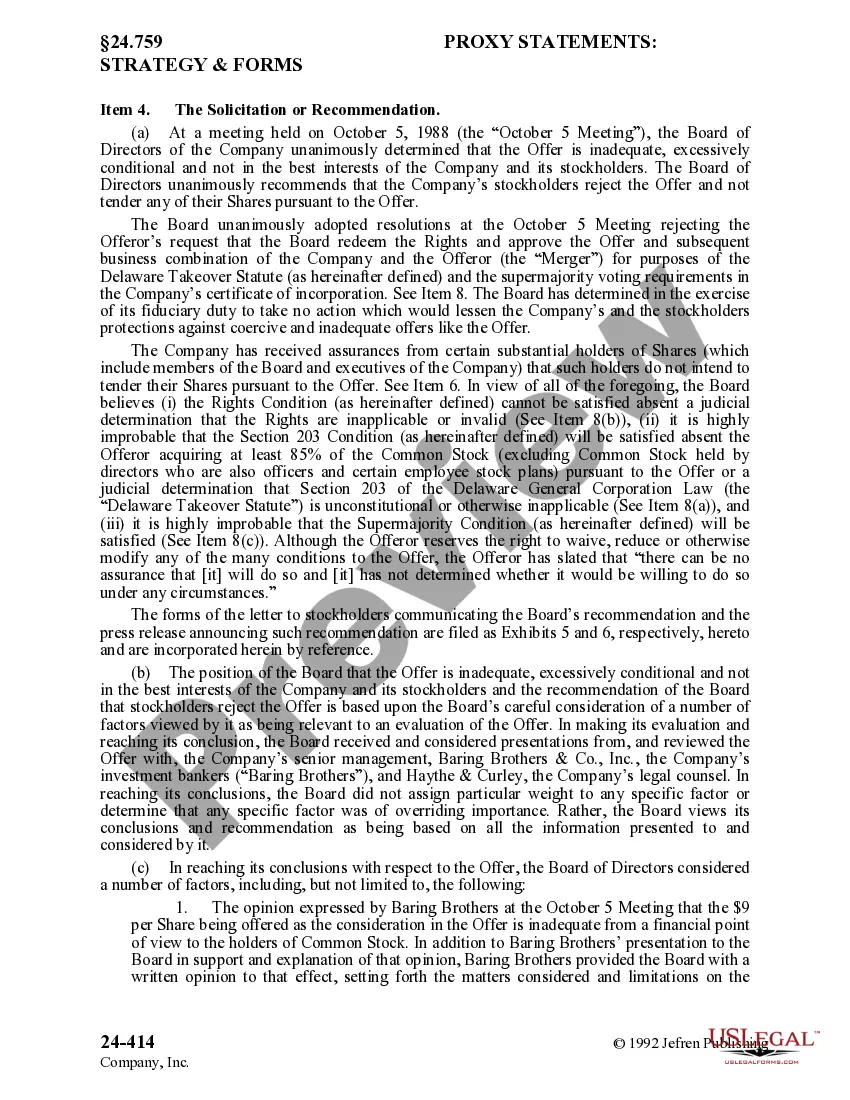
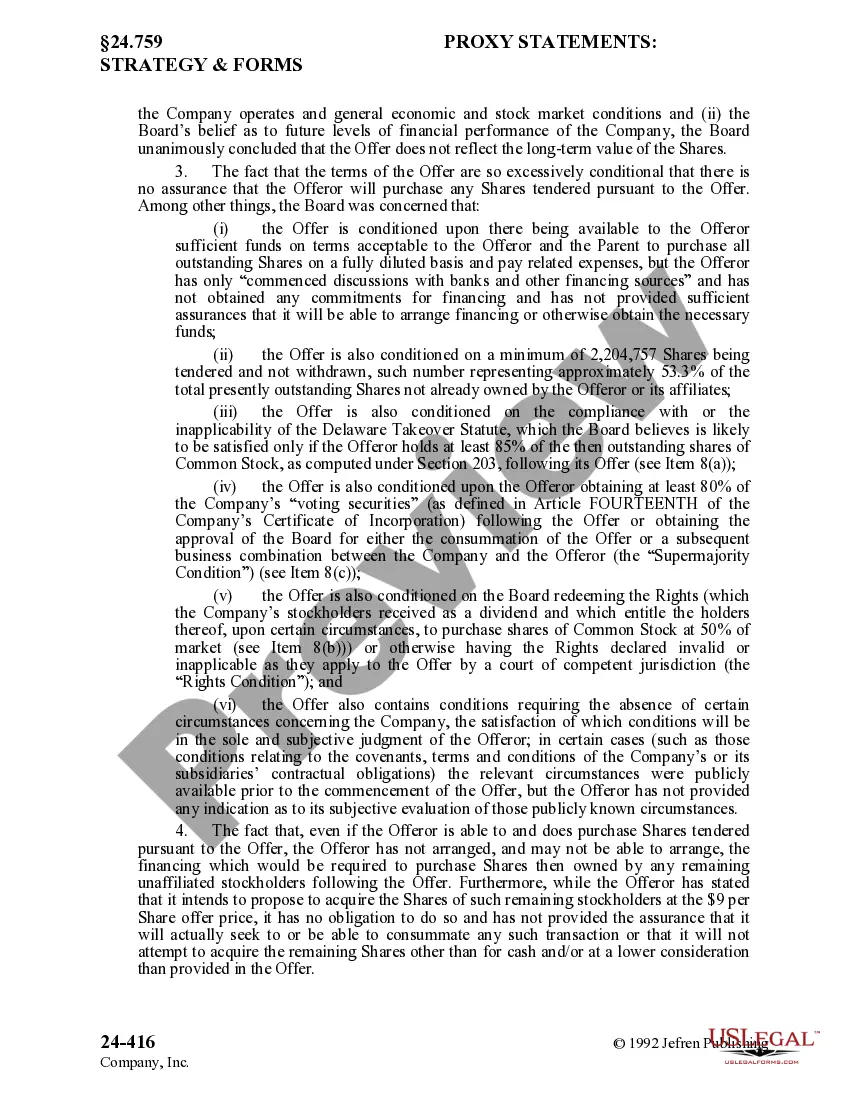
- Click on the form’s preview to view it.
- If it is the incorrect document, return to the search feature to find the Solicitation Statement For Graduate School template necessary.
- Download the template if it satisfies your requirements.
- If you possess a US Legal Forms account, simply click Log in to access previously saved templates in My documents.
- If you do not have an account yet, you can acquire the form by clicking Buy now.
- Select the suitable pricing option.
- Complete the account registration form.
- Select your payment method: utilize a credit card or PayPal account.
- Choose the document format you prefer and download the Solicitation Statement For Graduate School.
- Once it is downloaded, you can fill out the form using editing software or print it and complete it manually.
Form popularity
FAQ
A good master's personal statement typically begins with an engaging story or experience that relates to your field. It should detail your academic achievements, relevant experiences, and future goals in a coherent narrative. By linking your experiences to your aspirations, you can create a powerful solicitation statement for graduate school that stands out.
6 tips for writing your personal statement for graduate school Research requirements. Find out whether the university has a specific format for a personal essay. ... Be unique. If the university doesn't have a prompt, choose a topic that's special to you. ... Remain relevant. ... Try to specify. ... Use a professional tone. ... Proofread.
Top Tips for Writing a Graduate School Personal Statement Pick a few points to emphasize about yourself. Introduce yourself to the admissions board. ... Be very specific. ... Do your research. ... Address any gaps or discrepancies. ... Strike the right tone. ... Start strong and finish strong. ... Proofread, proofread and proofread again.
Discuss (1) your expertise and accomplishments in your major field, (2) your undergraduate studies in general and how they relate to what you intend to do in graduate school, (3) specific learning experiences that demonstrate your motivation and inspiration for continued study, and (4) other relevant experiences such ...
A strong personal history statement begins with an authentic voice and personal narrative. This can reflect your journey to graduate school, any obstacles you've encountered, and how you've overcome challenges. Talk about your personal goals and dreams. Explain what motivates and drives you toward this degree.
Admissions committees look for candidates with clear, well-defined research interests that arise from experience. With that in mind, your statement of purpose should reveal that you care deeply about your chosen discipline and that you have the background to support your ideas and sentiments.