Non Qualified Stock Plan
Description
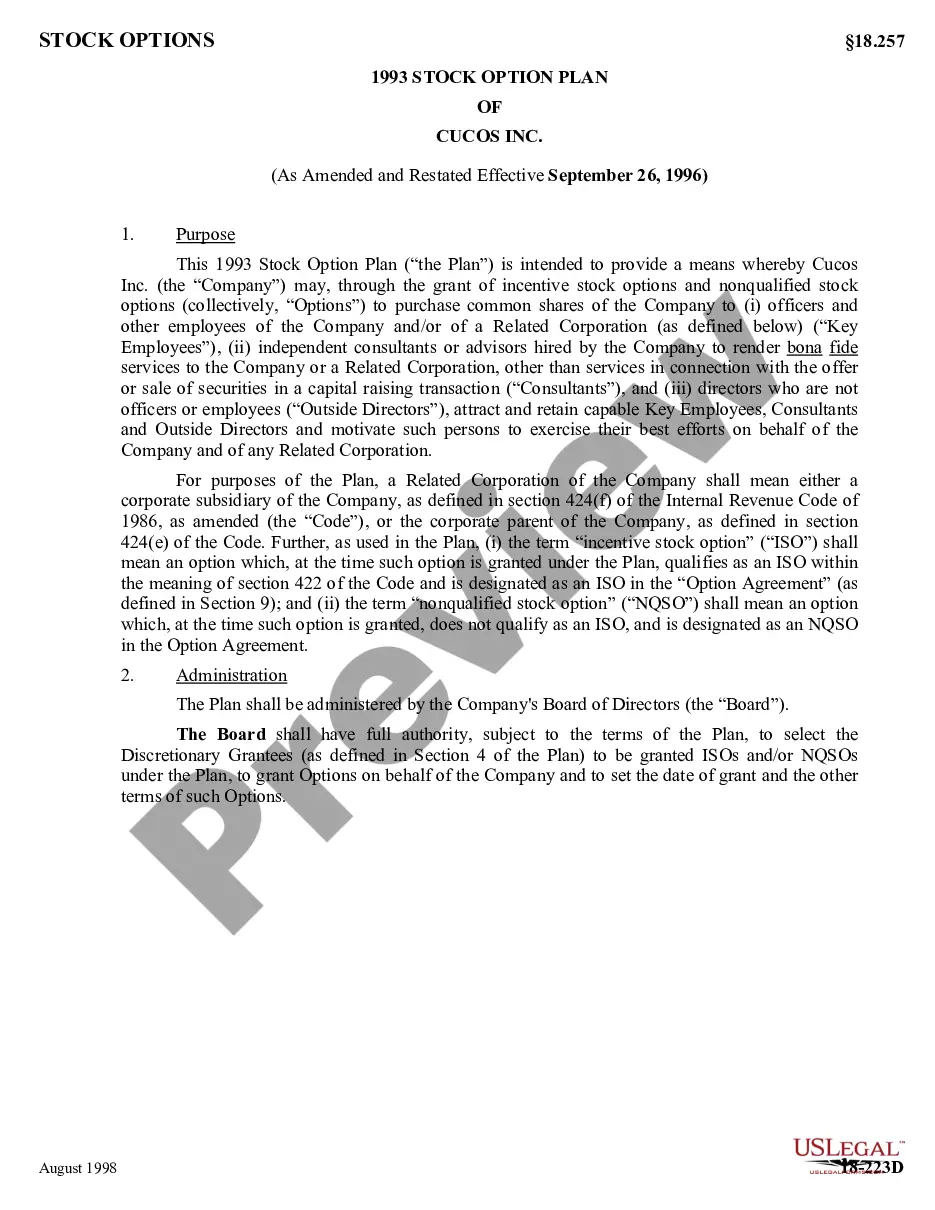

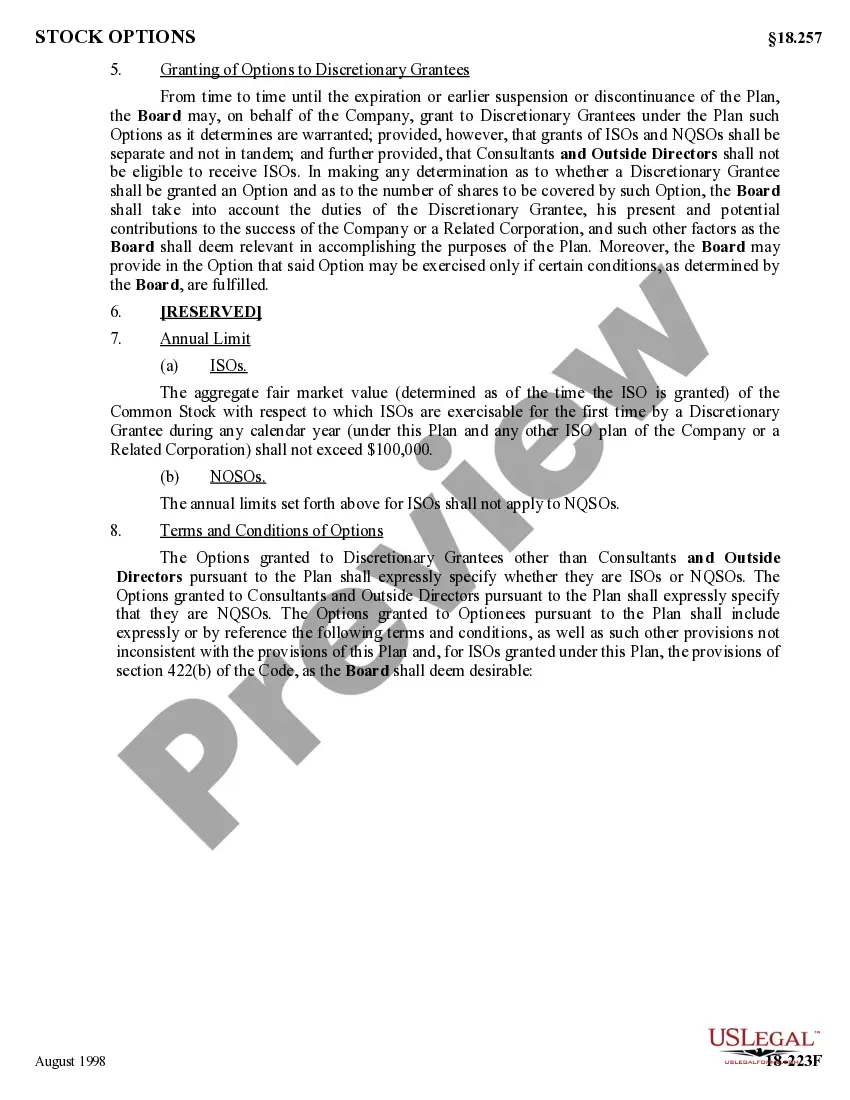

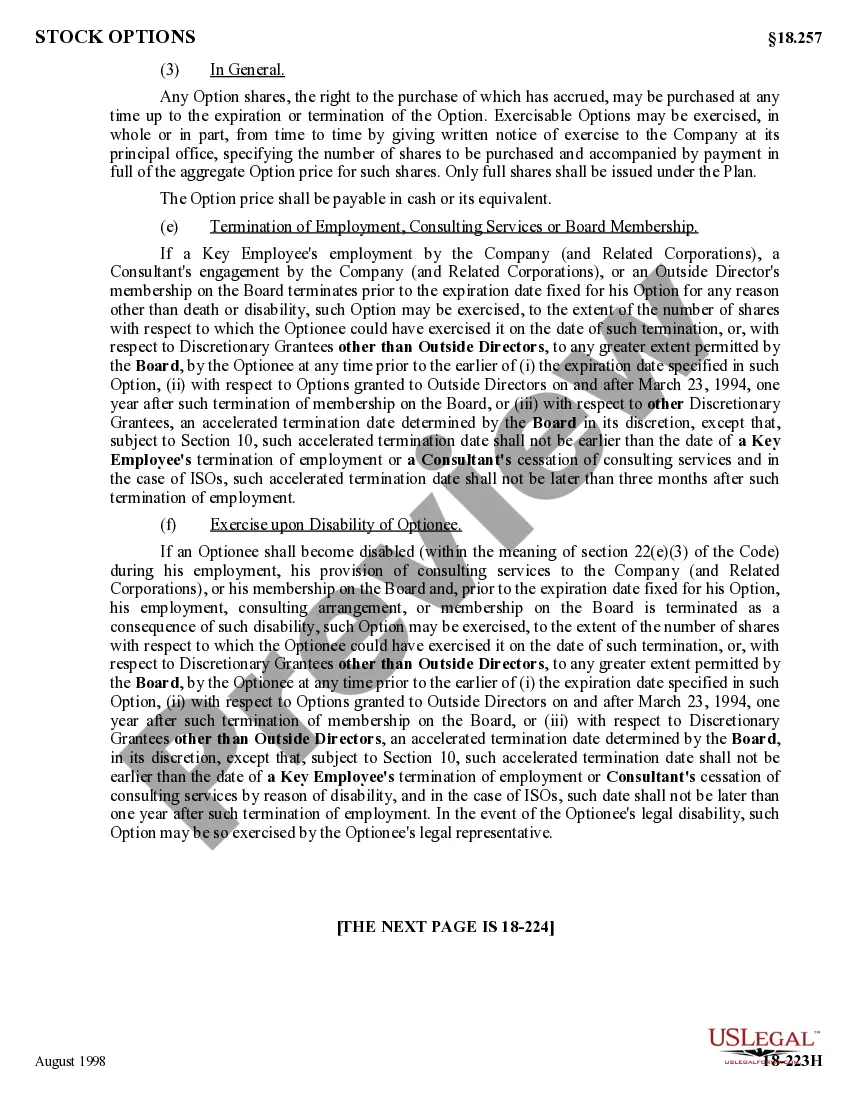
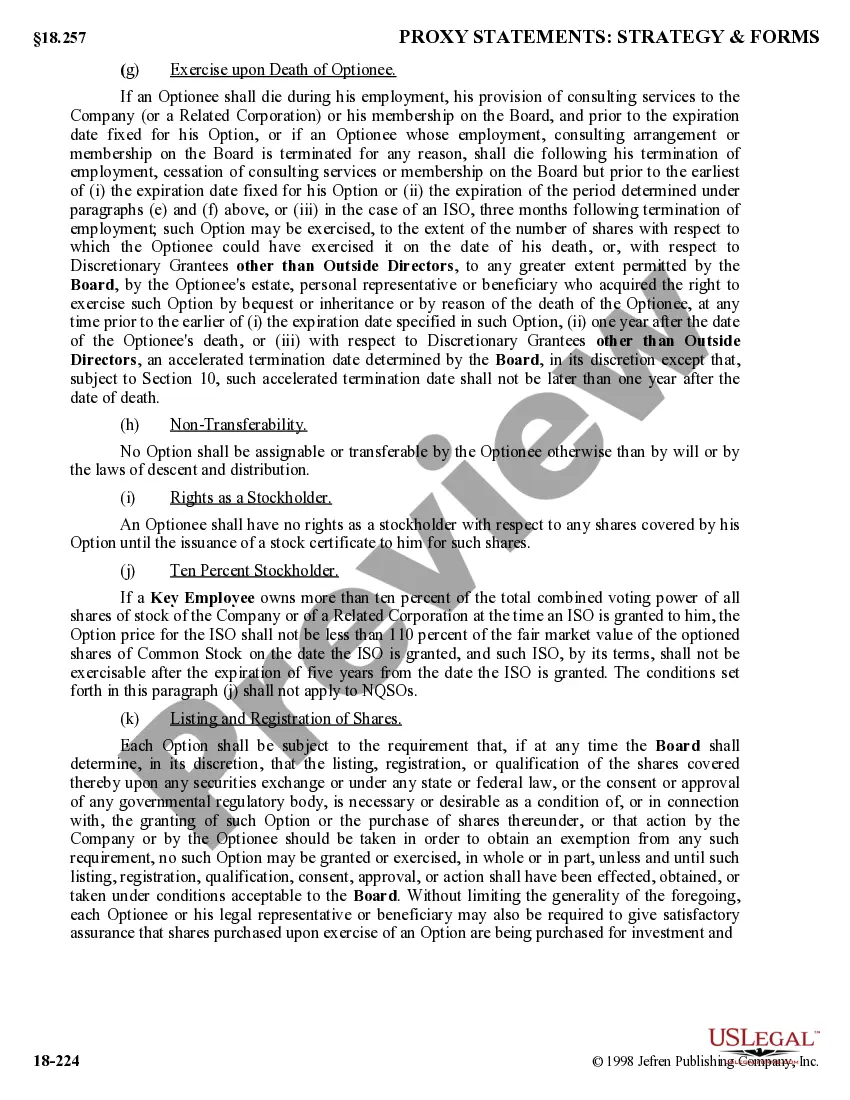
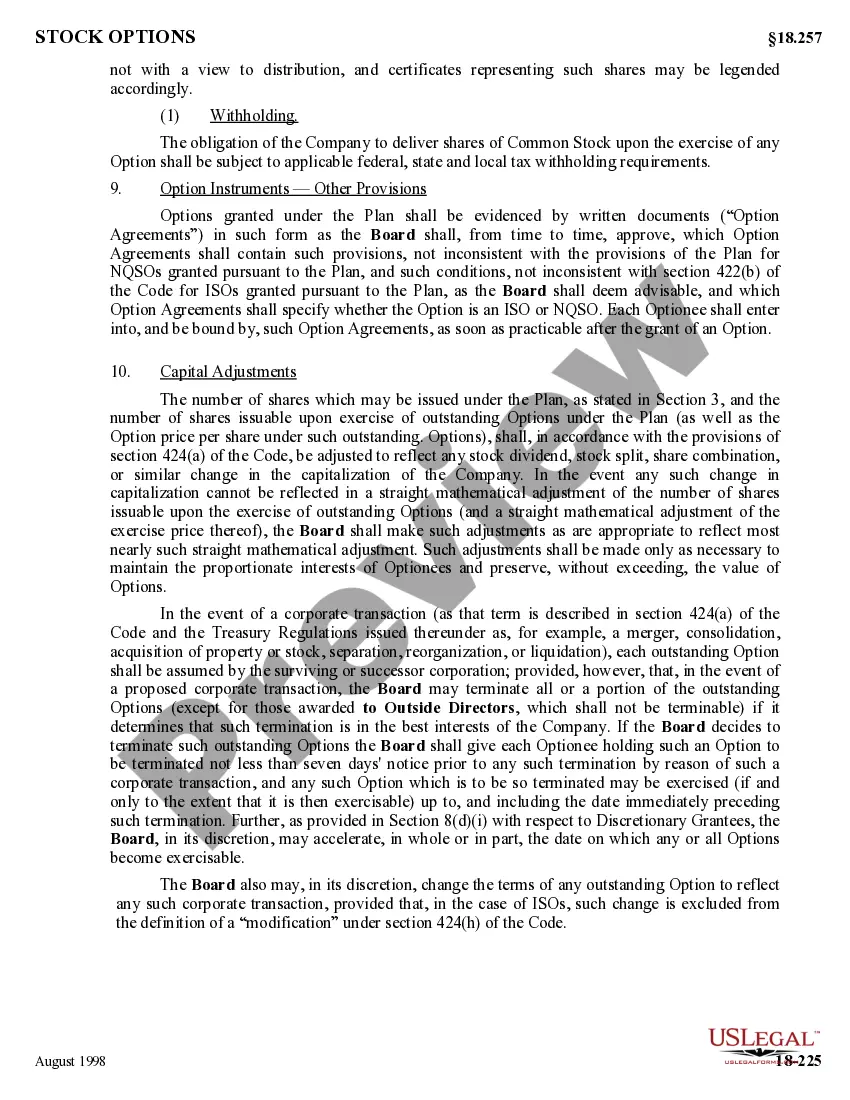





How to fill out Nonemployee Directors Nonqualified Stock Option Plan Of Cucos, Inc.?
Acquiring a reliable location to obtain the latest and suitable legal templates is a significant part of dealing with formalities.
Locating the correct legal documents requires accuracy and careful consideration, which illustrates why it is crucial to source Non Qualified Stock Plan samples only from reputable suppliers, such as US Legal Forms. An incorrect template will squander your time and hinder your situation.
Eliminate the hassle associated with your legal documents. Explore the comprehensive US Legal Forms library where you can discover legal samples, verify their suitability for your situation, and download them instantly.
- Use the catalog navigation or search feature to locate your template.
- Check the form’s description to ensure it aligns with the requirements of your state and locality.
- Examine the form preview, if accessible, to confirm the form is the one you seek.
- Return to the search and find the correct document if the Non Qualified Stock Plan does not suit your needs.
- If you are confident in the form’s applicability, download it.
- When you are a registered user, click Log in to verify and access your chosen templates in My documents.
- If you have not yet created a profile, click Buy now to acquire the form.
- Select the pricing plan that meets your needs.
- Proceed to the registration to complete your purchase.
- Conclude your purchase by selecting a payment method (credit card or PayPal).
- Choose the file format to download the Non Qualified Stock Plan.
- Once you have the form on your device, you can edit it using the editor or print it and complete it manually.
Form popularity
FAQ
What you do with nonqualified stock options largely depends on your financial situation and market conditions. You can choose to exercise them, sell the shares, or hold onto them for potential future gains. Each option carries its own risks and benefits, so it's wise to assess your goals. Resources like UsLegalForms can assist you in making informed decisions about your non qualified stock plan.
Non-qualified stock options are reported on your W2 form as part of your taxable income. The value of the options at the time of exercise is included in your gross income, which can affect your overall tax liability. It’s important to keep track of these transactions to ensure accurate reporting and compliance. Familiarity with these reporting requirements can simplify your tax filing process.
While it's challenging to avoid taxes on stock options entirely, you can minimize them through strategic planning. For instance, exercising options when your income is lower can reduce tax impact. Furthermore, utilizing tax-advantaged accounts or deferring income can be effective strategies. Consulting with a tax professional can provide personalized insights tailored to your nonqualified stock plan.
The most profitable options strategy often depends on market conditions and individual risk tolerance. Many investors find that a combination of buying and selling options can yield substantial returns. For nonqualified stock options, employing strategies like exercising at the right time or selling shares quickly can enhance profitability. This requires careful analysis and planning.
Here's a real-world example: If you exercise one of these NSOs, you'll pay your company $3 to buy a share. But the IRS views that share to be worth $35. The difference between the $3 and the $35 counts as a $32 phantom gain (also called the spread). The phantom gain is taxed at ordinary income rates.
In this situation, you exercise your option to purchase the shares but you do not sell the shares. Your compensation element is the difference between the exercise price ($25) and the market price ($45) on the day you exercised the option and purchased the stock, times the number of shares you purchased.
Paying Taxes on Non-Qualified Stock Options For example, after exercising at $20 per share, suppose the stock rose to $30 per share. If you sold your 100 shares at that price, you would pay capital gains taxes on the additional $1,000 in earnings. Capital gains taxes are dependent on how long you hold the shares.
Non-qualified stock options often reduce the cash compensation employees earn from employment. The price of these stock options is typically the same as the market value of the shares when the company makes such options available, also known as the grant date.
The income related to the option exercise should be included in the Form W-2 you receive from your employer or 1099-NEC from the company if you are a non-employee. Any capital gain or loss amount may also be reportable on your US Individual Income Tax Return (Form 1040), Schedule D and Form 8949 in the year of sale.