Non Qualified Stock Options
Description
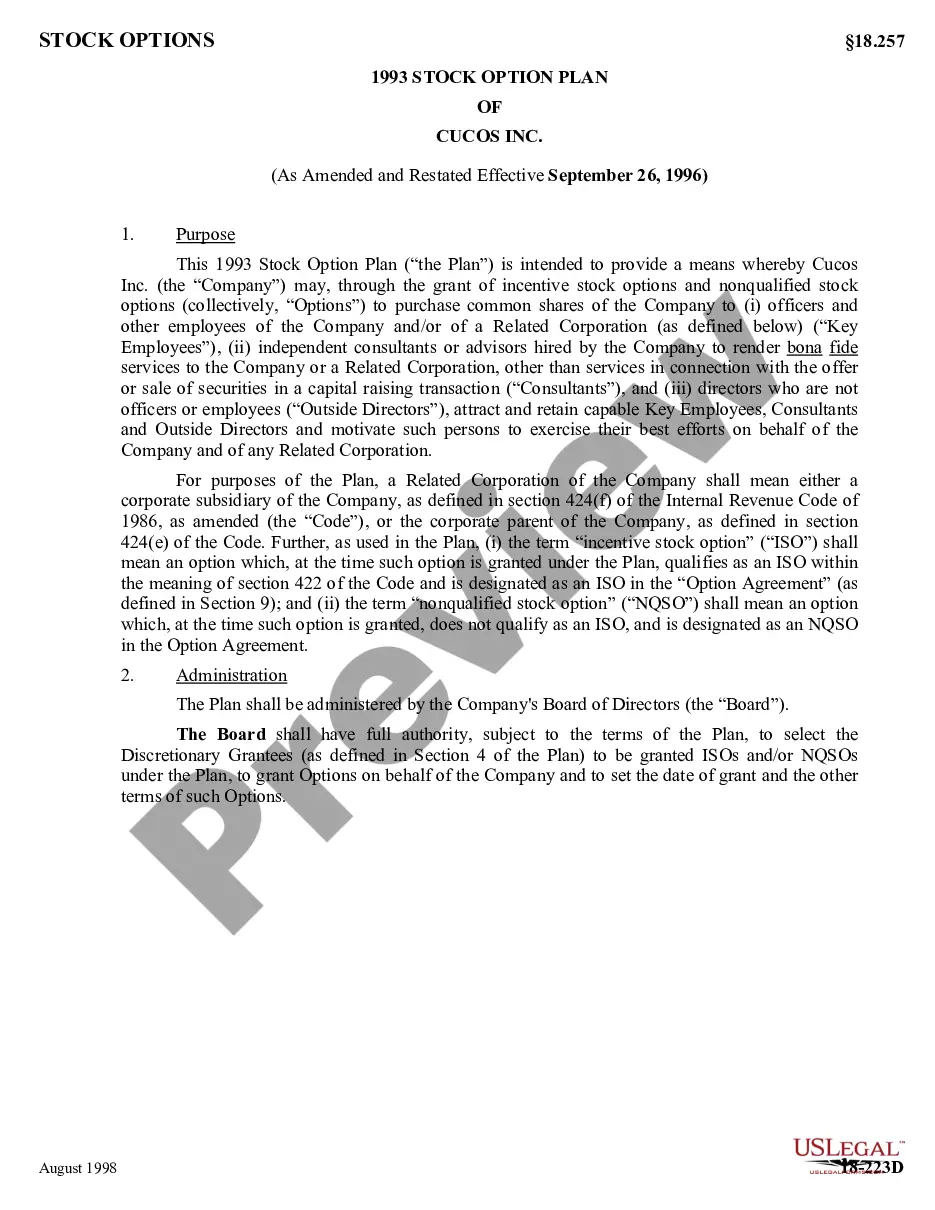

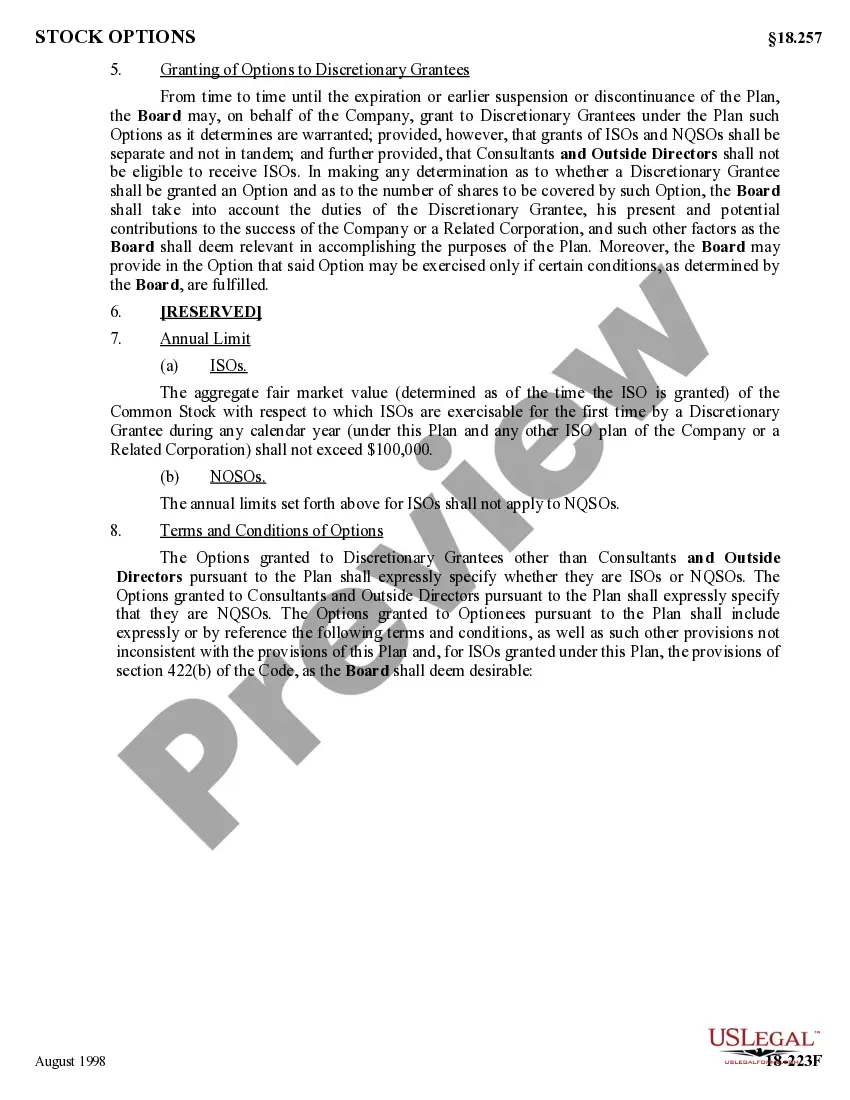

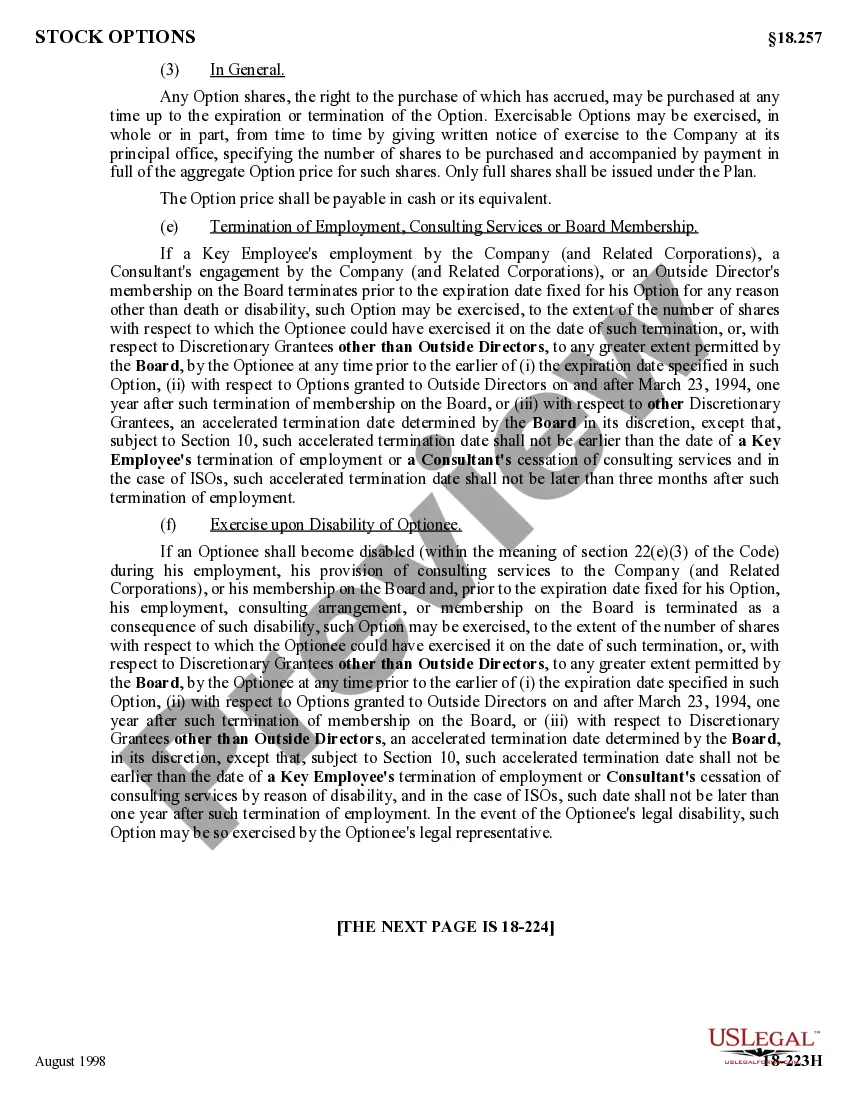
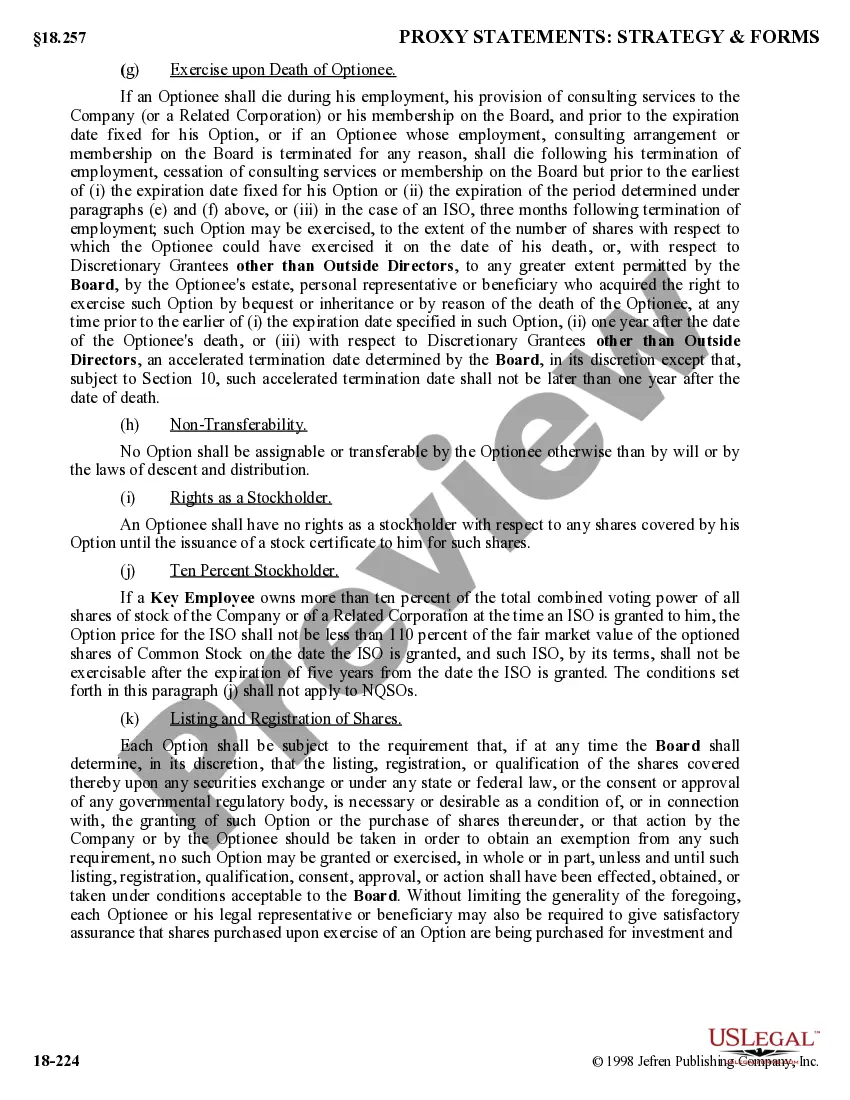
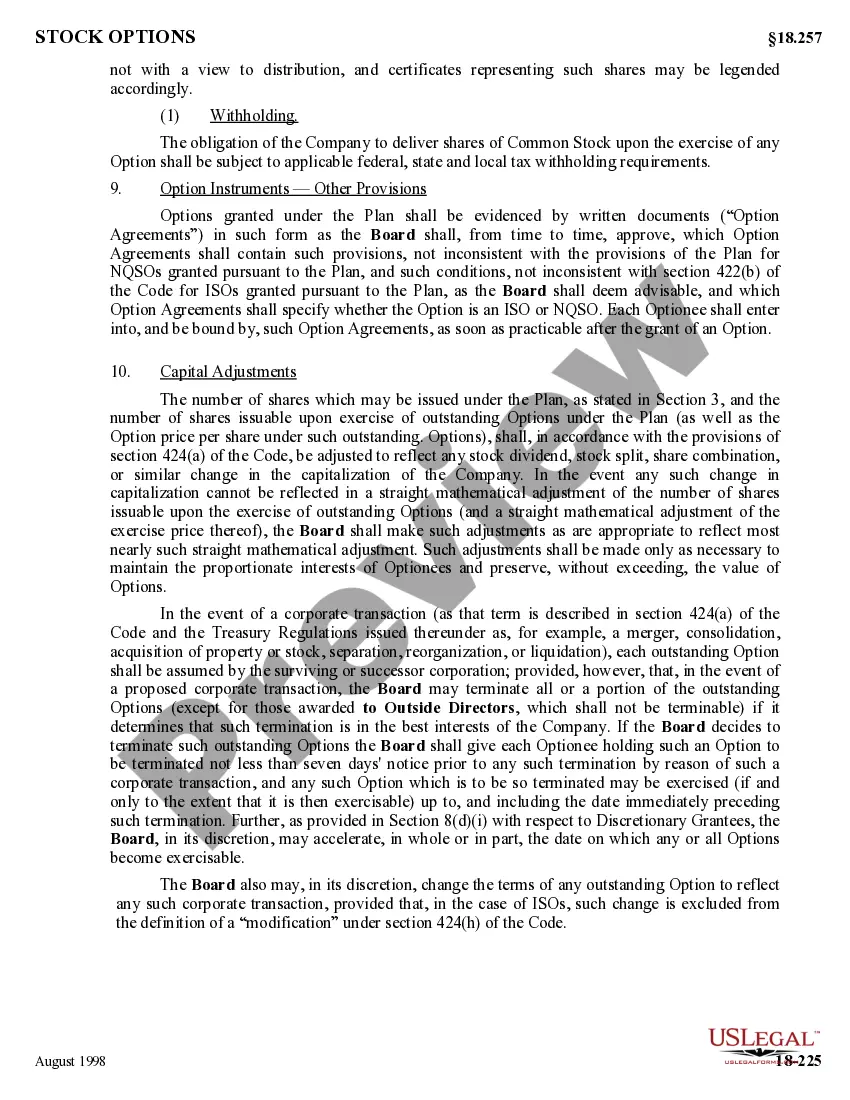

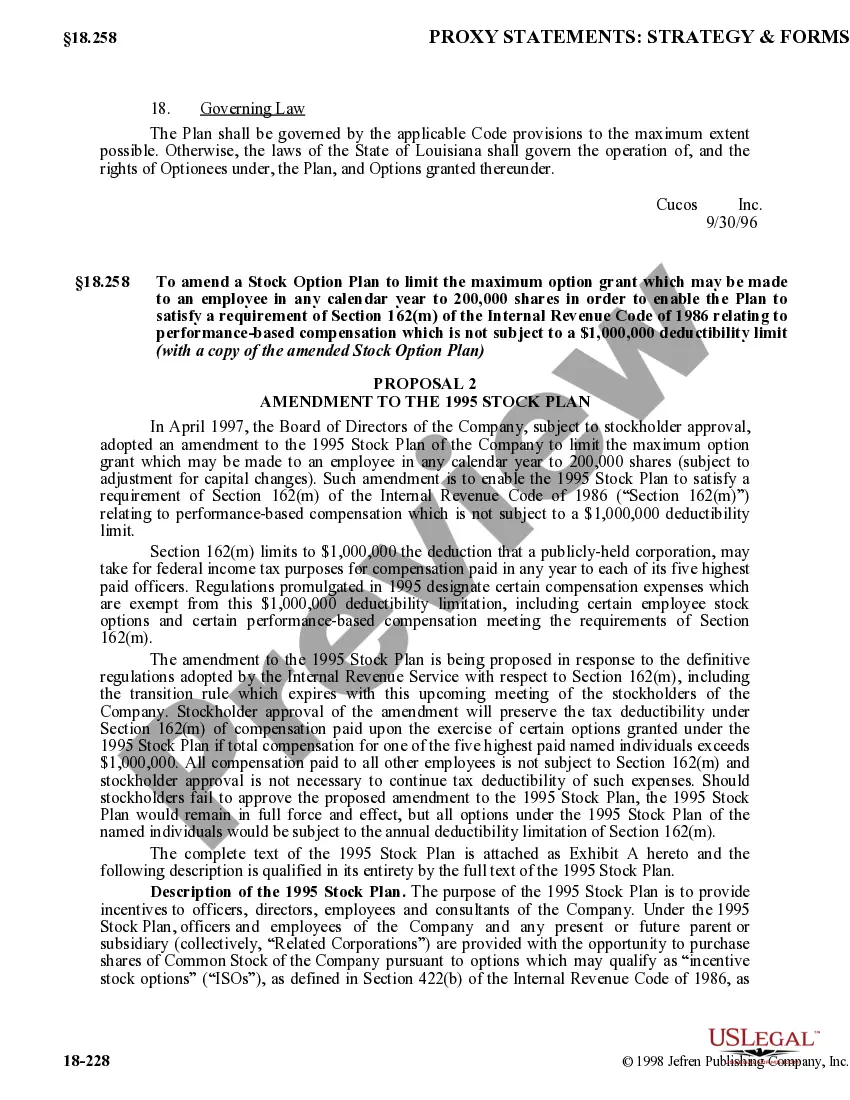






How to fill out Nonemployee Directors Nonqualified Stock Option Plan Of Cucos, Inc.?
The Non Qualified Stock Options presented on this website is a reusable legal document crafted by qualified attorneys in accordance with federal and state regulations.
For over 25 years, US Legal Forms has offered individuals, enterprises, and legal professionals more than 85,000 authenticated, state-specific forms for various business and personal needs. It’s the fastest, simplest, and most dependable method to acquire the documentation you require, as the service assures bank-level data protection and anti-malware safeguards.
Choose the format you desire for your Non Qualified Stock Options (PDF, DOCX, RTF) and download the sample to your device.
- Look for the document you require and examine it.
- Browse through the sample you searched for and preview it or review the form description to confirm it meets your requirements. If it doesn’t, utilize the search feature to find the correct one. Click Buy Now once you have located the template you need.
- Subscribe and Log In.
- Select the pricing option that works for you and create an account. Use PayPal or a credit card for a speedy payment. If you already possess an account, Log In and verify your subscription to proceed.
- Obtain the fillable template.
Form popularity
FAQ
When reporting stock options on your tax return, you must first determine whether your options are qualified or non-qualified stock options. Non-qualified stock options trigger tax implications at the time of exercise, which means you must report any income generated from exercising these options. You typically report this income on your Form 1040, and it appears as ordinary income. For detailed guidance and forms, consider using US Legal Forms to streamline your tax reporting process.
Non-qualified stock options are a type of stock option that does not meet certain requirements set by the Internal Revenue Service. Unlike qualified options, these do not receive favorable tax treatment, meaning you will owe taxes upon exercising them. Typically, non-qualified stock options allow employers more flexibility in granting them, but you should be aware of the tax implications. If you want to understand how non-qualified stock options can affect your financial planning, consider exploring resources on the US Legal Forms platform.
When you have non-qualified stock options, you have several choices to consider. You can exercise them to buy shares, hold them for potential appreciation, or sell them if the market conditions are favorable. Using a platform like US Legal Forms can help you navigate the complexities of managing your options, ensuring you make informed decisions every step of the way.
While avoiding taxes on non-qualified stock options entirely isn't possible, you can manage your tax burden effectively. You might consider holding onto your options until they qualify for long-term capital gains, which have a lower tax rate. Additionally, utilizing tax-advantaged accounts can help minimize your tax impact, so be sure to explore all available options.
The best strategy for non-qualified stock options often involves careful timing and tax planning. You may want to consider exercising your options when your income is lower, thereby potentially reducing your tax burden. Additionally, diversifying your investments after exercising can help mitigate risk. Utilizing resources from platforms like US Legal Forms can provide you with valuable information and tools to optimize your strategy.
To avoid tax on non-qualified stock options, you may consider holding onto the options until they are exercised. This allows you to manage when you recognize income. Additionally, consulting with a tax advisor can help you understand how to minimize your tax liabilities effectively. Using platforms like US Legal Forms can guide you through the legal aspects of your options.
The income related to the option exercise should be included in the Form W-2 you receive from your employer or 1099-NEC from the company if you are a non-employee. Any capital gain or loss amount may also be reportable on your US Individual Income Tax Return (Form 1040), Schedule D and Form 8949 in the year of sale.
Paying Taxes on Non-Qualified Stock Options For example, after exercising at $20 per share, suppose the stock rose to $30 per share. If you sold your 100 shares at that price, you would pay capital gains taxes on the additional $1,000 in earnings. Capital gains taxes are dependent on how long you hold the shares.
Non-qualified Stock Options (NSOs) are stock options that, when exercised, result in ordinary income under US tax laws on the difference, calculated on the exercise date, between the exercise price and the fair market value of the underlying shares.
Here's a real-world example: If you exercise one of these NSOs, you'll pay your company $3 to buy a share. But the IRS views that share to be worth $35. The difference between the $3 and the $35 counts as a $32 phantom gain (also called the spread). The phantom gain is taxed at ordinary income rates.