Stock Option Plan Explained
Description
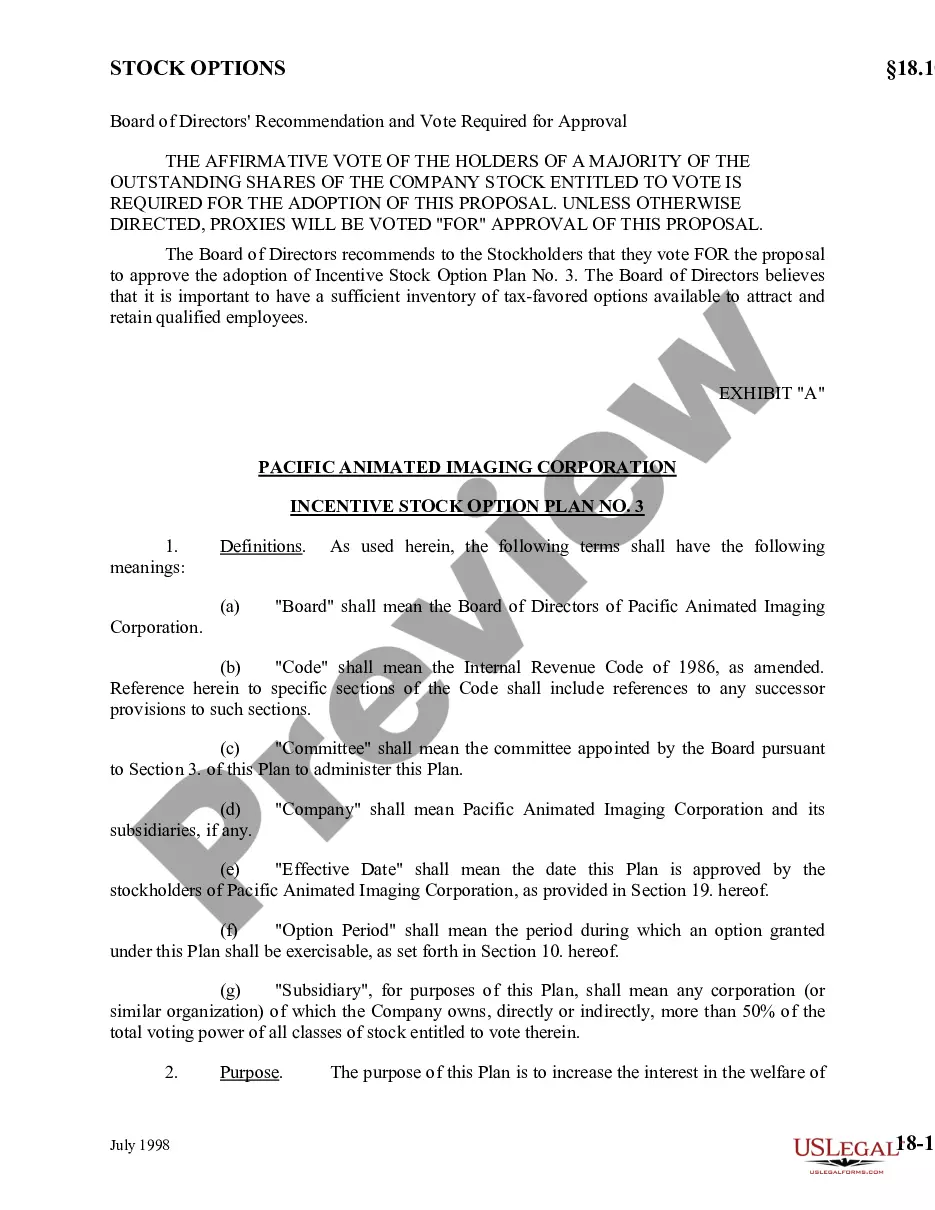
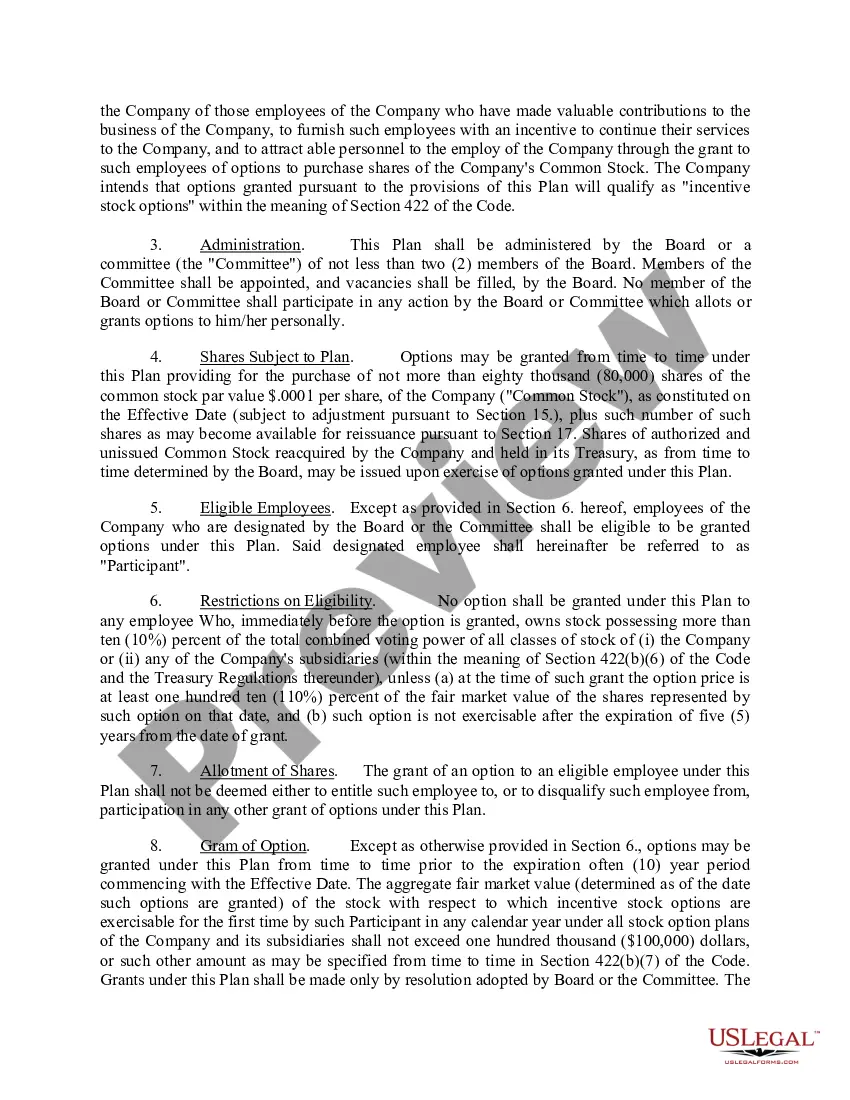
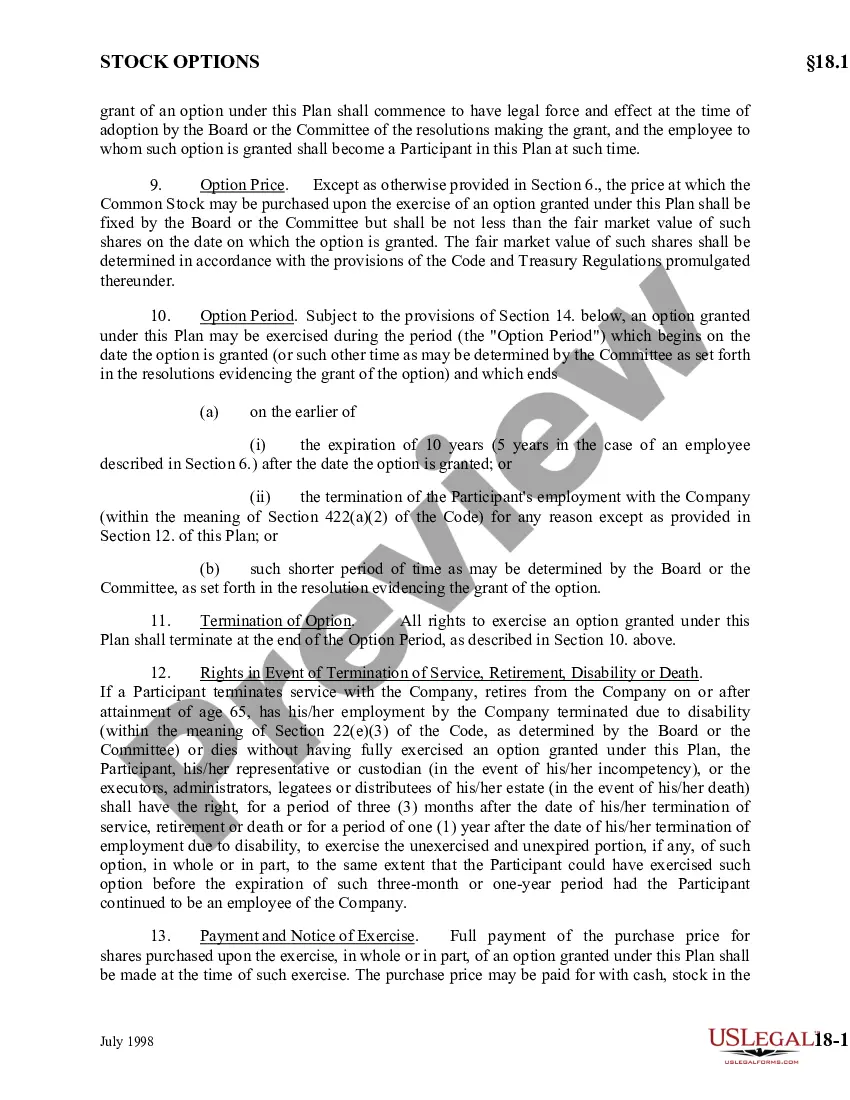
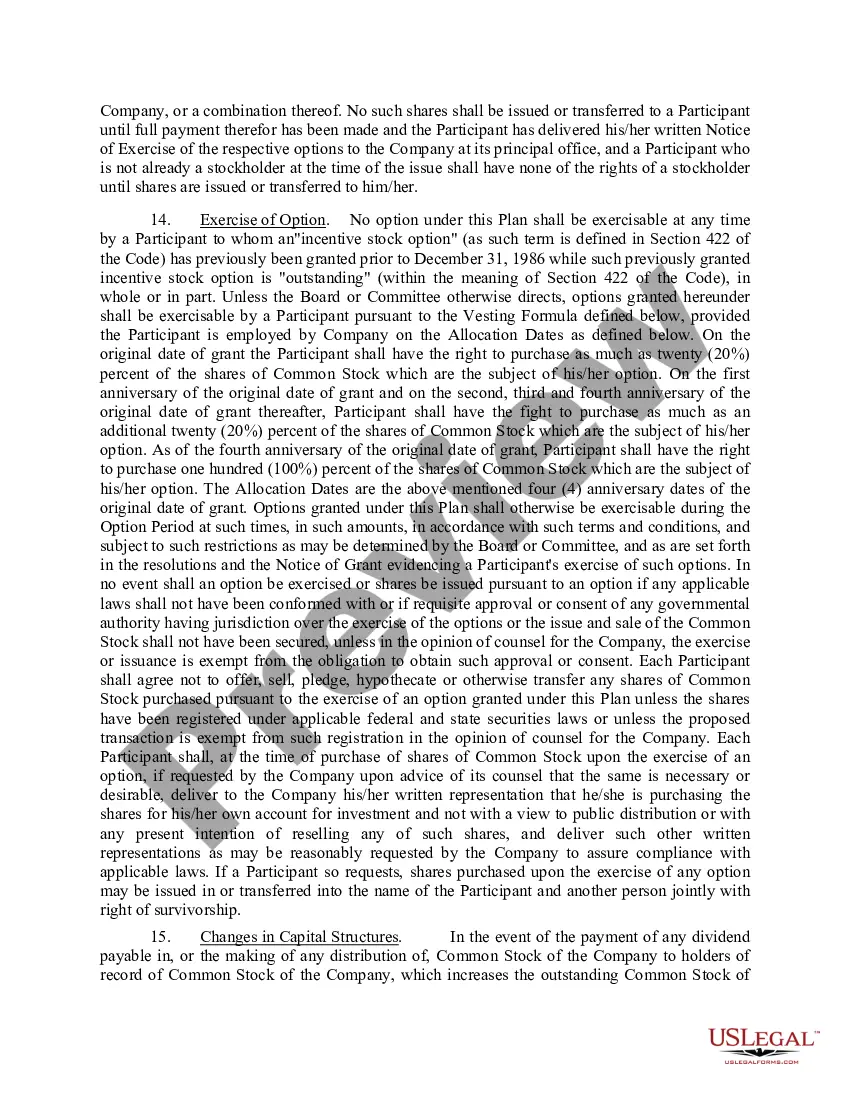
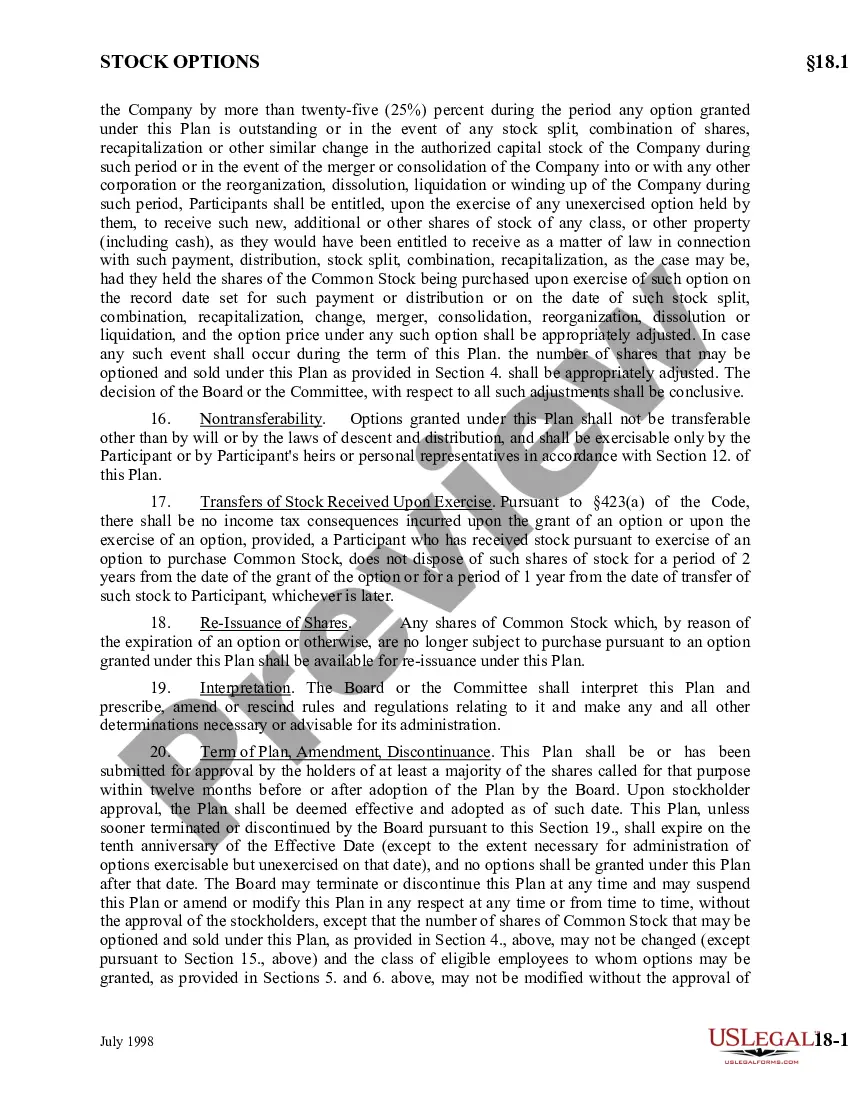
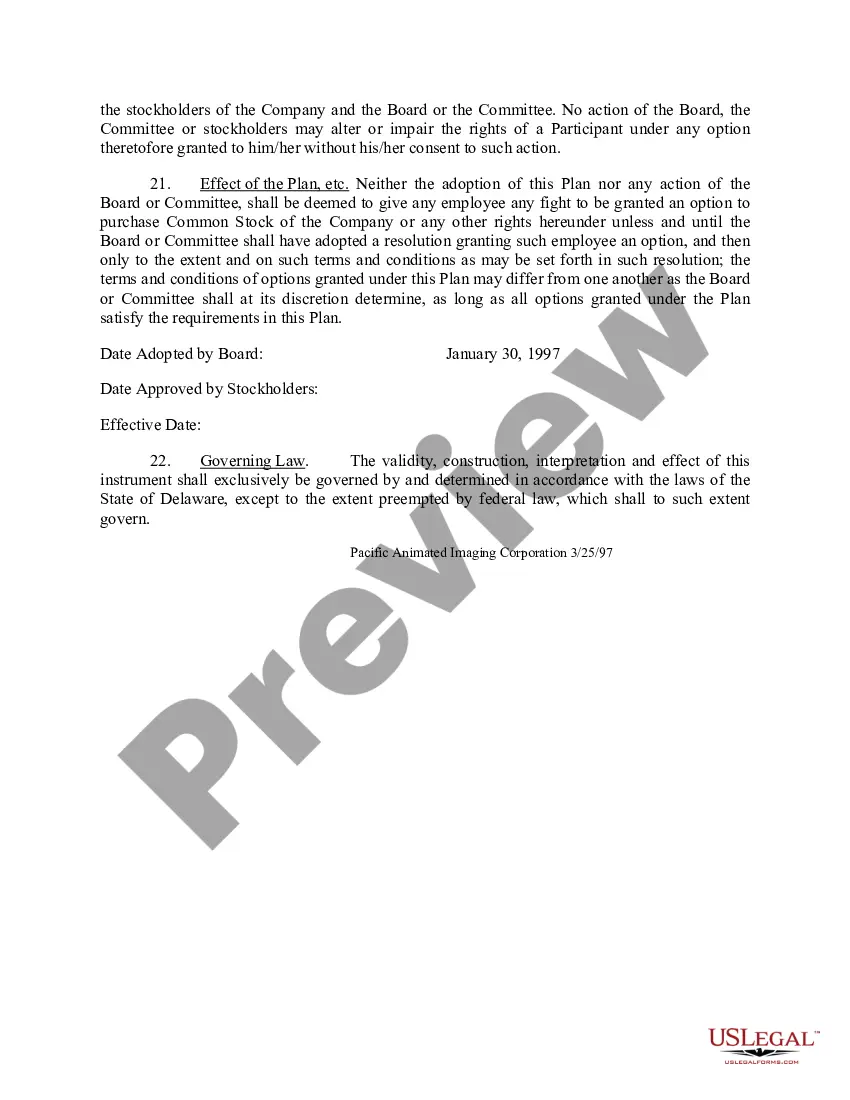
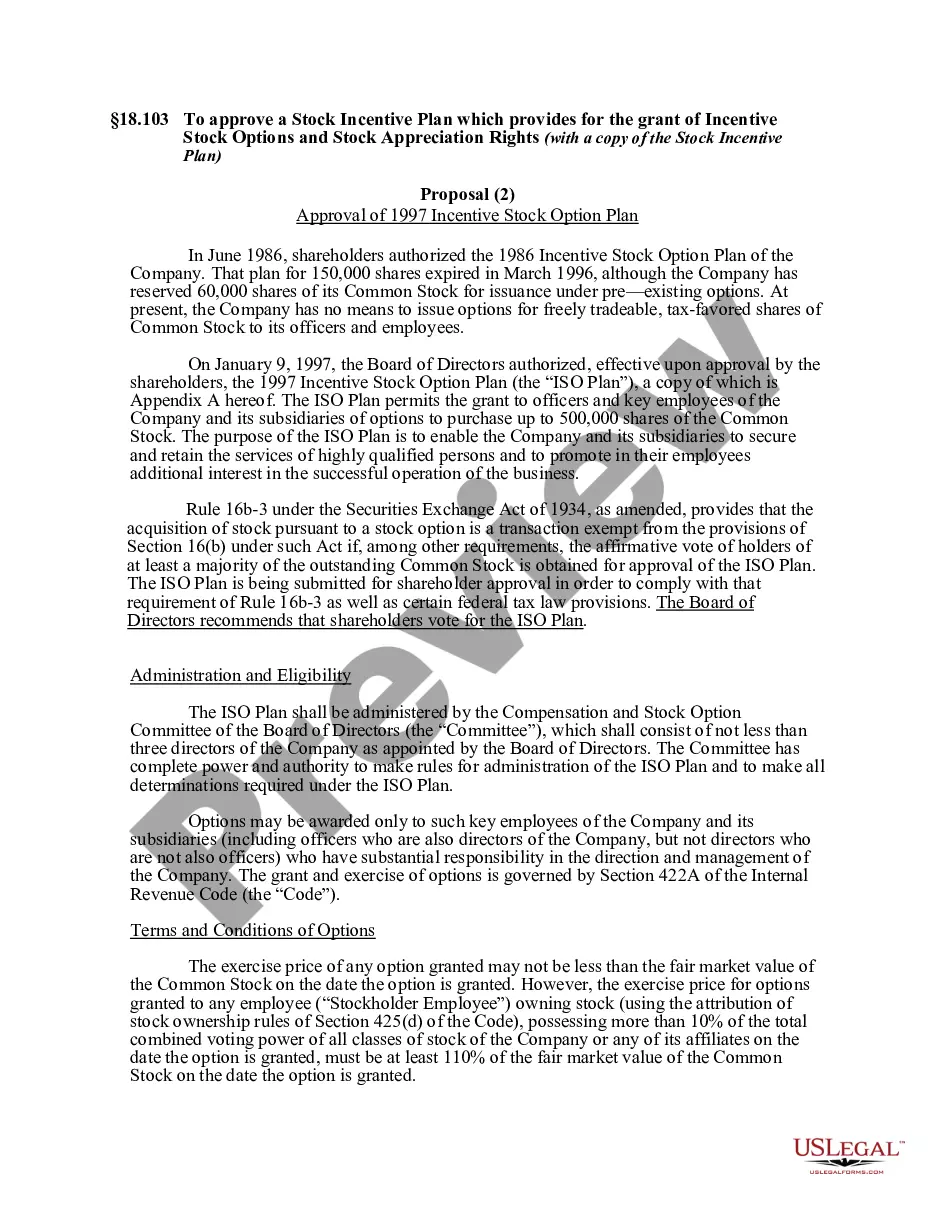
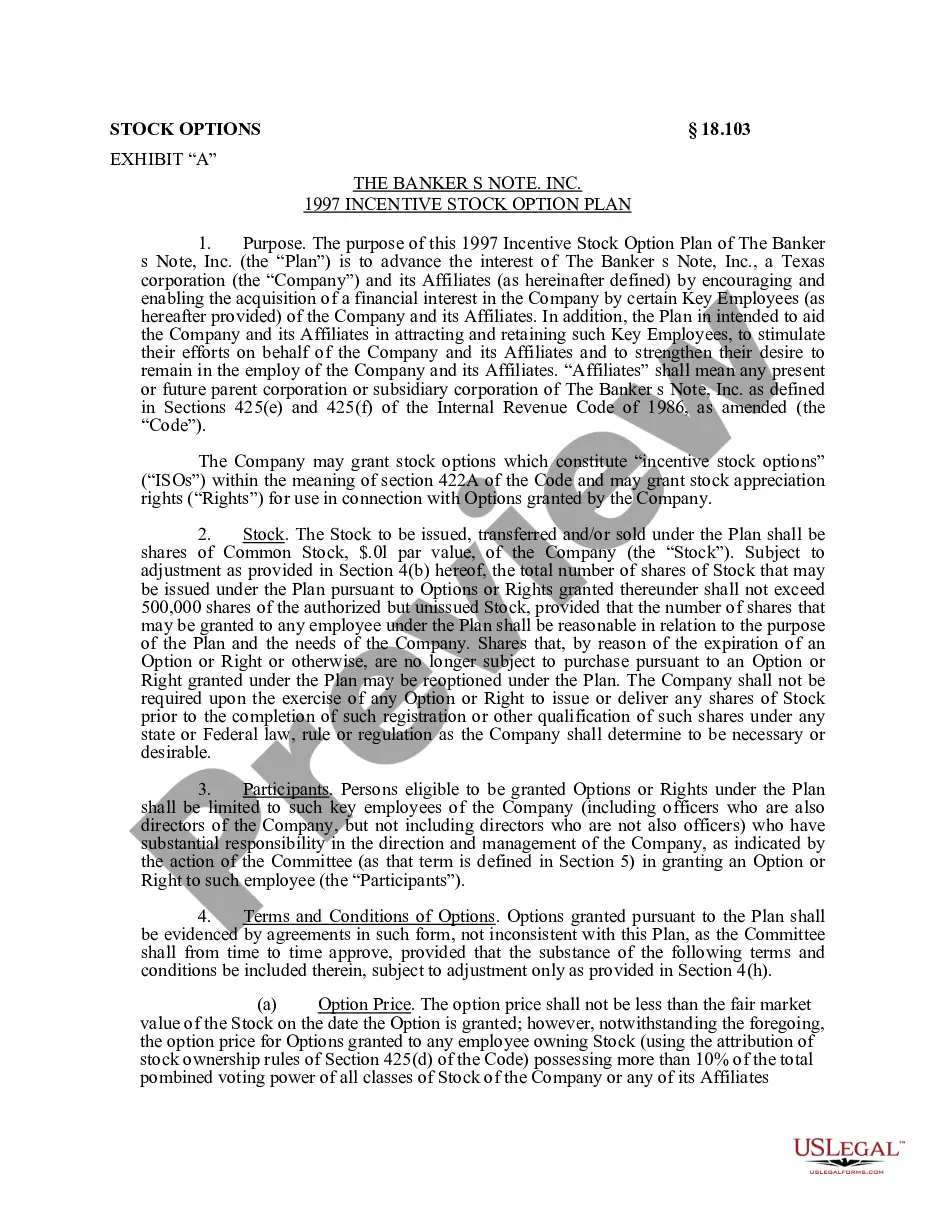
Get your form ready online
Our built-in tools help you complete, sign, share, and store your documents in one place.
Make edits, fill in missing information, and update formatting in US Legal Forms—just like you would in MS Word.
Download a copy, print it, send it by email, or mail it via USPS—whatever works best for your next step.
Sign and collect signatures with our SignNow integration. Send to multiple recipients, set reminders, and more. Go Premium to unlock E-Sign.
If this form requires notarization, complete it online through a secure video call—no need to meet a notary in person or wait for an appointment.
We protect your documents and personal data by following strict security and privacy standards.

Make edits, fill in missing information, and update formatting in US Legal Forms—just like you would in MS Word.

Download a copy, print it, send it by email, or mail it via USPS—whatever works best for your next step.

Sign and collect signatures with our SignNow integration. Send to multiple recipients, set reminders, and more. Go Premium to unlock E-Sign.

If this form requires notarization, complete it online through a secure video call—no need to meet a notary in person or wait for an appointment.

We protect your documents and personal data by following strict security and privacy standards.
Looking for another form?
How to fill out Stock Option Plan To Approve Incentive Stock Option Plan Of Pacific Animated Imaging Corp.?
- If you previously accessed US Legal Forms, log in to your account. Check that your subscription is active; if not, renew it according to your payment plan.
- For first-time users, visit the US Legal Forms website and peruse the extensive library. Ensure that you select a document relevant to your needs and compliant with your jurisdiction.
- Utilize the Search tab if you need assistance finding the correct document. If you find a suitable one, proceed to purchase.
- Click the Buy Now button and select your preferred subscription plan. You will need to create an account to gain access to the documents.
- Complete your purchase by entering your payment details. US Legal Forms accepts various payment methods, including credit cards and PayPal.
- Once the payment is processed, download your chosen form. You can find it later in the My Forms section of your account.
Utilizing US Legal Forms allows for rapid access to over 85,000 editable legal forms and packages, supporting both individuals and attorneys.
With unparalleled resources and expert assistance available, you're empowered to ensure your legal documents are accurate and sound. Get started today and take control of your legal needs.
Form popularity
FAQ
The rule of 100,000 pertains to tax limitations set by the IRS regarding the amount of stock options that can offer favorable tax treatment within a year. This rule is relevant to participants in stock option plans and understanding it is vital for achieving financial outcomes. By grasping this rule fully, you can navigate your stock option plan explained more effectively. It can significantly influence how and when you choose to exercise your options.
The $100,000 rule of Code 422(d) delineates how much stock can be granted as incentive stock options in a single year. This rule is essential for employees and employers to ensure compliance with tax regulations regarding stock options. Understanding this aspect helps you maximize your benefits under a stock option plan explained. Therefore, awareness of this rule allows you to make informed decisions regarding your stock offerings.
The 100,000 incentive stock option limit refers to the maximum value of stock options that can become exercisable in a single calendar year under IRS regulations. When you receive options, their potential financial value is key to understanding your stock option plan explained. If your options exceed this limit, they may not qualify for favorable tax treatment, which makes it crucial to understand how to manage your options effectively.
Creating a stock option plan involves several key steps, including defining eligibility criteria, selecting an appropriate option type, and determining the vesting schedule. It is essential to clearly define the plan's objectives to ensure alignment with business goals. Furthermore, consulting with legal experts, like those offered by uslegalforms, can help ensure compliance and effectiveness in establishing a solid stock option plan. A well-structured plan can significantly contribute to employee satisfaction and company loyalty.
The $100,000 rule pertains to the total value of stock options that can become exercisable within a calendar year. If the total value exceeds $100,000 based on the fair market value at the grant date, the excess options will be treated as non-qualified options. This distinction affects the tax implications for employees, making it vital to understand the rules surrounding stock option plans. A proper understanding of this rule can maximize the financial advantages of a stock option plan.
The 10-year rule for ESOP refers to the holding period for shares purchased through your Employee Stock Ownership Plan. Under certain conditions, you may need to hold your shares for up to 10 years before selling or transferring them. Understanding this rule is essential when navigating your stock options; for clarity, consult the stock option plan explained in your company's guidelines.
Being laid off can have implications for your Employee Stock Ownership Plan (ESOP). Typically, you will retain any vested shares, though unvested shares may be lost. To navigate this situation successfully, it's beneficial to have a thorough understanding of the stock option plan explained and to reach out to HR or a financial consultant to clarify your rights.
Leaving your company can affect your Employee Stock Ownership Plan (ESOP) in various ways. Generally, you may keep your vested shares, while any unvested shares are usually forfeited. To fully understand your options and the implications, consider the stock option plan explained in your exit documentation or seek guidance from your financial advisor.
If you decide to quit your job, the impact on your Employee Stock Ownership Plan (ESOP) will depend on your company's specific plan rules. Typically, you can retain vested shares but may lose unvested shares. It's important to review the stock option plan explained in your employee handbook or consult your HR department for clarity.