Stock Keeping Unit (skus)
Description

Get your form ready online
Our built-in tools help you complete, sign, share, and store your documents in one place.
Make edits, fill in missing information, and update formatting in US Legal Forms—just like you would in MS Word.
Download a copy, print it, send it by email, or mail it via USPS—whatever works best for your next step.
Sign and collect signatures with our SignNow integration. Send to multiple recipients, set reminders, and more. Go Premium to unlock E-Sign.
If this form requires notarization, complete it online through a secure video call—no need to meet a notary in person or wait for an appointment.
We protect your documents and personal data by following strict security and privacy standards.

Make edits, fill in missing information, and update formatting in US Legal Forms—just like you would in MS Word.

Download a copy, print it, send it by email, or mail it via USPS—whatever works best for your next step.

Sign and collect signatures with our SignNow integration. Send to multiple recipients, set reminders, and more. Go Premium to unlock E-Sign.

If this form requires notarization, complete it online through a secure video call—no need to meet a notary in person or wait for an appointment.

We protect your documents and personal data by following strict security and privacy standards.
Looking for another form?









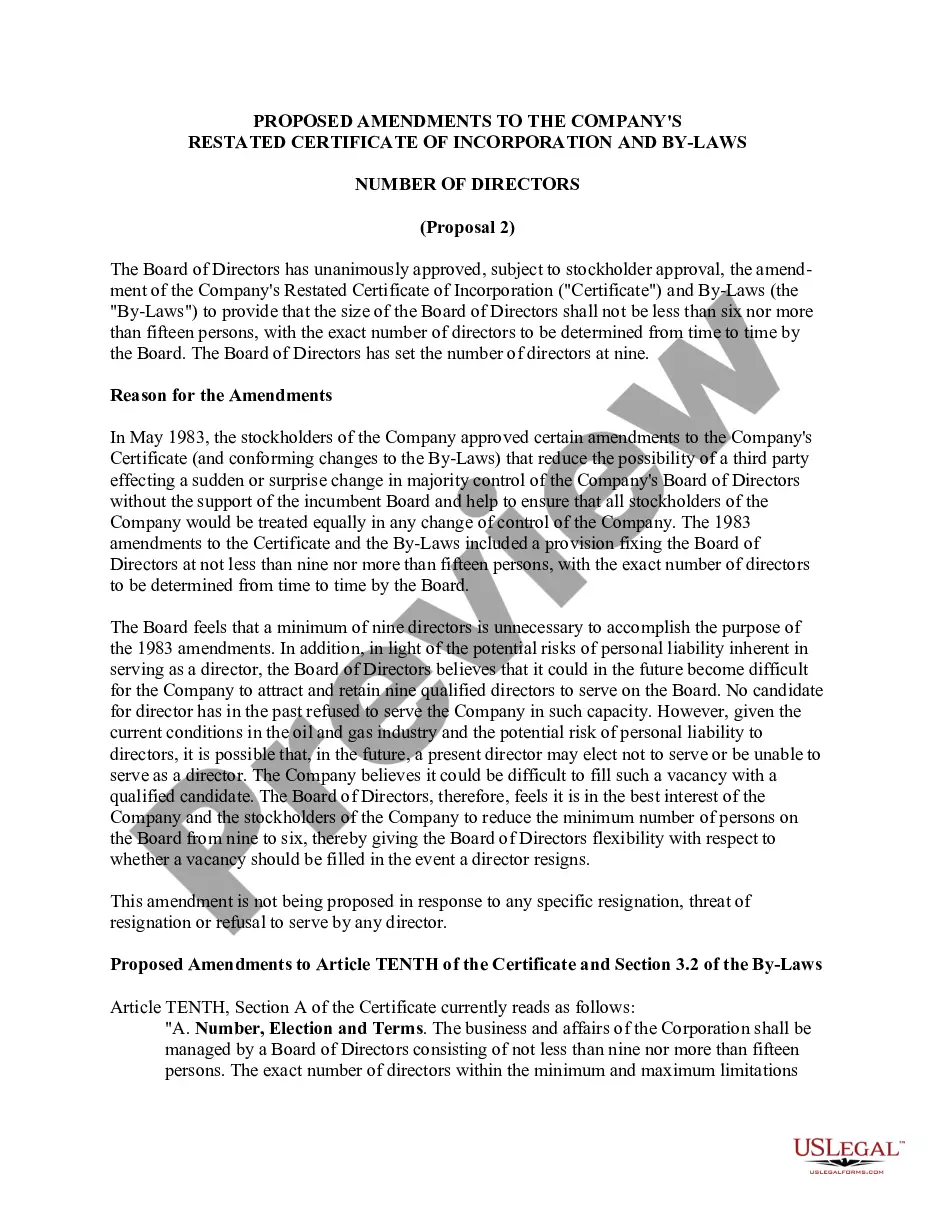
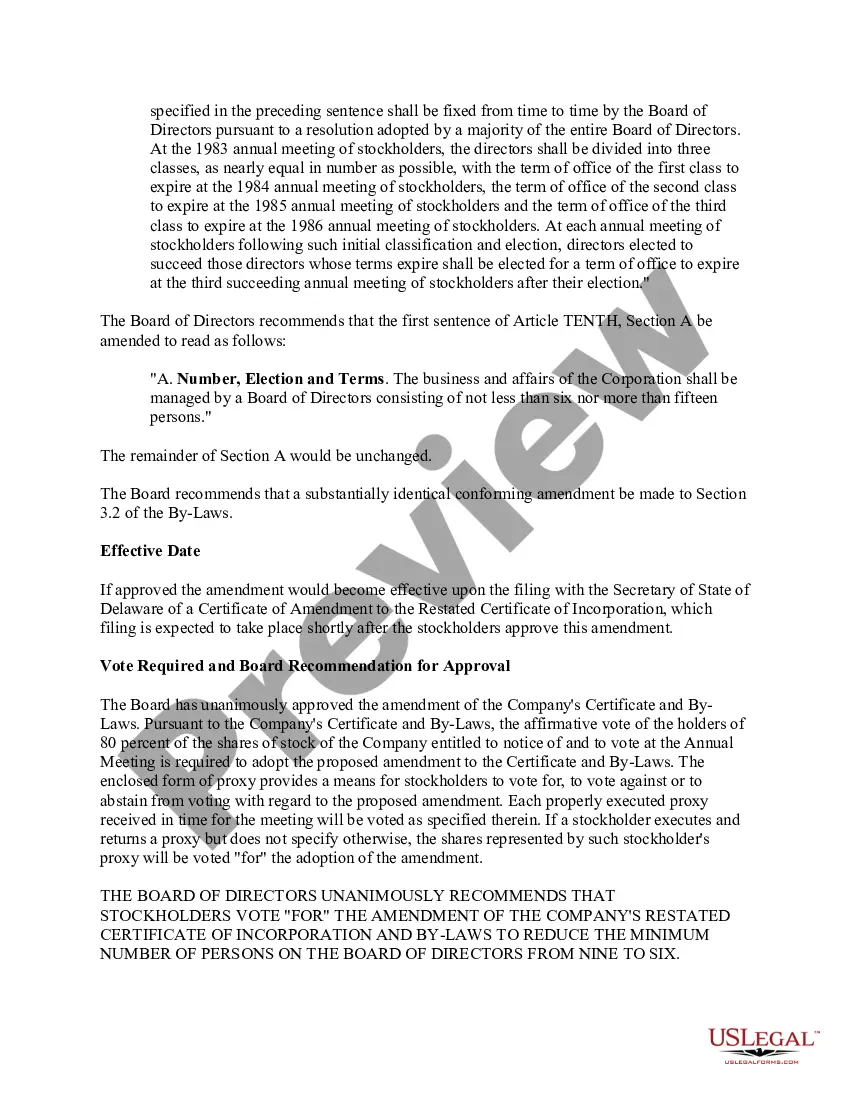
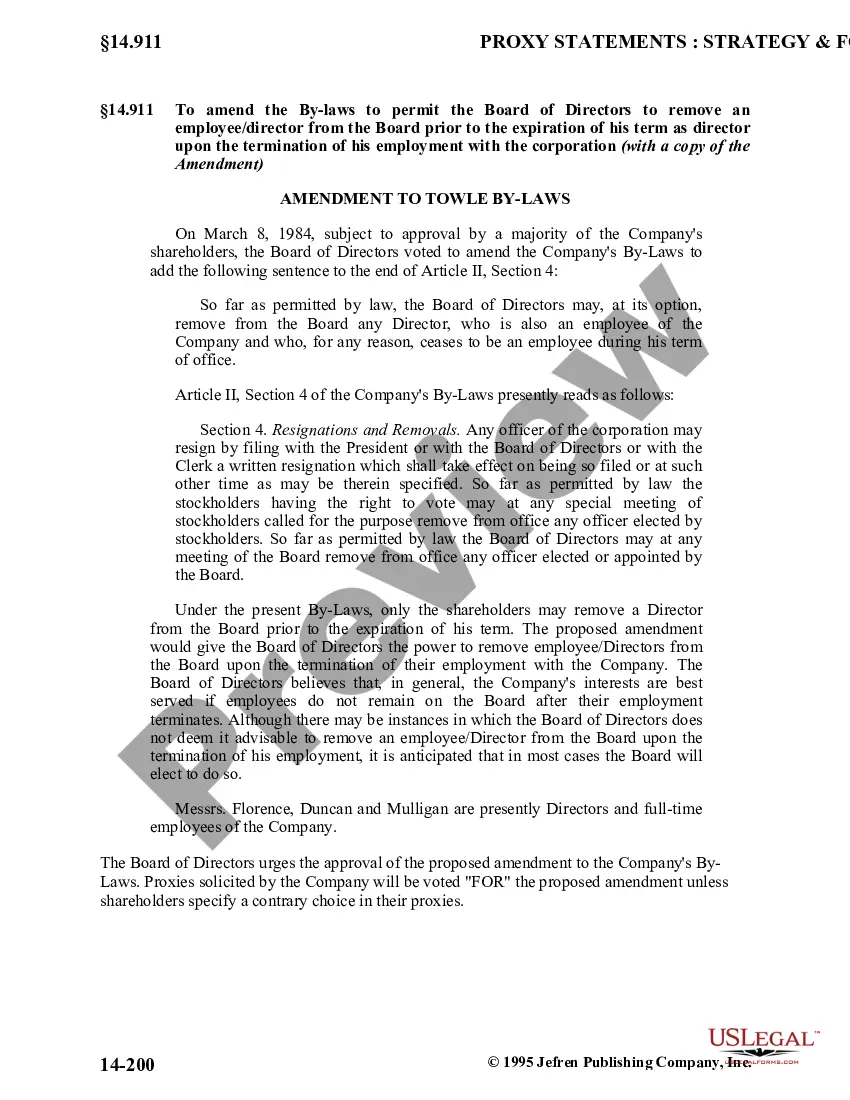
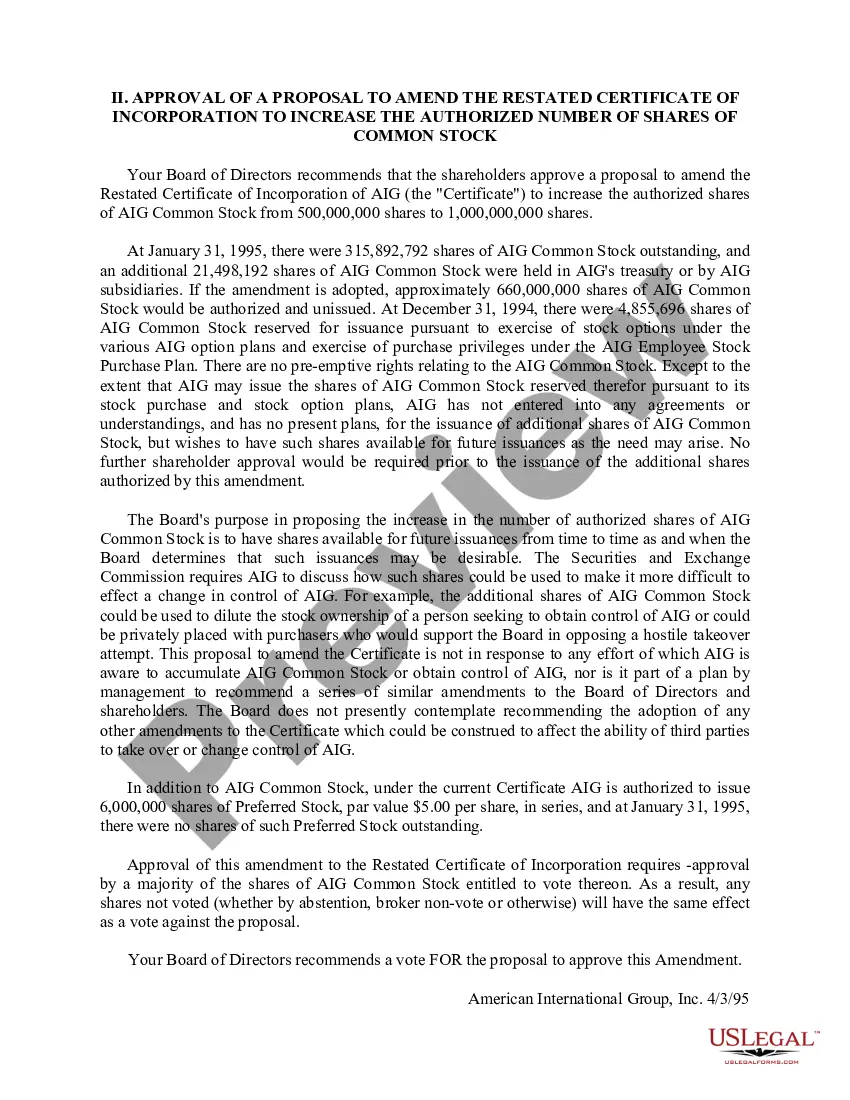
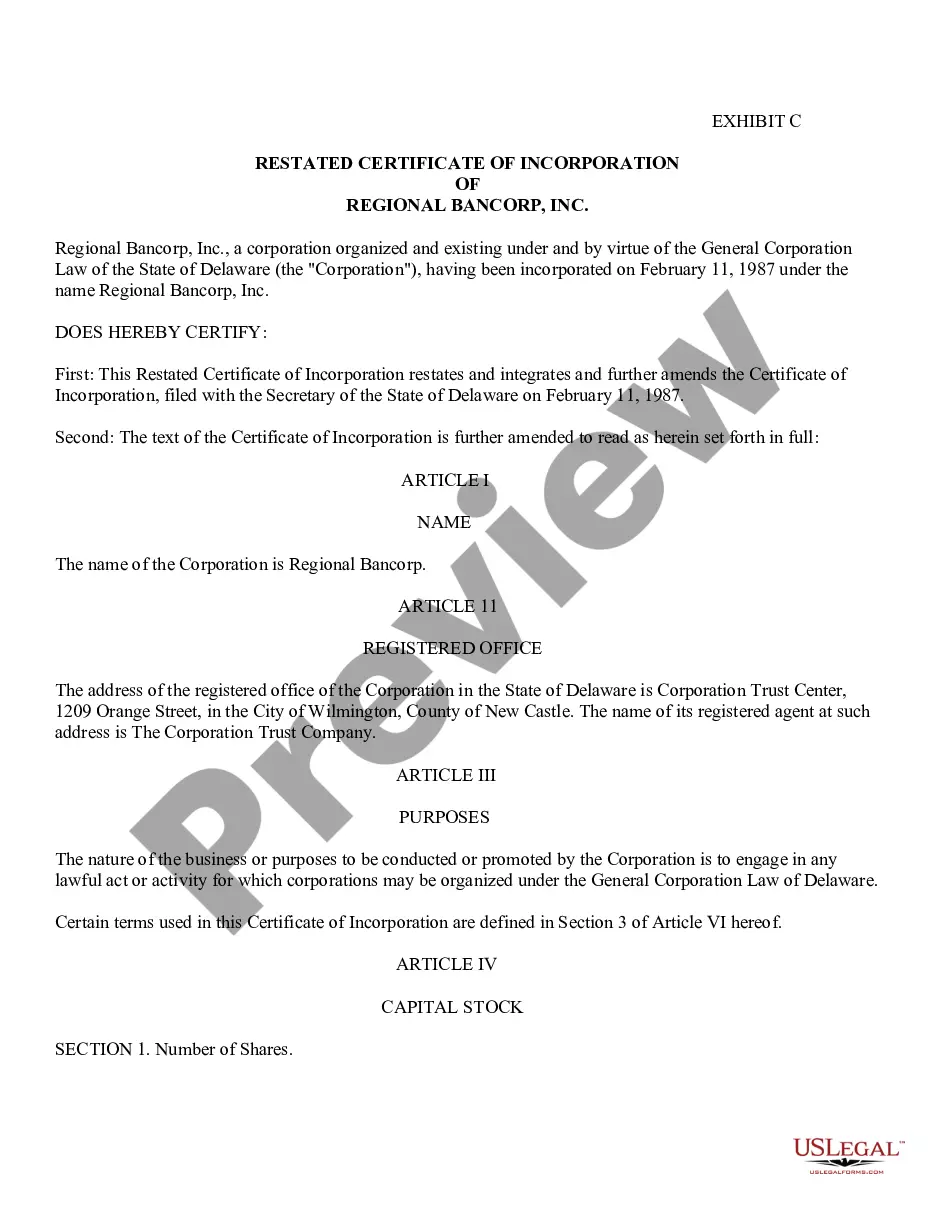
How to fill out Proposed Amendments To Restated Certificate Of Incorporation?
- Log in to your account if you've used US Legal Forms before and check the status of your subscription. Ensure it’s active to prevent interruptions.
- If this is your first time, start by browsing the extensive library of over 85,000 legal forms. Use the search function to find the correct template that aligns with your jurisdiction's requirements.
- Review the form's preview and description to confirm that it suits your needs. If you need a different template, utilize the search option to find it.
- Once you find the right document, click ‘Buy Now’ to select your desired subscription plan and register for an account if you haven’t yet.
- Complete your purchase by entering your credit card information or selecting your PayPal account for subscription payment.
- Download the form to your device after the transaction is confirmed. Access it at any time through the ‘My Forms’ section of your profile.
By efficiently utilizing stock keeping unit (skus) and harnessing the power of US Legal Forms, you can streamline your legal documentation process.
Get started today by exploring the vast array of resources available to ensure that your legal needs are met swiftly and accurately!
Form popularity
FAQ
SKUs in stock refer to the unique identifiers representing every product available for sale in an inventory system. They help track every item's movement, from sales to restocking needs. Understanding SKUs in stock is essential for efficient inventory management. By utilizing the US Legal Forms platform, you can streamline your inventory processes and enhance your business operations.
In inventory terms, a Stock Keeping Unit (SKU) is a specific code that identifies each product variant in a system. This code helps businesses keep track of stock levels, sales patterns, and reorder points effectively. Understanding SKU in inventory management ensures that you can make data-driven decisions regarding purchasing and stock levels. Consequently, it contributes to a smoother operation and increased profitability.
While both SKU and stock number serve inventory purposes, they are not the same. A Stock Keeping Unit (SKU) is a unique identifier used by a retailer for managing inventory, while a stock number may refer to generic identifiers used by manufacturers. Additionally, SKUs often include insightful information about the product, enhancing tracking efficiency. It's crucial to understand these differences when organizing your product listings.
SKU stands for Stock Keeping Unit, and it refers to a distinct identifier associated with each product in inventory. Each SKU corresponds to a specific item, which can be tracked by retailers for stock management. Understanding what a SKU means in stock is essential for optimizing inventory control. It offers clear visibility into what items are available for sale.
A Stock Keeping Unit (SKU) typically represents a unique item in inventory. For instance, if you sell shoes, each style, size, and color combination would have its distinct SKU. This system allows stores to track stock levels and sales accurately. In summary, SKUs help you manage your inventory effectively.
An SKU inventory is a comprehensive list showcasing the stock keeping units (SKUs) for all products within a store or warehouse. For instance, an inventory report may list items such as 'SHOES-BLACK-10' and 'SHOES-RED-9', each representing unique products. This detailed documentation assists businesses in tracking quantities, identifying bestsellers, and ensuring that they have the right amount of stock on hand. Utilizing an organized inventory system can significantly enhance efficiency.
An effective stock keeping unit (SKU) format often includes a combination of alphanumeric characters reflecting the product details. For example, a format might include the category followed by other distinguishing features, such as 'ELEC-LAPTOP-15-INCH'. This format provides information about the product type and specifications at a glance. Using a standard format simplifies inventory tracking and management, making it easier for businesses and customers alike.
A stock keeping unit (SKU) number typically appears as a series of letters and numbers, designed to convey essential information about a product. For instance, a SKU for a red t-shirt in medium size may look something like 'TSHIRT-RED-MED'. This combination provides immediate insights into the item while serving as a unique identifier in your inventory. A clear and concise format contributes to smooth operations within your business.
Writing SKU numbers involves using a systematic structure that is easy to understand and implement. You can start with a few letters representing the category of the product, followed by additional codes that denote size, color, or any other distinguishing features. The key is to ensure that the stock keeping unit (SKU) remains unique to avoid confusion in your inventory management. A well-defined format helps staff remember and retrieve items quickly.
To create a stock keeping unit (SKU), you should include a unique identifier for each product you offer. Typically, this identifier consists of a combination of letters and numbers that signifies essential details about the product, such as its category, size, color, or brand. You can use a system that works best for your inventory. Be sure to keep it consistent and straightforward, which helps with organization and retrieval.