Secured Claim Meaning
Description
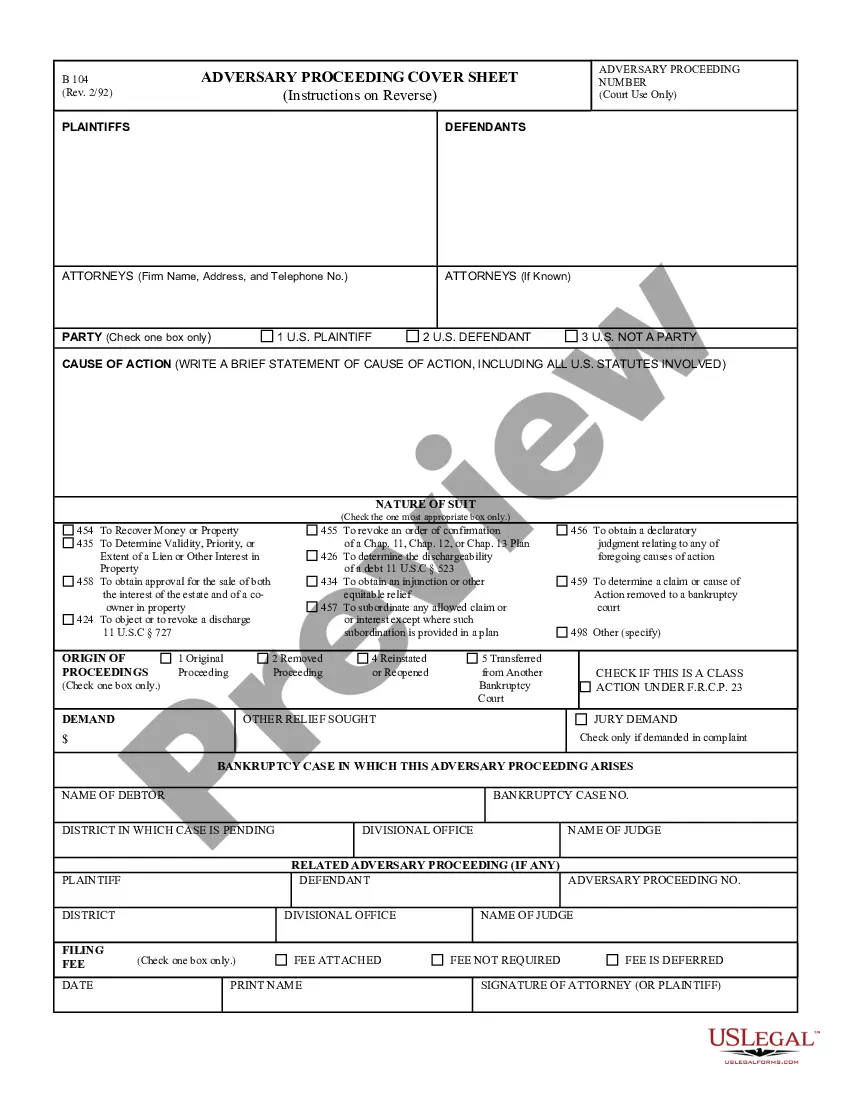
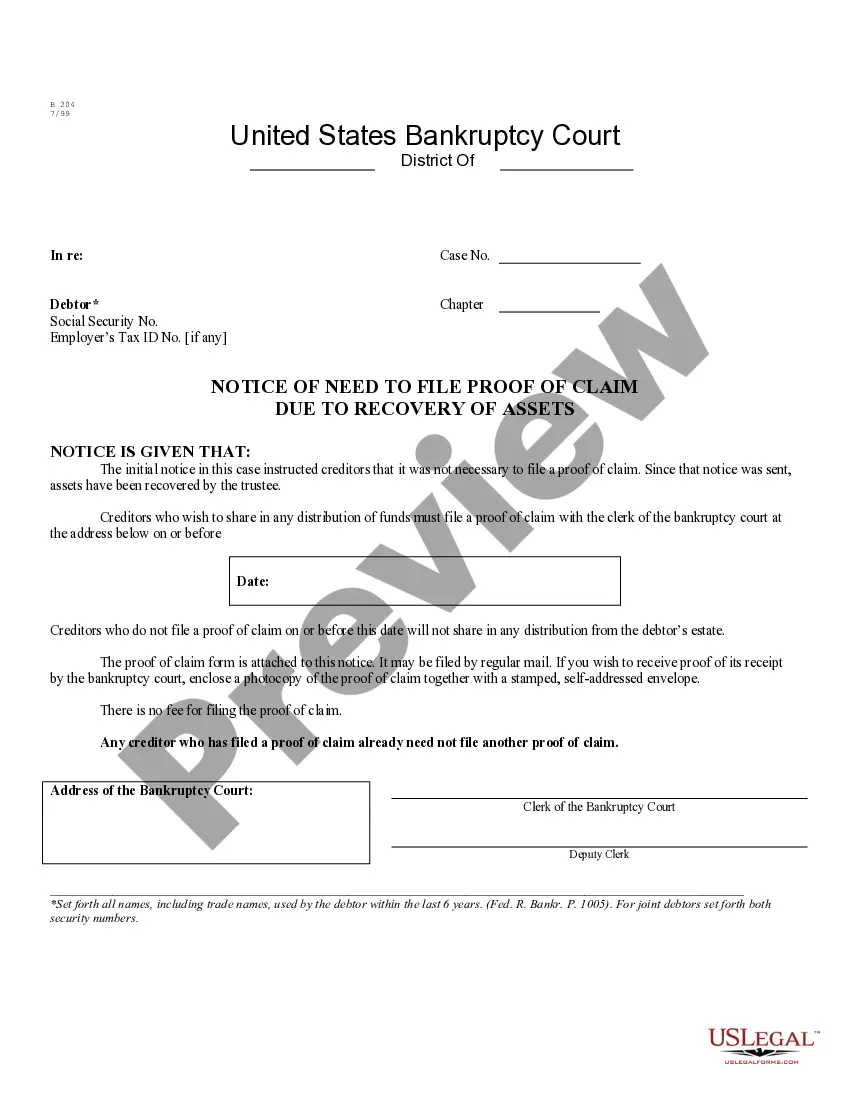
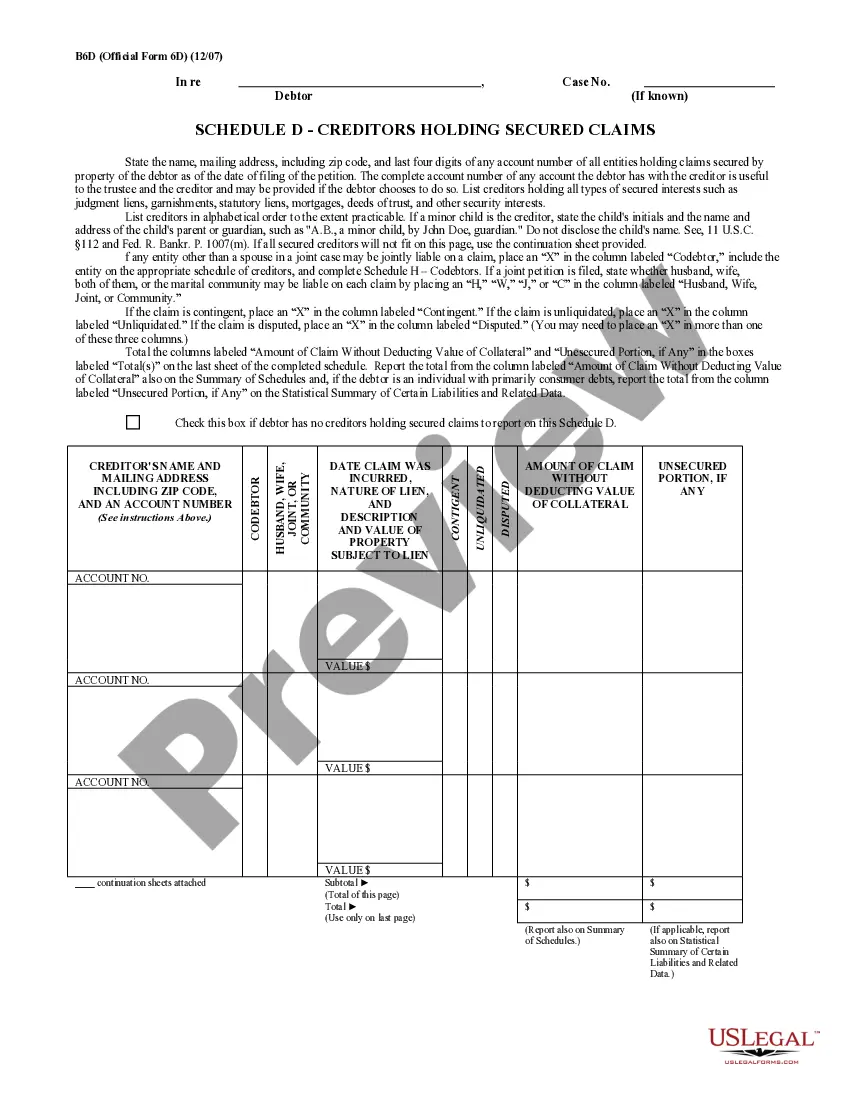
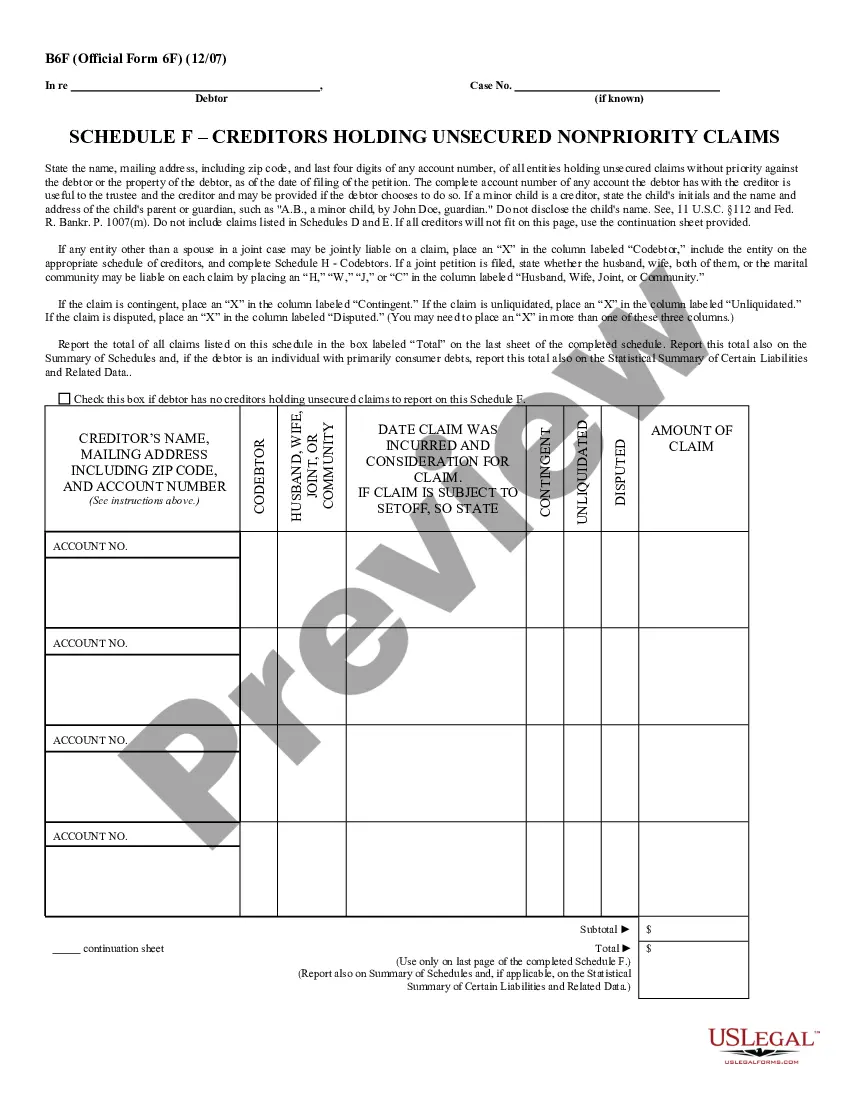


How to fill out List Of Creditors Holding 20 Largest Secured Claims - Not Needed For Chapter 7 Or 13 - Form 4 - Post 2005?
Creating legal documents from scratch can frequently be daunting.
Certain situations might require extensive research and significant financial investment.
If you're seeking a simpler and more economical method of forming Secured Claim Meaning or any other paperwork without unnecessary hurdles, US Legal Forms is always available to assist you.
Our virtual collection of over 85,000 current legal documents encompasses nearly every aspect of your financial, legal, and personal affairs. With just a few clicks, you can quickly obtain state- and county-specific templates carefully prepared for you by our legal professionals.
Ensure the template you select adheres to the regulations and laws of your state and county. Opt for the appropriate subscription choice to purchase the Secured Claim Meaning. Download the document. Then complete, authenticate, and print it out. US Legal Forms has an excellent reputation and over 25 years of experience. Join us today and make document preparation an easy and efficient process!
- Utilize our site whenever you require dependable services to swiftly find and download the Secured Claim Meaning.
- If you’re familiar with our site and have previously registered, simply Log In to your account, find the form, and download it right away or retrieve it later in the My documents section.
- No account yet? No problem. It only takes a few moments to create one and explore the library.
- But before proceeding to download the Secured Claim Meaning, keep these suggestions in mind.
- Examine the form preview and descriptions to ensure you are selecting the correct document.
Form popularity
FAQ
A secured claim refers to a debt that is backed by collateral, which means that if the borrower fails to repay, the lender can seize the asset. In simpler terms, it provides the creditor with a form of protection. For instance, a mortgage is a common example of a secured claim, where the house serves as collateral. Understanding the secured claim meaning is crucial for both borrowers and lenders to navigate financial agreements effectively.
To determine if a claim is secured, first check if there is a contract or agreement indicating collateral backing the debt. You can also review public records or filings that may disclose the nature of the claim. Additionally, if you are unsure, consulting with legal experts or using platforms like USLegalForms can provide clarity and guidance. Knowing the secured claim meaning is crucial for managing your financial responsibilities.
The secured claim meaning involves a debt that is backed by collateral, such as property or assets. In contrast, a priority claim refers to certain debts that are prioritized for repayment in bankruptcy proceedings. While both types of claims are important in legal contexts, secured claims provide creditors with a tangible asset to recover their funds. Understanding these distinctions helps you navigate financial obligations more effectively.
Secured claims refer to debts backed by collateral. Common examples include mortgages, where the home serves as collateral, and auto loans, where the vehicle secures the debt. If the borrower fails to repay, creditors can claim the collateral to recover their losses. Understanding secured claim meaning helps you recognize how these arrangements benefit both lenders and borrowers.
An unsecured claim refers to a debt that is not backed by collateral. This means that if the borrower defaults, the creditor has no specific assets to claim. Understanding the unsecured claim meaning is essential for borrowers, as it often leads to higher interest rates and increased risk for lenders.
A secured proof of claim is a legal document that a creditor files in bankruptcy proceedings to assert their right to payment backed by collateral. This document details the amount owed and describes the asset securing the claim. By filing a secured proof of claim, creditors can protect their interests and increase the likelihood of recovering their debts.
A secured claim means that a creditor has a legal right to specific property if the borrower fails to meet their financial obligations. This type of claim provides a layer of security for the lender, as it ensures they have a tangible asset to reclaim. For individuals and businesses, knowing the secured claim meaning can help them make informed decisions about loans and credit.
The difference between secured and unsecured claims lies in the backing of assets. A secured claim is supported by collateral, meaning that if the borrower defaults, the lender can seize the asset. In contrast, an unsecured claim does not have collateral backing it, making it riskier for lenders. Understanding this distinction is crucial when navigating financial agreements.