Subpoena Under Force Majeure
Description
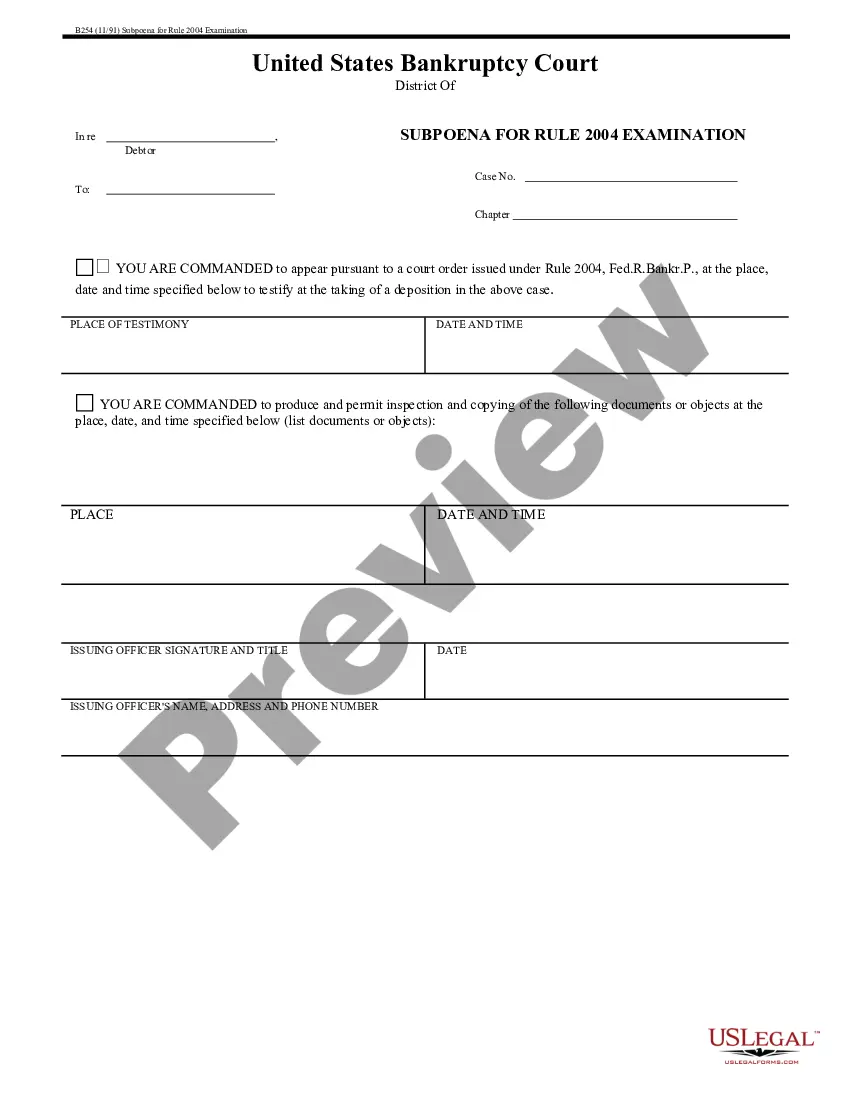
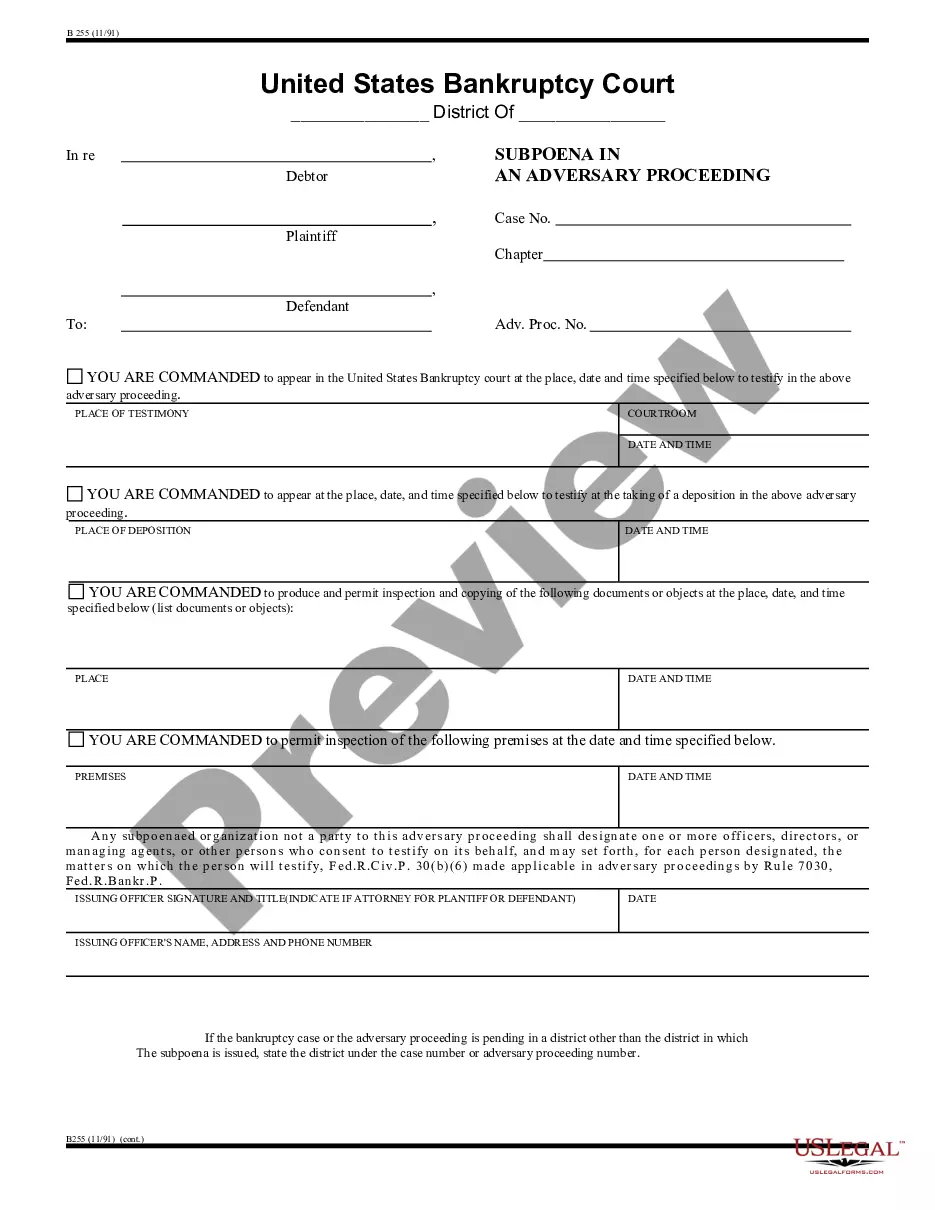
How to fill out Subpoena In A Case Under The Bankruptcy Code - B 256?
Whether for commercial reasons or personal matters, everyone must handle legal situations at some point in their life.
Filling out legal documents requires meticulous attention, beginning with selecting the suitable template.
Select the document format you prefer and download the Subpoena Under Force Majeure. Once saved, you can either complete the form using editing software or print it to finish it manually. With a vast US Legal Forms catalog available, you never have to waste time searching for the correct sample online. Benefit from the library’s user-friendly navigation to find the appropriate form for any circumstance.
- For example, if you select an incorrect version of the Subpoena Under Force Majeure, it will be denied upon submission.
- Thus, it is crucial to obtain a trustworthy source of legal documents such as US Legal Forms.
- If you need a Subpoena Under Force Majeure template, follow these straightforward steps.
- Retrieve the sample you require by utilizing the search bar or browsing the catalog.
- Review the form’s details to confirm it aligns with your case, jurisdiction, and area.
- Click on the form’s preview to inspect it.
- If it turns out to be the wrong document, return to the search feature to locate the Subpoena Under Force Majeure template that you need.
- Acquire the template when it meets your requirements.
- If you already possess a US Legal Forms account, simply click Log in to access previously saved templates in My documents.
- If you do not have an account yet, you can obtain the form by clicking Buy now.
- Select the suitable payment plan.
- Fill out the account registration form.
- Choose your payment method: you can make use of a credit card or PayPal account.
Form popularity
FAQ
The three types of force majeure typically include natural events, human actions, and governmental restrictions. Natural events encompass disasters like hurricanes or earthquakes. Human actions may involve strikes or riots, while governmental restrictions can include new laws or regulations. When dealing with a subpoena under force majeure, recognizing these types can guide your legal strategy.
Courts generally interpret force majeure clauses based on the specific language used in contracts. They assess whether the event was truly unavoidable and if it directly impacted the ability to comply with legal requirements. A subpoena under force majeure may be upheld if the circumstances clearly demonstrate that compliance was impossible. This interpretation can vary, so consulting legal experts is essential.
A force majeure event refers to unforeseen circumstances that prevent a party from fulfilling contractual obligations. Common examples include natural disasters, war, or pandemics. When a subpoena under force majeure is invoked, it typically means that an external factor has disrupted the process. Understanding these events helps individuals and businesses navigate legal obligations effectively.
The requirements for force majeure typically include an unforeseen event that is beyond your control and directly impacts your ability to fulfill contractual duties. The event must be specified in the contract or fall under general definitions of force majeure. You must also demonstrate that you acted reasonably to avoid or mitigate the effects of the event. For additional guidance, the uslegalforms platform can provide templates and resources to help you navigate these requirements.
To claim force majeure, you must formally notify the other party of your inability to fulfill the contract due to an unforeseen event. Include a detailed explanation of how the event directly impacts your obligations. It is essential to keep records of all correspondence and evidence related to the claim. If necessary, utilize a subpoena under force majeure to strengthen your position and clarify your claims.
To invoke a force majeure clause, first, review your contract to identify the specific language and conditions outlined. Notify the other party in writing, detailing the event that triggered the clause and how it affects your ability to perform. Be clear and concise in your communication, and provide any supporting documentation. Consider consulting a legal expert or using resources on uslegalforms to ensure proper invocation of the clause.
To prove force majeure, you need to demonstrate that an unexpected event, such as a natural disaster or pandemic, prevented you from fulfilling your contractual obligations. Collect relevant documentation, such as contracts, correspondence, and evidence of the event's impact. Additionally, you may need to show that you took reasonable steps to mitigate the effects. Using a subpoena under force majeure can help establish your case more clearly.