Subpoenas
Description
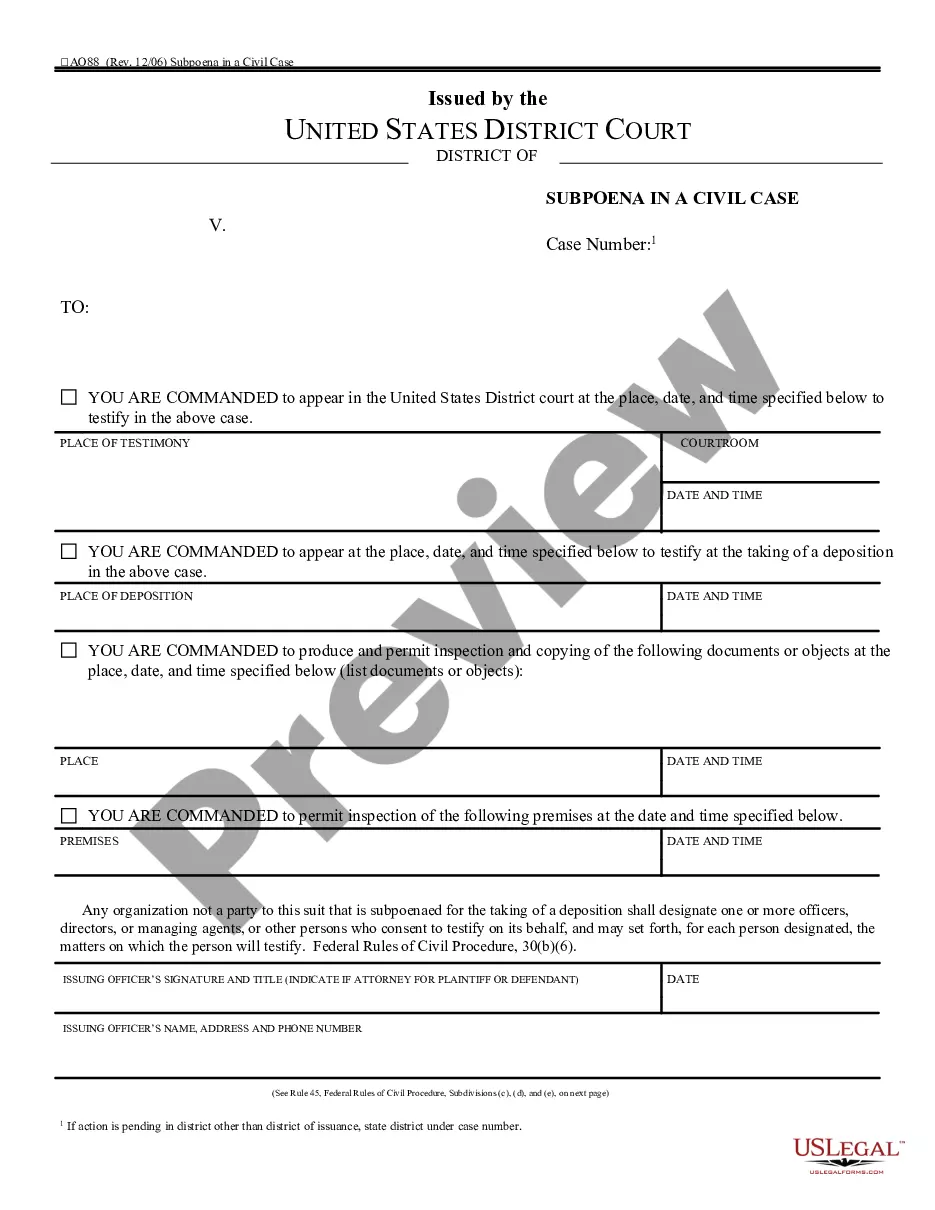
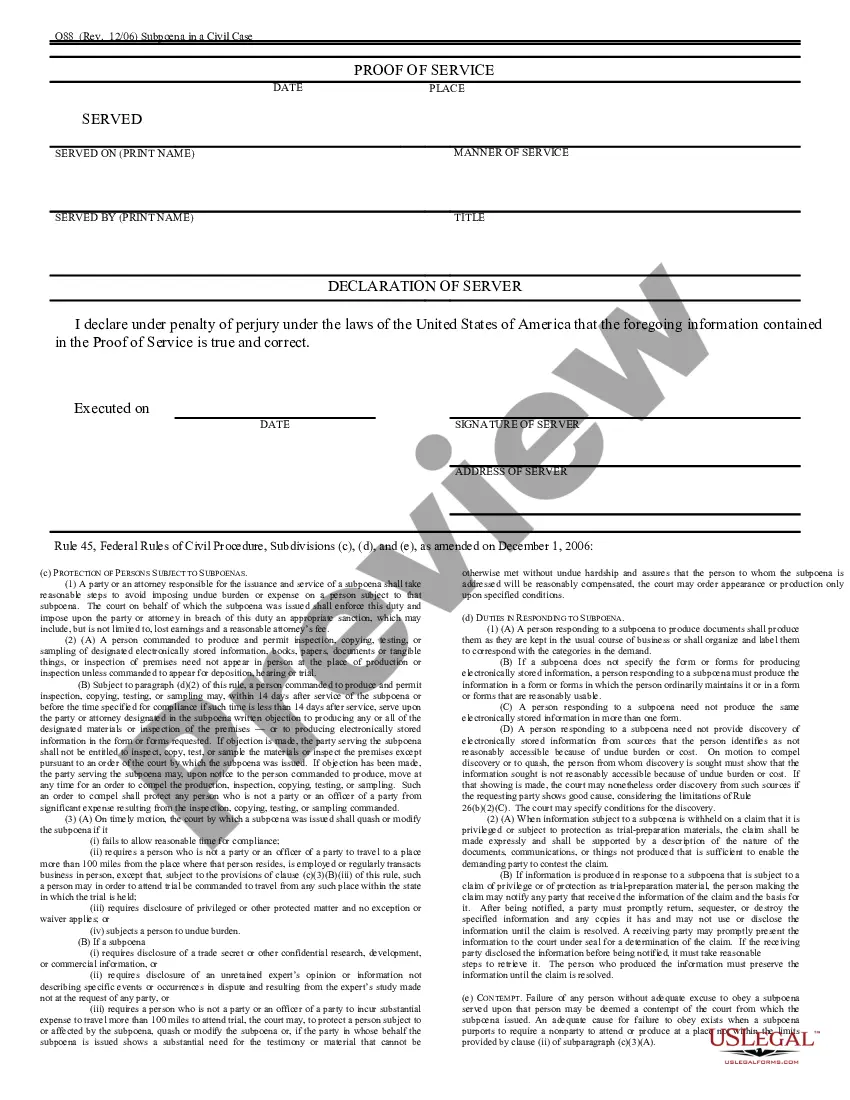
Get your form ready online
Our built-in tools help you complete, sign, share, and store your documents in one place.
Make edits, fill in missing information, and update formatting in US Legal Forms—just like you would in MS Word.
Download a copy, print it, send it by email, or mail it via USPS—whatever works best for your next step.
Sign and collect signatures with our SignNow integration. Send to multiple recipients, set reminders, and more. Go Premium to unlock E-Sign.
If this form requires notarization, complete it online through a secure video call—no need to meet a notary in person or wait for an appointment.
We protect your documents and personal data by following strict security and privacy standards.

Make edits, fill in missing information, and update formatting in US Legal Forms—just like you would in MS Word.

Download a copy, print it, send it by email, or mail it via USPS—whatever works best for your next step.

Sign and collect signatures with our SignNow integration. Send to multiple recipients, set reminders, and more. Go Premium to unlock E-Sign.

If this form requires notarization, complete it online through a secure video call—no need to meet a notary in person or wait for an appointment.

We protect your documents and personal data by following strict security and privacy standards.
Looking for another form?


How to fill out Subpoena To Appear And Testify At A Hearing Or Trial In A Civil Action?
- If you are a returning user, log in to your account to access your documents. Make sure your subscription is active; renew if needed.
- Preview the form's details carefully to ensure it aligns with your needs and complies with the jurisdictional requirements.
- If necessary, search for alternative templates using the Search tab, ensuring you find the correct form.
- Select the desired template and click on the Buy Now button. Choose your preferred subscription plan and create an account if you're a new user.
- Provide payment information via credit card or your PayPal account to complete your purchase.
- Once you've made the purchase, download the form and save it to your device. You can access it later in the My Forms section of your profile.
By following these steps, you can efficiently secure the necessary subpoena forms you need.
US Legal Forms empowers you to handle legal documents with confidence—try our library today to simplify your legal needs!
Form popularity
FAQ
While serving a subpoena, you might say, 'I am here to serve you with a subpoena that requires your presence in court.' Make sure to discuss any deadlines or requirements outlined in the subpoena. Being clear and precise in your communication ensures the recipient understands the importance of complying with the legal request.
When serving a subpoena, clearly identify yourself and state the purpose of your visit. It is important to deliver the document respectfully and professionally, explaining the obligations it entails. Providing the recipient with a concise overview of what the subpoena requires can make the process smoother and help them understand its seriousness.
To prepare for being subpoenaed to court, begin by reviewing the subpoena and gathering all necessary documents. Familiarize yourself with the case details and the role you are expected to play in the proceedings. Consulting a lawyer can provide valuable insights and guidance, ensuring that you present your testimony appropriately and understand the legal implications of your appearance.
The burden of proof for a subpoena typically lies with the party issuing it. They must demonstrate that the information requested is relevant and necessary for their case. If the subpoenaed party believes the request is overly broad or burdensome, they can file a motion to quash the subpoena, and legal counsel can assist in that process.
When you receive a subpoena, your first step is to read it carefully to understand what is required of you. Next, seek legal advice to ensure you understand your rights and responsibilities. Preparing the requested information or documents promptly and accurately is crucial to comply with the subpoena and avoid any legal complications.
Preparing for a subpoena involves reviewing the document thoroughly and understanding its requirements. Gather all relevant documents and materials that may be requested. It’s wise to consult with a legal professional, as they can help you navigate the complexities of subpoenas, ensuring you comply correctly and protect your interests.
A subpoena must include the name of the court, the title of the case, and the details of the person being subpoenaed. It should specify whether it is a subpoena for testimony or to produce documents. Additionally, the date, time, and location for compliance need to be clearly stated. Understanding what a subpoena contains helps you prepare and respond effectively.
If you get subpoenaed, you are legally obligated to respond according to the details outlined in the document. This may involve providing information, documents, or appearing in court. Ignoring a subpoena can lead to legal penalties, so it's critical to understand your rights and obligations. Seeking advice from legal professionals can make handling subpoenas easier.
In New Jersey, subpoenas can be issued by attorneys, court clerks, and judges as part of legal proceedings. This authority can extend to various cases, including civil and criminal matters. If you need to obtain a subpoena, it’s essential to follow the proper legal channels. Resources like US Legal Forms can assist you in navigating this process smoothly.
There are three main types of subpoenas: subpoena ad testificandum, subpoena duces tecum, and witness subpoenas. A subpoena ad testificandum requires an individual to testify, while a subpoena duces tecum demands the production of documents or evidence. Knowing these distinctions can help you understand what is expected of you when faced with subpoenas.