Fmla Rules For Employees With Central Government
Description
How to fill out Employee Rights Memo Under The Family And Medical Leave Act?
Securing a reliable source to obtain the most up-to-date and pertinent legal templates is a major part of navigating bureaucracy.
Locating the appropriate legal documents requires precision and meticulousness, which is why it is essential to source examples of Fmla Rules For Employees With Central Government only from reputable providers, such as US Legal Forms. A flawed template will squander your time and delay the situation you face.
Eliminate the stress associated with your legal documents. Explore the extensive US Legal Forms library where you can find legal templates, assess their relevance to your needs, and download them immediately.
- Utilize the library navigation or search tool to find your template.
- Examine the form’s description to determine if it meets the needs of your state and region.
- Review the form preview, if available, to confirm the form is indeed the one you seek.
- Return to the search and locate the correct template if the Fmla Rules For Employees With Central Government does not meet your needs.
- Once confident about the form’s pertinence, proceed to download it.
- If you are a registered user, click Log in to verify and access your chosen templates in My documents.
- If you do not have an account yet, click Buy now to acquire the form.
- Choose the pricing option that aligns with your preferences.
- Continue to the registration process to finalize your purchase.
- Complete your transaction by selecting a payment method (credit card or PayPal).
- Choose the document format for downloading Fmla Rules For Employees With Central Government.
- Once you have the form saved on your device, you may modify it using the editor or print it to fill it out manually.
Form popularity
FAQ
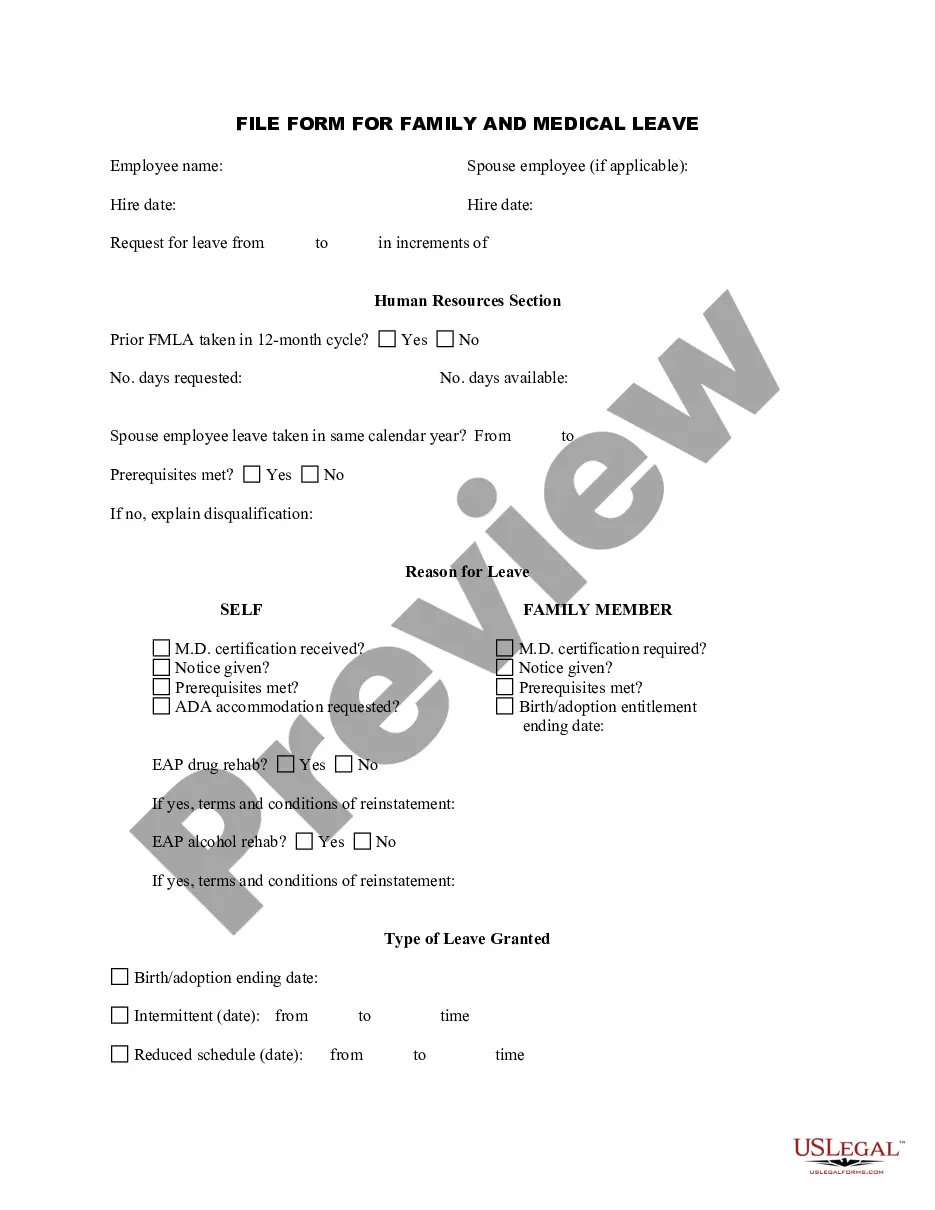
Filling out a FMLA form requires careful attention to detail. Start by providing your employer's information, your personal details, and the specific dates when you need leave. Ensure you include the reasons for the leave request, as outlined in the FMLA rules for employees with central government. For assistance, consider utilizing platforms like US Legal Forms to guide you through the process.
An example of a FMLA statement might include a formal request for leave followed by the reasons justifying the need for such leave. A well-structured statement will mention your eligible relationship to a family member or your own serious health condition, in accordance with the FMLA rules for employees with central government. Always ensure your statement is clear and concise.
To determine if your employer qualifies for FMLA, consider several factors. Your employer must have at least 50 employees working within a 75-mile range, which is a fundamental requirement of the FMLA rules for employees with central government. You can also check if your employer has been in business for at least 12 months and if you have met the eligibility criteria as an employee.
Under the FMLA rules for employees with central government, certain serious medical conditions qualify for leave. These conditions can include chronic illnesses, disabilities, or any medical issue that requires ongoing medical treatment or hospitalization. Additionally, care for a family member with a serious health condition can also qualify you for FMLA leave.
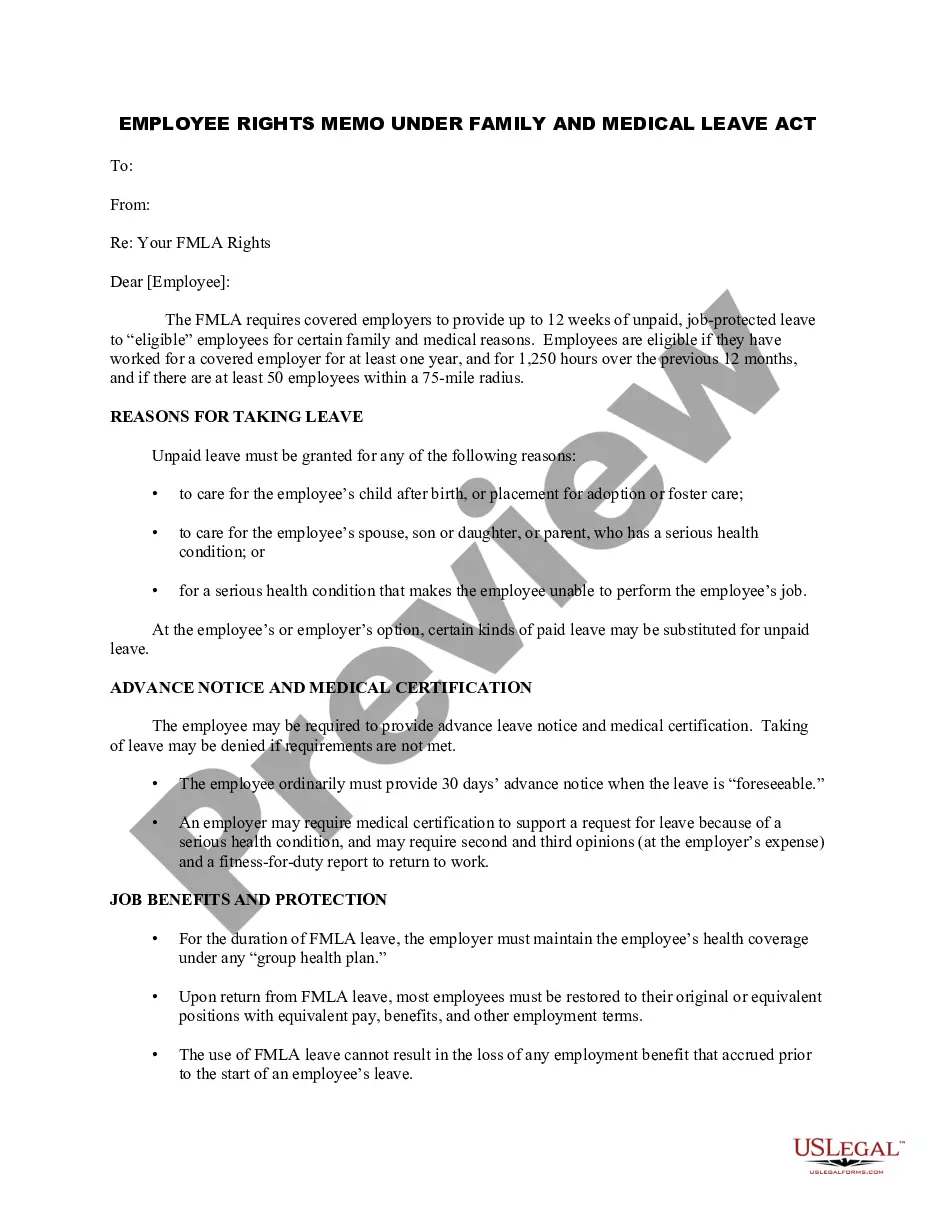
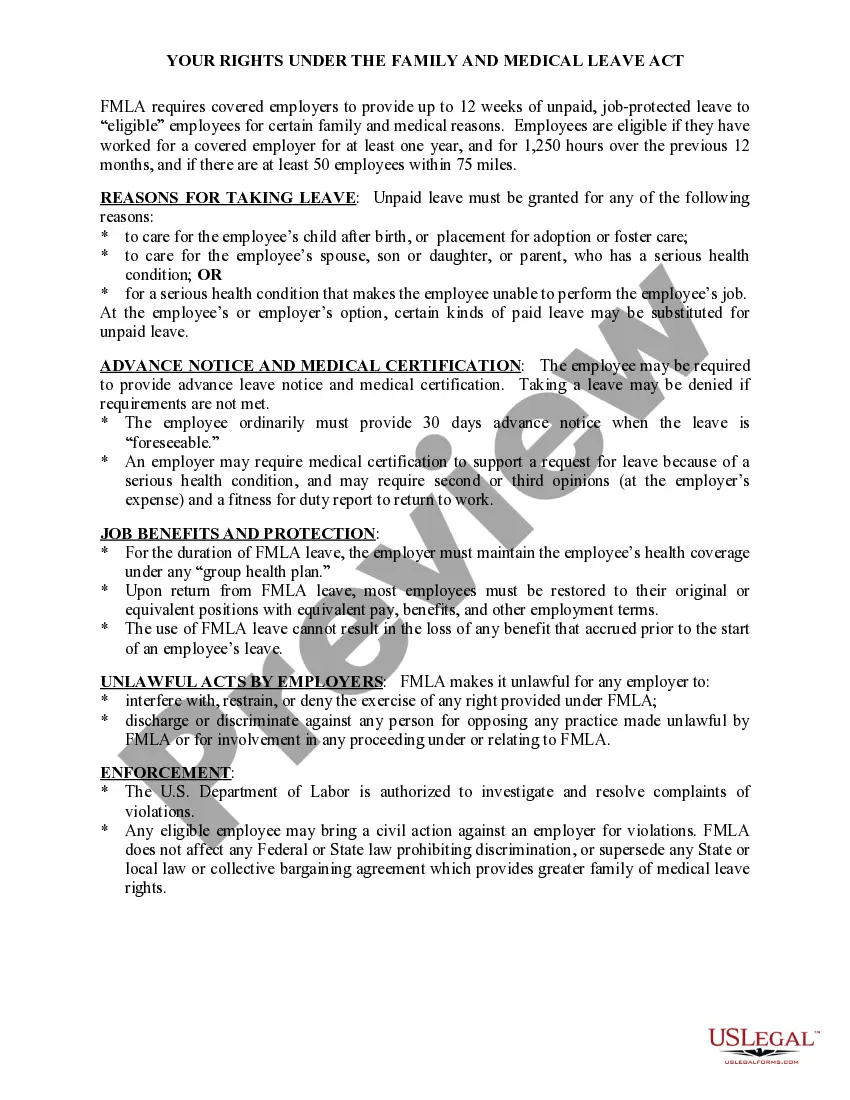
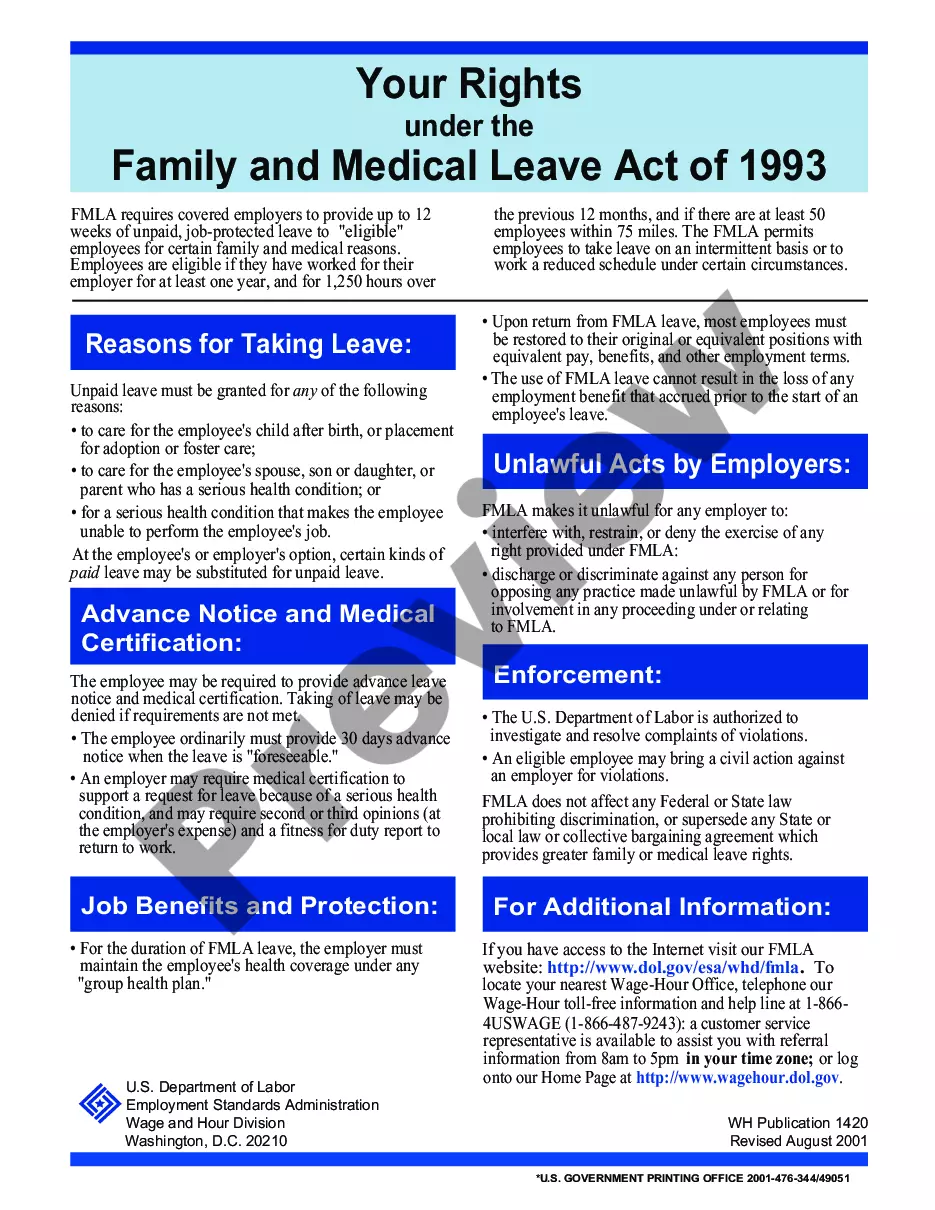
The federal guidelines for FMLA offer clear protections for eligible employees. Under these rules, employees can take up to 12 weeks of unpaid leave for specific family and medical reasons while ensuring their job security. Key aspects include eligibility criteria, the requirement for job restoration, and maintenance of health benefits during the leave period.
Several factors can disqualify you from the FMLA rules for employees with central government. For instance, if you have not worked for your employer for at least 12 months or you do not meet the minimum hours worked requirement of 1,250 in the past year, you may not be eligible. Additionally, certain employers, such as those with fewer than 50 employees within a 75-mile radius, may not be required to provide FMLA leave.
Certain individuals may not qualify under the FMLA rules for employees with central government. This includes employees with under 12 months of service, part-time workers who don't meet the hourly requirement, or those employed by smaller businesses that do not meet the thresholds. It's advisable to check your eligibility carefully to ensure you understand your rights and options. If you need support, platforms like USLegalForms can provide valuable resources and guidance.
Employers may deny FMLA requests based on specific grounds outlined in the FMLA rules for employees with central government. Common reasons include failure to meet eligibility or the absence of qualifying conditions. Employers can also deny requests if they believe the leave interferes with business operations. Transparency in communication can help mitigate misunderstandings regarding these decisions.
Some employees may be ineligible for the FMLA rules for employees with central government. For instance, workers who have been employed for less than 12 months or those who have not worked 1,250 hours in the previous year do not qualify. Seasonal employees or those working at certain small companies may also fall outside of this benefit. It’s important to review your specific circumstances to determine eligibility.
Certain employers are exempt from the FMLA rules for employees with central government. This includes small businesses with fewer than 50 employees who do not meet the required eligibility. Additionally, some public agencies, like the federal government, can have specific exemptions based on their functions. Understanding these limitations is crucial for both employers and employees.