Fmla Rolling Calendar For Employers
Description
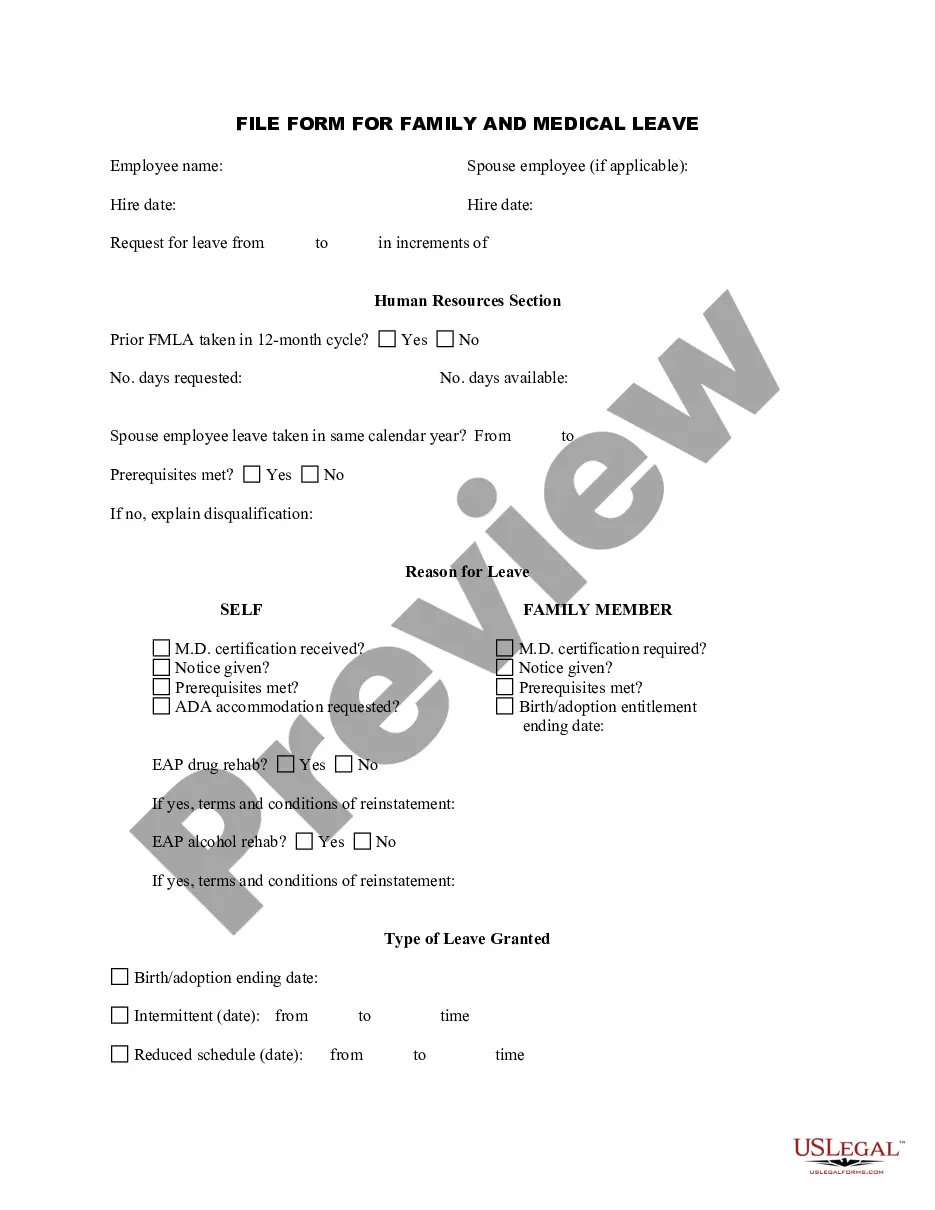
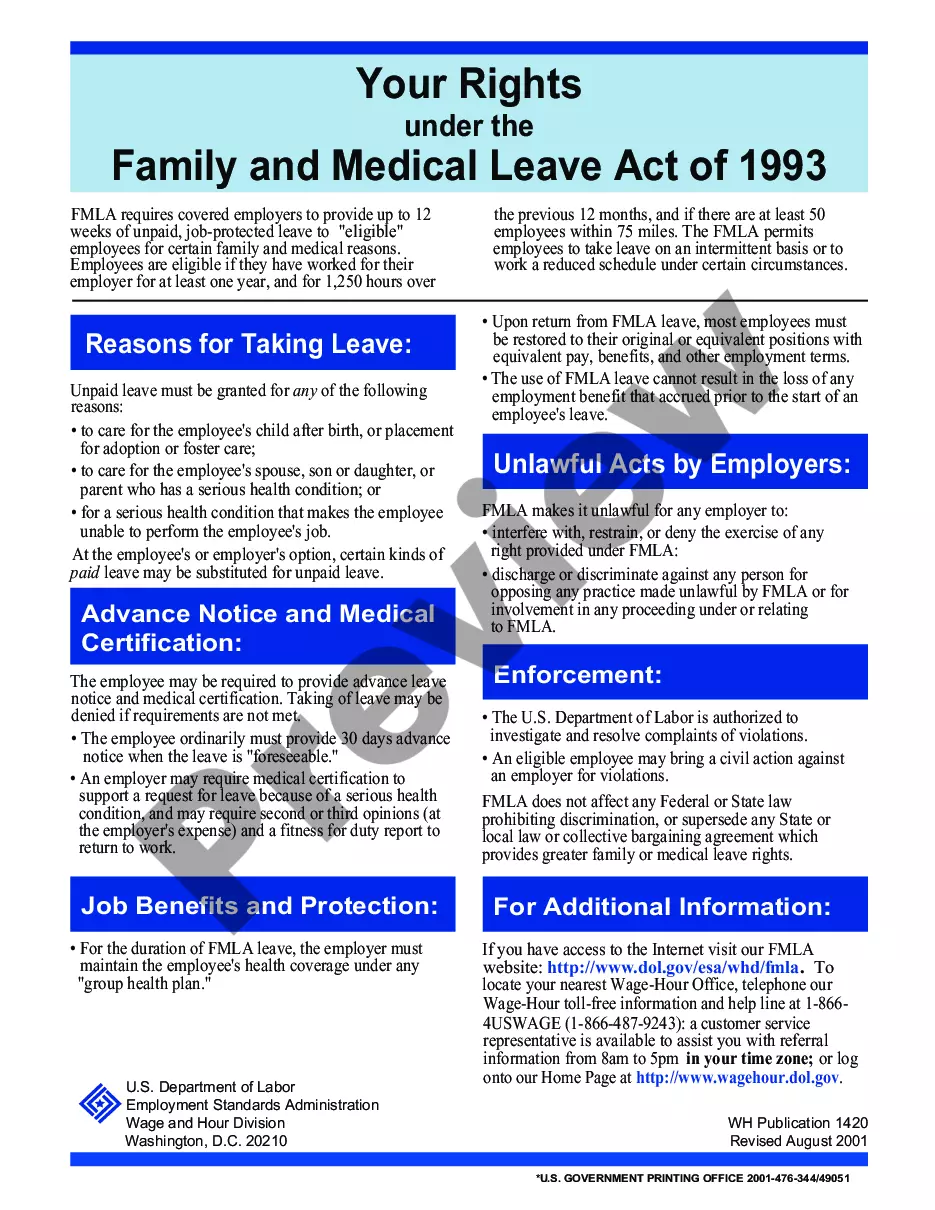
Get your form ready online
Our built-in tools help you complete, sign, share, and store your documents in one place.
Make edits, fill in missing information, and update formatting in US Legal Forms—just like you would in MS Word.
Download a copy, print it, send it by email, or mail it via USPS—whatever works best for your next step.
Sign and collect signatures with our SignNow integration. Send to multiple recipients, set reminders, and more. Go Premium to unlock E-Sign.
If this form requires notarization, complete it online through a secure video call—no need to meet a notary in person or wait for an appointment.
We protect your documents and personal data by following strict security and privacy standards.

Make edits, fill in missing information, and update formatting in US Legal Forms—just like you would in MS Word.

Download a copy, print it, send it by email, or mail it via USPS—whatever works best for your next step.

Sign and collect signatures with our SignNow integration. Send to multiple recipients, set reminders, and more. Go Premium to unlock E-Sign.

If this form requires notarization, complete it online through a secure video call—no need to meet a notary in person or wait for an appointment.

We protect your documents and personal data by following strict security and privacy standards.
Looking for another form?


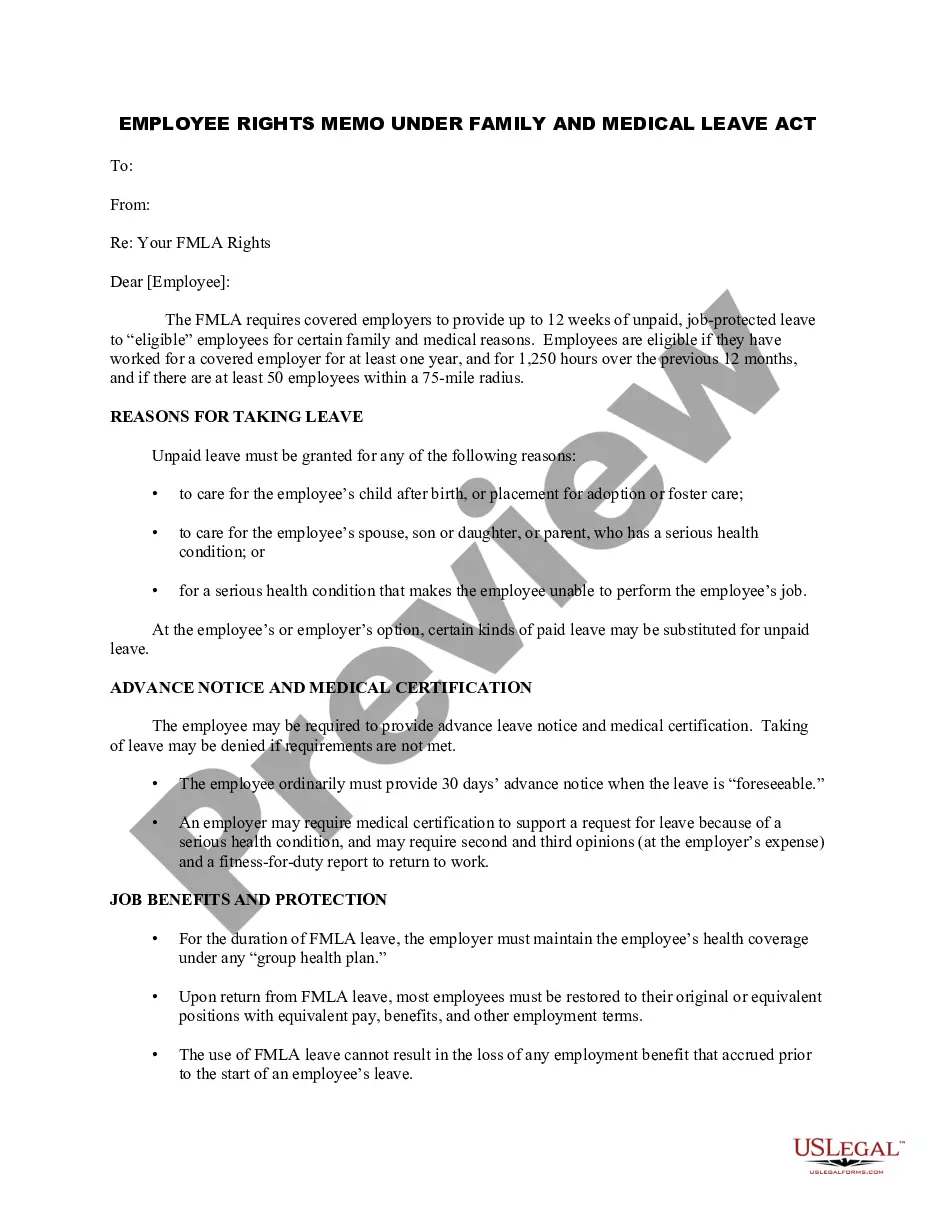
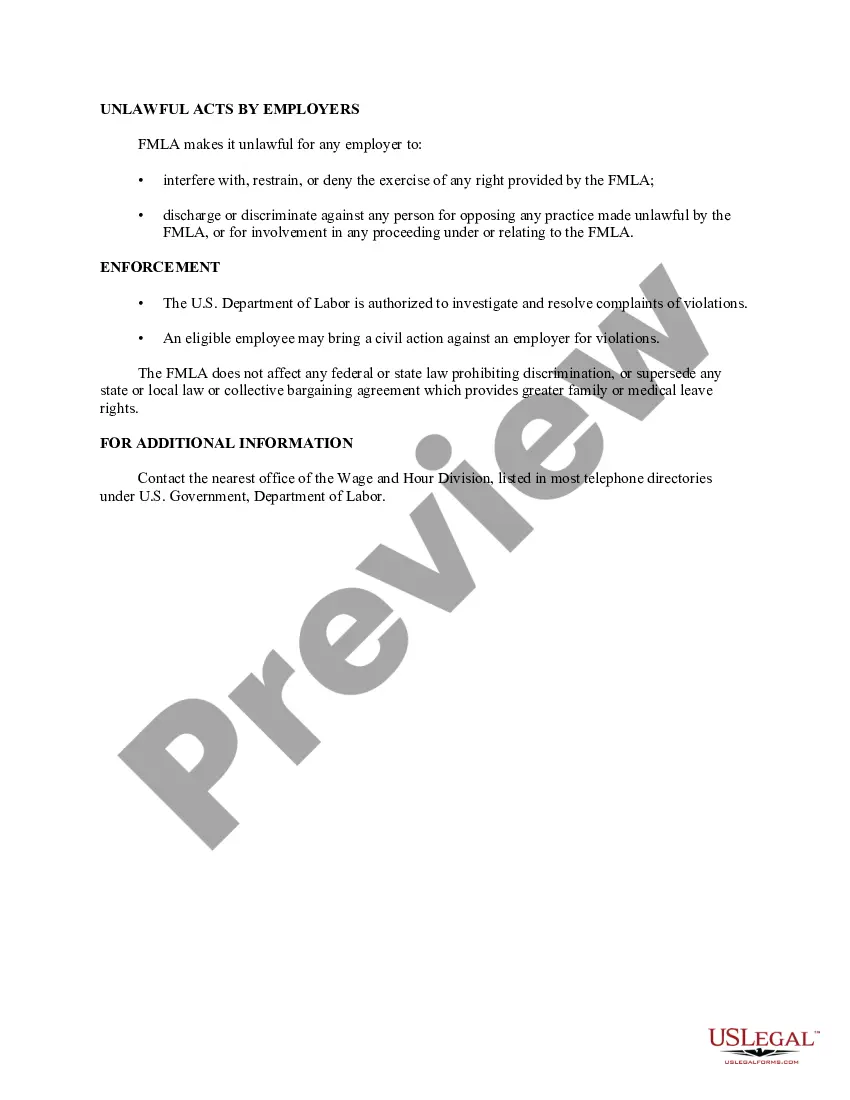
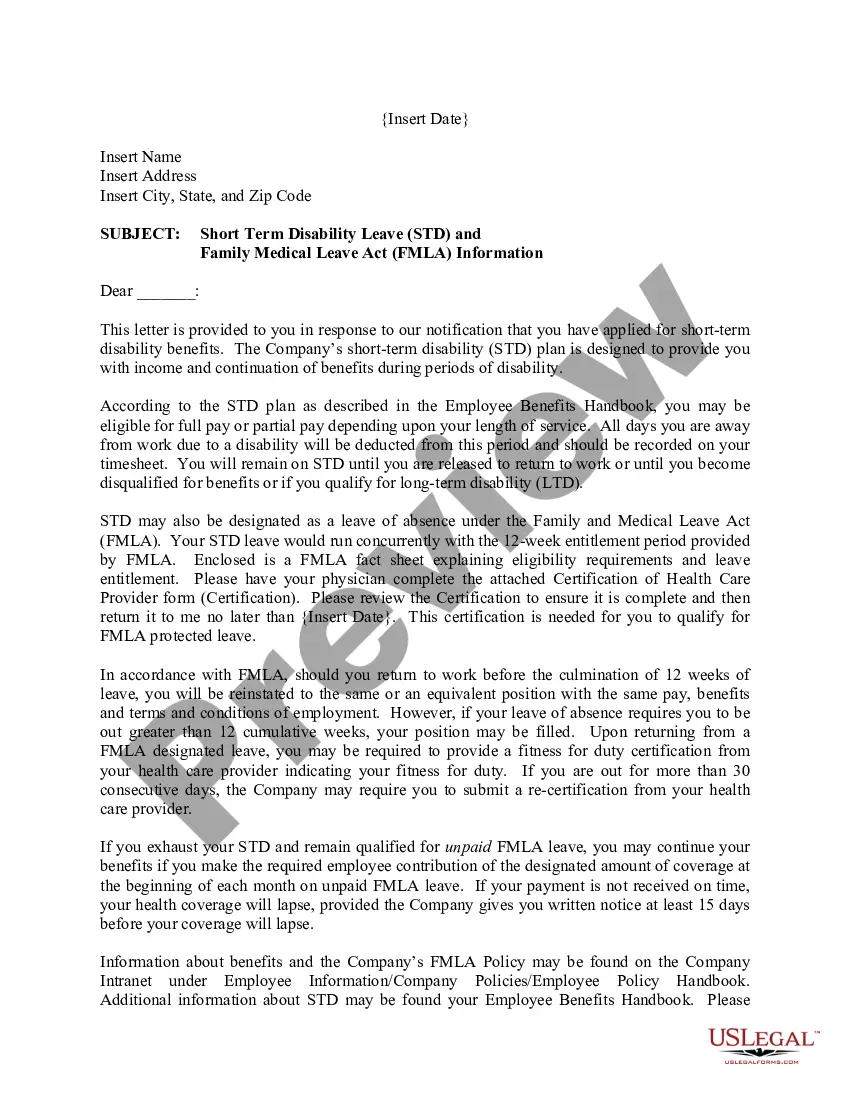
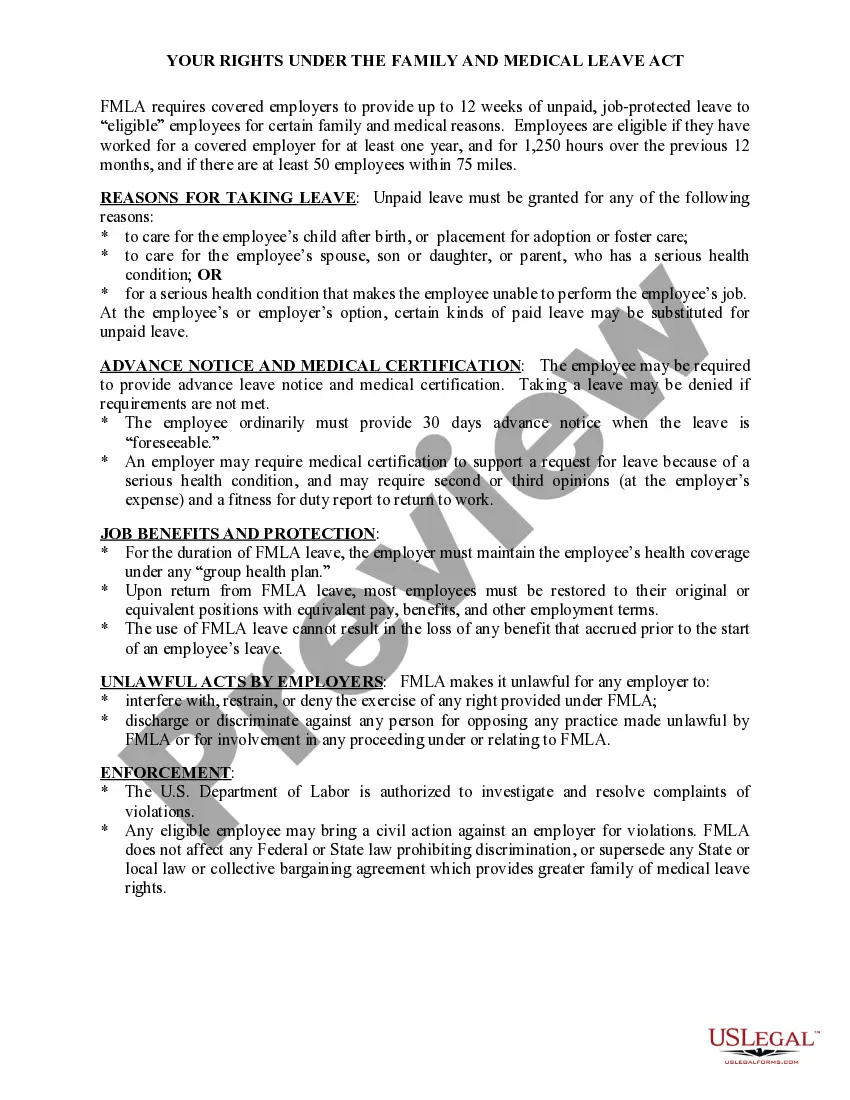
How to fill out Employee Rights Memo Under The Family And Medical Leave Act?
- If you are a returning user, log into your account to access your form templates. Ensure your subscription is active; if not, please renew it according to your chosen payment plan.
- For first-time users, start by browsing the Preview mode and reviewing the form descriptions to find the FMLA rolling calendar that best fits your needs and complies with your local jurisdiction.
- In case of discrepancies, utilize the Search feature to locate a more appropriate template. Once satisfied, proceed to the next step.
- Select the document you require by clicking on the Buy Now button. Choose your preferred subscription plan and create an account to gain access to the complete library of legal forms.
- Finalize your purchase by entering your payment details or opting for PayPal to secure your subscription.
- After payment is confirmed, download the form to your device. You can find it later in the My Forms section of your profile.
US Legal Forms not only facilitates easy access to documents but also ensures a vast collection that surpasses competitors. With over 85,000 editable forms, you can find everything you need in one place.
By adopting US Legal Forms for your legal document needs, you're setting yourself up for efficiency and accuracy. Don't hesitate—visit US Legal Forms today to simplify your legal processes.
Form popularity
FAQ
The FMLA rolling calendar for employers allows employees to take leave during a continuous 12-month period, moving forward from the first day leave is taken. Each time an employee takes leave, the amount of leave used is deducted from their total for the next 12 months. This system helps employers manage leave requests efficiently while ensuring employees have access to the necessary time off. For more detailed guidance, uslegalforms provides resources that help employers navigate the complexities of the FMLA rolling calendar.
The FMLA rolling calendar for employers operates based on either workdays or calendar days, depending on the employer's chosen method. Employers can select a 12-month period that either counts only actual workdays or includes all calendar days. This choice affects how leave is calculated and how employees track their available time off. Using the FMLA rolling calendar for employers ensures clarity and organization in managing employee leave.
The calendar method for FMLA calculates leave based on a fixed calendar year, typically running from January 1st to December 31st. In contrast to a rolling calendar, this method allows employers to track leave more straightforwardly but may not provide the same flexibility for employees with varied leave needs. Consider using tools like USLegalForms to streamline the tracking process, ensuring that you meet your compliance every time.
With a rolling twelve-month basis for FMLA eligibility, an employee's leave does not reset at the beginning of the calendar year. Instead, eligibility is based on the past twelve months' usage. Understanding this rolling calendar is essential for employers so they can maintain proper leave management and ensure compliance with FMLA regulations.
To calculate using the FMLA rolling year method, assess the leave taken by an employee within the last twelve months from the current date. Document each instance of FMLA leave, whether it’s full days or intermittent leave. This continual assessment grants employers flexibility to handle each employee's leave needs while adhering to regulations.
Calculating FMLA days involves determining the total hours an employee has used across the twelve-month period. Begin by reviewing any past FMLA leave taken, ensuring to account for both full and partial days. Employers using a rolling calendar method can manage FMLA tracking more effectively, allowing for better planning and compliance.
To calculate FMLA on a rolling calendar, start by identifying the date the employee intends to take leave. From that date, count backward twelve months to determine how much FMLA leave the employee has taken within that time. This approach allows employers to monitor leave without resetting at the year's end, providing a clear picture of available leave based on employee usage.
A rolling year for FMLA refers to a method of calculating leave based on the past twelve months from the date an employee takes leave. This means that each time an employee takes FMLA leave, the employer looks back over the previous twelve months to determine how much leave has been used and how much is available. For employers, understanding the rolling calendar is crucial for managing employee leave efficiently.
The year for FMLA purposes is calculated based on the specific method chosen by the employer, such as a rolling calendar year, fixed year, or other method. For the rolling calendar year, the calculation starts from the date of the employee's first absence related to FMLA. It's essential that employers correctly document leave taken to ensure compliance. Using a FMLA rolling calendar for employers aids in accurate year calculations.
The rolling calendar method is a way of administering FMLA leave on a 12-month basis that counts backward from the date of each leave request. This approach prevents employees from taking a full year of leave all at once. Instead, it provides them with leave time that is proportional to their absence history. A FMLA rolling calendar for employers can help facilitate this tracking efficiently.