Emergency Flight
Description
Get your form ready online
Our built-in tools help you complete, sign, share, and store your documents in one place.
Make edits, fill in missing information, and update formatting in US Legal Forms—just like you would in MS Word.
Download a copy, print it, send it by email, or mail it via USPS—whatever works best for your next step.
Sign and collect signatures with our SignNow integration. Send to multiple recipients, set reminders, and more. Go Premium to unlock E-Sign.
If this form requires notarization, complete it online through a secure video call—no need to meet a notary in person or wait for an appointment.
We protect your documents and personal data by following strict security and privacy standards.

Make edits, fill in missing information, and update formatting in US Legal Forms—just like you would in MS Word.

Download a copy, print it, send it by email, or mail it via USPS—whatever works best for your next step.

Sign and collect signatures with our SignNow integration. Send to multiple recipients, set reminders, and more. Go Premium to unlock E-Sign.

If this form requires notarization, complete it online through a secure video call—no need to meet a notary in person or wait for an appointment.

We protect your documents and personal data by following strict security and privacy standards.
Looking for another form?

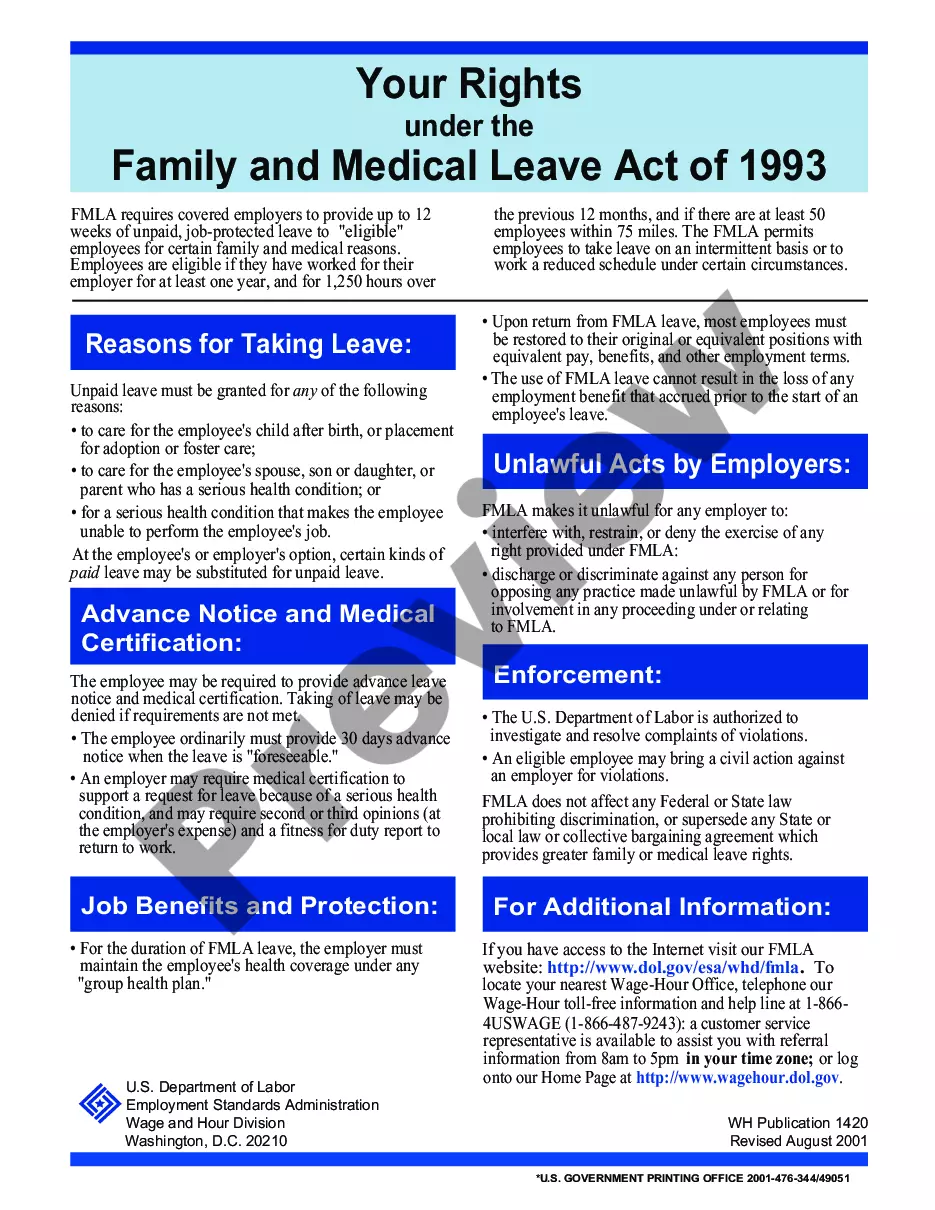
How to fill out Employee Rights Memo Under The Family And Medical Leave Act?
- Log in to your US Legal Forms account. If you’ve used the service before, make sure your subscription is active to access the needed form template easily.
- Preview the document and its description. Ensure it fits your specific needs and complies with local jurisdiction requirements.
- If you need a different template, use the Search tab to find another relevant form. Confirm it meets your needs before proceeding.
- Select the document you require by clicking on the 'Buy Now' button. Choose your preferred subscription plan, which may include options for immediate access.
- Complete your purchase by entering your payment information. Options include credit card payments or PayPal for convenience.
- Once purchased, download your form immediately and save it on your device. You can access it later in the 'My Forms' section of your profile.
Using US Legal Forms not only streamlines the process but also ensures that all documents are legally sound and tailored to your needs. With access to premium experts, help is always available if needed.
Don’t wait until it’s too late; access US Legal Forms today for all your urgent legal document needs!
Form popularity
FAQ
Typically, the pilot in command of an airline flight has the authority to declare an emergency flight. However, other crew members may also assist in recognizing emergencies and advising the pilot. In instances involving hazardous passenger behavior or serious onboard medical conditions, swift action is crucial. Utilizing platforms like uslegalforms can help clarify legal responsibilities for flight crew in these scenarios.
According to FAA guidelines, a pilot can declare an emergency flight whenever there is a threat to safety that requires immediate assistance. This may encompass mechanical malfunctions, fuel shortages, or passenger medical emergencies. The urgency of the situation dictates the need for quick action and communication. In such cases, declaring an emergency facilitates prompt responses from air traffic authorities.
Pilots may hesitate to declare an emergency flight due to concerns about reputation or the potential perception of overreacting. There can also be uncertainty about the severity of a situation, leading to indecision. However, safety should always take precedence, and prompt declaration allows for immediate support from air traffic control. Understanding the importance of this decision is vital for all pilots.
To declare an emergency flight, a pilot must assess the severity of the situation. Common minimum conditions include significant mechanical failure, medical distress among passengers, or life-threatening weather dangers. The pilot should evaluate whether the current circumstances could lead to an unsafe situation. Making the declaration ensures priority handling from air traffic control.
An emergency flight is a situation where an aircraft must divert from its planned course due to urgent problems that threaten safety. This can include severe mechanical issues, medical emergencies, or hazardous weather conditions. When these situations arise, pilots must act quickly to ensure the safety of passengers and crew. Recognizing an emergency flight is crucial for timely and effective responses.
An emergency in a flight refers to unexpected situations that require urgent attention, such as medical emergencies or personal crises like family deaths. These circumstances could trigger the need for an emergency flight, allowing you to travel quickly to your destination. Airlines often have specific procedures to assist passengers in such situations. For assistance with necessary travel documents, US Legal Forms offers useful resources that can help streamline your journey during an emergency.
Bereavement flights often offer discounts, but the savings can vary significantly depending on the airline. Typically, the fare reduction for an emergency flight related to bereavement can range from 10% to 50% off standard fares. It is best to contact airlines directly to inquire about their specific policies and available fares. Additionally, consider visiting platforms like US Legal Forms to help you navigate and access necessary documents for your emergency flight.
In an emergency, the quickest way to get a plane ticket is to visit an airline's website or call directly for assistance. Be prepared to explain your situation, as some airlines prioritize urgent requests. It’s beneficial to have alternative travel plans ready, just in case. For more clarity on your travel rights, US Legal Forms provides valuable information that can support you during such stressful times.
Securing emergency tickets involves contacting airlines directly or using online booking services. Promptly reaching out to customer service can provide you with options tailored to your urgent needs. Knowing the key terms related to emergency flights will help you communicate your situation effectively. Additionally, US Legal Forms offers resources that can simplify understanding your rights when seeking these tickets.
To prepare for an emergency landing, review your aircraft's emergency procedures and assess your landing options. Practice emergency landing simulations to build confidence in your skills. Stay in contact with air traffic control, as they will provide guidance and information to aid your emergency flight.