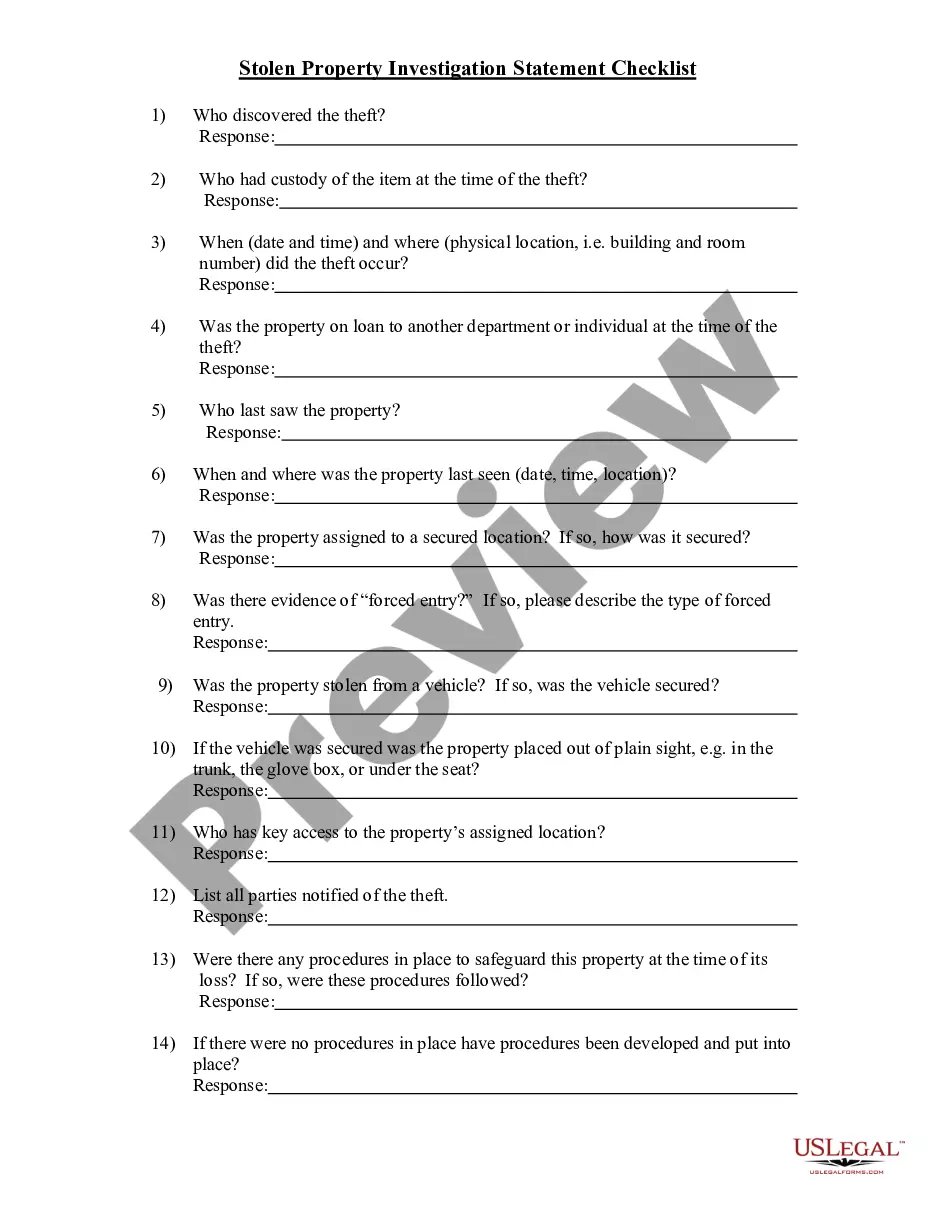
Employee Theft Investigation Checklist For Employees
Description
Get your form ready online
Our built-in tools help you complete, sign, share, and store your documents in one place.
Make edits, fill in missing information, and update formatting in US Legal Forms—just like you would in MS Word.
Download a copy, print it, send it by email, or mail it via USPS—whatever works best for your next step.
Sign and collect signatures with our SignNow integration. Send to multiple recipients, set reminders, and more. Go Premium to unlock E-Sign.
If this form requires notarization, complete it online through a secure video call—no need to meet a notary in person or wait for an appointment.
We protect your documents and personal data by following strict security and privacy standards.

Make edits, fill in missing information, and update formatting in US Legal Forms—just like you would in MS Word.

Download a copy, print it, send it by email, or mail it via USPS—whatever works best for your next step.

Sign and collect signatures with our SignNow integration. Send to multiple recipients, set reminders, and more. Go Premium to unlock E-Sign.

If this form requires notarization, complete it online through a secure video call—no need to meet a notary in person or wait for an appointment.

We protect your documents and personal data by following strict security and privacy standards.
Looking for another form?


How to fill out Theft Investigation Checklist?
The Employee Theft Investigation Checklist For Workers you find on this site is a versatile legal template crafted by skilled attorneys in accordance with national and local laws and regulations.
For over 25 years, US Legal Forms has supplied individuals, businesses, and legal experts with more than 85,000 authenticated, state-specific documents for any corporate and personal circumstance. It’s the fastest, simplest, and most dependable means to acquire the documentation you need, as the service ensures the utmost level of data security and anti-malware safeguards.
Subscribe to US Legal Forms to have verified legal templates for all of life's situations at your fingertips.
- Search for the document you need and examine it.
- Browse through the sample you found and preview it or review the form description to confirm it meets your needs. If not, utilize the search option to find the appropriate one. Click Buy Now once you have found the template you require.
- Register and Log In.
- Choose the pricing plan that appeals to you and create an account. Use PayPal or a credit card for a swift payment. If you already hold an account, Log In and review your subscription to continue.
- Obtain the editable template.
- Select the format you prefer for your Employee Theft Investigation Checklist For Workers (PDF, DOCX, RTF) and download the template onto your device.
- Fill out and sign the documentation.
- Print the template to fill it out manually. Alternatively, employ an online multifunctional PDF editor to quickly and accurately complete and sign your form using an eSignature.
- Download your documents again.
- Take advantage of the same document any time you need it. Access the My documents tab in your profile to redownload any previously saved forms.
Form popularity
FAQ
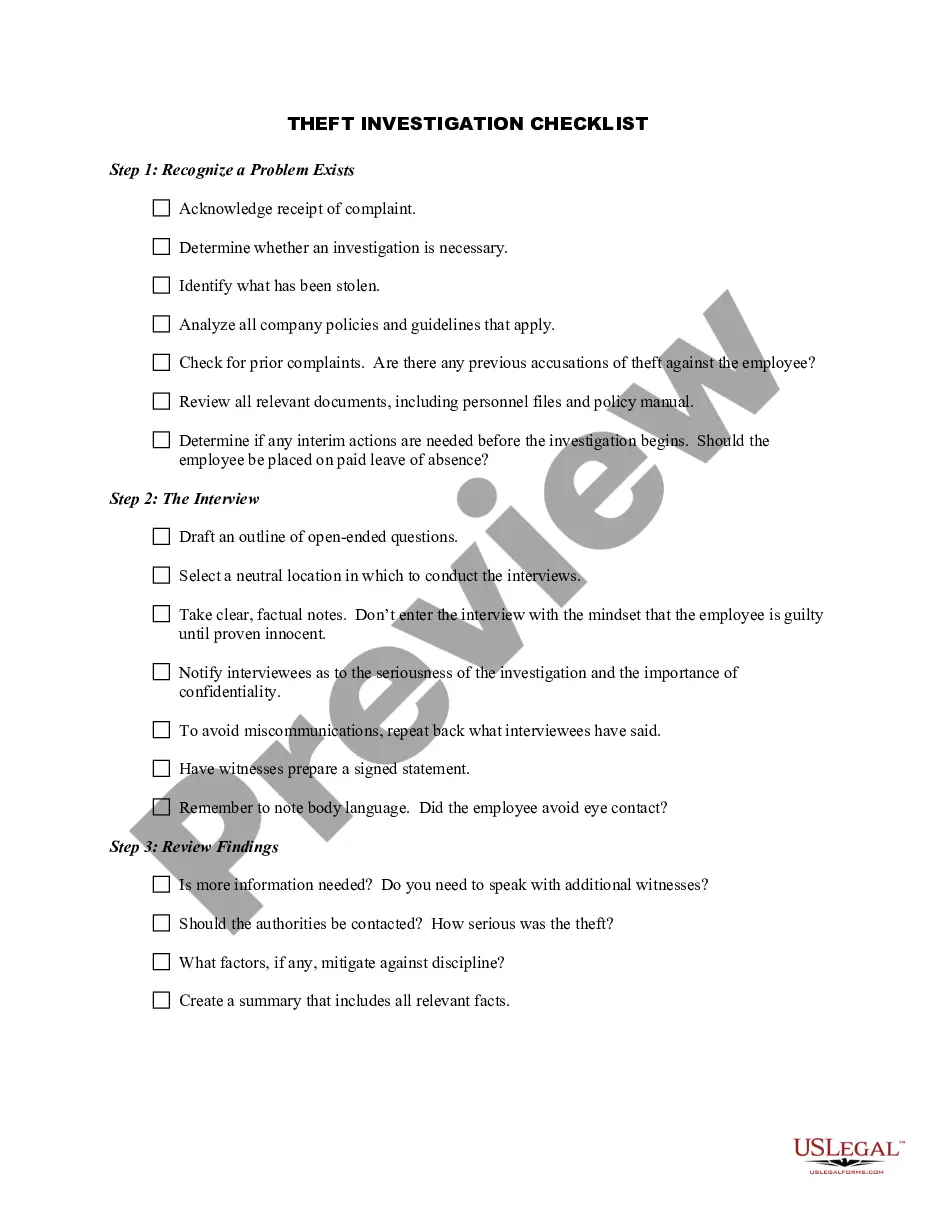
To prove an employee is stealing, start by documenting specific incidents and patterns of behavior. The Employee theft investigation checklist for employees can help you identify key evidence, such as discrepancies in inventory or financial records. Collect witness statements and any surveillance footage that supports your claims. Ultimately, presenting this evidence clearly can strengthen your case.
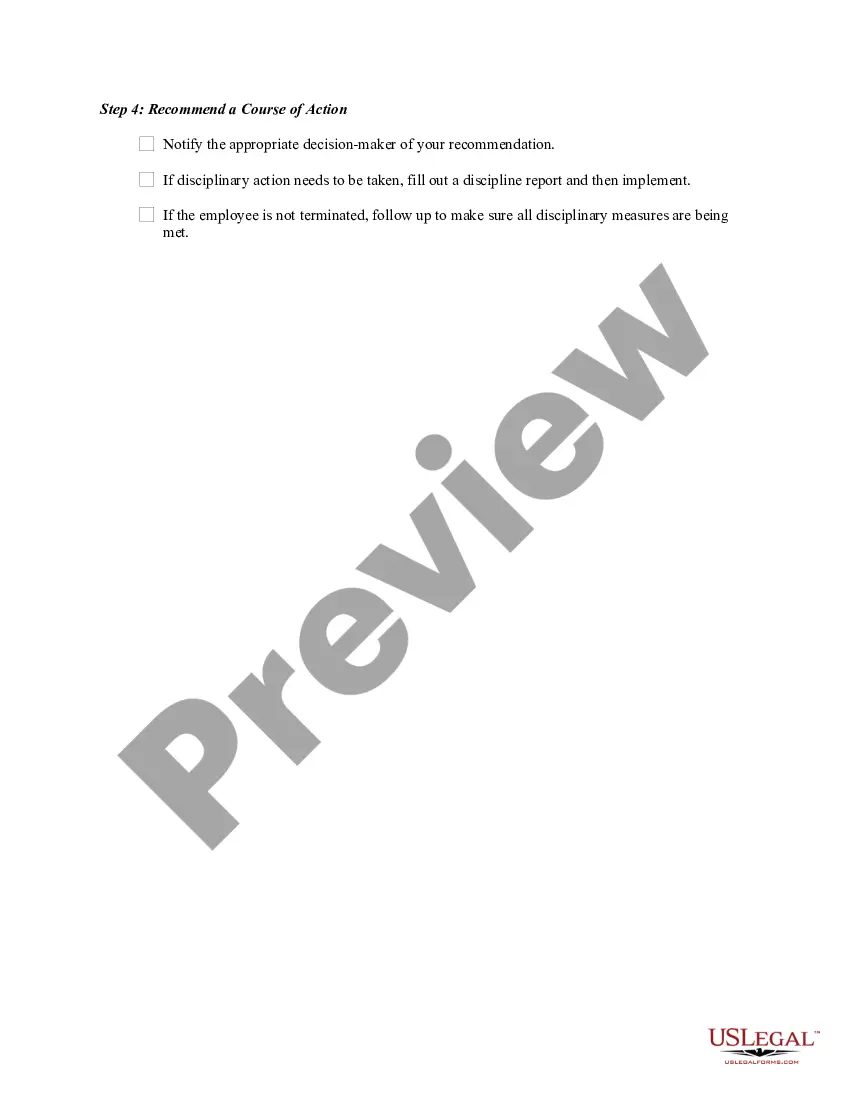
Completing an employee investigation involves a series of structured steps. First, gather relevant information by conducting interviews and collecting documentation. Next, utilize the Employee theft investigation checklist for employees to ensure you cover all necessary areas. Finally, analyze the information objectively to reach a conclusion that will guide your next actions.
An investigative report format should include an introduction, background information, a description of the investigation process, findings, conclusions, and recommendations. Ensure your report aligns with the employee theft investigation checklist for employees, detailing every essential component clearly and logically. Consistency in format helps readers understand the information easily and follow your conclusions.
The seven steps to conducting an investigation typically include initial assessment, planning, evidence collection, interviews, analysis, report writing, and follow-up. By following the employee theft investigation checklist for employees, you ensure thoroughness at each step. This structured approach enhances the credibility of the investigation and fosters trust among all parties involved.
Conducting an employee complaint investigation involves several crucial steps, starting with acknowledging the complaint and determining the facts. Utilize the employee theft investigation checklist for employees to guide the investigation process, ensuring you gather all necessary evidence and interview relevant parties. Maintaining confidentiality and neutrality throughout is vital to ensure all employees feel safe during the process.
A theft investigation report should start with a summary of the incident, including who, what, where, and when. Follow the employee theft investigation checklist for employees to systematically document each piece of evidence and witness testimony. Ensure that your report culminates with your conclusions and recommendations for preventing future incidents.
When writing an investigation letter, begin by clearly stating the purpose of the investigation. Use the employee theft investigation checklist for employees as a guide to outline the specific issues being addressed. Include a timeline for the investigation and any expectations for the recipient's response, ensuring the tone remains professional and neutral throughout.
To write an incident investigation report, start by gathering all relevant information, including witness statements, timelines, and any physical evidence. Ensure that your report follows the employee theft investigation checklist for employees, detailing the incident, what actions were taken, and the outcome. Make it clear and concise, focusing on facts to support your conclusions.
An example of investigative writing is a detailed report that examines a specific issue or event, such as employee theft. This type of writing focuses on the facts, presenting evidence and interviews related to the incident. In the context of an employee theft investigation checklist for employees, it would include findings that demonstrate how the theft occurred, who was involved, and what steps were taken to address the situation.
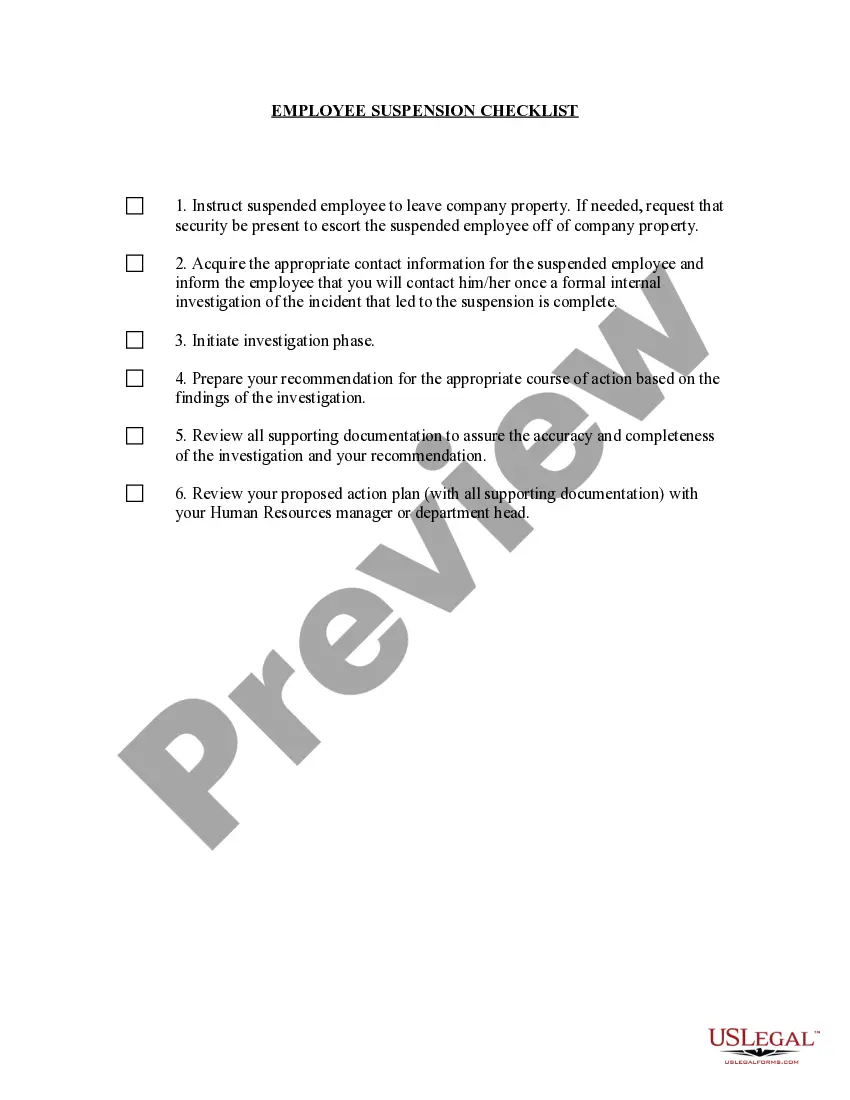
Inviting employees to an investigation meeting is generally a good practice, as it allows for transparency and fairness. However, it depends on the nature of the investigation. The Employee theft investigation checklist for employees can assist you in determining when it's appropriate to include an employee, ensuring their rights are considered while upholding the investigation's integrity.