Plan With
Description
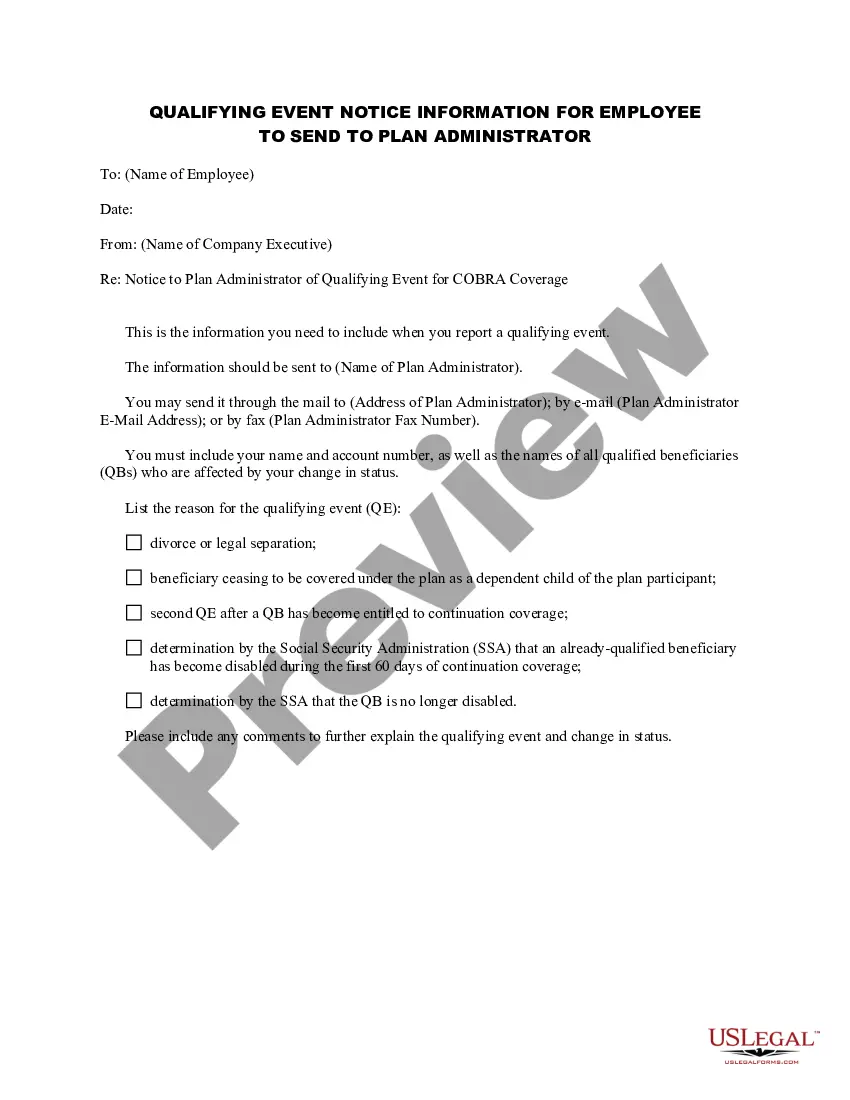

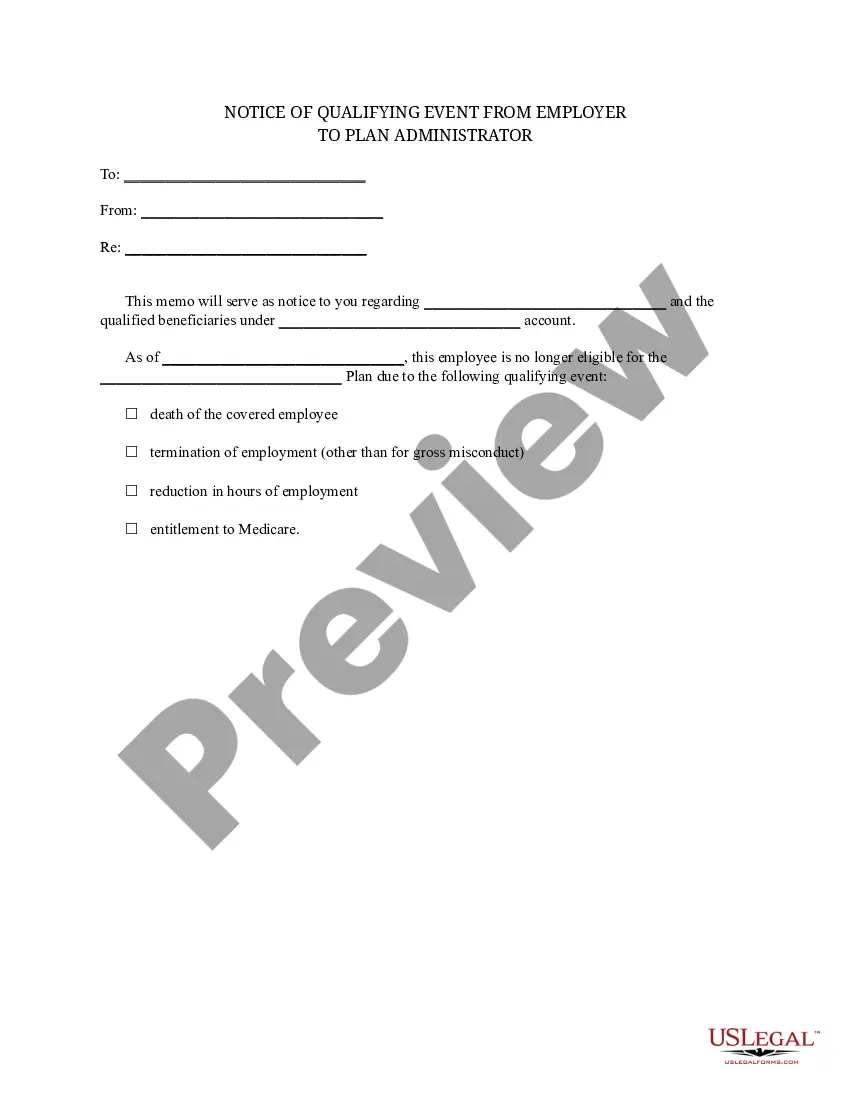
How to fill out Notice Of Qualifying Event From Employer To Plan Administrator?
- For returning users, log in to your account and check your subscription status. Ensure it’s valid before downloading your required form template.
- If this is your first time, start by exploring the Preview mode of your chosen form. Verify its details align with your local jurisdiction to avoid discrepancies.
- If necessary, use the Search tab to locate alternative templates that fit your needs more accurately.
- Once you've found the right form, click the Buy Now button and select a subscription plan that best suits your requirements.
- Complete your purchase using credit card details or your PayPal account to finalize your subscription.
- Finally, download your selected form to your device. You can always re-access it through the My Forms section in your profile.
By using US Legal Forms, you ensure that your legal documents are not only accessible but also accurate and tailored to your needs. With expert assistance available, you can have confidence in the legality of your forms.
Start your journey towards hassle-free legal documentation today. Explore US Legal Forms now!
Form popularity
FAQ
When writing out a plan, clearly define your objectives and include specific tasks, deadlines, and resources. Use simple language for clarity and structure your plan to enhance readability. Planning with tools from US Legal Forms can streamline this process; you can find templates that simplify your planning efforts, allowing you to focus on execution.
To create a step-by-step plan, start by outlining your end goal and then break it into actionable tasks. Organize these tasks chronologically and allocate time for each one. Additionally, consider using US Legal Forms to draft your plan, as it offers formats that cater to various project needs, ensuring you stay on track.
The seven steps in the planning process include setting objectives, analyzing the situation, developing options, choosing the best solution, implementing the plan, monitoring progress, and making adjustments as needed. Planning with these steps enables you to create a flexible framework that adapts to changes. Therefore, it is essential to remain proactive and open to reevaluation throughout the process.
The five essential steps of planning involve defining your objectives, gathering information, assessing alternatives, creating an action plan, and reviewing results. As you plan with these steps, ensure that each phase aligns with your overarching goals. This approach not only streamlines your process but also increases your chances of achieving successful outcomes.
To plan step by step, begin by identifying your goals, followed by breaking them down into smaller tasks. Next, assign deadlines and resources to each task while ensuring you monitor progress regularly. Utilize tools like US Legal Forms to create a structured outline and help manage your steps efficiently.
When you plan with an effective work plan, consider including elements such as objectives, tasks, timelines, resources, roles, risks, and evaluation criteria. Each element contributes to a comprehensive structure that guides your project towards success. Moreover, having these components ensures clarity and accountability throughout the planning process.
Plan filing refers to the organized process of storing and categorizing documents based on a pre-defined file plan. This approach ensures that files are easily retrievable and systematically managed. When you implement effective plan filing, your organization can operate efficiently and reduce time spent searching for documents. Consider USLegalForms as a solution to support your plan filing needs.
File plan rules are guidelines that govern how to manage files within your organization. These rules often include naming conventions, storage requirements, and retention timelines. By establishing file plan rules, you empower your team to plan with clarity and consistency. Adhering to these guidelines helps maintain compliance and order in your documentation practices.
To create a file plan, start by defining your document types and their specific needs. After identifying these types, categorize them based on criteria such as purpose and retention period. Planning with this organized approach helps you create an effective file management system. Additionally, utilizing USLegalForms can simplify the creation process and enhance organization.
A file plan report provides an overview of your file plan’s structure and policies. It outlines the categories, descriptions, and retention timelines of each file type. By generating a report, you can ensure all team members understand how to plan with your organization’s documentation. This report serves as a valuable reference tool for maintaining file management consistency.