Apartment Lease Agreement With Owner
Description
Get your form ready online
Our built-in tools help you complete, sign, share, and store your documents in one place.
Make edits, fill in missing information, and update formatting in US Legal Forms—just like you would in MS Word.
Download a copy, print it, send it by email, or mail it via USPS—whatever works best for your next step.
Sign and collect signatures with our SignNow integration. Send to multiple recipients, set reminders, and more. Go Premium to unlock E-Sign.
If this form requires notarization, complete it online through a secure video call—no need to meet a notary in person or wait for an appointment.
We protect your documents and personal data by following strict security and privacy standards.

Make edits, fill in missing information, and update formatting in US Legal Forms—just like you would in MS Word.

Download a copy, print it, send it by email, or mail it via USPS—whatever works best for your next step.

Sign and collect signatures with our SignNow integration. Send to multiple recipients, set reminders, and more. Go Premium to unlock E-Sign.

If this form requires notarization, complete it online through a secure video call—no need to meet a notary in person or wait for an appointment.

We protect your documents and personal data by following strict security and privacy standards.
Looking for another form?


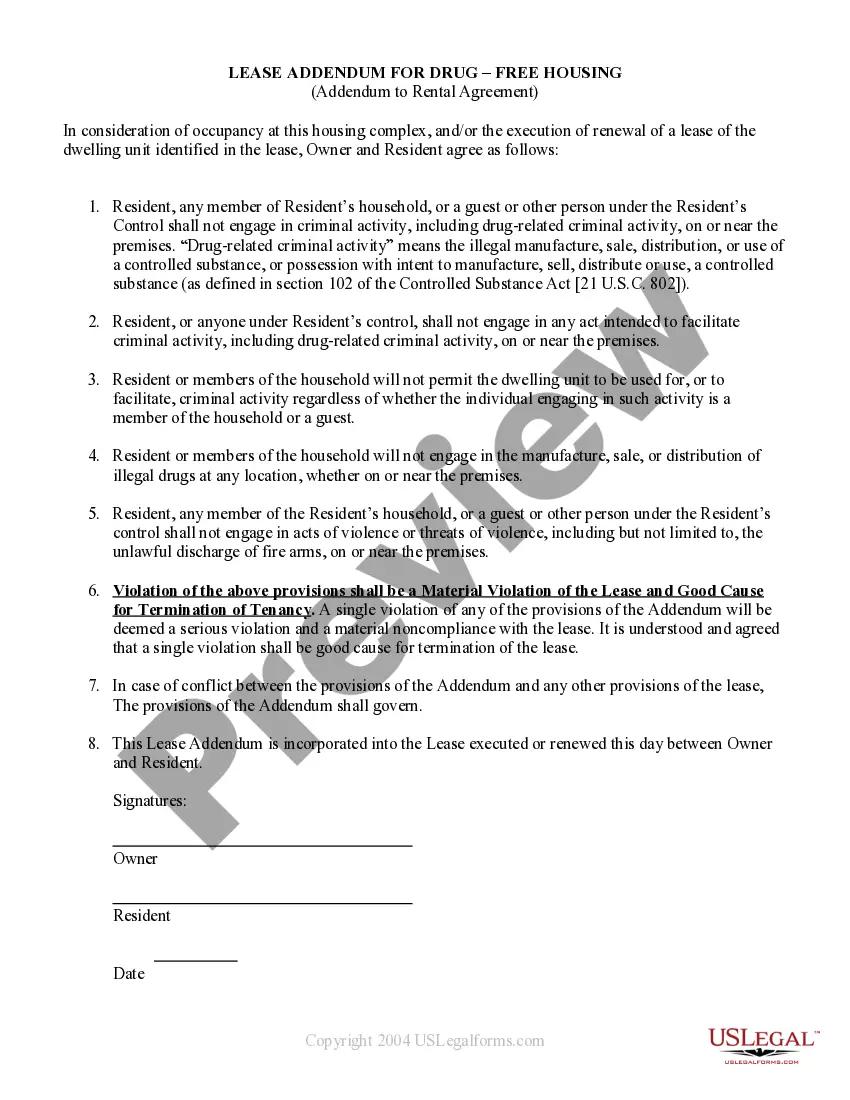
How to fill out Addendum To Apartment Lease Regarding Drug Free Housing?
- Log in to your US Legal Forms account if you are an existing user, ensuring your subscription is active. If needed, renew it based on your chosen payment plan.
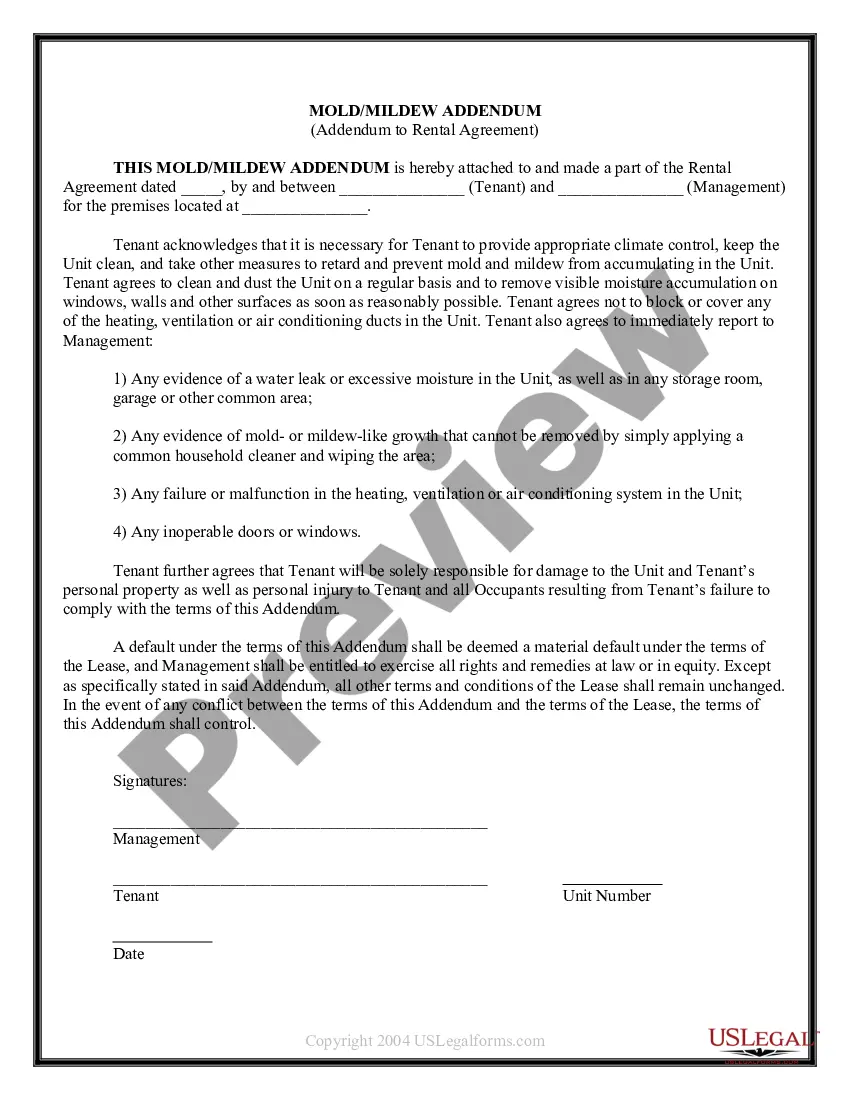
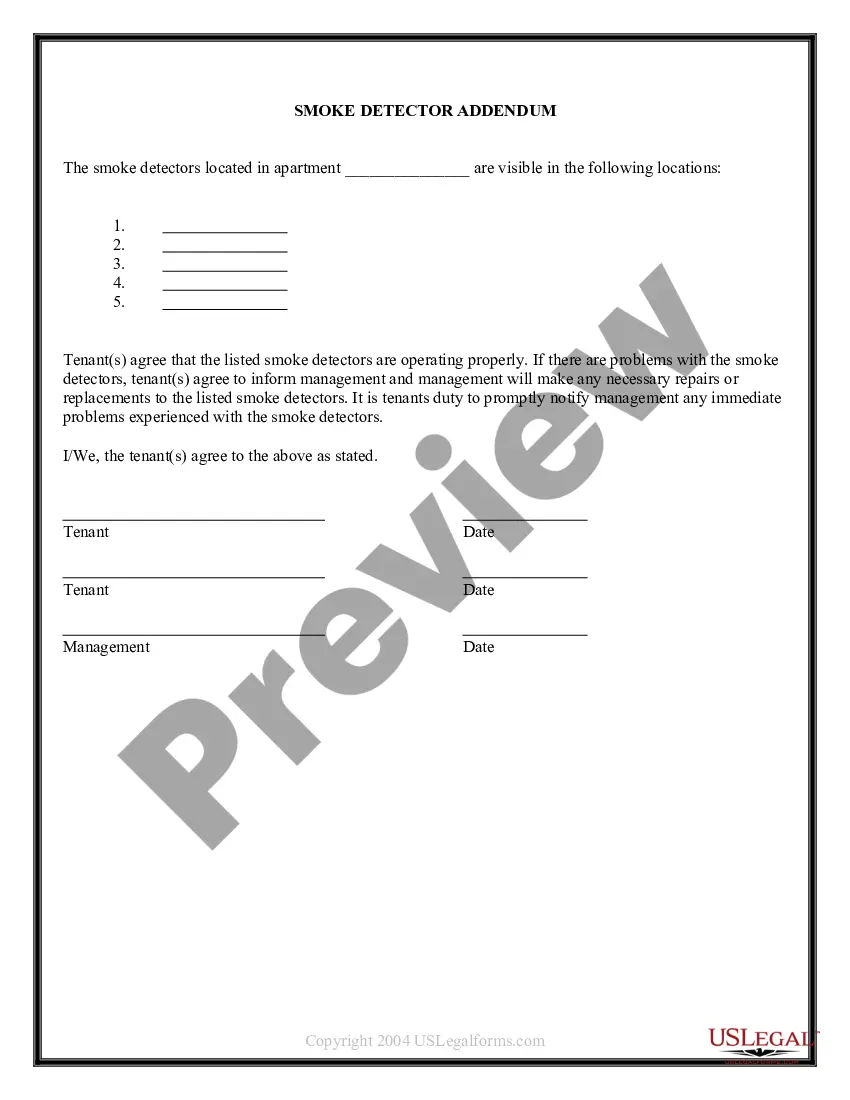
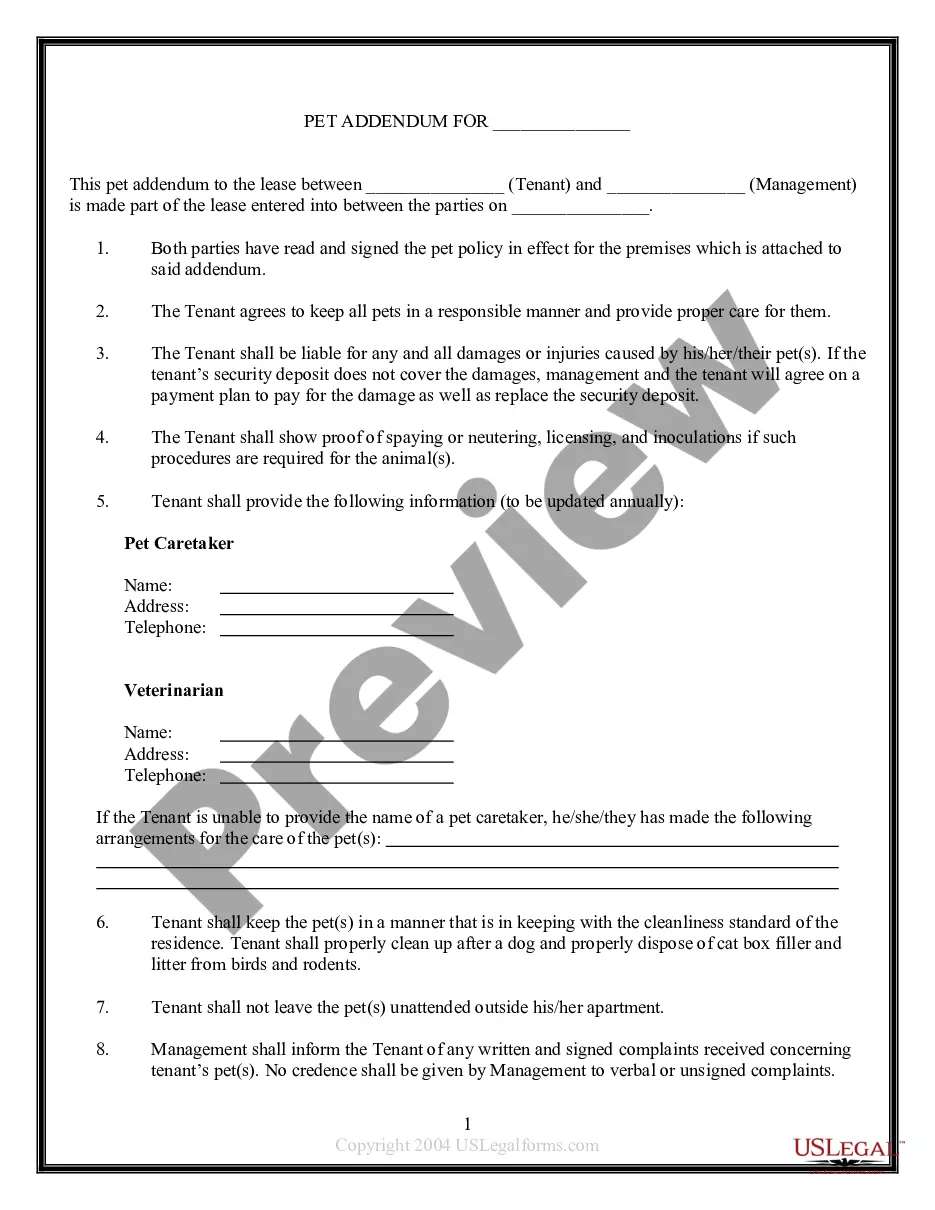
- Review the available form templates in Preview mode. Confirm that the lease agreement aligns with your requirements and complies with local jurisdiction criteria.
- Utilize the Search tab to find alternative templates if necessary. Select the appropriate one before proceeding.
- Make a purchase by clicking the 'Buy Now' button and selecting your preferred subscription plan. Registration is required for full access to the forms library.
- Complete your transaction by entering your payment details via credit card or PayPal.
- Download your lease agreement template. It will be accessible in the 'My Forms' section of your profile for future reference.
By following these steps, you can easily secure an apartment lease agreement with the owner, while also benefiting from the extensive support offered by US Legal Forms. This platform is designed to empower users by simplifying the legal document process.
Ready to create your own lease agreement? Start using US Legal Forms today for immediate access to a wide range of legal documents!
Form popularity
FAQ
Filling out an apartment lease agreement with the owner involves several steps to ensure clarity and completeness. Start by entering personal information for both landlord and tenant, then specify property details, rental terms, and payment schedules. It’s important to review the document for any special terms or conditions before signing. Utilizing resources like USLegalForms can streamline this process with easy-to-follow templates.
While it is not mandatory to have a lawyer draft an apartment lease agreement with the owner, consulting one can be beneficial, especially for complex situations. A legal professional can ensure compliance with local laws and help include necessary clauses. If you prefer a straightforward process, you can use pre-made lease templates available on USLegalForms to simplify your experience.
Typically, the tenant signs the apartment lease agreement with the owner first, indicating their commitment to the rental terms. Once the tenant has signed, the landlord countersigns to finalize the contract. This process provides assurance to both parties and establishes a mutual understanding of the terms outlined. It's advisable to retain a copy for each party after signing.
Absolutely, landlords can create their own apartment lease agreements with owners, as long as they comply with state and local laws. This flexibility allows landlords to tailor the lease to fit specific needs or property conditions. However, it's vital to ensure that the lease contains all essential elements to protect both parties. For assistance, you might want to explore USLegalForms for templates that guide you.
Yes, a handwritten lease agreement with the owner is generally legally binding, provided it meets necessary criteria. It must clearly define the terms of the rental arrangement, including the duration, payment details, and responsibilities of both parties. However, having a well-structured lease agreement can reduce misunderstandings and disputes. You may consider using platforms like USLegalForms to generate professional agreements.
For landlords, a long-term fixed lease often proves beneficial. An apartment lease agreement with owner that locks in tenants for an extended period can provide financial stability and reduce turnover. However, it's essential for landlords to evaluate the market and tenant needs to determine the best lease structure that balances flexibility with reliability.
In a lease agreement, the property remains owned by the landlord or property owner. An apartment lease agreement with owner specifies that while tenants have the right to use the space, ownership stays with the landlord. This fundamental understanding is critical for a positive leasing experience, ensuring clarity on rights and responsibilities.
The most common apartment lease is the fixed-term lease, typically lasting for 12 months. This type of apartment lease agreement with owner allows tenants to commit to a specific duration, providing stability for both parties. Fixed-term leases also outline clear terms for renewal or termination, making them popular choices for rentals.
No, the lessee is not the owner of the leased property. The lessee, often referred to as the tenant, holds rights to occupy the property under an apartment lease agreement with owner but does not possess ownership rights. Understanding this role helps clarify responsibilities and expectations in the rental relationship.
The head lease owner is the individual or entity that holds the primary lease agreement with the property owner. In an apartment lease agreement with owner, this person manages the lease and has the responsibility to adhere to the terms outlined in the agreement. It's important for tenants to know who this person is, as they will likely be your primary contact regarding the lease.