Must A Rental Deposit Be Invested
Description
Get your form ready online
Our built-in tools help you complete, sign, share, and store your documents in one place.
Make edits, fill in missing information, and update formatting in US Legal Forms—just like you would in MS Word.
Download a copy, print it, send it by email, or mail it via USPS—whatever works best for your next step.
Sign and collect signatures with our SignNow integration. Send to multiple recipients, set reminders, and more. Go Premium to unlock E-Sign.
If this form requires notarization, complete it online through a secure video call—no need to meet a notary in person or wait for an appointment.
We protect your documents and personal data by following strict security and privacy standards.

Make edits, fill in missing information, and update formatting in US Legal Forms—just like you would in MS Word.

Download a copy, print it, send it by email, or mail it via USPS—whatever works best for your next step.

Sign and collect signatures with our SignNow integration. Send to multiple recipients, set reminders, and more. Go Premium to unlock E-Sign.

If this form requires notarization, complete it online through a secure video call—no need to meet a notary in person or wait for an appointment.

We protect your documents and personal data by following strict security and privacy standards.
Looking for another form?
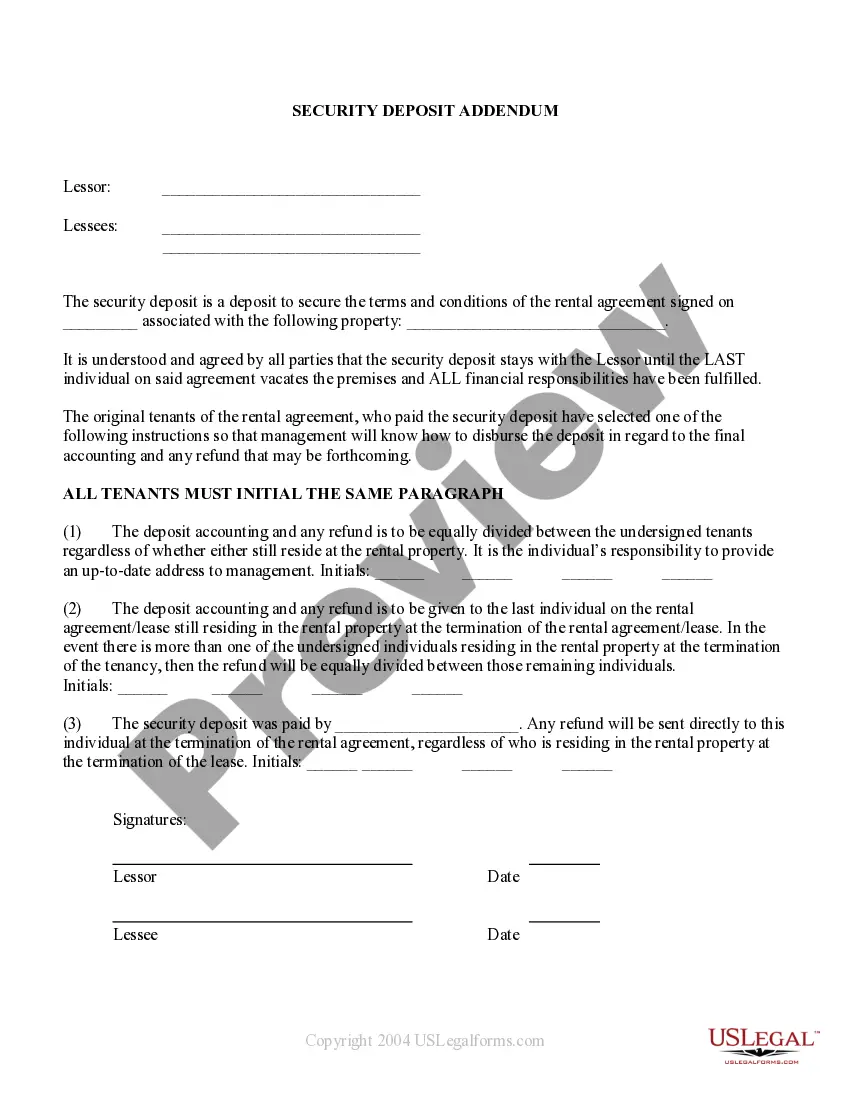
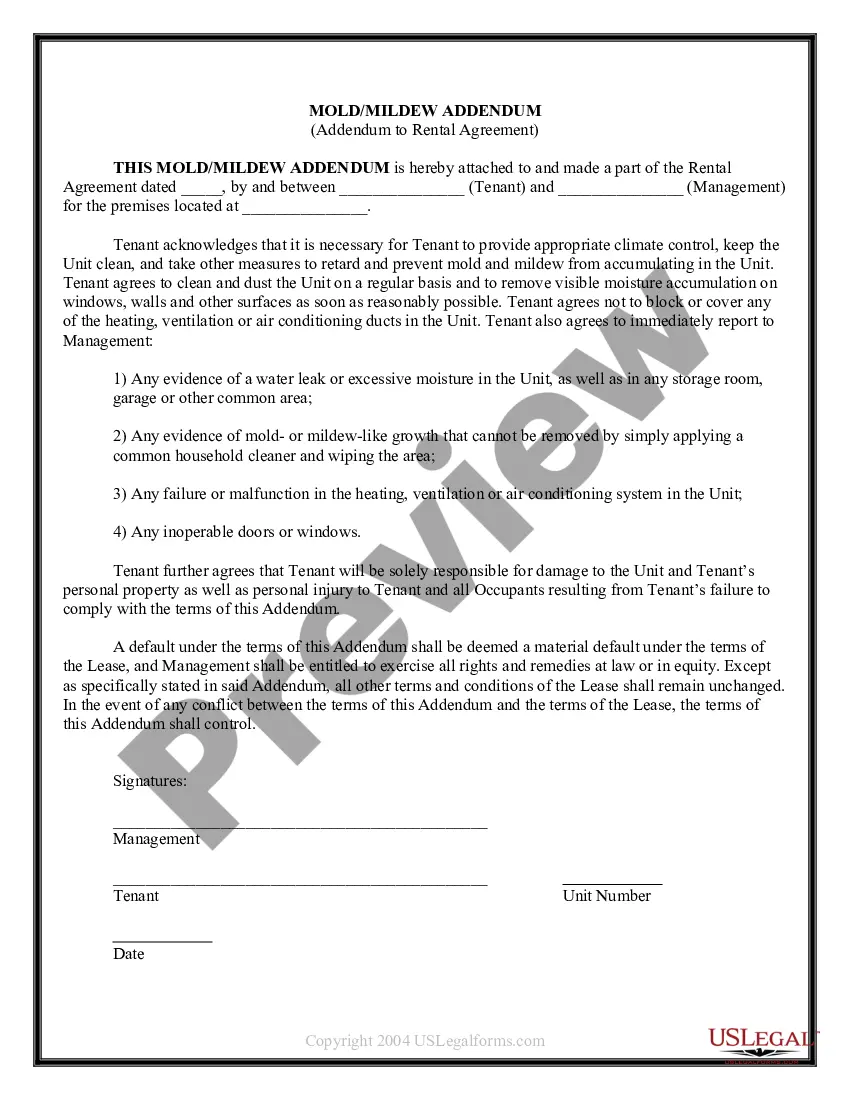
How to fill out Addendum To Apartment Lease Regarding Security Deposit?
The Necessity for a Rental Security Deposit to be Invested as seen on this page is a reusable legal framework crafted by expert attorneys in accordance with federal and local statutes and regulations.
For over 25 years, US Legal Forms has supplied individuals, enterprises, and lawyers with more than 85,000 validated, state-specific documents for any personal and business circumstance. It’s the quickest, easiest, and most dependable method to acquire the documents you require, as the service ensures bank-level data security and anti-malware safeguards.
Reuse your document as often as necessary. Access the My documents tab in your profile to redownload any previously saved documents. Subscribe to US Legal Forms to have authenticated legal templates for all of life’s situations readily available.
- Search for the document you require and examine it.
- Go through the sample you found and preview it or review the document description to verify it meets your requirements. If it doesn’t, utilize the search bar to identify the correct one. Click 'Buy Now' once you have found the template you need.
- Choose a pricing plan that works for you and create an account. Use PayPal or a credit card to make an immediate payment. If you already possess an account, Log In and check your subscription to continue.
- Select the format you prefer for your Necessity for a Rental Security Deposit to be Invested (PDF, Word, RTF) and save the document on your device.
- Print the template to complete it manually. Alternatively, use an online versatile PDF editor to swiftly and accurately fill out and sign your form with an eSignature.
Form popularity
FAQ
The clause for a security deposit outlines the expectations for both landlords and tenants regarding the deposit's collection, use, and return. Typically, it defines the deposit amount, the conditions for deductions, and the timeline for its return. Understanding this clause is crucial, especially when inquiring about whether a rental deposit must be invested, as many legal frameworks require that these funds be treated responsibly.
If the tenant intends to occupy the rental unit for more than one year, the security deposit should be reported as a long-term asset (or noncurrent asset) under the balance sheet classification "Other assets". The landlord that receives and holds the security deposit should report the amount as a liability.
Since a refundable deposit is cash that must be returned to the customer in the future, the company should debit restricted cash and credit the customer deposit liability account.
If your security deposit should be included in taxable income, then you can record the receipt of a security deposit as Rental Income with a note in the description. However, if the security deposit is refundable to the tenant, then you should create a separate Other Current Liability account to track the deposits.
Because security deposits are generally not considered rental income, they should not appear on your income statement or cash flow statement. Instead, include it as a liability on your balance sheet on the date you received it, since it's an amount you're planning to eventually return.
The person paying the security deposit would credit the asset account Cash and would debit the asset account Security Deposits. The person receiving the security deposit would debit the asset account Cash and would credit the liability account Security Deposits Returnable.