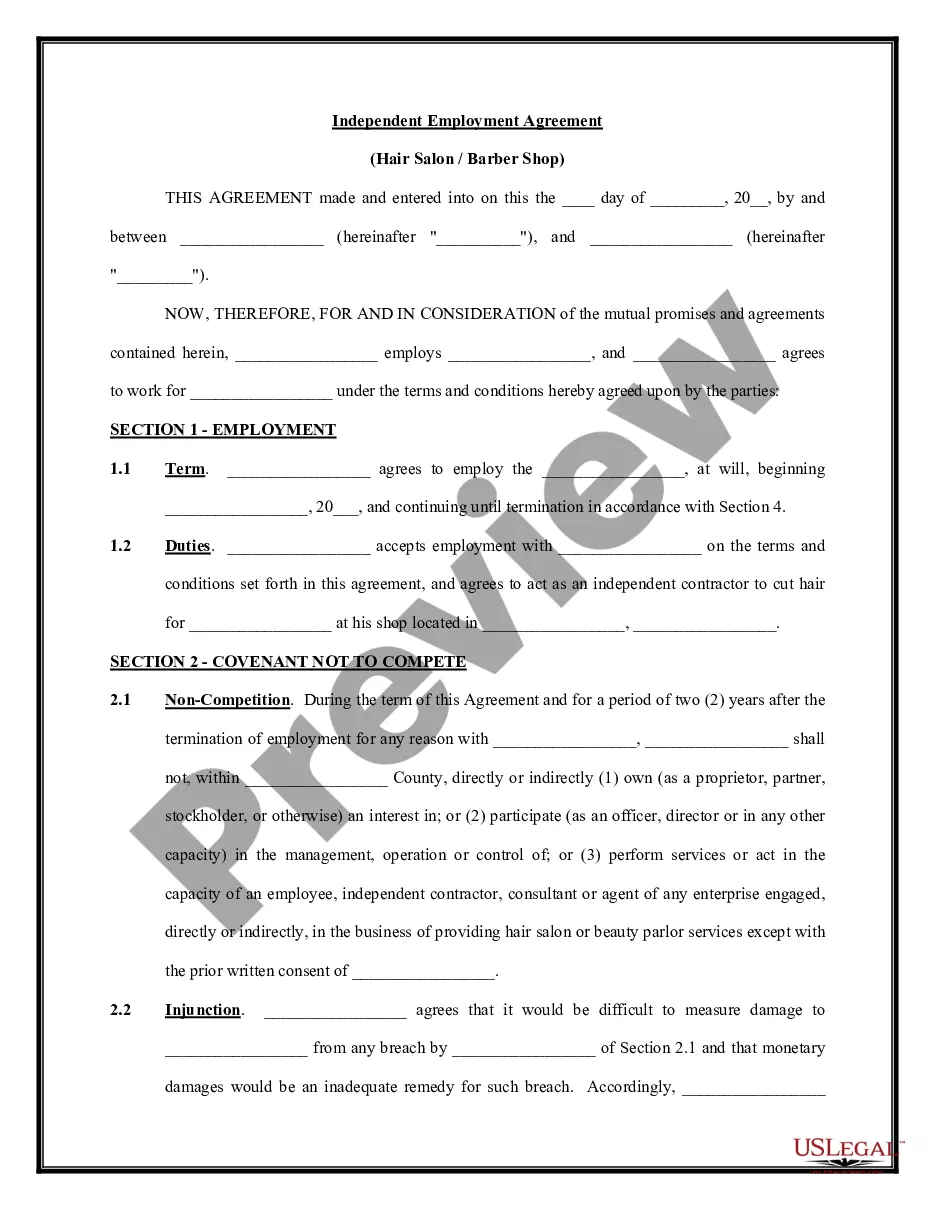
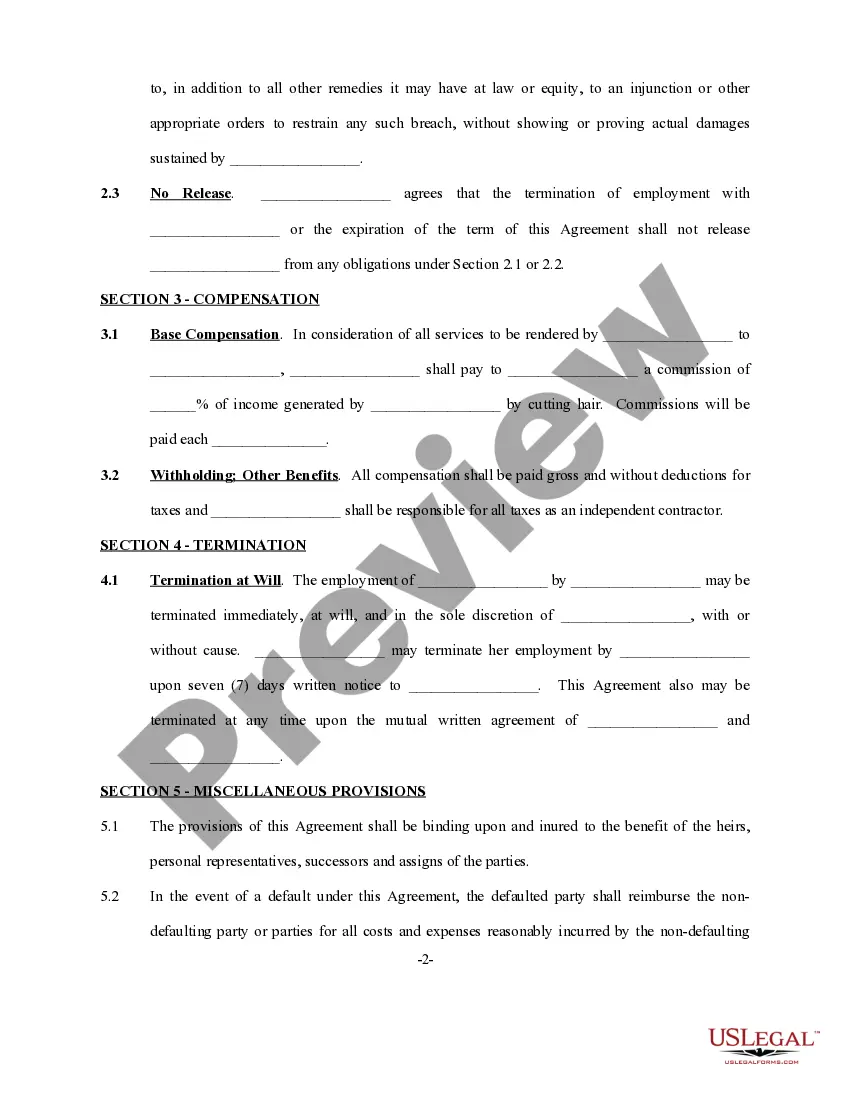
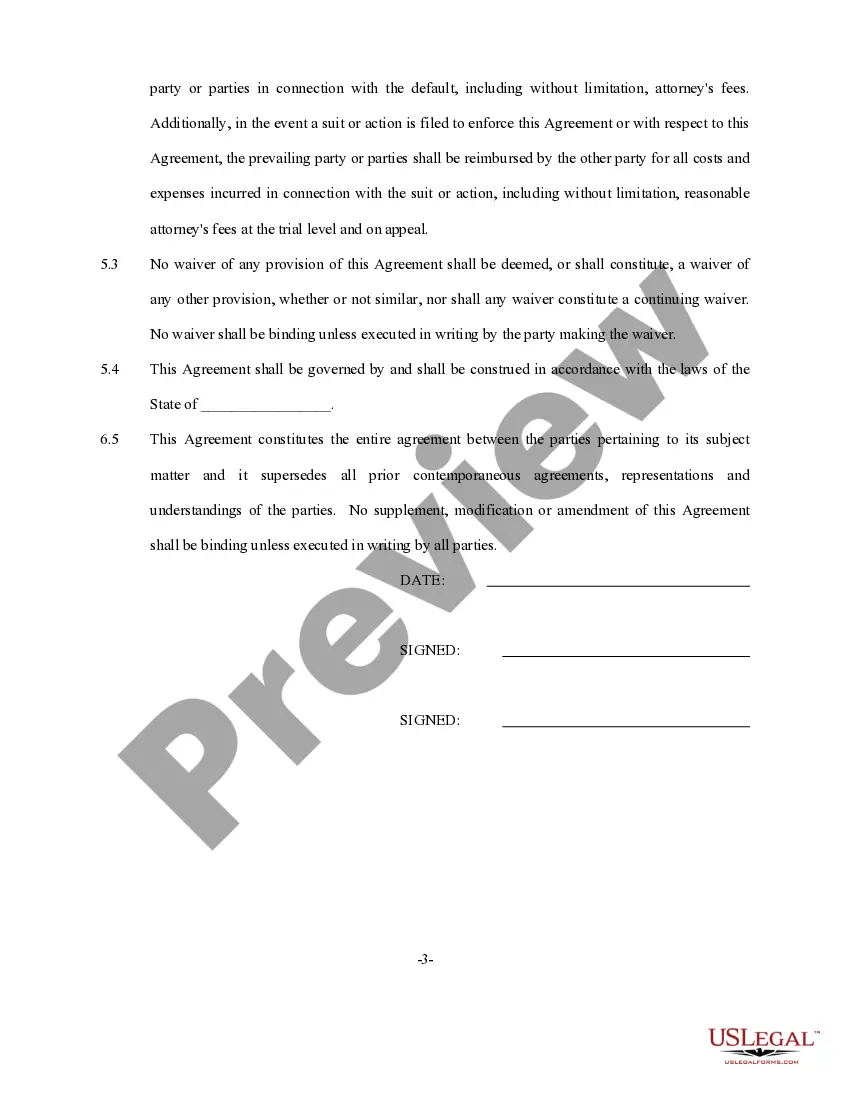
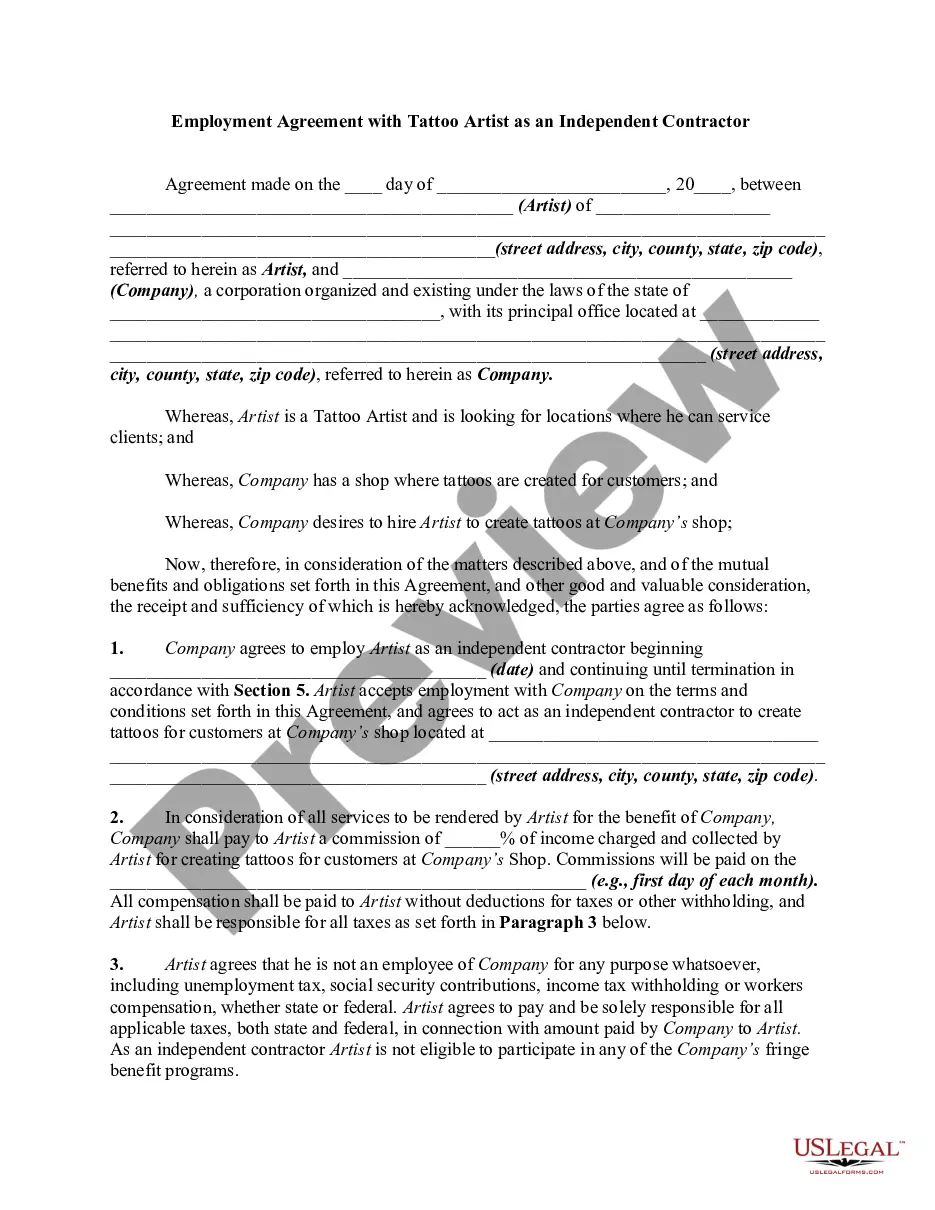
Self Employed Barber Contract With Insurance
Description
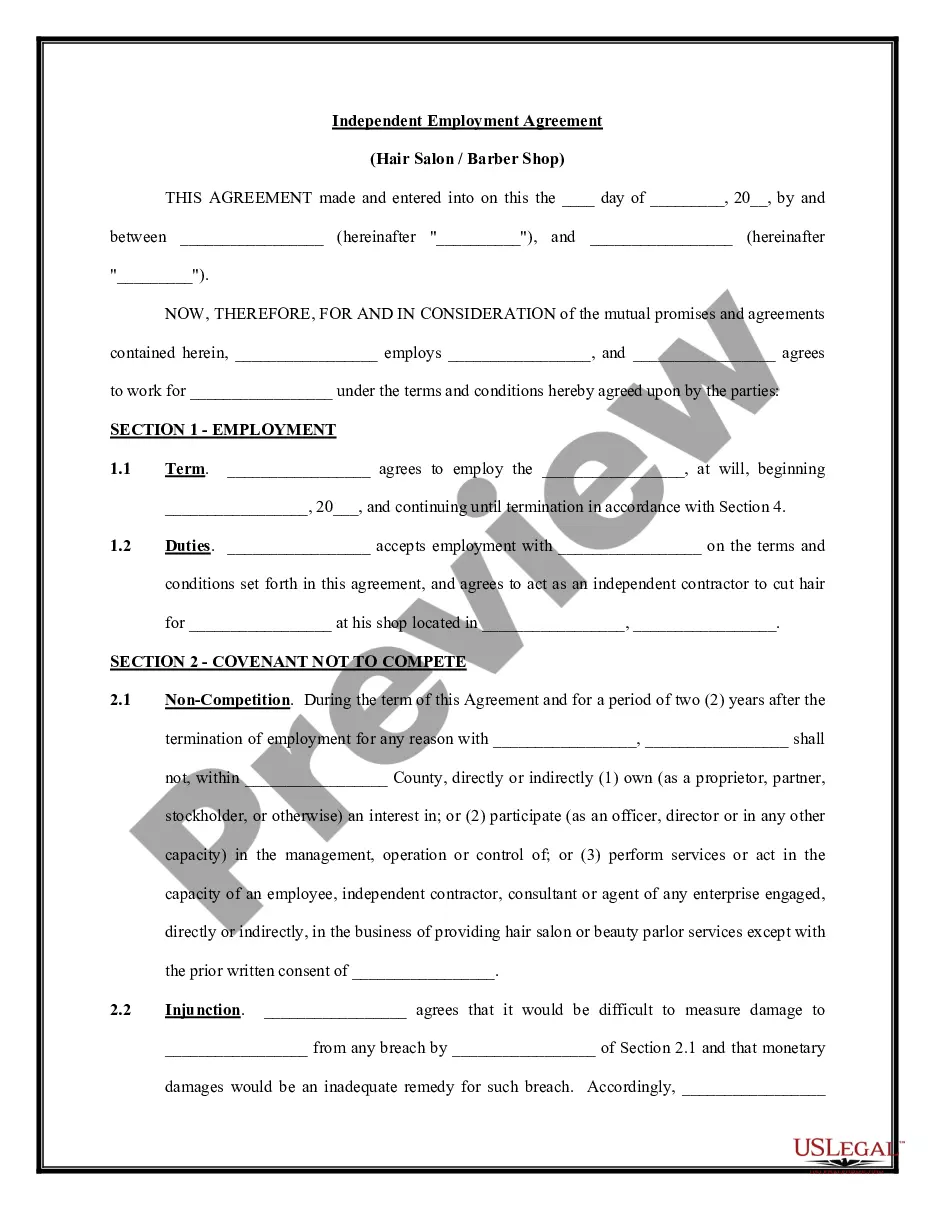
Get your form ready online
Our built-in tools help you complete, sign, share, and store your documents in one place.
Make edits, fill in missing information, and update formatting in US Legal Forms—just like you would in MS Word.
Download a copy, print it, send it by email, or mail it via USPS—whatever works best for your next step.
Sign and collect signatures with our SignNow integration. Send to multiple recipients, set reminders, and more. Go Premium to unlock E-Sign.
If this form requires notarization, complete it online through a secure video call—no need to meet a notary in person or wait for an appointment.
We protect your documents and personal data by following strict security and privacy standards.

Make edits, fill in missing information, and update formatting in US Legal Forms—just like you would in MS Word.

Download a copy, print it, send it by email, or mail it via USPS—whatever works best for your next step.

Sign and collect signatures with our SignNow integration. Send to multiple recipients, set reminders, and more. Go Premium to unlock E-Sign.

If this form requires notarization, complete it online through a secure video call—no need to meet a notary in person or wait for an appointment.

We protect your documents and personal data by following strict security and privacy standards.
Looking for another form?





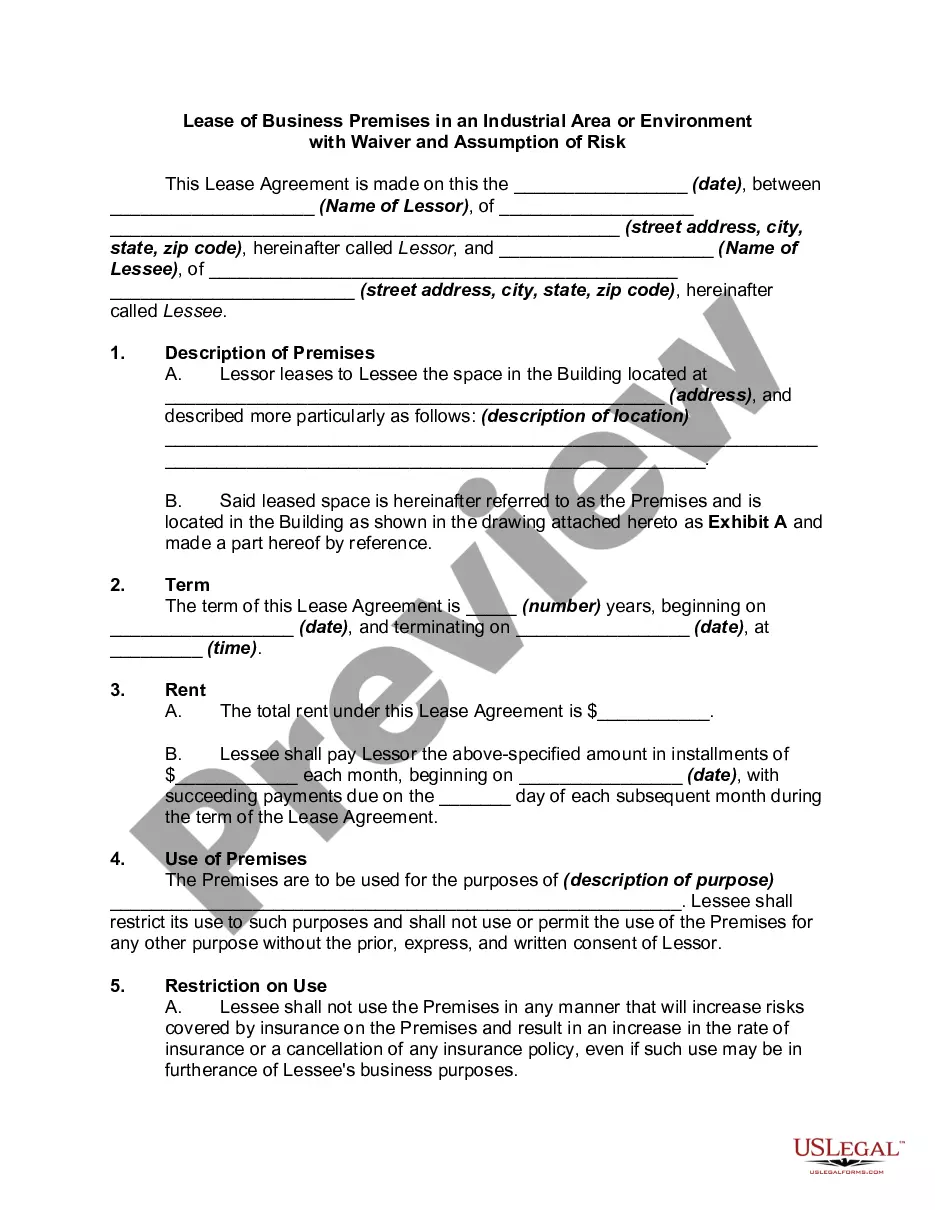




How to fill out Self-Employed Independent Contractor Employment Agreement - Hair Salon Or Barber Shop?
Handling legal documents can be challenging, even for experienced individuals.
If you are seeking a Self Employed Barber Agreement With Insurance and lack the time to dedicate to locating the correct and current version, the tasks can be stressful.
US Legal Forms caters to any needs you might have, ranging from personal to business documents, all conveniently located in one area.
Make use of sophisticated tools to complete and handle your Self Employed Barber Agreement With Insurance.
Follow these steps after you download the required document: Verify its accuracy by previewing it and reviewing its details.
- Gain access to a repository of articles, tutorials, and guides pertinent to your situation and requirements.
- Conserve time and effort searching for the documents you require, and employ US Legal Forms’ advanced search and Preview feature to locate and download the Self Employed Barber Agreement With Insurance.
- If you hold a membership, Log In to your US Legal Forms account, search for the document, and download it.
- Check out the My documents tab to see the documents you have previously downloaded and to manage your folders as needed.
- For first-time users of US Legal Forms, create an account to gain limitless access to all the platform's benefits.
- A robust online form repository could be a revolutionary solution for anyone looking to manage these issues effectively.
- US Legal Forms stands as a frontrunner in the realm of online legal documents, boasting over 85,000 state-specific legal forms accessible at any time.
- With US Legal Forms, you can access forms tailored to specific states or counties.
Form popularity
FAQ
Thankfully, barbering-related educational courses, certifications, and licenses are prime expenses to write off on your taxes. They are investments in your craft and business, making them integral to your success as a barber.
Self-employed hairstylists are required to pay estimated tax every three months and file an annual return. Depending on their location, they may also need to file local or state tax returns. First, you must report your business income and losses on IRS Form 1040 Schedule C.
Certifications, Education, and Licenses Thankfully, barbering-related educational courses, certifications, and licenses are prime expenses to write off on your taxes.
A barber contractor is responsible for reporting their income earned and any expenses accrued. For instance, a sole proprietorship should file a 1040 tax form using Schedule C to report business income, any expenses accrued and Schedule SE to report Self-Employment tax.
Business examples Common types of business activities within NAICS Code 812111 - Barber Shops are: Barber shops. Hair stylist shops, men's.