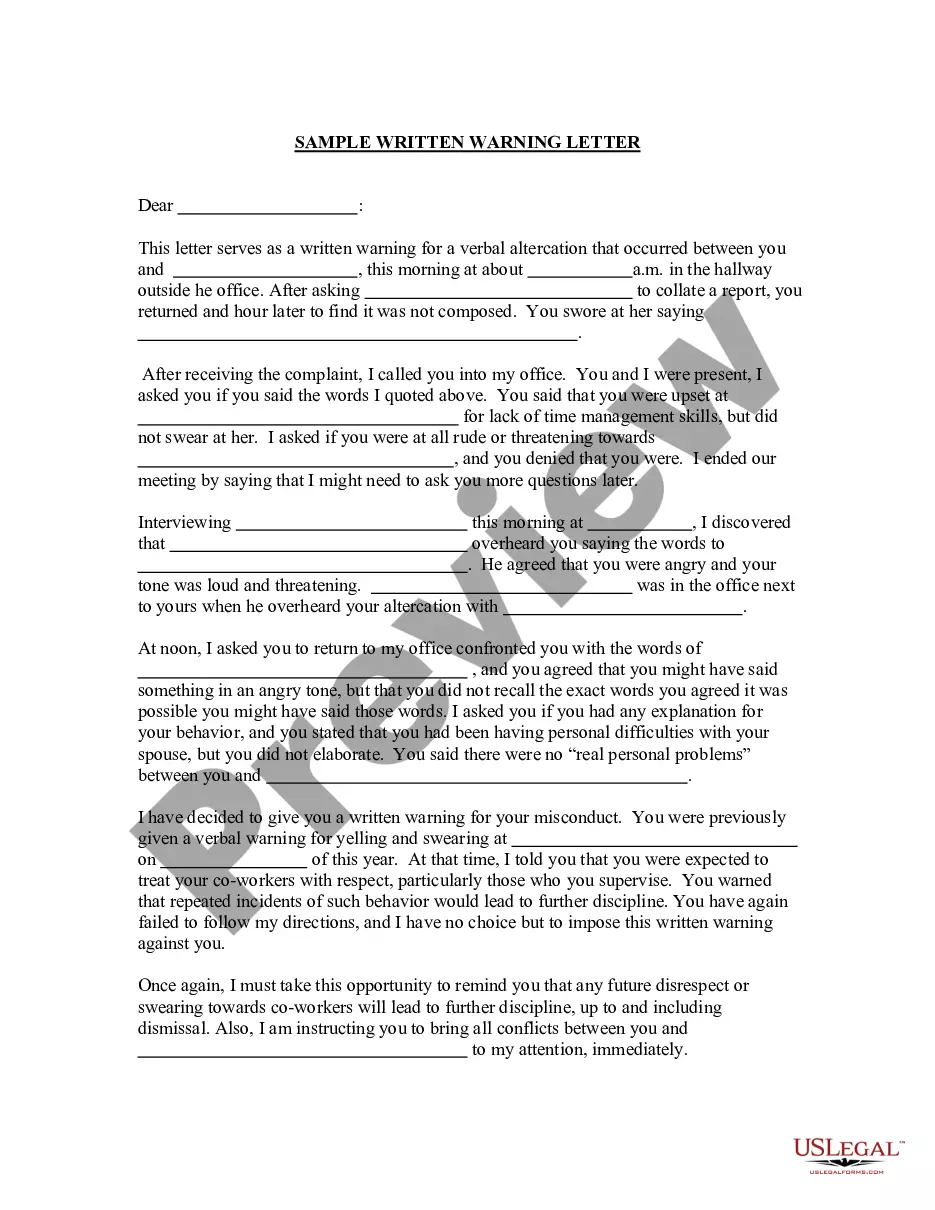
Suspension Letter For Insubordination
Description
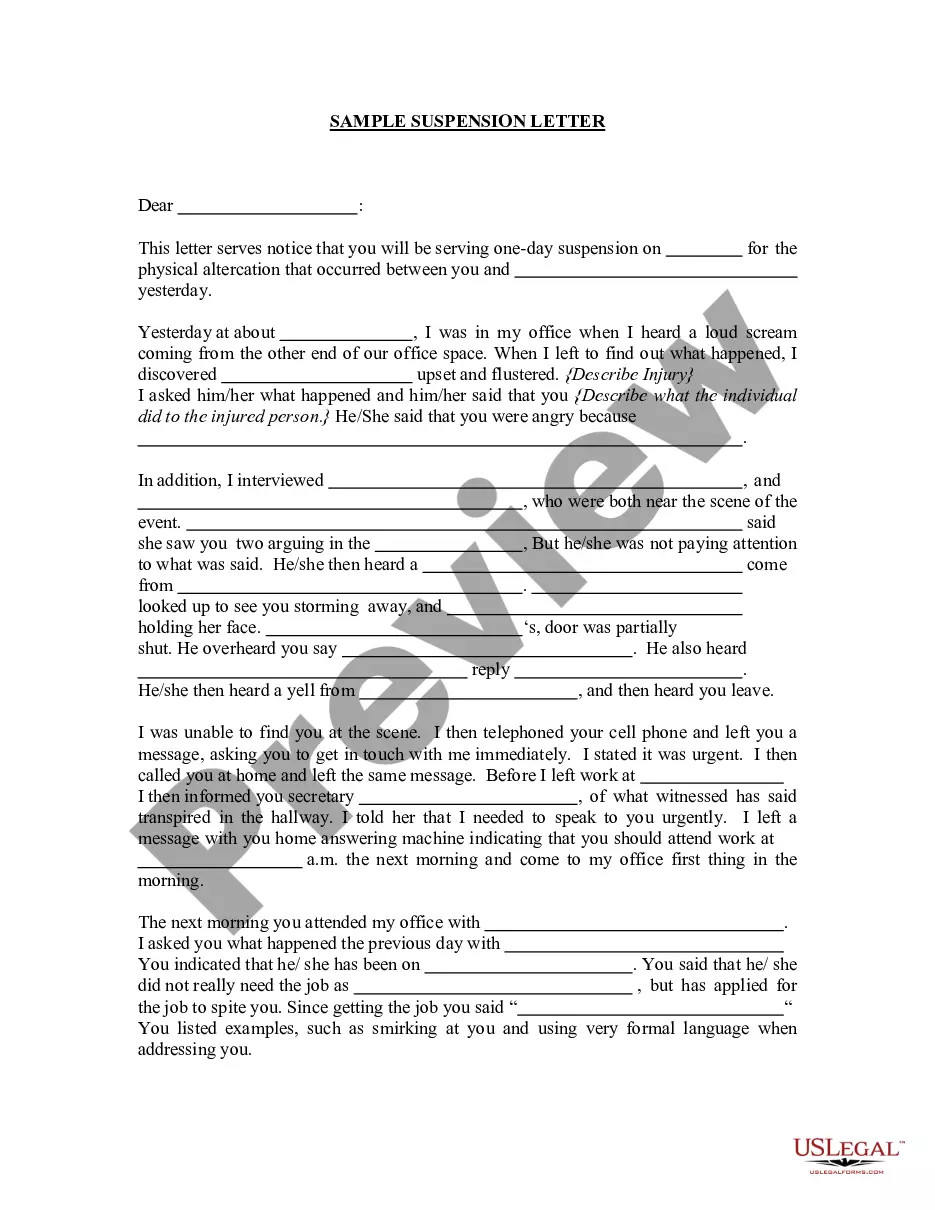
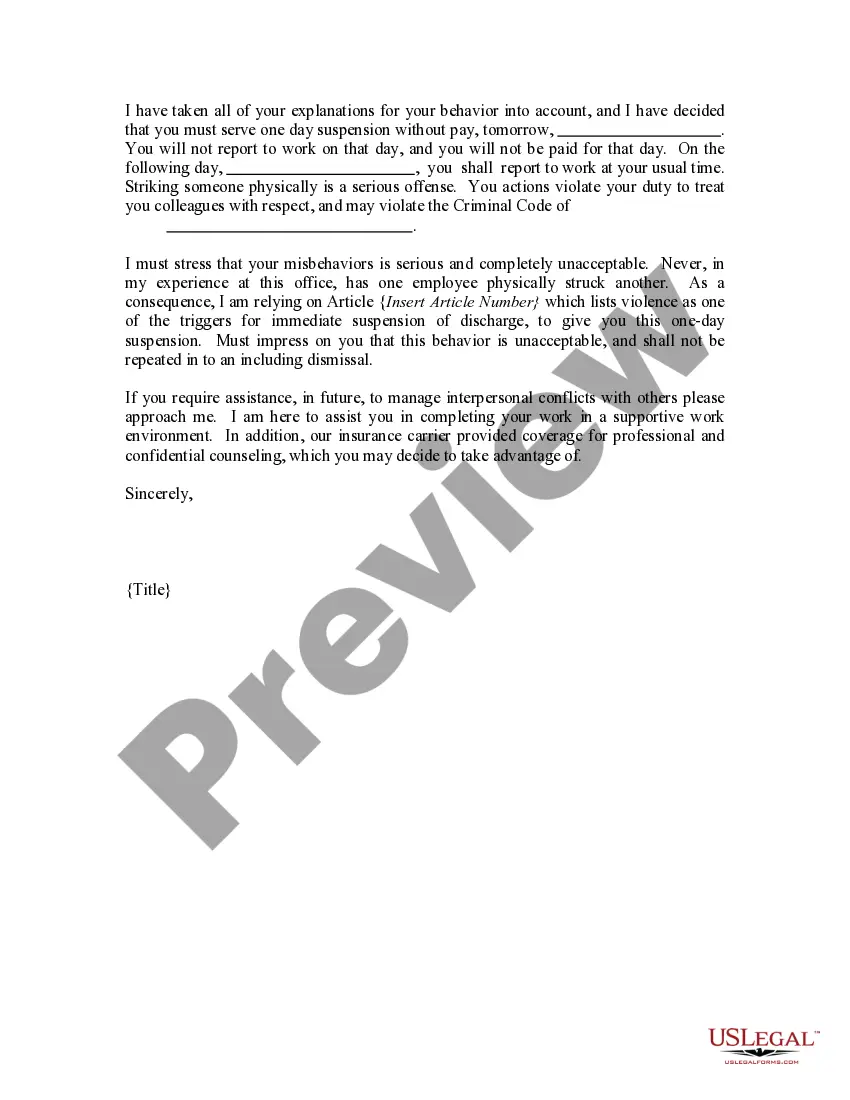
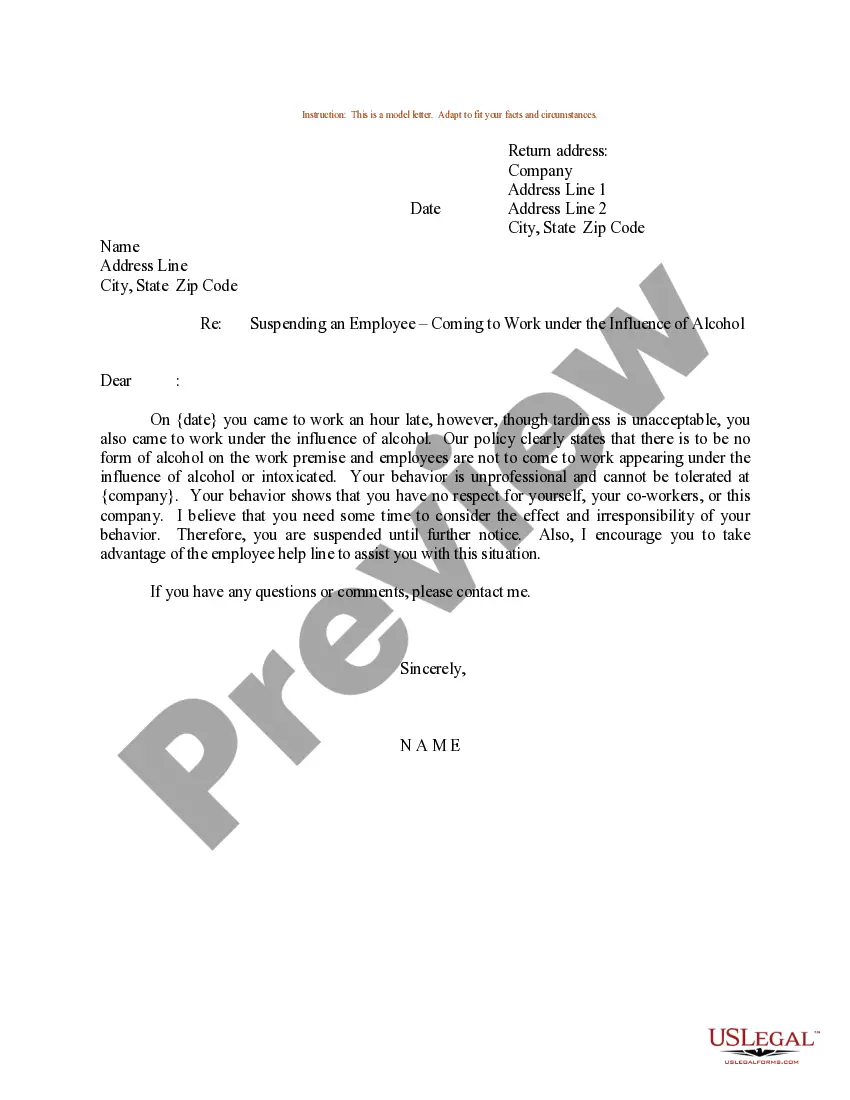
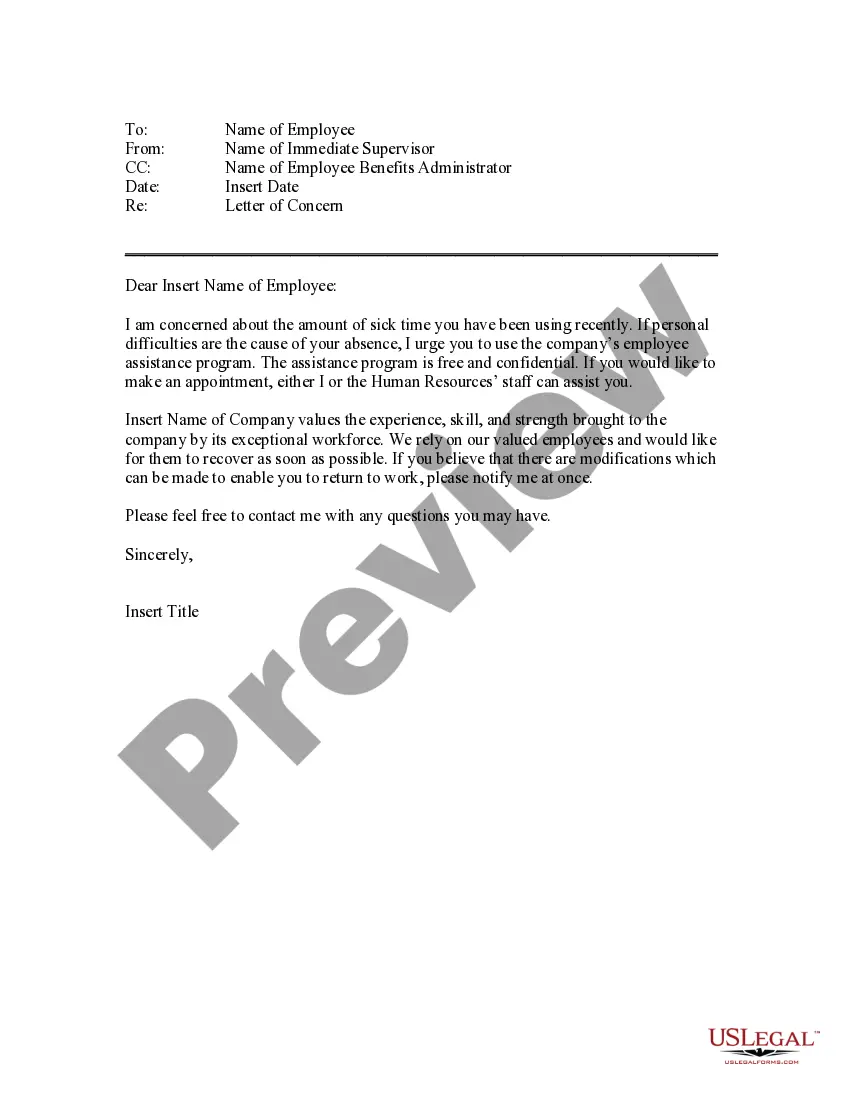

Get your form ready online
Our built-in tools help you complete, sign, share, and store your documents in one place.
Make edits, fill in missing information, and update formatting in US Legal Forms—just like you would in MS Word.
Download a copy, print it, send it by email, or mail it via USPS—whatever works best for your next step.
Sign and collect signatures with our SignNow integration. Send to multiple recipients, set reminders, and more. Go Premium to unlock E-Sign.
If this form requires notarization, complete it online through a secure video call—no need to meet a notary in person or wait for an appointment.
We protect your documents and personal data by following strict security and privacy standards.

Make edits, fill in missing information, and update formatting in US Legal Forms—just like you would in MS Word.

Download a copy, print it, send it by email, or mail it via USPS—whatever works best for your next step.

Sign and collect signatures with our SignNow integration. Send to multiple recipients, set reminders, and more. Go Premium to unlock E-Sign.

If this form requires notarization, complete it online through a secure video call—no need to meet a notary in person or wait for an appointment.

We protect your documents and personal data by following strict security and privacy standards.
Looking for another form?






How to fill out Sample Letter Of Suspension For Physical Altercation?
Precisely prepared official documentation is one of the crucial assurances for preventing issues and legal disputes, but acquiring it without the assistance of a lawyer may require time.
Whether you need to swiftly locate a recent Suspension Letter For Insubordination or any other forms for employment, family, or business purposes, US Legal Forms is always available to assist.
The procedure is even more straightforward for current members of the US Legal Forms library. If your subscription is active, you just need to Log In to your account and click the Download button next to the desired file. Additionally, you can access the Suspension Letter For Insubordination at any time later on, as all documents ever obtained on the platform are accessible within the My documents tab of your profile. Save time and money on preparing official documents. Experience US Legal Forms today!
- Verify that the form is appropriate for your situation and locality by reviewing the description and preview.
- Search for another template (if necessary) using the Search bar in the page header.
- Press Buy Now once you find the suitable template.
- Select the pricing option, sign in to your account or create a new one.
- Choose your preferred payment method to purchase the subscription plan (via a credit card or PayPal).
- Select PDF or DOCX file format for your Suspension Letter For Insubordination.
- Click Download, then print the template to complete it or upload it to an online editor.
Form popularity
FAQ
To prove employee insubordination, collect evidence such as emails, witness statements, and documented conversations. These items should clearly show that the employee failed to follow direct instructions or repeated company policies. It is crucial to have a consistent record to support your case, particularly when drafting a suspension letter for insubordination. Utilizing a resource like US Legal Forms can provide templates and guidance for this important process.
Issuing a suspension letter for insubordination involves a few key steps. First, document the incidents of insubordination to justify the action. Next, format the letter clearly, stating the reason for the suspension and any supporting details. Finally, deliver the letter to the employee in a manner that confirms receipt, such as through email or certified mail.
To write a suspension letter for insubordination, begin with a formal greeting and state the purpose of the letter clearly. Outline the specific behavior that led to the suspension, providing necessary details and examples. Include the duration of the suspension and any expectations for the employee's future conduct. Lastly, ensure that you use a respectful tone, reinforcing the importance of adhering to workplace standards.
Yes, an employee can be suspended for insubordination, but it should align with your organization's policies. Before taking such action, ensure that you have documented any relevant incidents thoroughly. A suspension letter for insubordination will provide clarity about the reasons and consequences of the employee’s actions. Implementing such measures helps reinforce your company's standards.
Insubordination typically includes refusing to follow reasonable instructions from a supervisor, disrespecting authority, or undermining company policies. It’s crucial to demonstrate a pattern of behavior rather than an isolated incident when labeling actions as insubordination. A suspension letter for insubordination is often used to formally address these behaviors and clarify expectations moving forward.
Yes, you can suspend an employee for misconduct, including insubordination. It’s vital to document the misconduct clearly and follow your company's disciplinary procedures. A well-drafted suspension letter for insubordination outlines the reasons for the suspension and sets expectations for future behavior. This approach helps maintain a professional work environment and ensures transparency.
Terminating an employee for insubordination requires a structured approach. First, document any instances of insubordination, including details and dates. If the behavior persists, issue a suspension letter for insubordination, which serves as a formal warning. This process ensures that you have followed appropriate steps, protecting your organization from potential legal issues.
When you receive an insubordination claim, it’s important to remain calm and objective. Start by collecting evidence, such as emails or witness accounts, to support your position. After gathering information, consider drafting a suspension letter for insubordination if it appears the claim is valid. This letter should outline the specific behaviors that led to the claim and any consequences that may follow.
To write a suspension notice, begin with a formal greeting followed by the employee's name and the effective date of suspension. Clearly outline the reasons for the suspension and any actions taken prior to this decision. Finish with a reminder of the company’s policies and what the employee must do next.
In writing a disciplinary letter for insubordination, document the specific incidents along with dates and any witnesses. State the consequences of the insubordination clearly, and reference any past warnings. This letter serves as a formal record of the employee’s behavior and the company's expectations.
