Suspension Letter For Gross Misconduct
Description
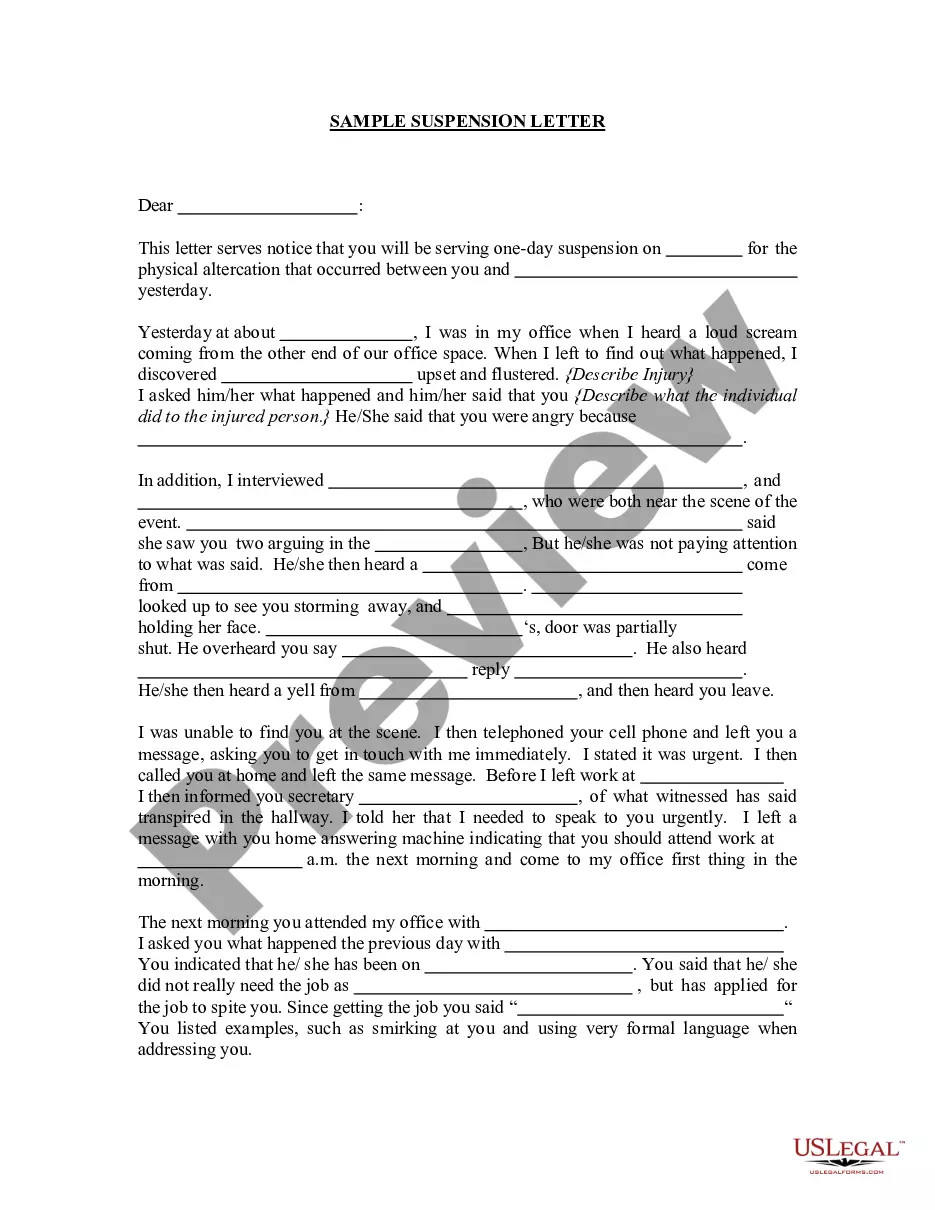
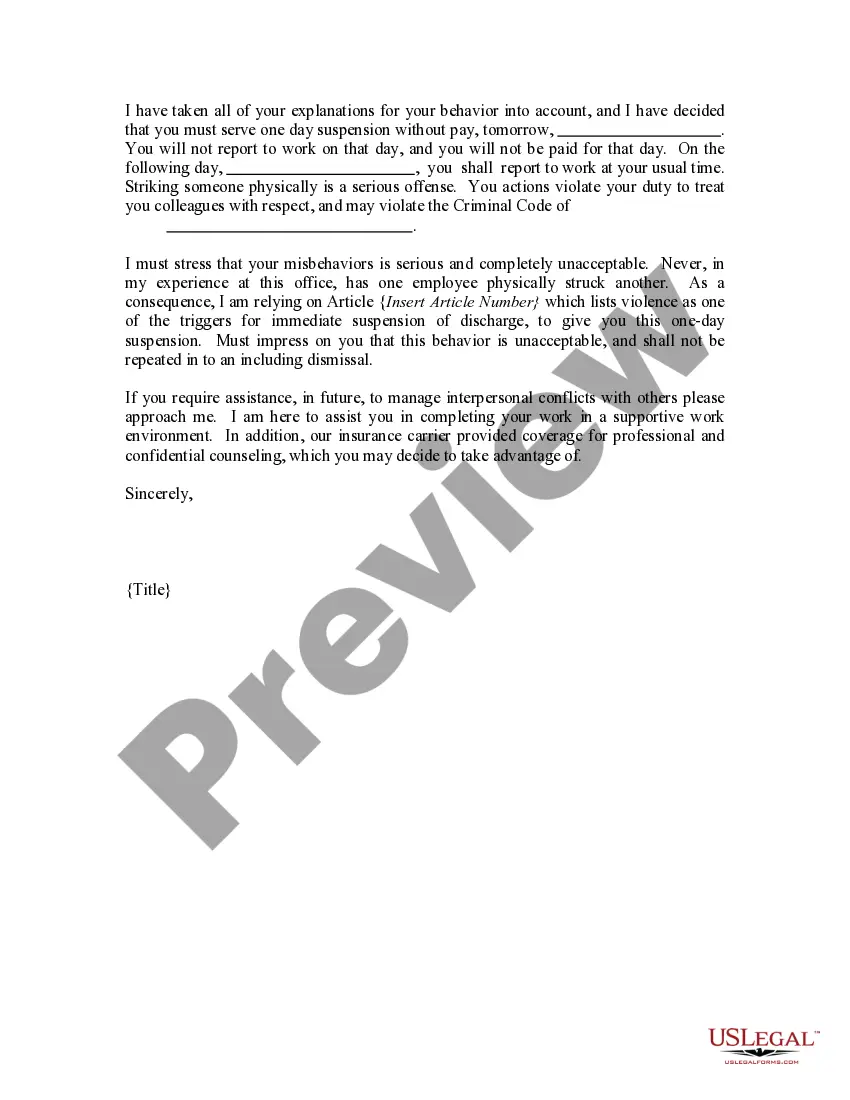
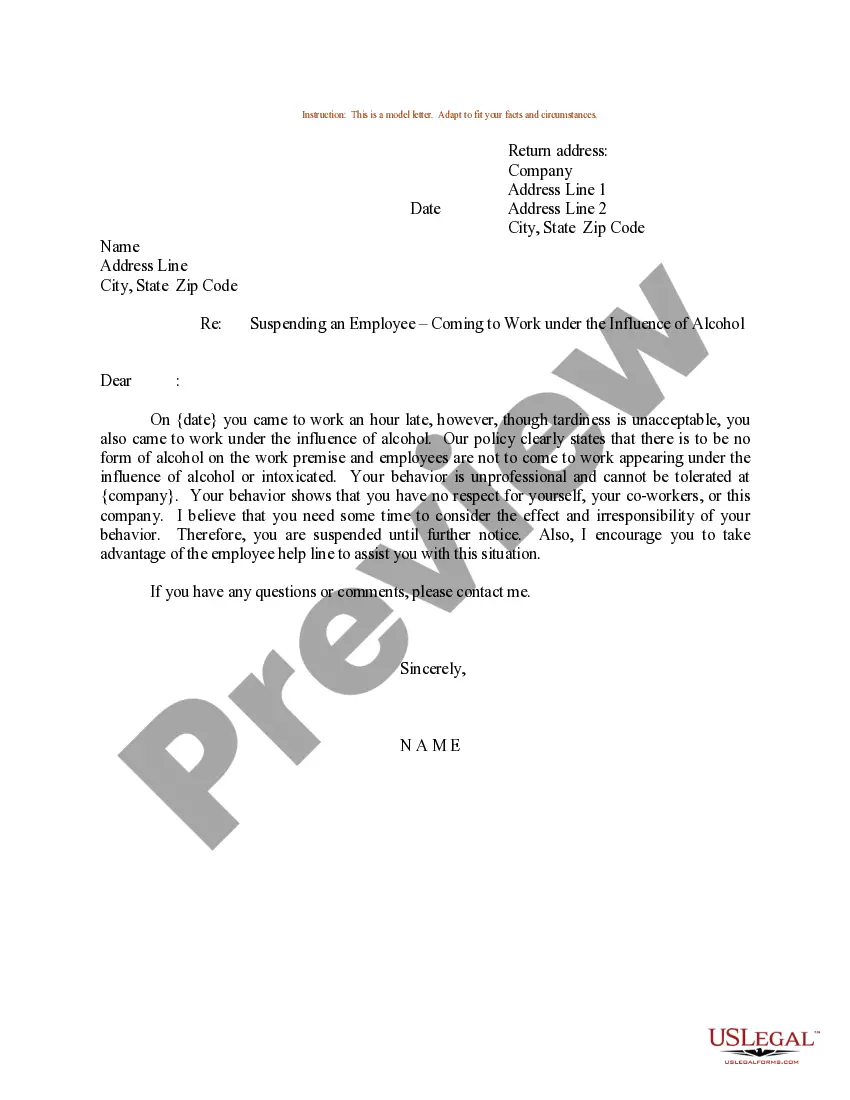
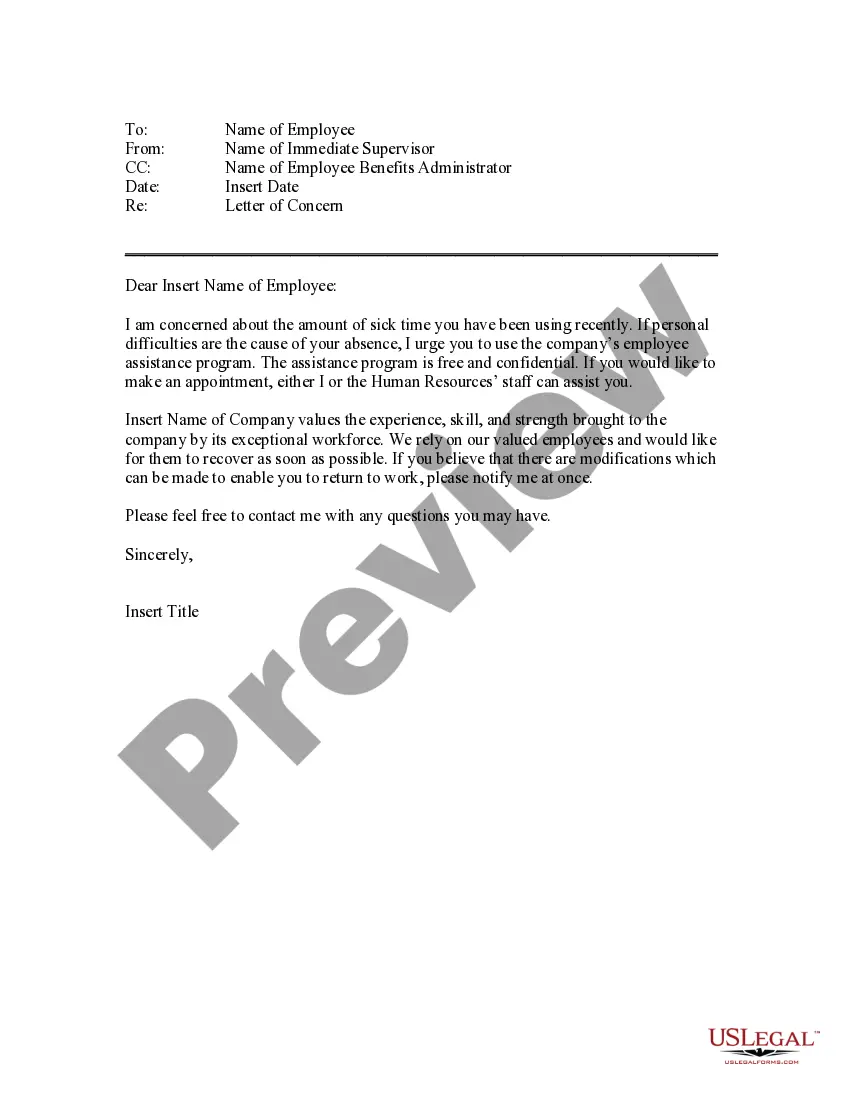

Get your form ready online
Our built-in tools help you complete, sign, share, and store your documents in one place.
Make edits, fill in missing information, and update formatting in US Legal Forms—just like you would in MS Word.
Download a copy, print it, send it by email, or mail it via USPS—whatever works best for your next step.
Sign and collect signatures with our SignNow integration. Send to multiple recipients, set reminders, and more. Go Premium to unlock E-Sign.
If this form requires notarization, complete it online through a secure video call—no need to meet a notary in person or wait for an appointment.
We protect your documents and personal data by following strict security and privacy standards.

Make edits, fill in missing information, and update formatting in US Legal Forms—just like you would in MS Word.

Download a copy, print it, send it by email, or mail it via USPS—whatever works best for your next step.

Sign and collect signatures with our SignNow integration. Send to multiple recipients, set reminders, and more. Go Premium to unlock E-Sign.

If this form requires notarization, complete it online through a secure video call—no need to meet a notary in person or wait for an appointment.

We protect your documents and personal data by following strict security and privacy standards.
Looking for another form?

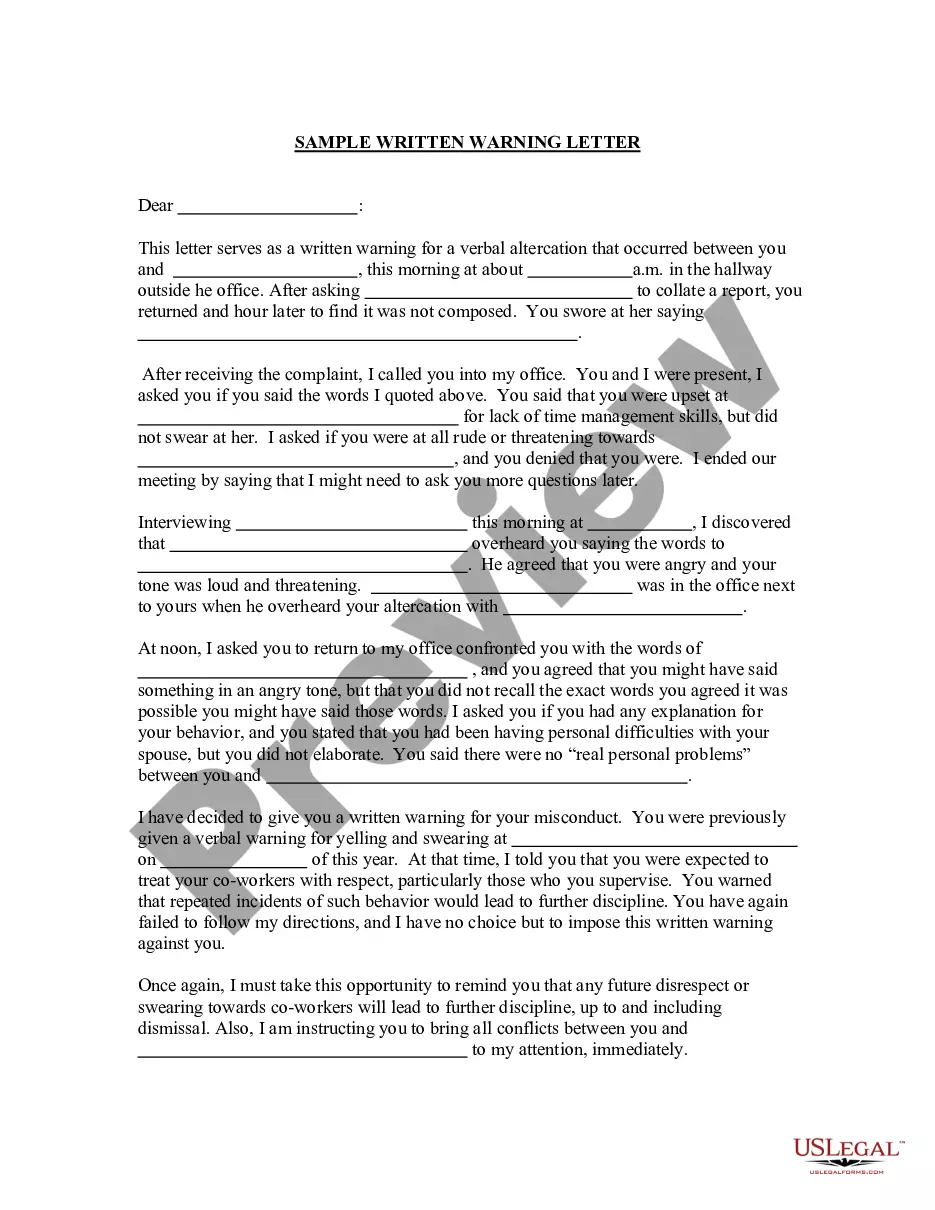
How to fill out Sample Letter Of Suspension For Physical Altercation?
Traversing the red tape of official documents and formats can be daunting, especially for those who do not engage in such tasks professionally.
Even locating the correct format for a Suspension Letter For Gross Misconduct can be labor-intensive, as it must be authentic and accurate down to the very last detail.
Nevertheless, you will need to spend considerably less time selecting a suitable template from a trustworthy resource.
Obtain the correct form in a few straightforward steps.
- US Legal Forms is a platform that streamlines the process of finding the appropriate forms online.
- US Legal Forms is a one-stop shop for the latest samples of documents, consulting their usage, and downloading these samples for completion.
- This is a compilation of more than 85K forms applicable in various sectors.
- When seeking a Suspension Letter For Gross Misconduct, you will not need to question its validity as all forms are authenticated.
- Having an account at US Legal Forms will ensure that you have all the necessary samples readily available.
- You can store them in your history or add them to the My documents catalog.
- Access your saved forms from any device by simply clicking Log In at the library site.
- If you do not possess an account yet, you can always conduct a new search for the required template.
Form popularity
FAQ
To win a gross misconduct case, gather all relevant evidence such as witness statements, documents, and emails. Present a coherent argument that demonstrates the actions violated company policies and justify the response taken, such as a suspension letter for gross misconduct. Engaging legal expertise can also enhance your position, ensuring that all procedures were correctly followed and documented. Understanding your rights and responsibilities is crucial during this process.
When writing a letter for misconduct, start by documenting the specific incident, including dates and witnesses if applicable. Clearly outline the behavior that violates company policy, and explain the consequences, which may include a suspension letter for gross misconduct. It’s important to communicate in a straightforward manner and offer the employee an opportunity to respond to the allegations. This approach fosters a fair evaluation of the situation.
Examples of gross misconduct include theft of company property, violence or threats against colleagues, and persistent harassment. Each of these actions can severely disrupt the workplace and compromise safety. Organizations treat these behaviors with utmost seriousness when issuing a suspension letter for gross misconduct. Familiarizing yourself with these examples can help maintain a professional and safe work environment.
To write a suspension notice, first, clearly state the employee’s name and the reason for the suspension. Include details regarding the specific events that led to the decision, along with the duration of the suspension. It’s essential to mention the policy or guideline that justifies the action. A well-written suspension letter for gross misconduct ensures transparency and fairness in the process.
Yes, an employee can be fired for misconduct, especially if the behavior is severe or repeated. Employers must follow proper procedures to ensure fairness and avoid legal complications. Documenting incidents and disciplinary actions, such as a suspension letter for gross misconduct, reinforces the justification for termination. This thorough approach helps protect both the employee's and the employer's rights.
Procedures for handling gross misconduct typically include an investigation, gathering evidence, and interviewing relevant parties. If misconduct is confirmed, the employer must consider disciplinary actions, which may include suspension or dismissal. Transparency throughout the process is vital for maintaining trust within the organization. Using a structured approach with a suspension letter for gross misconduct can facilitate these procedures.
Writing a letter of dismissal for gross misconduct requires clarity and professionalism. The letter should include the employee's name, reasons for dismissal, and reference any policies violated. It is crucial to document the process leading to this outcome for legal protection. Consider including a suspension letter for gross misconduct to show an established process before dismissal.
Disciplining an employee for misconduct involves several steps, starting with gathering facts and documentation regarding the incident. After assessment, employers should communicate the decision to the employee, often through a formal letter. This letter should outline the misconduct, disciplinary action taken, and future expectations. A suspension letter for gross misconduct may be part of this disciplinary process.
Grounds for suspension from work generally include serious breaches of company policy, such as theft, fraud, harassment, or repeated violations. Each case should be carefully assessed to determine if the behavior warrants suspension. Documenting incidents leading to suspension ensures transparency in the decision-making process. A suspension letter for gross misconduct typically outlines the specific grounds referenced.
To write a suspension letter, begin by clearly stating the employee's name and the effective date of the suspension. Include specific details about the misconduct and the duration of the suspension, if known. Ensure that the tone of the letter remains professional and factual, and conclude with information regarding next steps in the process. Utilizing a suspension letter for gross misconduct template can streamline this task.
