Reference Words
Description
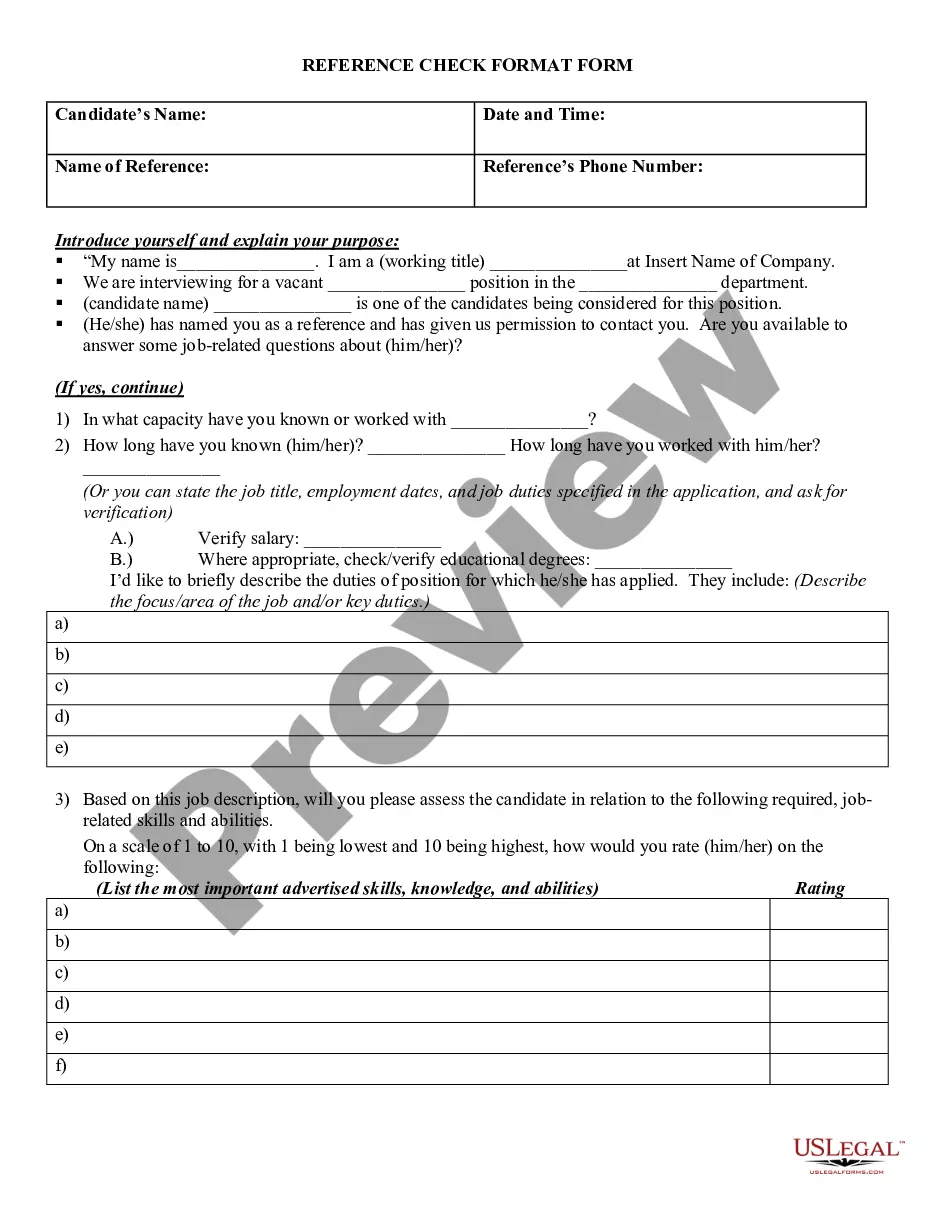
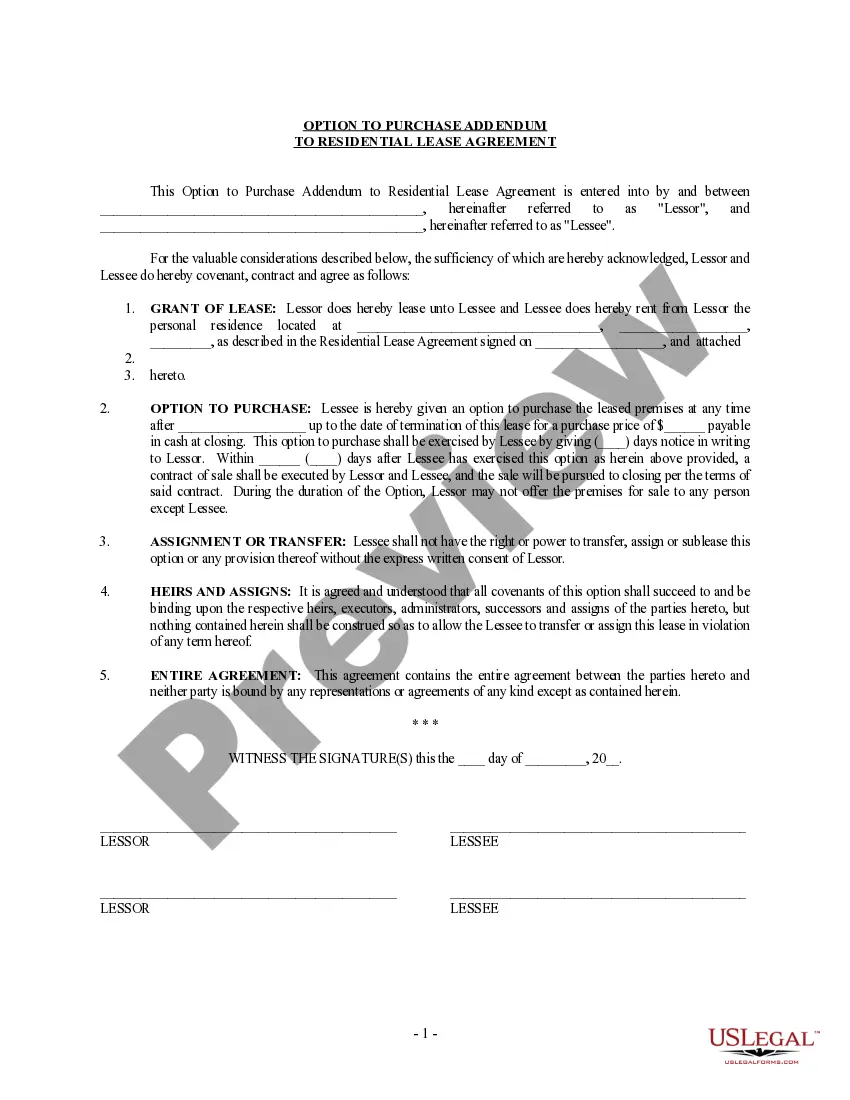
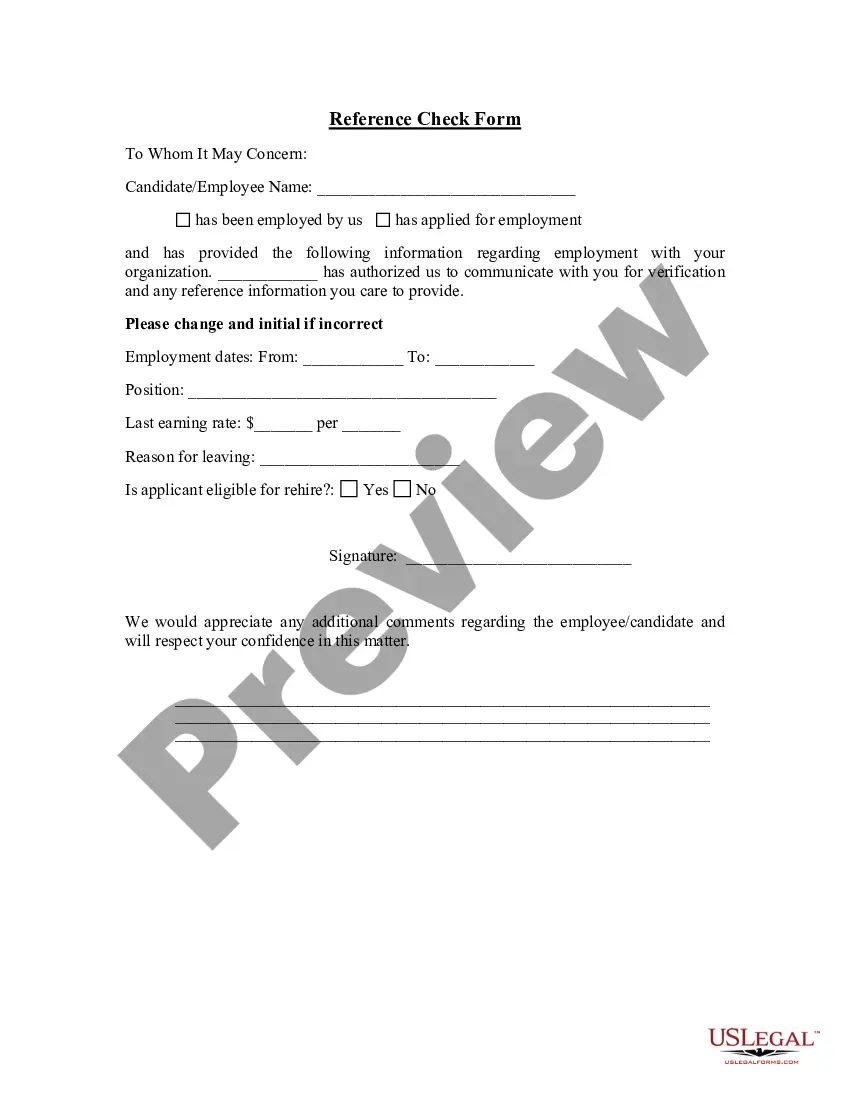
How to fill out Reference Check Form?
- For returning users, log into your account and download the required form template by clicking the Download button. Ensure your subscription is active; renew if necessary.
- If you're new, start by previewing the form descriptions to choose one that aligns with your requirements and jurisdiction.
- If you encounter any discrepancies, utilize the search bar to explore alternative templates before proceeding.
- Select the 'Buy Now' option for your chosen document and pick a suitable subscription plan. You will need to create an account.
- Complete your purchase by entering your credit card info or using your PayPal account for secure payment.
- Finally, download the document onto your device. You can also access it later in the 'My Forms' section of your profile.
By following these steps, you'll gain instant access to a powerful collection of legal documents tailored to your needs.
Start your journey with US Legal Forms today and ensure you have the right documents at the right time!
Form popularity
FAQ
To organize references in Word, create a structured layout by placing all reference words on a designated page. Utilize bullet points or numbering for better clarity if required. Ensure you maintain consistent formatting throughout and arrange your entries alphabetically, making it easier for readers to navigate and effectively utilize the reference material.
Formatting references in Word involves applying specific styles to each entry. You can use the 'Styles' feature to choose a consistent font type and size, as well as adjustments for bold or italic text. Ensure that each of your reference words follows the conventions of your chosen citation style, enhancing the readability and professionalism of your document.
To do references in Word format, begin by creating a new page titled 'References' at the end of your document. Enter all your reference words according to the chosen citation style. Remember to format each entry consistently—this includes italics, capitalization, and punctuation—ensuring that your references are presented clearly and professionally.
The best way to arrange references is to adopt a style guide that fits your document’s purpose, such as APA, MLA, or Chicago. Organizing your reference words alphabetically creates a straightforward layout. Additionally, be consistent in your formatting, which reinforces your credibility as a writer and helps readers navigate your work with ease.
Arranging a list of references involves selecting a consistent format, such as APA or MLA. Start by entering all reference words you need, then sort them alphabetically by the author's last name or the title. This method ensures your references are organized, making it easier for readers to locate them and enhancing the overall professionalism of your document.
To put references in order in Word, highlight your list of reference words and use the sorting feature found under the 'Home' tab in the 'Paragraph' group. Select 'Sort,' and then choose to sort by paragraph text. Ensure your references are formatted consistently to improve readability and make it easier for readers to find the relevant information.
To list references in a document, first gather all the reference words you used throughout your text. Next, create a separate 'References' section at the end of your document. Alphabetically arrange the reference words by the last name of the author or the title of the work if there's no author. This structure ensures clarity and allows your readers to easily locate the original sources.
Referent words serve to identify the noun they refer to within a text. For instance, in a sentence, 'The committee made its decision,' the word 'its' is a referent word that identifies 'the committee.' Clear use of referent words avoids confusion and helps readers track what or whom you are discussing. This effective communication style can be further supported through resources available on platforms like uslegalforms.
Reference words are terms that guide readers or listeners through a piece of information. Common examples include pronouns such as 'he,' 'she,' and 'they,' which refer back to nouns. Other examples are terms like 'this,' 'that,' and 'these,' which help clarify specific ideas or points being made. Remember, using clear reference words enhances communication and ensures your message is easily understood.
Filling out a reference form requires careful attention to detail. Start by ensuring you have accurate contact information for your references, including their names, phone numbers, and email addresses. Next, include a brief description of your relationship with each reference, along with any relevant details that highlight their qualifications to support you. Utilizing a platform like uslegalforms can simplify this process by providing templates that guide you through each step efficiently.