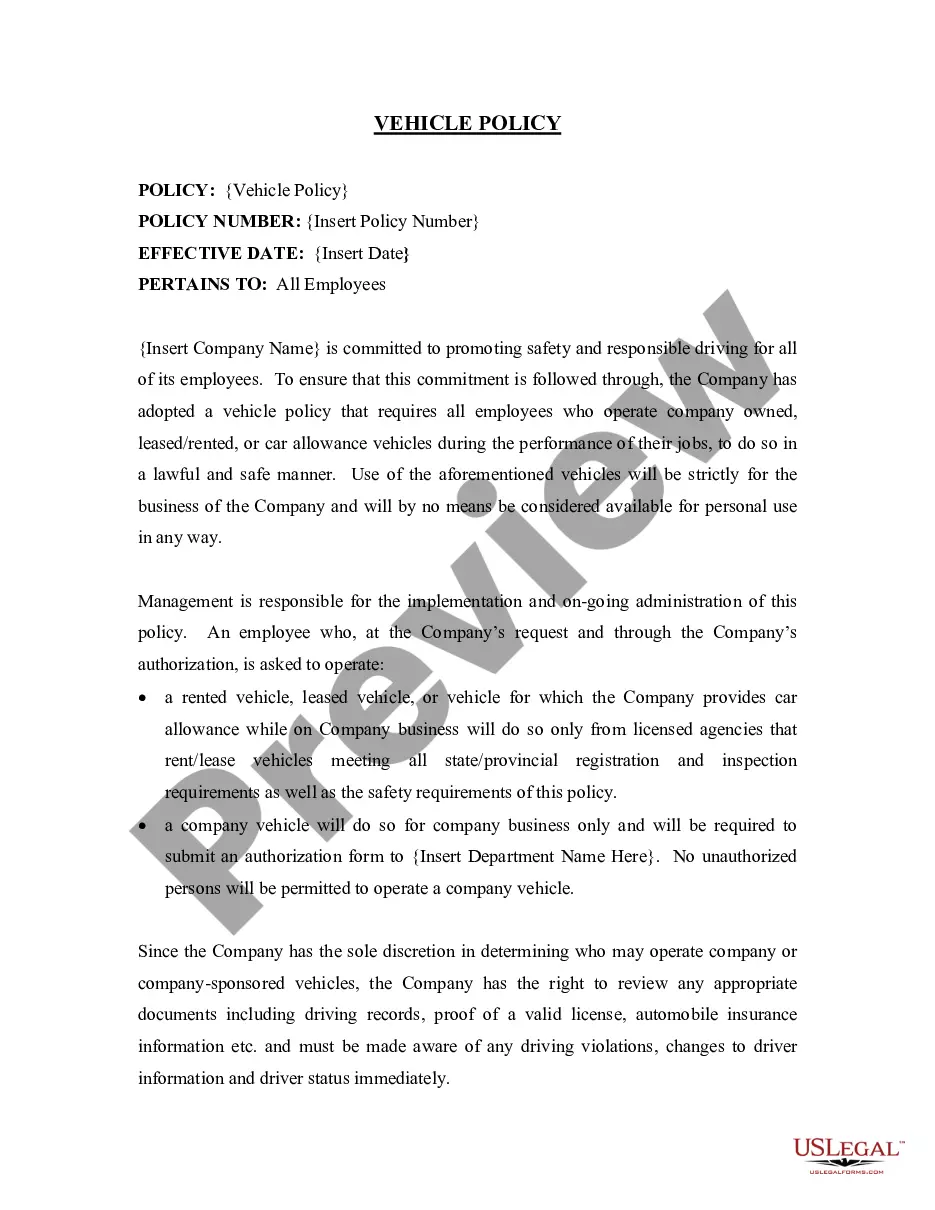
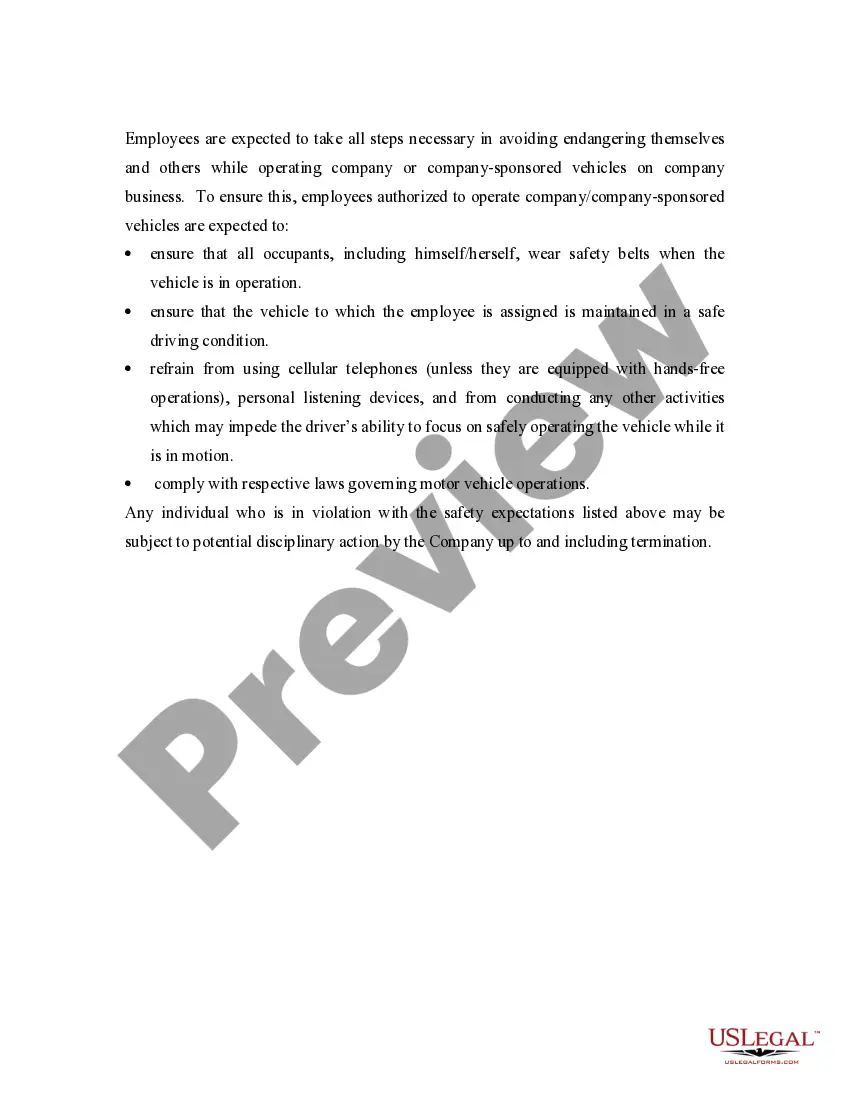
Vehicle Use Policy
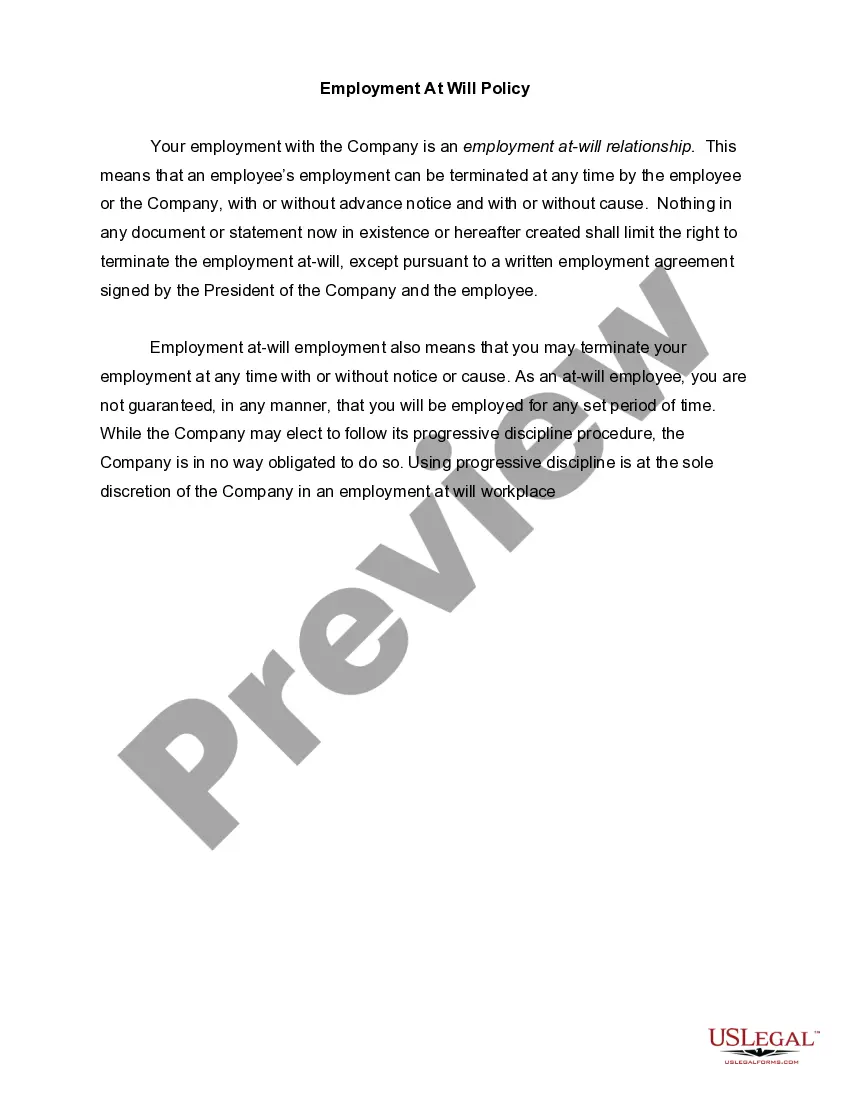
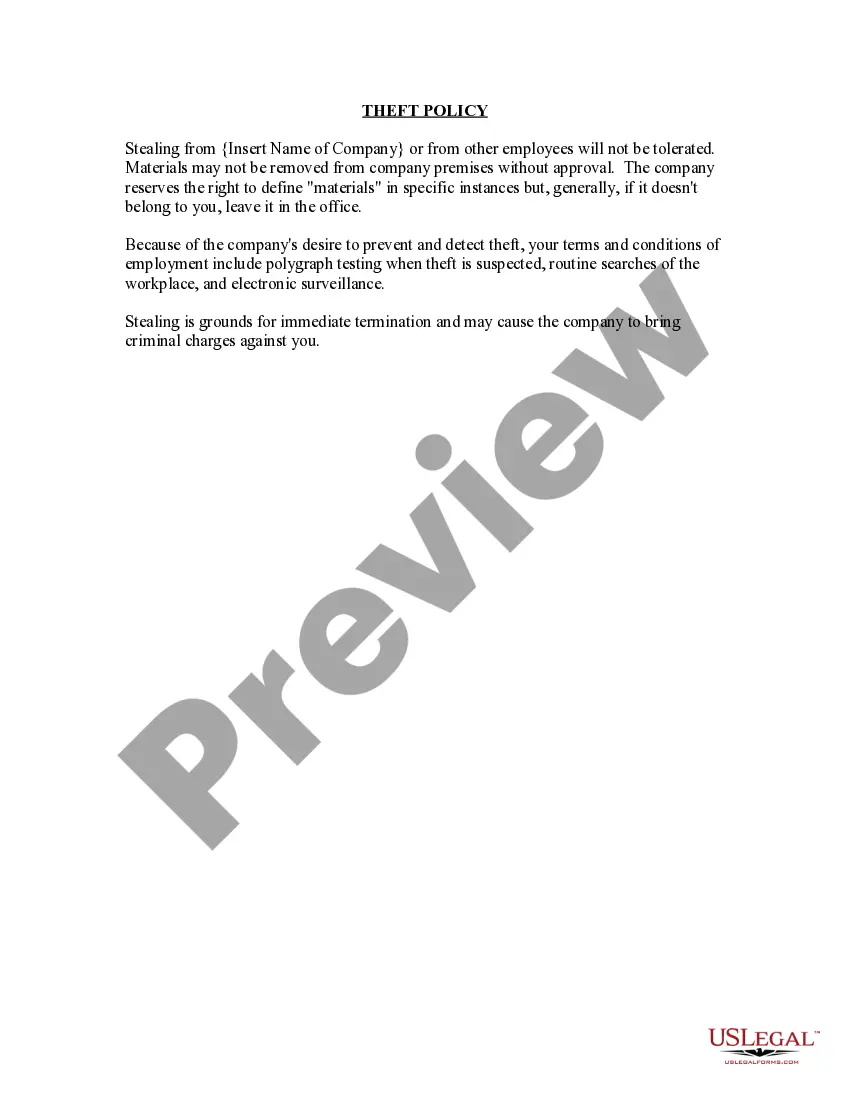
Description
Get your form ready online
Our built-in tools help you complete, sign, share, and store your documents in one place.
Make edits, fill in missing information, and update formatting in US Legal Forms—just like you would in MS Word.
Download a copy, print it, send it by email, or mail it via USPS—whatever works best for your next step.
Sign and collect signatures with our SignNow integration. Send to multiple recipients, set reminders, and more. Go Premium to unlock E-Sign.
If this form requires notarization, complete it online through a secure video call—no need to meet a notary in person or wait for an appointment.
We protect your documents and personal data by following strict security and privacy standards.

Make edits, fill in missing information, and update formatting in US Legal Forms—just like you would in MS Word.

Download a copy, print it, send it by email, or mail it via USPS—whatever works best for your next step.

Sign and collect signatures with our SignNow integration. Send to multiple recipients, set reminders, and more. Go Premium to unlock E-Sign.

If this form requires notarization, complete it online through a secure video call—no need to meet a notary in person or wait for an appointment.

We protect your documents and personal data by following strict security and privacy standards.
Looking for another form?


How to fill out Vehicle Policy?
Regardless of whether for commercial reasons or personal matters, everyone will eventually face legal situations in their lifetime.
Filling out legal documents requires meticulous care, starting from choosing the appropriate form sample.
With an extensive US Legal Forms catalog available, you do not need to waste time searching for the appropriate template online. Take advantage of the library’s straightforward navigation to obtain the right template for any situation.
- Locate the template you require by utilizing the search bar or catalog navigation.
- Review the form’s description to confirm it suits your situation, state, and area.
- Select the form’s preview to examine it.
- If it is the incorrect form, return to the search feature to find the Vehicle Use Policy sample you require.
- Obtain the file once it satisfies your needs.
- If you have a US Legal Forms account, simply click Log in to access previously stored files in My documents.
- If you do not yet have an account, you may acquire the form by clicking Buy now.
- Select the correct pricing option.
- Fill out the account registration form.
- Choose your payment method: you can utilize a credit card or PayPal account.
- Select the document format you desire and download the Vehicle Use Policy.
- Once downloaded, you can fill out the form with the assistance of editing software or print it and complete it by hand.
Form popularity
FAQ
Yes, a company can require employees to use their personal vehicles for work-related purposes, but this must be clearly outlined in the employee vehicle use policy. Companies often reimburse employees for mileage or expenses incurred while using their own vehicles. Having a comprehensive vehicle use policy protects both the employee and the employer during such situations.
An example of a company vehicle use policy may include guidelines for vehicle maintenance, acceptable driving behaviors, and usage limitations. It may also provide instructions for accident reporting and compliance with local traffic laws. Such a policy helps ensure safety and operational efficiency within the company.
The employee vehicle use policy sets forth the expectations for how employees should operate company vehicles during work and personal use. This policy may cover topics such as driver qualifications, vehicle maintenance, and accident reporting procedures. Clear guidelines allow for better management and accountability among employees.
The IRS has specific rules governing the use of company vehicles, particularly regarding personal use. Employees must report personal use as taxable income, which can be calculated using methods like the actual expense method or the deemed benefit approach. A clear vehicle use policy helps employees understand their obligations under IRS regulations.
An example of a policy that a company might use is a comprehensive vehicle use policy that details safety protocols, maintenance schedules, and insurance requirements. This policy can also address the procedures for reporting accidents or vehicle issues. By implementing such a policy, companies can foster safe driving habits among employees while protecting their assets.
A company vehicle policy may specify who is eligible to use company vehicles, maintenance responsibilities, and rules regarding vehicle operation. For instance, it might state that only authorized employees can drive company vehicles and outline consequences for violating the policy. Such guidelines help companies manage their assets and reduce liability.
The company vehicle personal use policy outlines the guidelines for how employees may utilize company vehicles outside of work tasks. It defines acceptable personal use, including limits on mileage and type of activities authorized. Adhering to this policy helps maintain standards and ensures that the vehicle is used responsibly.
Personal use of a company vehicle typically includes activities such as commuting to and from work, running personal errands, or driving to non-work-related appointments. Under the vehicle use policy, employees should report personal mileage separately. This ensures transparency and helps the company manage vehicle-related expenses effectively.
A vehicle qualifies for business use when it is utilized for tasks directly related to work activities. This may include transporting clients, delivering goods, or visiting job sites. A well-structured vehicle use policy outlines these criteria clearly, helping organizations track usage accurately. By defining business use, companies can simplify expense reporting and ensure compliance with tax regulations.
Personal use of a vehicle generally includes activities that are not related to business operations. This can involve errands, commuting to work, or leisure drives. Under a vehicle use policy, it's essential to clarify these distinctions, as they impact insurance and liability considerations. Understanding personal use helps individuals comply with their policies and makes vehicle management easier.