Llc Business Owner For Small
Description
Get your form ready online
Our built-in tools help you complete, sign, share, and store your documents in one place.
Make edits, fill in missing information, and update formatting in US Legal Forms—just like you would in MS Word.
Download a copy, print it, send it by email, or mail it via USPS—whatever works best for your next step.
Sign and collect signatures with our SignNow integration. Send to multiple recipients, set reminders, and more. Go Premium to unlock E-Sign.
If this form requires notarization, complete it online through a secure video call—no need to meet a notary in person or wait for an appointment.
We protect your documents and personal data by following strict security and privacy standards.

Make edits, fill in missing information, and update formatting in US Legal Forms—just like you would in MS Word.

Download a copy, print it, send it by email, or mail it via USPS—whatever works best for your next step.

Sign and collect signatures with our SignNow integration. Send to multiple recipients, set reminders, and more. Go Premium to unlock E-Sign.

If this form requires notarization, complete it online through a secure video call—no need to meet a notary in person or wait for an appointment.

We protect your documents and personal data by following strict security and privacy standards.
Looking for another form?







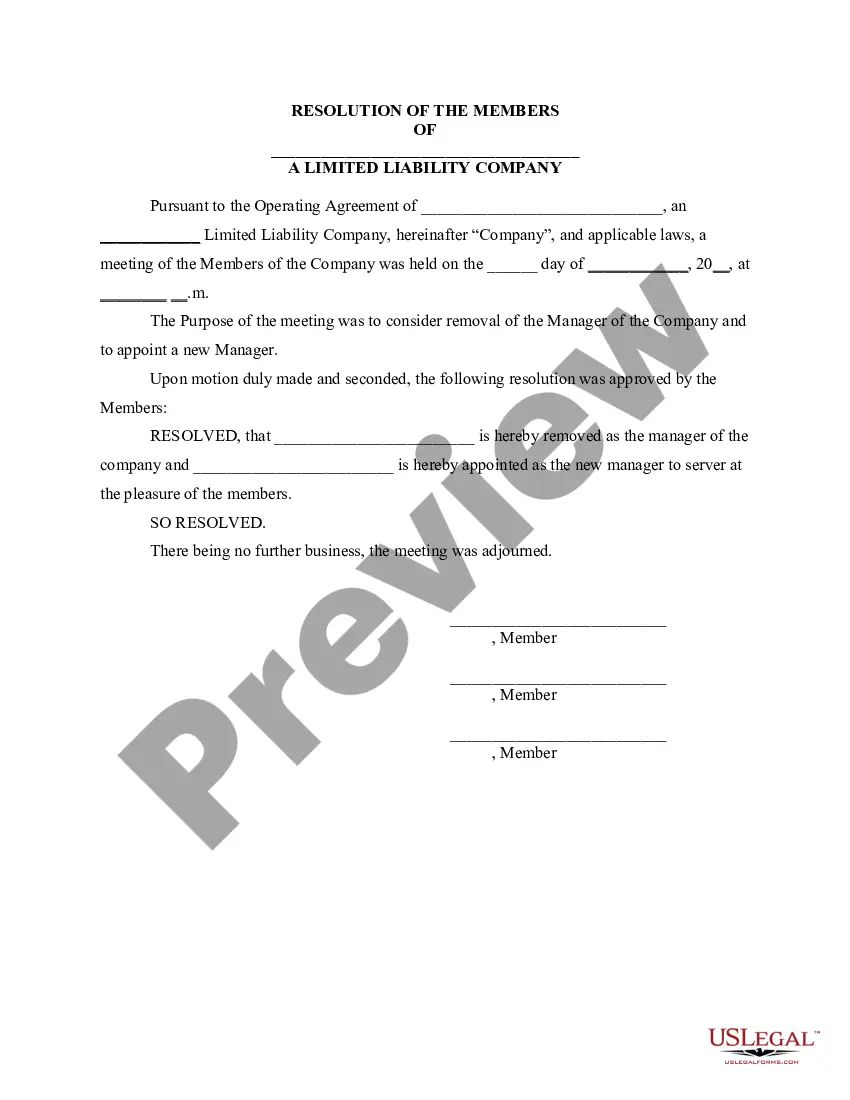
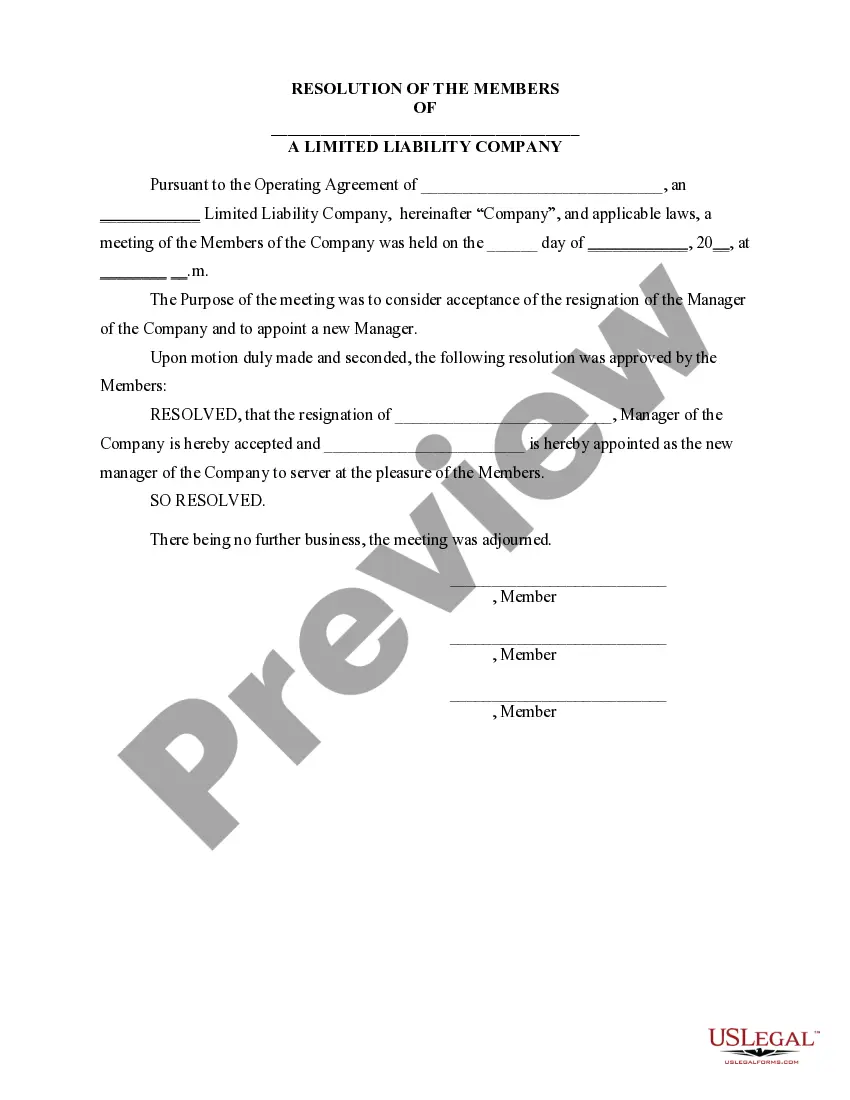
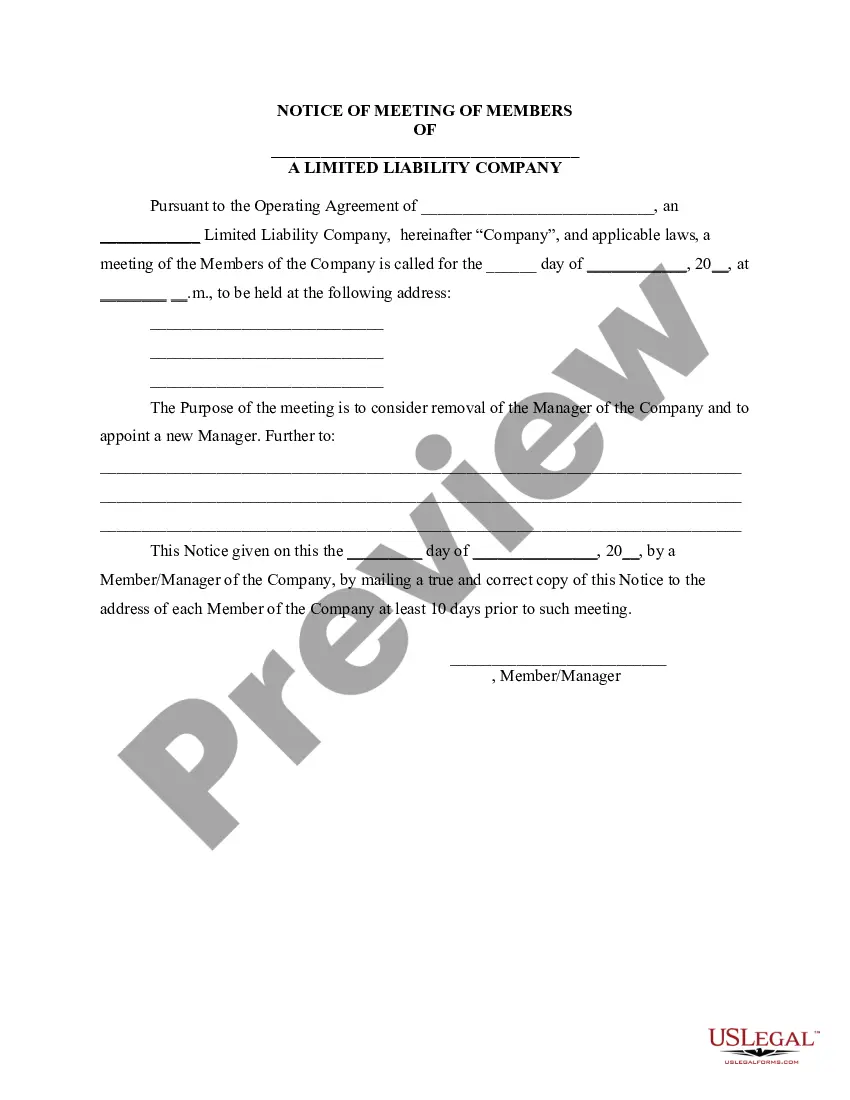
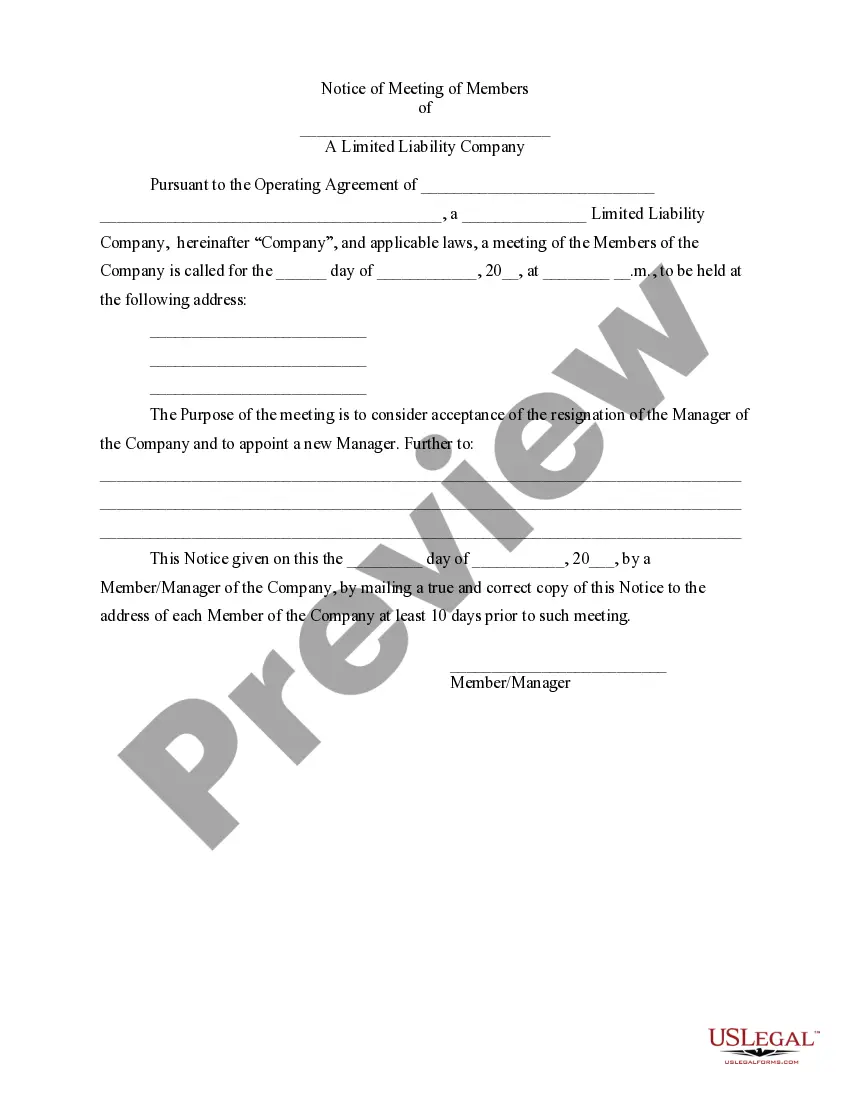
How to fill out Resolution Of Meeting Of LLC Members To Remove The Manager Of The Company And Appoint A New Manager?
It’s clear that you cannot become a legal authority instantly, nor can you discover how to swiftly draft Llc Business Owner For Small without possessing a specialized skill set.
Drafting legal documents is a lengthy endeavor that necessitates a particular education and expertise.
So why not entrust the creation of the Llc Business Owner For Small to the specialists.
- Explore the document you require using the search bar located at the top of the page.
- Examine it (if this option is available) and review the accompanying description to ascertain if Llc Business Owner For Small is what you’re looking for.
- Initiate your search again if you require any additional template.
- Create a free account and select a subscription plan to purchase the form.
- Click Buy now. After payment is processed, you can download the Llc Business Owner For Small, fill it out, print it, and deliver it to the required individuals or organizations.
Form popularity
FAQ
Determining when an LLC is worth it depends largely on your income and business goals. Generally, if you anticipate making a profit above $40,000 per year, it's beneficial to consider forming an LLC. This structure can protect your personal assets and provide tax advantages, making it attractive for an LLC business owner for small operations.
LLCs offer flexibility in how they are taxed, making them appealing to LLC business owners for small enterprises. By default, a single-member LLC is treated as a sole proprietorship while a multi-member LLC is treated as a partnership. This means profits and losses can pass directly to the owners’ personal tax returns, avoiding the double taxation often seen in corporations. Always consider consulting a tax expert to maximize your tax benefits.
Choosing the right type of LLC as an LLC business owner for small businesses depends on your specific needs. A single-member LLC is ideal for solo proprietors, while a multi-member LLC suits partnerships. Consider also the series LLC option if you plan to manage multiple businesses under one entity. Evaluating your business structure is crucial and resources from US Legal Forms can help guide your decision.
As an LLC business owner for small operations, there's no specific threshold for income that triggers the need to file taxes. If your LLC earns revenue, you must report it, regardless of the income level. Similarly, even if your business operates at a loss, you should still file to claim losses and potentially offset other income. Make sure to consult with a tax professional to understand your obligations.
To add your LLC to your personal taxes, first determine if you are a single-member or multi-member LLC. As a single-owner, report your business income and expenses on Schedule C of your Form 1040. If your LLC has multiple members, you will need to file Form 1065 and provide additional information on each member's Schedule K-1. Using platforms like US Legal Forms can help streamline this process since they offer resources tailored for LLC business owners for small ventures.
An LLC business owner for small businesses does not necessarily have to file a separate tax return. Single-member LLCs report income on their owner's personal tax return using Schedule C. However, multi-member LLCs must file Form 1065, which serves as the partnership tax return. Understanding these requirements is essential to avoid tax complications.
As an LLC business owner for small enterprises, you must report your business income on your personal tax return if you are a single-member LLC. This means you will typically use Schedule C to report your earnings and expenses. If your LLC has multiple members, you will need to file Form 1065, and each member will report their share of profits or losses on their personal returns. Consider using US Legal Forms to simplify your tax filing process and ensure compliance.
Filling out a W9 for an LLC single member is straightforward. As an LLC business owner for small, you will indicate your business name on the first line and select 'Individual/sole proprietor or single-member LLC' on the form. Provide your taxpayer identification number, which is typically your Social Security number or EIN. This ensures proper tax classification and helps you receive payments correctly.
An LLC, or Limited Liability Company, provides a simple structure for small business owners. It protects your personal assets from business liabilities, which is essential for any LLC business owner for small. Additionally, an LLC allows for flexible tax treatment, letting you choose how to file taxes. By forming an LLC, you can present your business professionally and attract clients with confidence.
A 1 person LLC is often referred to as a single-member LLC. This structure allows an individual to operate a business while enjoying the benefits of limited liability protection. As a small business owner, having a single-member LLC means simpler tax reporting and management. If you're thinking of setting one up, consider using USLegalForms for guidance on the process.