Work Policy Format For Safety
Description
Get your form ready online
Our built-in tools help you complete, sign, share, and store your documents in one place.
Make edits, fill in missing information, and update formatting in US Legal Forms—just like you would in MS Word.
Download a copy, print it, send it by email, or mail it via USPS—whatever works best for your next step.
Sign and collect signatures with our SignNow integration. Send to multiple recipients, set reminders, and more. Go Premium to unlock E-Sign.
If this form requires notarization, complete it online through a secure video call—no need to meet a notary in person or wait for an appointment.
We protect your documents and personal data by following strict security and privacy standards.

Make edits, fill in missing information, and update formatting in US Legal Forms—just like you would in MS Word.

Download a copy, print it, send it by email, or mail it via USPS—whatever works best for your next step.

Sign and collect signatures with our SignNow integration. Send to multiple recipients, set reminders, and more. Go Premium to unlock E-Sign.

If this form requires notarization, complete it online through a secure video call—no need to meet a notary in person or wait for an appointment.

We protect your documents and personal data by following strict security and privacy standards.
Looking for another form?








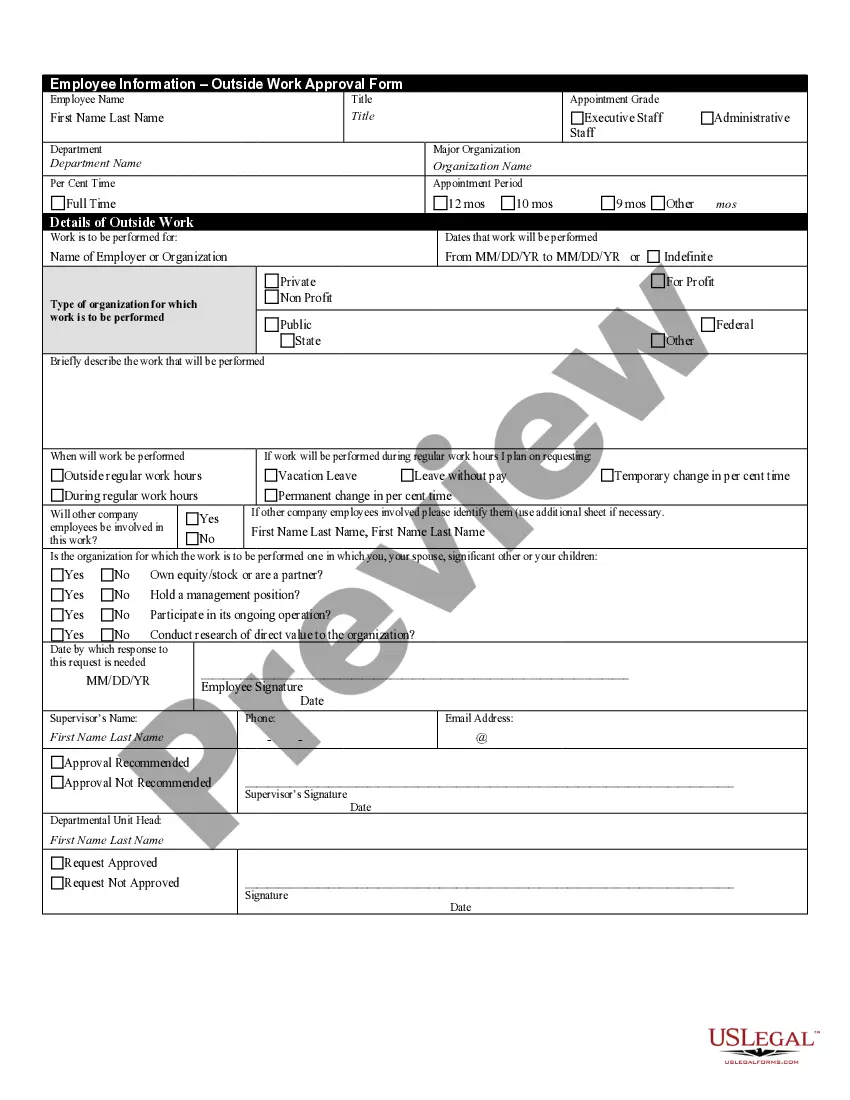
How to fill out Outside Work - Strict Policy?
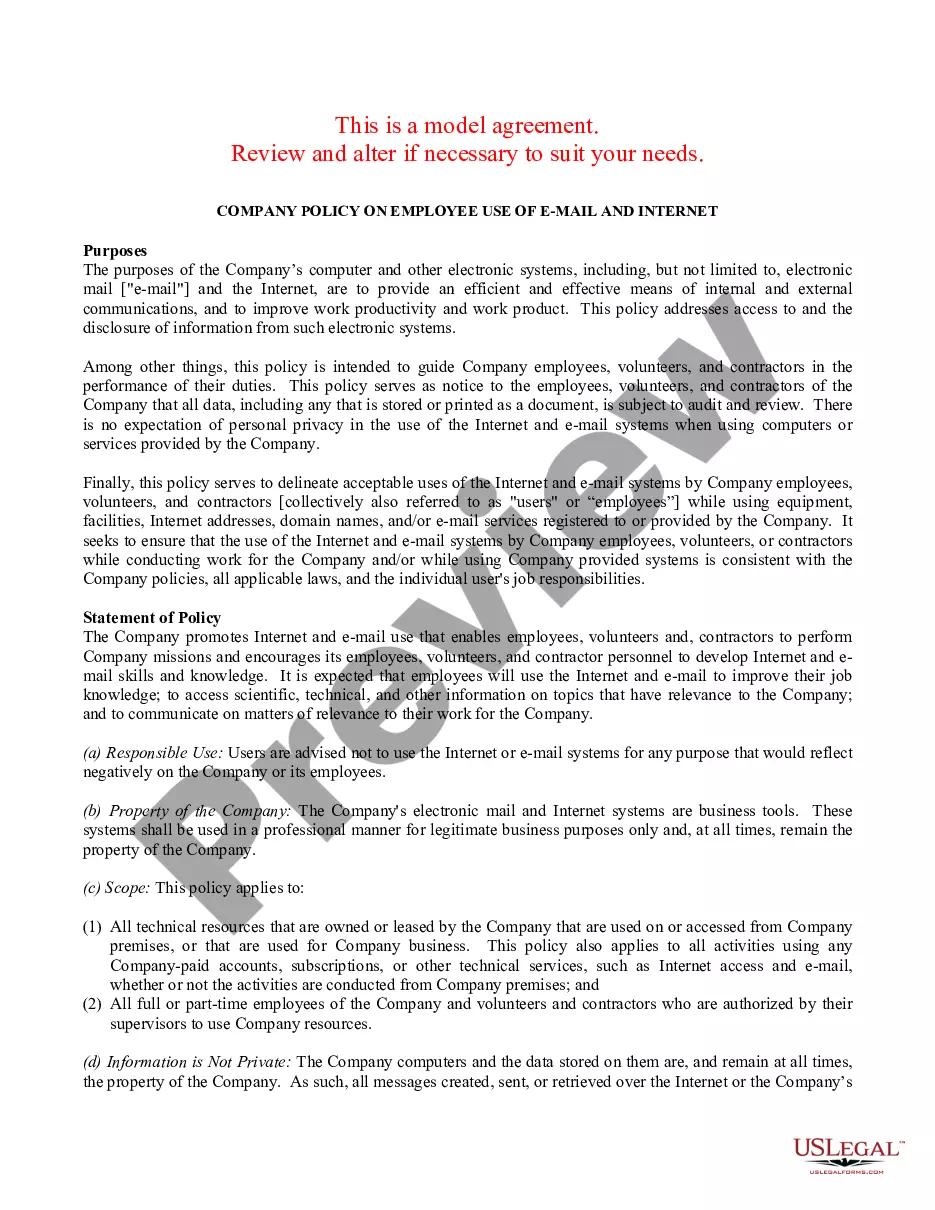
The Work Policy Template For Safety you view on this page is a reusable legal format created by expert attorneys in accordance with federal and state statutes and regulations.
For over 25 years, US Legal Forms has offered individuals, groups, and legal experts more than 85,000 verified, state-specific documents for any business and personal situation. It’s the fastest, easiest, and most reliable method to acquire the forms you need, as the service ensures bank-level data privacy and anti-malware safeguards.
Redownload your documents whenever necessary. Open the My documents section in your account to retrieve any previously downloaded forms. Sign up for US Legal Forms to have authenticated legal templates available for all of life’s situations.
- Search for the document you need and review it.
- Browse through the file you looked for and preview it or examine the form description to confirm it meets your needs. If it doesn’t, use the search bar to find the right one. Click Buy Now when you have found the template you require.
- Choose a pricing plan that fits you and register for an account. Use PayPal or a credit card to make a quick payment. If you already possess an account, Log In and check your subscription to continue.
- Select the format you prefer for your Work Policy Template For Safety (PDF, Word, RTF) and download the example onto your device.
- Print the template to fill it out by hand. Alternatively, use an online multifunctional PDF editor to quickly and accurately complete and sign your form with a legally binding electronic signature.
Form popularity
FAQ
A safety policy statement might read, 'Our company is committed to providing a safe work environment for all employees. We will regularly assess risks, provide necessary training, and promote a culture of safety.' This statement serves as a clear declaration of intent and sets the tone for the safety culture within the organization. To create an effective work policy format for safety, consider using examples and templates available through US Legal Forms, which can help you articulate your safety commitment clearly.
When drafting a safety policy, start by identifying potential hazards and the specific measures to mitigate them. Clearly define roles and responsibilities for employees and management, and include procedures for training and incident reporting. A comprehensive work policy format for safety should also incorporate methods for regular review and updates. Platforms like US Legal Forms provide templates that guide you step-by-step in creating an effective safety policy tailored to your organization’s needs.
To comply with regulations, a safety policy must address specific hazards in the workplace, outline employee responsibilities, and provide guidance on procedures for reporting incidents. Employers should ensure that the policy is accessible to all staff and regularly updated to reflect any changes in laws or procedures. A well-structured work policy format for safety not only meets legal standards but also fosters a culture of safety within the organization. Utilizing platforms like US Legal Forms can simplify the process of creating a compliant safety policy.
To make a safety policy, start by assessing your workplace for potential hazards and risks. Next, use a clear work policy format for safety to outline safety procedures, employee responsibilities, and reporting processes. It’s essential to review and update the policy regularly to reflect changes in regulations or workplace conditions. Utilizing resources like USLegalForms can help you draft a comprehensive and effective safety policy tailored to your organization.
The 4 C's of safety are communication, collaboration, commitment, and compliance. These elements work together to create a comprehensive safety culture in the workplace. By focusing on these C's within a work policy format for safety, organizations can effectively manage risks and encourage employee engagement in safety practices. This proactive approach leads to a safer and more productive work environment.
Yes, employers are generally required to provide a written safety policy. This document serves as a formal agreement that outlines safety expectations and procedures. By implementing a work policy format for safety, employers not only comply with regulations but also enhance workplace safety. A well-documented policy helps reduce risks and establishes a foundation for ongoing safety training.
Creating a safety policy involves several key steps. First, identify the specific hazards relevant to your workplace. Then, draft the policy using a work policy format for safety that clearly outlines safety measures, responsibilities, and procedures. Finally, communicate the policy to all employees and provide training to ensure everyone understands their roles in maintaining a safe environment.
A safety policy outlines the standards and procedures that promote a safe work environment. For instance, a workplace may have a policy that mandates the use of personal protective equipment in certain areas. By following a work policy format for safety, employees understand their responsibilities and the importance of adhering to safety protocols. This clarity helps prevent accidents and fosters a culture of safety.
