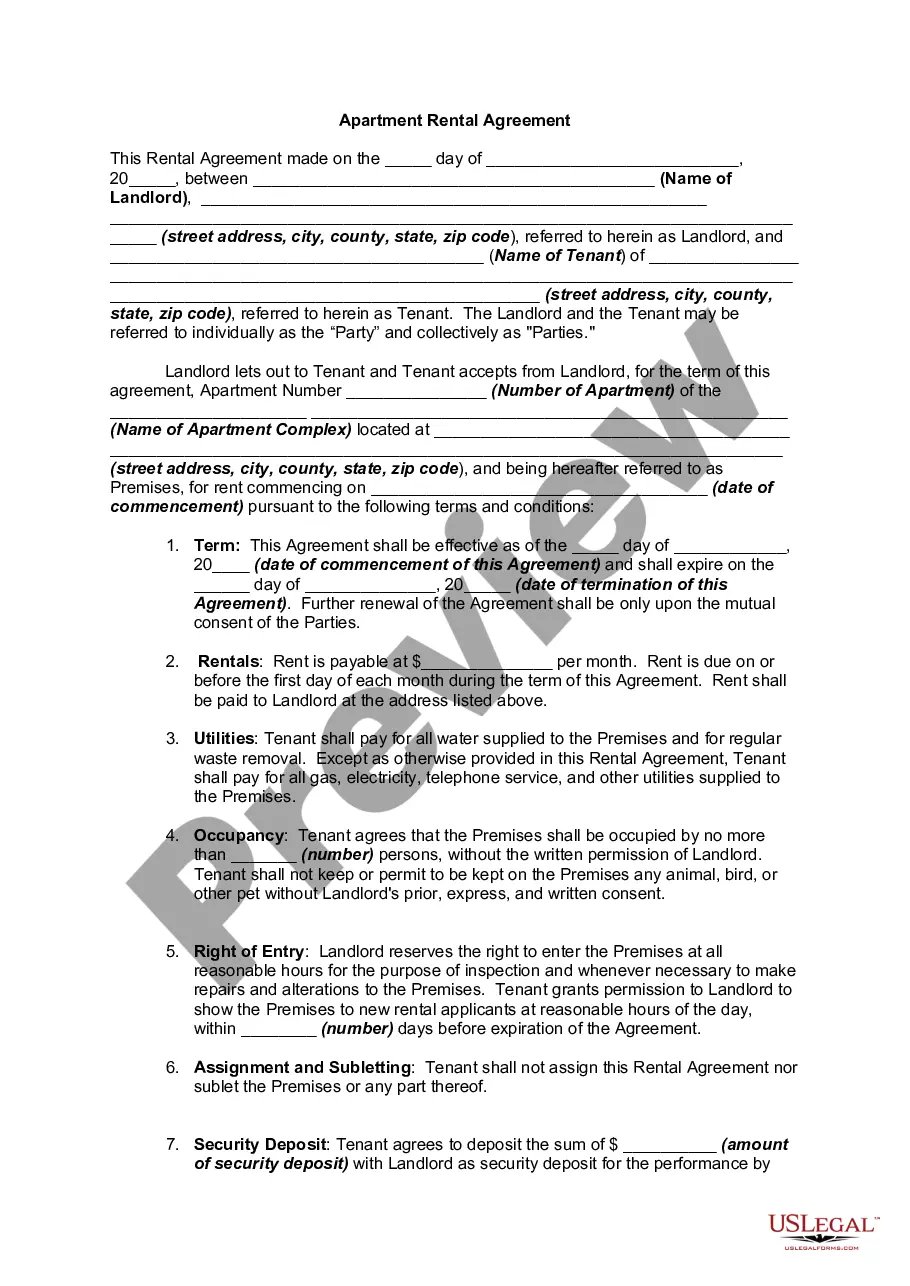
Licensing Agreement For Intellectual Property
Description
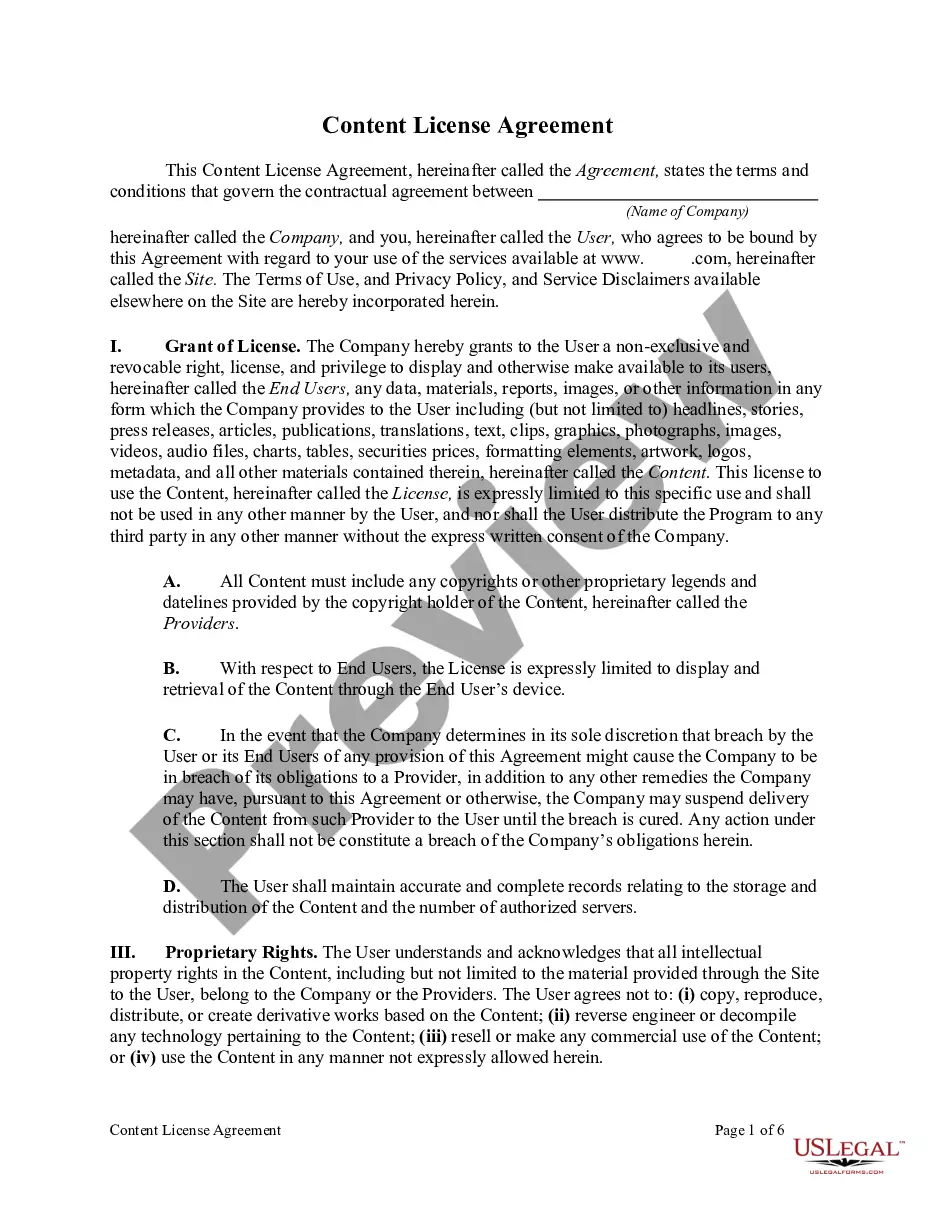
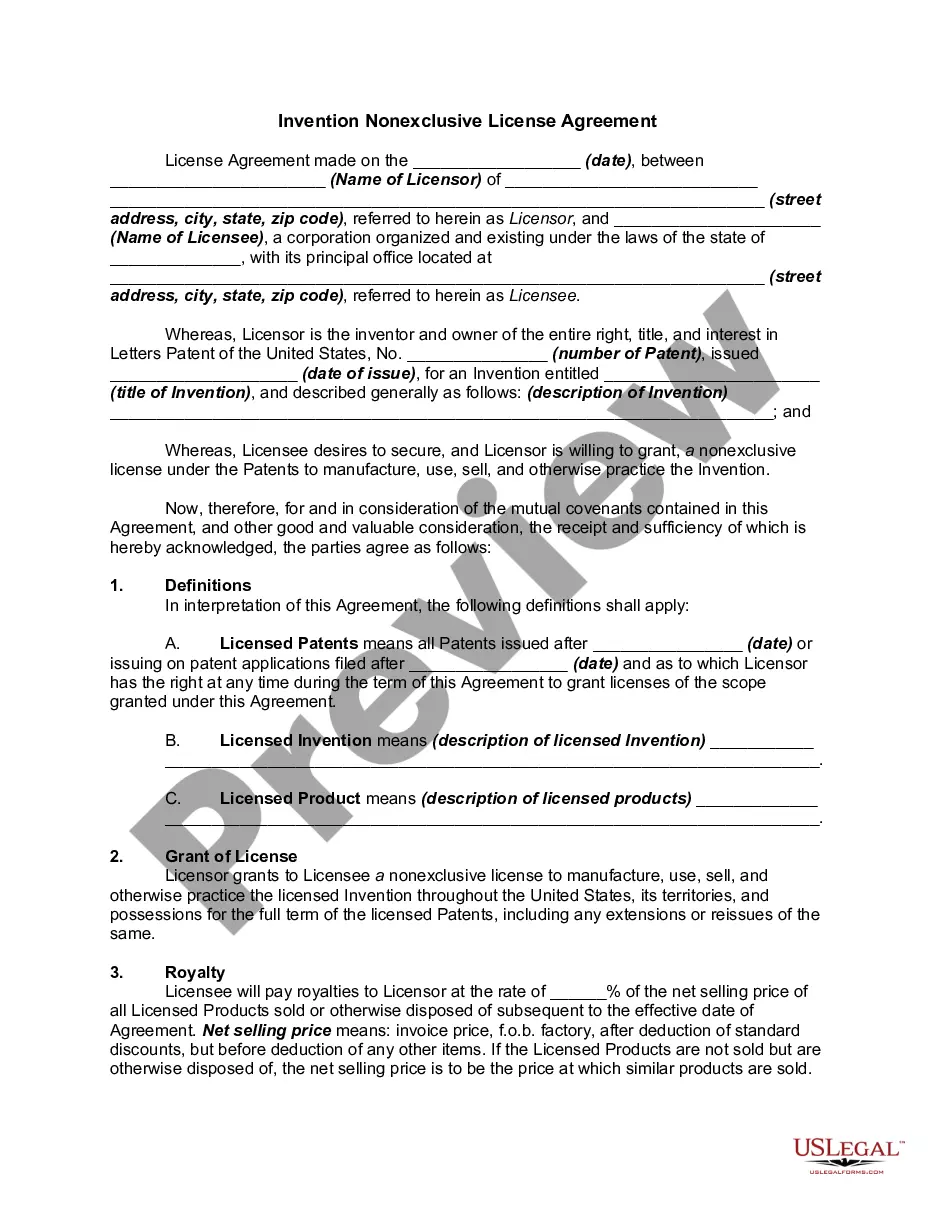
Get your form ready online
Our built-in tools help you complete, sign, share, and store your documents in one place.
Make edits, fill in missing information, and update formatting in US Legal Forms—just like you would in MS Word.
Download a copy, print it, send it by email, or mail it via USPS—whatever works best for your next step.
Sign and collect signatures with our SignNow integration. Send to multiple recipients, set reminders, and more. Go Premium to unlock E-Sign.
If this form requires notarization, complete it online through a secure video call—no need to meet a notary in person or wait for an appointment.
We protect your documents and personal data by following strict security and privacy standards.

Make edits, fill in missing information, and update formatting in US Legal Forms—just like you would in MS Word.

Download a copy, print it, send it by email, or mail it via USPS—whatever works best for your next step.

Sign and collect signatures with our SignNow integration. Send to multiple recipients, set reminders, and more. Go Premium to unlock E-Sign.

If this form requires notarization, complete it online through a secure video call—no need to meet a notary in person or wait for an appointment.

We protect your documents and personal data by following strict security and privacy standards.
Looking for another form?








How to fill out Nonexclusive Content Licensing Agreement?
Individuals often link legal documentation with something intricate that requires a professional's attention.
In a way, this is accurate, as formulating a Licensing Agreement For Intellectual Property demands significant knowledge of subject matters, including state and municipal laws.
Nevertheless, with the US Legal Forms, the process has become simpler: a collection of ready-to-use legal templates tailored to state legislation is consolidated in a single online repository and is now accessible to all.
Print your document or import it to an online editor for quicker completion. All templates in our library are reusable: once purchased, they remain saved in your profile. You can access them whenever necessary via the My documents tab. Discover all the benefits of utilizing the US Legal Forms platform. Subscribe now!
- US Legal Forms offers over 85,000 current documents categorized by state and purpose, making the search for a Licensing Agreement For Intellectual Property or any other specific template quick and easy.
- Existing users with a valid subscription should sign in to their account and click Download to obtain the form.
- New users must first create an account and subscribe before downloading any files.
- Follow these instructions to obtain the Licensing Agreement For Intellectual Property.
- Review the page content carefully to confirm it fits your requirements.
- Examine the form description or view it using the Preview option.
- Search for another template using the Search field above if the selected one does not meet your needs.
- Click Buy Now once you find the appropriate Licensing Agreement For Intellectual Property.
- Select a pricing plan that aligns with your needs and financial situation.
- Create an account or Log In to access the payment page.
- Complete the payment for your subscription using PayPal or a credit card.
- Choose the format for your template and click Download.
Form popularity
FAQ
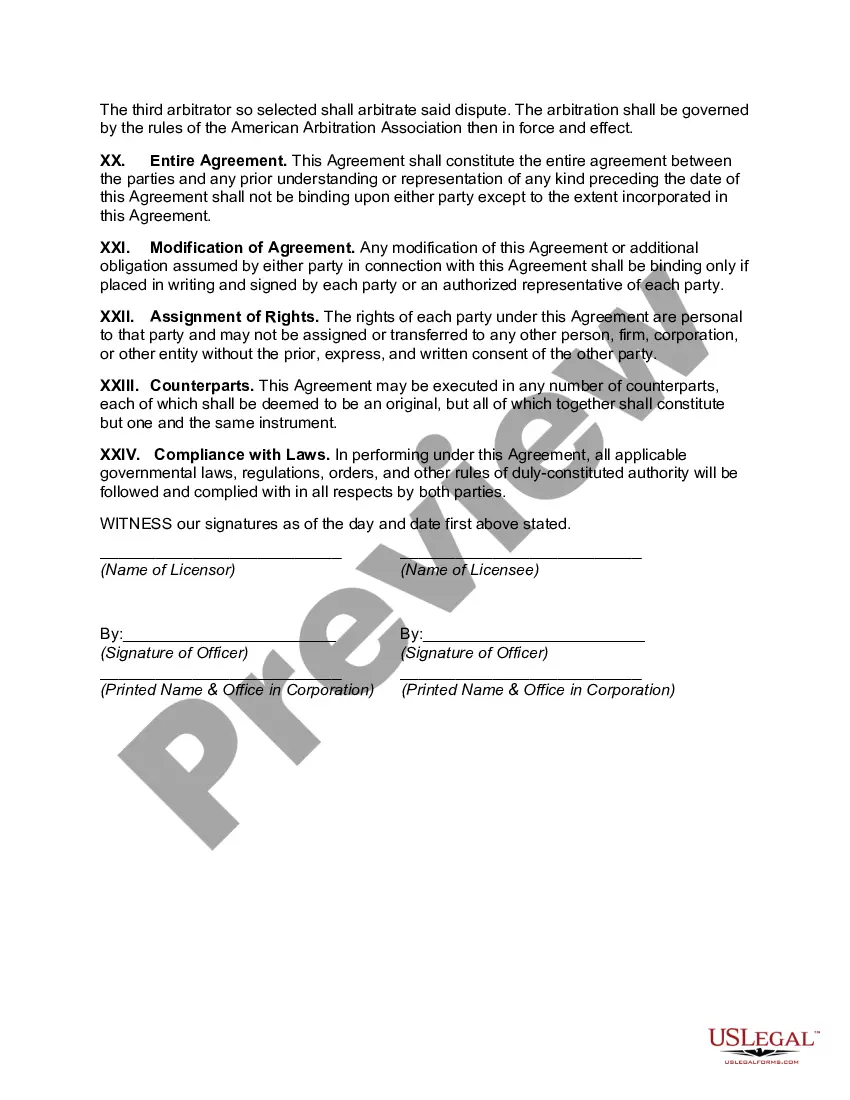
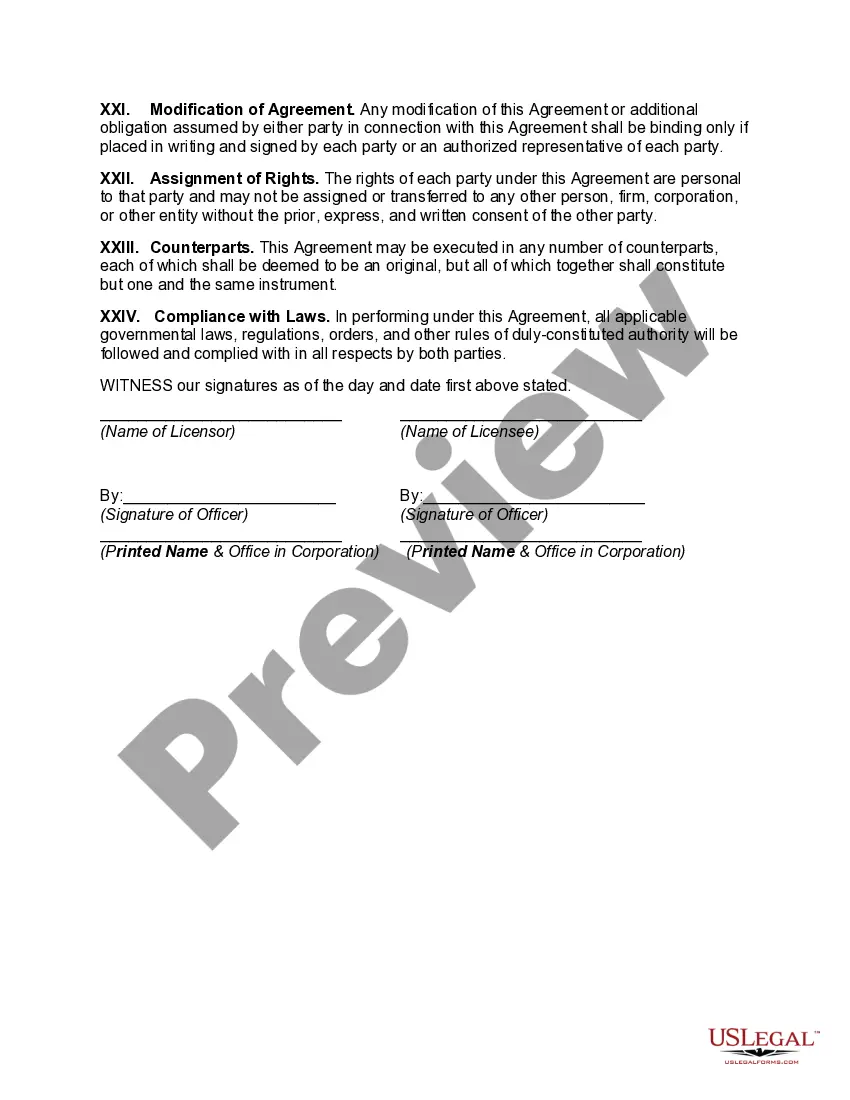
The steps for making a license agreement are as follows:Download a template for a licensing agreement.Choose your role as the licensor or licensee.Define the license(s) in the agreement.Decide whether the license is exclusive or not.Settle the matter of fees and payment schedule.Add a renewal date and rules.More items...?
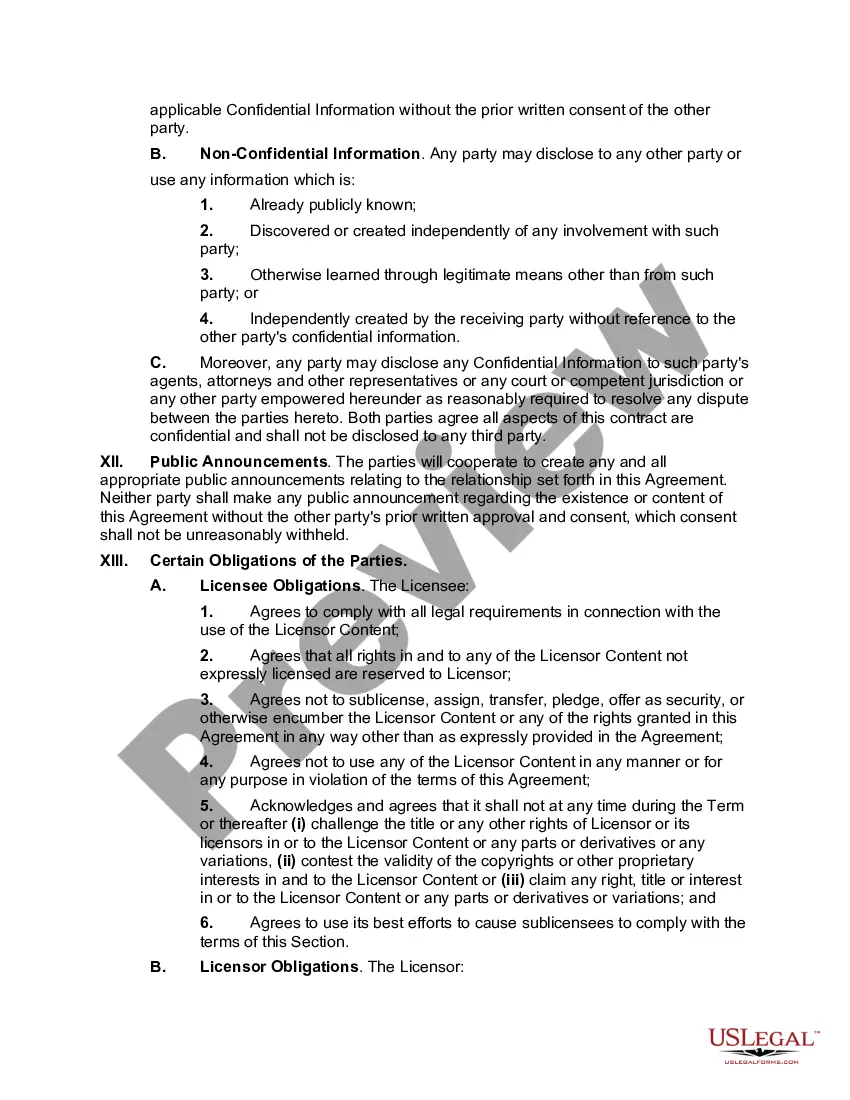
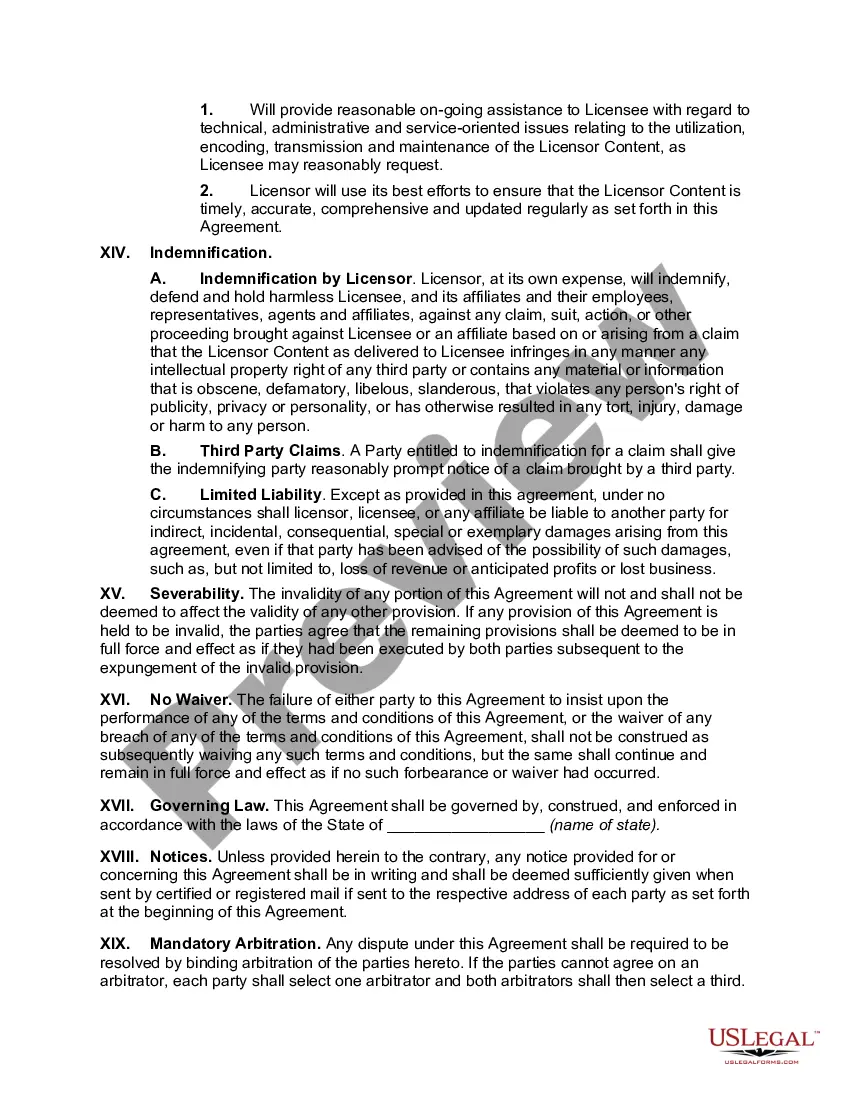
Under an intellectual property licensing agreement (also known as an intellectual property license or an intellectual property license agreement), you retain ownership of your patent, copyright, or trademark, but you give another party permission to use some or all of your intellectual property rights for a specific
How to decide between types of licensing agreementsPatent Licensing. Patents cover science and innovation.Trademark Licensing. Trademarks are signifiers of commercial source, namely, brand names and logos or slogans.Copyright Licensing.Trade Secret Licensing.Exclusive.Non-exclusive.Sole.Perpetual.More items...?
Examples of Licensing AgreementsThe software company may require you to sign a licensing agreement in order to use its software. Another example is when franchises have licensing agreements with the headquarters of a restaurant. The licensing allows the franchisee to use the company's branding and marketing materials.
An IP license in its simplest form is an agreement where an IP owner (the Licensor) permits another person (the Licensee) to engage in activities that, in the absence of the IP License Agreement, would infringe the Licensor's legal rights attaching to the IP.