Landlord Containing Repair Without Permission
Description

Get your form ready online
Our built-in tools help you complete, sign, share, and store your documents in one place.
Make edits, fill in missing information, and update formatting in US Legal Forms—just like you would in MS Word.
Download a copy, print it, send it by email, or mail it via USPS—whatever works best for your next step.
Sign and collect signatures with our SignNow integration. Send to multiple recipients, set reminders, and more. Go Premium to unlock E-Sign.
If this form requires notarization, complete it online through a secure video call—no need to meet a notary in person or wait for an appointment.
We protect your documents and personal data by following strict security and privacy standards.

Make edits, fill in missing information, and update formatting in US Legal Forms—just like you would in MS Word.

Download a copy, print it, send it by email, or mail it via USPS—whatever works best for your next step.

Sign and collect signatures with our SignNow integration. Send to multiple recipients, set reminders, and more. Go Premium to unlock E-Sign.

If this form requires notarization, complete it online through a secure video call—no need to meet a notary in person or wait for an appointment.

We protect your documents and personal data by following strict security and privacy standards.
Looking for another form?


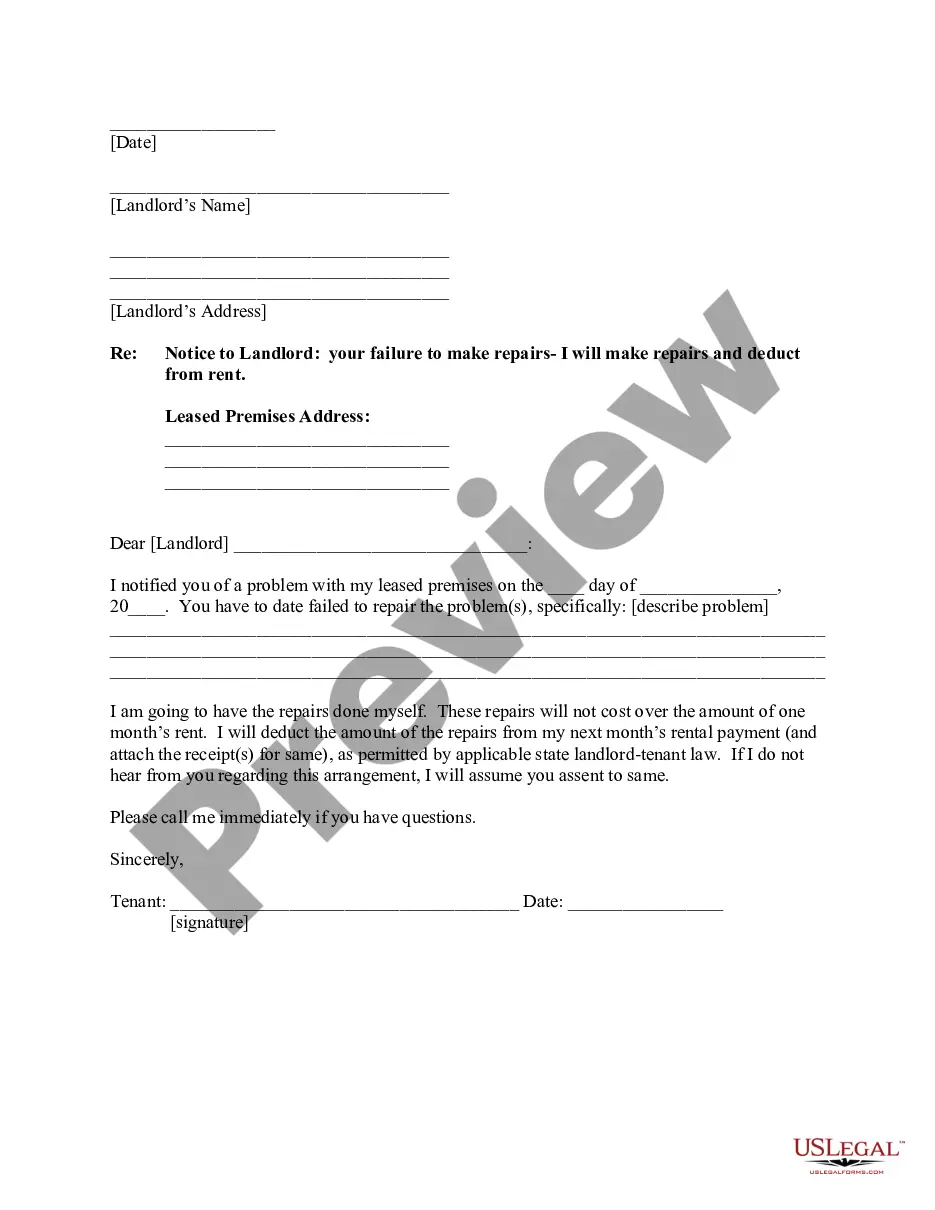
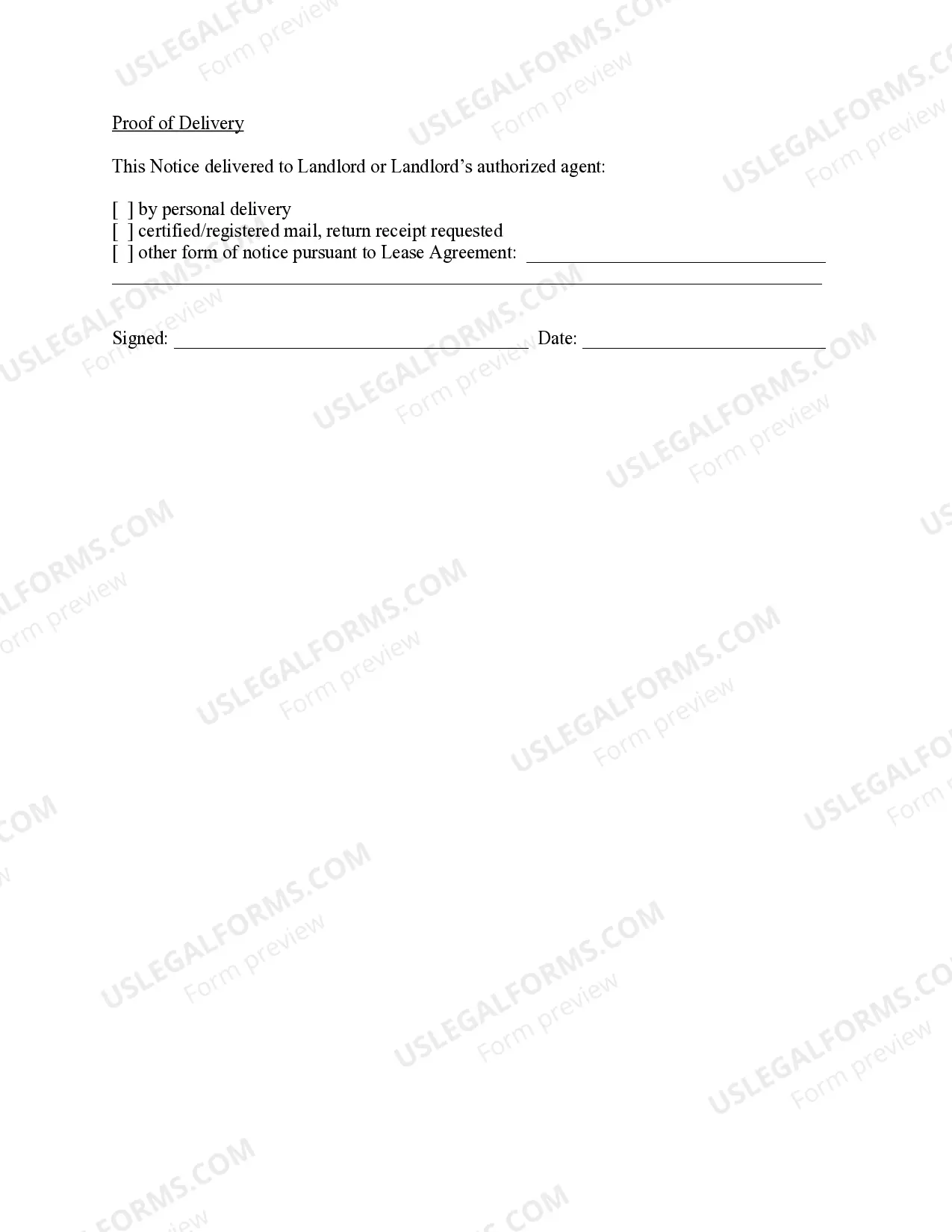
How to fill out Letter From Tenant To Landlord Containing Notice Of Use Of Repair And Deduct Remedy?
Whether for commercial reasons or for individual affairs, everyone must deal with legal circumstances at some moment in their life.
Filling out legal documents requires meticulous attention, starting from selecting the appropriate form template.
With an extensive US Legal Forms collection available, you do not need to waste time searching for the appropriate template online. Utilize the library’s straightforward navigation to find the suitable form for any situation.
- Obtain the example you need by utilizing the search bar or catalog browsing.
- Review the form’s details to confirm it aligns with your situation, state, and county.
- Click on the form’s preview to inspect it.
- If it is the incorrect document, return to the search feature to find the Landlord Containing Repair Without Permission template you need.
- Acquire the file if it aligns with your requirements.
- If you have an existing US Legal Forms account, click Log in to access previously stored documents in My documents.
- In case you don’t possess an account yet, you can obtain the form by selecting Buy now.
- Choose the correct pricing option.
- Fill out the account registration form.
- Choose your payment method: you may use a credit card or PayPal account.
- Select the document format you prefer and download the Landlord Containing Repair Without Permission.
- Once downloaded, you can fill out the form using editing software or print it and complete it by hand.
Form popularity
FAQ
In Iowa, tenants can withhold rent when the landlord does not address significant repairs that affect the safety or habitability of the rental unit. This includes issues like plumbing failures or heating problems. Before withholding rent, tenants should provide written notice to the landlord about the required repairs, allowing a reasonable time to address them. For guidance on how to proceed legally, check resources like US Legal Forms to ensure you are fully informed about your rights.
You can withhold rent for repairs when your landlord fails to fix serious issues that impact your living conditions. For instance, if your landlord neglects necessary repairs that affect your health or safety, you may have grounds to withhold rent. However, it's crucial to notify your landlord in writing about the needed repairs before taking this step. Always consult your local laws and consider using platforms like US Legal Forms to understand your rights and obligations.
When your landlord does not fix things in your rental unit, start by sending a formal request for repairs in writing. Make sure to include details about the problems and a reasonable deadline for completion. If the landlord ignores your request, you may need to explore options through uslegalforms, which offers valuable resources to help tenants understand their rights and take further action against landlords containing repair without permission.
If your landlord refuses to make necessary repairs, first document the issues clearly. Take photos and keep records of all communications. You can notify your landlord in writing, outlining the repairs needed and referring to your rights as a tenant. If the landlord still does not respond, consider using legal resources like uslegalforms, where you can find templates and guidance to address situations involving landlords containing repair without permission.
In California, renters have the right to live in a safe and habitable environment. If a landlord neglects necessary repairs, tenants can request these repairs in writing. However, if the landlord fails to act, renters may have the option to make repairs themselves, but this generally requires permission from the landlord. Understanding the implications of a landlord containing repair without permission is crucial, as it can lead to disputes. For more guidance on navigating these situations, consider visiting USLegalForms, where you can find resources to better protect your rights.
In California, a landlord generally has a reasonable time to fix something, which can range from a few days to a couple of weeks, depending on the nature of the repair. Urgent repairs should be prioritized and addressed within 24 hours. If your landlord fails to act within a reasonable time, you might want to consider your legal options to ensure your rights are protected.
You can sue your landlord for repairs if they fail to address issues that affect your living conditions. This can include situations where the landlord containing repair without permission has neglected their responsibilities. Gathering evidence and understanding your rights as a tenant will be crucial in pursuing any legal action.
The amount you can sue a landlord for emotional distress varies based on the circumstances of your case. Generally, you must show that the landlord's actions caused you significant distress, which can be challenging to prove. Consulting with a legal professional can help you assess your situation and determine a reasonable amount to seek.
If your landlord isn't doing repairs, start by documenting your requests and any communication. Follow up with a formal written request if necessary. If they still do not respond, you might consider contacting a local tenant's rights organization or seeking legal assistance to address the situation effectively.
A reasonable time frame for a landlord to make repairs often depends on the severity of the issue. For urgent repairs, such as plumbing problems or heating failures, action should typically be taken within 24 hours. For less urgent issues, a week or two may be reasonable, but if your landlord is delaying repairs without a valid reason, you may need to explore your legal options.