Examples Of Derivative Claims
Description
Get your form ready online
Our built-in tools help you complete, sign, share, and store your documents in one place.
Make edits, fill in missing information, and update formatting in US Legal Forms—just like you would in MS Word.
Download a copy, print it, send it by email, or mail it via USPS—whatever works best for your next step.
Sign and collect signatures with our SignNow integration. Send to multiple recipients, set reminders, and more. Go Premium to unlock E-Sign.
If this form requires notarization, complete it online through a secure video call—no need to meet a notary in person or wait for an appointment.
We protect your documents and personal data by following strict security and privacy standards.

Make edits, fill in missing information, and update formatting in US Legal Forms—just like you would in MS Word.

Download a copy, print it, send it by email, or mail it via USPS—whatever works best for your next step.

Sign and collect signatures with our SignNow integration. Send to multiple recipients, set reminders, and more. Go Premium to unlock E-Sign.

If this form requires notarization, complete it online through a secure video call—no need to meet a notary in person or wait for an appointment.

We protect your documents and personal data by following strict security and privacy standards.
Looking for another form?





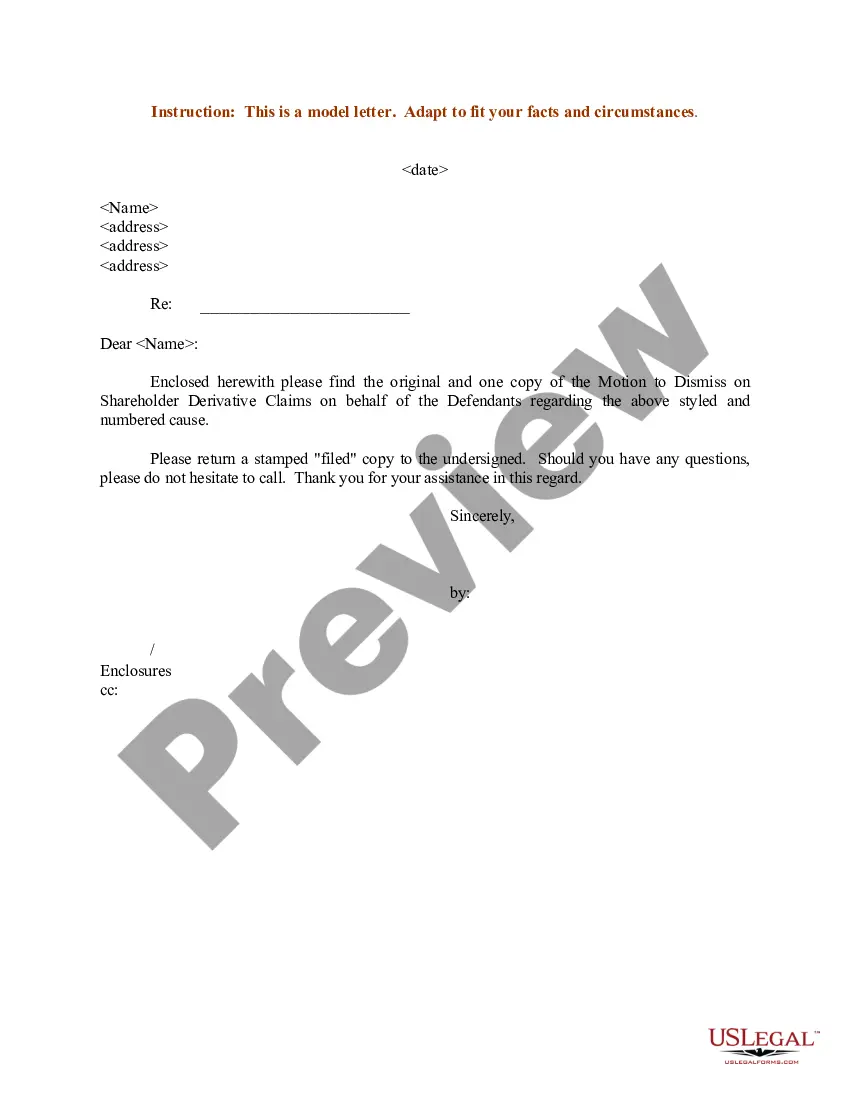
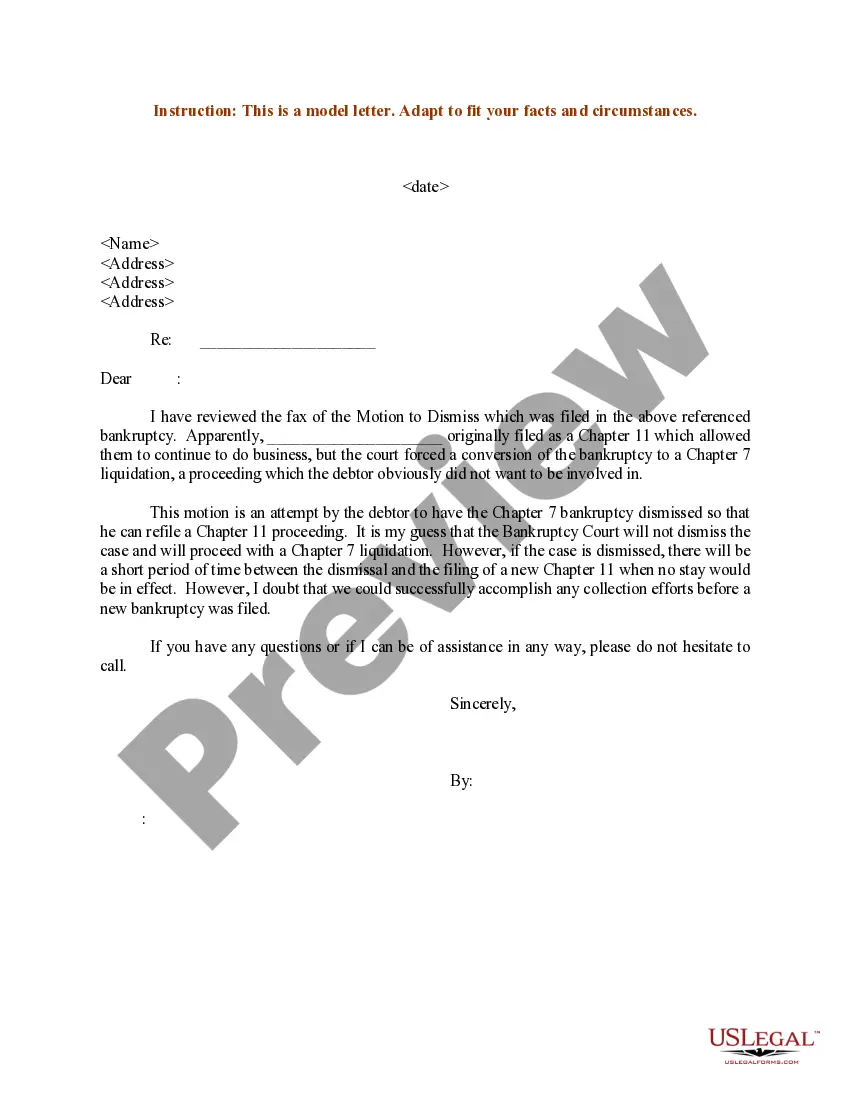
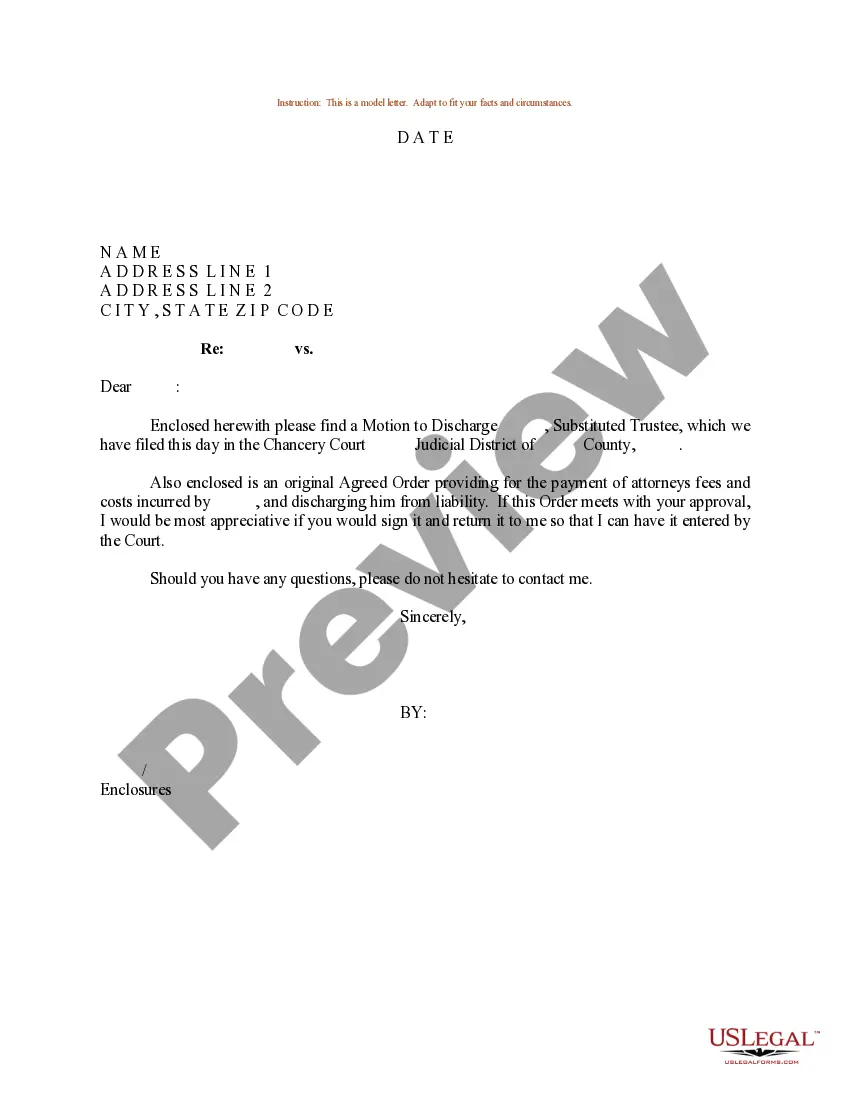
How to fill out Sample Letter Regarding Motion To Dismiss On Shareholder Derivative Claims?
Utilizing legal templates that adhere to federal and state regulations is essential, and the internet provides countless alternatives to choose from.
However, what's the purpose of spending time searching for the appropriate Examples Of Derivative Claims sample online when the US Legal Forms online collection already compiles such templates in one location.
US Legal Forms is the premier online legal repository with over 85,000 editable templates created by attorneys for any business and personal situation.
Review the template using the Preview feature or through the text description to ensure it satisfies your needs.
- They are simple to navigate with all documents categorized by state and intended use.
- Our experts stay updated with legal changes, so you can always be assured your form is current and compliant when obtaining an Examples Of Derivative Claims from our site.
- Acquiring an Examples Of Derivative Claims is fast and straightforward for both existing and new users.
- If you already possess an account with an active subscription, Log In and save the document sample you need in the correct format.
- If you are new to our site, follow the steps outlined below.
Form popularity
FAQ
The remedy for a derivative claim often involves the corporation receiving compensation or restitution from the wrongdoers. This can include recovering damages from individuals who mismanaged the company or breached their duties. In some cases, the court may order changes in management or corporate governance as part of the remedy. Familiarity with the potential outcomes can help you navigate through examples of derivative claims effectively.
To successfully file a derivative claim, certain requirements must be met. First, the claimant must be a current shareholder of the corporation at the time of the alleged wrongdoing. Second, the claimant typically must demonstrate that they made a demand on the company's board to address the issue, or show that such a demand would be futile. Understanding these requirements is essential, as they form the foundation for successful examples of derivative claims.
Derivative claims allow shareholders to sue on behalf of a corporation when they believe that the company has been wronged. In these cases, shareholders seek to address issues like mismanagement or breaches of fiduciary duty. Essentially, the claim is brought not for the shareholder's direct benefit, but for the benefit of the corporation. You can find many examples of derivative claims in corporate law cases.
Derivative claims are lawsuits brought by shareholders on behalf of a corporation to address wrongs done to the company. They often involve breaches of fiduciary duty or other misconduct by corporate officers or directors. These claims play a critical role in corporate governance, ensuring accountability and protecting shareholder interests. Understanding derivative claims can enhance your ability to engage with corporate legal matters effectively.
An example of a derivative could be a financial instrument whose value depends on the performance of underlying assets, like stocks or bonds. However, in a legal context, it refers to claims that derive from the rights of a corporation. This differentiation is significant when analyzing corporate law. Exploring examples of derivative claims can deepen your understanding of corporate responsibilities.
The largest derivative claim is often associated with high-profile corporate scandals, such as the case against WorldCom. This claim sought billions in damages due to a massive accounting fraud that impacted shareholders and the company's profitability. Such large-scale derivative claims highlight the importance of accountability within corporate governance. Knowing about these claims can inspire vigilance among shareholders.
An example of a derivative claim could involve a shareholder suing the company’s board for failing to act against a CEO involved in fraudulent activities. In this case, the shareholder believes that the board's inaction harms the corporation's value. This type of claim illustrates how shareholders can step in to protect the company's interests. Recognizing such examples of derivative claims can empower shareholders to take action.
A derivative claim signifies that the lawsuit is initiated by a shareholder on behalf of the corporation. This means that the harm done affects the company, and the shareholder acts as a representative to seek remedy. In essence, the claim is not personal; it focuses on restoring the company's health. This distinction is crucial when considering the implications of derivative claims.
Derivative claims arise when a shareholder seeks to enforce a right that belongs to the corporation. Common grounds include corporate mismanagement, breaches of fiduciary duty, or illegal actions by directors. Essentially, these claims aim to protect the company's interests rather than personal grievances. Understanding the grounds for derivative claims can help you navigate legal complexities effectively.
To bring a derivative claim, you first need to establish your legal standing as a party that can pursue the claim, typically a shareholder or a party with a vested interest. Next, you must demonstrate that the original party failed to act in the best interest, which justifies your action. It's essential to gather evidence supporting your claim and understanding the specific procedures in your jurisdiction. US Legal Forms can assist you in navigating the process and ensuring your claim is well-prepared.