Third Law
Description
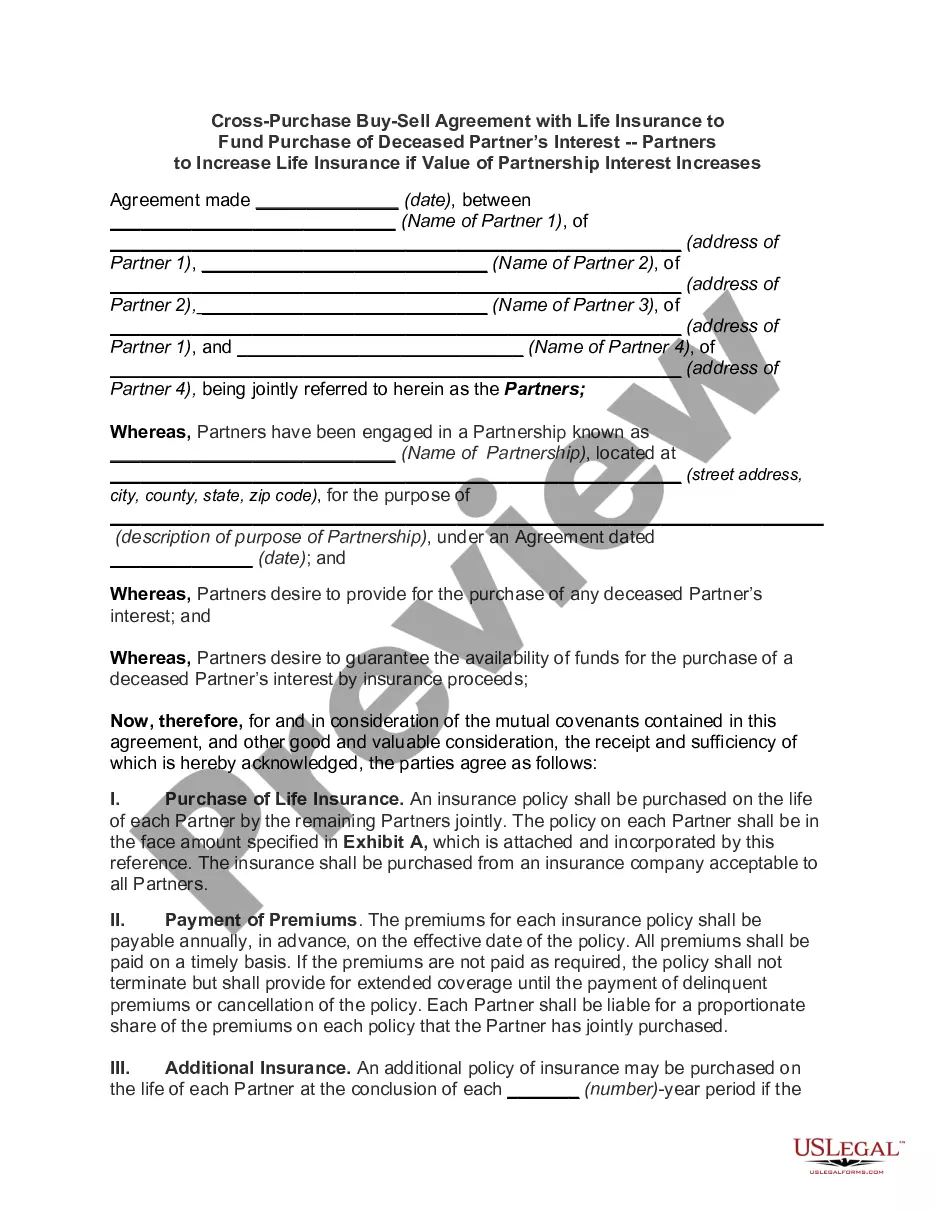
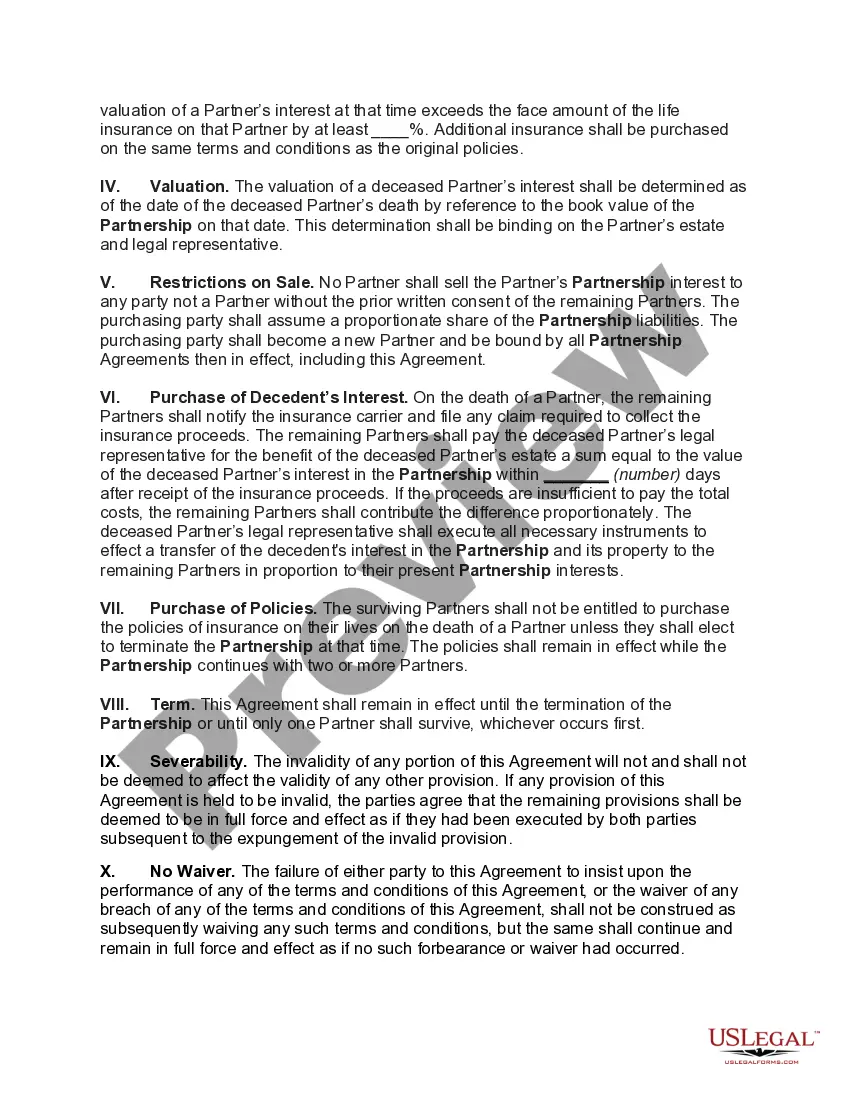
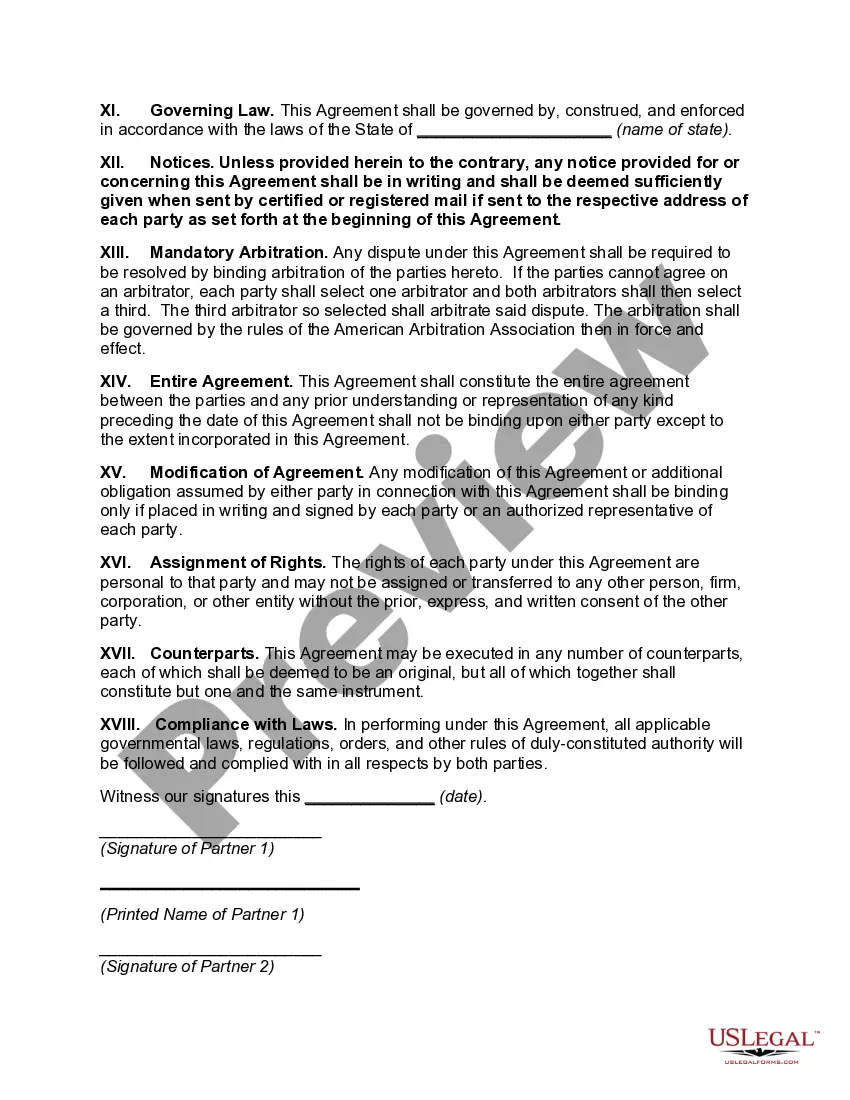
Get your form ready online
Our built-in tools help you complete, sign, share, and store your documents in one place.
Make edits, fill in missing information, and update formatting in US Legal Forms—just like you would in MS Word.
Download a copy, print it, send it by email, or mail it via USPS—whatever works best for your next step.
Sign and collect signatures with our SignNow integration. Send to multiple recipients, set reminders, and more. Go Premium to unlock E-Sign.
If this form requires notarization, complete it online through a secure video call—no need to meet a notary in person or wait for an appointment.
We protect your documents and personal data by following strict security and privacy standards.

Make edits, fill in missing information, and update formatting in US Legal Forms—just like you would in MS Word.

Download a copy, print it, send it by email, or mail it via USPS—whatever works best for your next step.

Sign and collect signatures with our SignNow integration. Send to multiple recipients, set reminders, and more. Go Premium to unlock E-Sign.

If this form requires notarization, complete it online through a secure video call—no need to meet a notary in person or wait for an appointment.

We protect your documents and personal data by following strict security and privacy standards.
Looking for another form?

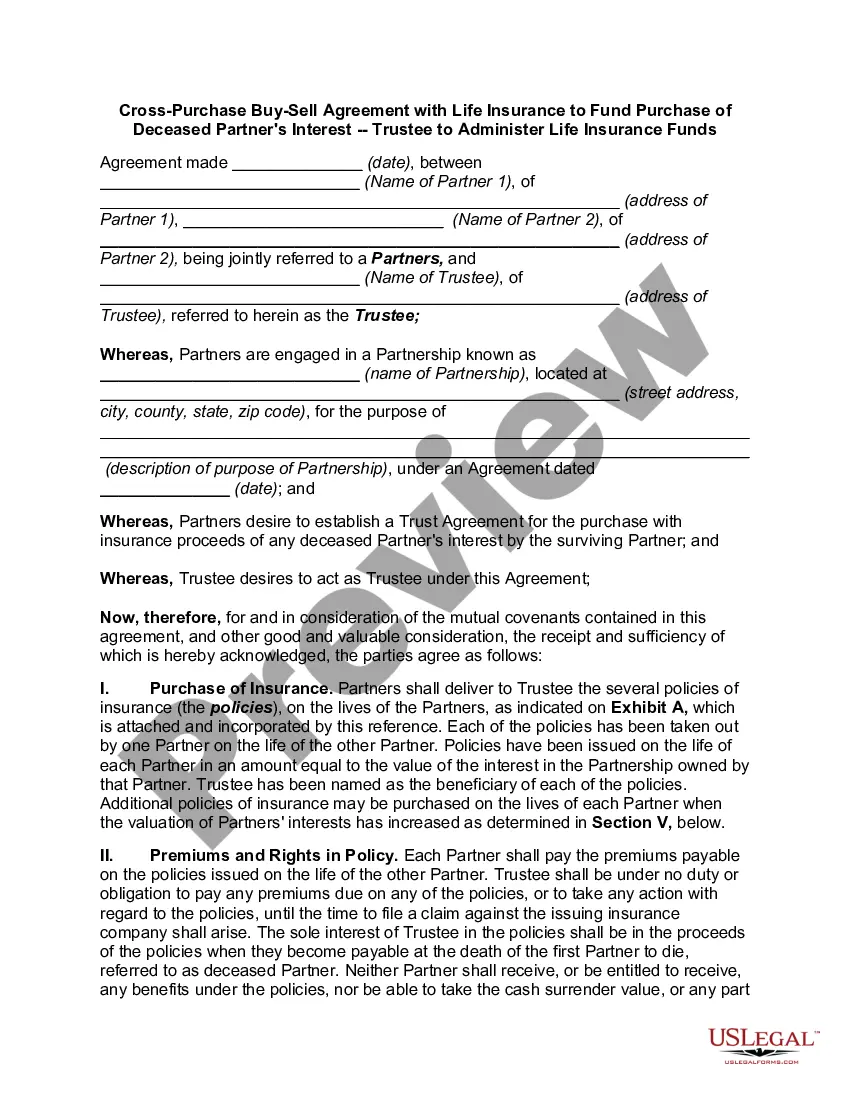
How to fill out Cross-Purchase Buy-Sell Agreement With Life Insurance To Fund Purchase Of Deceased Partner's Interest -- Partners To Increase Life Insurance If Value Of Partnership Interest Increases?
- If you are an existing user, log into your account and locate the desired form template. Ensure your subscription is active; if not, consider renewing your payment plan.
- For new users, begin by searching for your needed document. Check the description and preview mode to confirm it meets your requirements and complies with local jurisdiction.
- If the document doesn't suit your needs, utilize the Search tab to find the right template. Ensure it fits your specifications before proceeding.
- Purchase the document by clicking the Buy Now button. Select a subscription plan that works for you, and create an account for access to the full library.
- Complete your purchase using your credit card or PayPal for the subscription fees.
- Once the purchase is finalized, download the form to your device. Access it later from your profile's My Forms menu.
With US Legal Forms, you gain access to over 85,000 editable legal documents and premium expert support, ensuring that all your legal needs are met efficiently and accurately.
Start your journey today and experience the benefits of simplified legal documentation. Visit US Legal Forms now to get started!
Form popularity
FAQ
The term 'third motion' usually refers to Newton's third law of motion itself, which does not have a standalone formula. Instead, it represents the relationship of forces as action and reaction. Familiarity with this idea aids in many fields, from physics to engineering, helping to solve practical problems effectively.
To apply Newton's third law in everyday life, recognize the pairs of forces acting on objects. For example, when driving, the tires push against the road, while the road pushes back, allowing the vehicle to move. Understanding this principle empowers you to predict outcomes in various scenarios, from sports to machinery operation.
A common proof of the third law of motion involves observing interactions, such as a swimmer pushing off a pool wall and moving forward. When the swimmer applies force against the wall, the wall applies an equal and opposite force, propelling the swimmer. This direct observation of action and reaction demonstrates the consistency of the third law in real-world applications.
The formula for the third law of motion doesn't have a specific equation but is often expressed conceptually: Action = - Reaction. This means if an object A pushes object B, object B pushes back on object A with equal force in the opposite direction. Recognizing this relationship is critical for students and professionals alike.
The three laws of motion are typically summarized rather than expressed in a single formula. The first law states that an object at rest remains at rest unless acted upon, the second law connects force, mass, and acceleration (F = ma), and the third law emphasizes action and reaction. Grasping this framework provides a strong foundation for anyone studying physics or applied sciences.
For the third law pairs to be valid, the forces must be of the same type, act on two different objects, and be equal in magnitude but opposite in direction. These interactions occur simultaneously and demonstrate the principle of mutual action. Clarifying these requirements can help better understand dynamics in both academic and real-life scenarios.
The third law of motion emphasizes how forces work in pairs. It explains that two objects interacting with each other will exert forces that are equal in strength and opposite in direction. This third law is crucial for analyzing the forces acting during collisions and other interactions, guiding us in practical applications in technology and safety.
Newton's 3rd law states that for every action, there is an equal and opposite reaction. This means if one object exerts a force on another, the second object exerts a force of the same magnitude but in the opposite direction on the first object. Understanding this fundamental principle, referred to as the third law, helps in various fields, from engineering to everyday problem-solving.
Newton's third law can be succinctly expressed as 'For every action, there is an equal and opposite reaction.' Writing this law involves not only presenting the statement but also understanding its implications in various situations. Mastery of this principle can significantly enhance your approach to legal and physical problem-solving.
A third law pair can be seen when a rocket launches. The rocket engines push down against the ground as fuel ignites, creating thrust. Simultaneously, the ground pushes back with equal force, propelling the rocket upward, showcasing Newton's third law in action.