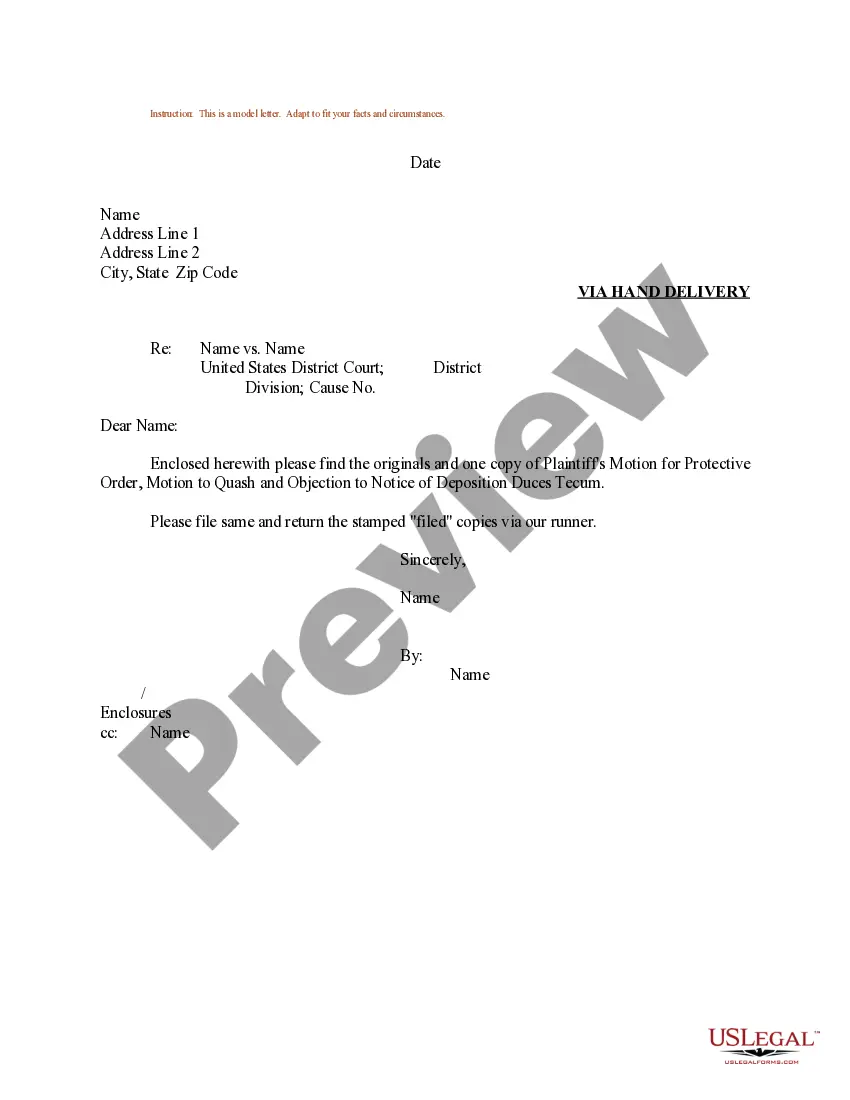
Objection To Deposition Notice With Documents California
Description
Get your form ready online
Our built-in tools help you complete, sign, share, and store your documents in one place.
Make edits, fill in missing information, and update formatting in US Legal Forms—just like you would in MS Word.
Download a copy, print it, send it by email, or mail it via USPS—whatever works best for your next step.
Sign and collect signatures with our SignNow integration. Send to multiple recipients, set reminders, and more. Go Premium to unlock E-Sign.
If this form requires notarization, complete it online through a secure video call—no need to meet a notary in person or wait for an appointment.
We protect your documents and personal data by following strict security and privacy standards.

Make edits, fill in missing information, and update formatting in US Legal Forms—just like you would in MS Word.

Download a copy, print it, send it by email, or mail it via USPS—whatever works best for your next step.

Sign and collect signatures with our SignNow integration. Send to multiple recipients, set reminders, and more. Go Premium to unlock E-Sign.

If this form requires notarization, complete it online through a secure video call—no need to meet a notary in person or wait for an appointment.

We protect your documents and personal data by following strict security and privacy standards.
Looking for another form?
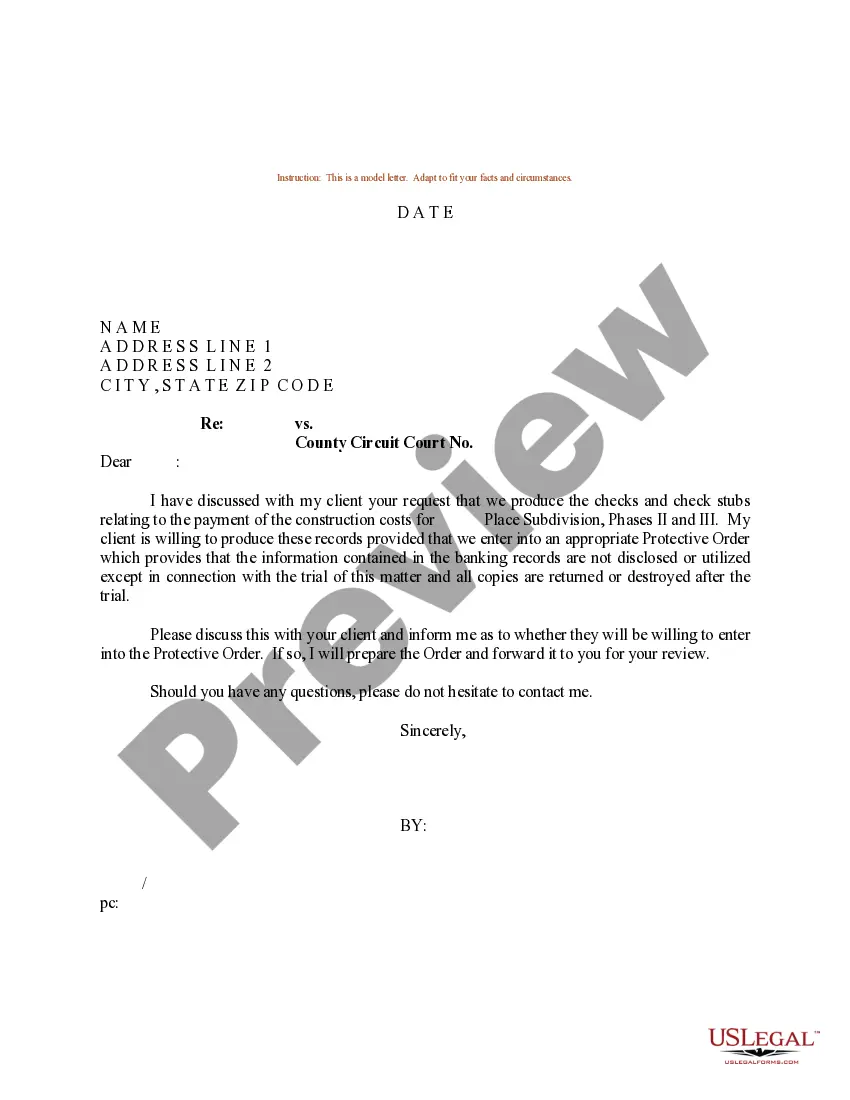
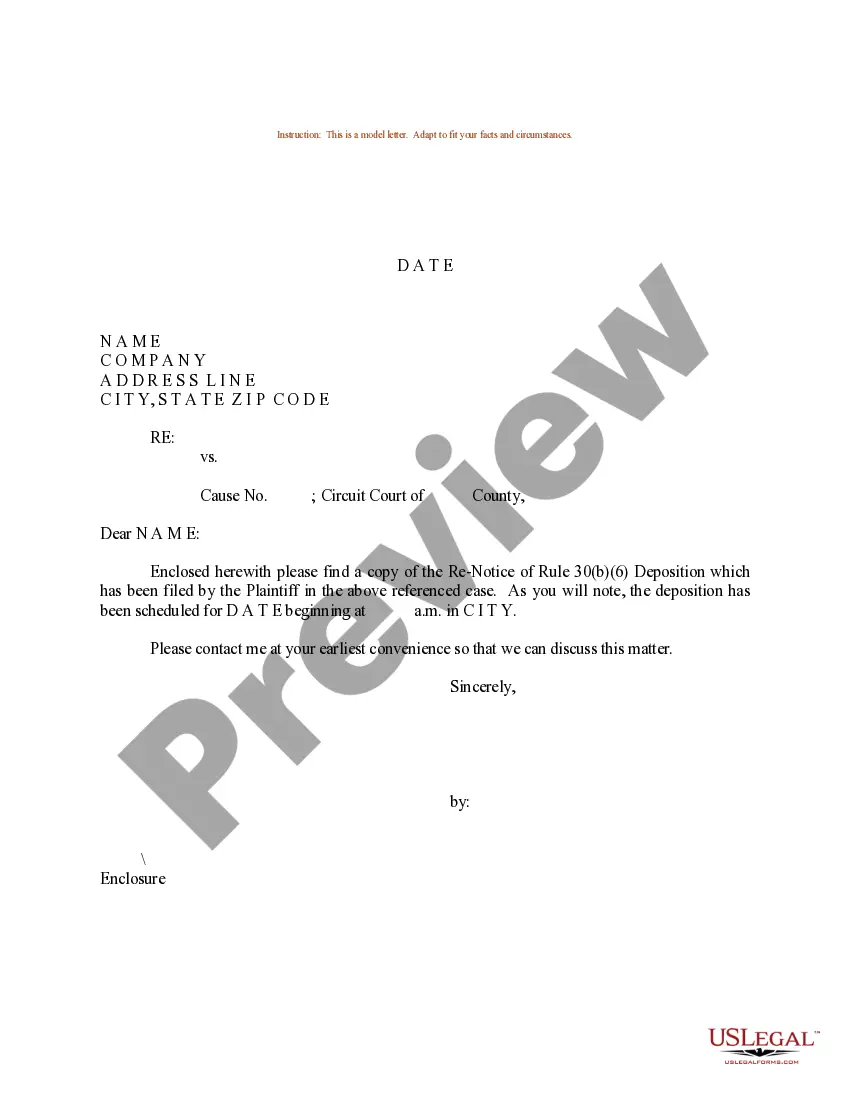
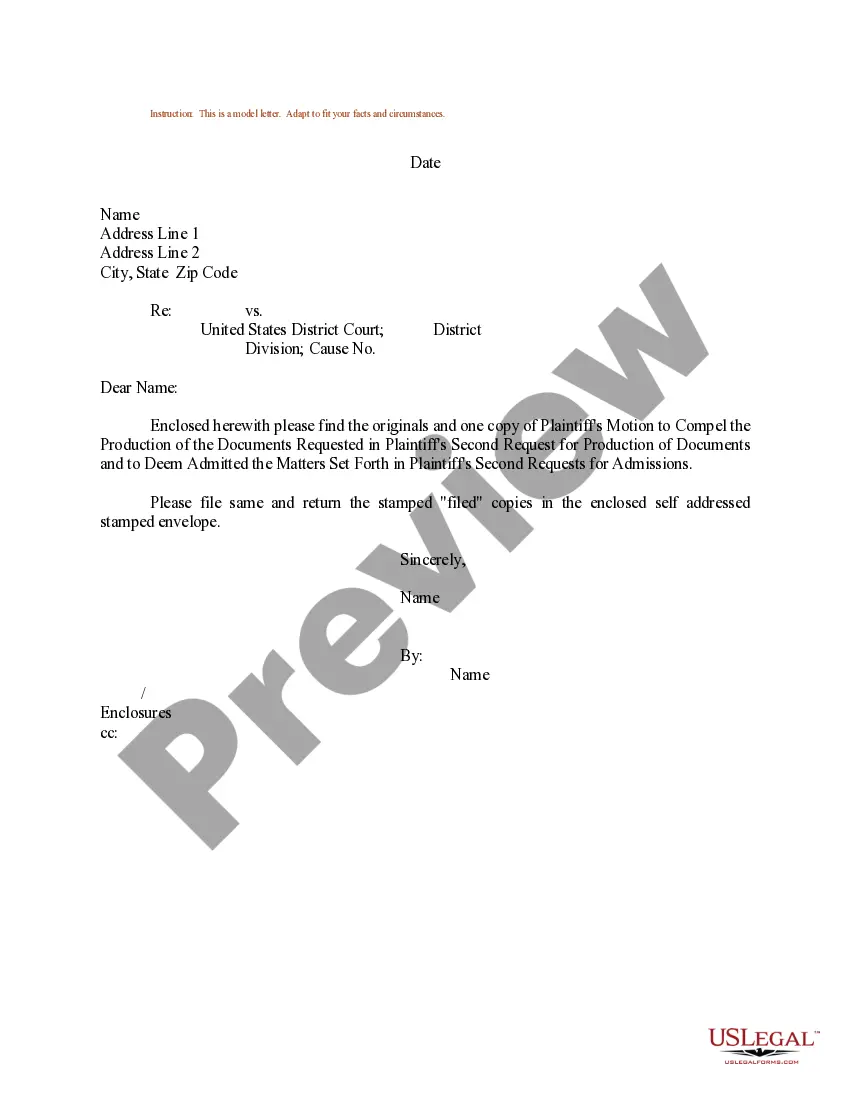
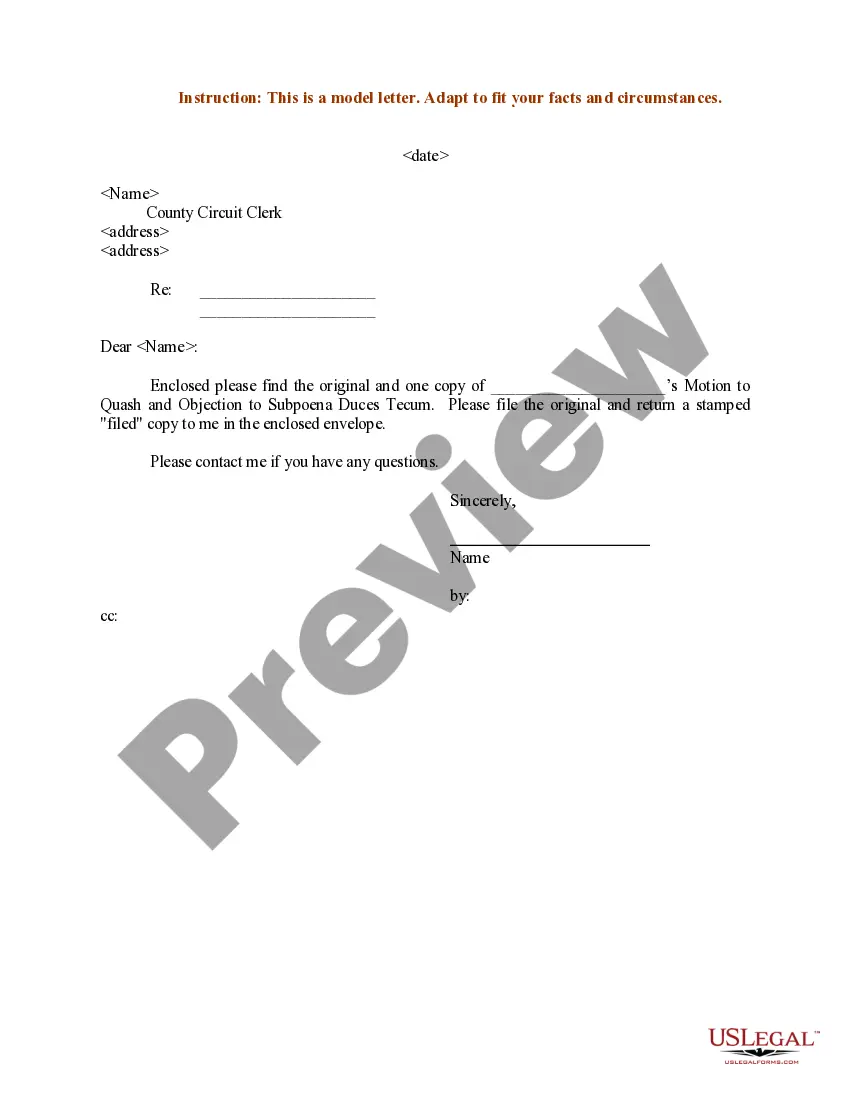
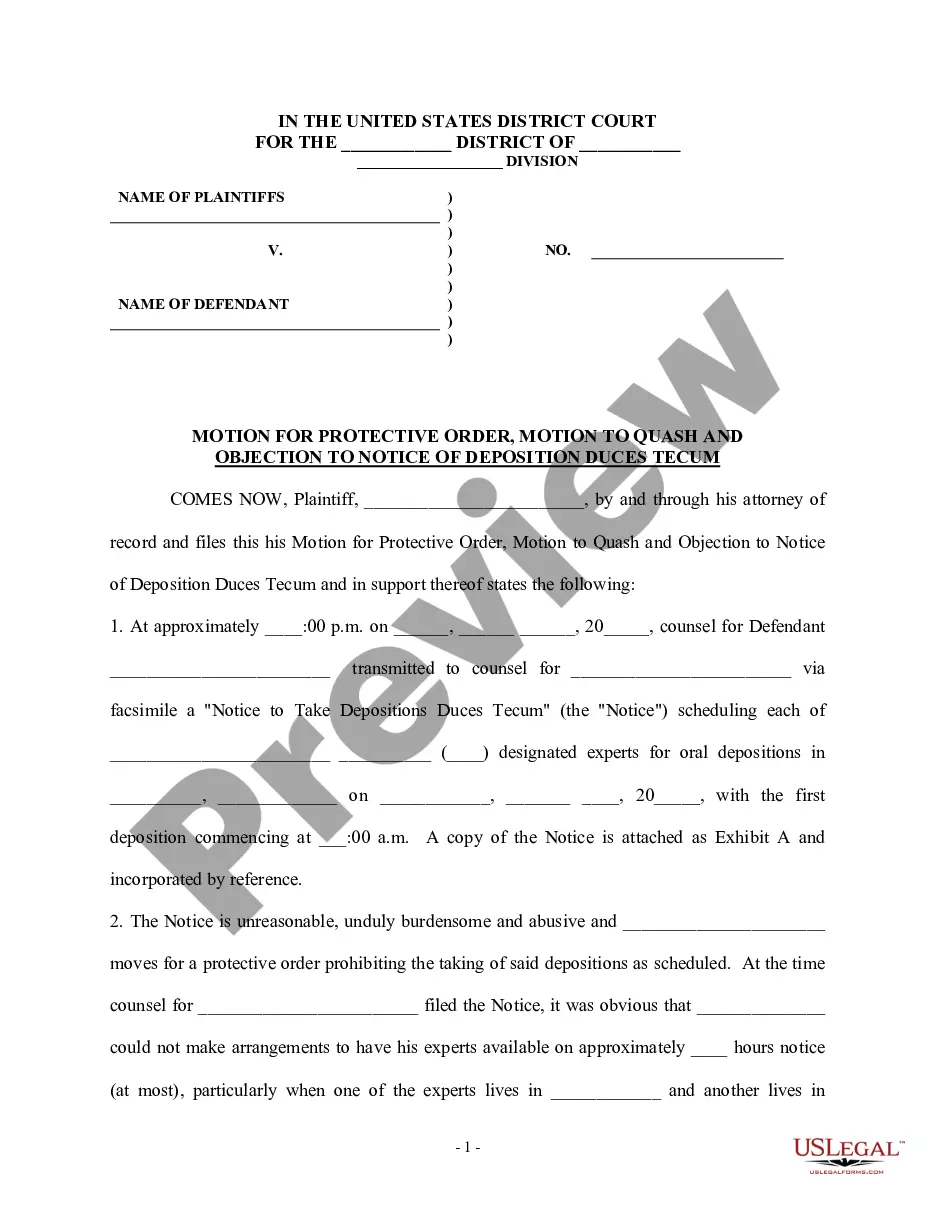
How to fill out Sample Letter For Plaintiff's Motion For Protective Order, Motion To Quash, Objection To Notice Of Deposition Duces Tecum?
Legal administration can be daunting, even for the most proficient experts.
When you are seeking an Objection To Deposition Notice With Documents California and do not have the opportunity to spend time searching for the appropriate and current version, the process can be overwhelming.
Gain entry to a collection of articles, guides, and resources related to your situation and needs.
Save time and effort searching for the documents you require, and use US Legal Forms’ advanced search and Preview feature to locate Objection To Deposition Notice With Documents California and obtain it.
Transform your daily document management into a seamless and user-friendly experience today.
- If you have a subscription, Log In to your US Legal Forms account, search for the form, and download it.
- Check your My documents section to view the documents you have previously downloaded and manage your folders as needed.
- If this is your first time using US Legal Forms, create an account and gain unlimited access to all the advantages of the platform.
- Here are the steps to follow after acquiring the form you need.
- Ensure it is the correct form by previewing it and examining its description.
- Access state- or county-related legal and business documents.
- US Legal Forms addresses any needs you may have, ranging from personal to business paperwork, all in one place.
- Utilize advanced tools to complete and handle your Objection To Deposition Notice With Documents California.
Form popularity
FAQ
Yes, you can object to a deposition question. If you believe that a question is improper, irrelevant, or violates your rights, you may raise an objection. In California, this applies to deposition notices where documents are requested as well. It's important to express your concerns clearly and to document your objections appropriately, as this protects your legal rights and ensures compliance with the rules governing depositions.
In California, you can object to a deposition notice with documents if you believe it violates legal rights or is overly broad. However, simply refusing to give a deposition can lead to legal consequences, including potential sanctions. It is essential to follow proper legal procedures when raising an objection. Using platforms like USLegalForms can help you understand your rights and properly address any concerns regarding a deposition notice.
In California, notice for a deposition that includes a request for documents must be provided at least 10 days in advance. This notice period allows all parties to prepare adequately and address any potential objections. Ensure that the notice is clear and comprehensive, detailing the documents to be produced. If you need help with the notice process or understanding its requirements, USLegalForms can offer solutions for managing an objection to deposition notice with documents California effectively.
When responding to a request for production of documents at deposition, review the request carefully to determine what documents are relevant and if any objections apply. You'll need to provide the requested documents unless you have valid reasons to object based on relevance or other legal grounds. Make sure to communicate any objections clearly during the deposition. For assistance in formulating your responses, USLegalForms offers tools to ensure you're prepared for an objection to deposition notice with documents California.
To object to deposition questions, clearly state your objection on the record. It's important to specify the grounds for your objection, whether it's relevance, privilege, or another valid reason. Ensure that you maintain a professional tone, as this keeps the process respectful. For guidance on navigating these objections and crafting effective responses, consider using resources like USLegalForms, which can help you manage objections within the framework of an objection to deposition notice with documents California.
In a deposition, three common objections include relevance, privilege, and form. The relevance objection is raised when questions do not relate to the case. Privilege objections occur when the information requested is confidential, while form objections address issues with how a question is posed. If you need assistance with objections, including an objection to deposition notice with documents California, UsLegalForms offers valuable resources to help you.
The leading objection in a deposition in California often involves relevance or privilege. These objections can be raised when the questions asked do not pertain to the case at hand or when the information sought is protected by legal privilege. Understanding these objections is crucial, especially when submitting an objection to deposition notice with documents California. Utilizing UsLegalForms can provide clarity and support in navigating these legal nuances.
To object to a deposition notice in California, you should first review the notice carefully. If you find any irregularities or unfair demands, you can draft a written objection outlining your concerns. It's essential to send this objection to the opposing party before the deposition date. For assistance, consider using resources from UsLegalForms to guide you in formulating your response effectively.