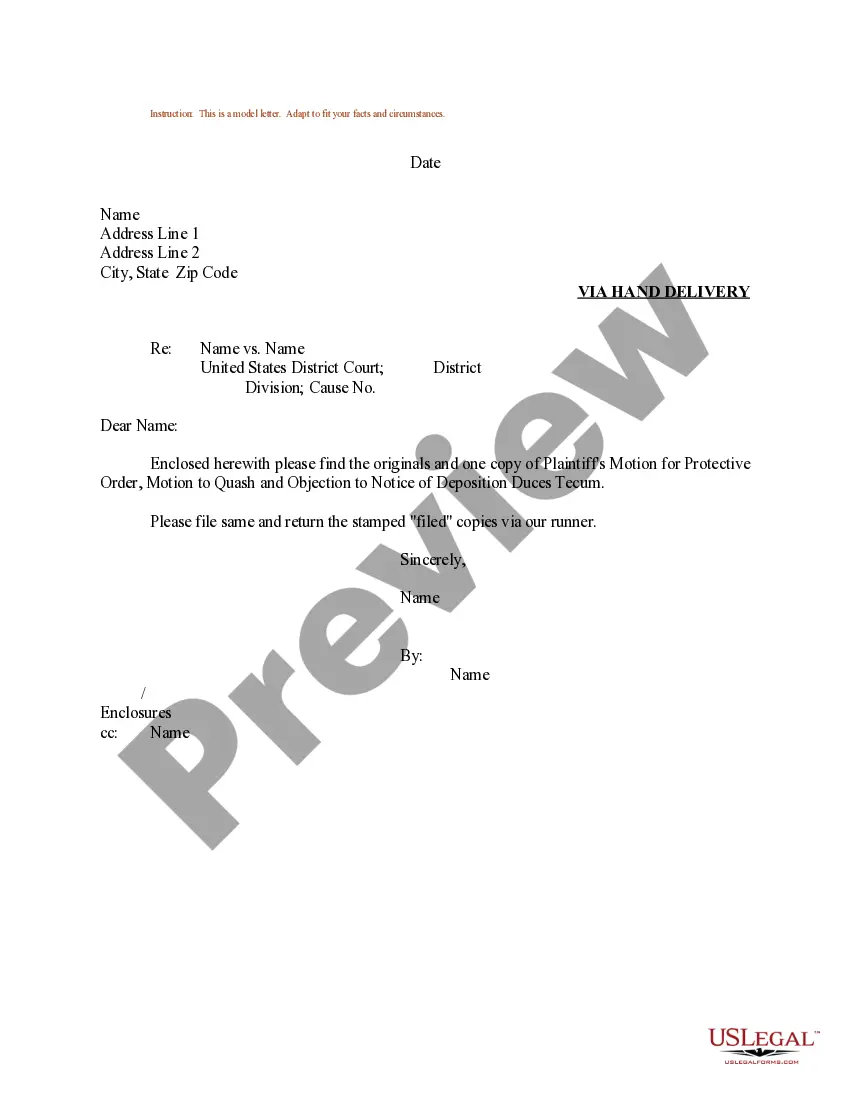
Letter Notice Deposition For The Account
Description
Get your form ready online
Our built-in tools help you complete, sign, share, and store your documents in one place.
Make edits, fill in missing information, and update formatting in US Legal Forms—just like you would in MS Word.
Download a copy, print it, send it by email, or mail it via USPS—whatever works best for your next step.
Sign and collect signatures with our SignNow integration. Send to multiple recipients, set reminders, and more. Go Premium to unlock E-Sign.
If this form requires notarization, complete it online through a secure video call—no need to meet a notary in person or wait for an appointment.
We protect your documents and personal data by following strict security and privacy standards.

Make edits, fill in missing information, and update formatting in US Legal Forms—just like you would in MS Word.

Download a copy, print it, send it by email, or mail it via USPS—whatever works best for your next step.

Sign and collect signatures with our SignNow integration. Send to multiple recipients, set reminders, and more. Go Premium to unlock E-Sign.

If this form requires notarization, complete it online through a secure video call—no need to meet a notary in person or wait for an appointment.

We protect your documents and personal data by following strict security and privacy standards.
Looking for another form?
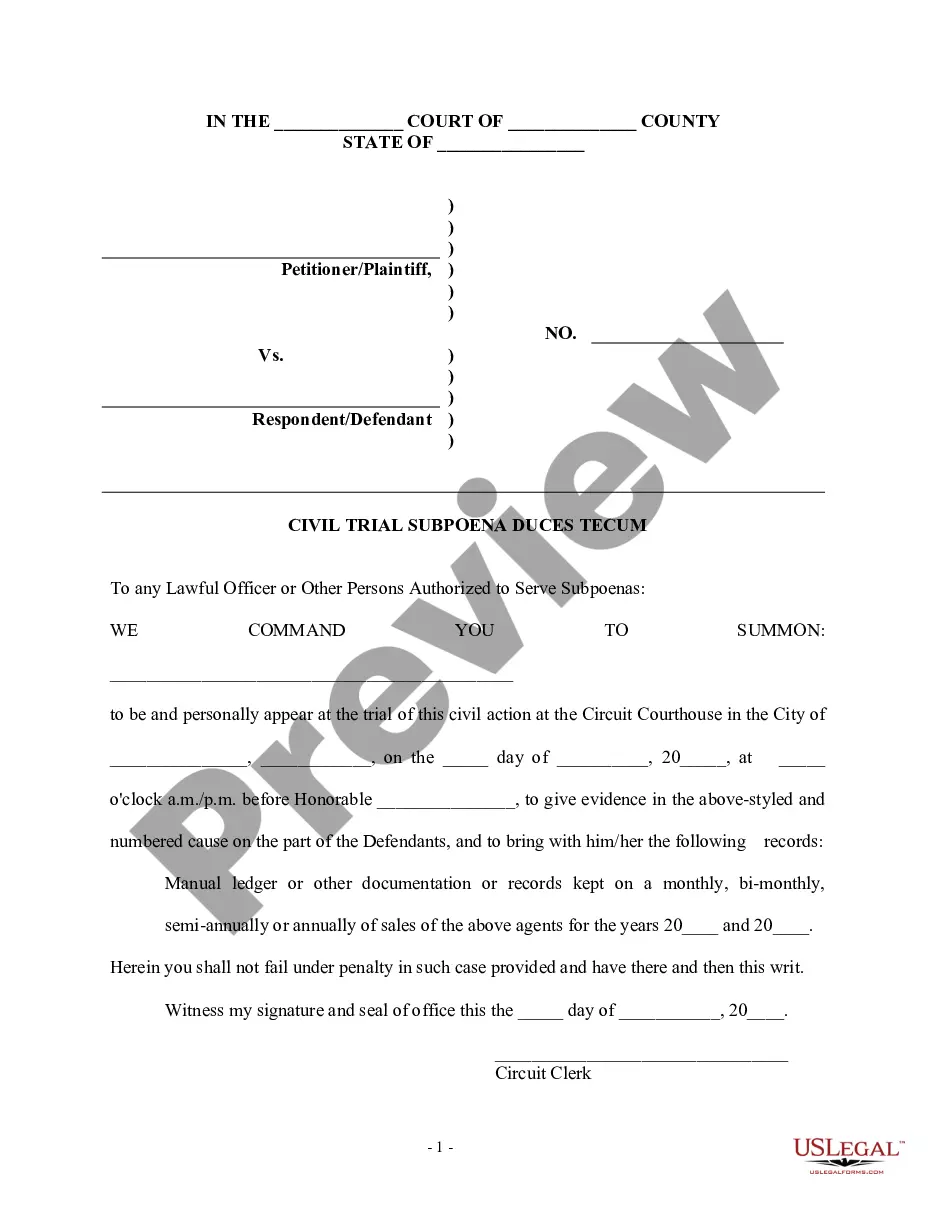
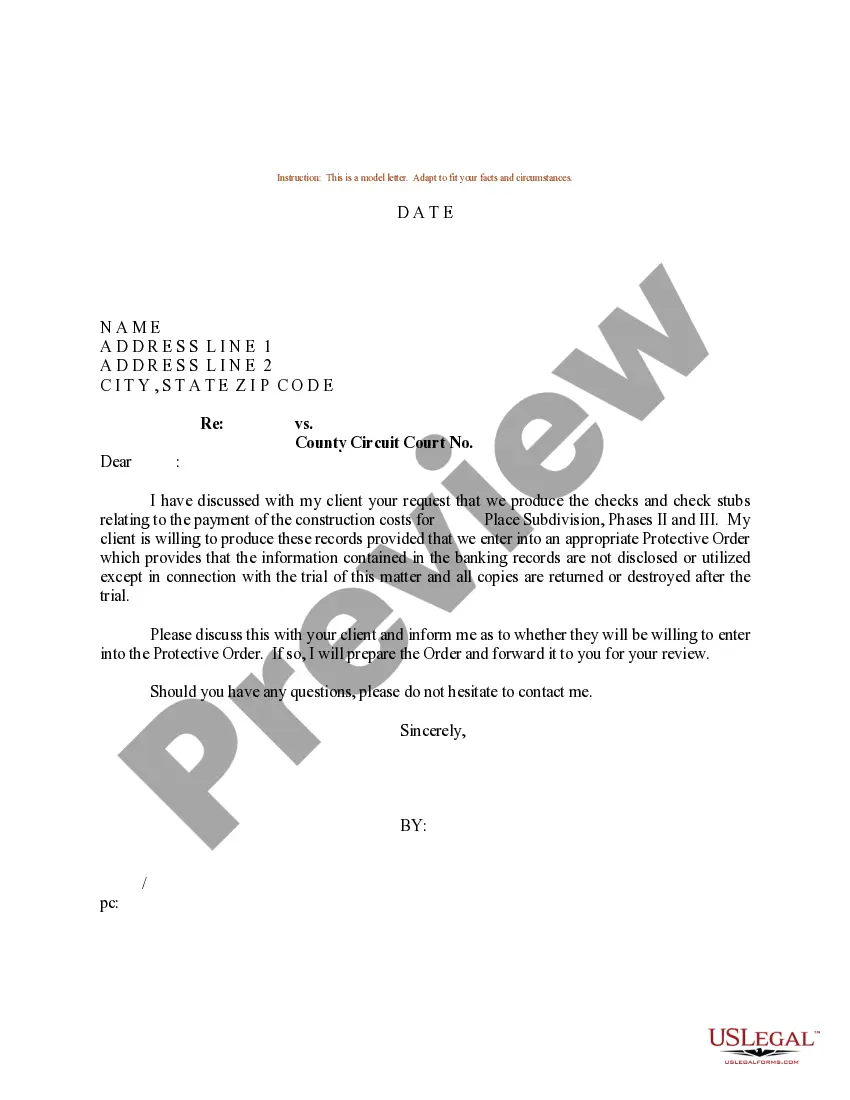
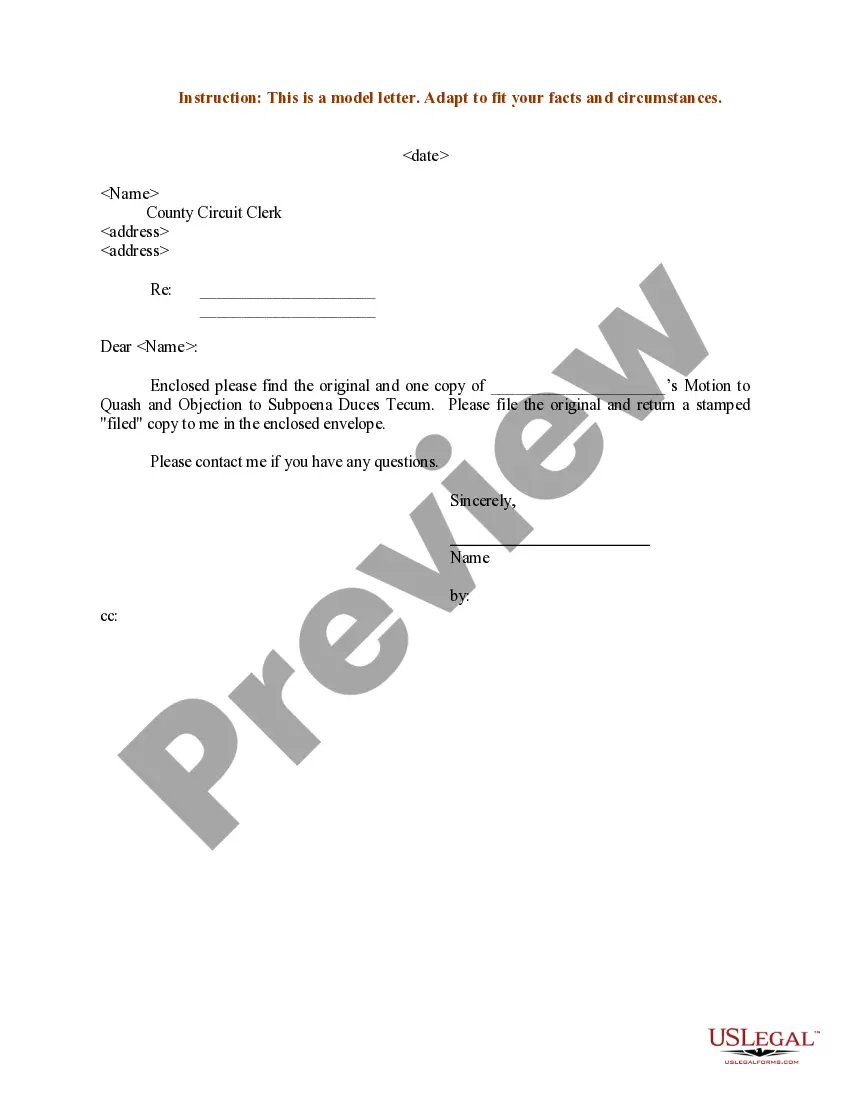
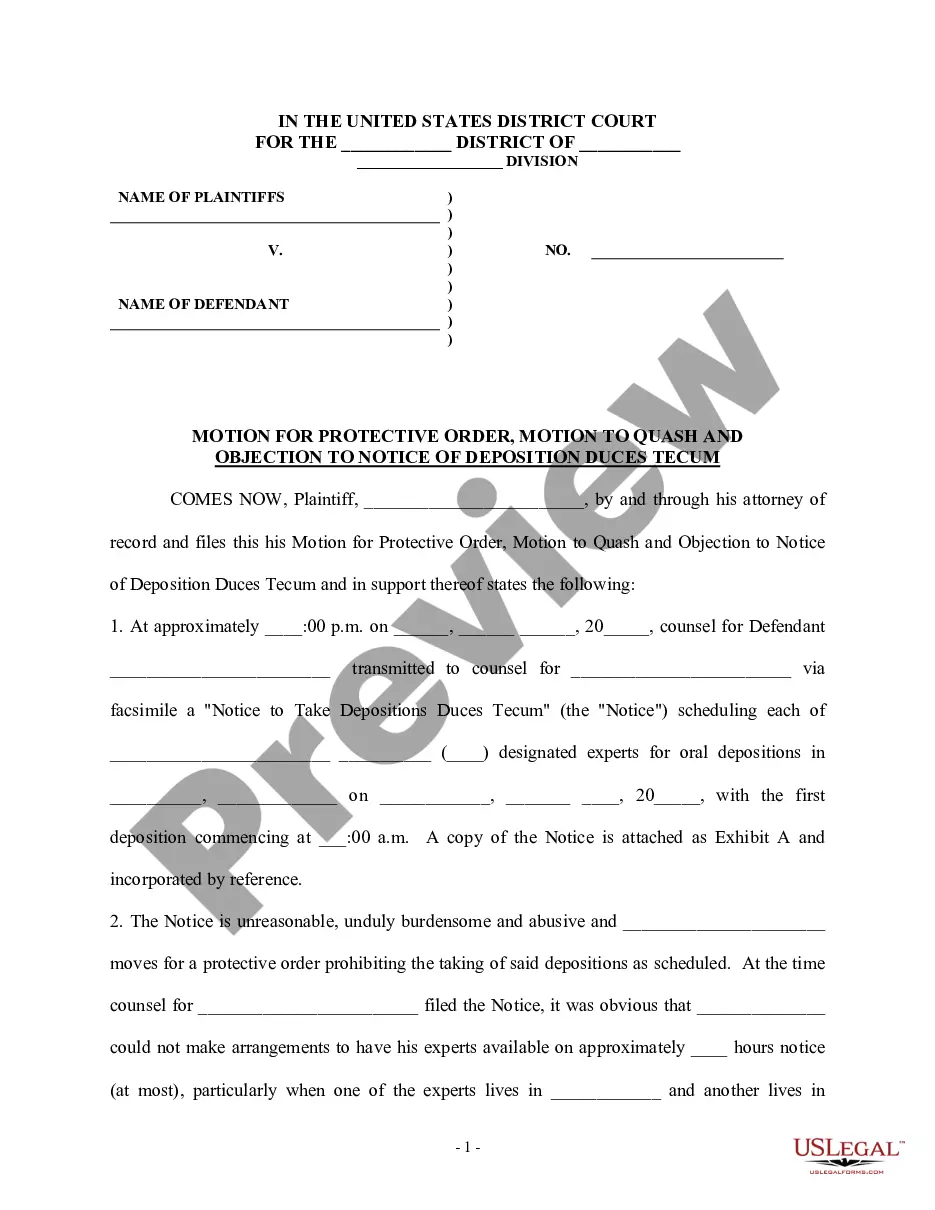
How to fill out Sample Letter For Plaintiff's Motion For Protective Order, Motion To Quash, Objection To Notice Of Deposition Duces Tecum?
- Log in to your US Legal Forms account if you're a returning user. Verify your subscription status and download the necessary form by clicking the Download button.
- If you are new to the service, start by reviewing the form's Preview mode and description to confirm it meets your legal needs and aligns with local regulations.
- Should you need another template, utilize the Search tab to locate additional options if the current form doesn't suit your requirements.
- To access the document, click on the 'Buy Now' button and select your desired subscription plan. A user account registration will be necessary to proceed further.
- Complete your payment by entering your credit card information or using your PayPal account for the subscription purchase.
- Finally, download your legal form to your device. You can access it later within the 'My Forms' section of your profile for easy future reference.
By following these straightforward instructions, securing your letter notice deposition for the account has never been easier. The robustness of US Legal Forms ensures you are equipped with all necessary legal documents, crafted expertly and tailored to your unique needs.
Start your journey towards hassle-free legal documentation today with US Legal Forms!
Form popularity
FAQ
To write a compelling deposition report, summarize the proceedings clearly and chronologically. Start with basic information such as the date, time, and location, and include the names of all parties present. Ensure you capture key questions and responses accurately to reflect the deposition accurately. Utilize uslegalforms to access templates and guides that can simplify the process of crafting your report.
A reasonable notice for a deposition typically requires at least 14 days' notice in most jurisdictions. However, this can vary based on the specific circumstances surrounding your case. Make sure to consult your local rules, as they may have specific requirements for your letter notice deposition for the account. Adequate notice allows all parties involved to prepare effectively.
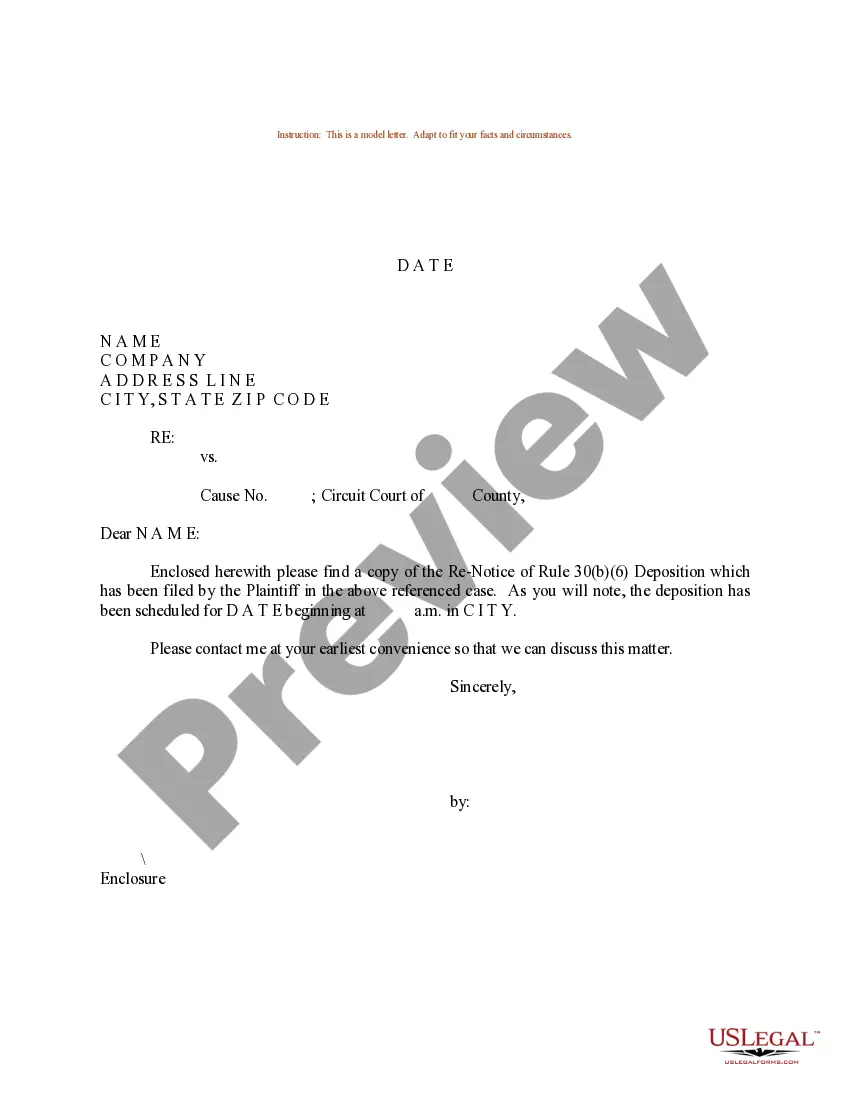
Drafting a letter notice deposition for the account involves several key elements. Start by including the date, time, and location of the deposition. Clearly identify the deponent, and state the purpose of the deposition. Ensure that you deliver this notice with enough time for all parties to prepare.
An example of a deposition might involve a witness answering questions about events related to a legal case. For instance, in a personal injury lawsuit, the plaintiff may be deposed about the accident details and their medical treatment afterward. This testimony helps gather facts for both parties' cases. Hence, establishing a solid letter notice deposition for the account could enhance the overall effectiveness of this legal procedure.
At the beginning of a deposition, introduce yourself and state your role to set a professional tone. Clearly explain the purpose of the deposition while confirming that the session is being recorded or transcribed. Establish ground rules for the session and stress the importance of speaking clearly and fully. This initial step sets the stage for a smooth and effective deposition experience.
To craft a good deposition summary, focus on the main points and quotes that highlight crucial testimony. Organize the summary chronologically, including any significant exhibits or documents referenced during the deposition. Aim for clarity and conciseness, ensuring the core information is easily accessible. Developing a format can enhance readability and usability for all parties involved.
Many cases do indeed settle after a deposition. This process often clarifies key facts that influence settlement negotiations. After reviewing deposition transcripts, parties might find common ground and a willingness to resolve the case outside court. A strategic approach during your deposition can lead to favorable outcomes.
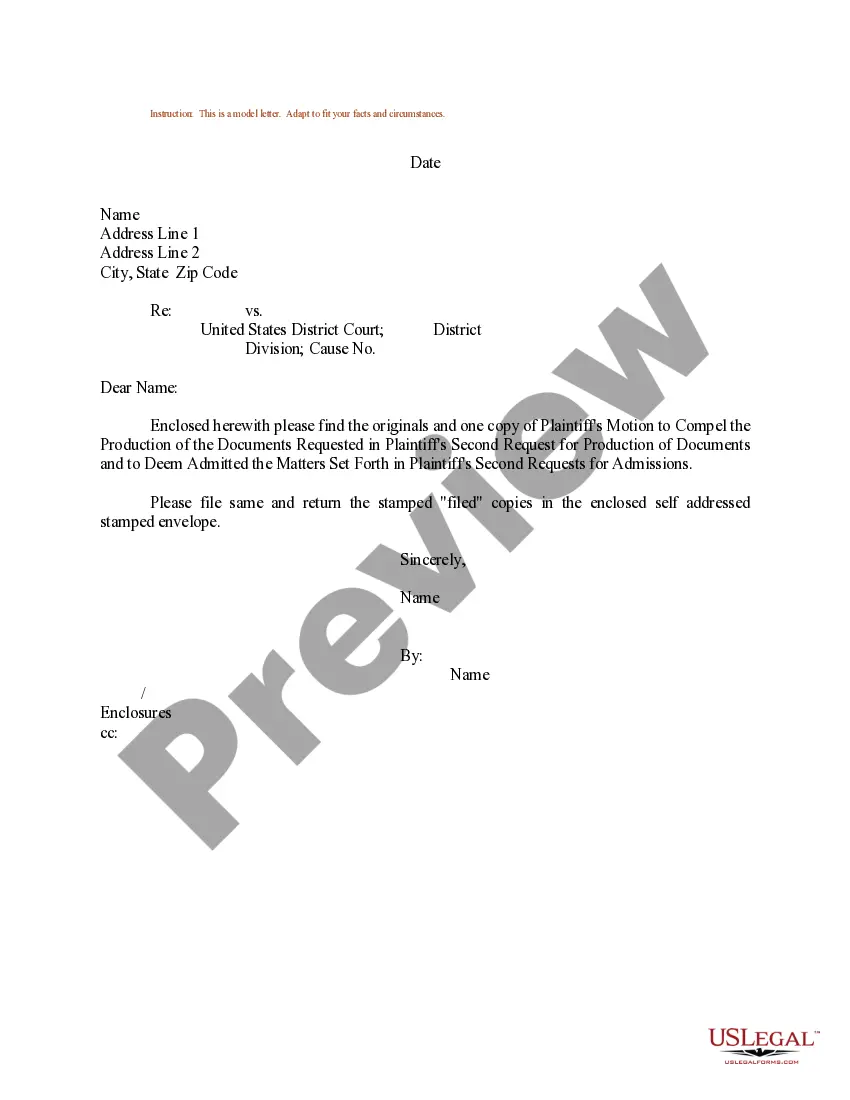
Writing a letter of deposition involves laying out the essential facts succinctly. Begin with the date and the recipient’s address, followed by a clear subject line. Briefly state the purpose of the letter, down to the particulars about time, date, and place for the deposition. For clarity and professionalism, referencing a template for a letter notice deposition for the account can be beneficial.
When responding to a notice of deposition, acknowledge receipt of the notice in writing. Clearly indicate whether you accept the stated date and time or if you need to negotiate an alternative schedule. It's important to express compliance or concerns professionally, maintaining clear communication. A structured response can help ease any potential misunderstandings.
To write a notice of deposition, start by clearly identifying the parties involved and the date, time, and location of the deposition. Include details about the witness or deponent, as well as any documents needed for review. Make sure to use a professional tone, as this correspondence is often critical in legal proceedings. Utilizing a template for letter notice deposition for the account can streamline this task.