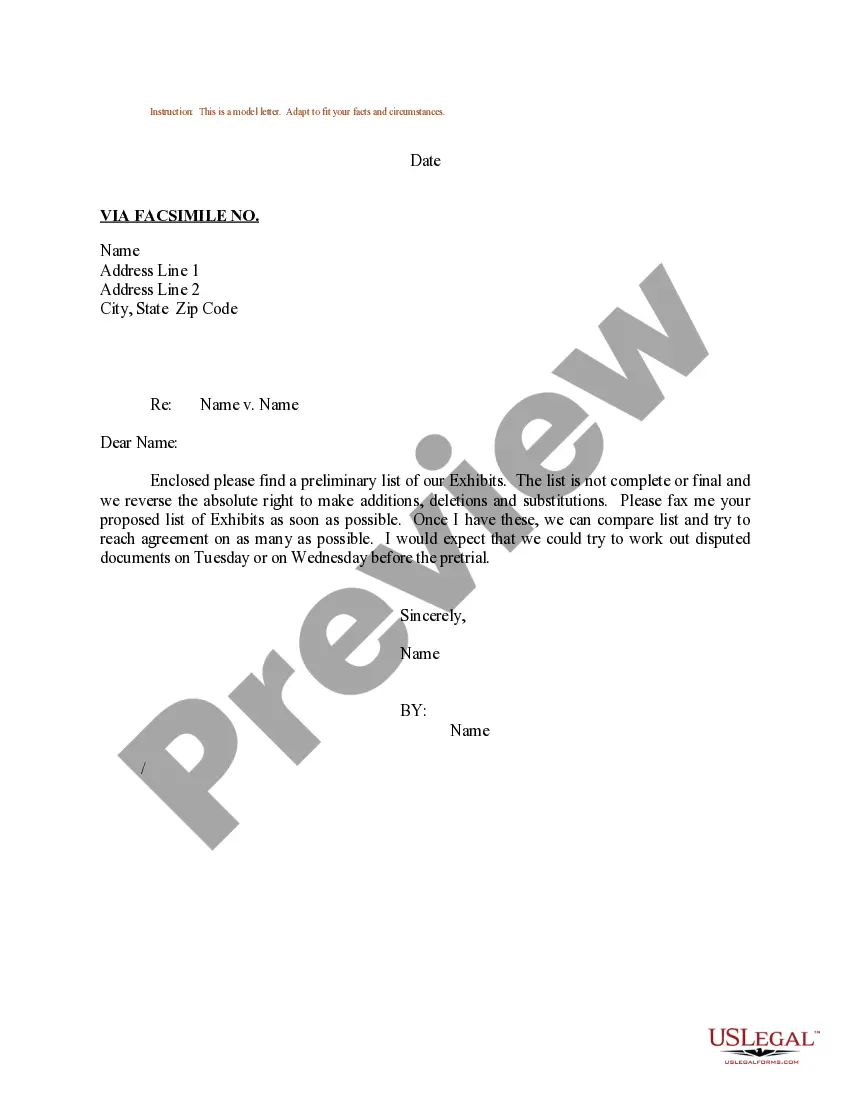
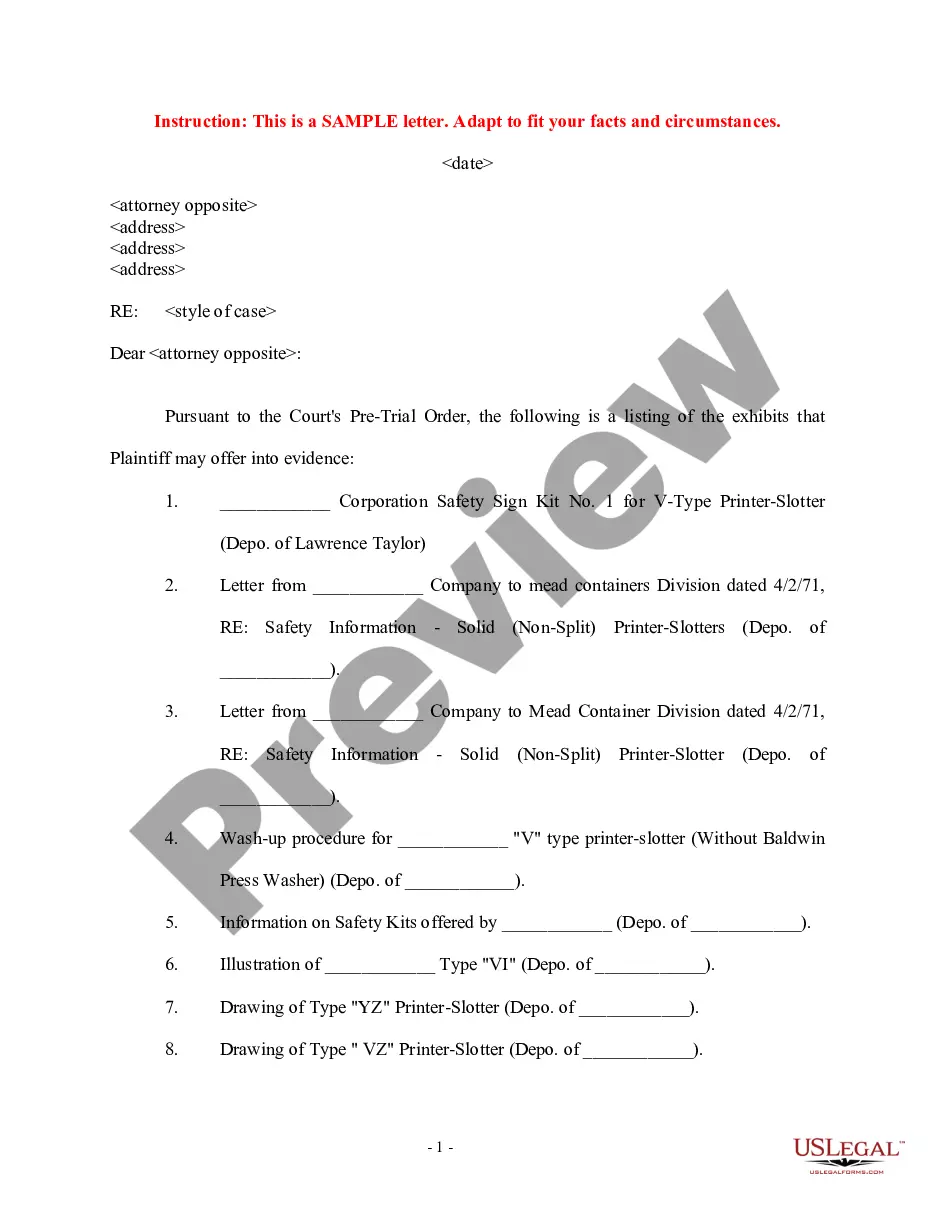
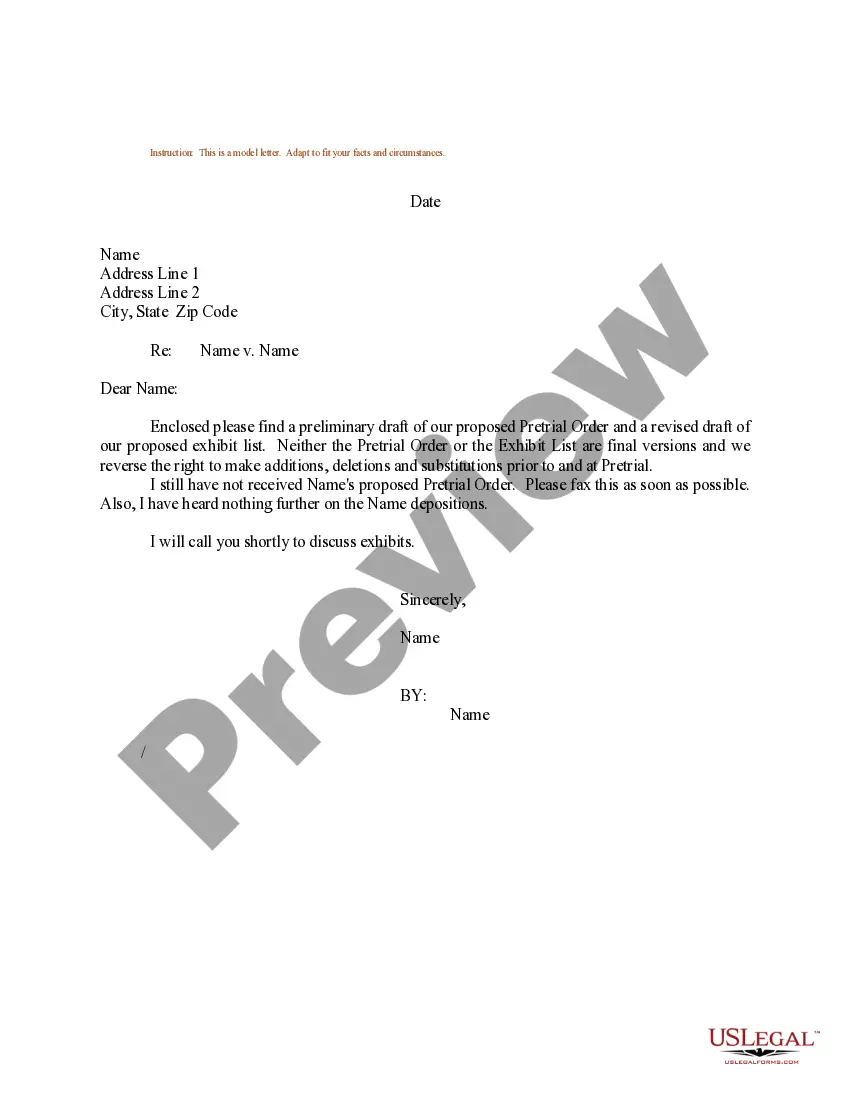
Witness And Exhibit List Template For California
Description
Get your form ready online
Our built-in tools help you complete, sign, share, and store your documents in one place.
Make edits, fill in missing information, and update formatting in US Legal Forms—just like you would in MS Word.
Download a copy, print it, send it by email, or mail it via USPS—whatever works best for your next step.
Sign and collect signatures with our SignNow integration. Send to multiple recipients, set reminders, and more. Go Premium to unlock E-Sign.
If this form requires notarization, complete it online through a secure video call—no need to meet a notary in person or wait for an appointment.
We protect your documents and personal data by following strict security and privacy standards.

Make edits, fill in missing information, and update formatting in US Legal Forms—just like you would in MS Word.

Download a copy, print it, send it by email, or mail it via USPS—whatever works best for your next step.

Sign and collect signatures with our SignNow integration. Send to multiple recipients, set reminders, and more. Go Premium to unlock E-Sign.

If this form requires notarization, complete it online through a secure video call—no need to meet a notary in person or wait for an appointment.

We protect your documents and personal data by following strict security and privacy standards.
Looking for another form?
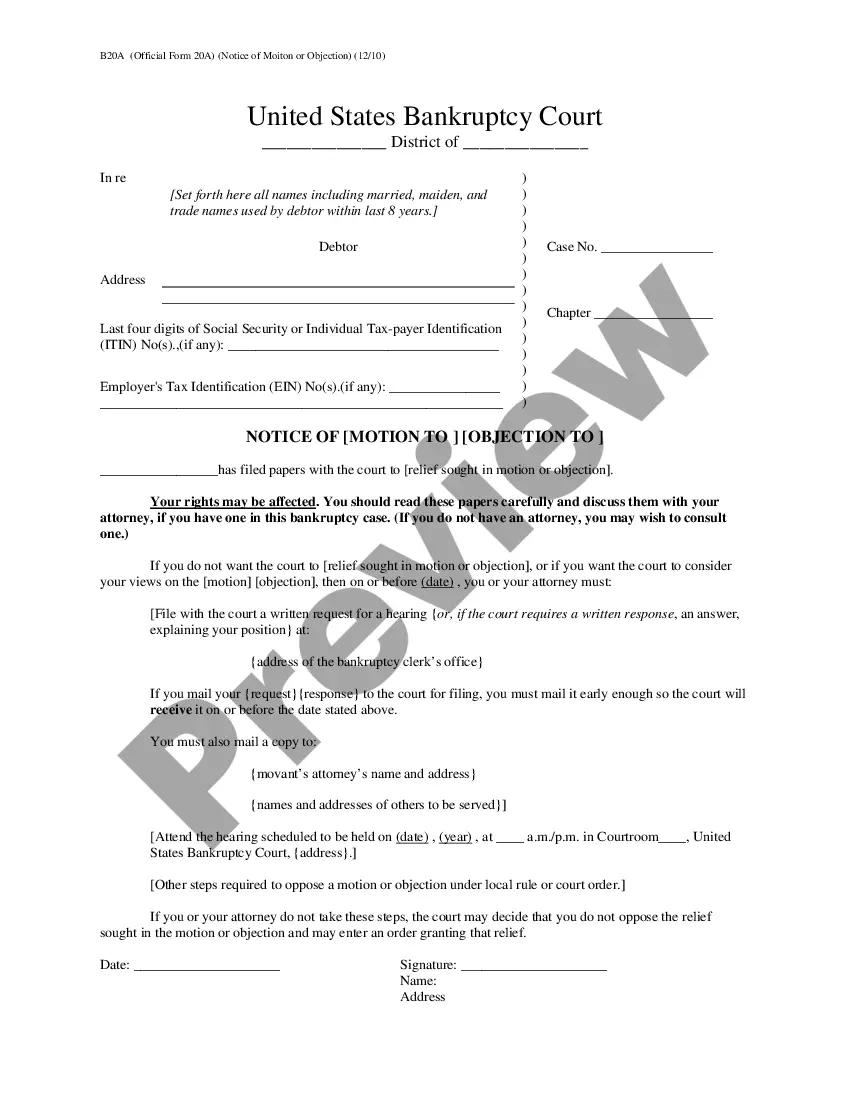
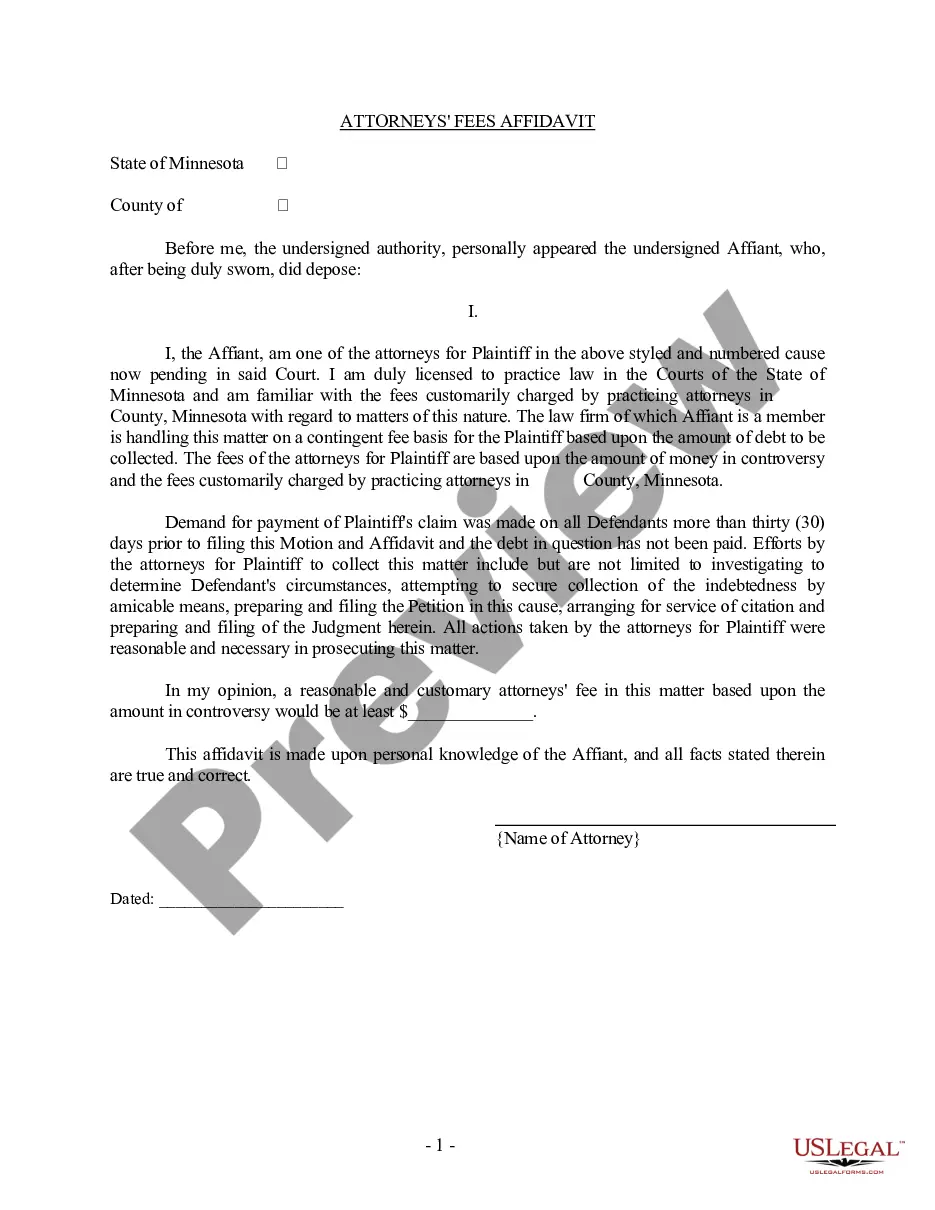
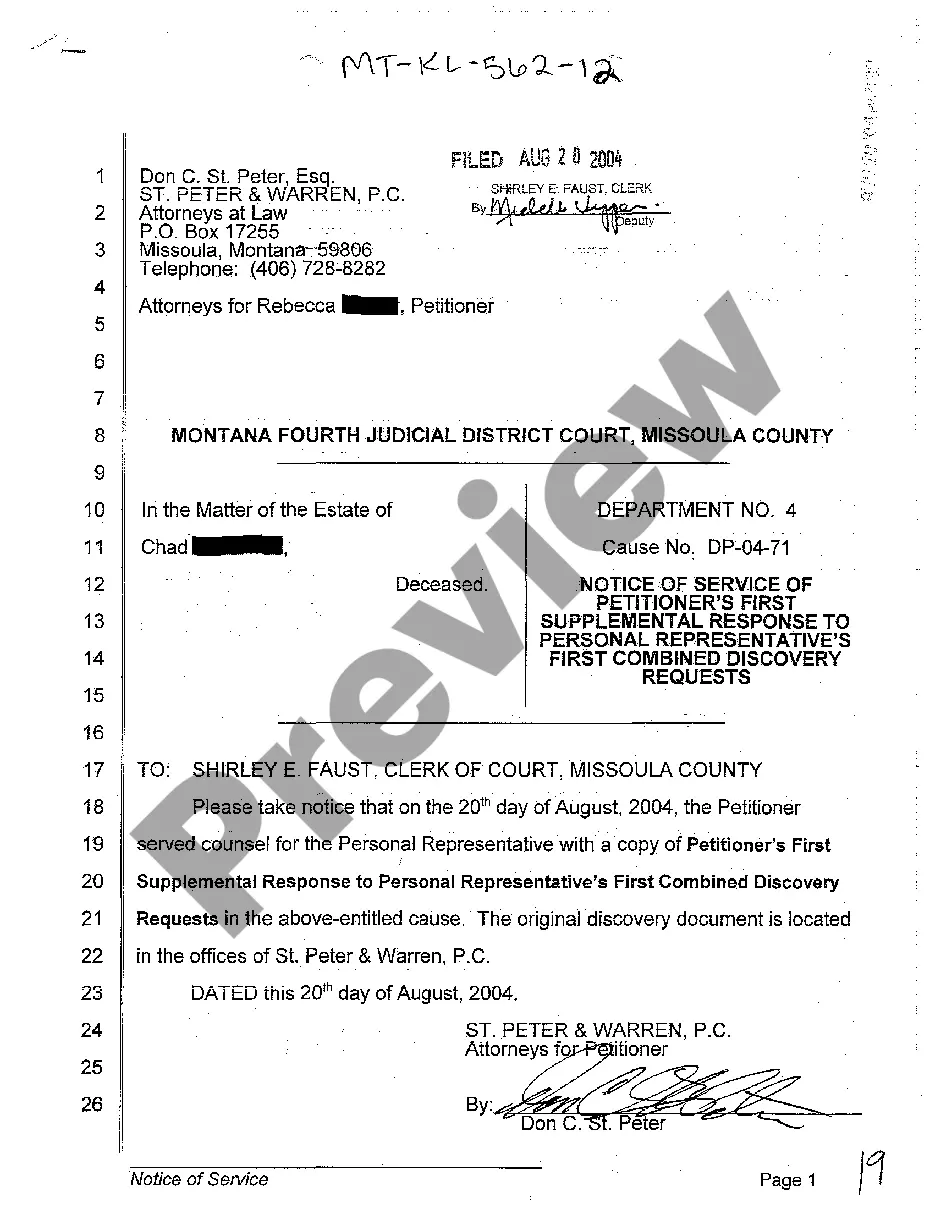
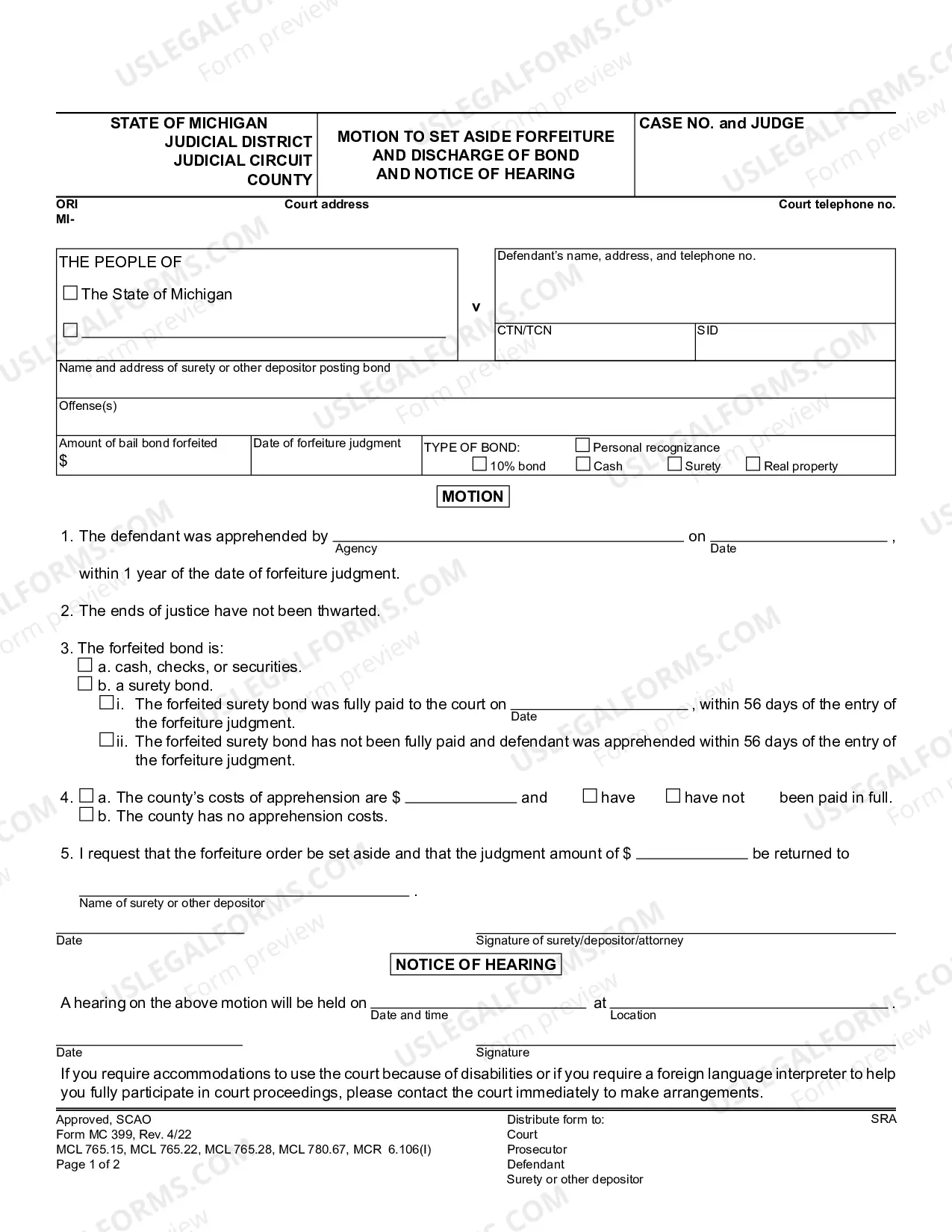
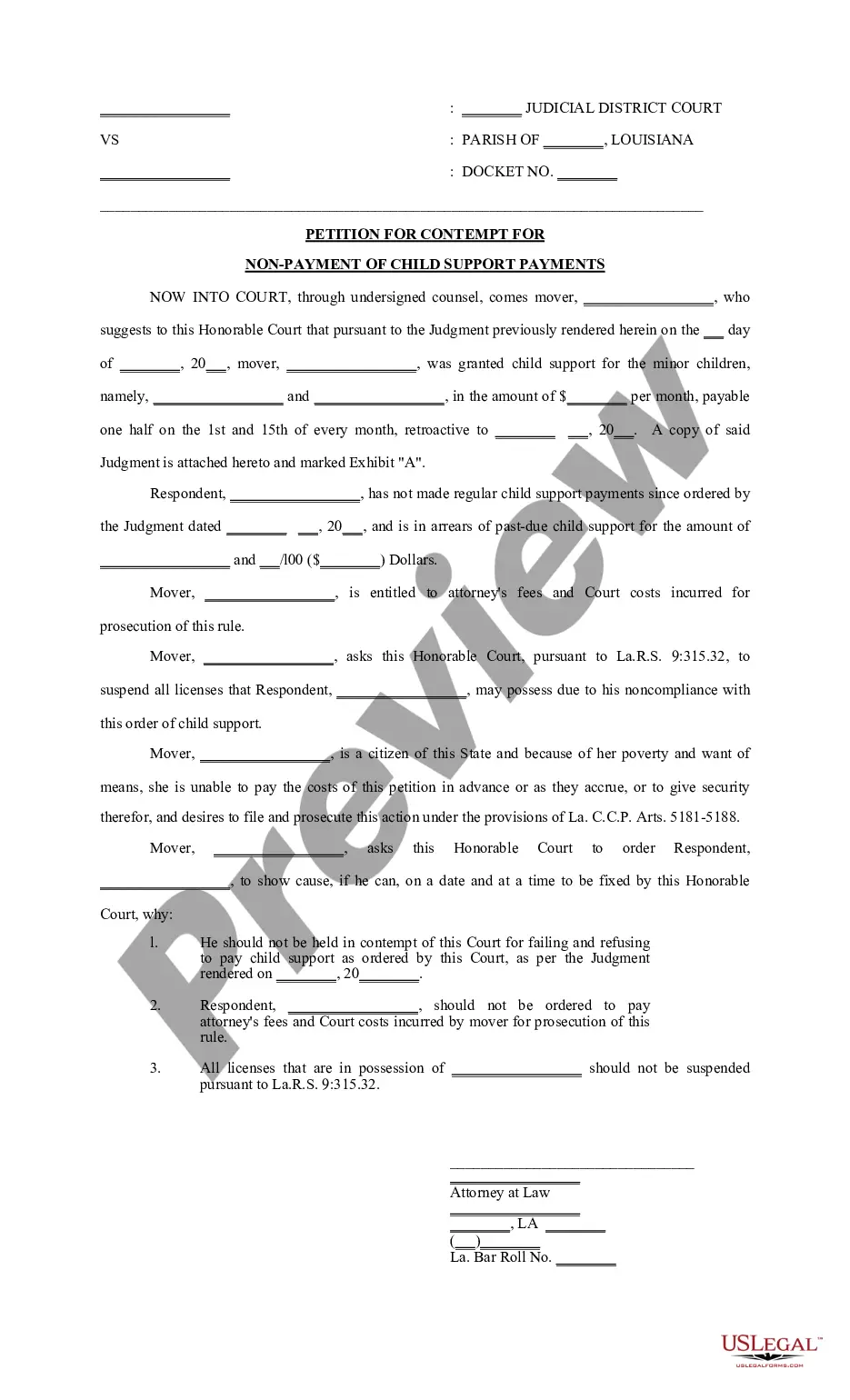
How to fill out Sample Letter Regarding List Of Exhibits?
Whether for corporate objectives or for personal matters, everyone must confront legal situations at some time in their lifetime.
Completing legal paperwork demands meticulous attention, beginning with selecting the appropriate form template.
With a comprehensive US Legal Forms catalog available, you never have to waste time searching for the appropriate template online. Utilize the library’s straightforward navigation to find the correct form for any circumstance.
- Acquire the template you require by utilizing the search bar or catalog browsing.
- Review the form’s description to ensure it aligns with your circumstances, jurisdiction, and area.
- Click on the form’s preview to examine it.
- If it is the incorrect document, return to the search function to locate the Witness And Exhibit List Template For California sample you require.
- Download the template if it corresponds to your requirements.
- If you already possess a US Legal Forms account, click Log in to access previously stored documents in My documents.
- In case you don’t have an account yet, you can acquire the form by clicking Buy now.
- Select the appropriate pricing choice.
- Complete the account registration document.
- Choose your payment method: utilize a credit card or PayPal account.
- Select the file format you desire and download the Witness And Exhibit List Template For California.
- Once saved, you can fill out the form using editing software or print it and complete it manually.
Form popularity
FAQ
How to Write a Divorce Agreement Date of the agreement. Full name of both spouses. Marriage date and location. Date of marriage end. Child support and custody arrangements. Spousal support terms and conditions. Life and health insurance. Division of spousal assets and property.
West Virginia operates under a principle of equitable distribution, which means the court divides the marital estate in a manner that equitable. There are several steps to the process, and each requires proper management if you want to come away with your fair share.
In order to be granted a no-fault divorce in the state of West Virginia, a couple must state grounds, or terms that qualify them for said divorce. The two no-fault grounds are: incompatibility and separate cohabitation (voluntary or involuntary) for at least a year.
Property Division in West Virginia Equitable division does not have to be equal, but the court must start by presuming that all the marital property will be split equally between the spouses. From there, a set of factors will be considered that may result in a shift in the balance from one spouse to the other.
A Virginia marital settlement agreement is used by spouses entering the divorce process to communicate to the court how they'd like to divide property, assets, debt, child custody, child support payments, alimony, and all other shared responsibilities.
Equal division of marital property. Except as otherwise provided in this section, upon every judgment of annulment, divorce or separation, the court shall divide the marital property of the parties equally between the parties.
A divorce may be ordered for adultery. Adultery is the voluntary sexual intercourse of a married man or woman with a person other than the offender's wife or husband. The burden is on the party seeking the divorce to prove the alleged adultery by clear and convincing evidence.
West Virginia is an equitable distribution state, not a community property state. This means that all marital property is subject to a fair, though not necessarily equal, division.