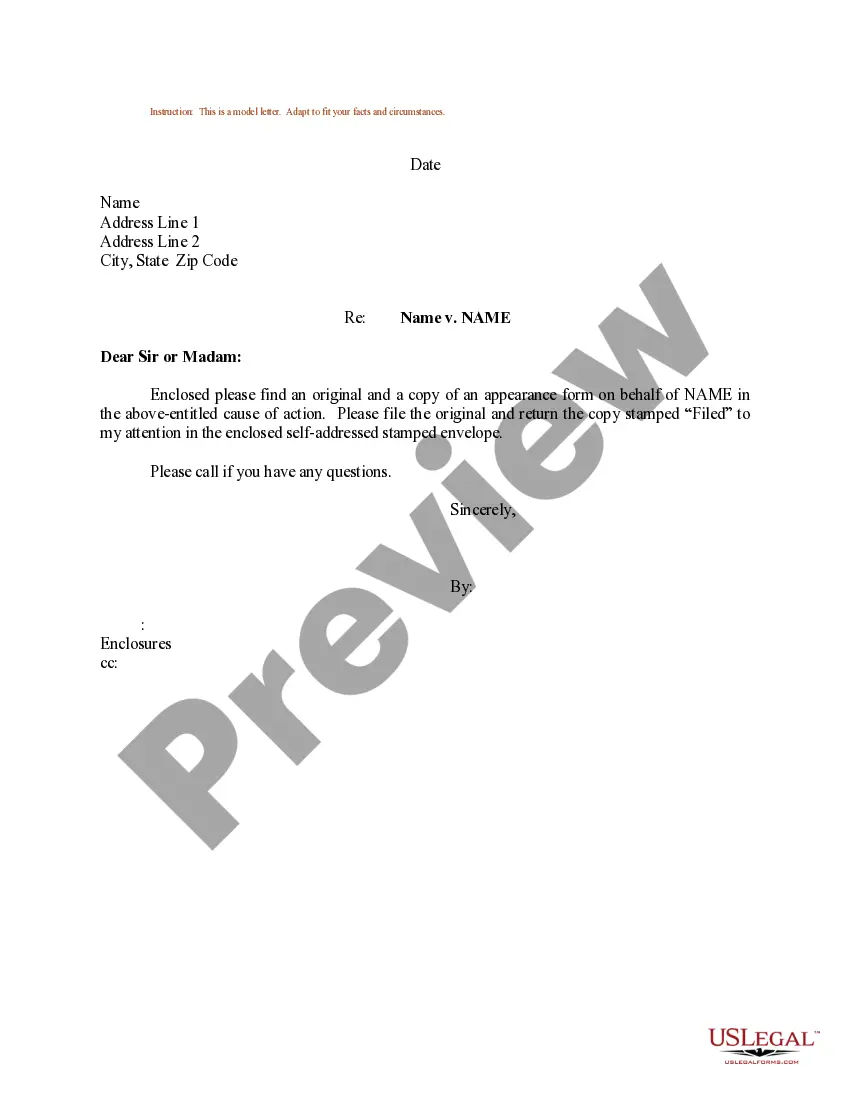
Sample Letter With Thru And Attention
Description
Get your form ready online
Our built-in tools help you complete, sign, share, and store your documents in one place.
Make edits, fill in missing information, and update formatting in US Legal Forms—just like you would in MS Word.
Download a copy, print it, send it by email, or mail it via USPS—whatever works best for your next step.
Sign and collect signatures with our SignNow integration. Send to multiple recipients, set reminders, and more. Go Premium to unlock E-Sign.
If this form requires notarization, complete it online through a secure video call—no need to meet a notary in person or wait for an appointment.
We protect your documents and personal data by following strict security and privacy standards.

Make edits, fill in missing information, and update formatting in US Legal Forms—just like you would in MS Word.

Download a copy, print it, send it by email, or mail it via USPS—whatever works best for your next step.

Sign and collect signatures with our SignNow integration. Send to multiple recipients, set reminders, and more. Go Premium to unlock E-Sign.

If this form requires notarization, complete it online through a secure video call—no need to meet a notary in person or wait for an appointment.

We protect your documents and personal data by following strict security and privacy standards.
Looking for another form?


How to fill out Sample Letter Regarding Appearance Form?
Regardless of whether it's for professional objectives or personal matters, everyone inevitably has to tackle legal issues at some point in their lives.
Filling out legal paperwork requires meticulous care, starting with selecting the appropriate form template.
Once downloaded, you can fill out the form using editing software or print it and fill it out manually. With an extensive US Legal Forms library at your disposal, you no longer need to waste time searching for the correct sample online. Utilize the library's straightforward navigation to find the ideal template for any situation.
- Obtain the sample you require by using the search bar or browsing the catalog.
- Review the form details to confirm it suits your situation, state, and location.
- Click on the form's preview to view it.
- If it's the incorrect form, return to the search function to locate the Sample Letter With Thru And Attention template you need.
- Download the file once it satisfies your requirements.
- If you possess a US Legal Forms account, simply click Log in to access templates you've previously saved in My documents.
- If you haven't created an account yet, you can acquire the form by clicking Buy now.
- Select the appropriate pricing option.
- Fill out the account registration form.
- Choose your payment method: you may utilize a credit card or PayPal.
- Select the document format you prefer and download the Sample Letter With Thru And Attention.
Form popularity
FAQ
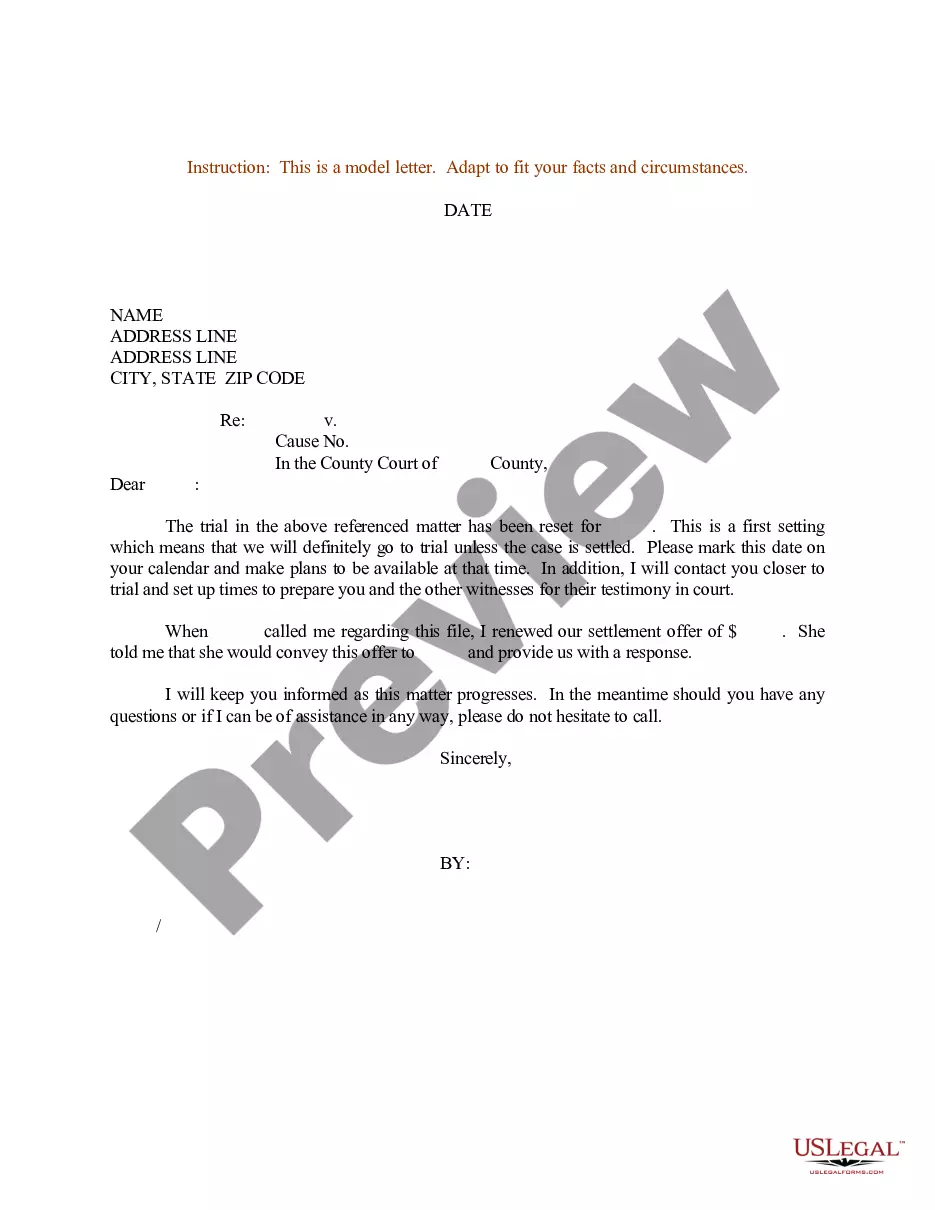
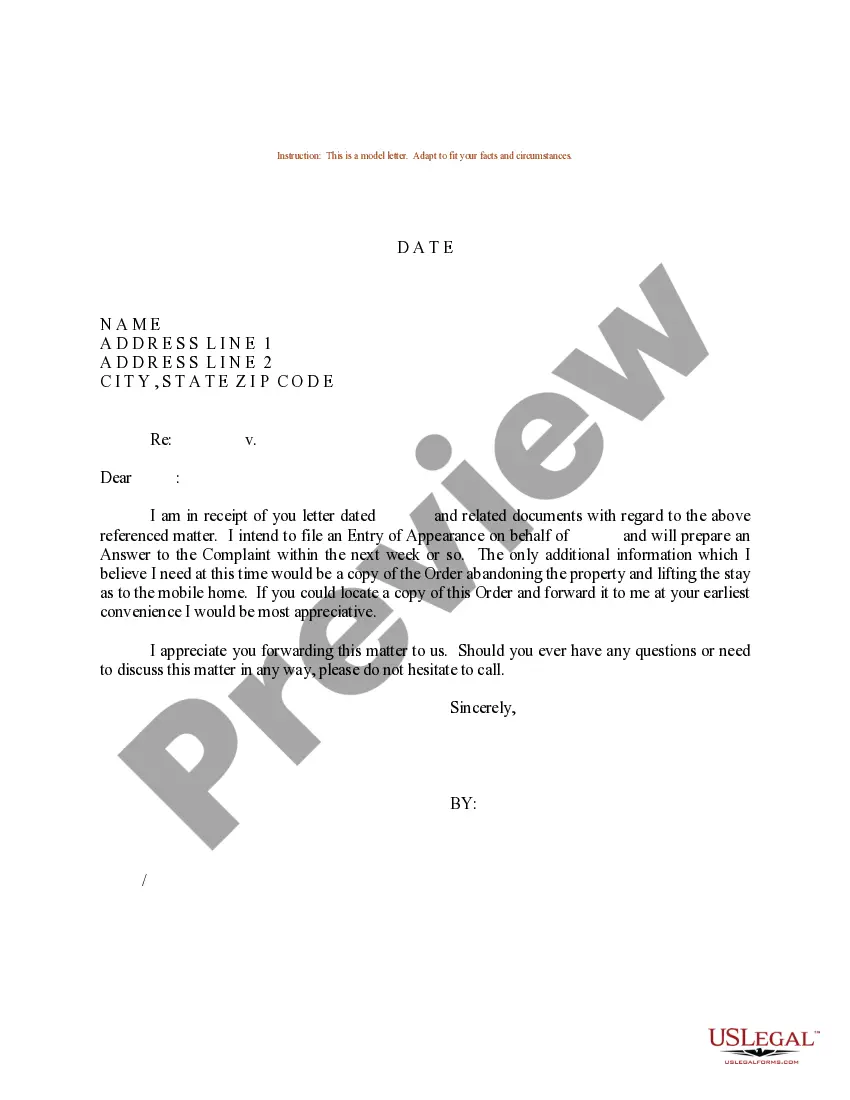
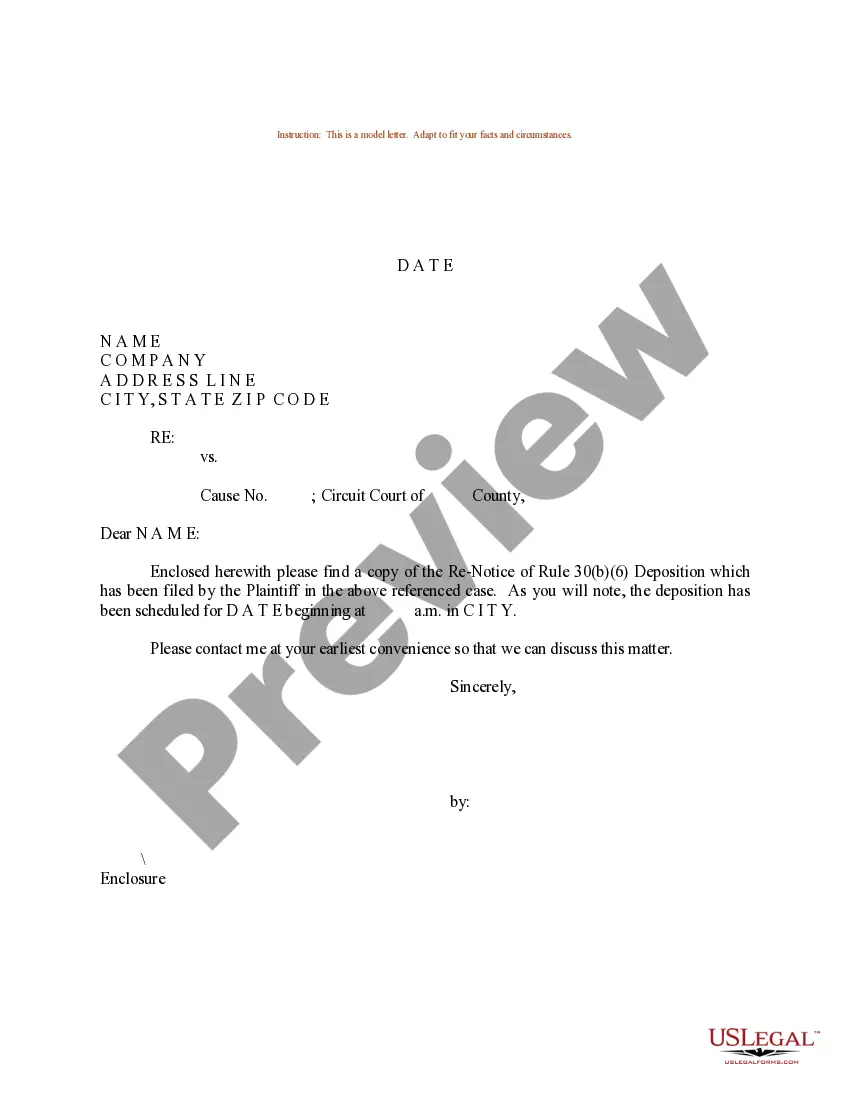
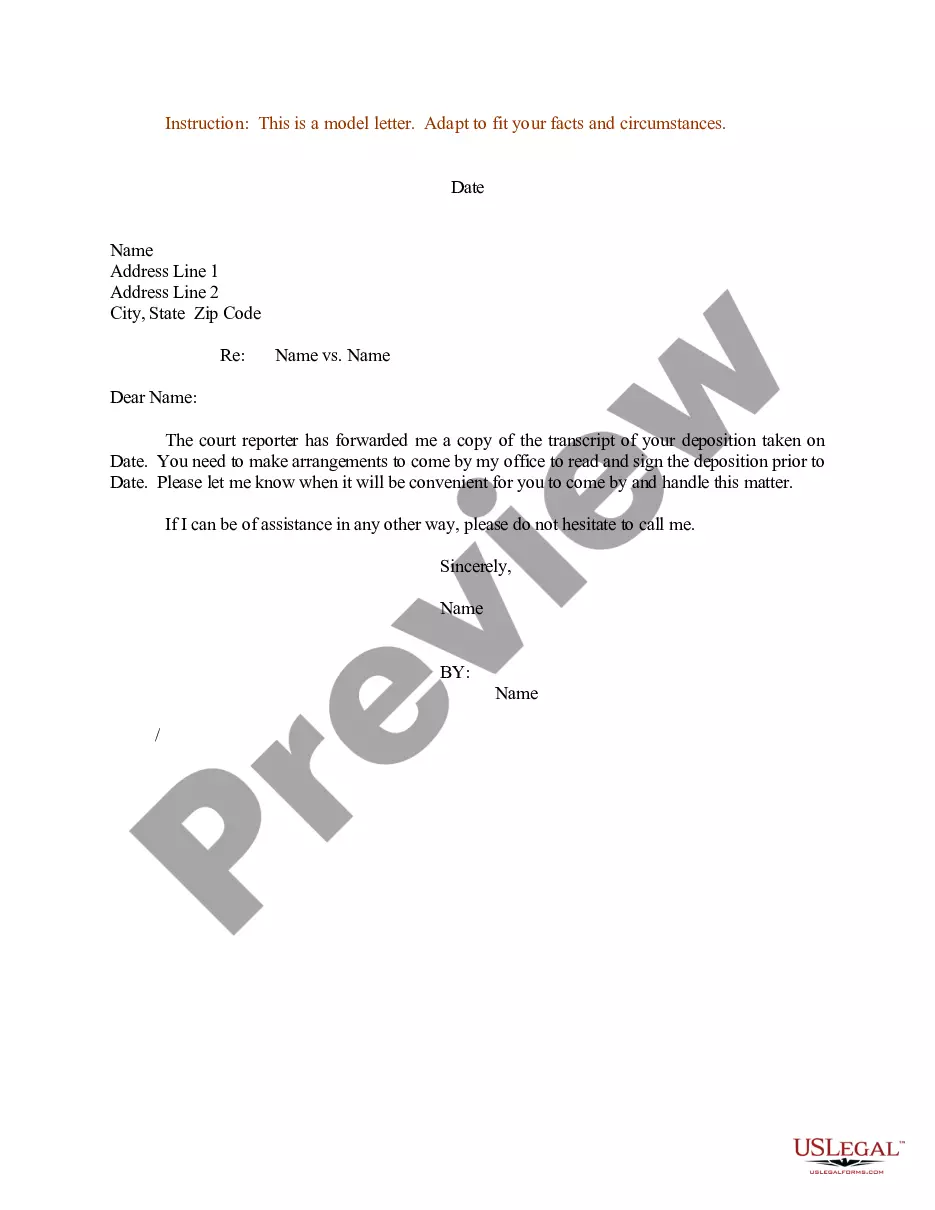
You typically use 'thru' in informal communication, especially in situations like memos, emails, or casual correspondence. It's best suited for contexts where clarity and brevity are vital without formality. To see how 'thru' can be effectively integrated, you can browse a sample letter with thru and attention, which can guide you in casual and semi-formal writing.
What Is an Estate Plan? An estate plan is a collection of documents and includes a will, guardianship designations, healthcare power of attorney, beneficiary designations, durable power of attorney, and a personal letter of intent, outlining your wishes, should you die or become incapacitated.
A California Estate Plan generally includes a Living Trust, Powers of Attorney, a Living Will, and a Pour-Over Will?for starters. It requires a specialized California Estate Planning Attorney to do it right.
Any adult who is of sound mind may make a will. 30.1-08-02. (2-502) Execution - Witnessed wills - Holographic wills. (2) Acknowledged by the testator before a notary public or other individual authorized by law to take acknowledgments.
A: While there are many different ways to approach estate planning, the four foundational documents we're focusing on here are wills, trusts, advance directives, and powers of attorney.
Does it make sense, then, to include your online passwords in your will? Probably not, say most experts, including the federal government. The Feds actually recommend naming a separate executor for ?digital assets? such as social media accounts, websites, blogs and other online accounts.
So call us today! Create an Inventory of Your Possessions. ... Consider Your Family's Needs After Your Death. ... Decide Who Your Beneficiaries Will Be. ... Indicate How You Want Your Estate Divided. ... Store Your Documents Properly. ... Update Your Estate Plan Regularly. ... Seek Help from a Trusted Estate Planning Lawyer.
Itemize Your Inventory. Add Your Non-Physical Assets. Assemble a List of Debts. Make a List of Memberships. Make Copies of Your Lists. Review Your Retirement Accounts. Update Your Insurance. Transfer on Death Designations.
5 Steps to Organize Estate Documents for Your Executor 5 Steps to Organize. ... Step 1: Create a checklist of important documents (and their locations) ... Step 2: List the names and contact information of key associates. ... Step 3: Catalog your digital asset inventory. ... Step 4: Ensure all documents are organized and accessible.