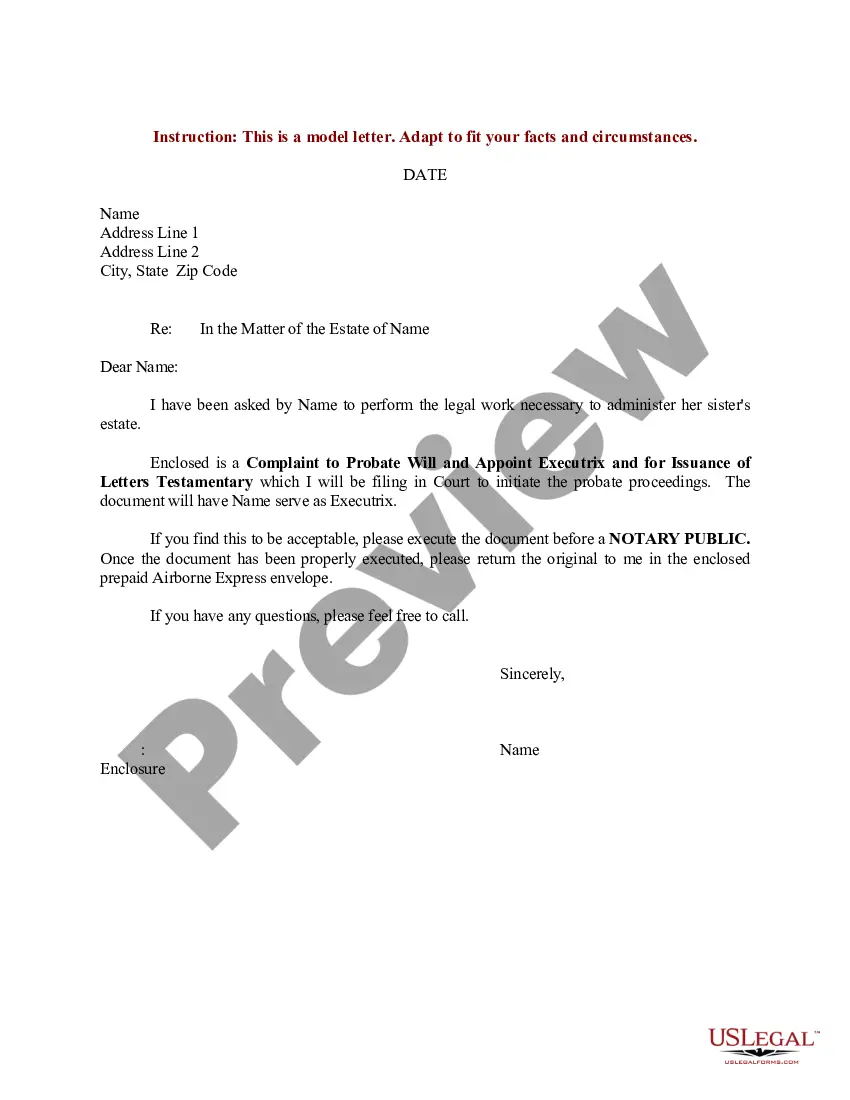
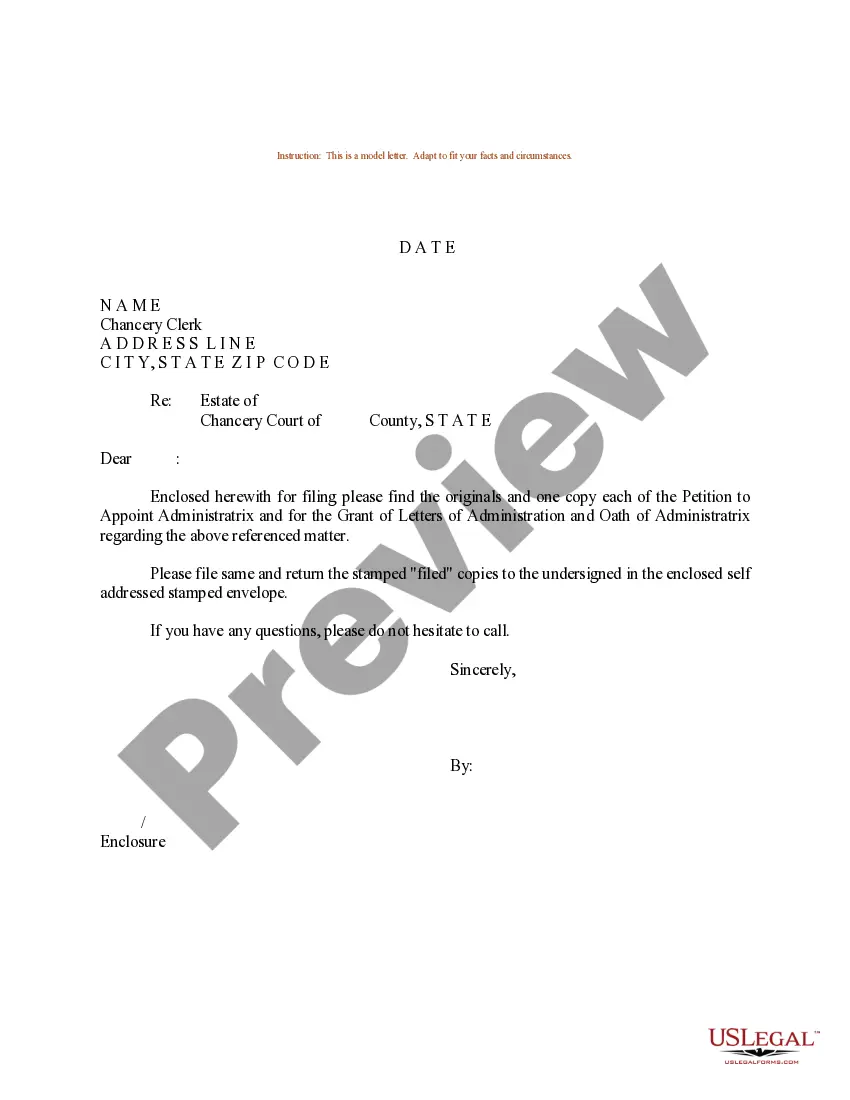
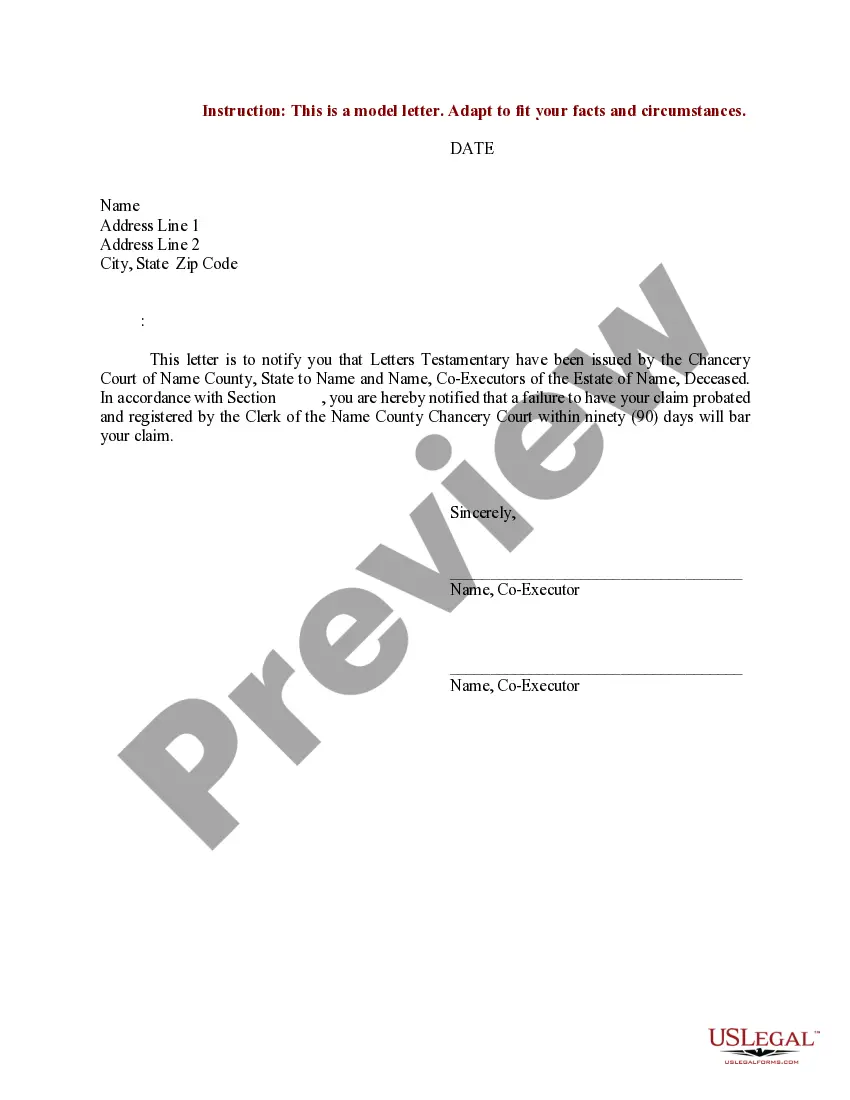
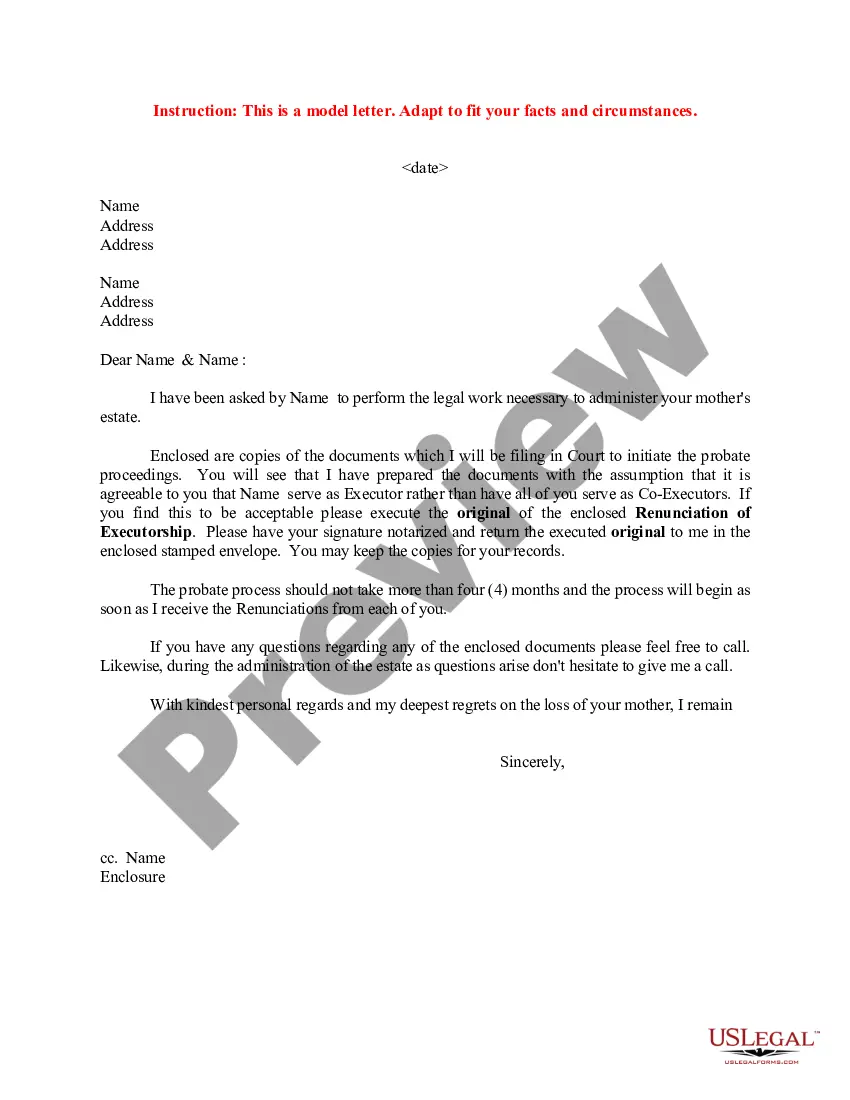
Sample Letter Estate Administration Without Will
Description
Get your form ready online
Our built-in tools help you complete, sign, share, and store your documents in one place.
Make edits, fill in missing information, and update formatting in US Legal Forms—just like you would in MS Word.
Download a copy, print it, send it by email, or mail it via USPS—whatever works best for your next step.
Sign and collect signatures with our SignNow integration. Send to multiple recipients, set reminders, and more. Go Premium to unlock E-Sign.
If this form requires notarization, complete it online through a secure video call—no need to meet a notary in person or wait for an appointment.
We protect your documents and personal data by following strict security and privacy standards.

Make edits, fill in missing information, and update formatting in US Legal Forms—just like you would in MS Word.

Download a copy, print it, send it by email, or mail it via USPS—whatever works best for your next step.

Sign and collect signatures with our SignNow integration. Send to multiple recipients, set reminders, and more. Go Premium to unlock E-Sign.

If this form requires notarization, complete it online through a secure video call—no need to meet a notary in person or wait for an appointment.

We protect your documents and personal data by following strict security and privacy standards.
Looking for another form?
How to fill out Sample Letter For Estate Administration?
Managing legal documents can be daunting, even for seasoned professionals.
When you're in search of a Template Letter for Estate Administration Without a Will and lack the time to look for the correct and up-to-date version, the process can be stressful.
With US Legal Forms, you can.
Obtain specific legal and organizational forms tailored to your state or county. US Legal Forms fulfills any needs you might encounter, ranging from personal to business documents, all in one location.
If this is your first experience with US Legal Forms, create a complimentary account and gain unlimited access to all the benefits of the library. Here are the steps to take after finding the form you need.
Confirm this is the correct form by previewing it and reviewing its description.
- Utilize enhanced tools to complete and manage your Template Letter for Estate Administration Without a Will.
- Access a wealth of articles, guides, and resources pertinent to your circumstances and needs.
- Save time and effort searching for the documents you require, and leverage US Legal Forms’ advanced search and Review tool to locate the Template Letter for Estate Administration Without a Will and obtain it.
- If you hold a membership, Log In to your US Legal Forms account, search for the form, and download it.
- Check the My documents tab to view the documents you have previously saved and manage your files as desired.
- A robust online form library can be a significant advantage for anyone looking to handle these matters efficiently.
- US Legal Forms is a forefront player in online legal forms, offering more than 85,000 state-specific legal templates accessible whenever you need them.
Form popularity
FAQ
The administrative letter serves as an official document that grants authority to the appointed individual to manage the estate. It outlines the executor's power to collect and distribute assets while adhering to state laws. For those navigating estate issues without a will, a sample letter for estate administration without a will can provide a clear template for creating this essential document. This guidance can streamline the process and help reduce confusion.
An executor may face several challenges, especially when managing an estate without a will. One primary disadvantage is the potential for disputes among heirs, which can complicate the administration process. Additionally, if someone steps forward to contest the appointment, it can delay the entire process. Using a sample letter for estate administration without a will can help clarify the executor's role and responsibilities.
To prove an executor in Tennessee when there is no will, you will need to petition the probate court. You may need to show that you are the person entitled to be the administrator based on the state's intestate succession guidelines. This process can seem daunting, but resources like a sample letter for estate administration without a will can provide clarity and structure to your application. Having proper documentation on hand will support your case and aid the court in appointing you as the administrator.
Generally, if there is no will, an executor cannot simply take everything from the estate. Instead, the estate will be distributed according to Tennessee's intestate succession laws, which dictate who inherits what. The executor's role is to manage the estate and distribute assets fairly as outlined by these laws. Using a sample letter for estate administration without a will can help you understand the executor's responsibilities in this situation.
In Tennessee, when someone dies without a will, their estate will go through a process called intestate succession. This means that the state laws will determine who receives the deceased person's assets. Typically, the spouse and children are prioritized, but it can vary based on individual family circumstances. You can use a sample letter for estate administration without a will to guide you through notifying interested parties and starting the legal process.
An administrator has significant power over the estate but must act within the law and for the benefit of the heirs. They manage assets, settle debts, and distribute remaining property according to state laws. However, they must provide transparent accounting to the court and to the beneficiaries. For specific guidelines, consider using a sample letter estate administration without will.
An executor and an administrator serve similar roles, but they differ in how they are appointed. An executor is named in a will, whereas an administrator is appointed by the court when there is no will. Both roles involve managing the estate, but the authority of an administrator comes from the court. Understanding the differences can help clarify your situation regarding a sample letter estate administration without will.
Writing a letter cannot replace a legally binding will, as it lacks formal requirements for validation. However, a letter can express your wishes and intentions to your loved ones. For formal estate administration, it's vital to have a will or a Letter of Administration to ensure your estate is handled correctly. A sample letter estate administration without will offers a framework for your necessary communication.
Filing letters of administration without a will involves preparing a petition and submitting it to the probate court. Include necessary documents such as the death certificate, lists of heirs, and details about the deceased's assets. The court evaluates your petition and will schedule a hearing to finalize the appointment. A sample letter for estate administration without a will can guide your paperwork.
An executor is the person named in a will to manage the estate, while a letter of administration is a court document granting authority to someone to manage an estate without a will. In essence, the executor acts based on the will, whereas the administrator operates under court appointment. Understanding these terms is crucial, especially when dealing with a sample letter for estate administration without a will.