Testamentary Probate Letter For Grants
Description
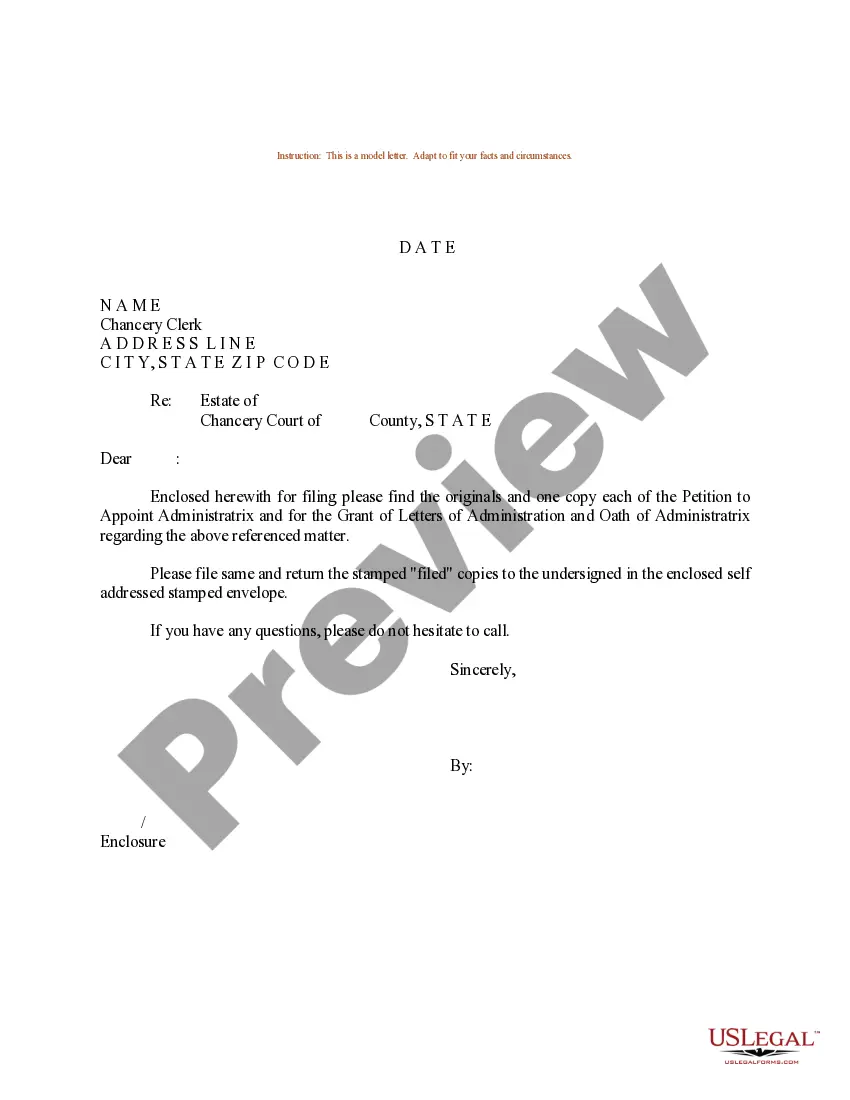
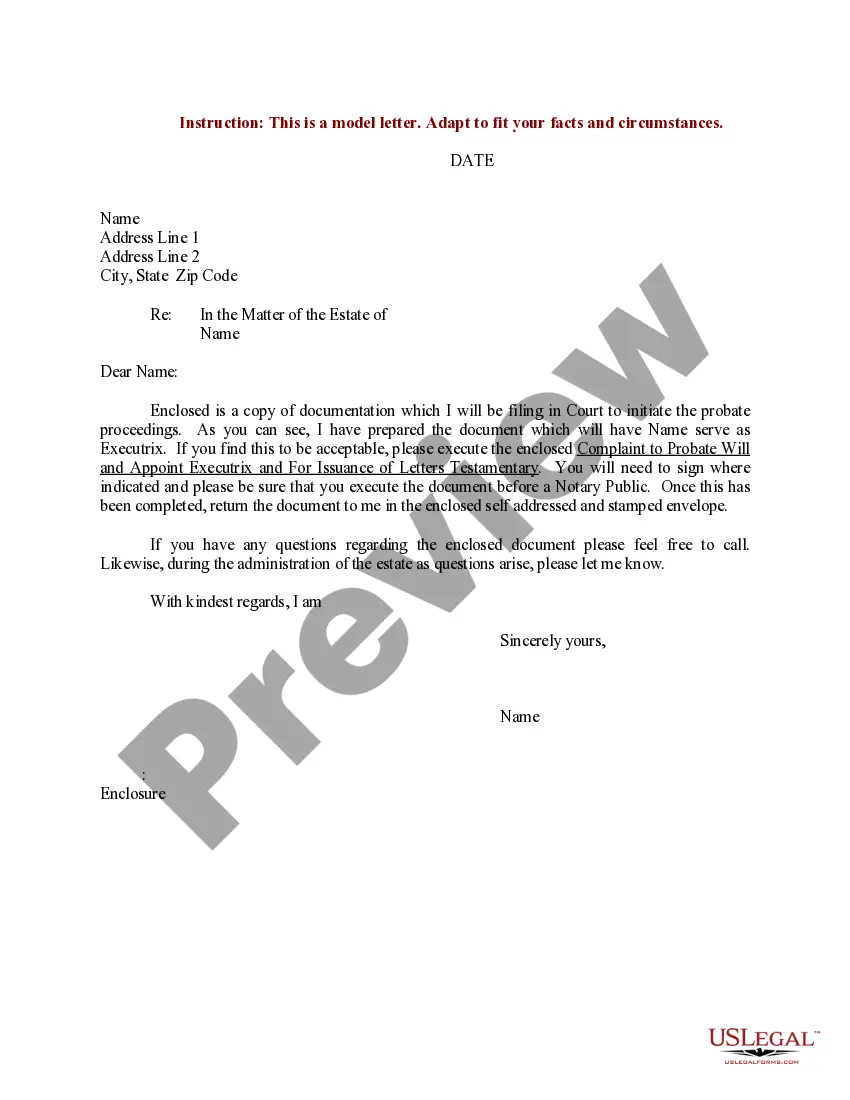
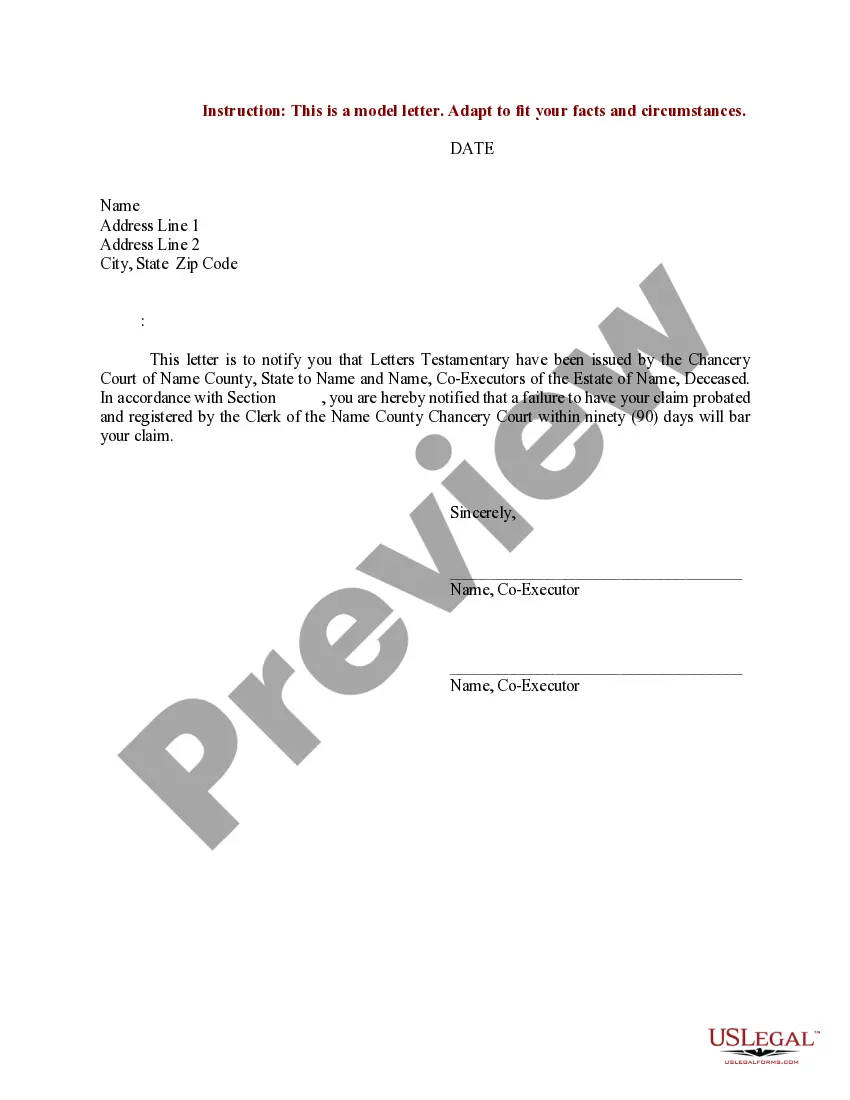
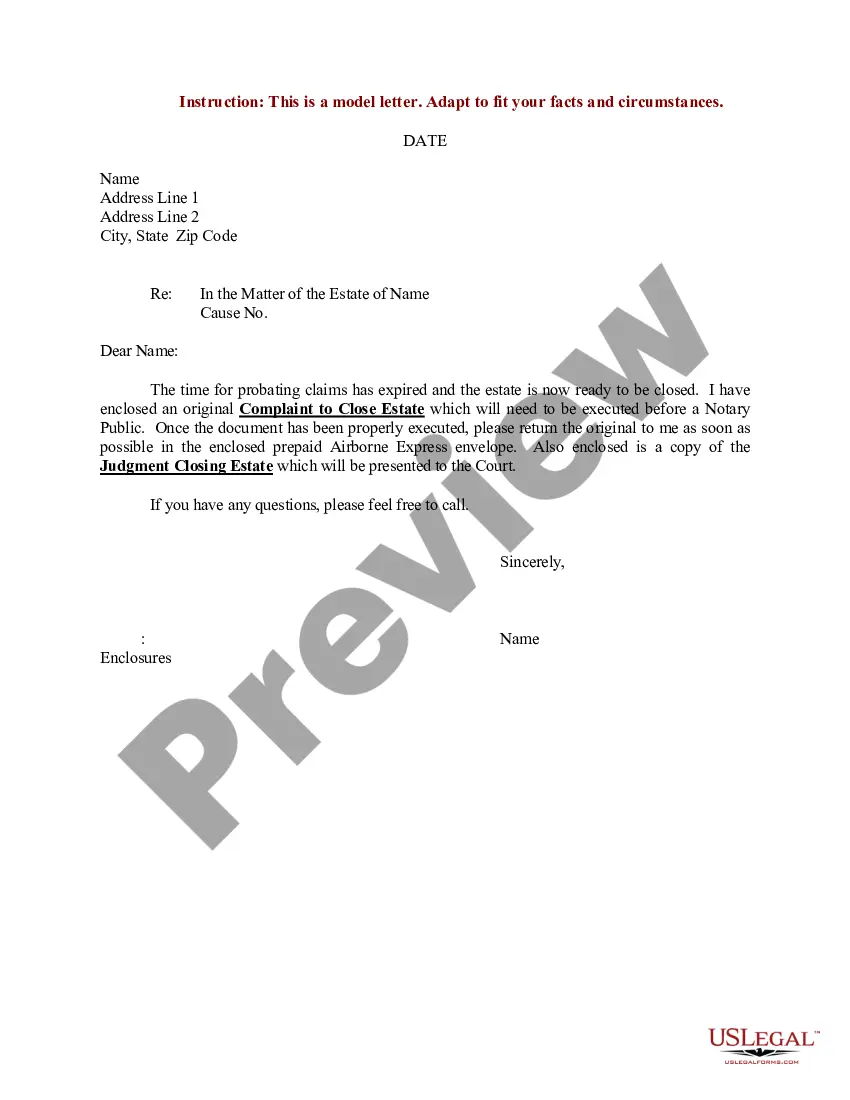


How to fill out Sample Letter For Complaint To Probate Will And Appoint Co-Executrixes And Issuance Of Letters Testamentary?
- If you're a returning user, simply log in to your account and download the necessary form template by clicking the Download button. Ensure that your subscription is active; if not, renew it based on your payment plan.
- For first-time users, start by previewing the form description to verify that it meets your needs and complies with local regulations.
- Utilize the Search tab to find alternative templates if the selected one does not fit your requirements.
- Once you find the appropriate document, click the Buy Now button and choose your preferred subscription plan. You will need to create an account to access the resources.
- Proceed to make your purchase, providing payment details via credit card or PayPal to complete the subscription.
- After payment, download your form to your device. You can access it anytime from the My Forms menu in your profile.
Concluding, US Legal Forms simplifies the process of obtaining a Testamentary probate letter for grants by providing an extensive range of resources at competitive prices. With access to premium experts, you can ensure that your legal documents are completed accurately and efficiently.
Start your journey with US Legal Forms today and access legal peace of mind!
Form popularity
FAQ
Letters of authority, including letters of testamentary, do not have a set expiration date, but they are limited to the lifecycle of the estate's administration. If the estate is not settled efficiently, there might be occasions where the court requires a new appointment, or the executor might need to seek renewal. Thus, proactively managing the probate process ensures your testamentary probate letter for grants remains effective. Consider using US Legal Forms for assistance in keeping your paperwork in order.
Letters of testamentary are typically valid until the estate is settled and closed, which could take several months to a few years. The duration may vary depending on your state laws and the complexity of the estate. It's essential to be aware that this testamentary probate letter for grants remains effective as long as you are acting under the authority granted by the probate court. Always check with legal resources for updates regarding your specific situation.
Another common name for a letter of testamentary is a grant of letters testamentary. This document serves as official proof that the executor has the authority to manage the deceased's estate. Many people refer to it simply as a testamentary probate letter for grants. Understanding these terms can help clarify the probate process for you.
To obtain a testamentary probate letter for grants, you first need to file a petition with your local probate court. This petition should include relevant documents, like the deceased's will and information about the estate. Once the court approves your petition, they will issue the letter of testamentary. You may find the process easier by using resources from platforms like US Legal Forms, which can guide you through the steps.
A testamentary order is a court-issued document that validates a will and specifies the authority granted to an executor. This order is crucial because it allows the executor to take necessary actions to manage the estate. It serves as an official confirmation of the executor's role in the probate process.
A letter of testamentary is issued when a decedent left a valid will and appoints an executor, while a letter of administration applies to estates without a will. The testamentary probate letter for grants allows the executor to manage the estate according to the deceased's wishes. In contrast, the administrator makes decisions based on state laws.
To order letters testamentary, start by filing a petition in probate court. This process typically includes submitting the original will, filling out necessary forms, and paying any required fees. Once the court approves your request, you will receive the testamentary probate letter for grants, allowing you to execute the will.
To acquire a certified letter of testamentary, you will need to request it from the probate court that issued the original letter. Provide your identification and any relevant case details to the clerk. This certified copy serves as a legal proof of your authority in the estate's management and can be crucial for fulfilling your obligations.
To obtain an updated testamentary probate letter for grants, you should file a petition with the probate court in your jurisdiction. This petition should include any new information or changes since the original letter was issued. After submitting the necessary documents, the court will review your petition and issue an updated letter if approved.
An alternative to a letter of testamentary is a small estate affidavit. This document allows beneficiaries to claim assets without going through formal probate. It's a simplified method used when the estate's total value falls under a specific threshold. If you're interested in learning more about your options, USLegalForms offers resources that can guide you in determining the best path for your situation.