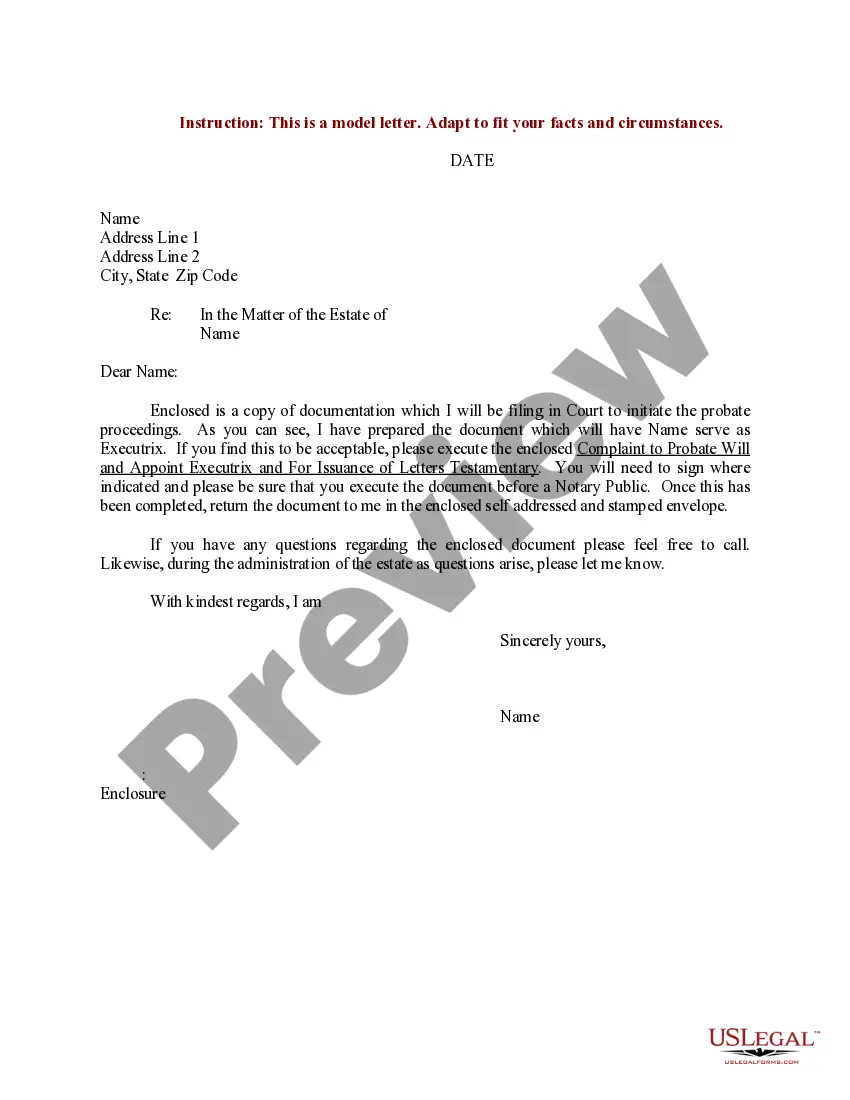
Sample Probate Letter To Bank
Description
Get your form ready online
Our built-in tools help you complete, sign, share, and store your documents in one place.
Make edits, fill in missing information, and update formatting in US Legal Forms—just like you would in MS Word.
Download a copy, print it, send it by email, or mail it via USPS—whatever works best for your next step.
Sign and collect signatures with our SignNow integration. Send to multiple recipients, set reminders, and more. Go Premium to unlock E-Sign.
If this form requires notarization, complete it online through a secure video call—no need to meet a notary in person or wait for an appointment.
We protect your documents and personal data by following strict security and privacy standards.

Make edits, fill in missing information, and update formatting in US Legal Forms—just like you would in MS Word.

Download a copy, print it, send it by email, or mail it via USPS—whatever works best for your next step.

Sign and collect signatures with our SignNow integration. Send to multiple recipients, set reminders, and more. Go Premium to unlock E-Sign.

If this form requires notarization, complete it online through a secure video call—no need to meet a notary in person or wait for an appointment.

We protect your documents and personal data by following strict security and privacy standards.
Looking for another form?
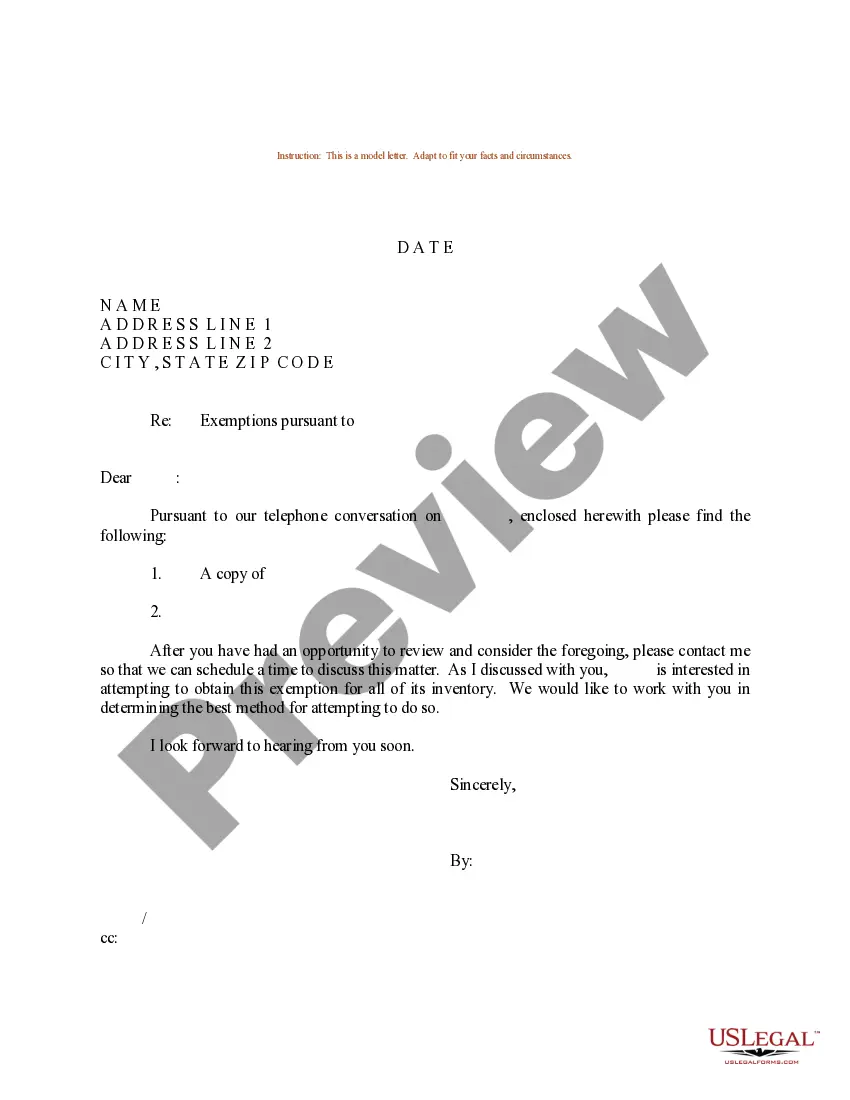
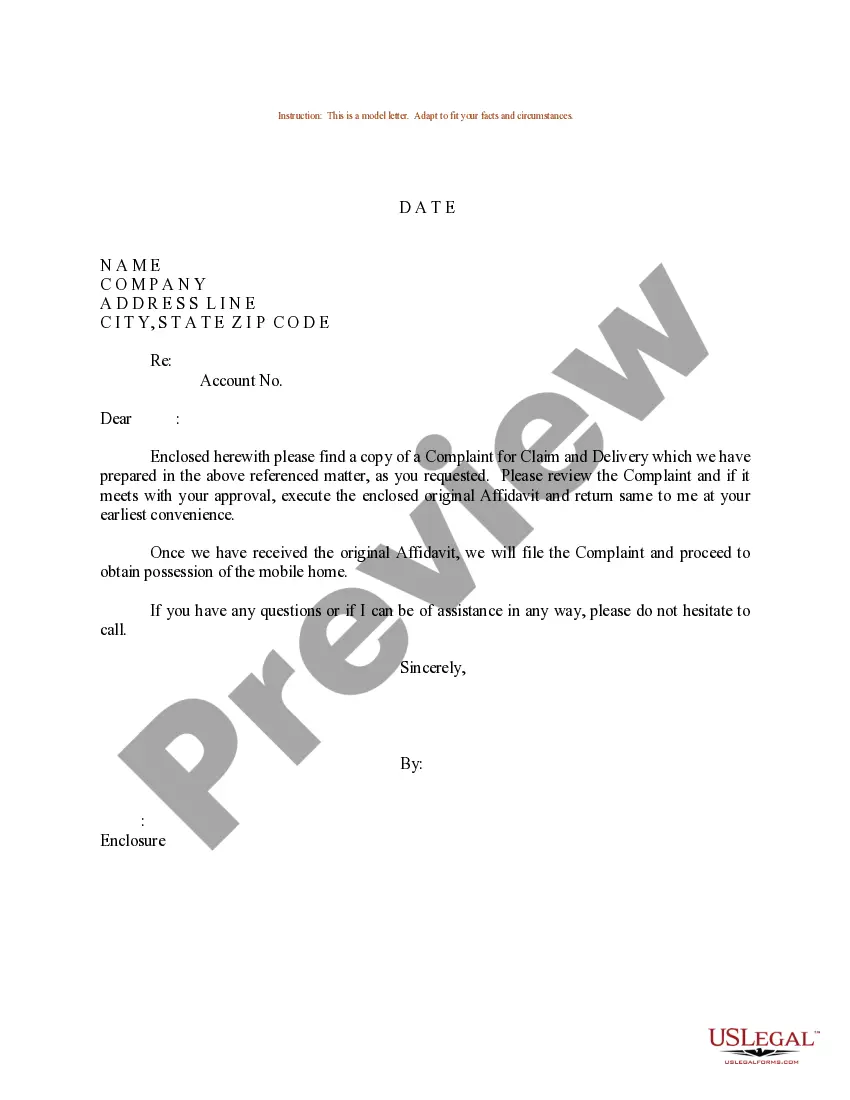
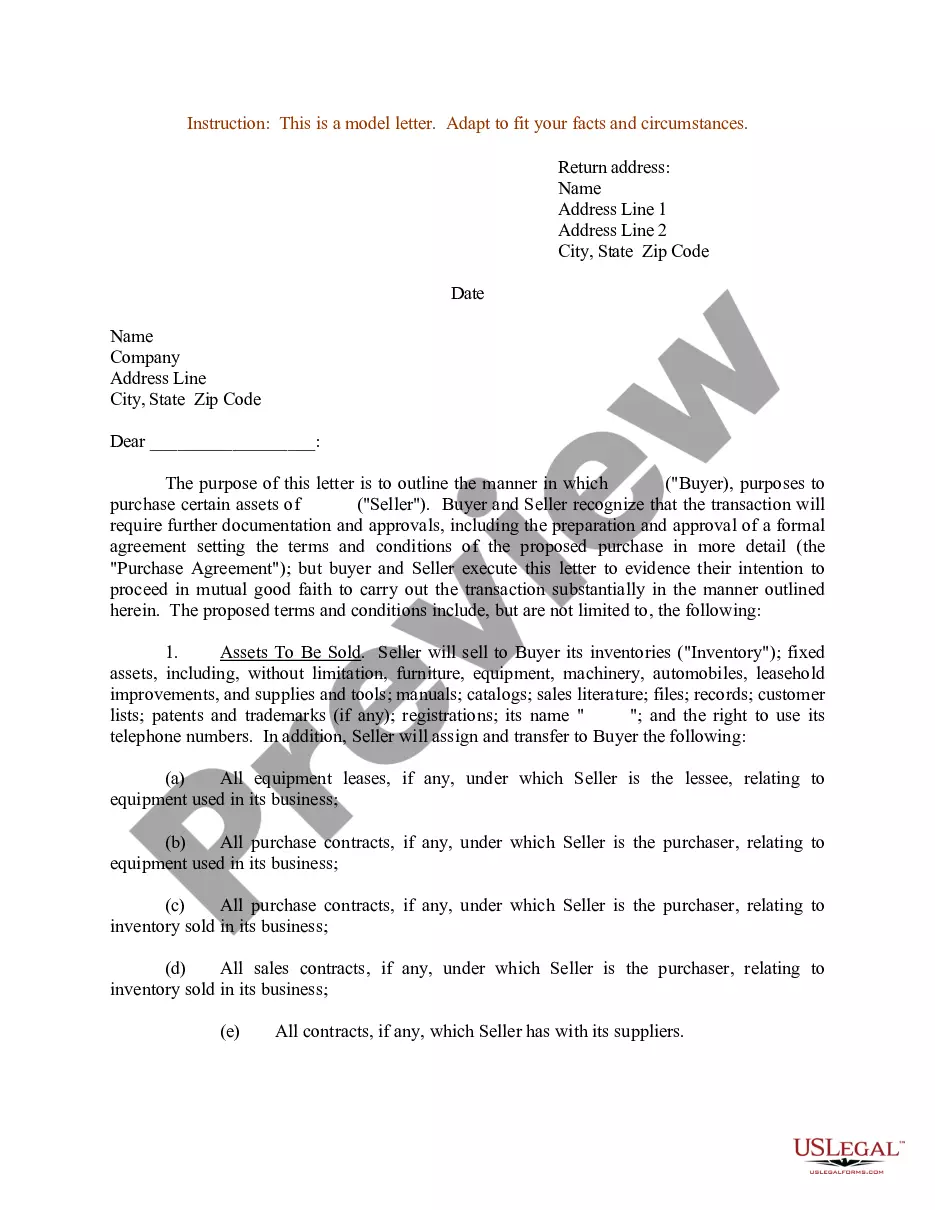
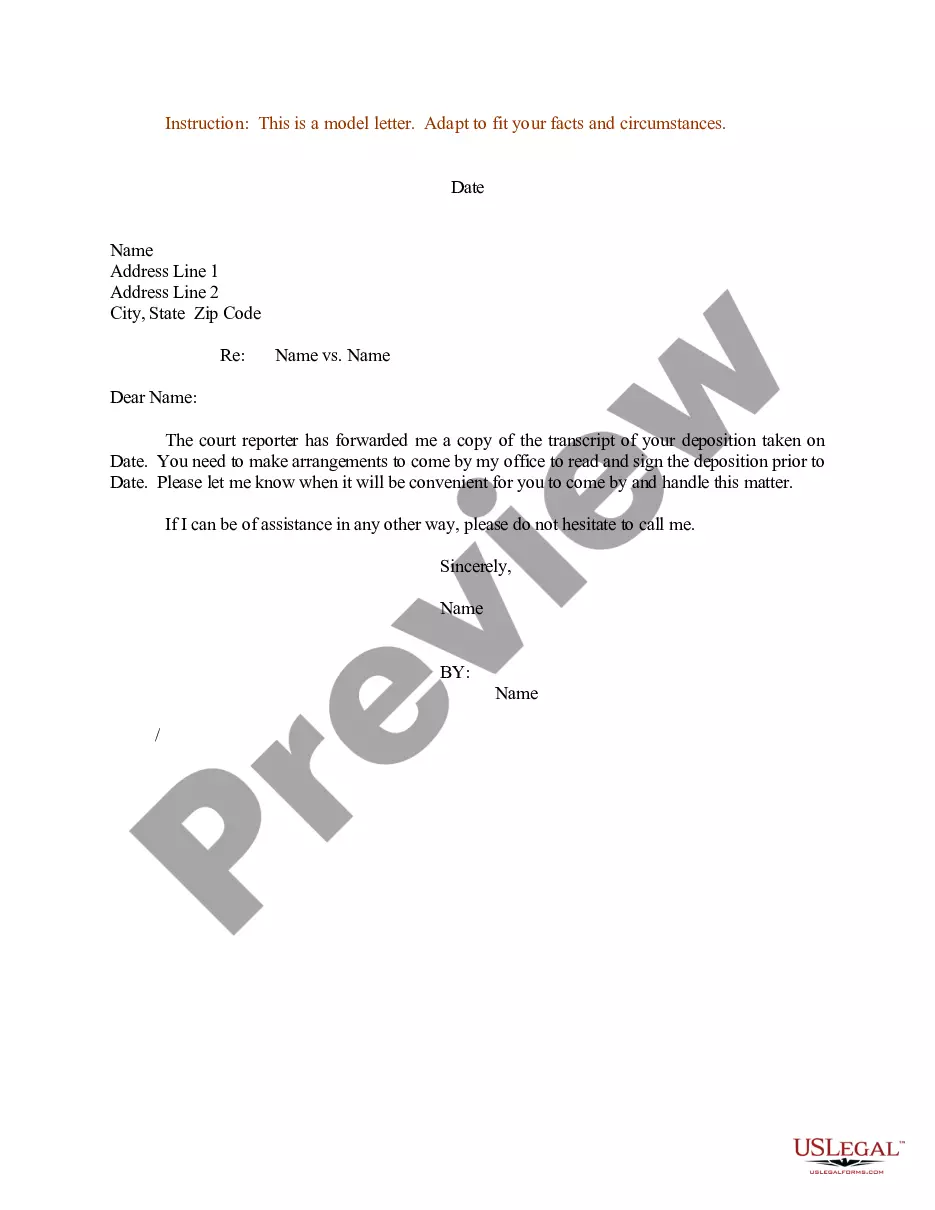
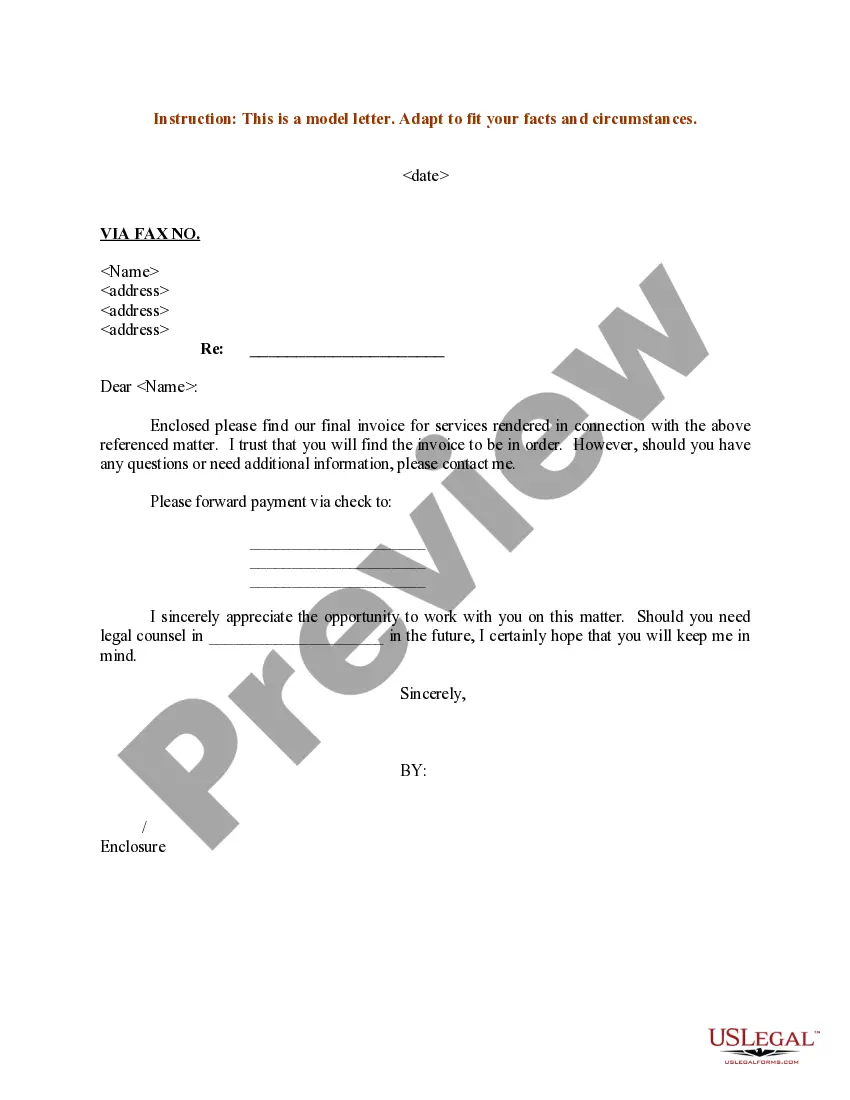
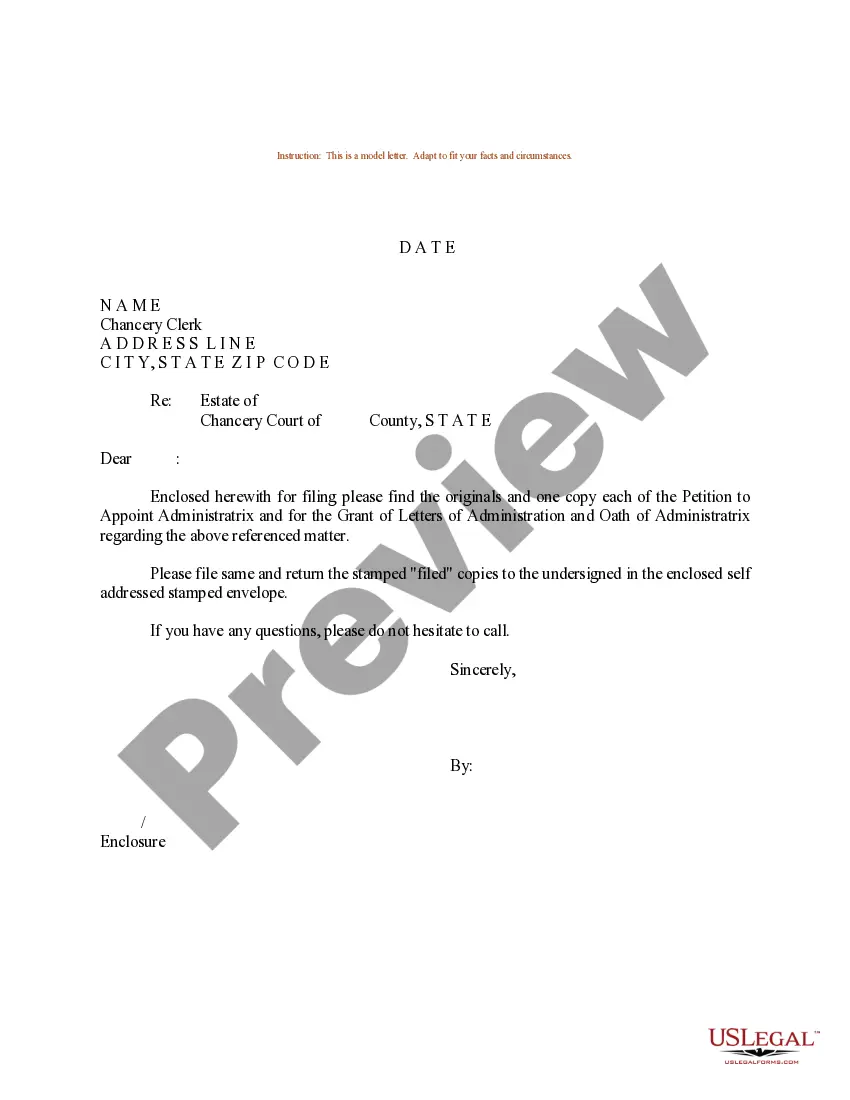
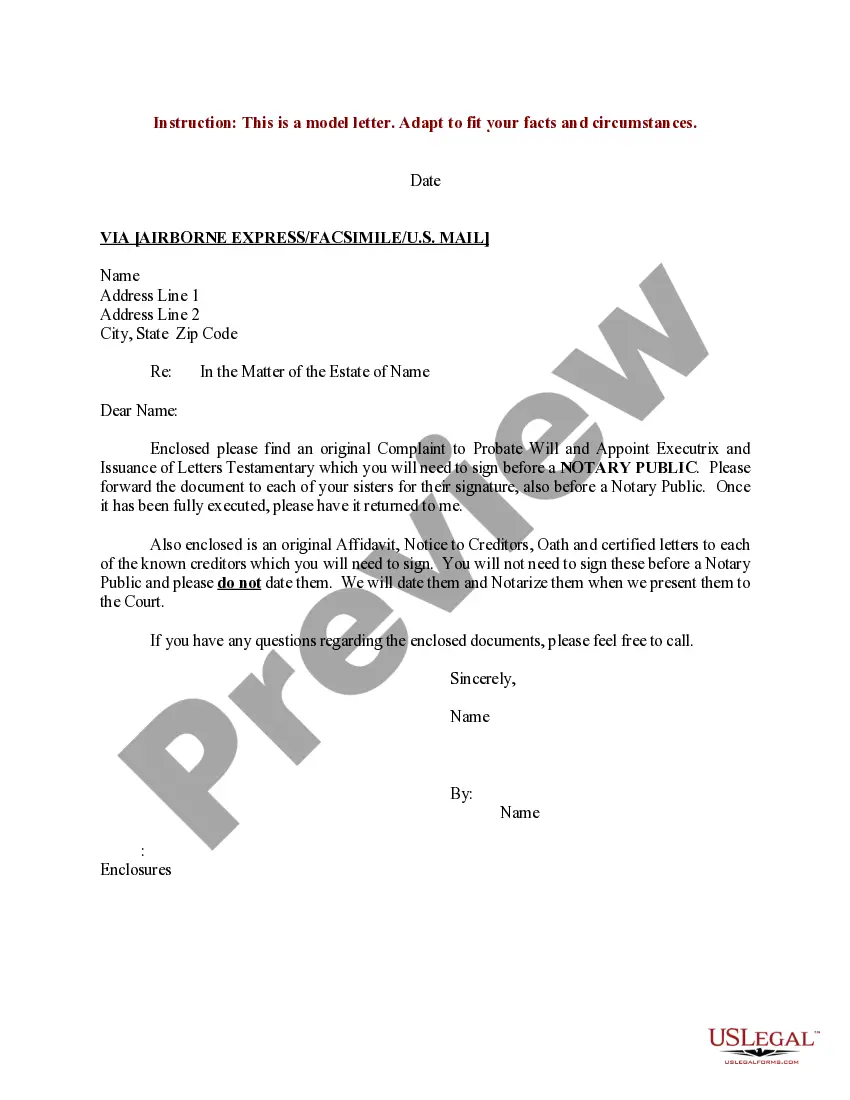
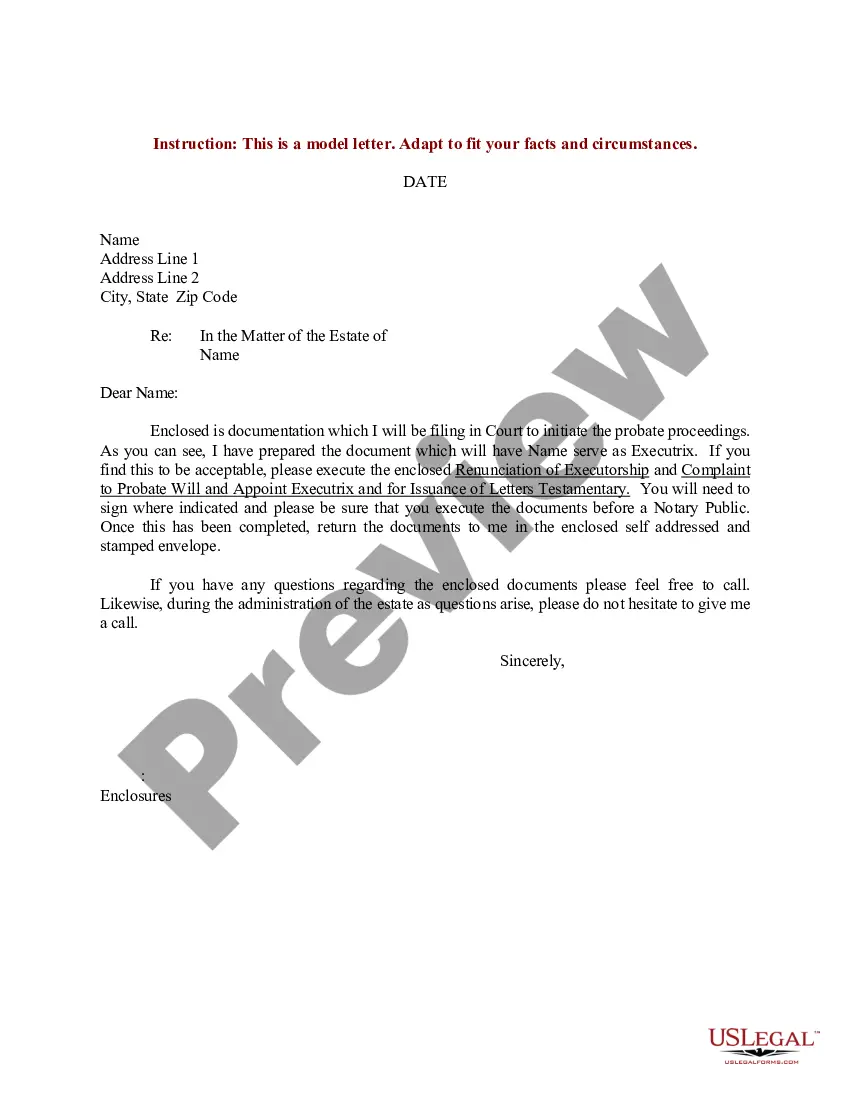
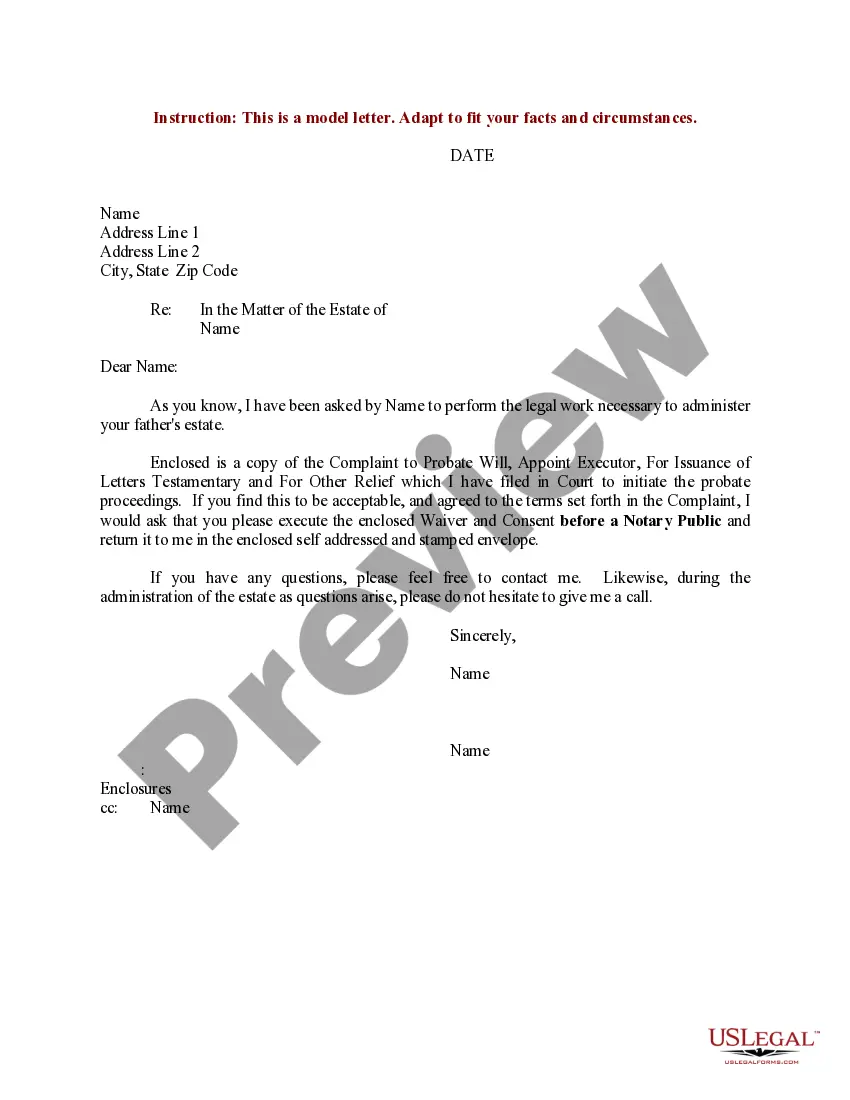
How to fill out Sample Letter For Initiate Probate Proceedings For Estate - Complaint To Probate Will?
The Example Probate Correspondence To Financial Institution presented on this site is a reusable legal document created by expert attorneys in accordance with federal and state regulations.
For over 25 years, US Legal Forms has assisted individuals, businesses, and legal professionals with more than 85,000 authenticated, state-specific forms for any commercial or personal situation. It’s the fastest, simplest, and most reliable method to acquire the documentation you require, as the service ensures bank-level data protection and anti-malware safeguards.
Choose the format you desire for your Example Probate Correspondence To Financial Institution (PDF, DOCX, RTF) and download the document to your device.
- Locate the document you require and review it.
- Search through the file you found and preview it or evaluate the form's description to verify it meets your requirements. If it doesn’t, utilize the search function to find the correct one. Click Buy Now once you’ve identified the document you need.
- Select a subscription and Log Into your account.
- Choose the pricing option that fits your needs and create an account. Use PayPal or a credit card for a quick transaction. If you already have an account, Log In and check your subscription to continue.
- Obtain the editable template.
Form popularity
FAQ
A good letter of instruction should contain the following information: A complete list of all assets. The whereabouts of any tangible assets that are not readily accessible. Necessary information about all liquid assets, including bank, brokerage, retirement, and investment accounts.
This is to notify the bank that my father, (name), had an account in your bank (account number). On (date), he passed away leaving behind me, his elder son, his wife and his daughter. I am writing this letter on behalf of my mother.
I am the personal representative of [deceased] who died on [date]. I enclose a copy of the death certificate, which I'd be grateful if you would return once you have noted the details. Please can you let me know: the balance on the account at the date of death.
The letter of instruction should include the following information: A summary of all assets and debts. The location of valuable physical assets (e.g., jewelry, art, collectibles, real estate) Details about your retirement and investment accounts.
Closing Deceased Accounts A bank usually cannot close a deceased account until the person's estate has been settled and closed, typically through probate. The probate court will appoint an executor or administrator if one is not named in the deceased's will or if the deceased didn't leave a will.