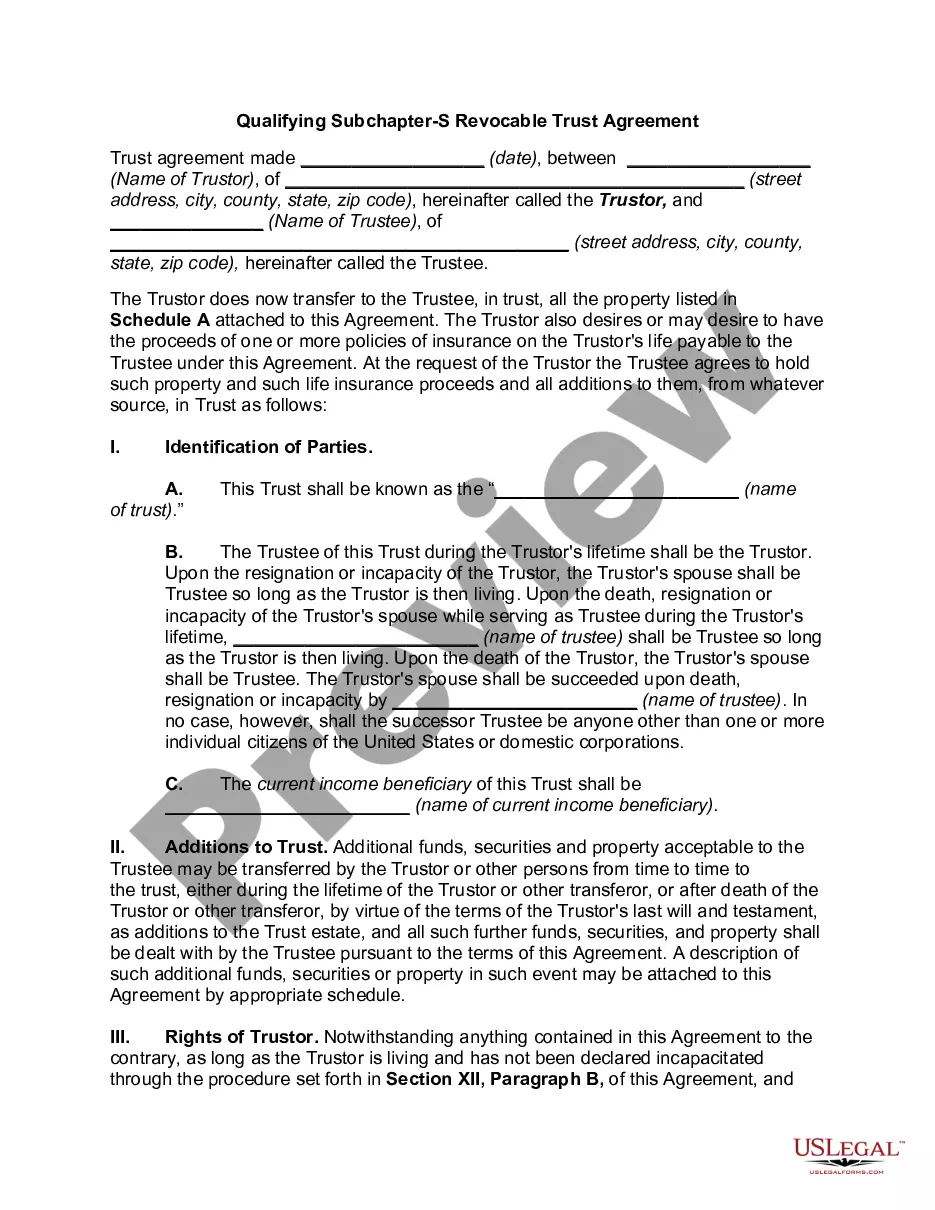
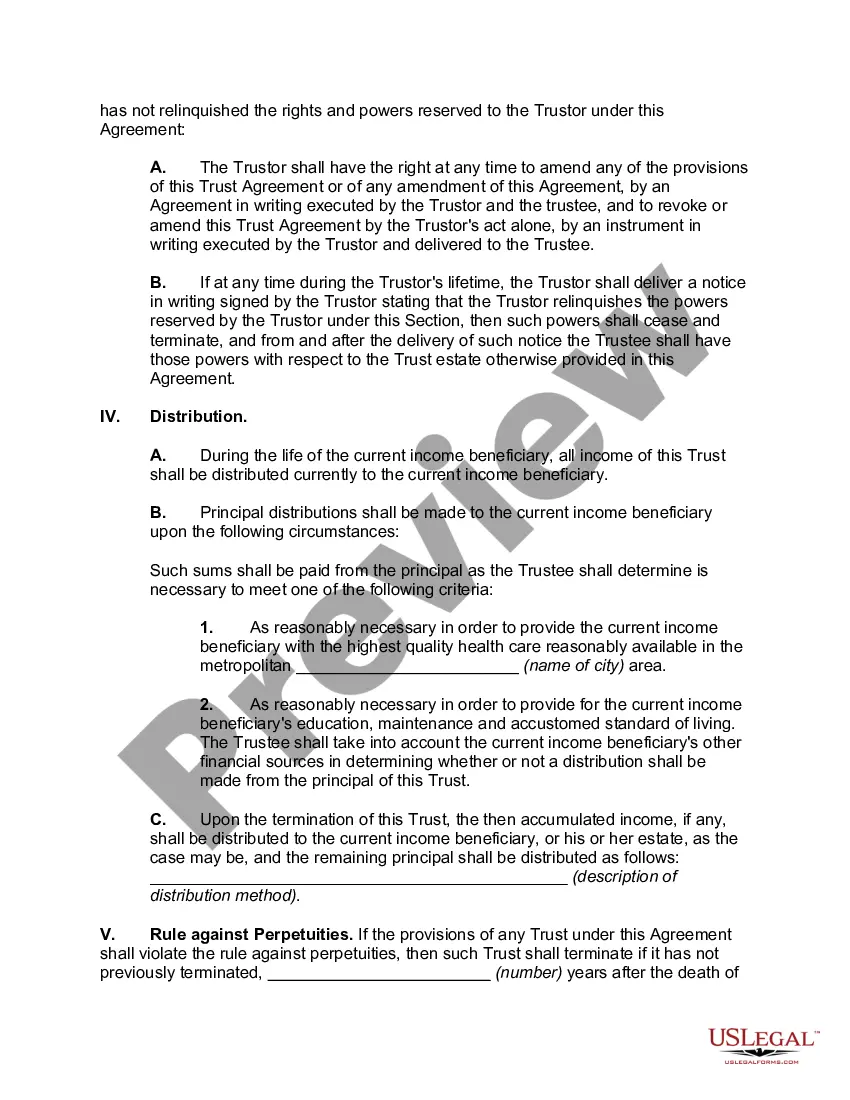
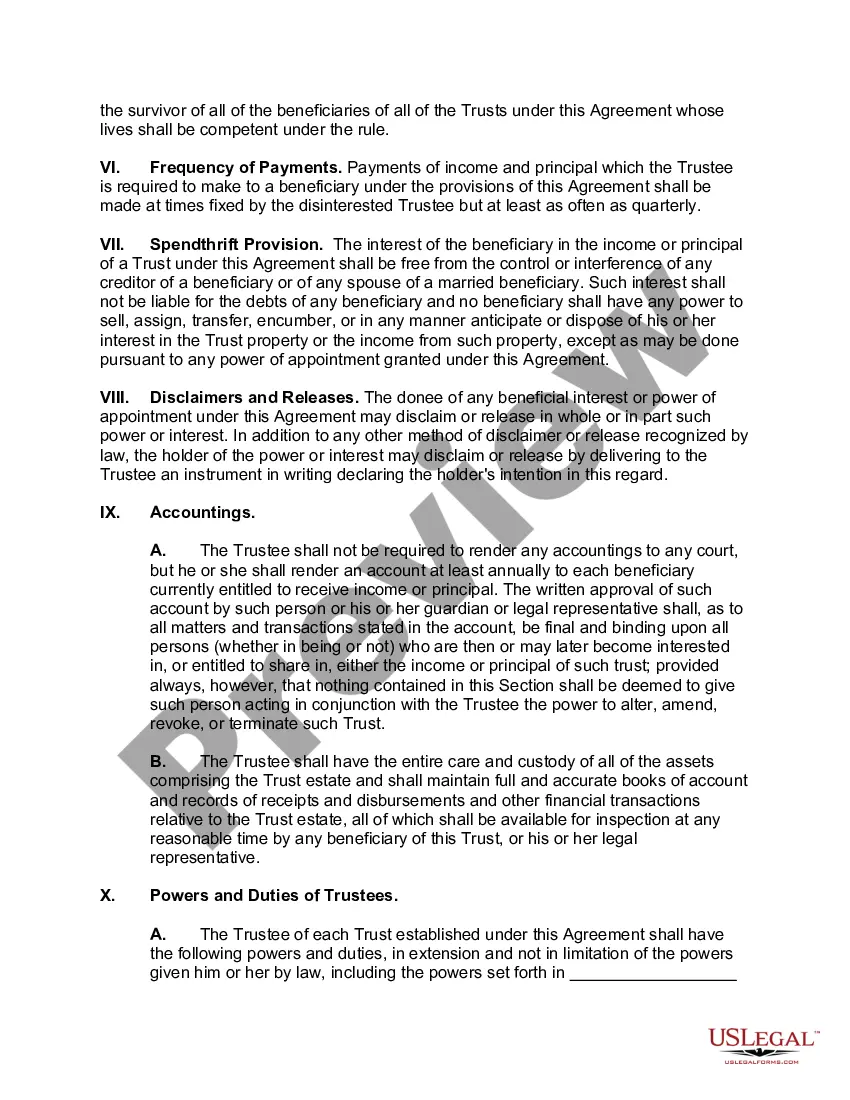
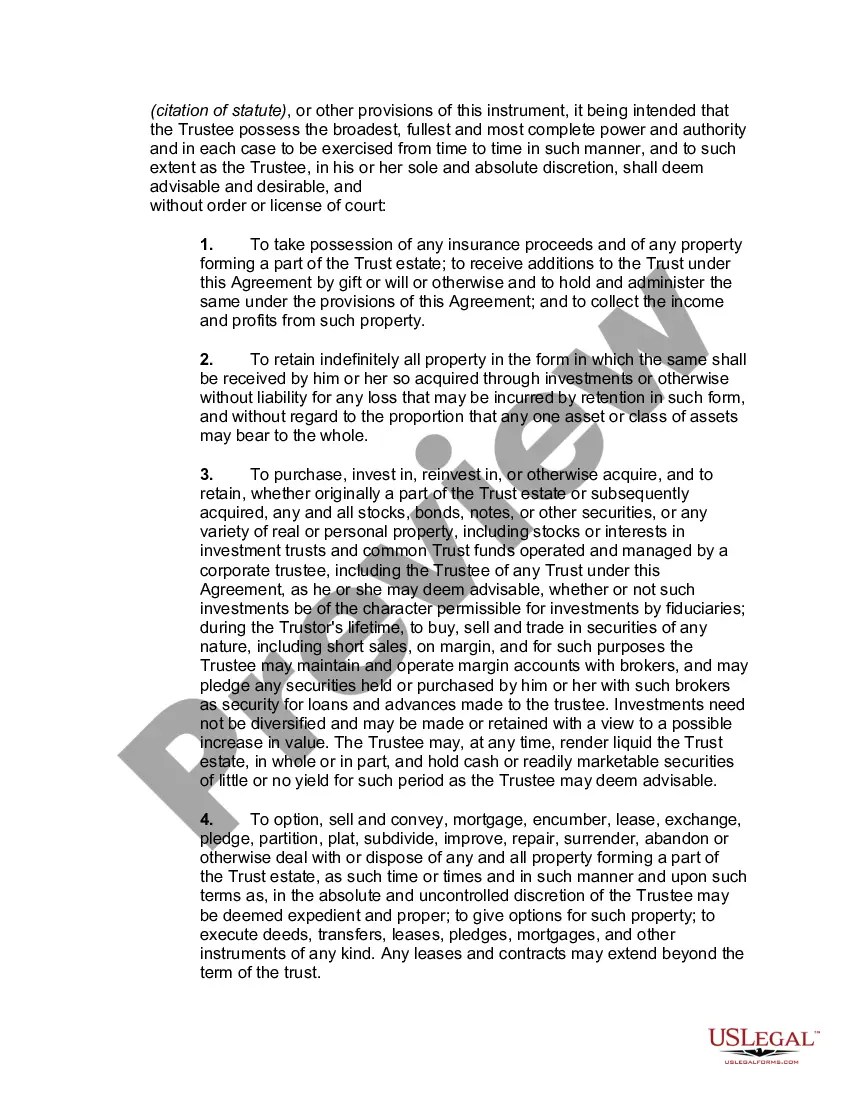
Qualified Subchapter S Trust Qsst
Description
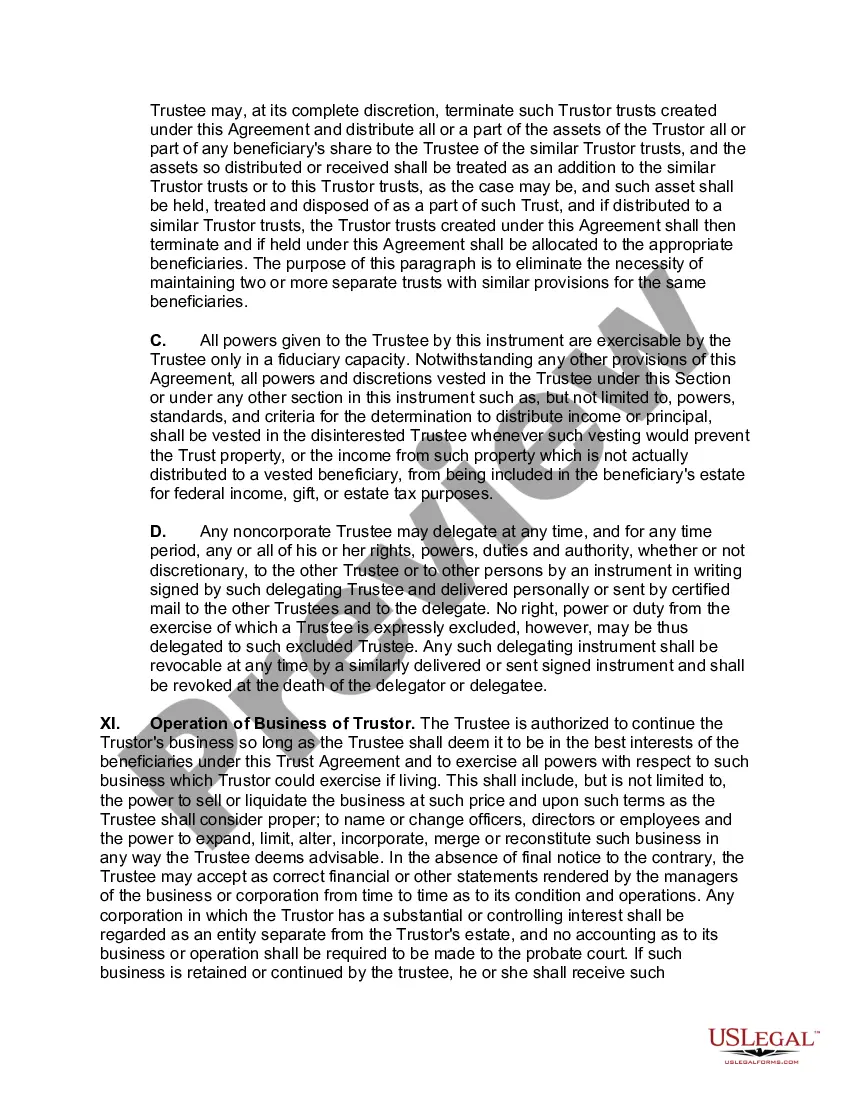
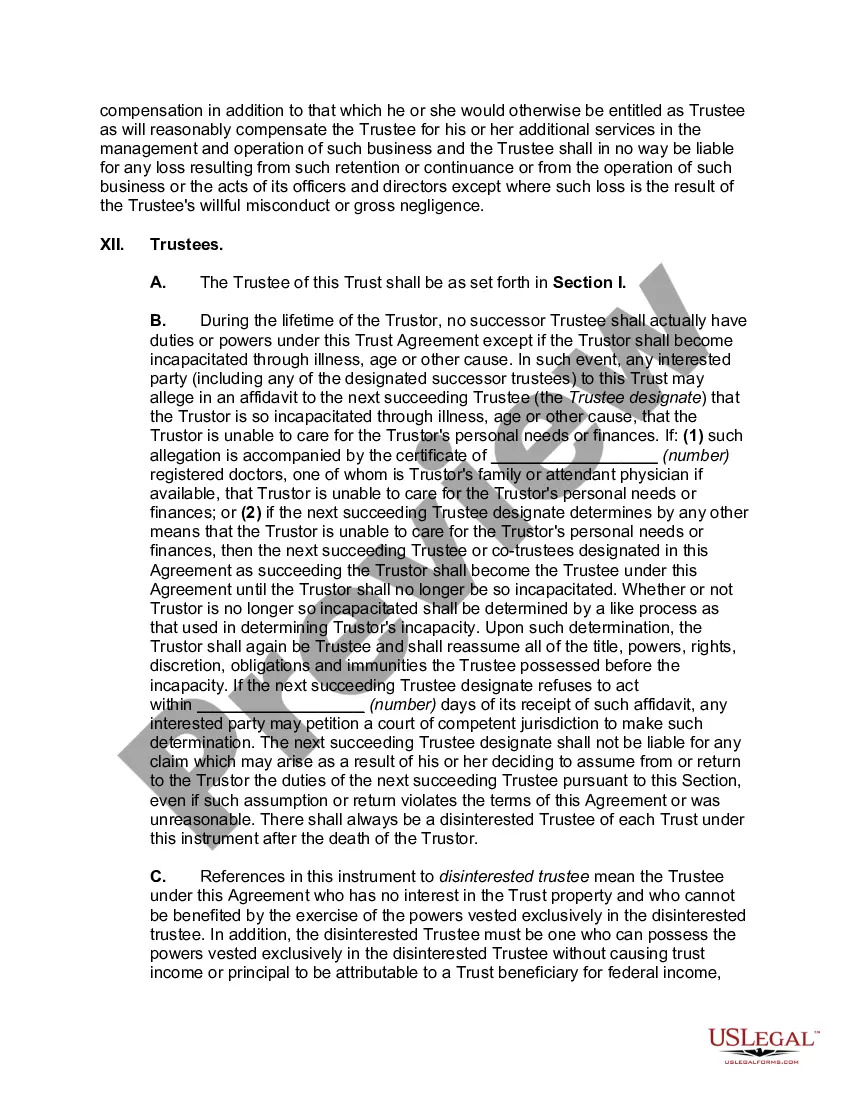

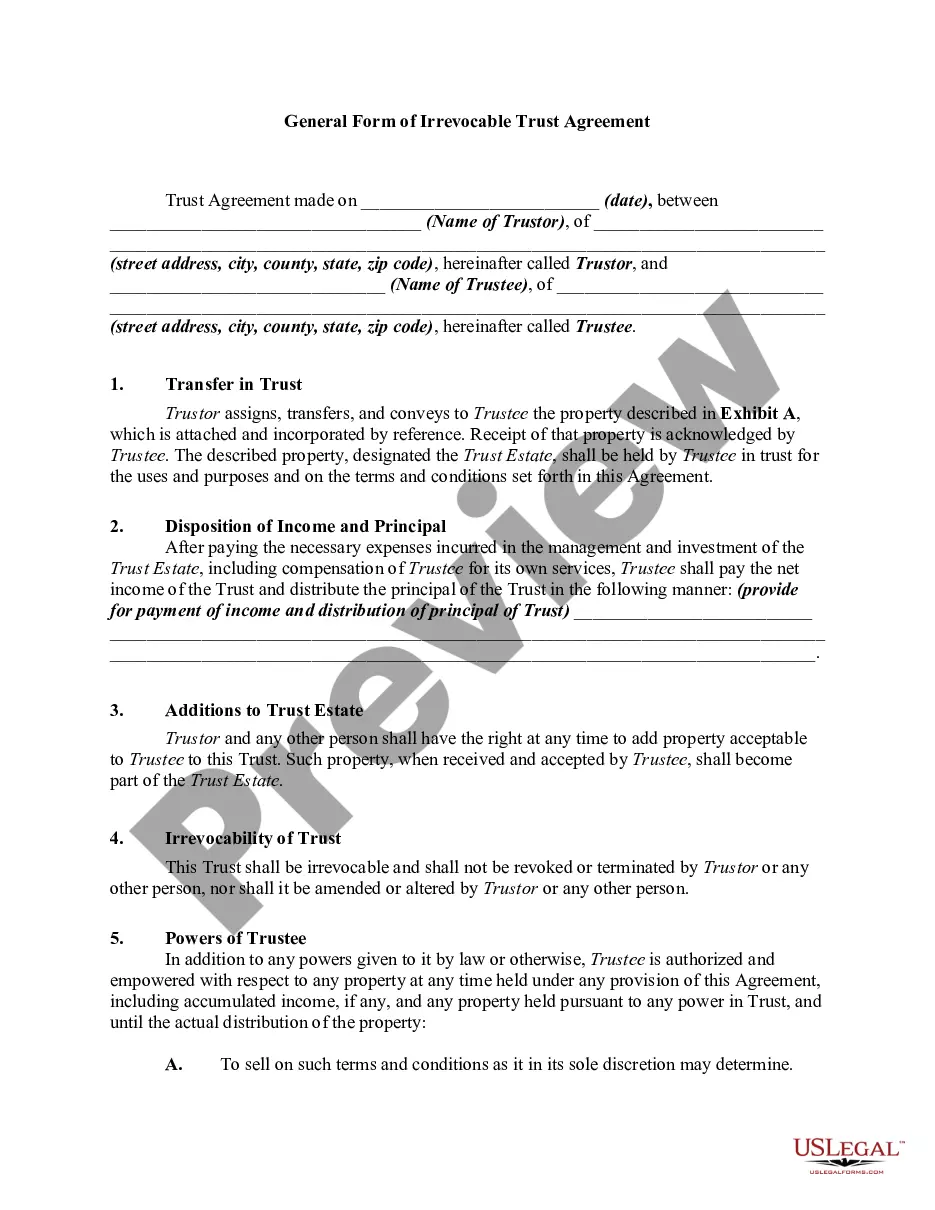
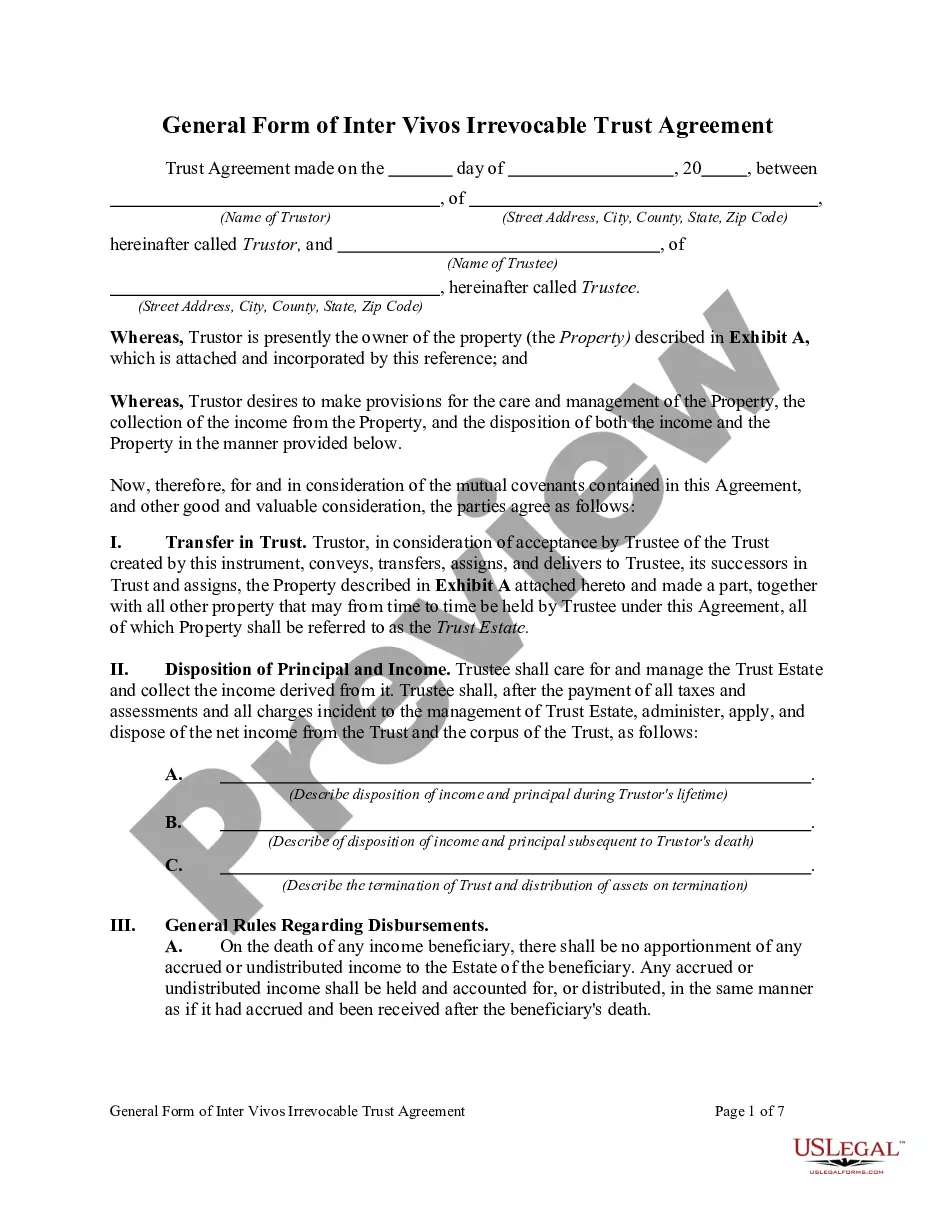
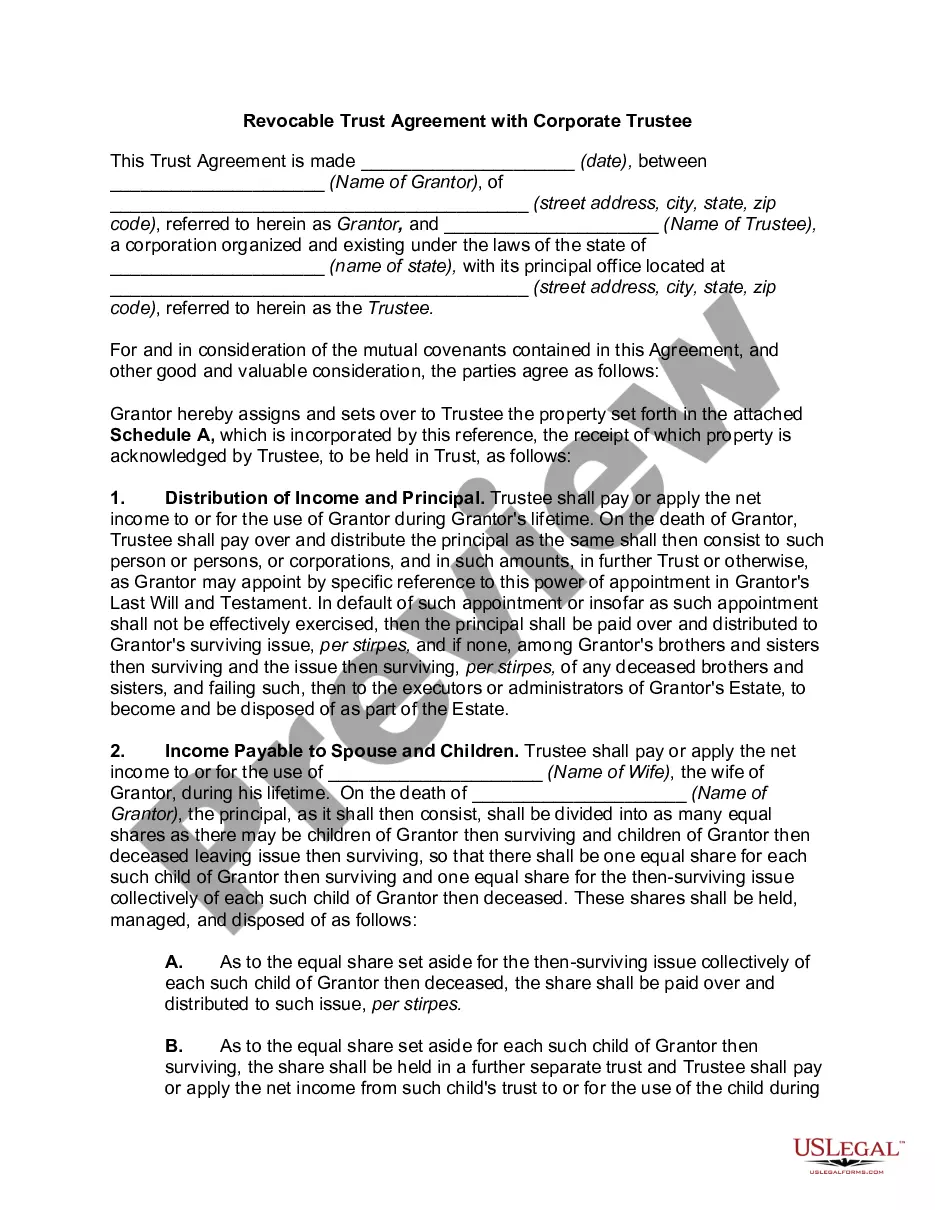
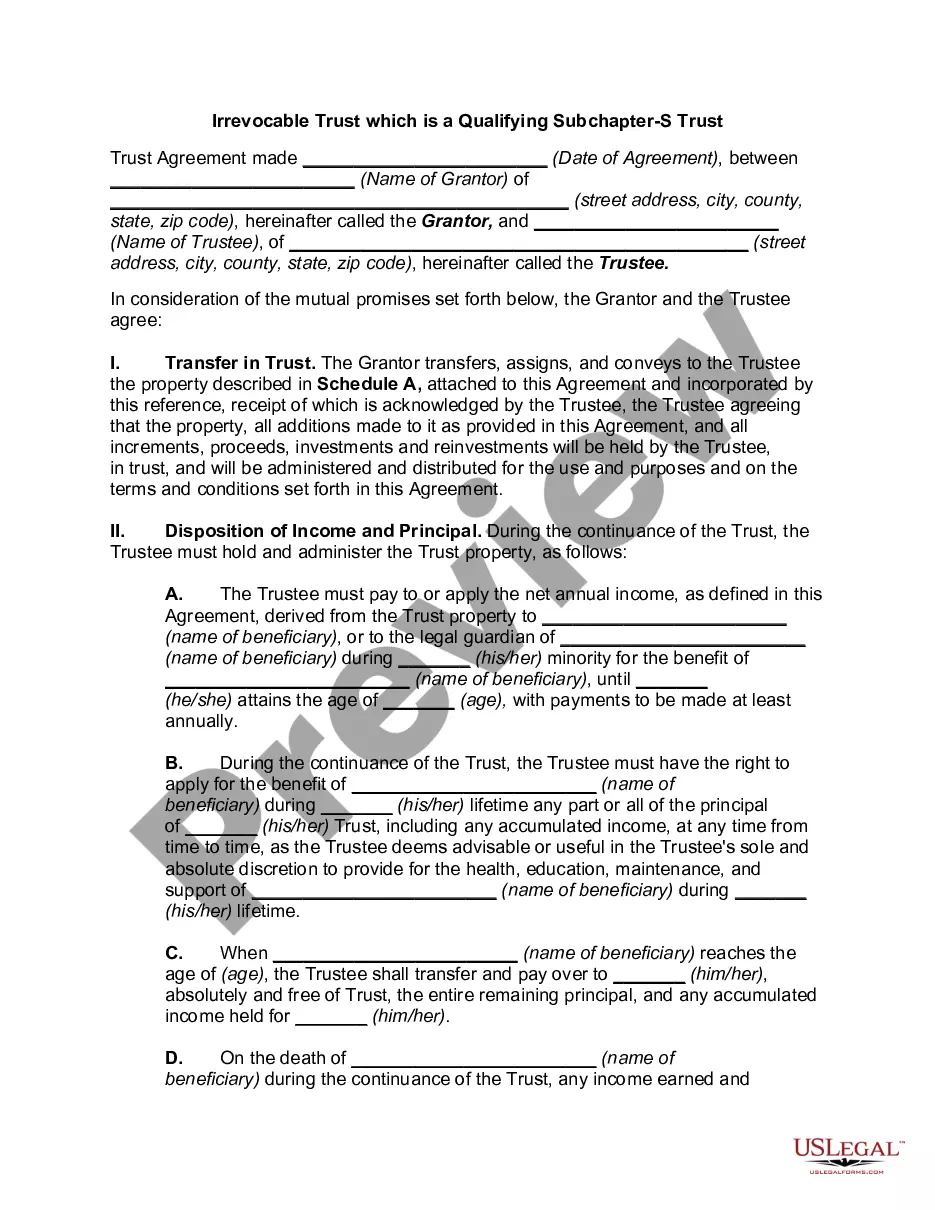
Get your form ready online
Our built-in tools help you complete, sign, share, and store your documents in one place.
Make edits, fill in missing information, and update formatting in US Legal Forms—just like you would in MS Word.
Download a copy, print it, send it by email, or mail it via USPS—whatever works best for your next step.
Sign and collect signatures with our SignNow integration. Send to multiple recipients, set reminders, and more. Go Premium to unlock E-Sign.
If this form requires notarization, complete it online through a secure video call—no need to meet a notary in person or wait for an appointment.
We protect your documents and personal data by following strict security and privacy standards.

Make edits, fill in missing information, and update formatting in US Legal Forms—just like you would in MS Word.

Download a copy, print it, send it by email, or mail it via USPS—whatever works best for your next step.

Sign and collect signatures with our SignNow integration. Send to multiple recipients, set reminders, and more. Go Premium to unlock E-Sign.

If this form requires notarization, complete it online through a secure video call—no need to meet a notary in person or wait for an appointment.

We protect your documents and personal data by following strict security and privacy standards.
Looking for another form?
How to fill out Qualifying Subchapter-S Revocable Trust Agreement?
- If you are a returning user, log into your account and find the relevant form template. Ensure your subscription is active; renew if necessary.
- In the Preview mode, review the form description carefully. Confirm that it matches your legal requirements and local jurisdiction needs.
- If there's a mismatch, use the Search tab located above to find another suitable template that better fits your qualifications.
- Select the document you need by clicking the Buy Now button, then opt for a subscription plan that best fits your needs. A user account will be required for access.
- Complete your transaction by entering your credit card information or opting to use your PayPal account.
- Once your purchase is confirmed, download the form directly to your device. You can manage and revisit your forms anytime from the My Forms section of your account.
With over 85,000 fillable legal forms and access to premium expert assistance, US Legal Forms enables users to handle legal documents confidently and accurately.
Start your journey today and ensure your legal paperwork is done right. Visit US Legal Forms now!
Form popularity
FAQ
A Qualified Subchapter S Trust (QSST) is not directly taxed on its income. Instead, the income generated is passed through to the beneficiaries, who then report this income on their personal tax returns. This structure provides tax efficiency, as the trust effectively avoids double taxation. Utilizing platforms like US Legal Forms can simplify the process of setting up a QSST while ensuring compliance with all necessary regulations.
The primary difference between a Qualified Subchapter S Trust (QSST) and an Electing Small Business Trust (ESBT) lies in their taxation and income distribution. A QSST offers simpler tax treatment, as it requires all income to be distributed to the beneficiaries. In contrast, an ESBT can accumulate income and has more flexible distribution rules. Understanding these distinctions can help you make informed decisions when setting up your trust.
Yes, a qualified subchapter S trust must file Form 1041. This form is necessary to report income generated by the trust and to ensure compliance with tax regulations. Proper filing helps safeguard the trust's standing while keeping the tax process straightforward for the income beneficiary.
Generally, a foreign grantor trust is not required to file Form 1041. However, if the trust has U.S.-source income or engages in certain U.S. activities, it may have tax obligations. It's essential to consult with a tax professional to navigate these specific requirements for foreign trusts.
To qualify as a QSST, a trust must meet specific criteria outlined by the IRS. These include having only one income beneficiary and distributing all income to that beneficiary annually. Understanding these requirements is vital for proper structuring, ensuring compliance, and maximizing tax benefits.
Yes, a qualified subchapter S trust can be classified as a grantor type trust. This means that the income beneficiary is considered the owner of the trust for tax purposes. This classification allows for certain tax advantages, making it an appealing option for many estate planning strategies.
The fiduciary of a qualified subchapter S trust is required to file Form 1041. This includes individuals who manage the trust and must report any income, deductions, or credits. Timely filing is essential to ensure compliance with IRS regulations and to maintain the trust's status.
A qualified subchapter S trust is generally taxed like a pass-through entity. The income generated by the trust is passed on to the deemed owner, who reports it on their personal tax return. This structure often allows for lower overall tax liability, as the trust itself usually has minimal tax obligations.
The deemed owner of a qualified subchapter S trust is the income beneficiary. This individual is treated as the owner of the trust assets for tax purposes. As a result, the income generated by the trust is taxed directly to the income beneficiary, ensuring a clear responsibility for tax compliance.
Yes, qualified subchapter S trusts, or QSSTs, must file tax returns. Specifically, they file Form 1041, the U.S. Income Tax Return for Estates and Trusts. This filing is necessary to report the income generated by the trust. It is crucial to comply with tax obligations to avoid penalties.