Trustor With Foreclosure
Description
Get your form ready online
Our built-in tools help you complete, sign, share, and store your documents in one place.
Make edits, fill in missing information, and update formatting in US Legal Forms—just like you would in MS Word.
Download a copy, print it, send it by email, or mail it via USPS—whatever works best for your next step.
Sign and collect signatures with our SignNow integration. Send to multiple recipients, set reminders, and more. Go Premium to unlock E-Sign.
If this form requires notarization, complete it online through a secure video call—no need to meet a notary in person or wait for an appointment.
We protect your documents and personal data by following strict security and privacy standards.

Make edits, fill in missing information, and update formatting in US Legal Forms—just like you would in MS Word.

Download a copy, print it, send it by email, or mail it via USPS—whatever works best for your next step.

Sign and collect signatures with our SignNow integration. Send to multiple recipients, set reminders, and more. Go Premium to unlock E-Sign.

If this form requires notarization, complete it online through a secure video call—no need to meet a notary in person or wait for an appointment.

We protect your documents and personal data by following strict security and privacy standards.
Looking for another form?

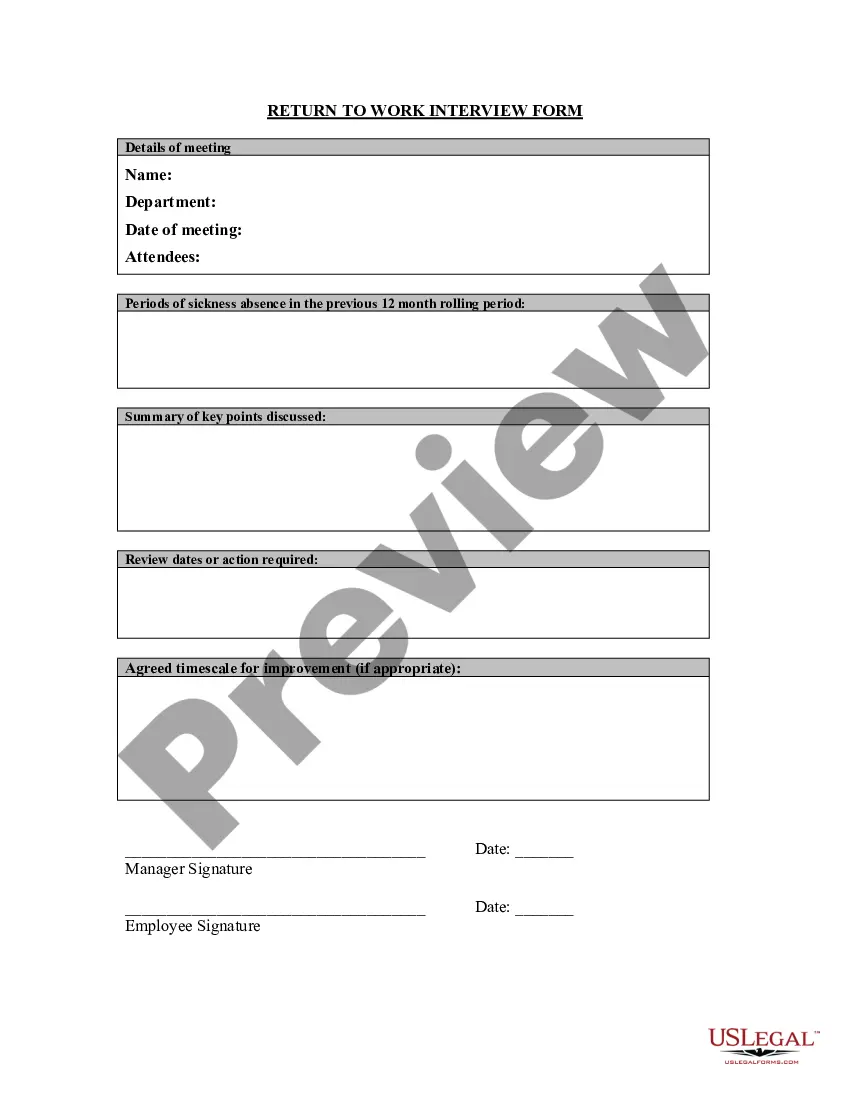






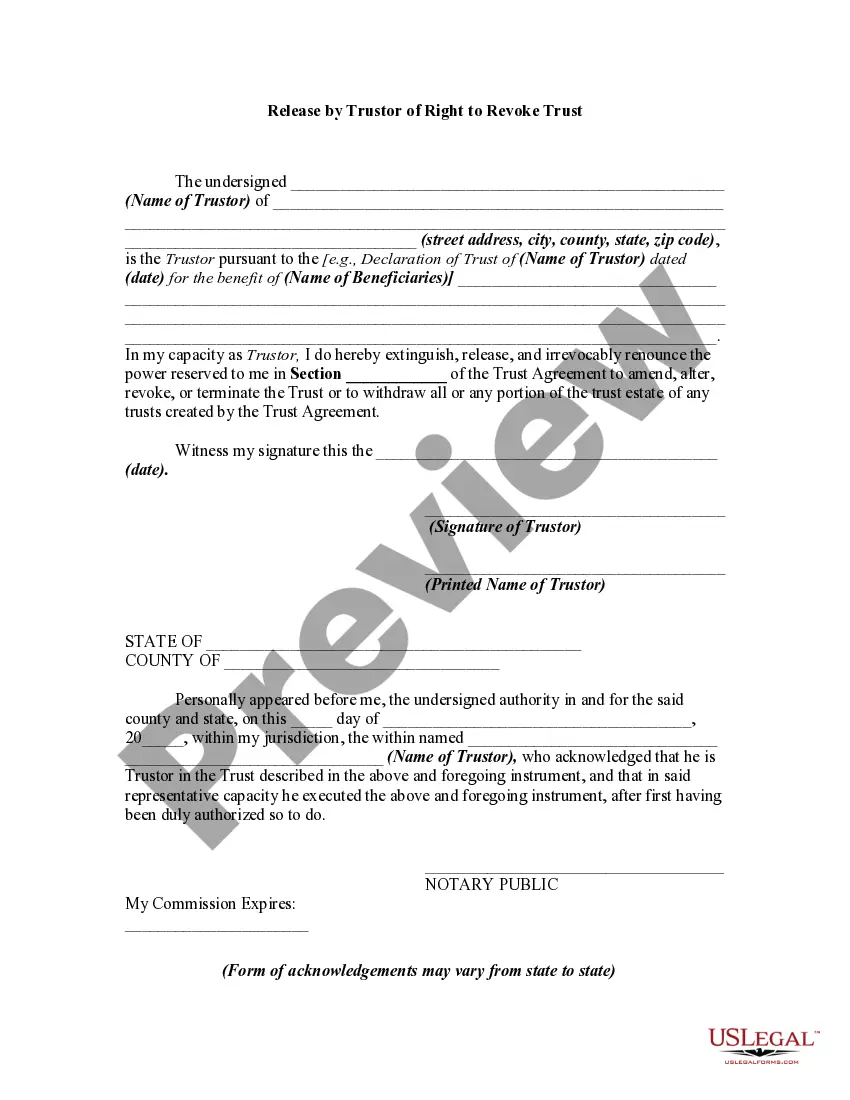
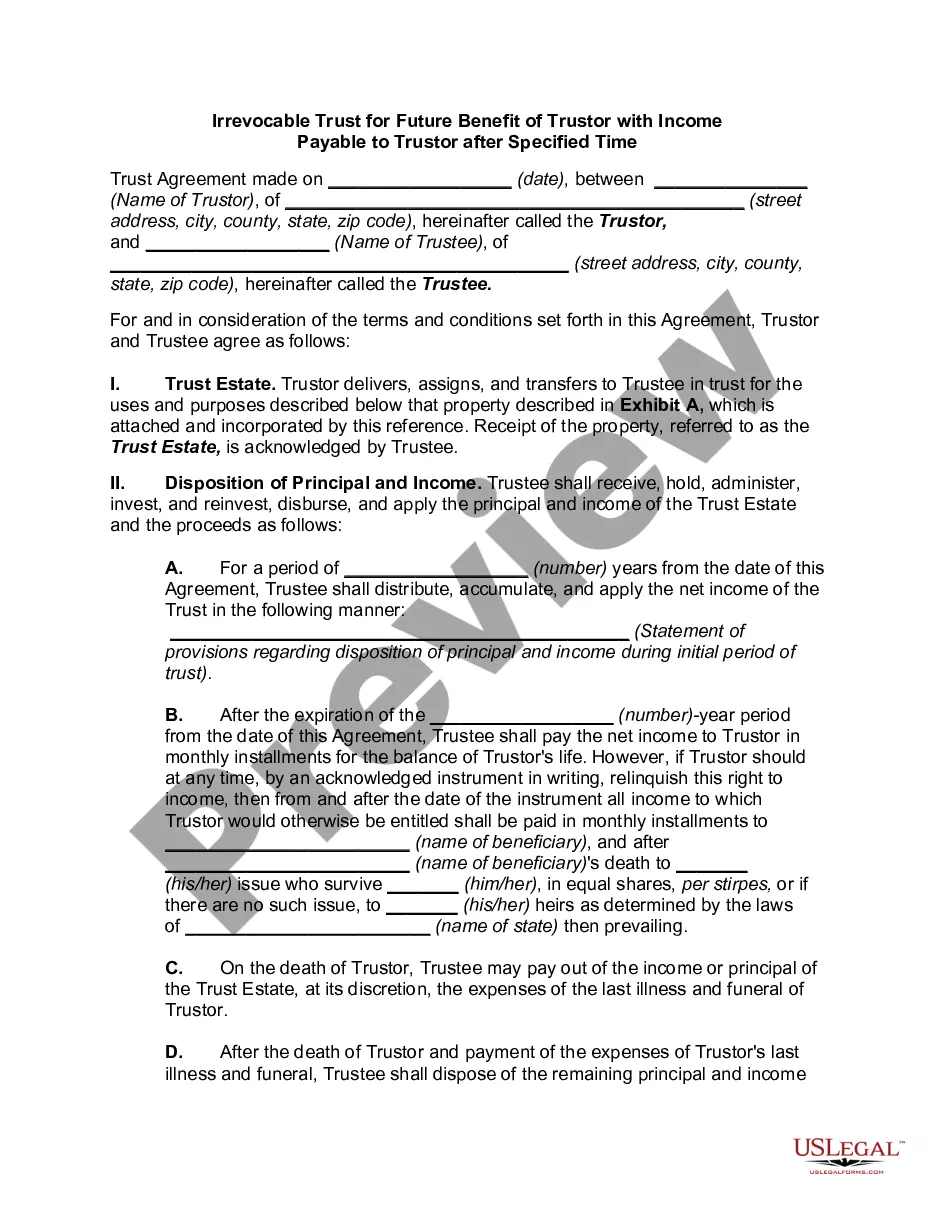
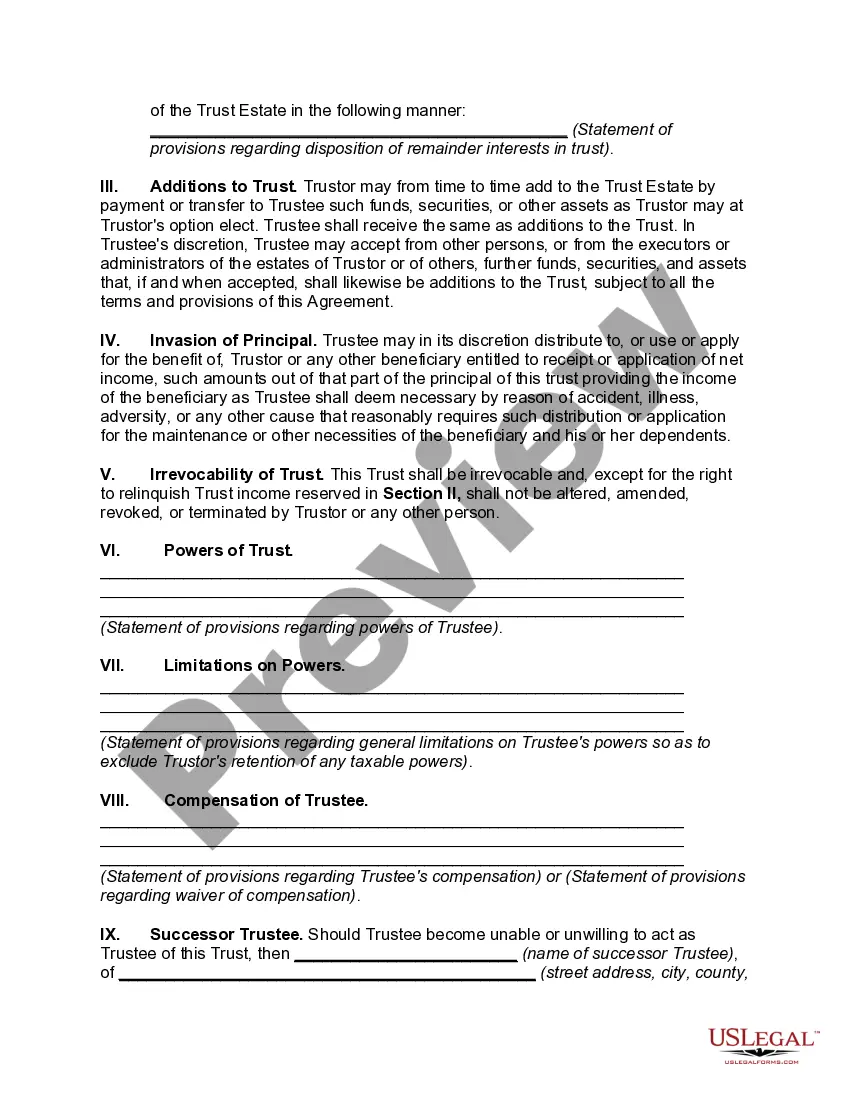
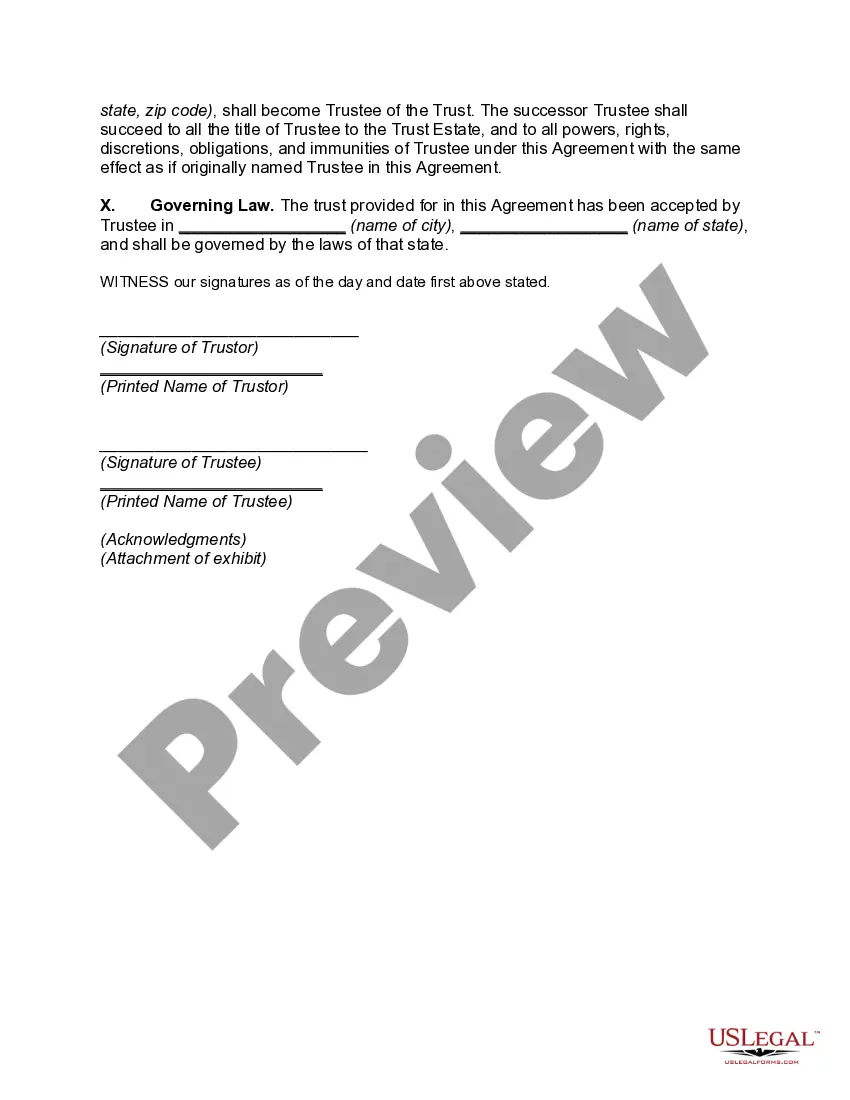
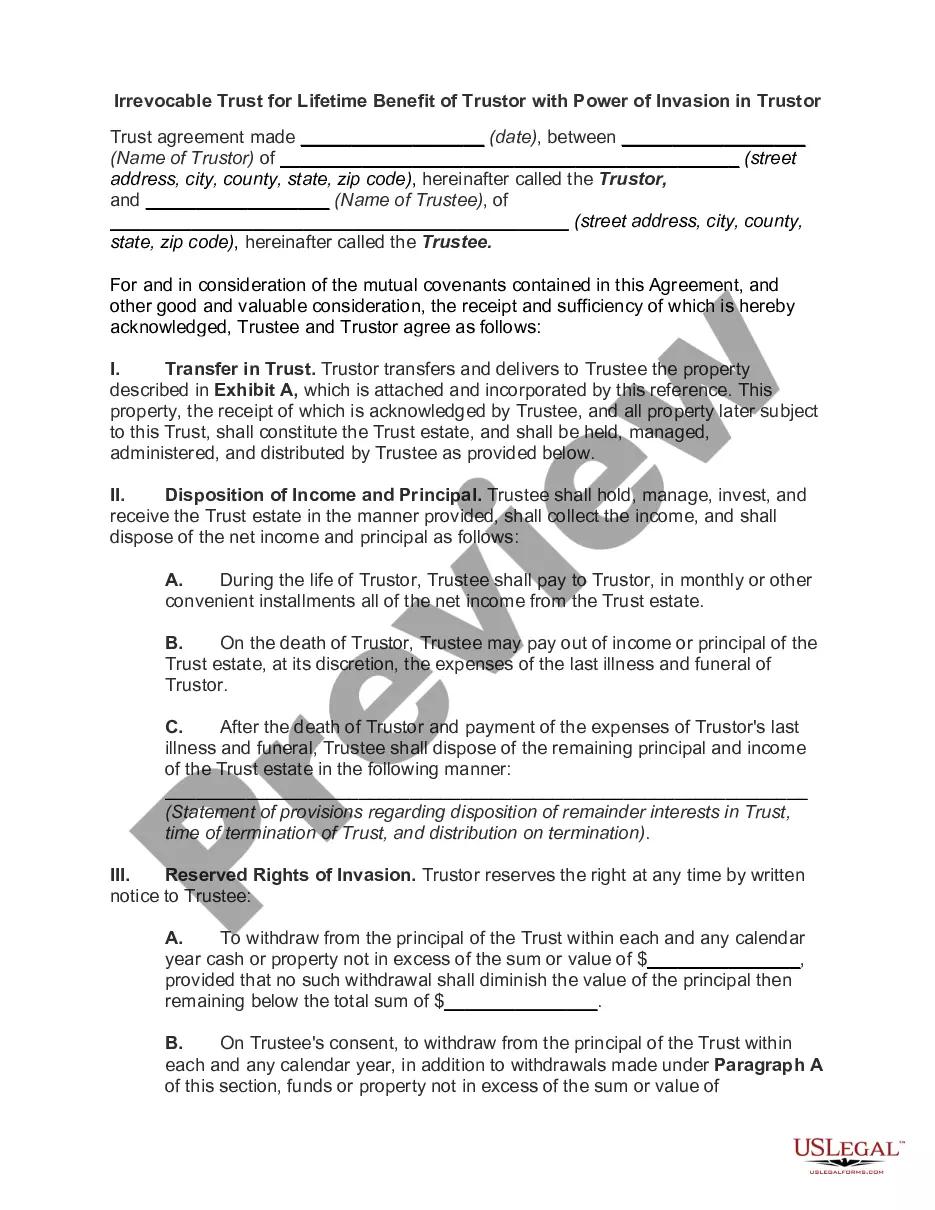
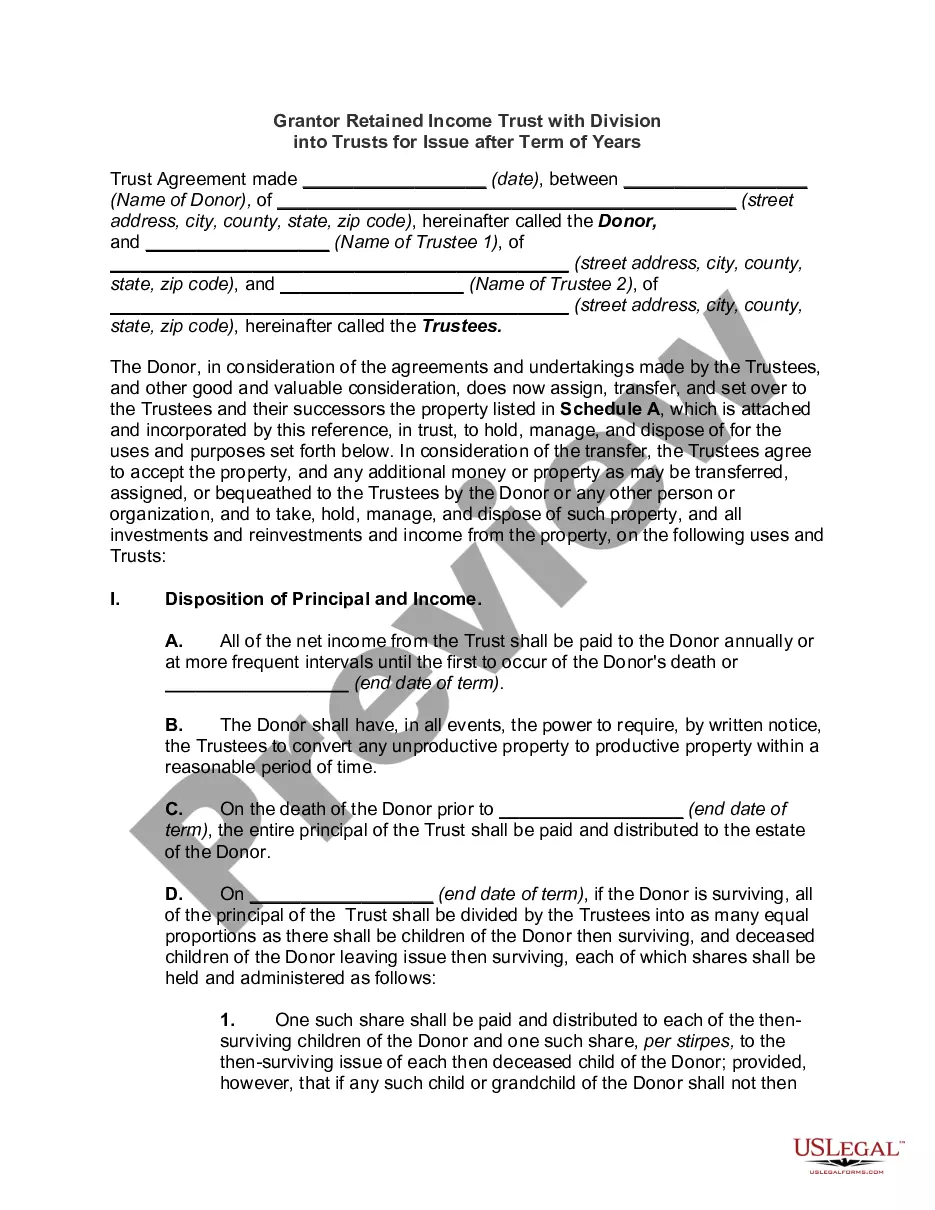
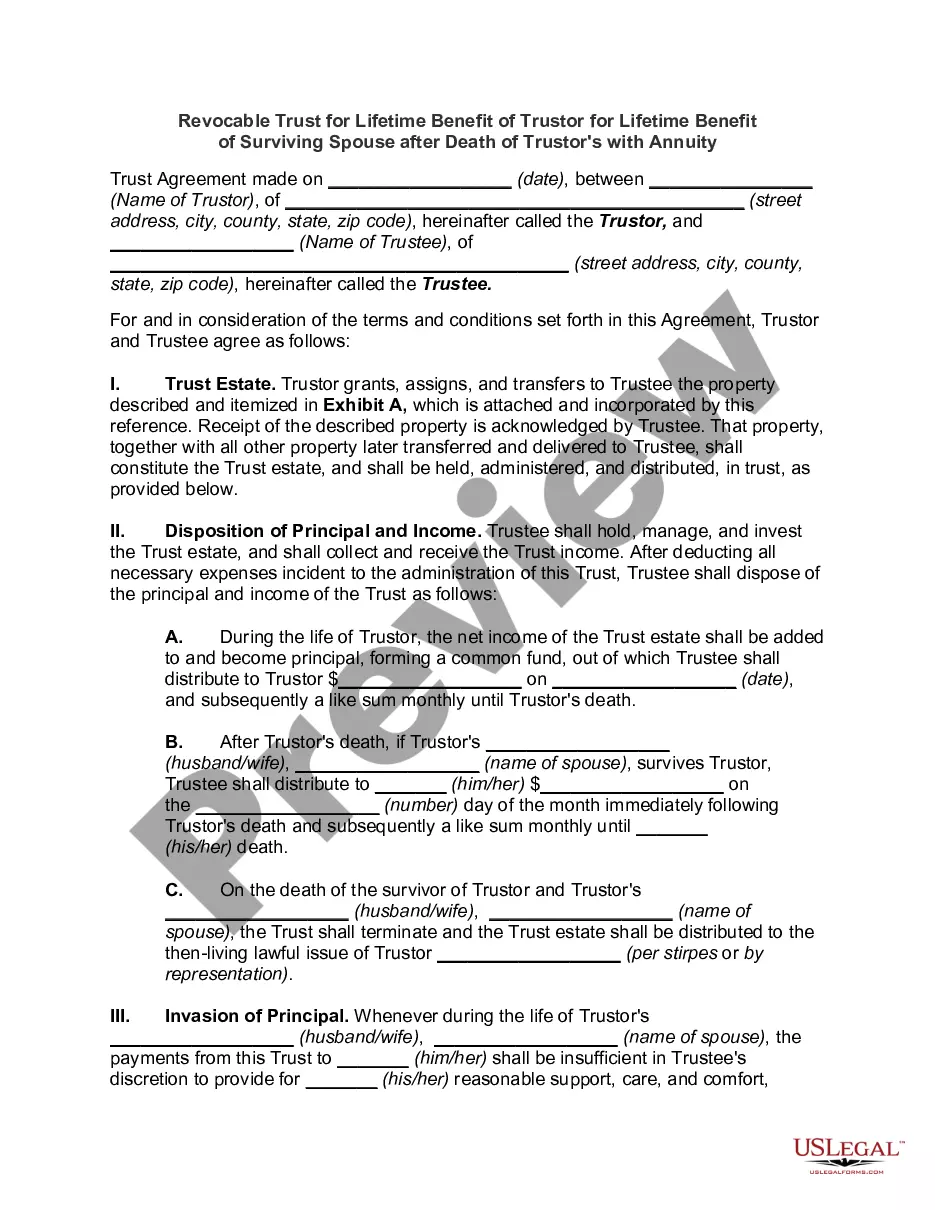
How to fill out Irrevocable Trust For Future Benefit Of Trustor With Income Payable To Trustor After Specified Time?
- Log into your US Legal Forms account if you are a returning user. Ensure your subscription is active to access documents.
- If you are new to US Legal Forms, start by using the Preview mode to review the available document descriptions. Confirm that the selected form meets your local jurisdiction's requirements.
- Conduct a search if you need an alternative template. Utilize the search feature to locate any desired documents that match your specifications.
- Proceed to purchase the document by clicking the 'Buy Now' button and selecting a suitable subscription plan, which requires account registration for access.
- Complete your purchase by entering your payment details via credit card or PayPal.
- Finally, download your selected form to your device. You can always revisit it from your user profile under 'My Forms' for future reference.
By following these straightforward steps, you can efficiently access a vast library of legal forms with US Legal Forms' support.
Don't hesitate—experience the benefits of tailored legal documents by visiting US Legal Forms today!
Form popularity
FAQ
The trustor in a foreclosure scenario is typically the seller of the property, as they are the one initiating the trust process. This means they are transferring their ownership into the trust. Buyers do not assume the role of the trustor; instead, they may become beneficiaries once the trust distributes the property. To navigate these complex roles effectively, consider utilizing US Legal Forms for clarity and guidance.
In the context of trustor with foreclosure, it's crucial to understand these roles. The trustee is the person or entity managing the trust, holding the title to the property. The trustor, also known as the grantor, creates the trust and transfers assets into it, including the property involved in foreclosure. The beneficiary, on the other hand, is the individual or entity that benefits from the trust, receiving the trust assets once conditions are met.
Recovering from foreclosure can be quite challenging for a trustor. The process often involves repairing credit scores, finding new housing, and retraining for employment. However, with the right support and resources, recovery is possible. USLegalForms provides valuable resources for trustors seeking to navigate this difficult journey and regain their financial footing.
The trustor with foreclosure clearly bears significant losses, but others also feel the impact. Family members may face emotional strain, while communities may experience declining property values. Additionally, investors and lenders face challenges when properties do not sell as expected. Recognizing this broad impact can motivate trustors to seek alternatives before the situation escalates.
The trustor with foreclosure typically suffers the greatest financial loss. This loss includes not only the equity in the property but also potential damage to their credit score. Additionally, emotional distress may accompany the financial repercussions, leading to further challenges. It is essential for trustors to seek advice and resources to understand their situation fully.
In most cases, the lender becomes the owner of the property after foreclosure. When the trustor with foreclosure defaults on payments, the lender takes possession of the asset. The property may then be sold at auction, often resulting in the lender recovering their losses. Understanding the ownership transfer can help trustors make informed decisions during challenging times.
In New Mexico, foreclosures generally follow a judicial process, meaning the lender must sue the borrower in court. The trustor with foreclosure can legally contest the foreclosure if they believe it was not executed correctly. Understanding the specifics of this process is essential for homeowners to navigate their options and protect their rights during a foreclosure.
When a home is foreclosed, personal belongings left behind may be subject to removal by the new owner or the bank. The trustor with foreclosure should be aware that they might have a limited time to claim their personal property after eviction. In many cases, any unclaimed items can be discarded or stored by the new owner, making it crucial to act quickly.
Foreclosures can severely impact several parties, but the trustor with foreclosure suffers the most. They face financial loss, damage to credit scores, and the emotional toll of losing their property. Additionally, families and tenants living in the home may experience instability and uncertainty as they are forced to relocate.
The 120-day rule for foreclosure typically refers to the period during which lenders must wait after a homeowner defaults before initiating the foreclosure process. This rule gives the trustor with foreclosure a chance to rectify their financial situation. Understanding this timeline can help homeowners explore their options and possibly avoid losing their home.