Wife Inheritance In Zimbabwe
Description

Get your form ready online
Our built-in tools help you complete, sign, share, and store your documents in one place.
Make edits, fill in missing information, and update formatting in US Legal Forms—just like you would in MS Word.
Download a copy, print it, send it by email, or mail it via USPS—whatever works best for your next step.
Sign and collect signatures with our SignNow integration. Send to multiple recipients, set reminders, and more. Go Premium to unlock E-Sign.
If this form requires notarization, complete it online through a secure video call—no need to meet a notary in person or wait for an appointment.
We protect your documents and personal data by following strict security and privacy standards.

Make edits, fill in missing information, and update formatting in US Legal Forms—just like you would in MS Word.

Download a copy, print it, send it by email, or mail it via USPS—whatever works best for your next step.

Sign and collect signatures with our SignNow integration. Send to multiple recipients, set reminders, and more. Go Premium to unlock E-Sign.

If this form requires notarization, complete it online through a secure video call—no need to meet a notary in person or wait for an appointment.

We protect your documents and personal data by following strict security and privacy standards.
Looking for another form?




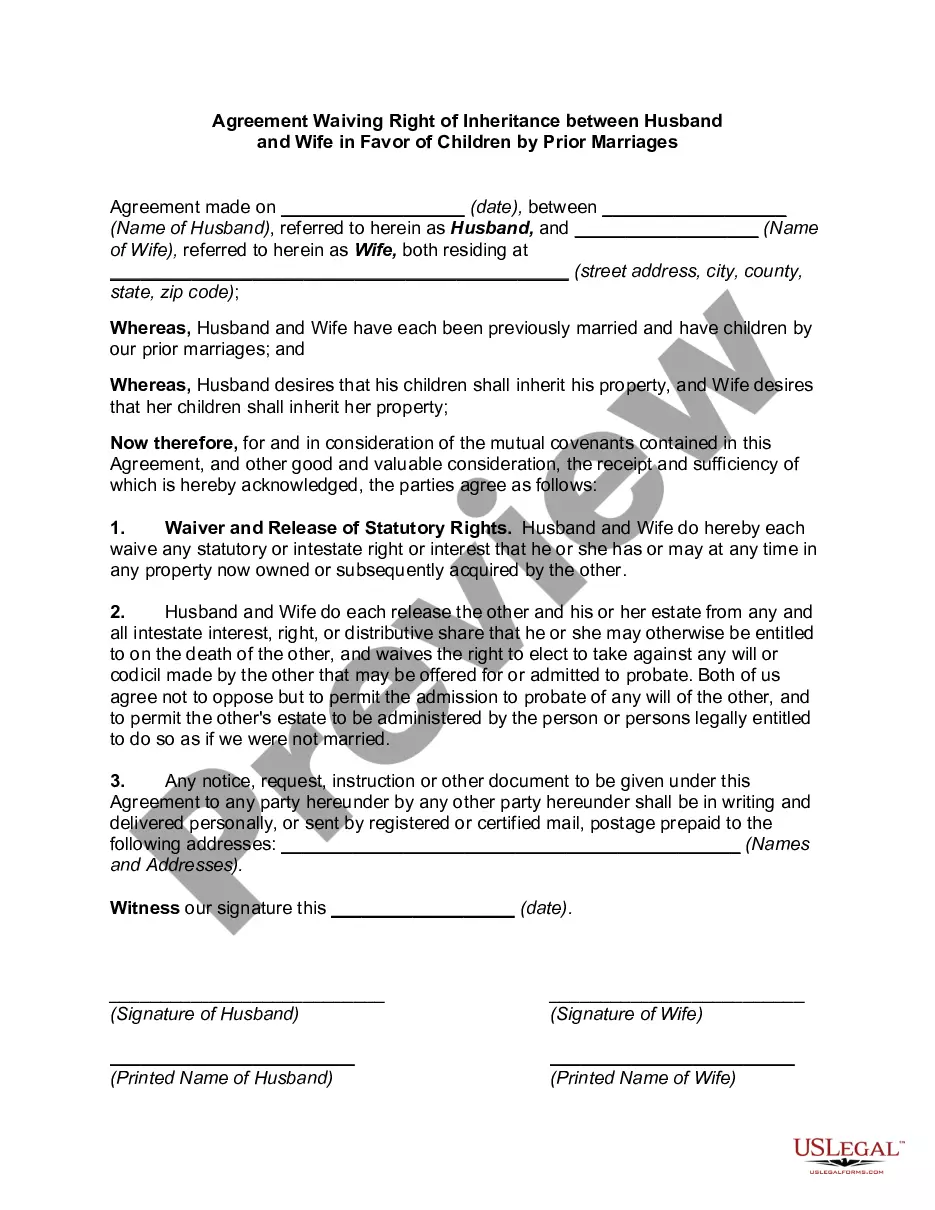
How to fill out Agreement Waiving Right Of Inheritance Between Husband And Wife In Favor Of Children By Prior Marriages?
Utilizing legal document examples that adhere to national and local regulations is essential, and the internet provides numerous choices to pick from.
However, why spend time hunting for the relevant Wife Inheritance In Zimbabwe example online when the US Legal Forms digital library has such documents compiled in one location.
US Legal Forms is the largest digital legal repository with over 85,000 editable templates created by attorneys for any business and personal situation.
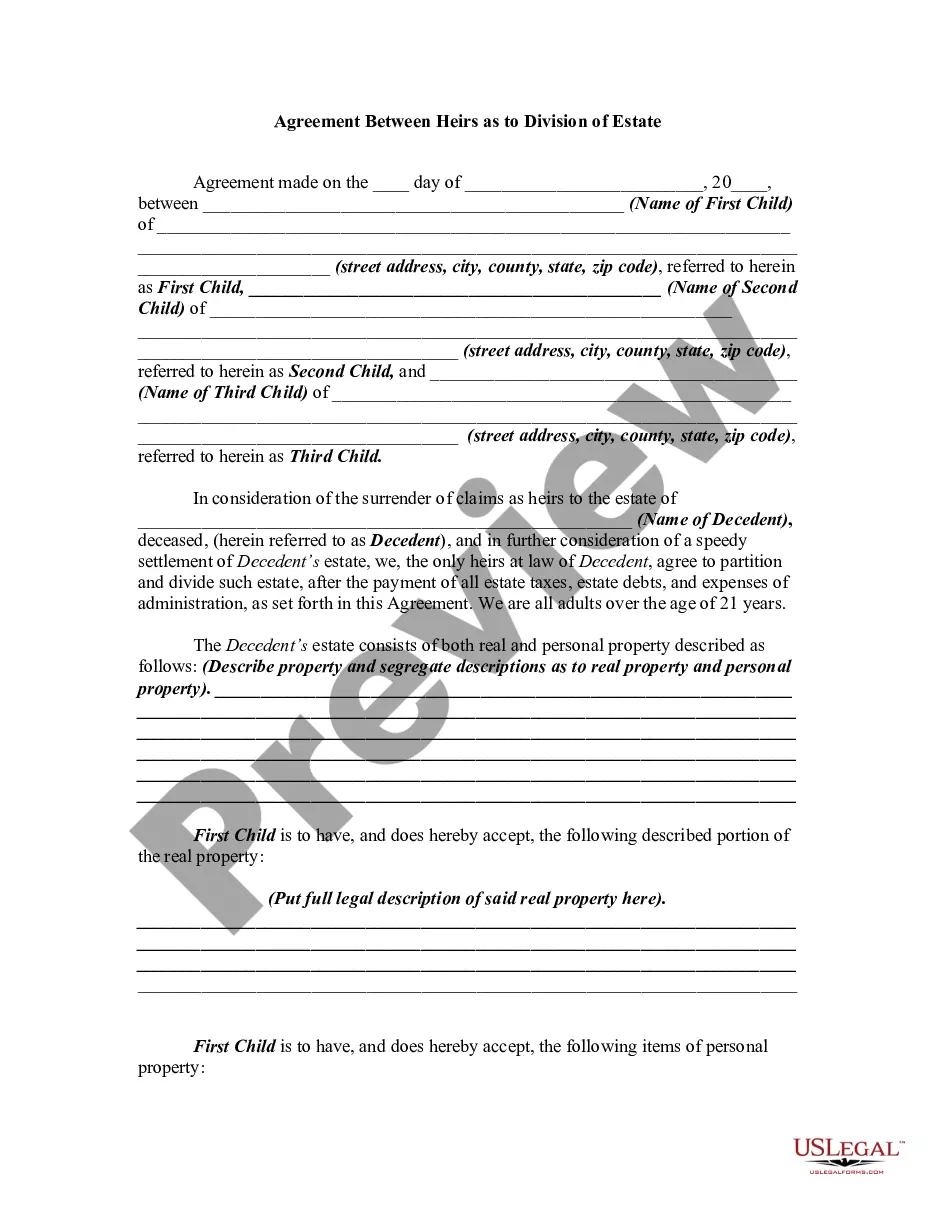
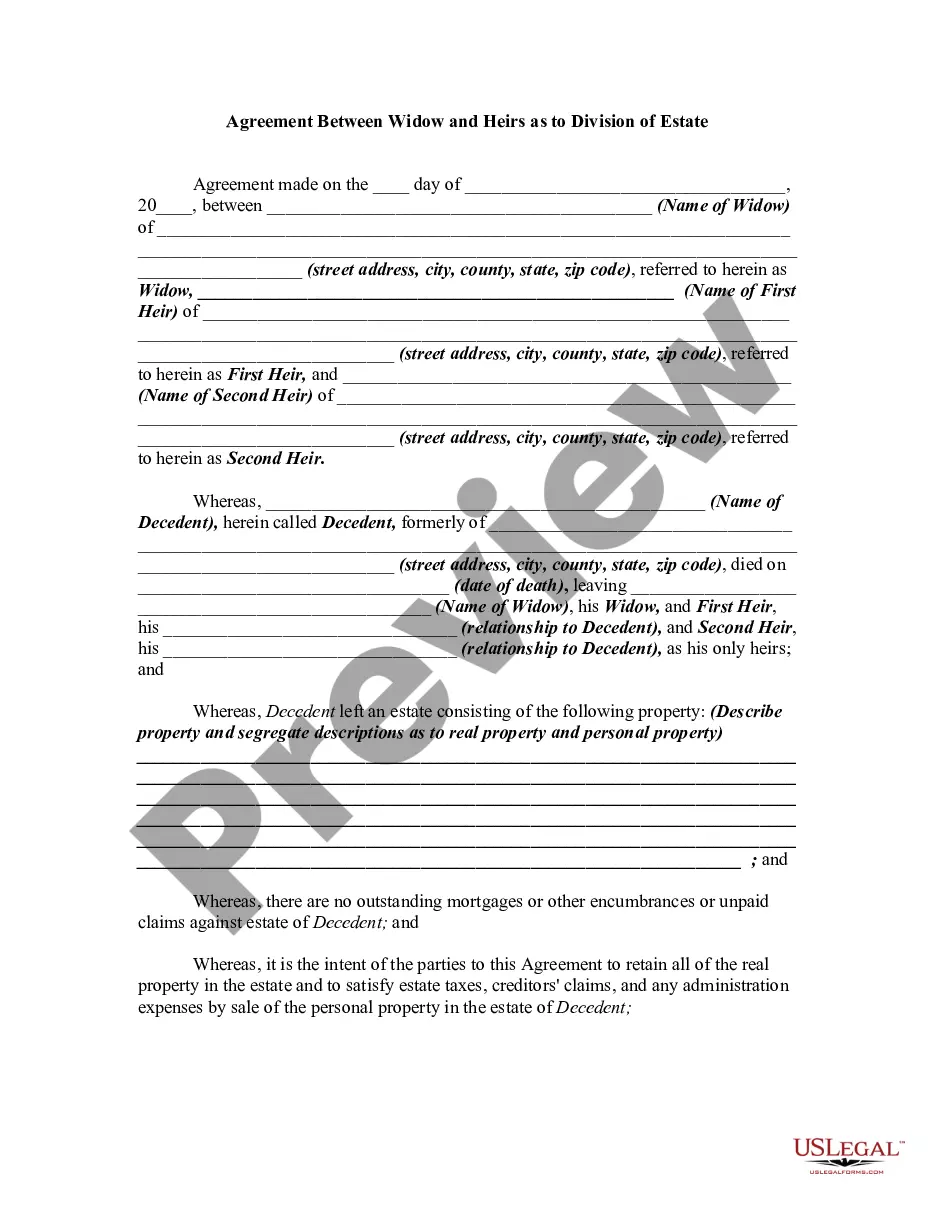
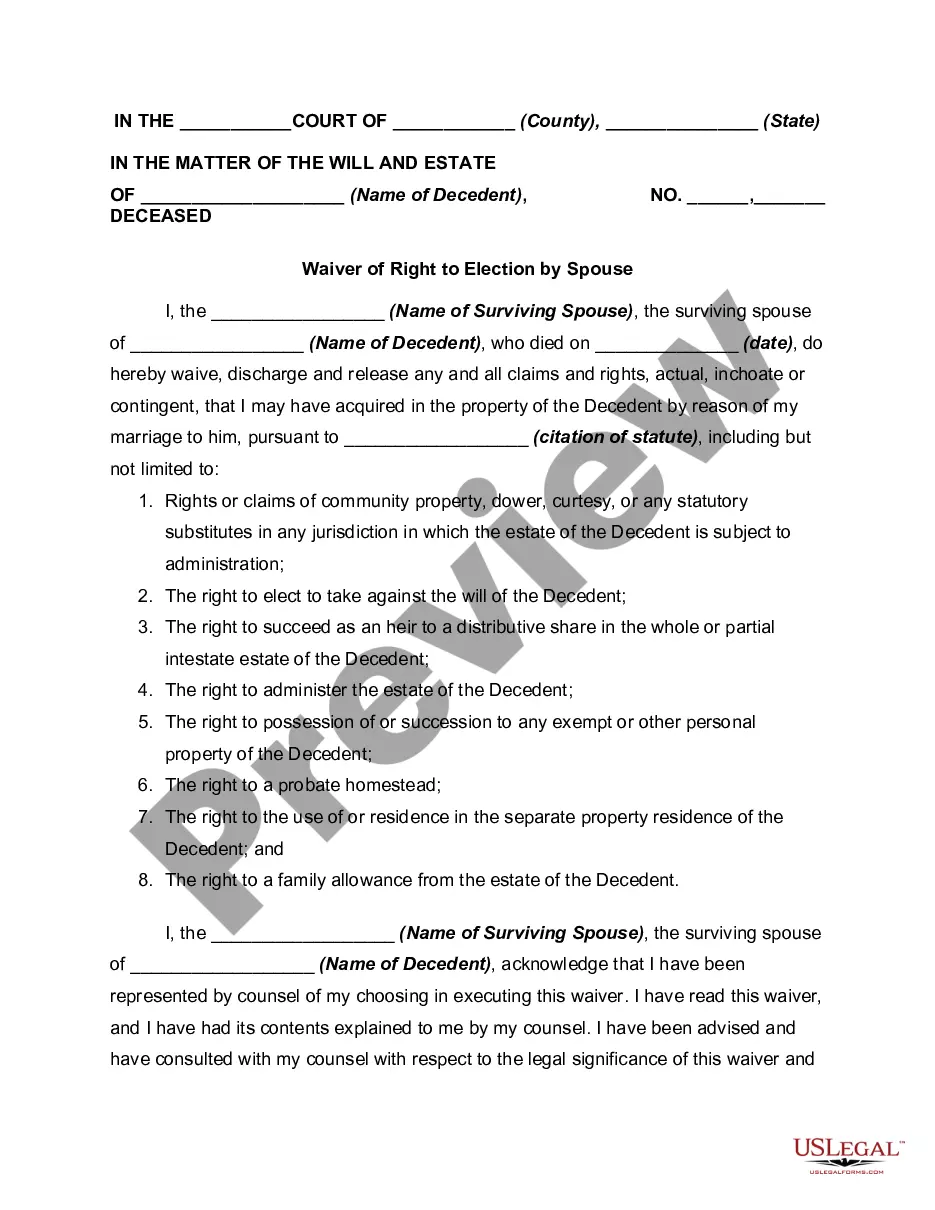
Review the template using the Preview feature or through the text description to ensure it fulfills your requirements.
- They are easy to navigate with all files categorized by state and intended use.
- Our specialists keep informed about legislative changes, ensuring that your form is always current and compliant when acquiring a Wife Inheritance In Zimbabwe from our site.
- Obtaining a Wife Inheritance In Zimbabwe is straightforward and quick for both existing and new users.
- If you already possess an account with an active subscription, Log In and download the document sample you need in the correct format.
- If you are new to our site, follow the steps below.
Form popularity
FAQ
Yes, a man can legally marry two wives in Zimbabwe under customary law. This practice is accepted and recognized, allowing for polygamous marriages. However, such marriages must adhere to specific legal criteria to ensure their validity. Therefore, understanding the implications of wife inheritance in Zimbabwe is crucial for men considering this marital arrangement.
Zimbabwe recognizes two primary types of marriage: civil marriage and customary marriage. A civil marriage follows statutory regulations and is officially registered with the government. Customary marriage, on the other hand, adheres to traditional practices and may not always be formally registered. Both types have implications for wife inheritance in Zimbabwe, affecting how assets are distributed upon death.
In Zimbabwe, wife inheritance laws ensure that your wife may have rights to a portion of your inheritance. If you pass away without a will, the distribution of your assets will be subject to the laws of intestate succession. This means your wife, along with other family members, may claim a share of your estate under Zimbabwean law. Hence, understanding wife inheritance in Zimbabwe is essential for proper estate planning.
The new law on marriage in Zimbabwe aims to enhance the protection of spouses' rights, especially focusing on equality and consent. This legal framework also addresses issues related to wife inheritance in Zimbabwe, ensuring that both partners are recognized and protected in the event of death. These changes reflect a progressive shift towards more equitable marriage laws.
The Marriage Act 5.17 in Zimbabwe governs the legal framework for marriages, specifying the requirements for a valid marriage, including registration and consent. This act plays a significant role in establishing rights related to wife inheritance in Zimbabwe. It seeks to protect spouses, especially by clarifying their rights during inheritance processes.
Zimbabwe recognizes three primary types of marriages: civil, customary, and religious marriages. Each type has distinct legal implications, particularly in terms of wife inheritance in Zimbabwe. Understanding these categories helps individuals navigate their rights and obligations within different marital contexts.
In Zimbabwe, a married woman can engage in romantic relationships outside of her marriage, but this can lead to potential legal and social consequences. Understanding the implications of extramarital relationships is crucial, particularly regarding wife inheritance in Zimbabwe. It's essential for individuals to consider their personal circumstances and the laws governing marital fidelity.
Inheritance laws in Zimbabwe establish the framework for distributing a deceased person's estate. These laws underscore the right of a surviving spouse, especially when discussing wife inheritance in Zimbabwe, ensuring they have access to family property. They also recognize children's rights, promoting fairness and equity in estate distribution.
The new marriage rule in Zimbabwe emphasizes the equal rights of spouses in marriages, particularly concerning property and inheritance. This rule aims to protect women, ensuring they have rights over inheritance, including wife inheritance in Zimbabwe. This legal change acknowledges the importance of mutual consent and respect in marital relationships.
The inheritance law in Zimbabwe governs how property is distributed after someone passes away. It encompasses rules about spousal, child, and other family member rights. Understanding these laws is vital for planning, especially in terms of wife inheritance in Zimbabwe, to ensure that all rights are protected and that families are supported in their times of need.